
Specs are compiled from manufacturer listings and verified buyer reviews and can change over time — please confirm the key details on the product page before buying.
A bypass lopper that feels great on a 1-inch green twig can leave your arms aching on a 1.5-inch dead oak branch. Matching the tool to the branch size you cut most days saves sore muscles and broken handles. I’m Rikta, founder of Lawn Gear Lab. This guide compares manufacturers’ published specs and patterns across verified customer reviews. You get each pick’s real strengths and trade-offs instead of marketing spin. You will find the right match for your budget and cutting job in this roundup of the best bypass loppers.
Quick Picks
- Haus & Garten PowerPRO Compound Action 29″ — Best Overall
- Corona Tools 33″ Bypass Loppers — Premium Pick
- Kings County Tools Double Ratcheting Bypass — Most Versatile
- Corona Tools 36-inch MAXFORGED Orchard Lopper — Pro Grade
- Corona Tools WL 3351 26″ Bypass Loppers — Best Value
- WORKPRO Bypass Lopper 28″ — Budget Champion
- TRUPER TB-122 21″ Classic Tubular Handle Bypass — Classic Budget
How To Choose The Best Bypass Loppers
The three numbers that define a lopper are its cutting width (the maximum branch thickness it can slice), its handle length (which determines your reach and leverage), and the blade material (which decides how long it stays sharp). Once you pin down the branch sizes you face most, the rest clicks into place.
Cutting Capacity: Match the Blade to the Branch
The cutting width tells you the thickest living branch the lopper can handle cleanly. A 1.18-inch capacity handles light trimming of shrubs and twigs, while a 2-inch or 2.5-inch rating lets you take on thicker tree limbs. Pushing a lopper past its rated limit often bends the blade or snaps the handles — buyers report broken handles from exceeding the 1.5-inch branch size on some models.
Handle Length & Leverage: Reach vs. Effort
Longer handles (29 inches to 36 inches) give you more leverage, meaning you need less strength to cut a branch of the same thickness. They also let you reach higher without a ladder. The trade-off is added weight, which can tire your arms during overhead trimming. Shorter handles (21 inches to 26 inches) are lighter and easier to control in tight spaces but require more force for thick cuts.
Blade Material and Coatings: Edge Life and Smooth Cuts
High-carbon steel and forged steel blades hold a sharp edge longer than basic steel, and some models add a Teflon coating that resists rust and prevents sap from sticking. A non-stick coating also reduces friction, so the blade glides through wood rather than binding halfway through a cut.
Quick Comparison
| Model | Best For | Cutting Width | Handle Length | Handle Material | Amazon |
|---|---|---|---|---|---|
| Haus & Garten PowerPRO 29″ | Heavy trimming with less effort | 2 in | 29 in | Aluminum | Amazon |
| Corona 33″ DualLINK | Thick branches up to 2 in | 2 in | 33 in | Plastic/Rubber | Amazon |
| Kings County Tools Extendable | Reaching high branches with a ratchet | 2 in | 26 – 40 in | Steel/Aluminum | Amazon |
| Corona 36″ Orchard Lopper | Maximum reach for serious orchard work | 2.5 in | 36 in | Aluminum | Amazon |
| Corona WL 3351 26″ | Durable all-around value | 1.5 in | 25.75 in | Wood | Amazon |
| WORKPRO 28″ | Light budget trimming | 1.18 in | 28 in | Plastic/Rubber | Amazon |
| TRUPER TB-122 21″ | Simple, inexpensive light pruning | — | 21 in | Metal | Amazon |
In‑Depth Reviews
1. Haus & Garten PowerPRO Compound Action 29″ Bypass Loppers

The compound-action geometry reduces the effort needed for each cut.
This lopper cuts a 2-inch max branch with a clever trick — multiple pivot points that multiply leverage, so you need less arm strength for the same cut. The 29-inch aluminum handles keep the tool light (under 3.5 lbs) while giving you reach for mid-height limbs without a ladder. The Teflon coating on the high-carbon steel blade resists rust and stops sap from gumming up the cut, so you scrape less between jobs. Owners mention the blunt nose makes it less ideal for snipping thin twigs, so you may still need hand pruners for detail work. One owner who cut 1/2-inch branches called them easy to use and sharp. Another praised the solid aluminum handles after years of breaking hollow iron handles on other brands. The Haus & Garten handles up to 2 inches of branch thickness, while the WORKPRO 28-inch model cuts up to 1.18 inches, so if you regularly face limbs thicker than an inch, this upgrade spares your arms.
Why it wins
- 2-inch cutting width handles most tree limbs
- Compound action multiplies force so you cut with less strain
- Teflon-coated blade resists rust and sap buildup
A real trade-off
- Blunt nose struggles on thin twigs and small vegetation
- Replacement blades not available like some competitors
Reach for this if: you need one lopper that handles an honest 2-inch branch without wearing out your shoulders.
Look elsewhere if: most of your pruning is thin twigs — you would benefit from a finer-tipped model.
2. Corona Tools 33″ Bypass Loppers with DualLINK MAXFORGED

The forged steel blade and 33-inch handles that turn a 2-inch limb into a one-handed squeeze.
Corona’s DualLINK MAXFORGED mechanism multiplies your pulling force, so each cut on a thick branch demands noticeably less muscle. The fully forged steel blade stays sharp through many seasons — one reviewer called it the best lopper they have ever owned, noting the insane amount of leverage from the 33-inch handles. At 4.3 pounds, this is a heavier tool, but the cushioned grips and impact-reducing bumpers absorb shock so your hands feel less jolt at the end of each cut. One buyer who already owned a five-year-old Fiskars found this upgrade adequate but not a dramatic improvement in cutting smoothness. The larger cutting capacity is the real win here — it chews through limbs that would stall a standard 1.5-inch lopper. The precision-ground hook also has a sap groove that prevents sticky resin from building up mid-job.
Best for heavy landscapers: if you prune thick limbs regularly and want a tool that multiplies your strength, this Corona delivers. But if you are upgrading from a modern compound-action lopper, the improvement may feel subtle for the price jump.
Grab this for: sustained heavy pruning of thick branches where leverage and blade durability matter most.
skip it if: your trimming is mostly light shrubs — the 2-inch capacity and 4.3-lb weight are overkill for thin twigs.
3. Kings County Tools Double Ratcheting Bypass Loppers
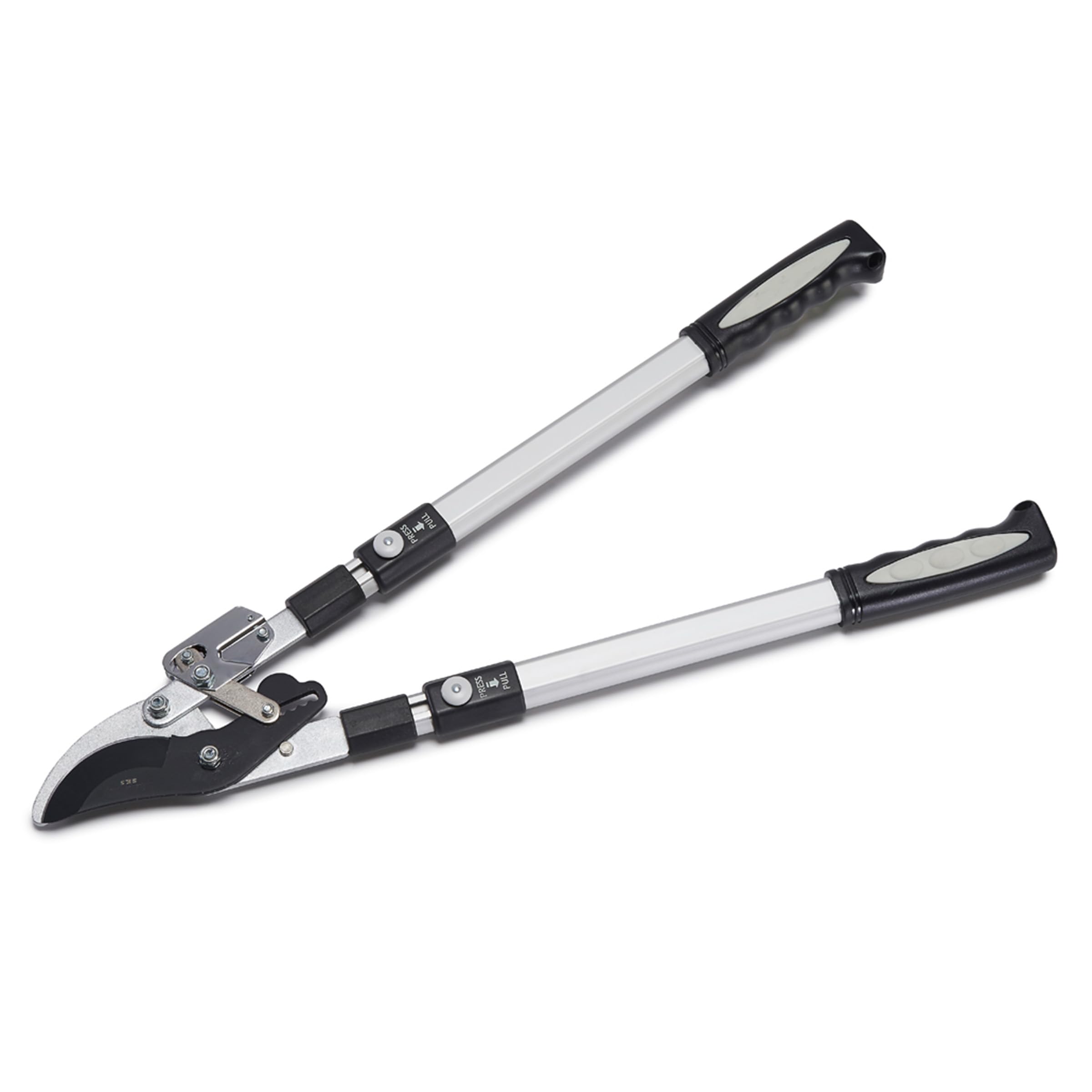
The ratcheting mechanism that lets you cut a 2-inch branch in stages — perfect for weaker grip strength.
Instead of one big squeeze, this lopper uses a double ratcheting system that advances the blade through the branch in multiple clicks, so each pull requires less force than a standard bypass model. The handles extend from 26 inches to 40 inches, meaning the same tool stows compactly for carrying and stretches out to reach higher limbs when needed. It weighs 3.99 pounds, while the 33-inch Corona weighs 4.3 pounds, and the serrated alloy steel blade is designed specifically for green, living wood. One reviewer who cut 0.75-inch dead branches noted a large chip fell out of the blade on the third use — a durability concern on dry wood. Several others call them the best loppers for the buck, praising how the ratcheting action gives extra torque on stubborn limbs. Unlike most ratcheting loppers (which are anvil type), this is a true bypass blade that makes clean cuts that heal better on trees.
Unique strengths
- Ratcheting cuts with less hand strength per squeeze
- Telescoping handles (26 to 40 inches) for storage and reach
- True bypass blade for cleaner cuts on live wood
Watch for
- One reviewer noted blade chipping on a dry 1-inch branch
- Heavier than some non-ratcheting competitors
Choose this if: you have limited hand strength and need the ratcheting advantage, or you want one tool that works at ground level and up high.
Consider something else if: you mostly cut dead or very hard wood — the blade is built for green limbs.
4. Corona Tools 36-inch MAXFORGED Orchard Lopper
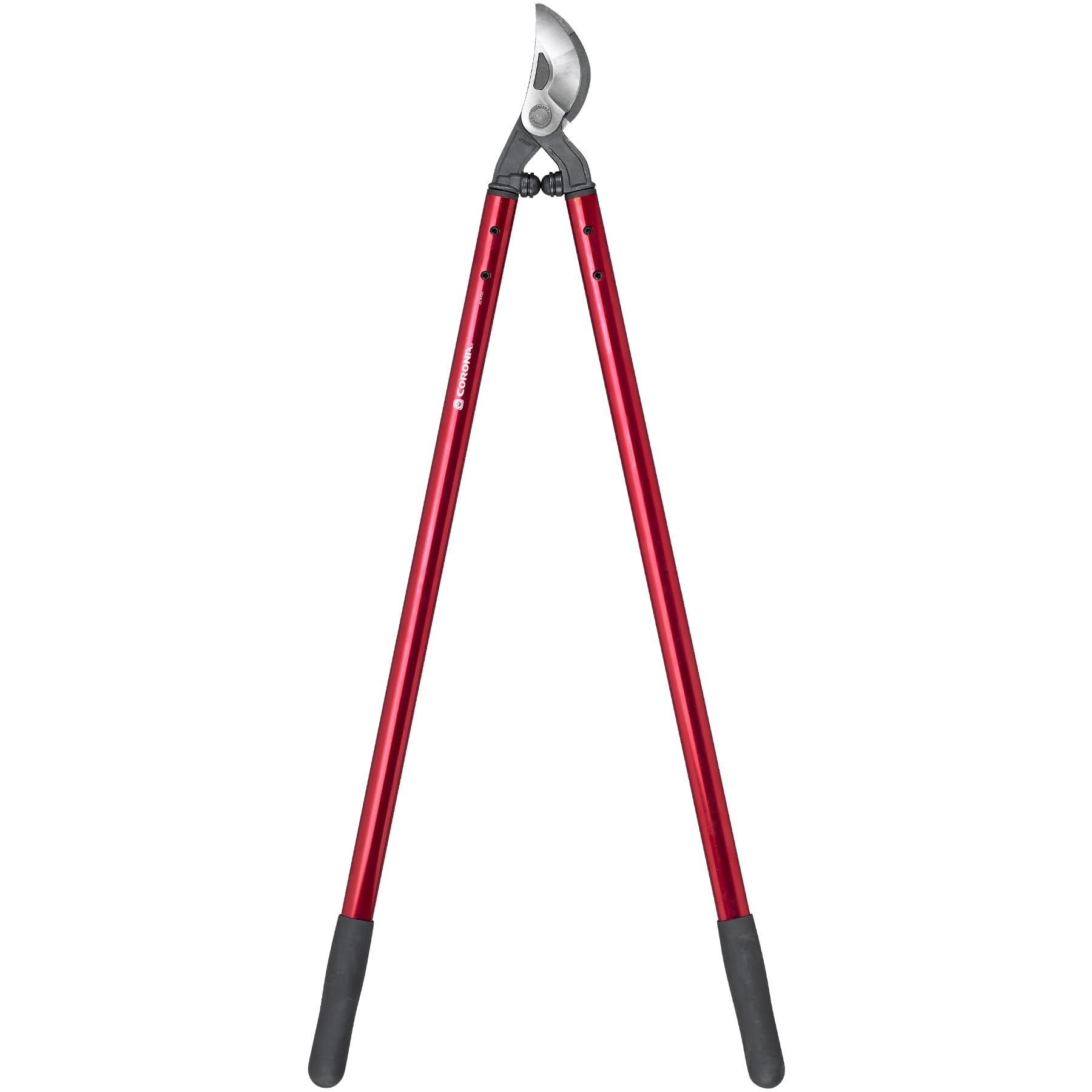
The 2.5-inch jaw that takes on the thickest limbs in the orchard, yet weighs only 2.8 pounds.
This is the biggest cutter in the lineup, with a 2.5-inch cutting width that handles limbs the others cannot touch. The 36-inch hollow aluminum handles keep the total weight down to 2.8 pounds — remarkably light for a tool with this capacity — so an afternoon of overhead pruning on tall trees does not leave your arms numb. The blade is made from fully heat-treated forged steel with a Dual Arc bypass design. It is both resharpenable and replaceable, which means this can stay in your shed for a decade. One owner reported getting 11 years out of their pair before breaking it from abuse, then bought the same model again. Customers note the locking nut stays tight better than older designs, but it is still best to carry a small wrench for adjustments. The shallow hook and deep sap groove keep the blade clean through dozens of cuts, so you are not stopping every few branches to scrape off pitch.
The verdict for serious pruners: if you need to cut branches up to 2.5 inches thick on a regular basis, this lightweight, long-handled Corona is the most capable tool here. The trade-off is that its long handles make it awkward in tight garden beds.
Best for: orchard owners, tree-care enthusiasts, and anyone who regularly faces 2-inch-plus limbs.
Not for: small gardens or light pruning — the reach and capacity are overkill for thin shrubs.
5. Corona Tools WL 3351 26″ Bypass Loppers
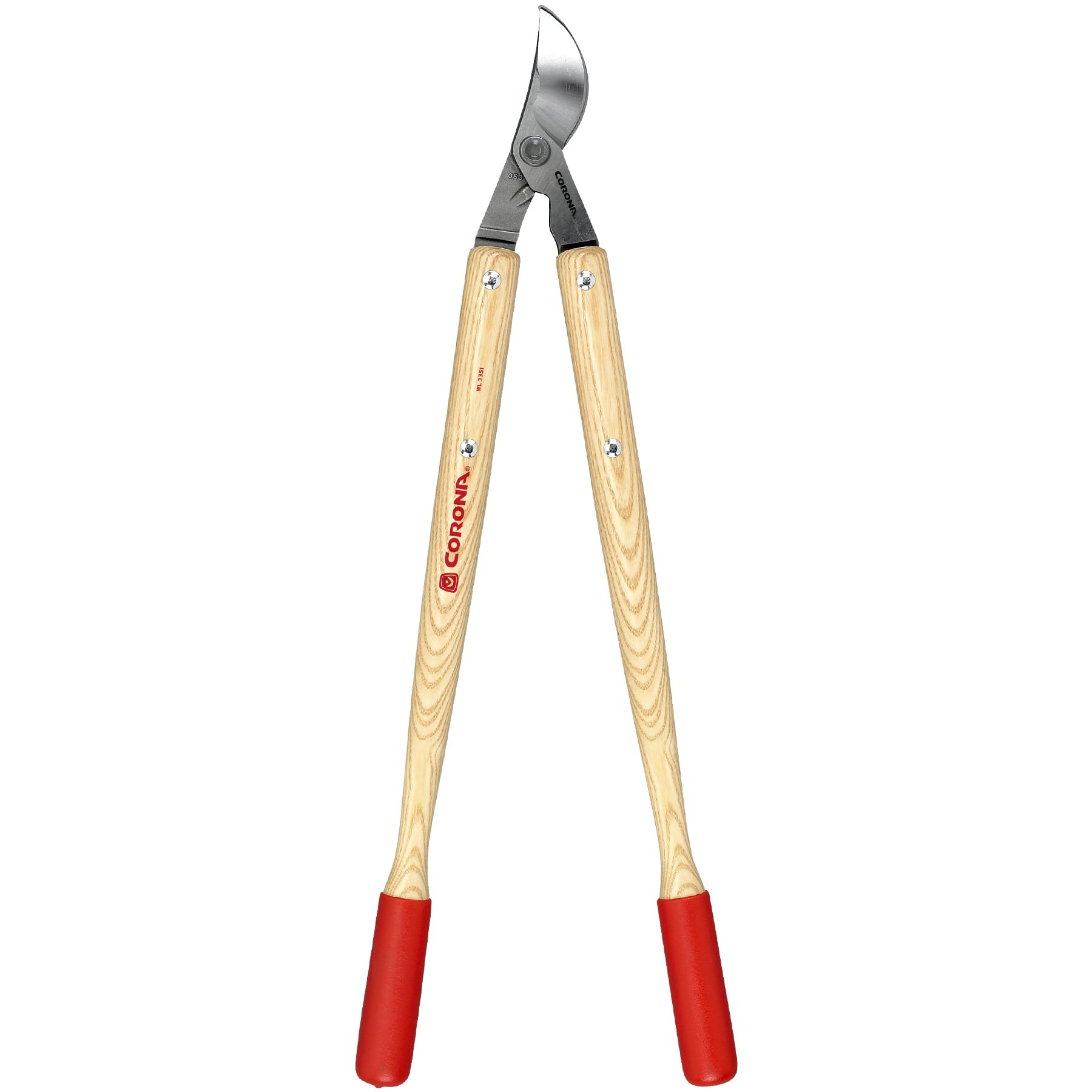
The forged-steel Radial Arc blade that stays sharp long after budget loppers have dulled.
These 26-inch loppers from Corona use a drop-forged steel alloy blade that compacts the steel molecules for a harder, longer-lasting edge — and you can resharpen it yourself when it eventually fades. The 1.5-inch cutting capacity covers the majority of yard and light orchard pruning, while the wood handles with non-slip red grips offer a classic feel that many experienced gardeners prefer over plastic. The slant-ground hook with a sap groove keeps the cut clean even on resin-heavy branches. One buyer who runs a 100-tree peach orchard says this is the go-to set of loppers despite owning longer and higher-capacity models. Another noted that the nut tends to loosen after a period of use and recommends carrying a wrench, but also stated this is the tenth lopper of various brands he has owned and this model served him best. The blade is serrated, which helps grip the branch and prevents it from slipping mid-cut.
Why it stands out
- Resharpenable forged steel blade for years of use
- 1.5-inch capacity handles most daily pruning jobs
- Wood handles with good grip that last if not abused
Keep in mind
- Pivot nut loosens during heavy use — needs periodic tightening
- Wood handles can break if you push past 1.5-inch branches
Pick this for: the gardener who wants a durable, maintainable blade at a fair price and does not cut above 1.5-inch limbs.
Pass if: you need a larger cutting capacity — the 2-inch models above handle thicker wood safely.
6. WORKPRO Bypass Lopper 28″ with 65MN Spring Steel Blade

The sharp, lightweight cutter that punches above its price on green wood up to an inch thick.
Built around a 65MN spring steel upper blade with a hardness rating of HRC54-56, this 28-inch lopper is designed for precise pruning of living branches with a diameter less than 1.18 inches. The lower blade is chromium-plated for rust resistance, so it holds up in humid garden conditions without spotting. The shock-absorbing buffers in the handle dampen vibrations so your hands feel less fatigue after a stack of cuts. Reviewers confirm it cuts well up to the advertised diameter — one buyer called it sharp and easy to use, cutting like butter on green wood. Another first-time gardener found it lightweight and capable on both bush branches and actual tree branches with no difficulty. The cutting width is 1.18 inches, while the Corona WL 3351 offers 1.5 inches, so thick limbs will require a different tool, but for typical shrub work and small tree branches, this is a sharp, affordable option.
Perfect for light-duty pruning: this WORKPRO delivers clean cuts on green branches up to roughly an inch thick, with a very sharp factory edge. The plastic and rubber handles are comfortable but feel less durable than the forged-steel or aluminum options above.
Buy it for: budget-conscious gardeners who prune mostly twigs and small branches under an inch.
pass on it if: you regularly cut 1.5-inch limbs — the 1.18-inch capacity will be undersized and may damage the blade.
7. TRUPER TB-122 21″ Classic Tubular Handle Bypass Loppers
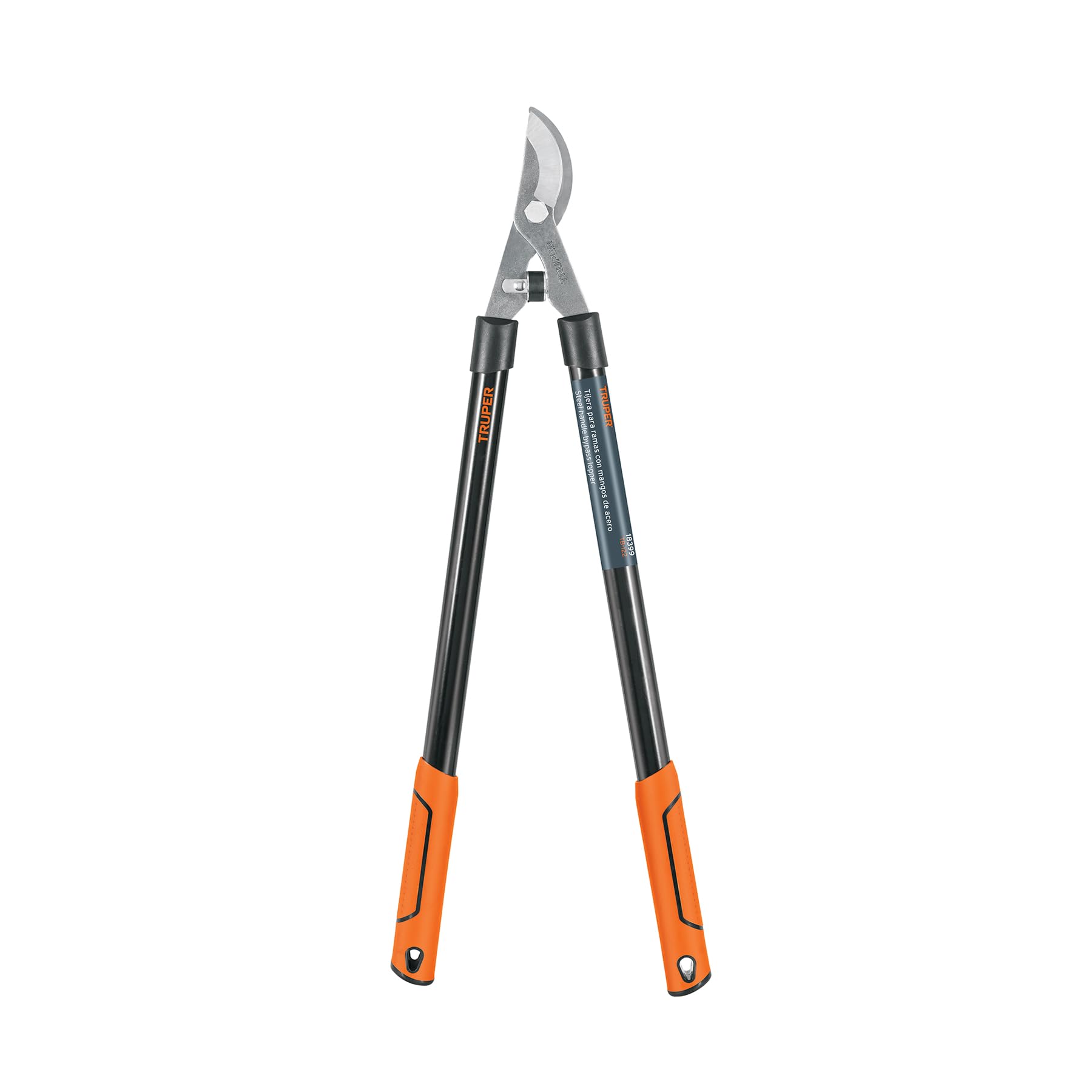
The affordable, no-frills bypass lopper for basic deadheading and light vine trimming.
This 21-inch lopper from Truper uses a stainless steel serrated bypass blade and simple metal tubular handles, with no fancy compound joints or shock absorbers. It is a straightforward tool for cutting small vines, shaping garden plants, and removing thin dead branches where you do not need much leverage. The serrated edge helps grip the plant material so it does not slide out before the cut completes. Buyers rate it highly for basic use — many call it good quality for the money and easy to handle. One buyer mentioned in Spanish that the limitation is that it does not cut large quantities of leaves, making the process slow for heavy work. That honest feedback captures the tool’s role: it is for light, occasional pruning, not dedicated branch removal. The 21-inch handles require more effort on thicker wood.
What works
- Very affordable for a stainless steel bypass lopper
- Serrated blade grips vines and thin stems
- Light and easy to handle for quick garden tasks
What does not
- Short handles offer limited leverage on thicker branches
- Slow for cutting large volumes of foliage
Best for: the occasional gardener who needs a simple, inexpensive lopper for trimming vines and small plant stems.
Not for: anyone who cuts branches over half an inch or needs to prune for more than a few minutes at a time.
Understanding the Specs
Cutting Capacity (Inches)
The cutting width tells you the thickest living branch the lopper can slice through in one clean motion without risking damage to the blade or handles. A 2-inch capacity model handles limbs nearly as thick as your wrist, while a 1.18-inch model is for twigs and thin shrubs. Pushing a lopper past its stated limit is the most common cause of broken handles and bent blades.
Compound Action vs. Ratcheting vs. Standard Bypass
Compound action uses extra pivot points to multiply your pulling force, so you need less effort per cut — ideal for thick branches. Ratcheting advances the blade in several smaller bites, which is helpful for users with weaker hand strength. Standard bypass is the simplest design: clean, direct cuts that work well up to the tool’s rated capacity but require more muscle on larger limbs.
FAQ
What is the difference between bypass and anvil loppers?
Can I use a bypass lopper on dead wood?
How do I maintain my bypass lopper to keep it sharp?
What handle length do I need?
How thick of a branch can I cut with a 2-inch bypass lopper?
Are heavier loppers always stronger?
What does compound action mean?
Can I replace the blades on my loppers?
Final Thoughts: The Verdict
For most people, the best bypass loppers winner is the Haus & Garten PowerPRO 29″ because it balances a 2-inch cutting capacity with compound-action leverage that saves your strength and a Teflon-coated blade that stays rust-free season after season. If you want the longest reach and the biggest jaw, grab the Corona 36-inch MAXFORGED. And for light budget-friendly trimming, the WORKPRO 28″ delivers sharp, clean cuts on small branches while staying affordable.
How We Picked
We do not accept paid placement. Every pick is matched to a real buyer and a real use-case; we do not hands-on test units.
Sources & Methodology
Specifications: manufacturer listings and product documentation. Review insights: verified customer reviews, as of July 2026. Pricing: not shown on this page (it changes often); check the current price via the retailer link.
As an Amazon Associate, Lawn Gear Lab earns from qualifying purchases. This does not affect which products we feature.