
Specs are compiled from manufacturer listings and verified buyer reviews and can change over time — please confirm the key details on the product page before buying.
Spring is the moment when you either get ahead of lawn weeds or spend the rest of the summer pulling, spraying, and fuming. A pre-emergent or early post-emergent weed killer stops crabgrass, dandelions, and clover before they take over, saving you hours of work later.
I’m Rikta — the founder and writer behind Lawn Gear Lab. This guide is built by comparing the manufacturers’ published specifications and the patterns across verified customer reviews, so you get each pick’s real strengths and trade-offs instead of marketing spin.
This deep look at the best lawn weed killer for spring separates the potent formulas from the weak mixes so you apply the right chemistry at the right time in your yard.
Quick Picks
- The Andersons Barricade 50 lb Bag — Best Overall
- Prodiamine 65 WDG 5lb (Generic Barricade) — Pro Grade
- Liquid Harvest Mesotrione Bundle – 8 Ounces — Best Value
- Agrisel Sulfentrazone 4F Weed Killer – 8 Ounces — Specialty Pick
- The Andersons 18-0-4 Barricade Fertilizer — Top Performer
- Scotts Halts Crabgrass & Grassy Weed — Budget Champion
- Sunday Weed & Green – 32 oz — Easy Application
How To Choose The Best Lawn Weed Killer For Spring
Spring weed control is a two-phase game. You either prevent weed seeds from sprouting with a pre-emergent, or you kill young weeds just after they emerge with a post-emergent. Many of the products below combine both, but your choice depends on whether you see weeds now or just want to stop them before they show up.
Pre-Emergent vs. Post-Emergent
A pre-emergent creates a chemical barrier just below the soil that stops weed seeds from germinating. Apply it early spring before soil temperatures hit roughly 55°F — this timing keeps crabgrass and foxtail from ever breaking the surface. A post-emergent kills weeds that are already visible, usually by disrupting their growth system through the leaves or roots. Some herbicides, like mesotrione and sulfentrazone, work both ways.
Coverage matters
The square footage a product covers tells you how much yard it can handle per bottle or bag. A 32 oz spray covering 1,250 sq ft fits a small suburban lawn, while a 40 lb granular bag covering 10,000 sq ft serves a larger property. Buy too small and you run out mid-lawn; buy too large and the leftover chemical degrades before next season.
Active ingredient
Your spring weed killer’s active ingredient determines what it kills and how long it lasts. Prodiamine (found in Barricade products) stops over 30 grass and broadleaf weeds and holds in the soil for months. Mesotrione (found in Tenacity alternatives) both prevents and kills weeds and turns them white before death. Sulfentrazone targets tough weeds like nutsedge and wild onions. Chelated iron in some sprays greens the lawn while controlling weeds — a two-in-one for a single pass.
Quick Comparison
| Model | Best For | Coverage | Active Ingredient | Item Form | Amazon |
|---|---|---|---|---|---|
| The Andersons Barricade 50 lb | Large lawns, season-long prevention | 14,200 sq ft | Prodiamine 0.48% | Granule | Amazon |
| The Andersons 18-0-4 Barricade 40 lb | Prevention plus fertilizer | 10,000 sq ft | Prodiamine 0.426% | Granule | Amazon |
| Prodiamine 65 WDG 5lb | Budget per application for large areas | Varies by rate | Prodiamine 65% | Wettable powder | Amazon |
| Liquid Harvest Mesotrione 8 oz | Pre + post control for specific weeds | 2,000 sq ft | Mesotrione | Liquid concentrate | Amazon |
| Agrisel Sulfentrazone 4F 8 oz | Stubborn sedges and wild onions | 2,500 sq ft | Sulfentrazone | Spray concentrate | Amazon |
| Scotts Halts Crabgrass 10.06 lbs | Simple granules for early spring | 5,000 sq ft | — | Granule | Amazon |
| Sunday Weed & Green 32 oz | Weed kill + lawn greening in one pass | 1,250 sq ft | Chelated iron (FeHEDTA) | Hose-end spray | Amazon |
In‑Depth Reviews
1. The Andersons Barricade 50 lb Bag
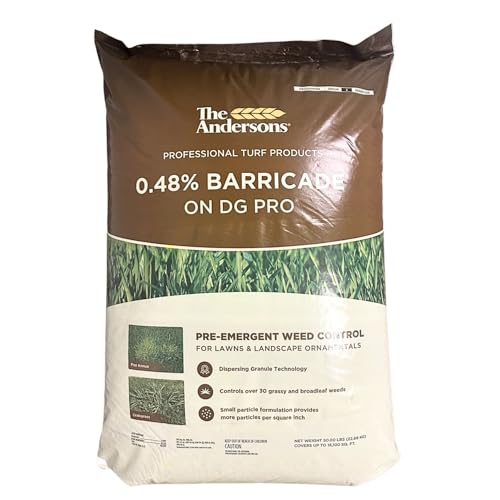
The big bag pro-grade pre-emergent that covers a half-acre yard in one pass.
You get a single granular product that prevents over 30 grass and broadleaf weeds including crabgrass, poa annua, goosegrass, and henbit — without harming your existing turf. The key number here is the 0.48% prodiamine active ingredient, and it covers a massive 14,200 square feet from one 50 lb bag. Buyers report that in some places they applied it two years ago, weeds still have not returned, which speaks to how long the chemical barrier holds in cool-season soil.
The DG Pro formulation means each granule breaks down into many smaller particles when watered, giving you more coverage points per square inch compared to standard granules. That finer distribution is why professionals trust this brand. One trade-off: this is strictly a pre-emergent and will not kill weeds already visible in your lawn. If you already have a patch of clover or dandelions, you will still need a follow-up spray. Covering 14,200 sq ft also means this is heavier — at 50 lbs it is 10 lbs heavier than the 40 lb Andersons fertilizer combo above — so be ready to haul it from the garage.
Season-spanning protection: A single spring application locks out weeds for months, and the coverage-to-cost ratio makes it the most economical choice for anyone with a quarter-acre or larger yard. The limitation is that new weeds blowing in from a neighbor’s yard can still germinate on bare soil spots, so reseed any thin areas after application.
Reach for this if: You have a bigger lawn (over 10,000 sq ft) and want to apply once in early spring and not think about crabgrass again until fall.
Look elsewhere if: Your lawn is smaller than 5,000 sq ft — the bag is overkill and the chemical loses potency stored from season to season.
2. Prodiamine 65 WDG 5lb (Generic Barricade)
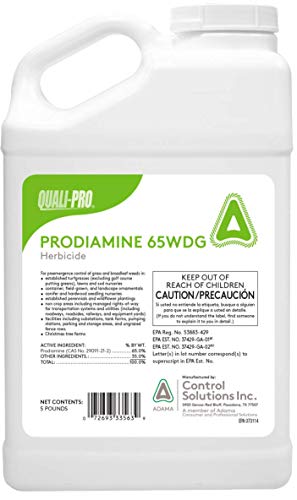
A concentrated wettable powder that costs pennies per application for pros mixing their own spray.
The active ingredient here is 65% prodiamine — a much higher concentration than the 0.48% you get in the granular Andersons Barricade above. That translates to a tiny amount per gallon of water. The label advises mixing between 0.185 and 0.55 oz per 1,000 sq ft depending on how aggressive you want the barrier, meaning this single 5 lb bag can treat a huge property over multiple seasons. Owners mention the higher upfront cost is offset by the very low per-application cost.
Unlike granular products that you spread with a walk-behind spreader, this is a wettable powder you mix with water and spray. That gives you more precise coverage on irregular lawn shapes but requires a sprayer you already own. Several customers note applying it late September and late March and noticing a massive reduction in weeds by summer. One note: because the particles are so fine, you need to water it in shortly after spraying, and heavy rain immediately after application can wash it where you do not want it.
Where it excels
- Extremely concentrated — 65% active ingredient means a little goes a very long way
- Excellent value per application for large properties when compared to ready-to-spray products
- Reviewers point out it kept everything out except Bermuda and St. Augustine grass
Where it demands more
- Requires a sprayer, tank mixing, and accurate measuring — not a grab-and-go item
- Fine powder can clump if stored in humid conditions
The application-flexible powerhouse: Ideal for the DIY lawn enthusiast who already owns a sprayer and wants the cheapest active ingredient per treatment. If you prefer spreading granules without mixing, the Andersons granular options above are simpler.
One caution: The powder is heavily concentrated — a measurement error can damage your grass, so follow the label’s per-gallon rates exactly.
3. Liquid Harvest Mesotrione Bundle – 8 Ounces
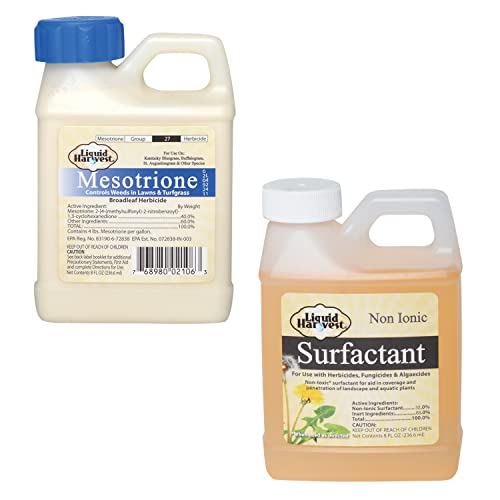
The one that bleaches crabgrass white and also prevents new seeds from sprouting.
Mesotrione is a dual-action herbicide that works both as a pre-emergent (stops seeds from germinating) and a post-emergent (kills weeds that are already up). This 8 oz bottle covers 2,000 sq ft and includes an 8 oz surfactant (a sticking agent that helps the chemical cling to leaves). One buyer described how it “bleached out crab grass white” after application, which is the classic visual sign the weed is dying — the mesotrione blocks photosynthesis and turns susceptible plants white before they wither.
It targets 46 broadleaf species and grasses including barnyard grass, carpetweed, chickweed, clover, crabgrass, and dandelion. You need to be careful which grass types you apply it on — it is safe for Kentucky Bluegrass, Centipede grass, Buffalo grass, Tall Fescue, Perennial Ryegrass, Fine Fescue, and St. Augustine Grass (sod only), but it can damage bentgrass, poa annua, kikuyugrass, zoysiagrass, and bermudagrass. Activation requires water; if rain does not fall within 10 days, you need to water in 0.15 inches yourself. At 8.32 oz the bottle is nearly identical in weight to the Agrisel Sulfentrazone (8 oz), but the mesotrione covers 2,000 sq ft compared to the Agrisel’s 2,500 sq ft — a noticeable difference in reach per bottle.
Two-in-one weed control: You can use this as a spring pre-emergent to stop crabgrass seeds and then spot-spray any survivors that pop through later. The bundled surfactant removes the guesswork of buying a separate additive. The main catch: you must keep children and pets off the treated area until the spray dries, and the whitening effect on grass tips (which fades after a couple of weeks) can be alarming if you are not expecting it.
Best for: Homeowners who want both prevention and early weed kill in one bottle, especially if you are dealing with poa annua or crabgrass that keeps returning.
skip it if: You have bentgrass or zoysiagrass lawns — mesotrione can harm those varieties.
4. Agrisel Sulfentrazone 4F Weed Killer – 8 Ounces
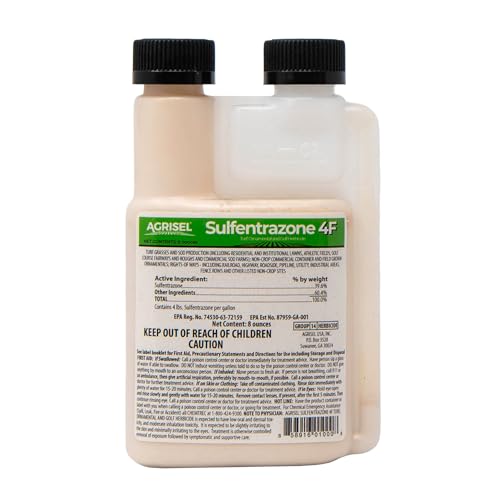
The go-to for sedges, wild onions, and creeping charlie that laugh at other sprays.
Sulfentrazone works both as a pre-emergent (stopping weed seeds as they germinate) and a post-emergent (killing visible weeds). This 8 oz bottle covers approximately 2,500 sq ft, which gives it a wider reach per ounce than the Liquid Harvest Mesotrione bundle above. The brand claims it stops over 100 weed types, but buyers consistently highlight its effectiveness on tough targets like wild onions, nutsedge, and clover. One reviewer noted: “I used 1 oz for a 4 gallon sprayer and the sedges are already dying after 1 week.”
The Tip and Pour bottle design makes measuring less messy, though you need your own sprayer — one is not included. A few reviewers noted that applying it on clover in a fescue lawn killed some of the grass as well, so you may need to dial down the concentration and do multiple light applications rather than one heavy dose. The manufacturer recommends applying when soil temperatures are between 55°F and 75°F consistently for the best pre-emergent activation.
Where it shines
- Effective on hard-to-kill weeds including wild onions, sedges, and creeping charlie
- Low usage rate — 1.5 tsp per gallon stretches the bottle further than many competitors
- Pre-emergent and post-emergent in one formulation
Where it can get tricky
- Can damage desirable turfgrass if applied too heavily, especially fescue
- Sprayer sold separately — if you do not already own one, factor in that cost
Reach for this if: You are battling specific stubborn weeds that other herbicides leave behind, particularly sedges and wild garlic.
Look elsewhere if: You want a simple hose-end sprayer setup for the whole lawn — this requires mixing and a separate sprayer.
5. The Andersons 18-0-4 Barricade Fertilizer with Pre Emergent 40 lbs
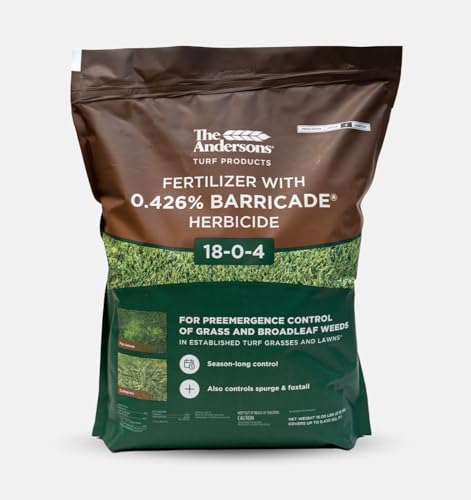
A pre-emergent that feeds your lawn at the same time it blocks weeds.
This 40 lb bag combines a 18-0-4 fertilizer (the numbers mean 18% nitrogen, 0% phosphorus, 4% potassium) with 0.426% prodiamine for pre-emergent weed control. The patented DG Technology (dispersible granule) means the granules dissolve rapidly when watered, pushing the prodiamine straight into the soil rather than sitting on the surface where birds or rain could move it.
Buyers who have used it for three consecutive years report having the greenest, weed-free lawn in their neighborhood. The nitrogen content encourages thick grass growth, which naturally crowds out weeds. One trade-off is that the bag weighs 40 lbs — noticeably heavier than the 5 lb Prodiamine 65 WDG, but much easier to apply if you already own a Scotts spreader. Because this is a pre-emergent with fertilizer, it will not kill existing weeds; it only prevents new ones from germinating.
Two jobs, one pass: You save a weekend chore by fertilizing and preventing weeds at the same time. The 18-0-4 ratio is a standard early-spring feed that pushes green growth without excessive leaf blade elongation. If your lawn already has weeds poking through, you will still need a post-emergent spray after the granules are down and watered in.
Best for: Homeowners who want to simplify their spring lawn routine — one trip across the yard feeds the grass and stops weeds from sprouting.
Not for: Anyone who wants to kill existing visible weeds; this is prevention only.
6. Scotts Halts Crabgrass & Grassy Weed Preventer 10.06 lbs (2-Pack)
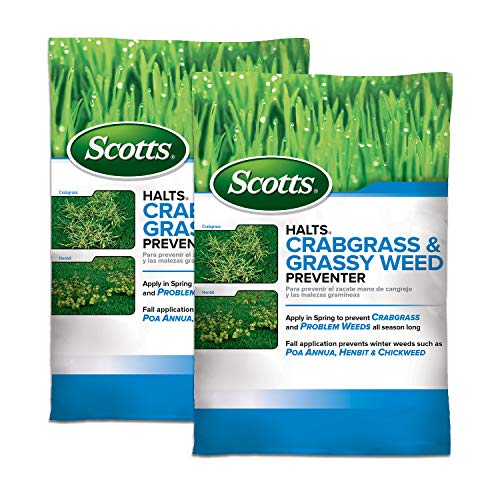
The classic granular that stops crabgrass before you ever see a blade.
This 2-pack includes two 10.06 lb bags that together cover 5,000 sq ft. At 321.92 oz total, it is a massive 10.1x more product by weight than the Sunday Weed & Green spray, reflecting the very different delivery method — dry granules versus liquid spray. Apply it to a dry lawn in early spring and rain or freezing weather afterward will not mess up its performance, according to Scotts. It prevents crabgrass, foxtail, spurge, barnyardgrass, and in the fall it can also stop poa annua, henbit, corn speedwell, and chickweed.
Reviewers consistently note that this product needs patience. One buyer pointed out it “takes 3 seasons to control bad crabgrass” and may cause dead spots that need reseeding. Another found that it loses effectiveness after two months with heavy rains, requiring a reapplication. The granules are simple to spread with a standard broadcast spreader, and it works on all grass types except Dichondra and Bentgrass. If your yard has a mild crabgrass problem, one spring application may be enough; if the previous owner let it go wild, budget for repeating this treatment across several seasons.
The upside
- Simple dry granules — no mixing, no spraying, no special equipment
- Works on all common grass types except Dichondra and Bentgrass
- Safe to apply before rain or freezing weather
The downside
- Does not kill existing weeds; pre-emergent only
- Heavy infestation may take up to three seasons to fully control
- May require a second application if heavy rain occurs within two months
Grab this for: A straightforward early-spring granular spread for small to medium lawns where crabgrass has been a minor issue.
pass on it if: You already see crabgrass growing — you need a post-emergent spray first, then apply this to prevent the next wave.
7. Sunday Weed & Green – 32 oz
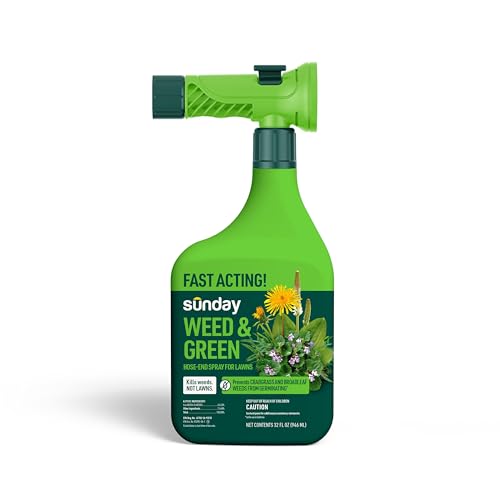
A 5-in-1 hose spray that kills dandelions and greens the lawn in the same pass.
But it serves a different purpose. The formula contains chelated iron (FeHEDTA), which acts as both a post-emergent weed killer and a lawn booster that delivers a deep green color within days. It works on dandelion, oxalis, white clover, chickweed, thistle, and plantain while leaving your turfgrass unharmed.
The main selling point is ease: no mixing, no measuring, no spreader. You screw the included sprayer onto your hose, turn on the water, and spray your entire lawn. One buyer mentioned: “Just did it and it works! The weeds turn dark and die.” Another reported it helped beat back creeping Charlie effectively. On the other hand, a separate reviewer found it did nothing on their specific weeds — results seem to depend heavily on weed type and growth stage. This is best as a spot treatment or whole-lawn spray for light weed pressure, not a heavy-duty solution for a yard overrun with established crabgrass.
Hose-and-go convenience: If your spring lawn has scattered dandelions and clover and you want them gone while also getting a color boost, this is the simplest path. The chelated iron greens the grass without pushing excessive growth like high-nitrogen fertilizers can. The trade-off in coverage (1,250 sq ft per bottle) means you may need a second bottle for a typical suburban lot.
Best for: The casual lawn owner who wants one product that kills visible broadleaf weeds and makes the grass greener, all with a hose attachment.
Not for: Heavy crabgrass or nutsedge infestations — those need stronger active ingredients like mesotrione or sulfentrazone.
Understanding the Specs
Active Ingredient
This is the chemical compound that does the weed-killing work. Prodiamine stops weed seeds from germinating by blocking cell division in the root. Mesotrione blocks photosynthesis, turning the weed white before it dies. Sulfentrazone disrupts growth by being absorbed through the roots and leaves. Chelated iron (FeHEDTA) kills broadleaf weeds by delivering a high dose of iron that they cannot process, while turfgrass tolerates it fine. The higher the concentration percentage (like 65% in Prodiamine 65 WDG), the less product you need per application.
Coverage Area
This tells you how much lawn one bottle or bag of product can treat. It is usually stated in square feet. Small spray bottles cover 1,250 to 2,500 sq ft — fine for front yards and small townhome lots. Granular bags for spreaders cover 5,000 to 14,200 sq ft, which suits quarter-acre or larger properties. If your yard is bigger than the listed coverage, you either need multiple bottles/bags or a concentrated product you mix yourself.
FAQ
When exactly should I apply a spring pre-emergent?
Can I use the same product for spring prevention and summer weed killing?
Will a weed killer hurt my existing grass?
How long do I need to keep kids and pets off after applying?
Do I need to water after applying a pre-emergent?
What is the difference between prodiamine and dithiopyr?
Can I overseed my lawn after applying a pre-emergent?
How do I know if my weeds are dying or just dormant?
Final Thoughts: The Verdict
If you want one dependable pick, the best lawn weed killer for spring is the The Andersons Barricade 50 lb Bag because it combines professional-grade prodiamine with massive 14,200 sq ft coverage that locks out weeds for the entire season. If you want both prevention and greening in one pass, grab the The Andersons 18-0-4 Barricade Fertilizer 40 lbs. And for targeting stubborn sedges and wild onions already emerging, the standout is the Agrisel Sulfentrazone 4F 8 oz.
How We Picked
We do not accept paid placement. Every pick is matched to a real buyer and a real use-case; we do not hands-on test units.
Sources & Methodology
Specifications: manufacturer listings and product documentation. Review insights: verified customer reviews, as of July 2026. Pricing: not shown on this page (it changes often); check the current price via the retailer link.
As an Amazon Associate, Lawn Gear Lab earns from qualifying purchases. This does not affect which products we feature.