
Specs are compiled from manufacturer listings and verified buyer reviews and can change over time — please confirm the key details on the product page before buying.
A digging fork should sink into hard ground without making you wrestle it, then lift a load of soil without the tines bending or the handle splintering. That balance is surprisingly hard to find — many forks either flex under pressure or are so heavy they wear you out before the bed is turned. This guide cuts through the choices to the few models that actually hold up in real garden conditions.
I’m Rikta — the founder and writer behind Lawn Gear Lab. This guide is built by comparing the manufacturers’ published specifications and the patterns across verified customer reviews, so you get each pick’s real strengths and trade-offs instead of marketing spin.
If you have hard, compacted soil, you want the TABOR Tools J59A: its welded high-carbon steel shaft won’t bend, and at 5.5 pounds it has enough heft to sink in without exhausting you. For lighter work like turning compost in a raised bed, the Truper Spading Fork weighs just 1.7 kg (3.7 lb) and is easy to swing all day. The choice depends on tine strength, handle length, and total weight — here are the six models worth your time.
Quick Picks
- TABOR Tools J59A Digging Fork — Best Overall
- Spear & Jackson Neverbend Professional — Premium Pick
- Bully Tools Spading Fork with D-Grip — Top Performer
- Berry&Bird Gardening Digging Fork — Best Value
- Ymachray 5-Tine Heavy Duty Digging Fork — Compact Pick
- Truper Spading Fork (Model 30293) — Budget Champion
How To Choose The Best Garden Digging Fork
Picking the right digging fork is simpler than you think. Focus on three things: what the tines are made of, how the handle feels in your hand, and the total weight you’ll be lifting every time you plunge the fork into the soil.
Tines: Count, Shape, and Steel
Most digging forks have four square tines — that’s the standard for breaking up soil and turning compost. Five-tine forks exist, but they’re heavier and better for moving loose material like mulch or straw. The tines should be forged from carbon steel or stainless steel so they don’t bend when you hit a rock or a root. Look for welded or over-welded construction at the crossbar; that’s the spot where cheap forks snap.
Handle Length and Material
A handle between 28 and 44 inches changes how much you have to bend. Taller gardeners (over 6 feet) want at least a 40-inch handle to avoid back strain. Shorter handles suit raised beds and tight spaces. Wood handles (ash or hardwood) absorb shock well but can splinter over time. Fiberglass handles won’t rot or splinter and are lighter than steel. Steel shafts are virtually unbreakable but add significant weight.
Weight and Footstep
A fork that’s too light won’t sink into hard soil; a fork that’s too heavy exhausts you. Look for something in the 5 to 6 pound range for general digging. A wide footstep (the flat bar you push with your boot) makes penetration much easier — you want at least a 2-inch step so your foot doesn’t slip off.
Quick Comparison
| Model | Best For | Handle Length | Weight | Tine Material | Amazon |
|---|---|---|---|---|---|
| TABOR Tools J59A | Virtually unbreakable steel build | 40″ total | 5.5 lb | High-carbon steel | Amazon |
| Spear & Jackson Neverbend | Forged carbon steel toughness | 39.17″ | 5.39 lb | Carbon steel | Amazon |
| Bully Tools Spading Fork | Heavy clay soil | 44″ | 6 lb | USA-made steel | Amazon |
| Berry&Bird Digging Fork | Ergonomic ash wood handle | 43.9″ | 6.24 lb | Stainless steel | Amazon |
| Ymachray 5-Tine Fork | Rust-resistant stainless steel | 41.3″ | 2.72 kg (6 lb) | Stainless steel | Amazon |
| Truper Spading Fork | Lightweight value pick | 30″ | 1.7 kg (3.7 lb) | Steel | Amazon |
In‑Depth Reviews
1. TABOR Tools J59A Digging Fork

A welded steel shaft makes this fork unbendable even when you hit buried rock — the TABOR Tools J59A is the one you trust for heavy ground.
You get a virtually unbreakable digging fork here — the J59A is forged from hardened and tempered high carbon steel, so the 4-tine head and the welded steel shaft are built to outlast any wood or fiberglass handle. The shaft measures 40 inches total, with a 28-inch handle length and a head that’s 8 inches wide by 12 inches tall, giving you serious leverage for deep soil penetration. At 5.5 pounds, it’s heavy enough to sink into tough ground without being a back-breaking load.
The D-handle grip leaves room for a gloved hand, which you’ll appreciate during long sessions turning compost or double-digging new beds. The fork works as a spading fork, potato fork, and bedding fork — one tool for multiple jobs around the garden. Unlike fiberglass handles that flex or wood that splinters, the welded steel shaft delivers rock-solid power transfer from your arms straight into the soil.
The trade-off is clear: this fork is heavier than most wood-handled alternatives, so if you have a smaller garden or prefer a lighter touch, the extra heft may feel like overkill.
Built to Last
- Welded high-carbon steel shaft won’t splinter, crack, or flex
- 4-tine head resists corrosion with black oxide finish
- D-handle accommodates gloved hands for comfortable grip
Heft to Consider
- At 5.5 lb, it’s heavier than wood-handled forks — not ideal for light, quick work
- Limited customer reviews available for detailed feedback
Reach for this if: you need a fork that will survive rocky, heavy clay soil without bending or breaking — this is the industrial-grade choice for serious digging.
Look elsewhere if: you want a lighter, easier-to-maneuver fork for raised beds or container gardening.
2. Spear & Jackson Neverbend Professional Digging Fork

At 5.39 lb with a 39.17-inch handle, the Spear & Jackson Neverbend is lighter than the TABOR Tools J59A but tough enough to turn cement-like clay into workable soil — buyers call it a “heavy-duty clay buster.”
The Neverbend name isn’t just marketing — this fork is built with solid forged carbon steel tines that resist bending even in the toughest conditions. At 5.39 pounds with a 39.17-inch overall length, it’s slightly lighter than the TABOR Tools option above, which makes it a touch easier to handle for extended digging sessions. The weatherproofed hardwood shaft is designed to withstand moisture and seasonal changes without cracking, a common failure point on cheaper wood-handled forks.
One buyer notes this fork is a “heavy-duty clay buster” — and another reviewer at 6’3″ confirms the handle length doesn’t force them to stoop, which is a big deal if you’re tall. The 7-inch tines penetrate deep into compacted ground, making it ideal for aerating lawns or breaking up new beds. Compare this to the Truper fork below: the Spear & Jackson is nearly 2 pounds heavier and has a 9-inch longer handle, giving it more heft and reach for serious ground-breaking.
A small number of users report the wood handle can snap after extended use, though this seems rare and may be related to prying with the fork (which no digging fork is designed for).
Clay Crusher
- Forged carbon steel tines stay straight under load
- Weatherproofed hardwood shaft resists moisture damage
- 39.17-inch length suits taller gardeners without back strain
Handle Risk
- Wood handle can break if used for prying — treat it as a digging tool only
- Heavier than entry-level forks, not ideal for lightweight tasks
Best for: gardeners with tough clay or compacted soil who need a fork that sinks in deep without the tines bending — the forged steel makes this a long-term investment.
skip it if: you prefer a fiberglass or steel handle for maximum durability against splintering.
3. Bully Tools Spading Fork with D-Grip
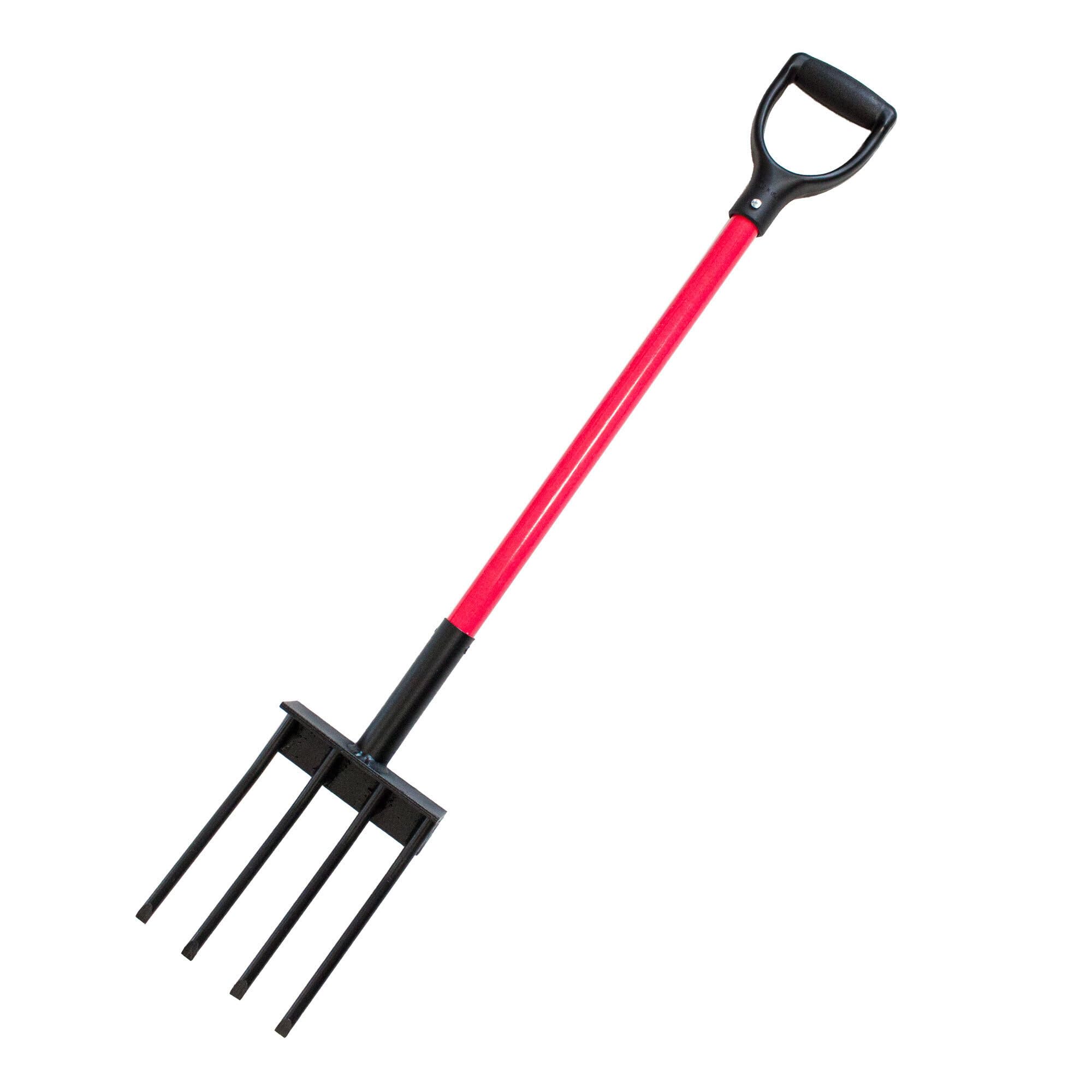
A 100% Made-in-USA fork built like a tank for your toughest soil — its 44-inch fiberglass handle and 2.25-inch footstep let you drive the over-welded steel tines deep into heavy clay.
Bully Tools doesn’t mess around — this spading fork has over-welded tines made from solid American steel, which the company claims is up to 30% more durable than foreign competitors. The 44-inch fiberglass handle is coated in a polyester veil to prevent splintering, and at 6 pounds total weight, this is a heavy-duty tool you feel in your hands the moment you pick it up. The 2.25-inch footstep gives you a wide, stable platform for driving the tines deep with your boot.
Buyers report this fork breaks up heavy clay without strain, and one reviewer calls it “a beast of a fork Frankenstein would be afraid of.” The extended steel up the handle protects the neck — typically the weakest point — so you can apply serious downward force without worrying about snapping the head off. Compared to the Ymachray 5-tine fork below, the Bully Tools uses four tines instead of five, which means less resistance going into the ground and easier soil penetration overall.
The catch is weight: at 6 pounds, this is the heaviest fork in the lineup. It’s built for strength, not speed, so if you have a large garden with light soil, you may find it tiring after an hour.
Tank-Like Build
- Over-welded USA-made steel tines resist bending under heavy loads
- Fiberglass handle with polyester coating won’t splinter or rot
- Wide 2.25″ footstep for easy soil penetration
Heavy Lifter
- At 6 lb, it’s the heaviest fork here — tiring for long sessions
- Some owners mention tines can bend on large roots, a trade-off for avoiding brittleness
Reach for this if: you have heavy clay, rocky soil, or need to break up compacted ground regularly — this fork can take the abuse.
Look elsewhere if: you want a lighter fork for quick weeding or raised beds.
4. Berry&Bird Gardening Digging Fork

A sustainably-sourced ash wood fork with stainless steel tines that won’t rust — ideal for humid or coastal gardens where other forks corrode.
Berry&Bird uses an FSC-certified ash wood handle that’s ergonomically shaped to reduce fatigue, paired with a 4-tine stainless steel head that resists rust and sheds soil easily. The fork weighs 6.24 pounds and measures 43.9 inches, making it one of the longest handles in this lineup — great for tall gardeners or anyone who wants to avoid bending. The D-grip is solid ash that won’t loosen over time, and the handle includes a hole for hanging storage.
One buyer living at the beach reports the fork hasn’t rusted after three months, which speaks to the stainless steel’s corrosion resistance. Another reviewer uses it for aerating raised beds and notes the straight tines (as opposed to curved ones) make penetration much easier in compacted soil. The brand offers a 2-year warranty, adding confidence. Compare this to the TABOR Tools J59A above: the Berry&Bird is almost a full pound heavier, but the stainless steel head gives it an edge in rust resistance for humid or coastal environments.
The trade-off is that the stainless steel tines aren’t as hard as forged carbon steel, so if you hit large rocks regularly, you may see some wear over time.
Rust-Free Design
- Stainless steel head resists rust and minimizes soil sticking
- FSC-certified ash wood handle is ergonomic and sustainably sourced
- 43.9-inch length reduces back strain for taller users
Not for Rock Gardens
- Stainless steel is less hard than carbon steel — may show wear on rocks
- At 6.24 lb, it’s on the heavier side for all-day use
Best for: coastal or humid gardens where rust is a concern, and gardeners who value an ergonomic, sustainably-made tool with a warranty.
pass on it if: you need a fork for rocky soil — the forged carbon steel options above will hold up better.
5. Ymachray 5-Tine Heavy Duty Digging Fork

Five sharp stainless steel tines give this fork more soil contact per plunge than the standard 4-tine models, cutting through compacted clay with less effort according to buyers.
Most digging forks have four tines — the Ymachray gives you five, which means more surface contact when turning soil and moving loose material like mulch or compost. The head is made from stainless steel with a welded boron steel blade, so it resists rust and won’t flex like fiberglass-handled alternatives. The T-handle design is a shift from the standard D-grip, and it’s meant to reduce stress on your wrist during repetitive digging motions. The fork weighs 2.72 kilograms (roughly 6 pounds) with a 41.3-inch total length.
Customers note the tines come sharp and cut straight down into Georgia red clay with less effort than expected — one reviewer with back issues says it helped turn untilled soil and overgrown beds that a rototiller couldn’t handle. The tilt bracket/step bar provides extra leverage for generating downward force when you need it. While this fork is heavier than the Truper (which weighs 1.7 kilograms — a 60% weight difference), the extra heft is exactly what you need for breaking new ground.
The main complaint is that some users wish the handle were about 6 inches longer, especially if you’re taller than 5’10”. The extra weight vs. the Truper also means it’s not ideal for quick, light work.
Extra Tine Power
- 5 square tines provide more soil contact for turning and cultivating
- Sharp tines and welded boron steel construction for durability
- T-handle and step bar improve leverage and reduce wrist strain
Weight Consideration
- At 2.72 kg (6 lb), it’s noticeably heavier than 4-tine alternatives
- Handle may be too short for users over 5’10”
Reach for this if: you have heavy clay soil that needs serious breaking up — the five sharp tines and extra weight make it a ground-breaking specialist.
Look elsewhere if: you want a lighter, shorter-handled fork for raised beds or compost turning.
6. Truper Spading Fork (Model 30293)
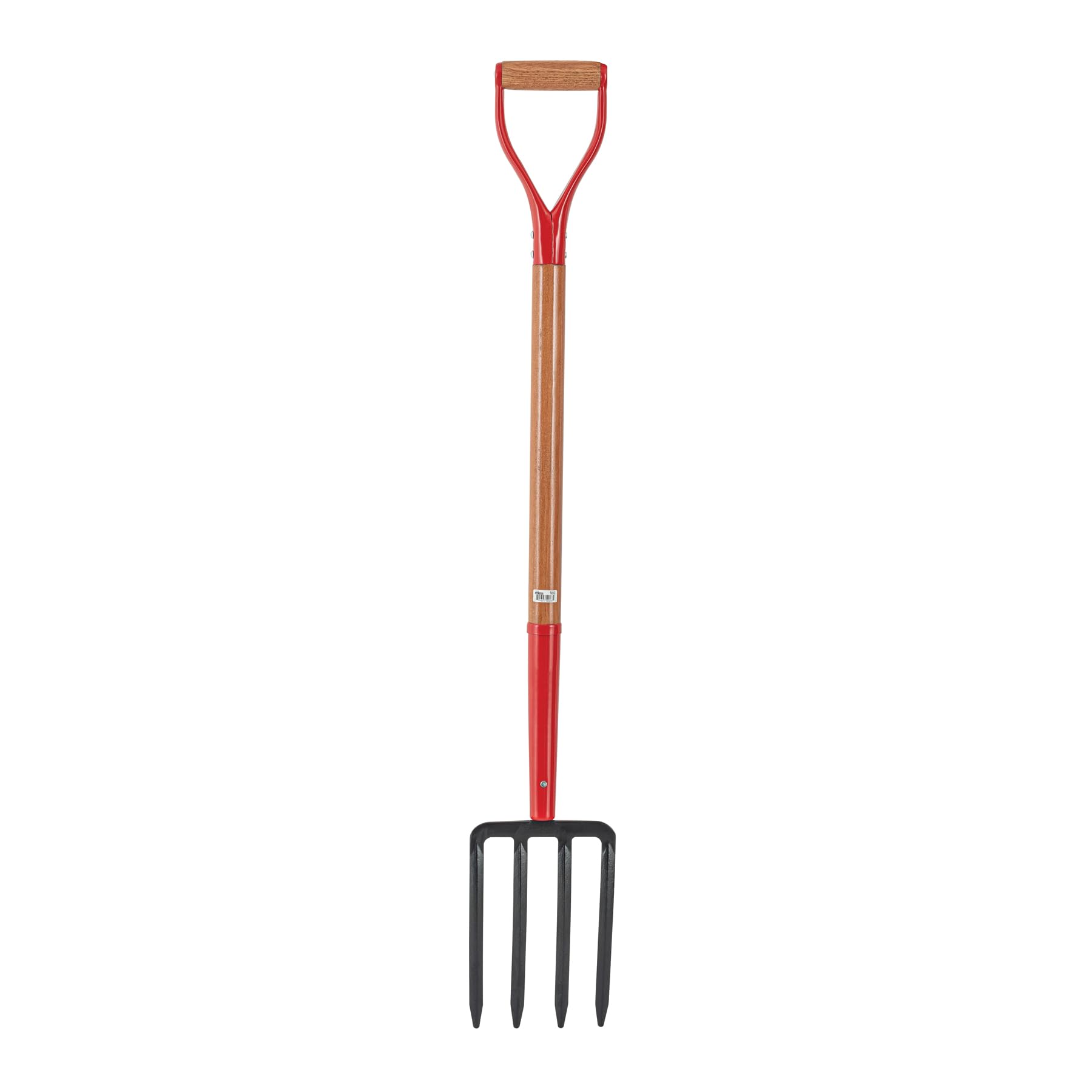
A lightweight 1.7 kg (3.7 lb) fork with a 30-inch wood D-handle that slips into tight garden spaces — the lightest fork here by 60%.
The Truper is the lightest fork in this lineup at just 1.7 kilograms (roughly 3.7 pounds), making it the obvious pick if you need something easy to maneuver for quick jobs around flower beds or raised planters. The 30-inch wood D-handle is noticeably shorter than the other forks here — that’s a plus if you’re working in compact spaces but a drawback if you’re tall. The 4-tine steel head is built for turning, loosening, and aerating soil, compost, and mulch, and the green-finished wood handle provides a classic gardener’s feel.
Reviewers point out this fork is quality-built and made turning garden soil much easier — one reviewer notes “the fork is a bit on the short side, but once you get used to it, it’s actually quite easy to maneuver.” The wood handle is sturdy hardwood, and the steel fork head feels solid for routine garden tasks. However, compared to the 6-pound Bully Tools above, the Truper is a full 2.3 kilograms lighter — a 60% weight difference — which means it won’t sink into hard clay as easily without more effort on your part.
The short handle means taller gardeners will need to bend more, and the wood handle won’t hold up to prying or abuse. One long-term user reported the fork broke off after years of use, though they also noted the tool had served well for a decade.
Light & Nimble
- At 1.7 kg (3.7 lb), it’s the lightest fork here — easy to handle for hours
- 30-inch length fits tight spaces and raised beds
- Sturdy hardwood handle and steel 4-tine head for routine tasks
Not for Heavy Digging
- Short handle forces tall users to bend, causing back strain
- Too light to penetrate hard clay without significant effort
Best for: small gardens, raised beds, and compost turning where you need a lightweight, maneuverable fork that won’t tire you out.
it’s not for you if: you have heavy clay soil or are over 6 feet tall — the short handle and light weight will frustrate you.
Understanding the Specs
Tine Count and Shape
Most digging forks use four square tines because that design offers the best balance between soil penetration and lifting capacity. The square shape (as opposed to round) grips soil and roots better when you pull up. Five-tine forks (like the Ymachray) cover more area per plunge but require more force to push in — they’re better for loose soil and mulch than for breaking new ground.
Handle Material and Length
The handle is where you feel the fork’s personality. Wood handles (ash or hardwood) absorb shock well and feel warm in the hand, but they can splinter or rot if left in the rain. Fiberglass handles are lighter than steel and won’t splinter, but they can flex under heavy loads. Steel shafts are virtually unbreakable but add significant weight. Handle length determines how much you bend: 30-36 inches suits raised beds and shorter gardeners, while 40-44 inches is better for tall users and ground-level digging.
Weight and Balance
A fork’s weight directly affects how easily it penetrates the soil and how tired you get. Heavier forks (5-6 pounds) sink in with less effort but are tiring for long sessions. Lighter forks (under 4 pounds) are easier to maneuver but may require you to stomp harder or use body weight to drive the tines into compacted ground. A well-balanced fork puts the weight near the head so you’re not fighting leverage.
Footstep (Tread Plate)
The footstep is the flat bar across the top of the fork head where you push with your boot. A wider footstep (2+ inches) gives you better stability and makes soil penetration easier, especially in hard or rocky ground. Narrow footsteps can cause your foot to slip off, wasting energy and risking injury. Look for a footstep that’s at least as wide as the sole of your gardening boot.
FAQ
Is a 4-tine or 5-tine digging fork better for clay soil?
What handle length should I choose if I’m over 6 feet tall?
Can I use a digging fork to pry rocks out of the ground?
What’s the difference between a spading fork and a pitchfork?
How do I prevent my wood handle from splitting?
Is a heavier digging fork always better for hard soil?
Will a stainless steel digging fork rust?
Can I use a digging fork for aerating my lawn?
How wide should the footstep be on a digging fork?
Is a fiberglass handle better than wood for a digging fork?
Final Thoughts: The Verdict
For the majority of shoppers, the best garden digging fork is the TABOR Tools J59A because its welded steel shaft and high-carbon steel tines deliver unbreakable performance in tough soil without being the heaviest option. If you want a fork with a fiberglass handle that’s built for abuse, grab the Bully Tools Spading Fork. And for a lightweight, maneuverable fork for raised beds and compost, the Truper Spading Fork is the budget-friendly pick.
How We Picked
We do not accept paid placement. Every pick is matched to a real buyer and a real use-case; we do not hands-on test units.
Sources & Methodology
Specifications: manufacturer listings and product documentation. Review insights: verified customer reviews, as of July 2026. Pricing: not shown on this page (it changes often); check the current price via the retailer link.
As an Amazon Associate, Lawn Gear Lab earns from qualifying purchases. This does not affect which products we feature.