
Specs are compiled from manufacturer listings and verified buyer reviews and can change over time — please confirm the key details on the product page before buying.
Tomatoes and peppers need steady moisture and cool roots to produce a heavy harvest, but the wrong mulch can cook the soil or invite rot. This guide cuts through the options to find the best picks for your vegetable garden, from organic straw that breathes to coconut chips that hold water like a sponge.
I’m Rikta — the founder and writer behind Lawn Gear Lab. This guide is built by comparing the manufacturers’ published specifications and the patterns across verified customer reviews, so you get each pick’s real strengths and trade-offs instead of marketing spin.
The right mulch for tomatoes and peppers keeps soil temperature stable, suppresses weeds, and feeds the soil as it breaks down.
Quick Picks
- Back to the Roots 100% Organic Mulch — Best Overall
- HealthiStraw GardenStraw, 3 cu ft — Top Performer
- Organic Coco Chips for Plants — Best Value
- Soil Sunrise 100% Natural Pine Bark Mulch — Compact Pick
- Riare 10LBS Coco Chips Substrate for Plants — Budget Champion
How To Choose The Best Mulch For Tomatoes And Peppers
Tomatoes and peppers are heat-loving plants, but their shallow root systems are sensitive to soil temperature swings and dry topsoil. The right mulch does three things: it keeps the soil cool in summer heat, stops water from evaporating before it reaches the roots, and slowly feeds the soil as it decomposes. Here are the key factors to weigh.
Moisture Retention and Drainage
Tomatoes need consistent watering, and a good mulch holds moisture near the roots without keeping the soil soggy. Coconut husk chips, for example, absorb many times their weight in water and release it slowly, which reduces how often you need to water. Straw, on the other hand, lets water pass through easily and sits on top, blocking evaporation without holding water itself.
Organic Material and Soil Health
Mulches that break down over the season add organic matter to the soil, improving its texture and feeding soil microbes. Wheat straw and coconut chips both decompose, but at different speeds. Straw breaks down quickly and builds compost, while coconut chips last longer and need less frequent replacement.
Weed and Seed Prevention
A thick mulch layer blocks sunlight and stops weed seeds from germinating. However, some straw mulches can contain wheat seeds that sprout in your beds, creating extra work. Look for straw that is cleaned to remove seeds, or choose a weed-free option like coconut husk chips.
Quick Comparison
| Model | Best For | Weight / Size | Expanded Volume | Material Type | Amazon |
|---|---|---|---|---|---|
| HealthiStraw GardenStraw | Large beds & lawn seeding | 20 lbs (3 cu ft compressed) | 3 cu ft | Wheat Straw | Amazon |
| Back to the Roots Coco Mulch | Best Overall organic cover | 10 lb compressed block | 2 cu ft | Coconut Husk | Amazon |
| Plantonix Coco Chips | Water-efficient gardening | 10 lbs | 15 Gallons | Coconut Husk | Amazon |
| Soil Sunrise Pine Bark Nuggets | Pots & container mixes | 2.32 kg (12 Quarts) | 12 Quarts | Pine Bark | Amazon |
| Riare Coco Chips Substrate | Budget-friendly value | 10 lbs | — | Coconut Husk | Amazon |
In‑Depth Reviews
1. Back to the Roots 100% Organic Mulch, 58 Quart (2 Cubic ft)
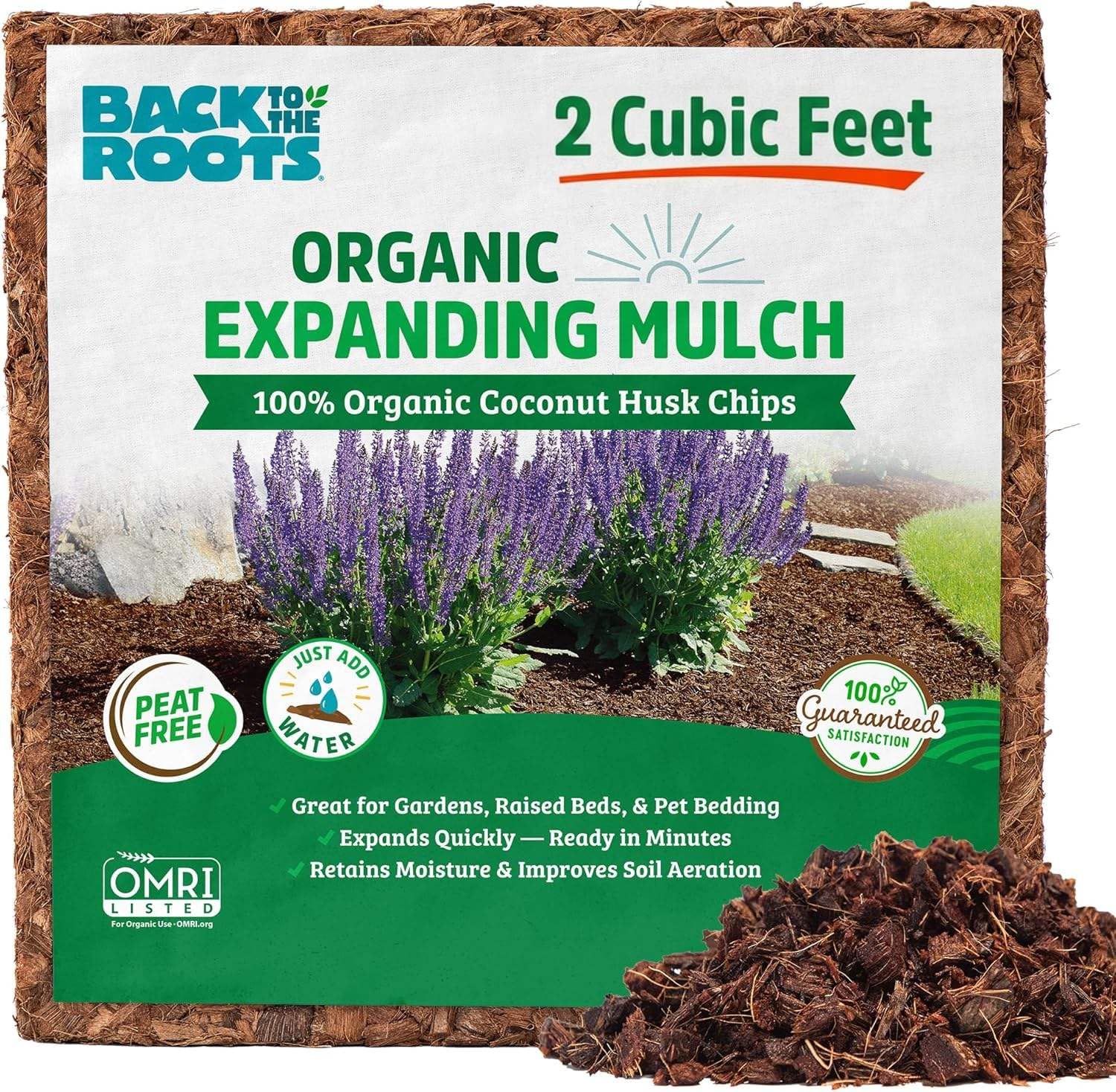
A compressed cube that swells into two cubic feet of organic cover for your raised beds.
You get a 10-pound compressed block that turns into over 2 cubic feet of coconut husk when you add water. That expansion saves heavy lifting — one buyer says it “fills a wheelbarrow 3/4 and a kiddie pool.” The OMRI-listed (Organic Materials Review Institute) label means it meets organic production standards, so you can use it around vegetables without worry. Unlike wheat straw, which may contain seeds, this coconut product is seed-free and breaks down slowly, adding organic matter over time. Buyers report it retains moisture longer than traditional bark, even in direct summer heat.
Compared to the HealthiStraw GardenStraw, this block covers less area per bag (2 cu ft vs. 3 cu ft), but it stays seed-free and lasts longer before decomposing.
Pick for depth: This is the best choice for a single-product solution that covers a large area, stays natural, and feeds the soil as it decomposes.
Consider the trade-off: It needs hydration to expand, so you will need a wheelbarrow or tub to prep it; dry blocks are useless until soaked.
Reach for this if: you need a large volume of organic, weed-free mulch that is easy to transport in compressed form and expands dramatically.
Look elsewhere if: you prefer a mulch that stays in place without any prep soaking, or need something lighter than 10 lbs for small pots.
2. HealthiStraw GardenStraw, 3 cu ft (20 lbs) All-Natural Mulch
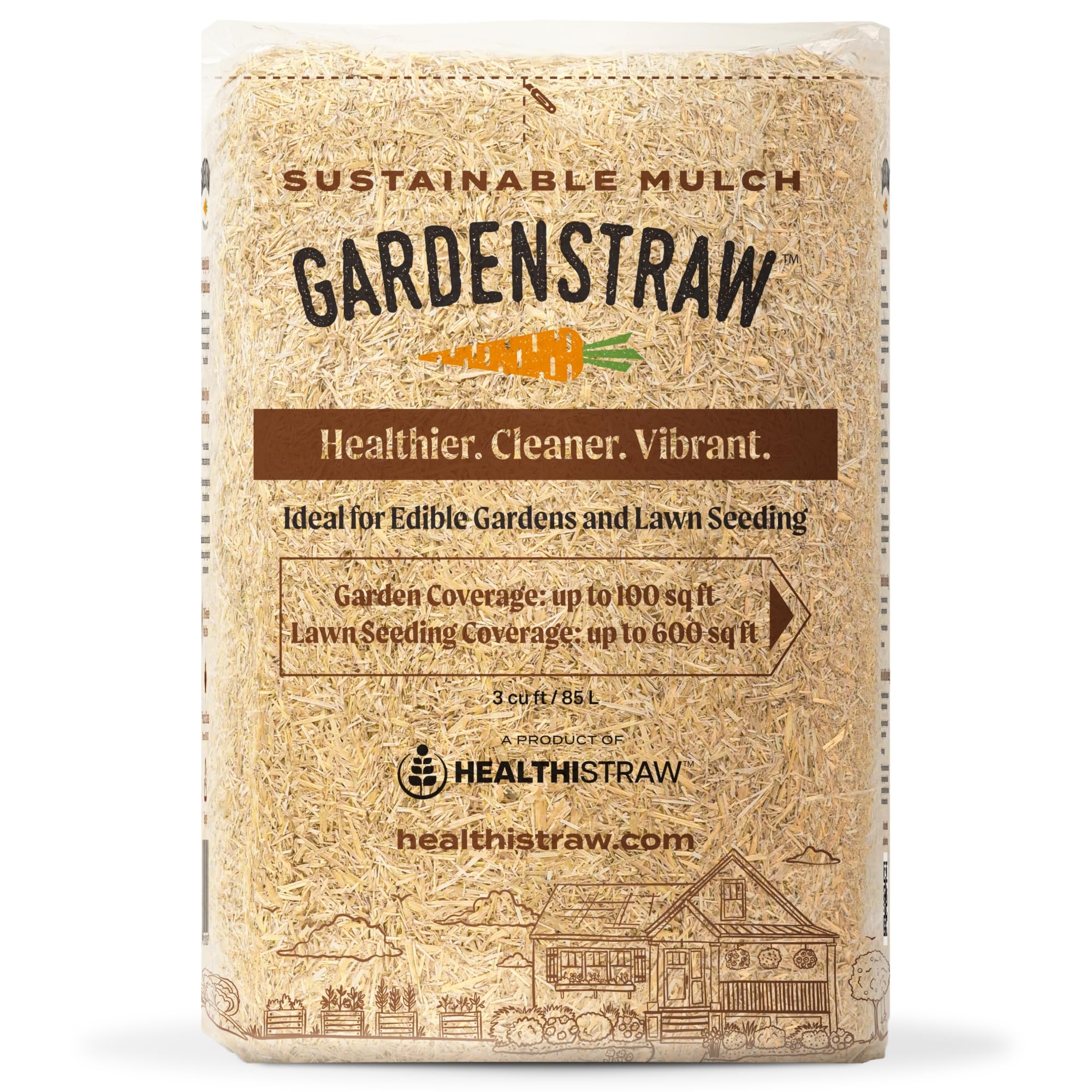
A 20-pound wheat straw bale designed to lock in moisture and suppress weeds across big garden beds.
At 20 lbs and 3 cubic feet compressed, this bale covers up to 100 square feet at a 2-to-3-inch depth — enough for several raised beds. The straw fibers interlock when watered, resisting wind and rain without chemical binders. Compared to the coconut chip options, straw breaks down faster and adds carbon (a soil-building nutrient) to your compost in a single season. One buyer calls it “the best mulch I’ve ever used,” noting it is easy to spread and does an excellent job holding off weeds. Another, however, reports “so many seeds … I’ve been pulling it from the planters.” The company says their process removes most seeds, but some can still sprout.
Why it stands out
- 3 cu ft compressed bale covers up to 100 sq ft of garden bed at 2–3″ depth
- All-natural, non-GMO wheat straw with no chemical binders
- Breaks down quickly and adds carbon to compost pile
Common complaints
- Some users report visible wheat seeds germinating in beds
- Pricier per bale than raw straw from a farm store
Best for large beds: if you need to cover substantial ground area and plan to till the mulch into your soil at season’s end, this straw is a smart pick.
Not for seed-sensitive gardens: if you absolutely cannot pull stray wheat sprouts from your tomato vines, consider a coconut chip option instead.
3. Organic Coco Chips for Plants (10lbs) – Plantonix

Coconut chips that drink up ten times their weight to keep your peppers and tomatoes hydrated.
You get fewer waterings because the manufacturer states this coconut mulch absorbs up to 10 times its own weight in water. The coir chips are larger than standard coco coir, reducing dust and creating air pockets that improve soil aeration. With a neutral pH and a high CEC (cation exchange capacity — a measure of how well the material holds onto nutrients for roots), these chips release nutrients to the root zone. That is especially helpful for heavy-feeding tomato plants. Owners mention the brick “expands nicely” and the chips are “much bigger than the coco-coir,” mixing well with potting soil for raised beds. One notes it is a “great product and easy to work with.” For the price per volume, the HealthiStraw GardenStraw covers more square feet per dollar.
Value pick: at roughly the same price as the Back to the Roots block but with a different chip size, this is a strong option for those who prioritize water absorption and nutrient retention.
Watch out for: the brick is compressed, so you will need a container to soak it before use; plan ahead.
Grab this if: you want a water-conserving mulch that also improves soil fertility and drainage in your tomato and pepper beds.
skip it if: you need maximum coverage area for the price — the HealthiStraw straw covers more square feet per dollar.
4. Soil Sunrise 100% Natural Pine Bark Mulch Nuggets (12 Quarts)
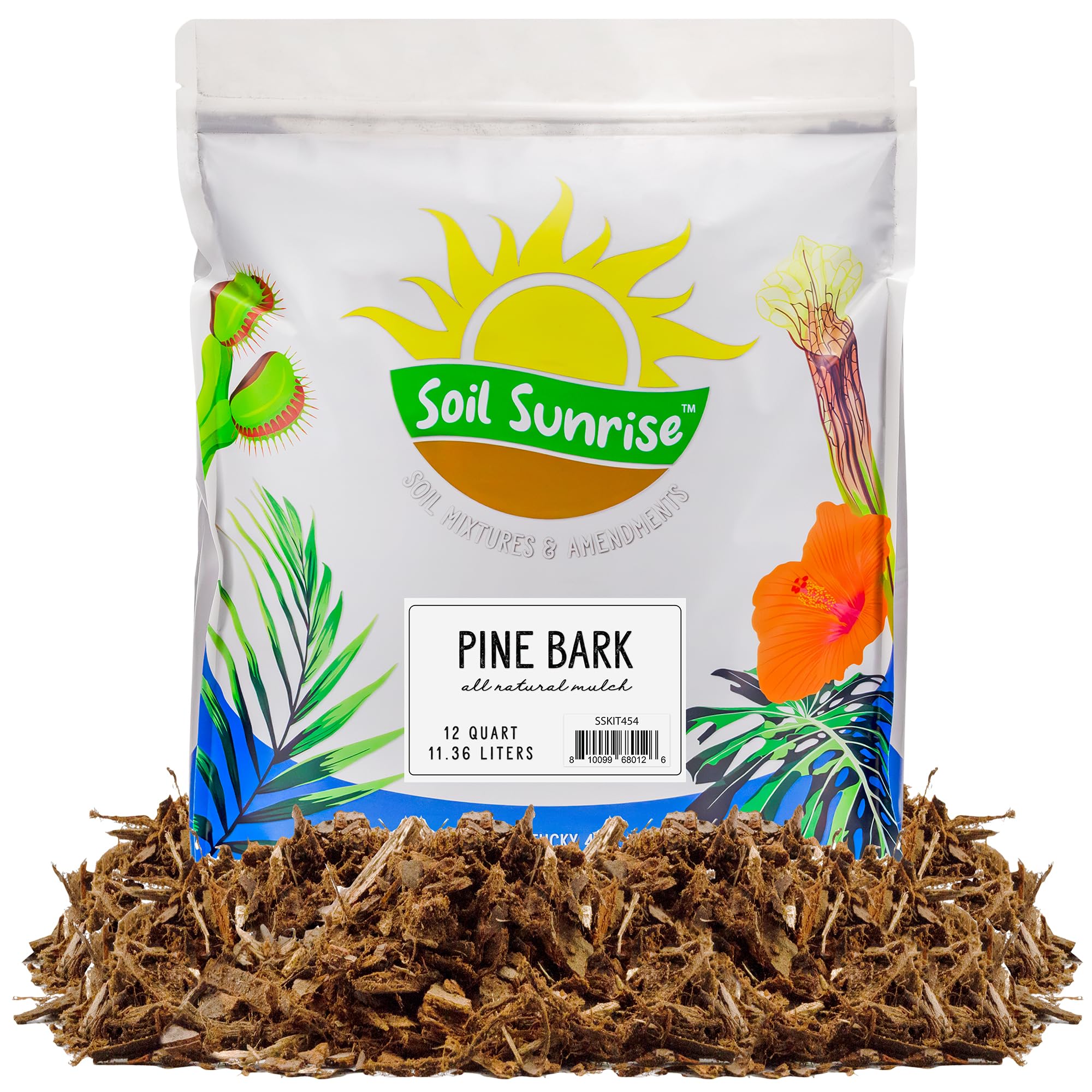
Clean-smelling pine bark nuggets that are ideal for container gardening and soil mixes.
This is a pine bark mulch with small chips, designed for containers. At 12 quarts, it is a much smaller volume than the 2-to-3 cubic foot options — perfect for a few pots, not a whole garden. The bark comes in a clear bag so you can examine it for mold or insects before opening. One buyer says pine bark “replaces peat moss” (a common soil additive that improves drainage) in potting mixes and helps with root oxygenation. Another notes it “really helps in keeping the moisture in” for veggies in pots. It is not ideal for large beds because of the low volume, but it blocks digging pests and looks neat.
Why choose this
- Small chip size mixes well with potting soil for drainage and aeration
- Natural pine scent and attractive look
- Clear bag lets you inspect quality before opening
Limitations
- 12 quarts is a small volume — not for large garden beds
- Some customers note it is “a little on the expensive side” per quart
Perfect for container growers: if your tomatoes and peppers live in pots or planters, this pine bark is a clean, functional top-dressing that improves drainage.
Not for big beds: if you are covering more than a few square feet, you will need multiple bags, which gets pricey — go with the straw or coco blocks instead.
5. Riare 10LBS Coco Chips Substrate for Plants

A budget-friendly brick of coconut chips that delivers premium aeration and moisture control.
This 10-pound brick of compressed coconut husk chips is the most affordable entry on the list. The chips are low EC (electrical conductivity — a measure of salt content that can affect root health) and pH balanced, so they will not disrupt your soil chemistry. One buyer calls it the “best mulch ever! It looks good and breaks down very slowly, so you don’t need to replace it often.” Another says it is “superior to pine straw for raised beds” and praises moisture retention. The package is dense — users note a “heavy package, lightweight substrate.” If volume is your priority, the Back to the Roots block offers more expanded cubic feet for a few extra dollars.
Smart budget pick: you get the water-holding power and slow decomposition of coconut chips at a price that undercuts most competitors.
The catch: packaging is heavy relative to the expanded volume, and some buyers perceive the per-quart cost as higher than they would like.
Go for it if: you want a long-lasting, natural coco mulch for your tomato and pepper beds on a tight budget.
Consider spending more if: volume is your priority — the Back to the Roots block offers more expanded cubic feet for a few extra dollars.
Understanding the Specs
Expanded Volume vs. Compressed Weight
Mulch like coconut husk is sold as dense bricks that expand when wet. A 10-pound block can turn into 2 cubic feet of loose mulch — enough to cover a small raised bed. Straw, on the other hand, is sold pre-expanded and is measured in cubic feet at purchase. Comparing the two: a straw bale labeled “3 cu ft” gives you that volume immediately, while a coco block needs water to reach its full size. Always plan for this soaking step if you choose compressed products.
Water Retention and Absorption
Coconut chips can absorb many times their weight in water, which means they release moisture slowly into the soil over days. This reduces how often you water your tomatoes and peppers, especially in hot weather. Straw does not absorb water the same way; it sits on top of the soil as a barrier that blocks evaporation. Both methods work, but coco chips are better for people who forget to water, while straw is better for heavy-rain climates where soggy soil is a problem.
FAQ
Should I use straw or coconut mulch for tomatoes and peppers in hot climates?
How thick should I lay the mulch around tomato plants?
Will wheat straw introduce weeds or seeds into my garden?
How often do I need to replace coconut mulch?
Can I use pine bark mulch for tomatoes and peppers in pots?
Is OMRI-listed mulch necessary for vegetable gardens?
How much mulch do I need to cover a 4×8 raised bed?
Does mulch affect the pH of the soil around peppers and tomatoes?
Can I till coconut mulch into the soil at the end of the season?
What is the difference between coco coir and coco chips for mulching?
Final Thoughts: The Verdict
If you want one dependable pick, the mulch for tomatoes and peppers winner is the Back to the Roots 100% Organic Mulch because it combines a massive 2 cubic foot expansion from a lightweight block, ORI-listed organic certification, and excellent moisture retention in a seed-free coconut husk. If you need to cover a large garden area on a budget, grab the HealthiStraw GardenStraw for its 3 cubic foot coverage per bale. And for container gardeners who want a neat, functional top-dressing, the Soil Sunrise Pine Bark Mulch is your best bet.
How We Picked
We do not accept paid placement. Every pick is matched to a real buyer and a real use-case; we do not hands-on test units.
Sources & Methodology
Specifications: manufacturer listings and product documentation. Review insights: verified customer reviews, as of July 2026. Pricing: not shown on this page (it changes often); check the current price via the retailer link.
As an Amazon Associate, Lawn Gear Lab earns from qualifying purchases. This does not affect which products we feature.