
Specs are compiled from manufacturer listings and verified buyer reviews and can change over time — please confirm the key details on the product page before buying.
Watching hydrangea leaves turn spotty, yellow, or brown is frustrating, especially after weeks of careful watering and feeding. The right fungicide stops the damage early, keeps your blooms showy, and prevents the disease from spreading to the whole shrub.
I’m Rikta — the founder and writer behind Lawn Gear Lab. This guide is built by comparing the manufacturers’ published specifications and the patterns across verified customer reviews, so you get each pick’s real strengths and trade-offs instead of marketing spin.
After pulling apart the active ingredients, concentrate strengths, and real-world results from seven top products, here is the honest breakdown of the best fungicide for hydrangeas to match your garden style and infestation level.
Quick Picks
- Bonide Revitalize Biofungicide — Best Overall
- Fertilome Liquid Systemic Fungicide II RTS — Top Systemic
- Bonide Captain Jack’s Citrus — Multi-Purpose
- Earth’s Ally Disease Control Concentrate — Best Natural
- Athena IPM Plant Pest Control Ready-to-Use Spray — Zero Effort
- Dow AgroSciences Eagle 20EW Fungicide — Heavy Duty
- Quali-Pro Propiconazole 14.3 Fungicide — Broad-Spectrum
How To Choose The Best Fungicide For Hydrangeas
Hydrangeas are prone to powdery mildew, Cercospora leaf spot, and rust — especially in humid summers. The right product depends on if you want a quick fix, a long-term preventive, or a natural option safe for edible plants nearby. Here are the three factors to check before you buy.
Concentrate vs Ready-to-Use
A concentrate makes multiple gallons of spray from one bottle, so it costs less per treatment and lets you cover a whole hedge. A ready-to-use spray is simpler: you just point and squirt, making it the better choice if you only have one or two potted hydrangeas and want zero measuring.
Systemic vs Contact Action
A systemic fungicide (like propiconazole or myclobutanil) travels inside the plant to protect new growth from the inside out — great for stopping hidden infections. A contact fungicide (like those with citric acid or sulfur) stays on the leaf surface, killing spores on impact but washing off in rain. For established leaf spot on hydrangeas, a systemic product usually works faster.
Organic vs Synthetic Chemistry
If you grow vegetables or herbs near your hydrangeas, look for an OMRI Listed formula (approved for organic gardening) that you can use up to the day of harvest. Synthetic fungicides like propiconazole are more potent but often require a waiting period and full protective gear (gloves, goggles, respirator) during application.
Quick Comparison
| Model | Best For | Bottle Size | Active Ingredient | Form | Amazon |
|---|---|---|---|---|---|
| Bonide Revitalize Biofungicide | Immune-boosting prevention | 16 fl oz | Bacillus subtilis (biological) | Concentrate | Amazon |
| Fertilome Liquid Systemic II RTS | Fast systemic rescue | 32 fl oz | Myclobutanil | Ready-to-Use | Amazon |
| Bonide Captain Jack’s Orchard Spray | Multi-purpose insect + disease | 32 fl oz | Sulfur / Pyrethrins | Concentrate | Amazon |
| Earth’s Ally Disease Control | Natural / OMRI organic | 32 fl oz | Citric acid | Concentrate | Amazon |
| Athena IPM RTU Spray | Instant no-mix spray | 32 fl oz | Clove oil / Rosemary oil | Ready-to-Use | Amazon |
| Dow Eagle 20EW | Professional-grade turf & ornamentals | 16 fl oz | Myclobutanil | Concentrate | Amazon |
| Quali-Pro Propiconazole 14.3 | Broad-spectrum lawn & shrub control | 32 fl oz | Propiconazole | Concentrate | Amazon |
In‑Depth Reviews
1. Bonide Revitalize Biofungicide

Boosts the plant’s own defenses so hydrangeas fight back naturally.
Unlike a chemical that just poisons the fungus, Revitalize uses Bacillus subtilis (a beneficial microbe) to trigger the plant’s immune system. It controls powdery mildew, blight, and black spot from the inside out — without synthetic residue. One owner reported “after using this for about a month & applying every 3-4 days as a soil drench, the trees started to show signs of rebounding — new leaves, no more black leaves.”
The 16 oz concentrate treats a surprising area considering its small bottle. You mix it with water and apply either as a foliar spray (coating the leaves) or a soil drench (pouring around the roots). It is approved for organic gardening, so you can spray right up to the day of harvest on nearby vegetables.
This works best as a preventive or early-stage treatment. If your hydrangea already has a full-blown brown-spot crisis, you might see faster results from a systemic synthetic. But for weekly maintenance that keeps the foliage clean all season, this is the most balanced pick.
Immune-Boosting Edge: It does not just kill the fungus; it teaches the plant to resist it. That means longer-lasting protection than a contact spray.
The Trade-Off: You need to reapply every 3-4 days during active outbreaks, so it demands more consistency than a one-and-done systemic.
Reach for this if: You want an organic, long-term solution that protects your hydrangeas without harsh chemicals.
Look elsewhere if: You need to knock out a severe leaf-spot infection this weekend — a stronger synthetic will act faster.
2. Fertilome Liquid Systemic Fungicide II RTS
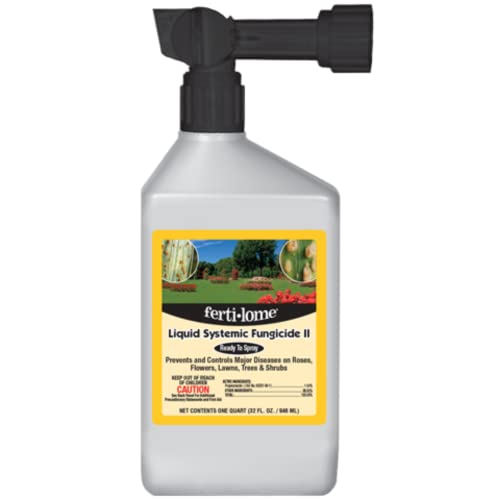
A ready-to-use systemic that travels inside the plant to stop hidden disease.
This 32 oz spray bottle comes pre-mixed, so you do not measure or dilute. Just aim at the hydrangea leaves and spray to the point of runoff. Myclobutanil (the active ingredient) enters the leaf tissue and protects new growth from powdery mildew, leaf spot, and rust. At 2.4 lbs, the bottle is light enough to carry around the garden one-handed.
Buyers report it stopped yellowing leaves after a single treatment on young trees. Another noted it cured fire blight in a Crimson Maple after three biweekly hose-end sprays — the same systemic action works beautifully on hydrangeas. It is a 32 fl oz RTU versus Bonide Revitalize’s 16 fl oz concentrate, meaning you get more product in the bottle but fewer total gallons of spray than a concentrate.
The catch is that myclobutanil is a synthetic fungicide, so it is not ideal if you are strict about organic gardening. Also, this RTU bottle is convenient for small jobs but runs out quickly if you are spraying a whole hedge of mature hydrangeas.
Zero-Mix Convenience: No measuring cups, no math. Open the bottle, pull the trigger, and the systemic begins working inside the plant within hours.
One Caveat: The pre-mixed spray covers less area per dollar than a concentrate, so consider buying two bottles if you have a large garden.
Grab this for: Quick, potent rescue of a single hydrangea that is already showing leaf spots or powdery mildew.
skip it if: You need to treat a whole row of shrubs — a concentrate will go further for the same money.
3. Bonide Captain Jack’s Citrus, Fruit & Nut Orchard Spray

One concentrate that kills both the fungus and the bugs eating your hydrangeas.
This 32 oz concentrate goes after powdery mildew, rust, blight, and brown rot while simultaneously handling beetles, caterpillars, spider mites, and thrips. One reviewer noted “the leaf spots on my apple tree are disappearing and it is noticeably greener” — the same leaf-spot control works on hydrangea leaves. You mix as little as 2.5 fluid ounces per gallon of water to make up to 6.4 gallons of finished spray.
That means you can custom-blend a stronger dose for heavy infestations or a lighter maintenance spray. The sulfur in the formula leaves a slight powdery residue on leaves, but buyers confirm it does not harm the fruit on nearby trees.
The one downside: it smells stronger than a biofungicide or citric acid spray, and the sulfur residue can look unsightly on ornamental hydrangea blooms if you overspray. Apply when the flowers are not fully open to keep them looking clean.
Two Jobs, One Bottle
- Controls powdery mildew and leaf spot on hydrangea foliage.
- Kills Japanese beetles, aphids, and caterpillars that chew holes in leaves.
Watch the Residue
- Leaves a visible white sulfur dust on petals — avoid spraying open blooms.
- Needs reapplication after heavy rain (non-persistent formula).
Perfect if: You have both fungal leaf spots AND insect pests on the same hydrangea — it saves you from buying two separate products.
Not the choice if: You want a clear, invisible spray that keeps your flowers looking pristine for a garden show.
4. Earth’s Ally Disease Control Concentrate
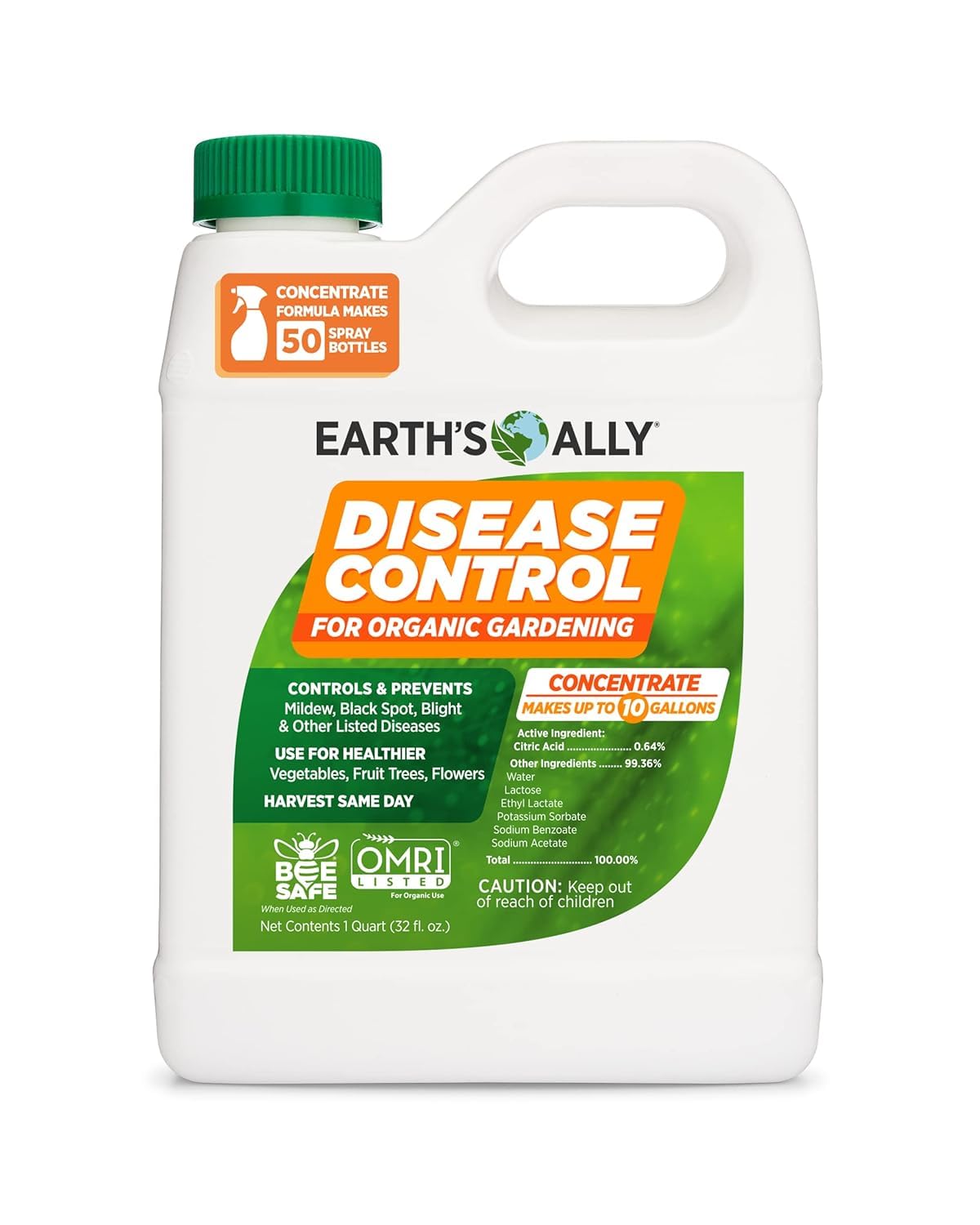
A citric-acid formula that wipes out fungus without toxic residue.
Earth’s Ally uses citric acid as its active ingredient, making it one of the safest sprays you can use around pets, kids, and vegetable beds. It is OMRI Listed for organic gardening, and you can spray it on fruits and vegetables right up to the day of harvest. A buyer reported it “stopped root fungus in 2 applications” on a struggling Palo Verde tree — the same mode of action works on hydrangea root rot and leaf spot.
The 32 oz concentrate makes 10 gallons of ready-to-use spray when you mix 6 tablespoons per gallon of water. At 2.26 lbs, it is 6% lighter than the Fertilome systemic (2.4 lbs), but the real difference is the chemistry: citric acid is a contact killer, so it must hit the fungus directly to work. It will not travel inside the plant like a systemic.
Because it is a contact spray, you need thorough coverage — get the undersides of every hydrangea leaf where powdery mildew hides. It also degrades faster in rain than a systemic, so plan to reapply after a downpour.
Safe Enough to Eat: No harsh chemical residues. You can treat a hydrangea next to your tomato plants without worry.
The Limitation: It is a contact-only spray with no plant penetration. Miss a leaf underside, and the fungus survives there.
Best for: Organic gardeners who want a non-toxic solution and are diligent about spraying every leaf surface.
Avoid if: You have a deep, established infection inside the plant tissue — you need a systemic for that.
5. Athena IPM Plant Pest Control Ready-to-Use Spray
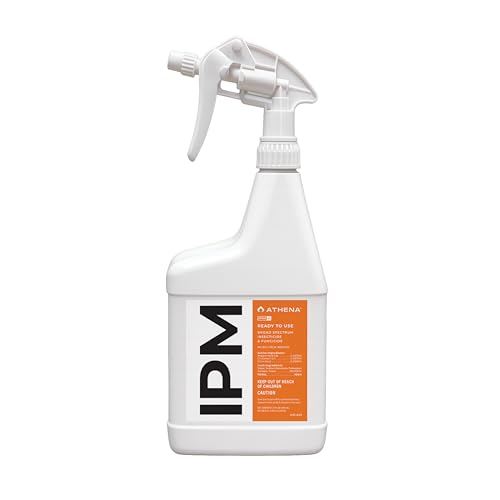
The no-measure, no-mix spray that kills powdery mildew and spider mites instantly.
Athena IPM comes ready to use — just shake the 32 oz bottle and spray. It is made with EPA 25(b) minimum-risk ingredients (clove and rosemary oils), so it is safe around people and pets when used as directed. A buyer summed it up simply: “Quick spray application, no mixing needed.” It treats powdery mildew on contact while also killing spider mites, aphids, and thrips that often attack hydrangeas.
Because this is an essential-oil-based spray, it has a pleasant herbal smell instead of the chemical odor of synthetic fungicides. It works well on houseplants, patio hydrangeas, and greenhouse setups. Unlike the Fertilome systemic (which penetrates the plant), Athena IPM works on the surface only — so you need to spray until the leaves drip and cover every stem.
The ready-to-use format limits how much area you can cover. One 32 oz bottle treats a few medium-sized hydrangeas but runs out fast on a big hedge. For large plantings, you will want a concentrate instead.
Fast and Fragrant: Spray directly from the bottle with no prep work. The natural oils smell pleasant and break down quickly in sunlight.
Small-Batch Tool: Best for container hydrangeas or a small garden bed. Not economical for covering a whole fence line of shrubs.
Great for: Casual gardeners with a few potted hydrangeas who want a grab-and-go spray without fiddling with measuring spoons.
Not for: Large landscapes or severe disease — the essential oils are milder than chemical fungicides and need frequent reapplication.
6. Dow AgroSciences Eagle 20EW Fungicide

An agricultural-grade systemic that eradicates even stubborn rust and blight.
Eagle 20EW is a professional fungicide with myclobutanil — the same active ingredient as the Fertilome systemic but in a higher-strength concentrate. It controls more than 15 fungal diseases including powdery mildew, rust, leaf spot, and anthracnose on ornamentals, turf, and fruit trees. One buyer in zone 7 called it their “go to product for powdery mildew.”
The 16 fl oz bottle is smaller than the Fertilome’s 32 fl oz, but it is a highly concentrated formula meant for large-scale use (mixing at ounces per acre, not teaspoons per gallon). That means it is powerful but requires precise measuring and full protective gear — a reviewer noted you need “PPE and complex mixing (oz/acre/100 gal).” For a homeowner with a few hydrangeas, a simpler product might be less intimidating.
Where Eagle 20EW shines is on tough cases. If you have tried copper fungicide or biofungicides and the leaf spots keep coming back, this systemic will penetrate the plant tissue and stop the infection at the cellular level.
Serious Firepower: Works on diseases that resist weaker sprays. Great for valuable landscape shrubs that you cannot afford to lose.
Not a Beginner’s Spray: Requires a sprayer with accurate measurement, a mask, and goggles. Overdosing can harm the plant.
Only if: You have a persistent, treatment-resistant fungal infection on a mature hydrangea or ornamental tree.
pass on it if: You want a simple, no-PPE spray for routine maintenance — choose a ready-to-use or a gentler concentrate instead.
7. Quali-Pro Propiconazole 14.3 Fungicide

A microemulsion systemic that coats every leaf surface for long-lasting control.
Propiconazole is among the most trusted broad-spectrum fungicides in turf and ornamental care. This 32 fl oz concentrate from Quali-Pro uses a microemulsion formulation (tiny droplets that spread evenly) to reduce odor and improve coverage on waxy hydrangea leaves. It fights brown patch, powdery mildew, leaf spot, rust, and dollar spot — all common problems on hydrangeas in humid climates.
A homeowner reported it “effectively treated brown patch fungus on 1/3 acre lawn” and noted visible new growth after just one week. Another buyer said it “eliminated orange rust fungus on wild blackberry bushes after 3 sprays” with no return all summer. The systemic action works from the inside out, so even if you miss a spot on the leaf surface, the plant absorbs the chemical and distributes it to the new shoots.
The downside is the safety requirement. This is a professional-grade chemical — buyers emphasize you need “full PPE (bunny suit, respirator, goggles, gloves)” and should not eat fruit from treated plants for at least a year. It is overkill for a single hydrangea but perfect if you have a large landscape with multiple shrubs, trees, and lawn areas that all need protection.
One Bottle, Many Jobs: Works on hydrangeas, lawn grass, trees, and flowers. Excellent tank-mix compatibility with other fungicides.
Serious Precautions: Requires protective gear during mixing and spraying. Not suitable if children or pets play in the treatment area immediately after application.
Choose this for: Large properties where hydrangeas are part of a mixed landscape of ornamentals, turf, and trees — the economy of scale justifies the strength.
Pass it by if: You only have a couple of hydrangea bushes — a smaller, gentler product will be easier and safer to handle.
Understanding the Specs
Systemic vs Contact Fungicide
A systemic fungicide (like myclobutanil or propiconazole) is absorbed into the plant’s vascular system and travels to new growth, protecting the entire shrub even where spray did not land. It is ideal for stopping hidden infections inside the stem and leaves. A contact fungicide (like citric acid or sulfur) stays on the leaf surface and kills spores on impact, but it washes off in rain and requires precise full-coverage spraying. For established hydrangea leaf spot, systemic action gives faster, longer-lasting results.
Concentrate vs Ready-to-Use (RTU)
A concentrate (like the Bonide Revitalize 16 oz) requires you to measure and mix with water in a sprayer, but one bottle makes several gallons of finished spray — far more economical for large hedges. A ready-to-use spray (like Fertilome RTS or Athena IPM) comes pre-diluted in a trigger bottle. It costs more per ounce but eliminates measuring and is perfect for treating one or two potted hydrangeas on the patio with zero setup.
FAQ
What is the best time of day to spray fungicide on hydrangeas?
Can I use a lawn fungicide on my hydrangeas?
How often should I apply fungicide to hydrangeas?
Will fungicide hurt my hydrangea flowers or buds?
Is it safe to use fungicide on hydrangeas near vegetable gardens?
Can I mix fungicide with insecticide for a single spray?
Why do my hydrangeas keep getting powdery mildew even after spraying?
How long does a 32 oz bottle of concentrate last?
Do I need to wear gloves when applying fungicide to hydrangeas?
Can I use the same fungicide on my hydrangeas and roses?
Final Thoughts: The Verdict
For most people, the fungicide for hydrangeas winner is the Bonide Revitalize Biofungicide because it boosts the plant’s natural immunity without leaving harsh residues, making it safe for organic gardens and effective as a preventive all season. If you want a quick systemic rescue for a sick shrub, grab the Fertilome Liquid Systemic II RTS. And for a natural contact spray that works on both fungus and insects, the standout is the Bonide Captain Jack’s Orchard Spray.
How We Picked
We do not accept paid placement. Every pick is matched to a real buyer and a real use-case; we do not hands-on test units.
Sources & Methodology
Specifications: manufacturer listings and product documentation. Review insights: verified customer reviews, as of July 2026. Pricing: not shown on this page (it changes often); check the current price via the retailer link.
As an Amazon Associate, Lawn Gear Lab earns from qualifying purchases. This does not affect which products we feature.