
Specs are compiled from manufacturer listings and verified buyer reviews and can change over time — please confirm the key details on the product page before buying.
You need a rototiller that chews through your soil without stalling or leaving hard patches — and without the noise and fumes of a gas engine. This guide lines up the battery-powered machines that back up their claims with real torque numbers and proven customer feedback, so you pick the one that matches the dirt in your yard, not the marketing in the ad.
I’m Rikta — the writer behind Lawn Gear Lab. I compare published specs from manufacturers and patterns from verified customer reviews to show you each pick’s real strengths and trade-offs.
Here is a straightforward look at the best battery powered rototiller options today, covering the specs that matter for turning soil and the quirks buyers report after a season of use.
Quick Picks
- TaskStar 12 Inch Electric Tiller Cultivator — Best Overall
- Seesii 40V Cordless Tiller for Gardening — Premium Versatility
- MZK 40V 12-inch Cordless Garden Tiller — Best Value
- Mellif 40v Cordless Brushless Tiller Cultivator — Flex Power Pick
- LawnMaster Brushless 48V MAX Cordless Tiller — Wide Coverage
- Sun Joe 24V Cordless Garden Tiller Cultivator — Brand Authority
- Lmozim 21V Cordless Tiller Cultivator — Budget Entry
- Greenworks Pro 80V 10 Inch Cultivator — High Voltage
How To Choose The Best Battery Powered Rototiller
Choosing the right battery rototiller means matching its specs to your soil. You need enough tilling width to cover ground quickly, enough depth to break through compacted layers, and enough battery runtime to finish the job without stopping to recharge.
Tilling Width and Depth
Width determines how many passes you need — a 10-inch tiller (the width it churns in one pass) means more walking than a 14-inch model. Depth decides if you are just scratching the top layer for weeding or actually breaking new soil for planting. Most models range from about 7 to 9 inches deep.
Battery Voltage and Capacity
Voltage — measured in volts (V) like 21V, 40V, or 80V — drives the motor’s torque. Higher voltage generally powers through hard or clay-heavy ground more effectively. Capacity, measured in amp-hours (Ah) like 3.0 Ah or 5.0 Ah, determines how long each battery charge lasts. Two larger Ah batteries let you work longer without stopping.
Motor Type
A brushless motor (a motor that uses electronic controllers instead of physical brushes, reducing friction and heat) runs cooler, spins more efficiently, and lasts longer than older brushed motors. It also draws less power from the battery, so you get more tilling time per charge.
Quick Comparison
| Model | Best For | Tilling Width | Tilling Depth | Battery | Amazon |
|---|---|---|---|---|---|
| TaskStar 12 Inch 40V | Best Overall Power | 12 in | 8 in | 40V / 2×5.0 Ah | Amazon |
| Seesii 40V 12 Inch | Premium Versatility | 12 in | 8 in | 40V / 2×5.0 Ah | Amazon |
| LawnMaster 48V MAX | Medium-Large Gardens | 14.5 in | 9 in | 48V / 2×4.0 Ah | Amazon |
| Mellif 40V Dewalt Compatible | Dewalt Battery Owners | 14.2 in | 8.7 in | 40V / Tool Only | Amazon |
| MZK 40V 12 Inch | Value & Runtime | 14 in | 8.6 in | 40V / 2×4.0 Ah | Amazon |
| Sun Joe 24V Cordless | Established Brand | 14 in | 7 in | 24V / 2×2.0 Ah | Amazon |
| Lmozim 21V Cordless | Budget Entry | 9.5 in | 6.7 in | 21V / 2×3.0 Ah | Amazon |
| Greenworks Pro 80V | High-Voltage Performance | 10 in | 5 in | 80V / 1×2.0 Ah | Amazon |
In‑Depth Reviews
1. TaskStar 12 Inch Electric Tiller Cultivator, 40V Cordless
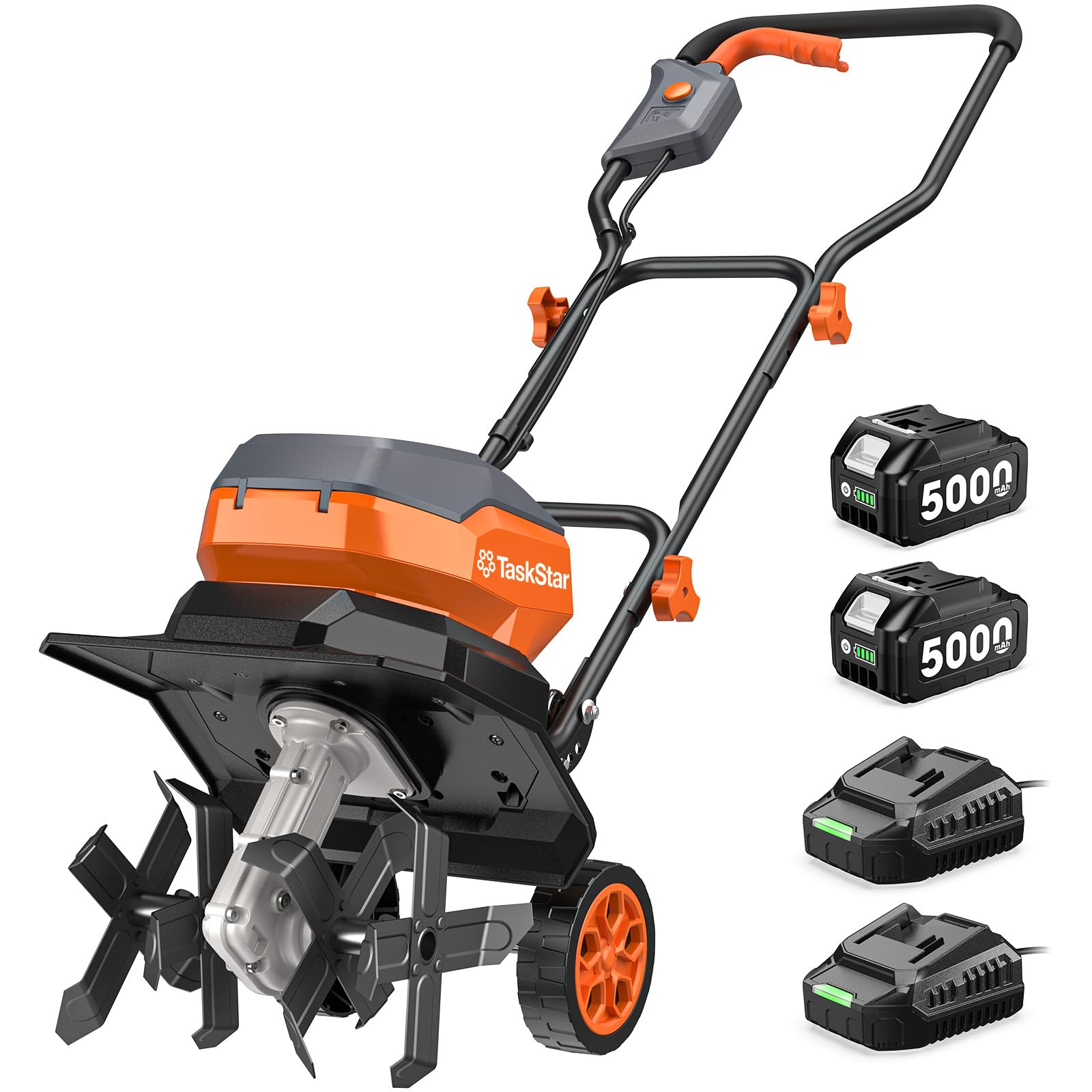
The yard machine that made a two-stroke lover admit battery power works.
The TaskStar carries the biggest battery capacity in this list — two 40V 5.0 Ah packs — so you can cover a 30’x40′ garden in about an hour, according to one owner. It delivers a 12-inch tilling width and 8-inch depth, and its wheeled design with four adjustable depth settings lets you shift from shallow weeding to deep cultivation without kneeling.
Owners mention the motor is surprisingly strong — one reviewer called it a “little beast” that turned previously tilled ground to powder and handled unbroken soil after a few passes. The dual-switch safety (pressing a button and trigger simultaneously) prevents accidental startups. At 40V, it holds a 1.9x voltage advantage over the 21V Lmozim model, and its 5.0 Ah batteries pack 67% more capacity than that entry-level pick’s 3.0 Ah packs. One reviewer who usually prefers gas tillers said this changed his mind.
Real-World Strengths
- Two 5.0Ah batteries provide extended runtime for medium gardens
- Wheeled design with depth adjustments for easy control
- Lightweight and quiet compared to gas models
Honest Limits
- May need multiple passes on unbroken compacted clay
- Brand name is less established than Sun Joe or Greenworks
Reach for this if: you need the highest battery capacity and reliable 8-inch depth for medium gardens or raised beds.
Look elsewhere if: you need to break virgin sod or very rocky ground in a single pass.
2. Seesii 40V Cordless Tiller for Gardening, 12 Inch

At 19 pounds, it is light enough that one reviewer compared it favorably to a neighbor’s heavier unit.
This is one of the lightest premium options at 19 pounds, so it works well if heavy machinery tires you out. It runs on two 40V 5.0 Ah batteries and uses a 320W motor (320 watts — the power that drives the tines) to turn a 12-inch width and 8-inch depth. Customers note that a single battery runs the entire garden, and assembly is simple with batteries arriving pre-charged.
One owner noted it was “slow in damp clay but better than manual tools” and called it comparable to a neighbor’s cultivator. The 3-position adjustable handle and 4-position wheel depth give you fine-tuning control over the 8-inch depth. For easy maintenance, the removable steel tines rinse clean quickly. It is a step up in build quality from budget models without jumping to the highest price tier. A reviewer who owns the TaskStar said the Seesii edges it out slightly in portability.
What Stands Out
- Lightweight build at 19 pounds reduces arm fatigue
- Three-year warranty on a premium-priced unit
- Removable tines clean up fast after muddy work
Where It Slows Down
- Slow going in damp, heavy clay soil
- Battery life drops to around 20+ minutes in tougher ground
If you prioritize low weight over the TaskStar’s extra battery capacity, this is your pick. Damp clay will test its limits — plan for extra passes.
3. MZK 40V 12-inch Cordless Garden Tiller
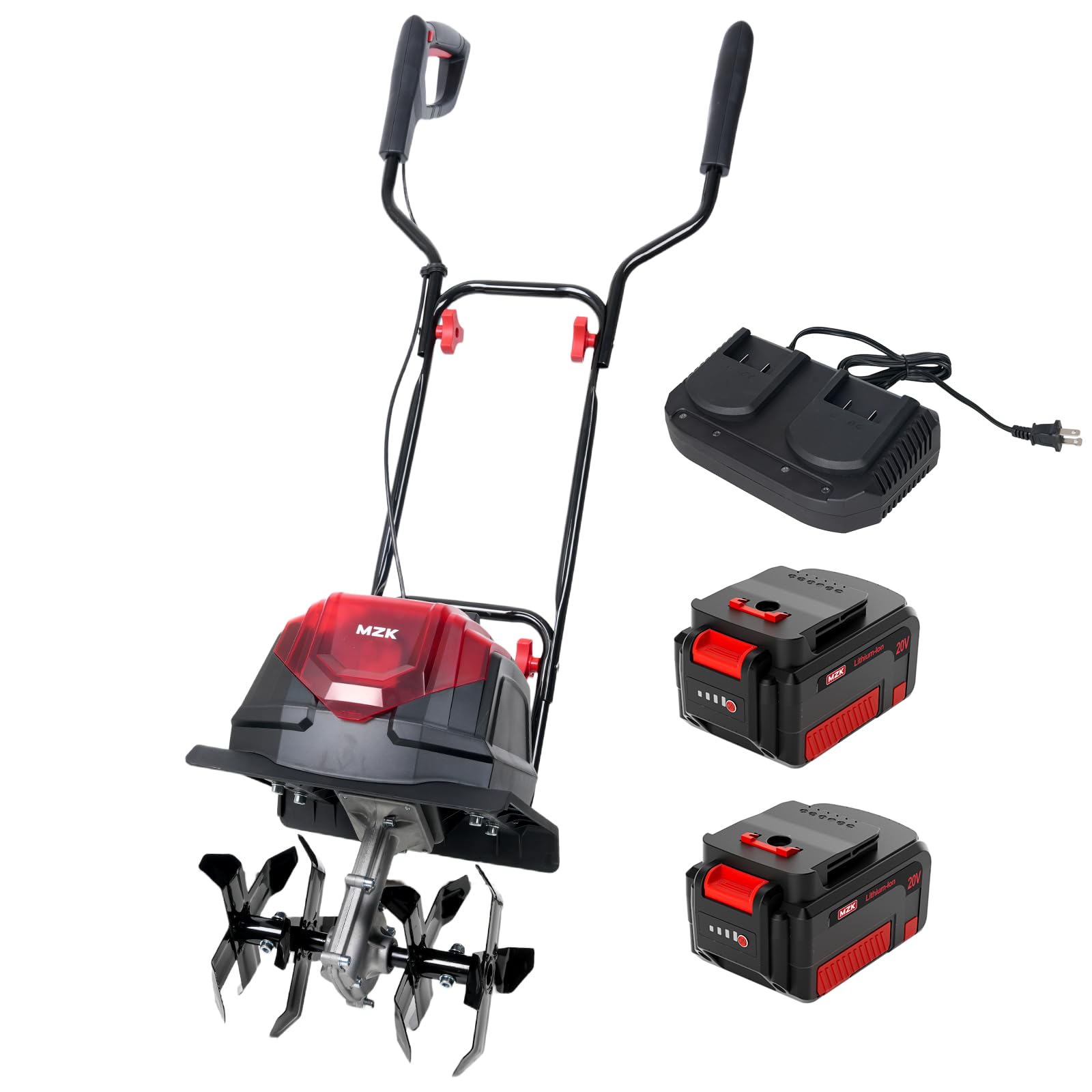
A 5’3″ reviewer said it offered “perfect depth, light weight, and easy” control.
This MZK delivers a 14-inch tilling width and an 8.6-inch depth with 16 steel tines spinning at 180 RPM — that is 180 revolutions per minute, a measure of how fast the tines churn soil. While slower than the 360 RPM of the Lmozim model, reviewers point out the lower speed pairs well with the machine’s weight to dig deep without bouncing. One experienced reviewer noted it “works as well as a gas tiller” and appreciated having no pull-start or gas to manage.
The double-handle design and adjustable wheels give you good control, and the safety button does not need to be held continuously — a detail owners love for reducing finger strain during long sessions. It comes with two chargers so both 4.0 Ah batteries recharge simultaneously. One owner reported using it roughly 50 times and said it still stores compactly with the folding handle.
Owners confirm: heavy enough to dig well but portable enough for a smaller gardener to handle easily.
The jump factor: because the machine is light, it tends to hop when hitting rocks — that is common with any light tiller.
It delivers gas-like results without fumes, noise, or maintenance at a price that undercuts the TaskStar. skip it if you need to plow through rocky, unbroken virgin soil — this is at its best in existing beds.
4. Mellif 40v Cordless Brushless Tiller Cultivator (Dewalt Compatible)
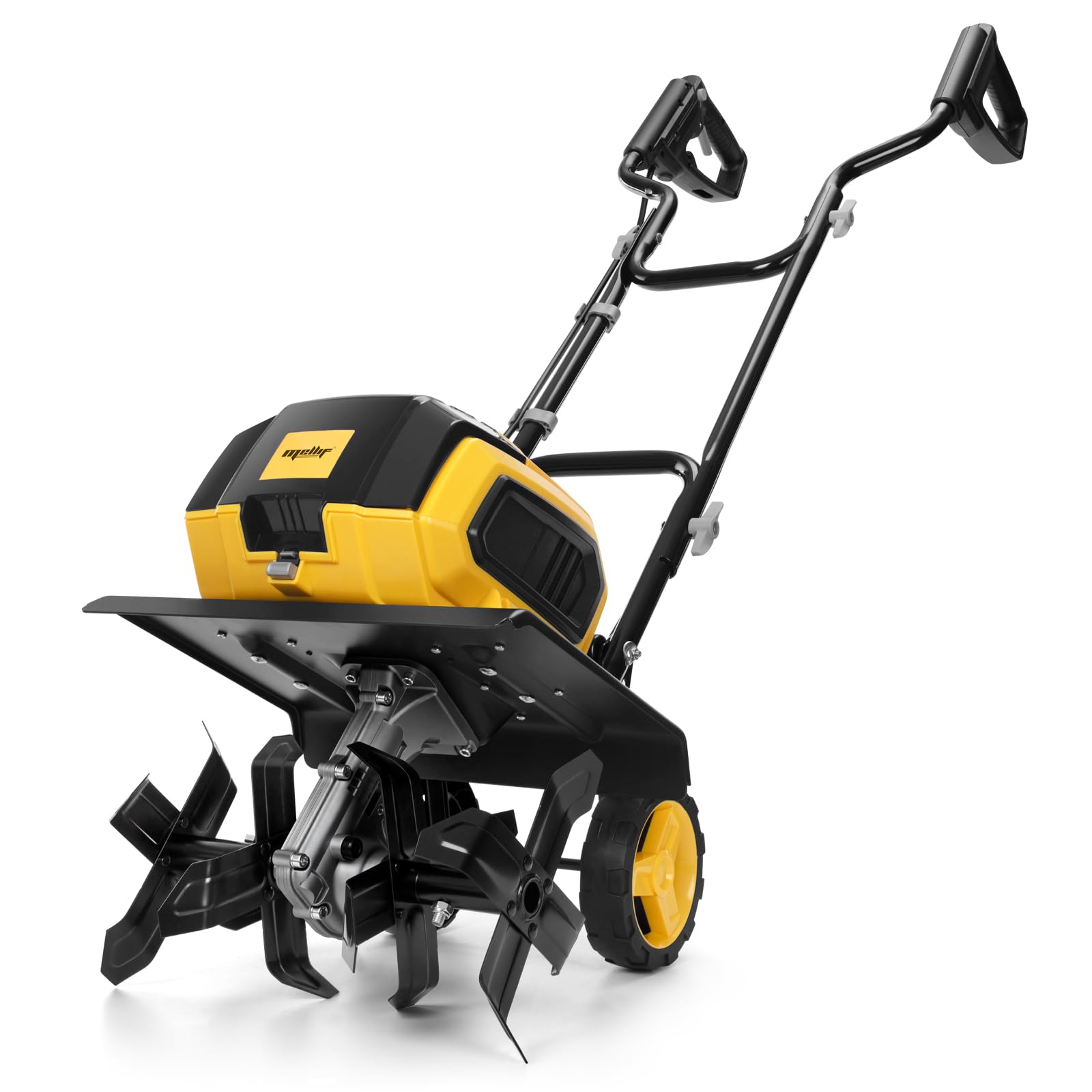
The only tool-only tiller that rewards existing Dewalt owners with serious width and depth.
This is a tool-only unit (no batteries included) designed to run on two Dewalt 20V Max batteries in series (connected one after the other) for 40V power. If you already own Dewalt gear, this adds a rototiller without another charging system. It delivers a 14.2-inch working width and 8.7-inch depth, versus the Lmozim’s 9.5-inch width and 6.7-inch depth. — with 4×4 steel blades that are 8.1 inches in diameter.
Shoppers say it “went through hard ground like a champ” and that it surprised them with how well it turned over soil. One reviewer noted you need at least two Dewalt 20V batteries rated 6 Ah or higher for decent runtime. The brushless motor, according to the manufacturer, claims to improve runtime by 30%. The foldable frame stores compactly, and the 5-year warranty is the longest on this list — useful for a power tool that lives in a shed.
Highlights
- 14.2-inch width covers more ground per pass than most competitors
- 5-year warranty is top-tier for this category
- Foldable frame stores small in a garage or shed
Catch Points
- Requires two 6 Ah or higher Dewalt 20V batteries (not included)
- One owner reported tines stopped spinning on first use
Ideal if you own Dewalt power tools and want to leverage your existing battery collection for heavy garden work. Without high-capacity 6 Ah batteries, runtime will be frustratingly short.
5. LawnMaster Brushless 48V MAX Cordless Tiller Cultivator
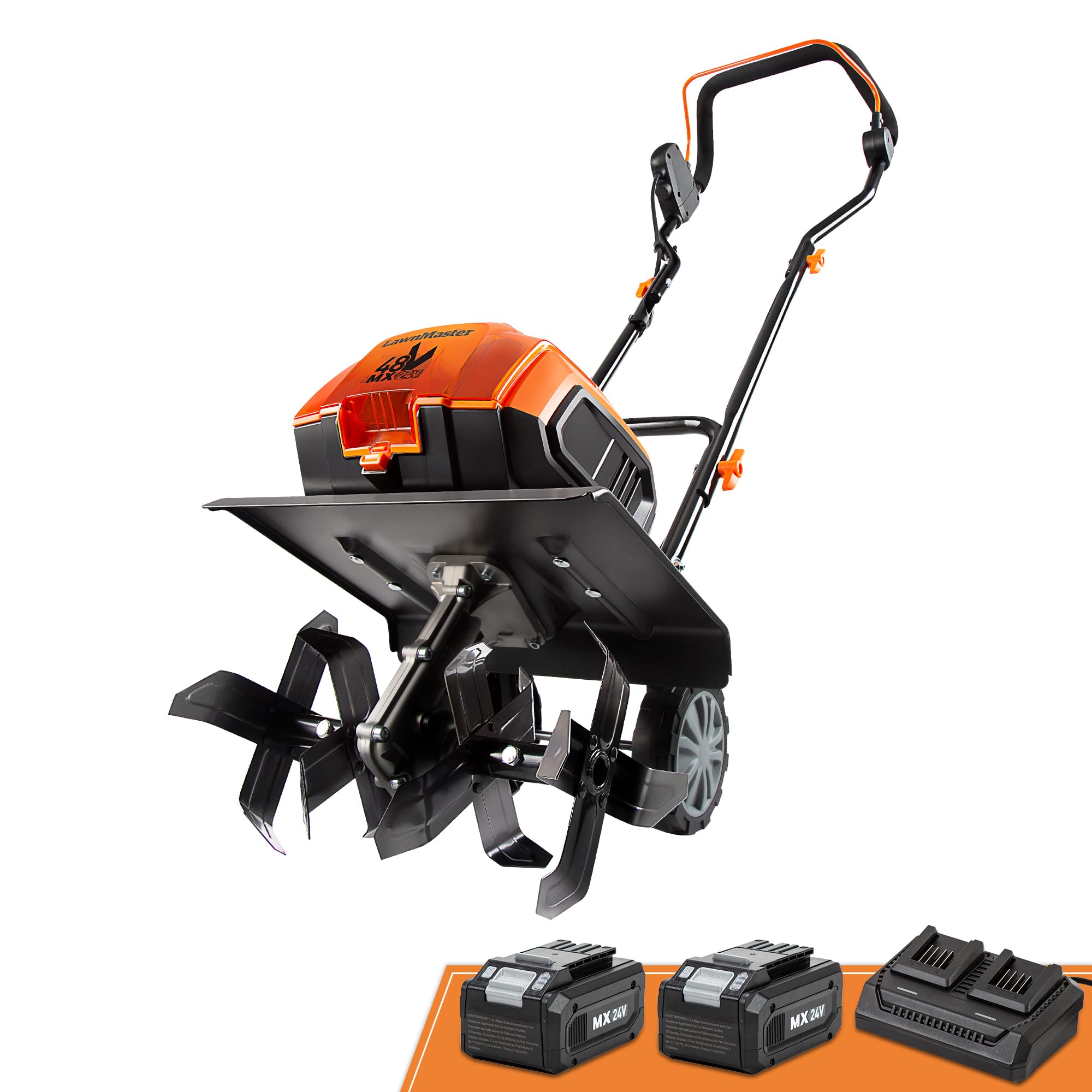
The widest and deepest tiller on the list, built for medium-to-large gardens.
This LawnMaster gives you a 14.5-inch max tilling width and a 9-inch depth — the largest numbers in this roundup — so you cover ground faster than the TaskStar’s 12-inch width. It runs on a 48V MAX brushless motor powered by two 24V 4.0 Ah batteries and spins 4 rust-resistant steel blades at 180 RPM. The manufacturer advertises up to 35 minutes of runtime.
Buyers report it is “powerful for a cordless tiller” and that it handled large rocks without throwing itself around. A 77-year-old reviewer reported it was lightweight enough for her to manage easily on flower beds, though she noted only one battery was included with her unit despite the description. The foldable design stores compactly, and the brushless motor runs quietly compared to gas alternatives.
Coverage champion: the 14.5-inch width means fewer passes across your garden rows than the TaskStar or MZK.
Buyer note: effective on conditioned soil and loose ground — not ideal for breaking fresh, rocky clay due to its relatively light weight.
If your garden is 400 square feet or more, the extra width and depth save serious time versus the 10-inch or 12-inch models. Consider the TaskStar if your soil is heavy clay or you need a machine that can self-propel through tough ground.
6. Sun Joe 24V Cordless Garden Tiller Cultivator
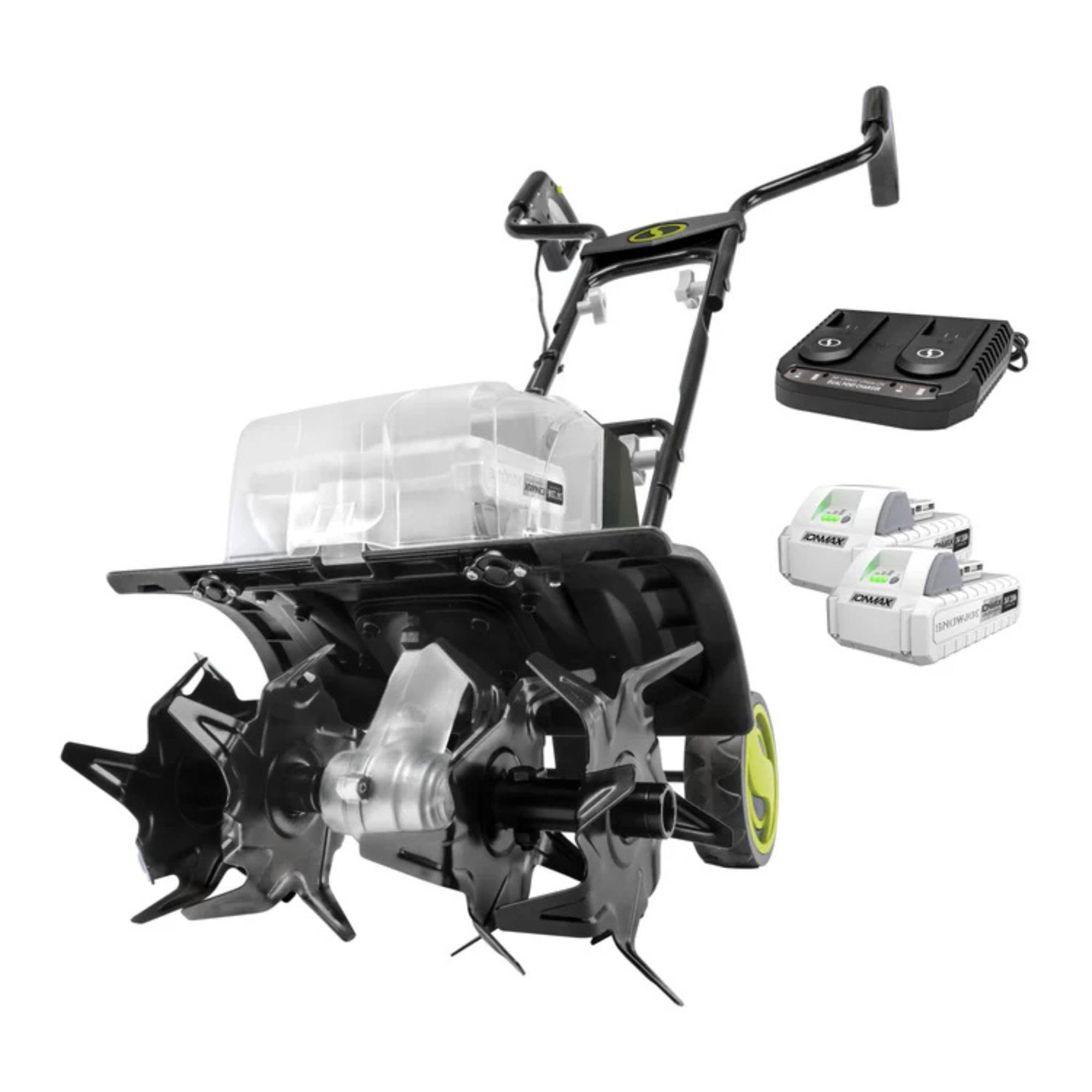
The name you recognize that actually delivers reliable power for established beds.
Sun Joe is a well-known brand in cordless outdoor tools. This 24V cultivator runs on two 24V 2.0 Ah lithium-ion batteries to deliver a 14-inch tilling width and 7-inch depth. It uses 4 steel blades and weighs about 26 pounds — not the lightest but manageable for most users. The 3-position height adjustment and ergonomic auxiliary handle help reduce strain during longer sessions.
Buyers consistently describe it as “lightweight but very powerful,” with one reviewer noting it “easily destroys roots and tough soil.” However, several owners point out it is more of a cultivator (a machine for weeding and mixing in established beds) than a true tiller — it works beautifully on ground you have already broken but cannot easily cut through virgin sod. The flip-back wheels make handling easy, and the battery life recharges quickly between tasks.
Real Strengths
- Brand parts and support are widely available
- Flip-back wheel design makes maneuvering easy
- Quick battery recharge between tasks
Limits to Know
- Cannot break virgin sod — best for existing beds only
- Some owners mention the power button sticks over time
7. Lmozim 21V Cordless Tiller Cultivator
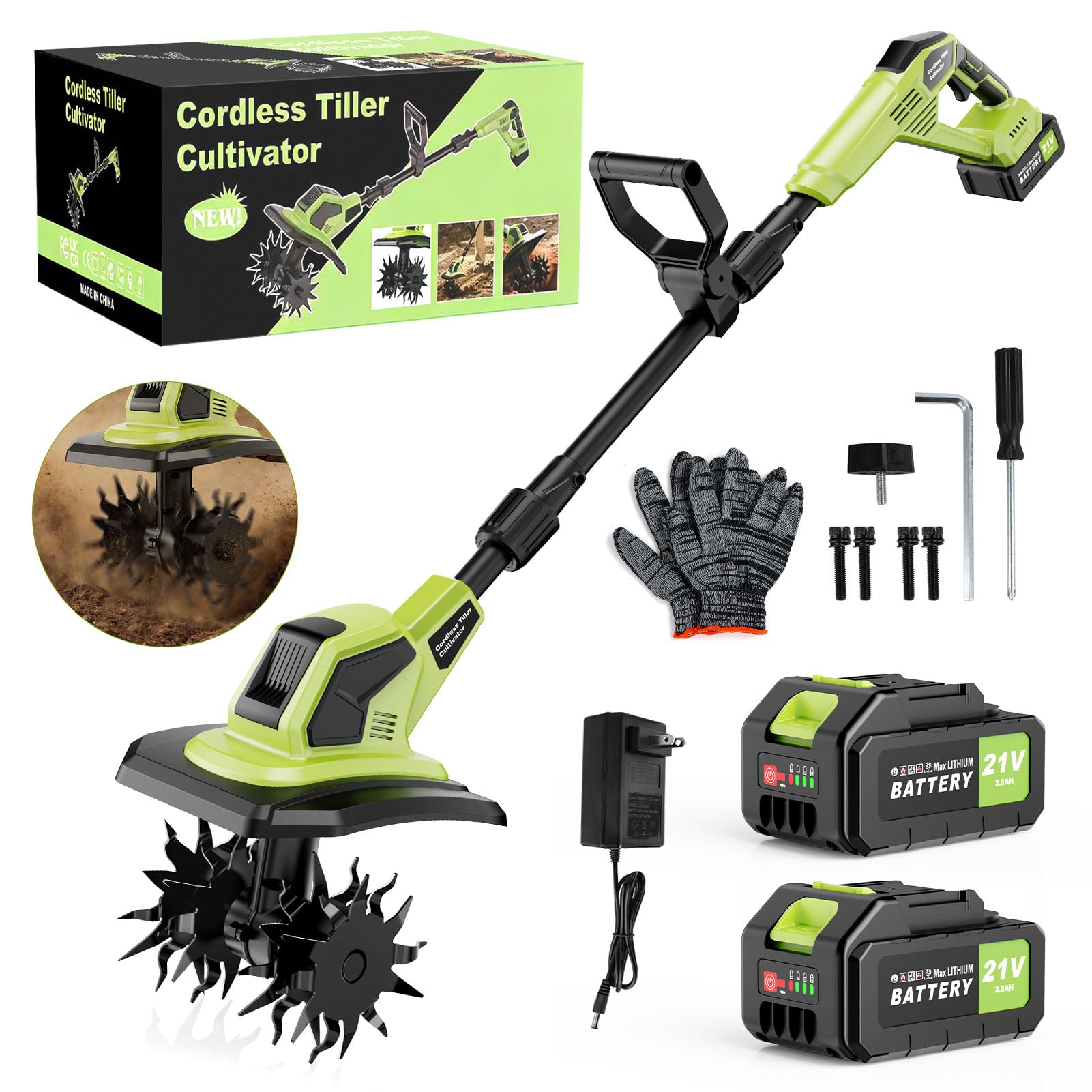
A small hand tiller that spins fast for precision work in tight flower beds.
This 21V model runs at 360 RPM — more than double the 180 RPM of the MZK — making it fast at churning through loose topsoil in raised beds and narrow corners. It has a 9.5-inch tilling width and 6.7-inch depth, with each 3.0 Ah battery providing up to 30 minutes of runtime with quick-swap capability. The dual-safety start system requires pressing the safety button and trigger together.
Customers note it is “great for tilling garden beds and backyard” and that it does a “fantastic job on compacted soil.” One buyer mentioned that hitting a stone makes it jump, but admitted that is true of any tiller at this weight. The detachable blade design makes cleaning easy — just rinse off residual weeds and soil after use. The 21V system is noticeably less powerful than the 40V picks, so this is best for light-to-moderate soil prep.
What It Does Well
- High RPM (360) for fast work in loose soil
- Lightweight and easy to carry around
- Detachable blades simplify cleanup
Where It Plays Small
- Narrow 9.5-inch width means more passes
- 21V motor struggles with hard, compacted clay
8. Greenworks Pro 80V 10 Inch Cultivator

The highest voltage in the lineup with torque that tilled 1500 square feet of rocky clay.
The Greenworks Pro 80V system packs the highest voltage in this comparison, providing serious torque through its brushless motor. It offers an adjustable tilling width from 8.25 inches to 10 inches and up to 5 inches of depth. With the included 2.0 Ah battery, you get up to 40 minutes of runtime, and the 30-minute rapid charger gets you back to work quickly.
Reviewers point out it “competes perfectly with a Honda mini gas tiller” and one owner said it flawlessly tilled 1500 square feet of rocky clay soil. However, the 5-inch depth is shallower than most picks here — the TaskStar goes 8 inches deep and the LawnMaster hits 9 inches. Some owners note the plastic construction feels less durable than metal alternatives, and a minority reported durability failures like a stripped gearbox after 6 uses.
Voltage advantage: 80V provides the most electrical torque of any pick — superb for breaking rocky or clay-heavy ground.
Depth limitation: at only 5 inches, you cannot deep-till like you can with 8-inch or 9-inch models.
Understanding the Specs
Voltage (V) and Amp-Hours (Ah)
Voltage is the electrical pressure feeding the motor — higher voltage (40V, 48V, 80V) generally means more torque for chewing through hard soil. Amp-hours measure the battery’s fuel tank: a 5.0 Ah battery holds 5.0 amp-hours versus a 3.0 Ah battery’s 3.0 amp-hours, so it runs longer before needing a recharge., so it runs longer before needing a recharge.
Tilling Width and Depth
Width determines your coverage per pass — a 14-inch tiller covers 14 inches per pass versus a 10-inch model’s 10 inches per pass.. Depth dictates whether you are just scratching the surface for weeding or actually turning soil for new planting. For most home gardens, 7 to 8 inches of depth is enough to mix in compost and aerate roots.
Brushless Motor
A brushless motor uses electronic controls instead of physical brushes, reducing friction heat and wear. It typically draws less power from the battery, giving you more runtime per charge, and tends to last longer than a brushed motor. Most premium cordless tillers now use brushless technology.
Safety Lock System
A dual-switch safety requires pressing both a button and a trigger to start the tines spinning. This prevents the tiller from lurching forward if you accidentally bump the trigger while carrying it. Some designs require holding the button continuously; others click it once, which owner reviews often prefer for comfort.
FAQ
Can a battery powered rototiller break up new garden sod?
How long do the batteries last on a single charge?
Will a 40V tiller work in heavy clay soil?
What is the difference between a cultivator and a tiller?
Can I use two different brands of batteries in a dual-battery tiller?
How do I store a battery tiller during winter?
Do I need to wear gloves when using a rototiller?
Are battery tillers quiet enough for early-morning use?
Can a lightweight tiller do the same job as a heavy one?
How do I clean the tines after use?
Final Thoughts: The Verdict
Across the board, the best battery powered rototiller is the TaskStar 12 Inch 40V because it combines the largest battery capacity (2×5.0 Ah), useful 8-inch depth, and adjustable wheel control at a mid-range price that makes sense for home gardeners. If you already own Dewalt 20V tools and want wider coverage, the Mellif 40V Dewalt-Compatible unit offers 14.2-inch width and an 8.7-inch depth. For a proven brand name on established beds, the Sun Joe 24V remains a dependable, well-supported choice that handles routine cultivation with ease.
How We Picked
We do not accept paid placement. Every pick is matched to a real buyer and a real use-case; we do not hands-on test units.
Sources & Methodology
Specifications: manufacturer listings and product documentation. Review insights: verified customer reviews, as of July 2026. Pricing: not shown on this page (it changes often); check the current price via the retailer link.
As an Amazon Associate, Lawn Gear Lab earns from qualifying purchases. This does not affect which products we feature.