
Specs are compiled from manufacturer listings and verified buyer reviews and can change over time — please confirm the key details on the product page before buying.
A leaky pond isn’t just a puddle — it’s a constant worry, a bill that keeps rising with every refill, and a source of muddy frustration. The right bentonite clay pond sealer swells when it gets wet, locking into the soil to form a natural, flexible barrier that stops water from sneaking out. The trick is choosing the right grade and application method for your soil type so you get a lasting seal on the first try.
I’m Rikta — the founder and writer behind Lawn Gear Lab. This guide is built by comparing the manufacturers’ published specifications and the patterns across verified customer reviews, so you get each pick’s real strengths and trade-offs instead of marketing spin.
You need a bentonite clay pond sealer that stops water from leaking out of your pond. Below are three reviews that tell you exactly how much each bag expands, how heavy it is, and which soil types or pond sizes it works with, so you can pick the right one for your property.
Quick Picks
- Natural Waterscapes Granular Sodium Bentonite Clay — Best Overall
- Natural Waterscapes Granular Sodium Bentonite Clay for — Best Value
- Nuanchu 30lb Granular Bentonite Clay — Versatile Pick
How To Choose The Best Bentonite Clay Pond Sealer
Choosing a bentonite clay pond sealer depends on three things: how much you need, how fine the particles are, and whether it matches your soil type. Here is what to look for.
Granules vs Powder — Which Blend Works Best?
A mix of chips and powder, like the granular form, spreads more evenly and works better in loose or sandy soils. Pure powder can clump or wash away before it has a chance to swell. The right blend gives you a tight seal with less effort.
Weight and Coverage — Matching the Bag to Your Pond
Bentonite is sold by the pound. A 25-pound bag covers a small pond or a patch repair, while a 45-pound bag handles a larger area or a full floor application. Measure your pond’s surface area and check the manufacturer’s recommended application rate — usually 1 to 3 pounds per square foot depending on soil type.
Swell Index — How Much It Expands
The swell index tells you how much the clay expands when wet. A higher swell index means the clay swells more, plugging larger gaps and loose soil. Bentonite from Wyoming, known as sodium bentonite, is prized for its high swelling ability making it the go-to choice for pond sealing.
Quick Comparison
| Model | Best For | Weight | Item Form | Dimensions | Amazon |
|---|---|---|---|---|---|
| Natural Waterscapes 45 lbs | Large pond sealing & full floor coverage | 45 Pounds | Granular | 25 x 15 x 15 in | Amazon |
| Natural Waterscapes 25 lbs | Medium ponds & targeted leak repair | 25 Pounds | Granules, Powder | 12 x 12 x 11 in | Amazon |
| Nuanchu 30 lb | Small ponds & versatile sealing tasks | 30 Pounds | Granules | — | Amazon |
In‑Depth Reviews
1. Natural Waterscapes Granular Sodium Bentonite Clay for Pond Sealing 45 lbs

The heavy bag for big jobs — 45 pounds of pure granular sodium bentonite for a serious seal.
You get the most material per bag with this one — 45 pounds of pure granular sodium bentonite clay (a natural clay that swells when wet) in a box measuring 25 x 15 x 15 inches. At 45 pounds versus the 25-pound option below, you can cover a large pond floor or apply a thick layer in one go. No additives or fillers are mixed in.
The granular form makes this easy to spread and mix into the soil. Unlike pure powder that can float away, these granules settle into the dirt and swell, creating a natural waterproof barrier. One owner mentioned that it worked well for sealing around pipes and the edges of a farm pond — critical spots where leaks often start.
The bag only says “expands in contact with water” — no detailed instructions. You will need to look up proper compaction technique beforehand: mix the clay into your soil and pack it tight for the best seal.
Why it leads the list
- Full 45-pound bag delivers the most material for large jobs
- Granular form resists washing away before it expands
- Natural sodium bentonite from a known brand
One thing to factor
- No detailed application guide included — you need to research mixing and compacting methods separately
Grab this for: covering a large pond bottom or a full renovation where 45 pounds of granular material will save you a second trip to the store.
Think twice if: you only have a small patch repair — the 25-pound version will waste less material and be easier to handle.
2. Natural Waterscapes Granular Sodium Bentonite Clay for Pond Sealing 25 Pounds

A smart-sized bag — 25 pounds of a chip-and-powder blend for medium ponds and spot repairs.
This one uses a blend of chips and powder instead of pure granules. The chips sink and swell when wet, while the powder fills the tiny gaps between soil particles — a combination that creates a denser seal, especially in soil that is not perfectly compacted. It is from Natural Waterscapes, the same brand as our top pick, but in a lighter 25-pound bag and a much smaller 12 x 12 x 11-inch box — the 45-pound version’s box is 25 x 15 x 15 inches — so you can carry it to the pond edge by yourself.
Buyers report it works well for use in large ponds, lakes, waterfall edges, farm ponds, and livestock tanks. The manufacturer recommends mixing it with pond soil and compacting it to create the tightest seal — a step that cannot be skipped. The blend also handles leak repair around outlet pipes, where you need material that can wrap around odd shapes.
One limitation is that the blend’s lighter weight means you get less total material than the 45-pound bag. For a full pond floor on a larger water body, you might need multiple bags, while the 45-pound bag would serve you better in a single purchase.
Reasons to choose this
- Chip-and-powder blend fills gaps more thoroughly than granules alone
- Big enough for a medium pond but manageable to carry at 25 pounds
- Versatile across ponds, lakes, farm tanks, and pipe seals
Its limit
- For a large pond floor you will likely need more than one bag
Pick this for: a medium pond or targeted leak repairs where the blend’s chip-plus-powder action gives you a tighter fill than granules alone.
Choose the 45-pounder instead if: you are sealing a whole pond bottom and prefer one bag over carrying multiples.
3. Nuanchu 30lb Granular Bentonite Clay for Pond Sealing
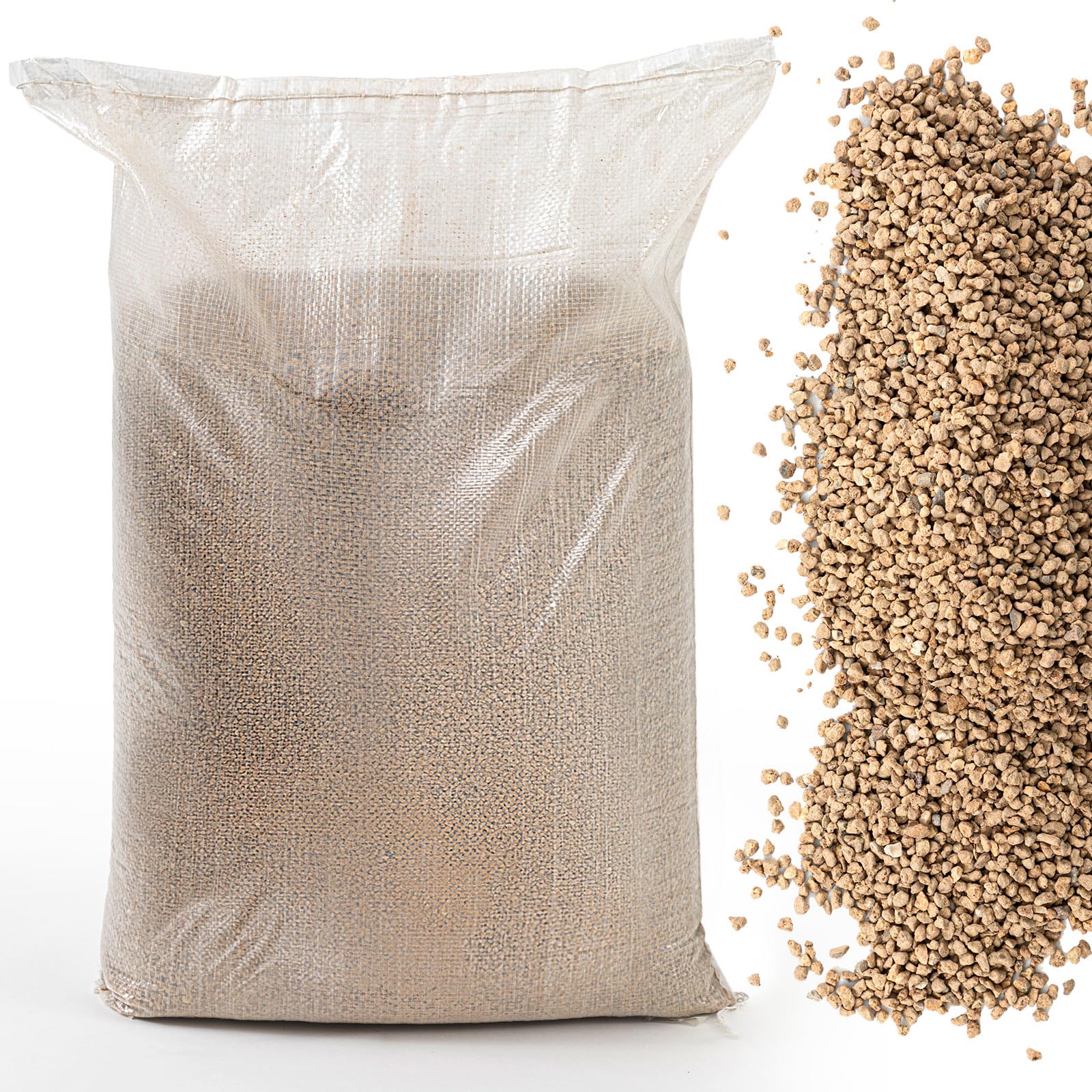
30 pounds of granular bentonite that expands up to 15 times on contact with moisture.
Nuanchu brings a 30-pound bag of granular all-natural bentonite that the manufacturer says expands up to 15 times or more when exposed to moisture. That high expansion rate is useful for sealing looser soils where a less swellable clay might not fill all the gaps. Like the others, the process is standard: drain the pond, mix the bentonite into the soil at the bottom and sides, compact it, then cover with clean soil or sand.
It is sold as a versatile option — the manufacturer lists uses beyond pond sealing, including as a binder in foundry sand and for cat litter clumping. For pond work, it works on large ponds, lakes, waterfall edges, farm ponds, and livestock tanks.
One thing to note is that Nuanchu is a less established brand in the pond category compared to Natural Waterscapes. Also, the product is sold as a single 30-pound bag, so for a full pond floor you would tally up how many you need based on your square footage. Owners mention it is best applied properly — the expansion rate only delivers if you follow the compaction and covering steps.
What stands out
- High expansion rate — up to 15 times — for filling loose soil
- 30-pound bag offers a middle ground between the 25 and 45 pounders
- Versatile for other uses like foundry sand or cat litter
Potential downsides
- Brand is newer to pond sealing so track record is shorter
- Proper application steps (mixing, compacting, covering) are crucial — skipping them kills the seal
Reach for this if: you want the highest expansion potential and a 30-pound bag that sits right between the standard 25 and 45-pound options.
Look elsewhere if: brand familiarity matters to you and you prefer a product with a longer history in the pond category.
Understanding the Specs
Granular vs Powder — Which One to Choose
Granular bentonite contains small chips that sink into the soil and swell when wet, making it the better choice for ponds with loose or sandy soil. A chip-and-powder blend, like the one in the 25-pound Natural Waterscapes option, fills both large gaps (with the chips) and fine cracks (with the powder) for a tighter overall seal. Pure powder can float away or clump before expanding, especially if the pond is refilled too quickly.
Application Method — Why Compaction Matters
Every bentonite pond sealer works the same basic way: drain the pond, mix the clay into the top layer of soil, compact it by tamping or rolling, and cover it with clean soil or sand. Skipping the compaction step is the number one reason seals fail. The bentonite cannot swell against loose soil — it needs pressure to hold it in place while it expands. A properly compacted seal can last for years without maintenance.
FAQ
How much bentonite clay do I need per square foot?
Can I use bentonite clay in a pond that already has water in it?
How long does a bentonite clay pond seal last?
Is bentonite clay safe for fish and aquatic plants?
What is the difference between sodium bentonite and calcium bentonite for ponds?
Can I mix bentonite clay with the soil myself or do I need special equipment?
Will bentonite clay seal a pond with heavy clay soil?
Can I use bentonite clay to seal around pipes and outlet fittings?
Final Thoughts: The Verdict
For most buyers, the bentonite clay pond sealer winner is the Natural Waterscapes 45-pound granular sodium bentonite because it gives you the most material in a single bag for covering a large pond area with pure granular clay. If you prefer a chip-and-powder blend for tighter soil filling and a lighter 25-pound bag, grab the Natural Waterscapes 25-pound blend. And for a 30-pound mid-sized option with high expansion potential, the Nuanchu 30lb granular bentonite is a solid versatile choice.
How We Picked
We do not accept paid placement. Every pick is matched to a real buyer and a real use-case; we do not hands-on test units.
Sources & Methodology
Specifications: manufacturer listings and product documentation. Review insights: verified customer reviews, as of July 2026. Pricing: not shown on this page (it changes often); check the current price via the retailer link.
As an Amazon Associate, Lawn Gear Lab earns from qualifying purchases. This does not affect which products we feature.