
Specs are compiled from manufacturer listings and verified buyer reviews and can change over time — please confirm the key details on the product page before buying.
Starting seeds, repotting a fussy snake plant, or filling an apartment windowsill box — you want soil that drains well and feeds roots naturally, not a bag of synthetic fertilizer that burns tender new growth. The whole trick is finding a mix that is “plain” on purpose, without added nutrients, so you control exactly what your plants get.
I’m Rikta — the founder and writer behind Lawn Gear Lab. This guide is built by comparing the manufacturers’ published specifications and the patterns across verified customer reviews, so you get each pick’s real strengths and trade-offs instead of marketing spin.
These six soils skip the chemical boost and start with clean ingredients like coco coir, peat moss, and perlite, giving you full control over your feeding schedule. Our goal is to help you find the absolute best potting soil without fertilizer for your exact plants and space.
Quick Picks
- Minute Soil – Compressed Coco Coir Fiber Grow — Best Overall
- Midwest Hearth Premium Potting Soil Mix — Top Performer
- Perfect Plants Organic Snake Plant Soil — Best for Snake Plants
- LGM Organic Potting Soil Mix (0.5 Cubic Feet) — Best Organic Mix
- ZESTIGREENS 16 Pack Expanding Organic Fiber Soil — Compact Option
- Yecna Sphagnum Peat Moss (3 Quarts) — Best for Mixing
How To Choose The Best Potting Soil Without Fertilizer
When a bag says “feeds for months,” that added fertilizer can damage sensitive roots or burn seedlings. The six soils here all skip the synthetic boost, so you decide when and what to feed. Here are the three decisions that will narrow your choice.
Base Ingredient: Coco Coir vs. Peat Moss
Coco coir comes from coconut husks. It holds water well, rehydrates easily from a dry brick, and has a neutral pH that most houseplants like. Peat moss, on the other hand, is harvested from bogs, is more acidic, and breaks down slower. Choose coir if you want a renewable, easy-to-store option that expands with water. Pick peat moss if you are blending your own mix and need a stable, long-lasting base.
Texture and Drainage
The best soils for container plants are light and fluffy, not dense and muddy. Look for ingredients like perlite (white volcanic glass that traps air), vermiculite (a mineral that holds moisture), and coarse sand or pine bark. These create gaps in the soil so roots get oxygen and excess water drains away, preventing root rot.
Volume and Storage
Consider how much space you have. A bag of pre-mixed soil is ready to use but bulky to store. Compressed bricks of coco coir take up almost no shelf space and expand to several gallons of soil when you add water. If you live in an apartment or only need small amounts for a few pots, a compressed option or a 4-quart bag is much easier to manage than a 40-pound sack.
Quick Comparison
| Model | Best For | Volume | Base Ingredient | Weight | Amazon |
|---|---|---|---|---|---|
| Minute Soil Compressed Coco Coir | Best Overall / Big Projects | 4.5 Gallons | Coco Coir | 1.89 kg | Amazon |
| Perfect Plants Snake Plant Soil | Best for Snake Plants | 4 Quarts | Coco Coir / Pine Bark / Perlite | — | Amazon |
| Midwest Hearth Premium Potting Soil | Best Ready-to-Use Mix | 8 Quarts | Peat Moss / Perlite / Vermiculite | 1.25 kg | Amazon |
| LGM Organic Potting Soil Mix | Best Organic Mix | 0.5 Cubic Feet | Sphagnum Peat Moss / Perlite / Kelp Meal | 3.44 kg | Amazon |
| ZESTIGREENS 16 Pack Expanding Coco Coir | Best for Small Pots | 10 Quarts | Coco Coir | — | Amazon |
| Yecna Sphagnum Peat Moss | Best for Mixing Your Own | 3 Quarts | Sphagnum Peat Moss | 0.77 kg | Amazon |
In‑Depth Reviews
1. Minute Soil – Compressed Coco Coir Fiber Grow Medium – 3 Bricks

Three bricks that puff into a generous 4.5 gallons of soil with just water.
If you want the most soil for your money without a trace of fertilizer, this is it. Each brick needs 10 cups of water and expands to about 1.5 gallons per brick. The base is pure, untreated raw coconut coir (no added nutrients), so you control all feeding. It is also OMRI-listed (approved for organic gardening).
Reviewers love the convenience of storing three lightweight bricks instead of a heavy wet bag. One buyer even shared a time-saving tip: “If you are impatient like I am use hot water not cold and it will instantly puff up!” The trade-off is that pure coco coir has no structure on its own — some reviewers noted it compacts when dry, so mixing it with perlite or a standard potting soil improves drainage and water retention. At 1.89 kilograms, it weighs 1.89 kg, while the Yecna peat moss weighs 0.77 kg, but that weight is all dry, compact soil waiting to expand.
This pick is ideal for anyone who re-pots frequently, starts seeds, or wants a huge supply of plain soil without hauling heavy bags. Because it is raw and unamended, you have to add your own fertilizer — exactly the point if you want to avoid the pre-mixed kind.
What stands out
- Huge 4.5-gallon yield from compact bricks
- Pure, untreated coco coir — zero synthetic fertilizers
- OMRI-listed for organic production
- Lightweight and easy to store before use
What to know
- Can compact when dry — better mixed with perlite or potting soil
- Plastic packaging rips easily; needs a bucket or bag for storage
Reach for this if: you need bulk soil for multiple pots, seedlings, or a garden and want zero added fertilizer.
Keep scrolling if: you prefer a pre-mixed blend with perlite already in it — this is pure coco coir and needs your own amendments.
2. Midwest Hearth Premium Potting Soil Mix (8 Dry Quarts)

A professional-grade blend that is light, fluffy, and completely fertilizer-free.
This is the “just open and plant” mix for anyone who does not want to mess with bricks or custom blending. It combines peat moss for moisture retention, perlite for aeration, and vermiculite to hold water, all balanced to a controlled pH that suits a wide range of plants. Unlike the Minute Soil which needs mixing, this bag is ready to use straight out of the resealable bag. At 8 dry quarts, it is a solid mid-size option — bigger than the 4-quart Perfect Plants bag but smaller than the bulk 4.5-gallon Minute Soil yield.
Buyers report this soil “promotes stronger roots and faster growth in herbs and flowers” and that it has a “light, fluffy texture” with no weeds or bugs. Some mention the bag is a bit small for large projects, but for indoor pots, containers, and seed-starting, it is convenient. The 1.25-kilogram weight makes it easy to carry. The “modern” style name aside, the spec is simple: a balanced, unfertilized triple-blend from a USA-based maker.
This pick fills the gap if you want a premium ready mix without fertilizer and without the work of hydrating bricks. The resealable bag also keeps unused soil fresh, which the Minute Soil’s torn packaging does not.
Best for convenience: Open the bag, pour, plant. No mixing, no bricks, no guesswork.
Grab this if: you want a no-fuss, high-quality mix for a handful of pots and don’t want to blend your own.
Pass if: you need a huge volume for a garden — the 8-quart bag is better for containers than ground beds.
3. Perfect Plants Organic Snake Plant Soil (4 Quarts)

A species-specific mix that drains fast and contains no slow-release fertilizer.
Snake plants (Sansevieria) hate sitting in wet soil, and this blend is engineered to fix that. It is made with coco coir, pine bark chips, perlite, and sand — all coarse, free-draining ingredients. One reviewer noted, “Soil drains quickly with perlite, coarse sand, coconut coir, and pine bark. Ideal for snake plants, mimicking natural habitat.” The bag clearly states it contains no slow-release fertilizer, so it fits perfectly in the “no fertilizer” category while being a tailored solution rather than a generic base.
At 4 quarts, it is a smaller bag than the Midwest Hearth 8-quart mix, but the heavy-duty resealable bag keeps the soil fresh between uses. A few buyers mention the price per quart is high compared to generic mixes, so it makes more sense for propagating small plants or repotting a few specimens than for filling large pots.
If you grow snake plants, succulents, or any drought-tolerant houseplant, this mix removes the guesswork. It is the only pick here that is professionally blended for a specific genus, giving it an edge over general-purpose coco coir or peat moss.
Why it works
- Drains quickly — coarse sand, pine bark, and perlite keep roots dry
- No slow-release fertilizer
- Professionally mixed in the USA on a family farm
Consider this
- Small bag (4 quarts) may be costly for large snake plants
- Not a general-purpose mix — best for snake plants and succulents
For snake plant owners: This is the closest you’ll get to a tailored, fertilizer-free mix that mimics their natural habitat.
skip it if: you need a cheap bulk soil for a garden or general houseplants — you’ll get more value from a larger bag of coco coir or peat moss.
4. LGM Organic Potting Soil Mix (0.5 Cubic Feet)
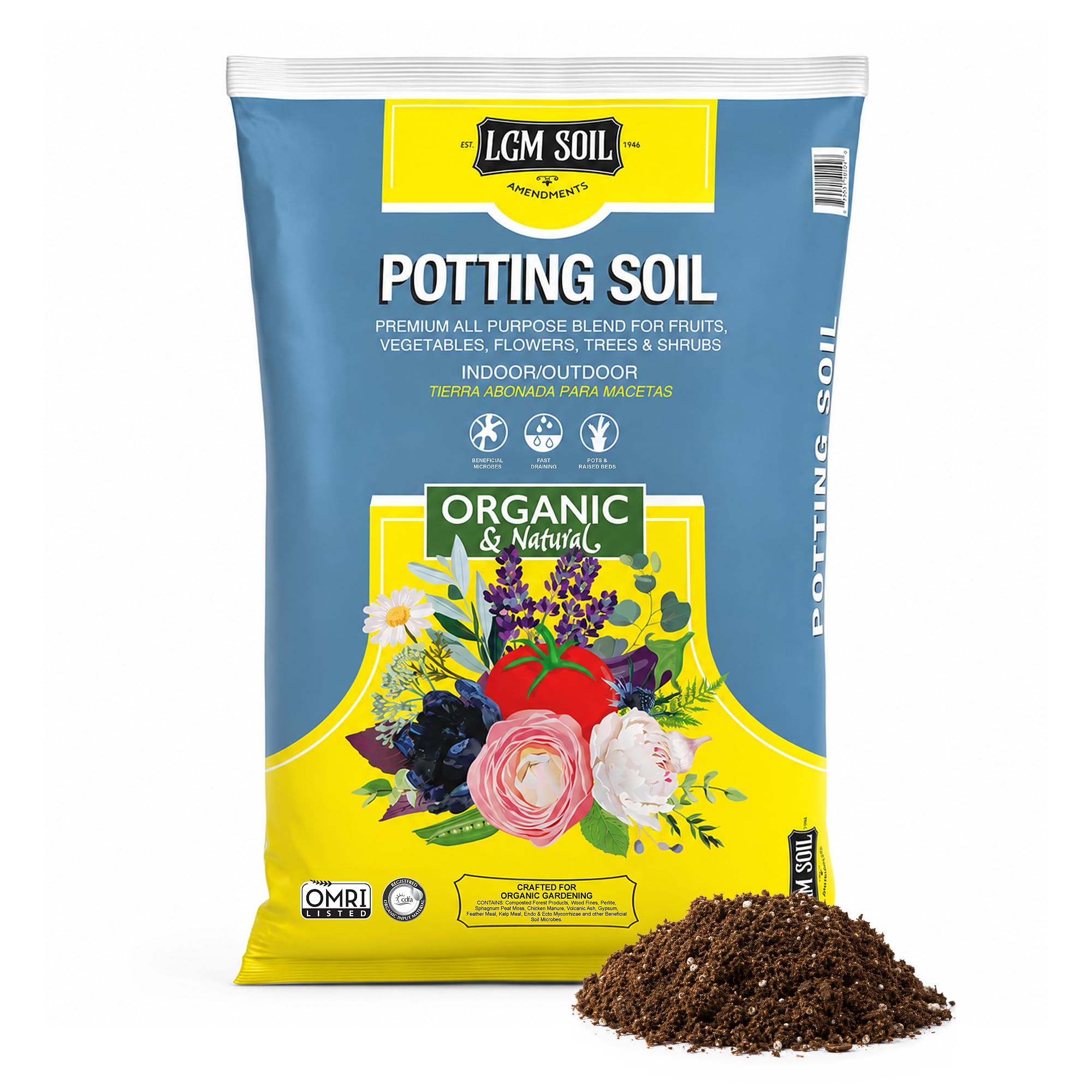
An 11-ingredient living mix that feeds the soil biology, not the plant directly.
This is the most complex blend on the list — and the only one that includes beneficial microbes, volcanic ash, and kelp meal alongside sphagnum peat moss and perlite. The manufacturer explicitly states there are “zero synthetic fertilizers and zero artificial additives,” so it meets the no-fertilizer requirement while still offering a rich, natural starting point. Unlike the simple coco coir bricks, this mix uses 11 natural inputs to create a living soil that supports root development from the start.
At 0.5 cubic feet (about 15 dry quarts), it is the largest ready-to-use bag here by volume, and at 3.44 kilograms, it is the heaviest. The texture is described by buyers as “rich, clean” and “deep moisture” but one buyer mentioned it is “heavy, sandy soil with wood chips” and had poor results with vegetable seedlings (2 out of 44 germinated). That suggests this mix is better for established potted plants and container flowers than for seed-starting.
This pick is for the gardener who wants a more “ecosystem” approach — soil that encourages microbial life instead of synthetic fertilizer. It is a premium choice for indoor houseplants like snake plants and pothos, and it works well in outdoor containers and planters.
For soil-life enthusiasts: 11 natural inputs with beneficial microbes, zero synthetic fertilizers.
Choose this if: you want a high-organic, microbial-rich soil for established houseplants or container gardens and want to avoid any synthetic additives.
Avoid for seedlings: the heavy, sandy texture may not work for germination — stick to a finer mix for starting seeds.
5. ZESTIGREENS 16 Pack Expanding Organic Fiber Soil

Sixteen compact wafers that each expand into a small pot’s worth of clean coir soil.
If you only need small amounts of soil for a few 3- or 4-inch pots, this pack is the neatest solution. Each wafer is shrink-wrapped, so you can store them indefinitely and hydrate only as needed — add 5 ounces of water per disc and watch it puff up into coco coir. The total yield is 10 quarts from a package that takes up almost no shelf space, making it much more flexible for small projects.
One creative buyer noted, “I used it in my fish tank, and it worked perfectly!” — proof of how clean and chemical-free this unfertilized coir is. Other reviewers mentioned it is easy to hydrate and works well for cat grass and seed starting. The main downsides: the packaging can arrive cut open during shipping (spilling some soil), and the individual wafers have a mesh bag that some users prefer to cut off for better expansion. It also comes as 1 Count (a pack of 16 discs) versus the Minute Soil’s 3 Count (3 bricks).
This pick is the easiest for apartment dwellers or anyone who wants to avoid lugging heavy bags. Each disc is a controlled portion, so you never waste soil.
Perfect for small spaces
- Compact, dry wafers store in a drawer — no heavy bags
- Each disc makes exactly the right amount for a small pot (no waste)
- Clean, natural coco coir with no additives
Watch out for
- Packaging may tear during shipping (reported by buyers)
- Each disc is individually wrapped — more packaging waste than a bag
Best for window-sill gardeners: use one disc for a single small pot and save the rest for later.
Not for large pots: you would need to hydrate many discs to fill a 6-inch pot; a brick or bag is more efficient.
6. Yecna Sphagnum Peat Moss (3 Quarts)

A pure, lightweight peat moss that is perfect for custom blending your own soil.
This is the most basic ingredient on the list — straight sphagnum peat moss with nothing else added. It is not a finished potting mix like the Midwest Hearth or LGM blends; it is a soil amendment meant to be mixed with perlite, sand, or other materials. At 3 quarts and 0.77 kilograms, it is the lightest and smallest package here, while the Minute Soil bricks weigh 1.89 kg. Buyers call it “great moss, kind of amazing it goes from looking like a small beer of cardboard to plush happy moss when rehydrated.”
Because it is compact and dry, it stores easily and rehydrates quickly. The acidic pH (typical of peat moss) makes it a good base for acid-loving plants like blueberries or azaleas, but you will need to adjust the pH if you use it for general houseplants. Unlike coco coir which has a neutral pH, peat moss is naturally more acidic. This is a feature if you know what you are doing, but a risk if you just want to open and plant.
This is the budget-friendly base for gardeners who make their own custom mixes. It is also the simplest soil to repurpose — strong, pliable root growth in a medium you control entirely. If you want a pure, untreated peat moss that you can blend exactly to your plants’ needs, this is your pick.
For DIY blenders: pure sphagnum peat moss with no fertilizer — you control the recipe.
Grab this if: you already have perlite or vermiculite at home and want a base component to mix your own soil.
pass on it if: you want a ready-to-use potting mix straight from the bag — this requires mixing and pH management.
Understanding the Specs
Volume: Quarts, Gallons, and Cubic Feet
Soil volume is measured in quarts (qt), gallons (gal), or cubic feet (cu ft). One gallon equals 4 quarts, and 1 cubic foot is about 7.5 gallons. For a single 6-inch pot, you need about 1.5 quarts of soil. A 10-quart bag handles 6-7 small pots. Compressed bricks or wafers yield much more than their dry size suggests — a 3-brick pack of coco coir can produce 4.5 gallons of soil, which is about 18 quarts.
Base Ingredients: Coco Coir vs. Peat Moss
Coco coir is made from ground coconut husks. It is renewable, rehydrates quickly, and has a neutral pH (around 6.0-6.5), which most houseplants prefer. Peat moss is harvested from ancient bogs, is more acidic (pH around 3.5-4.5), and holds water well but takes longer to rehydrate when dry. Coco coir expands faster and is easier to store dry. Peat moss breaks down slower and provides more structure over time. Choose coir for fast, easy use with most houseplants; choose peat moss for acid-loving plants or long-term soil building.
FAQ
Can I use these soils for seed starting?
How do I hydrate compressed coco coir bricks?
What does “no slow-release fertilizer” actually mean?
Can I mix coco coir with regular potting soil?
How long does a bag of unfertilized soil last once opened?
Is coco coir better than peat moss for indoor plants?
Do I need to add anything to these soils?
Which bag is best for a single large snake plant?
Final Thoughts: The Verdict
For the majority of shoppers, the potting soil without fertilizer winner is the Minute Soil Compressed Coco Coir because it delivers the most soil for your money (4.5 gallons), stores compactly as dry bricks, and gives you complete control with zero added nutrients. If you want a ready-to-use mix that is already aerated and pH-balanced, grab the Midwest Hearth Premium Potting Soil. And for a tailored, fast-draining mix designed specifically for snake plants and succulents, the Perfect Plants Snake Plant Soil is the safest bet.
How We Picked
We do not accept paid placement. Every pick is matched to a real buyer and a real use-case; we do not hands-on test units.
Sources & Methodology
Specifications: manufacturer listings and product documentation. Review insights: verified customer reviews, as of July 2026. Pricing: not shown on this page (it changes often); check the current price via the retailer link.
As an Amazon Associate, Lawn Gear Lab earns from qualifying purchases. This does not affect which products we feature.