
Specs are compiled from manufacturer listings and verified buyer reviews and can change over time — please confirm the key details on the product page before buying.
Small bugs on your houseplants are a real headache, but the wrong spray can damage your leaves or fill your home with harsh smells. The best bug spray for indoor plants kills pests on contact without toxic fumes, so you can spray right inside your living room and move on with your day.
I’m Rikta — the founder and writer behind Lawn Gear Lab. This guide is built by comparing the manufacturers’ published specifications and the patterns across verified customer reviews, so you get each pick’s real strengths and trade-offs instead of marketing spin.
After analyzing seven top-rated sprays that are safe for indoor use, one clear winner emerged for most plant owners. Keep reading to find the best bug spray for indoor plants that actually stops aphids, spider mites, and fungus gnats without forcing you to open every window.
Quick Picks
- Dr. Killigan’s Doom & Bloom House Plant — Best Overall
- Athena IPM Plant Pest Control Ready-to-Use Spray — Large Collection Pick
- Miracle-Gro Plant Care Leaf Protect and Shine — Multi-Purpose Champion
- Arber Organic Insecticide Liquid Concentrate — Organic Specialist
- NatroZing Garden Insect Killer 11 OZ — Budget Champion
- Smart Grower Neem Oil Spray — Leaf Shine + Scent
- Evergreen Way Organic Insecticide & — Value Concentrate
How To Choose The Best Bug Spray For Indoor Plants
You need a spray that kills your specific pest without harming your plant or your family. Check the active ingredient, how often you must reapply, and whether it is ready-to-use or a concentrate.
Active Ingredient — How It Kills
Some sprays use plant-derived oils (neem, soybean, peppermint) that smother insects or break down their outer shell. Others use biological agents that disrupt the pest’s life cycle. Soybean oil, for example, works by physically breaking down the pest’s protective outer layer, leading to dehydration — a mechanical mode that pests cannot build resistance to.
Ready-to-Use vs. Concentrate
Ready-to-use sprays let you start treating immediately with no mixing, but you pay for the water they contain. Concentrates (like the Arber and Evergreen Way formulas) require you to dilute with water, but one bottle can produce multiple treatments — often more economical for a large plant collection or a garden bed.
Coverage — All Life Stages vs. Adults Only
Many sprays kill adult bugs on contact but leave eggs and larvae untouched. If you only kill the adults, the infestation returns in a week. Look for sprays that specifically mention eliminating nymphs, larvae, and eggs, or pair your spray with a systemic soil treatment for complete control.
Quick Comparison
| Model | Best For | Volume | Active Ingredient | Kill Stages | Amazon |
|---|---|---|---|---|---|
| Dr. Killigan’s Doom & Bloom | Overall Performance | 16 fl. oz. | Soybean Oil | Adults (contact) | Amazon |
| Athena IPM | Large Collections | 32 fl. oz. | EPA 25(b) Oils | Adults (contact) | Amazon |
| Miracle-Gro Leaf Protect & Shine | Multi-Purpose + Shine | 8 fl. oz. (2-pack) | Multi-oil Blend | Adults + Fungus | Amazon |
| Arber Organic Insecticide | Organic Gardening | Concentrate (1.1 lb) | Biological Concentrate | Larvae + Adults | Amazon |
| NatroZing Garden Insect Killer | Budget-Friendly Power | 11 oz. | Plant Extract | Eggs + Larvae + Adults | Amazon |
| Smart Grower Neem Oil Spray | Leaf Shine + Scent | 8 fl. oz. | Neem + Essential Oils | Adults (light) | Amazon |
| Evergreen Way Organic Insecticide | Value Concentrate | 16 oz. Concentrate | Bio-based Concentrate | Larvae + Adults + Fungus | Amazon |
In‑Depth Reviews
1. Dr. Killigan’s Doom & Bloom House Plant Pest Spray
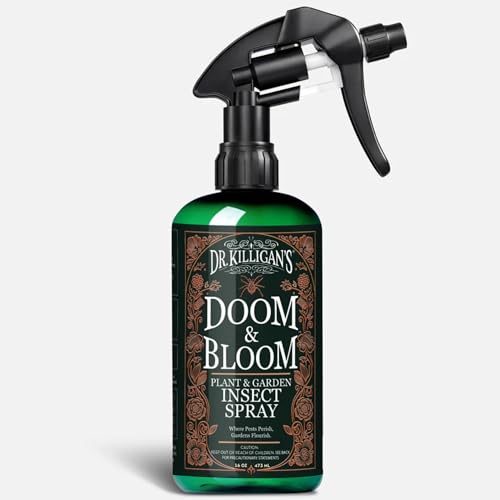
The spray that physically shreds pests without toxic fumes — made for indoor use from day one.
Unlike most sprays that attack a bug’s nervous system and risk building resistance, Doom & Bloom uses soybean oil in a mechanical mode of action — it breaks down the pest’s protective outer layer, causing dehydration and disrupted respiration. That means aphids, spider mites, thrips, and soil gnats die on contact, and the pests can’t develop immunity to it over time. It holds 16 fluid ounces of liquid, which is double the 8 fluid ounces you get in the Smart Grower Neem Oil Spray, so you treat more plants before needing a refill.
Buyers report that using it 1-2 times per day for 1-2 weeks alongside systemic watering eliminated thrips immediately and triggered new growth. The adjustable trigger sprayer lets you switch between a mist for broad leaf coverage and a stream for direct soil hits. Just remember: it works best on small-bodied insects like aphids, and it does not treat fungal infections, so pair it with a fungicide if you see powdery mildew.
Fast contact killer: The soybean oil base works instantly on small pests and won’t lose effectiveness over time — a solid choice for any indoor plant owner dealing with a sudden aphid or thrips outbreak.
Reach for this if: You want a ready-to-use, low-odor spray that physically eliminates common houseplant pests without chemicals hanging around in your air.
Look elsewhere if: You need a spray that also treats fungal issues like powdery mildew — this is a straight insecticide only.
2. Athena IPM Plant Pest Control Ready-to-Use Spray
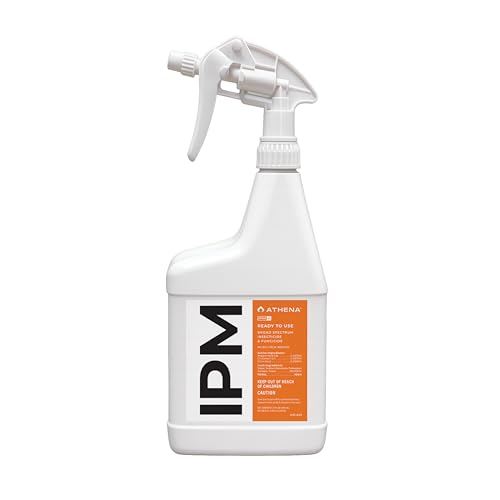
A giant 32-ounce bottle you just shake and spray — no mixing, no measuring, no fuss.
If you own a serious indoor garden or a tall fiddle-leaf fig that needs full coverage, the Athena IPM comes ready to use straight from the bottle with a massive 32 fluid ounces of liquid — that’s the largest volume of any ready-to-use spray here, giving you more treatments than the 16-ounce Dr. Killigan’s bottle. It is made with EPA 25(b) minimum risk ingredients, meaning the formula is safe around pets, people, and children when used as directed, and it controls spider mites, aphids, thrips, and powdery mildew in one pass.
Owners mention that the spray kills bugs instantly on contact, has a pleasant smell, and is effective even in rural areas with heavy bug pressure. Because it also contains a fungicide, it doubles as protection against powdery mildew — something the Doom & Bloom spray cannot do. The trade-off: it is a contact killer only, so you still need to re-apply weekly during active infestations and ensure you hit the underside of every leaf.
Why it stands out
- 32 fl. oz. ready-to-use — twice the volume of most competitors, so you spray more plants before needing a new bottle
- Kills both insects and powdery mildew, combining insecticide and fungicide in one bottle
One honest limit
- Contact-only formula — you must spray every bug directly; it does not leave a long-term protective residue on leaves
Grab this for: Big plant collections where you want one sprayer that handles bugs and fungus without needing to measure or mix anything.
skip it if: You only have a couple of small pots — the 32-ounce bottle will sit around longer than a smaller spray would.
3. Miracle-Gro Plant Care Leaf Protect and Shine, 4-in-1
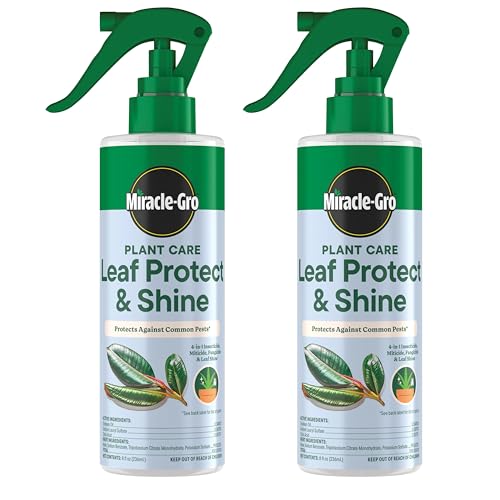
One spray that kills mites, prevents disease, and makes leaves shine — like a spa day and pest control combined.
Miracle-Gro’s 4-in-1 formula combines insecticide, miticide, fungicide, and leaf shine in a single spray — a rare combination that saves you from buying separate products. It kills and prevents common pests like mites, thrips, aphids, and whiteflies, while also protecting against powdery mildew. The 2-pack gives you two 8-fluid-ounce bottles, so you can keep one at the ready and one in storage. It is formulated specifically for hard-leaved houseplants like fiddle leaf figs, monsteras, rubber plants, and pothos.
Customers note their plants look “radiant and healthy after two days” of using the product. The leaf shine is a noticeable plus: multiple owners noted the leaves looked healthier, cleaner, and shinier without appearing greasy. The catch? The product instructions advise against using it on succulents or soft-leaved plants, so check compatibility before spraying your entire collection. You apply it every 7 to 14 days, which means it works as a maintenance treatment rather than a one-time rescue.
All-in-one convenience: This bundle handles bugs, fungus, and leaf shine in a single spray — perfect for the plant parent who wants quick results without juggling multiple bottles.
Best for: Owners of hard-leaved houseplants who want pest protection plus a natural-looking shine without any extra polishing step.
Not ideal for: Succulent collectors or anyone treating a severe, multi-pest outbreak — this is more of a preventative and cosmetic spray than a heavy-duty killer.
4. Arber Organic Insecticide Liquid Concentrate
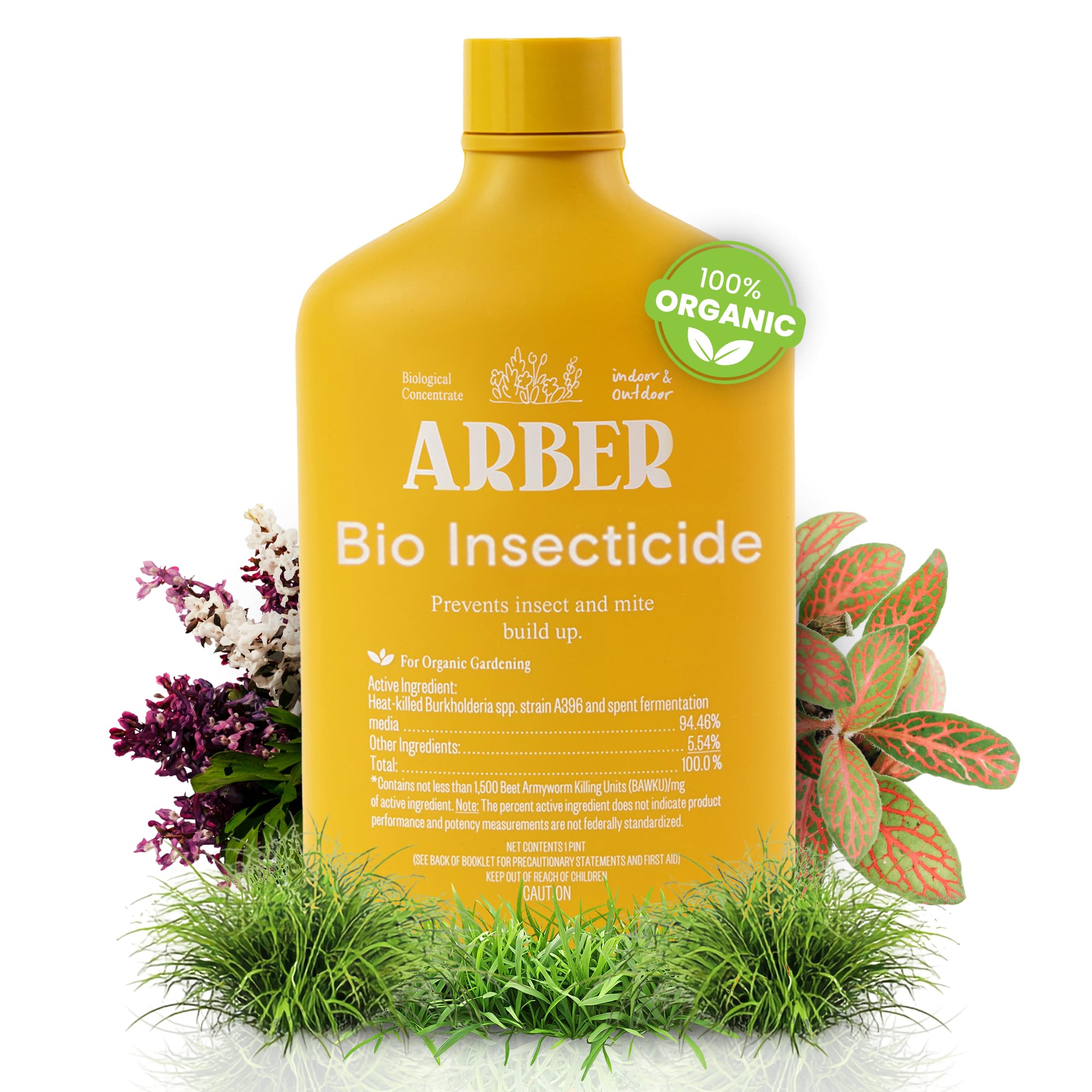
A concentrate you dilute yourself — more treatments per bottle, less junk in your sprayer.
Arber’s formula uses biological agents (not synthetic chemicals) to penetrate foliage and soil, disrupting pest life cycles while supporting the soil’s natural microbiome. Because it is a concentrate (1.1 pounds of liquid concentrate), you mix it with water yourself, which means one bottle yields more treatments than pre-diluted sprays — and you can adjust the strength: lighter mixes for weekly maintenance, stronger ratios for an active flare-up. It targets fungus gnats, aphids, whiteflies, mealybugs, and spider mites, and it is low-odor and dye-free.
Reviewers point out that a combination of the Arber insecticide with their Biofungicide (used every 5 days, then biweekly) killed both fungus gnat larvae and adults after three applications, proving more cost-effective long-term than granular treatments. A couple of reviewers, however, noted that spider mites returned monthly and that pre-mixed spray solutions can grow mold in distilled water after a week, so mix only what you will use quickly.
What works
- Dilutable concentrate gives you control over strength and more total treatments per bottle
- Gentle on plants — shoppers say no leaf burn even with repeated use
- Safe for organic gardening and edible gardens when used as directed
What to watch
- Mixed spray can grow mold in the bottle after about a week, so only mix what you will spray soon
- Spider mites may return monthly, suggesting it needs a preventative schedule rather than a one-shot fix
Choose this if: You prefer an organic, customizable spray and have a larger plant collection where a concentrate saves you money over repeated ready-to-use bottles.
Pass if: You want a grab-and-spray solution — this requires measuring and mixing before every use.
5. NatroZing Garden Insect Killer 11 OZ

Kills eggs, larvae, and adults — one spray that breaks the entire pest cycle.
Most sprays only kill the bugs you see (adults), but NatroZing’s plant-extract formula eliminates insects at every life stage — nymphs, larvae, eggs, and adults — including those resistant to conventional pesticides. You spray it directly on leaves and stems or apply it to the soil during or after potting to eliminate soil-borne pests like fungus gnats, spider mites, and whiteflies. The bottle holds 11 ounces of ready-to-use liquid, and the formula is plant-derived, meaning it blocks specific neuron receptors in invertebrates while remaining harmless to humans and pets.
Buyers report that it kills fungus gnats on contact, has no strong smell, and requires no ventilation — a huge plus for indoor spraying. Because it covers both foliage and soil, you can tackle an infestation from both sides. The catch: some buyers found it did not last long against worms or beetles on outdoor plants, and for delicate or newly sprouted plants, you should test on a small area first and wait 24 hours.
Full-cycle killer at a low cost: Eliminating eggs and larvae along with adults means you are less likely to see a rebound infestation — rare in this price tier.
Ideal for: Budget-conscious plant owners who want a single spray that treats both the leaves and the soil without needing multiple products.
Not for: Heavy-duty beetle or caterpillar outbreaks outdoors — this spray is best kept for soft-bodied indoor pests.
6. Smart Grower Neem Oil Spray for Plants Botanical Blend
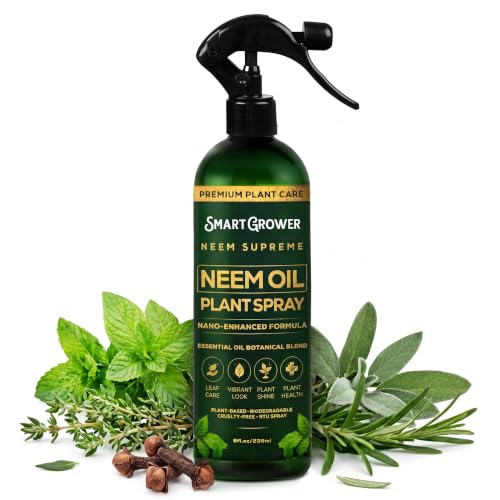
Neem plus nine essential oils — smells like a spice rack, cleans leaves like a polish.
This 8-ounce ready-to-use spray combines cold-pressed neem oil with a botanical blend of tea tree, clove, sage, thyme, cedarwood, lemongrass, peppermint, garlic, and capsicum oils. It is biodegradable, cruelty-free, and plant-based, and you simply shake, spray on the top and underside of leaves, and wipe for extra shine. Unlike the harsh sulfur smell of some neem products, this one has a light clove scent that reviewers describe as pleasant and room-friendly.
Owners mention that it gives plants a “super shiny, healthy look” and works well as a general plant tonic. However, one reviewer specifically noted that it did not deter or eliminate fungus gnats despite full use alongside sticky traps and root dousing, and recommended rosemary oil on a cotton ball in the planter as an alternative. The volume is only 8 fluid ounces — half the size of the Dr. Killigan’s 16-ounce bottle — so you will use it up faster if you have many plants.
What you get
- Pleasant clove-like scent that makes indoor spraying more tolerable than traditional neem
- Cleans and shines leaves while adding a mild pest-deterrent layer
What you might miss
- Not strong enough alone for a serious fungus gnat infestation — you will need a targeted insecticide for that
- Small 8 oz. bottle runs out fast on a medium-to-large plant collection
Pick this for: Leaf-polishing and light pest prevention with a pleasant scent — ideal for small collections where you want no chemical smell.
Avoid if: You have an active gnat or thrip infestation that needs a fast, powerful kill — this is a maintenance spray, not an outbreak solution.
7. Evergreen Way Organic Insecticide & Fungicide Concentrate

A concentrate that goes both ways — kills bugs and knocks out powdery mildew in a single mix.
Evergreen Way’s formula is a true dual-action concentrate: it tackles both chewing and sap-sucking pests (mites, aphids, whiteflies, thrips, fungus gnats) and suppresses powdery mildew and other leaf diseases. You dilute 10 drops in 32 ounces of water according to one reviewer, and apply with a pump, hose-end, or battery sprayer. Because it is a concentrate, one 16-ounce bottle yields many treatments — making it the most economical choice per spray if you have a large garden or a dense indoor plant collection.
Customers note that after one full soaking, a severe fungus gnat infestation was eliminated completely, and weekly soaks keep the plants gnat-free and thriving. Other owners note that the fungicide component promotes lush, green growth without any leaf burn. One reviewer noted the fungicide is thicker and has a stronger smell than the insecticide side, so be prepared for that when mixing. The concentrate also works for outdoor vegetables, herbs, and ornamentals, giving you versatility beyond houseplants.
One bottle, endless refills: This concentrate gives you the most bang for your buck if you treat plants regularly — just mix fresh each time for the best results.
Best for: Heavy-duty plant owners with large indoor gardens or greenhouses who want a dual insecticide-fungicide concentrate they can mix to any strength.
Not ideal if: You want a grab-and-spray bottle ready at a moment’s notice — this requires a mixing step each time.
Understanding the Specs
Contact Killer vs. Systemic
A contact killer (like the Dr. Killigan’s or Athena sprays) must hit the bug directly to work — it dries on the leaf and kills only what it touches. A systemic product (like the Arber concentrate) is absorbed by the plant and makes the whole plant toxic to pests that bite it. Contact killers work faster, but systemics provide longer-lasting protection.
Ready-to-Use vs. Concentrate
Ready-to-use sprays are pre-diluted and come with a trigger — you open the bottle and spray immediately. They cost more per fluid ounce because you are paying for the water and packaging. Concentrates (like the Evergreen Way and Arber) need you to add water, but one bottle can produce gallons of finished spray, making them cheaper per treatment and easier to store.
FAQ
Can I use outdoor bug spray on my indoor plants?
How often should I spray my indoor plants for bugs?
Will bug spray hurt my plant’s leaves?
Does neem oil spray kill fungus gnats?
What is the difference between a miticide and an insecticide?
Can I mix bug spray with fertilizer?
How do I know if my plant has spider mites?
Is bug spray safe to use on edible herbs like basil or mint?
Do I need to wipe the leaves after spraying?
How long does a bottle of ready-to-use spray last?
Final Thoughts: The Verdict
For the majority of shoppers, the best bug spray for indoor plants winner is the Dr. Killigan’s Doom & Bloom because its soybean-oil mechanical mode kills pests on contact without generating chemical resistance, and the 16-ounce bottle gives you plenty of coverage for a reasonable price. If you want a spray that also shines leaves and prevents powdery mildew, grab the Miracle-Gro 4-in-1 2-pack. And for a heavy-duty concentrate that treats both insects and fungus across a large collection, the standout is the Evergreen Way Organic Insecticide & Fungicide Concentrate.
How We Picked
We do not accept paid placement. Every pick is matched to a real buyer and a real use-case; we do not hands-on test units.
Sources & Methodology
Specifications: manufacturer listings and product documentation. Review insights: verified customer reviews, as of July 2026. Pricing: not shown on this page (it changes often); check the current price via the retailer link.
As an Amazon Associate, Lawn Gear Lab earns from qualifying purchases. This does not affect which products we feature.