
Specs are compiled from manufacturer listings and verified buyer reviews and can change over time — please confirm the key details on the product page before buying.
Facing a branch that is simply too thick for your hand pruners is frustrating. You need a tool that multiplies your strength and makes a clean, decisive cut through tough wood up to 2 inches (55 mm) or more — without leaving you exhausted. This guide cuts through the noise to find the loppers that deliver on that promise.
I’m Rikta — the founder and writer behind Lawn Gear Lab. This guide is built by comparing the manufacturers’ published specifications and the patterns across verified customer reviews, so you get each pick’s real strengths and trade-offs instead of marketing spin.
We break down the best tools that turn a wrestling match with a thick limb into a single, satisfying snip, so you can find the right loppers for thick branches for your yard.
Quick Picks
- Corona Tools 32-inch Branch Cutter MAXFORGED — Premium Pick
- Kings County Tools Tree Trimmer Loppers — Best Overall
- Corona Tools 33″ Bypass Loppers — Great Value
- GARTOL Heavy-Duty Extendable Loppers — Best Ratcheting
- YRTSH Loppers Branch Cutter Heavy Duty Tree — Best Value
- JARDINEER Loppers for Tree Trimming Heavy Duty — Budget Champion
How To Choose The Best Loppers For Thick Branches
Picking the wrong blade style or handle length can turn a quick pruning job into a frustrating struggle. The key is matching the tool’s design to the type of wood you are cutting most often.
Anvil vs. Bypass: The Blade Showdown for Thick Wood
Your first big decision is which blade type to pick. An anvil lopper has one sharp blade that smashes the branch against a flat, soft-metal anvil — ideal for dead, dry, or hardwood where you need crushing power. A bypass lopper has two blades that glide past each other like scissors, giving you a cleaner cut that is better for living, green wood because it doesn’t crush the branch’s water-carrying tissues, which helps the plant heal faster.
Ratcheting & Compound Action: How They Save Your Strength
A ratcheting lopper uses a gear system to let you cut in stages — your first squeeze bites in, a click holds the blade, then you release and squeeze again to go deeper. This design multiplies your force and lets you cut through wood that would require a lot more muscle with a standard lopper. Compound action loppers use a pivot link that gives you more cutting power from the same squeeze effort. Both are excellent for anyone looking to reduce fatigue during a big pruning session.
Handle Length & Material: Getting The Leverage You Need
Longer handles (33 to 41 inches) provide more leverage, which makes cutting thick branches easier on your arms. Extendable, telescoping handles give you that reach when you need it and pack down to a shorter length for storage. Look for handles made from strong, light materials like aluminum or alloy steel. Hard, comfy grip zones (like TPR rubber) let you hold on securely even when your hands are sweaty, reducing the chance of slippage.
Quick Comparison
| Model | Best For | Blade Type | Handle Length | Weight | Amazon |
|---|---|---|---|---|---|
| Corona 32″ Orchard Loppers | Premium precision cuts | Bypass | 32″ | 2.6 lbs | Amazon |
| Kings County Tools Loppers | Double ratcheting bypass | Bypass | 26″-40″ | 3.8 lbs | Amazon |
| Corona 33″ DualLINK Loppers | Forged leverage for thick branches | Bypass | 33″ | 4.3 lbs | Amazon |
| GARTOL Telescopic Loppers | Maximum ratcheting power for tough wood | Anvil | 28″-41″ | 4.14 lbs | Amazon |
| YRTSH Extendable Loppers | Value compound action reach | Anvil | 28″-41″ | — | Amazon |
| JARDINEER 30″ Loppers | Budget-friendly workhorse | Anvil | 30.5″ | 4.99 lbs | Amazon |
In‑Depth Reviews
1. Corona Tools 32-inch Branch Cutter MAXFORGED Orchard Loppers
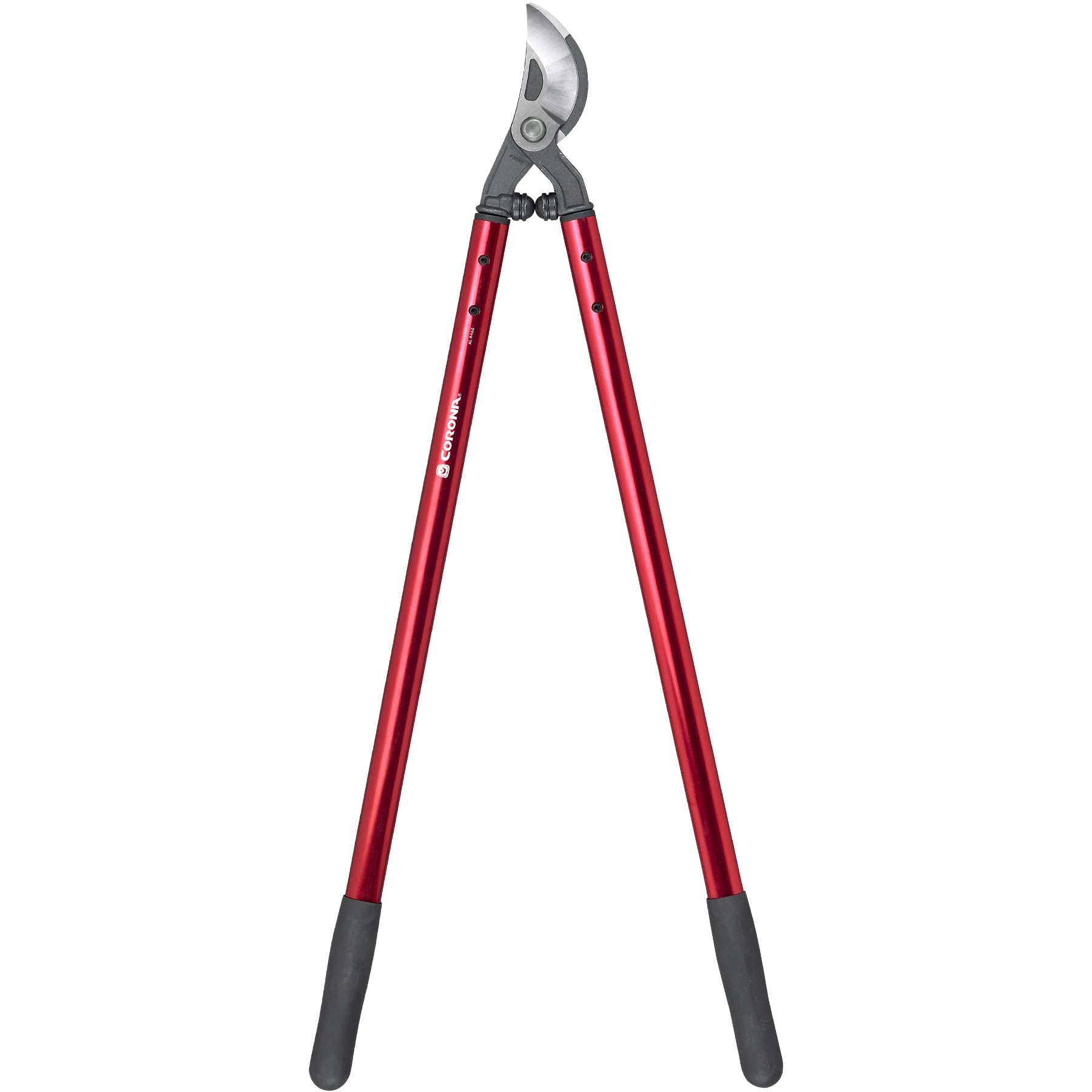
A lightweight titanium-blade bypass tool for precision orchard work.
If clean, precise cuts on living wood are your priority, this Corona lopper is a standout. It is much lighter than most heavy-duty picks — at just 2.6 lbs (1.2 kg) — so you can work overhead for longer without your arms tiring. Its 32-inch handles, made from hollow forged aluminum, create excellent leverage without the heavy weight of steel. The blade material is a real step up in durability, and bypass action (scissor-like blades) is the best choice for green, growing wood because it slices cleanly without crushing the branch tissue, which helps your trees heal properly. One reviewer noted how it cuts 1.5-inch cypress with ease, providing a level of quality that is comparable to pro brands like Felco or Barnell at a much better value.
The catch here is that the long handles are not telescoping, so you are fixed at 32 inches. Some buyers also note that it is best for branches up to about 1.5 inches; while it claims a 2.25-inch max, that thicker cut will require full effort. It is also noted that this tool prefers precise work over brute-force smashing on very hard wood. This is a professional-grade tool for the serious gardener or landowner who values feel, weight, and longevity over max power.
Buyers report the build quality is superb and they expect years of service, similar to the reviewer who said their first pair lasted for 11 years of faithful use. The combination of a lightweight design, a forged steel head, and a clean bypass cut makes this a joy to operate compared to the heavier anvil models below, which are more for deadwood demolition. It is not the cheapest option, but its durability and ease of use make it a high-value investment for a long-term tool.
Why It Stands Out
- Weighs just 2.6 lbs — very easy for overhead work vs. heavier rivals like the JARDINEER (4.99 lbs).
- Blade with bypass action for sharp, clean cuts on live wood.
- Lightweight 32″ aluminum handles give great leverage without extra weight.
Key Limitations
- Fixed 32″ handles; no extendable reach.
- Best for branches up to 1.5″; requires full leverage for the max 2-1/4″ claim.
The Pro’s Choice: If you want a lightweight, precise bypass tool that feels like an extension of your arm, this is the pick for meticulous tree care.
Reach for something else if: You mainly need to cut dry, stubborn dead wood where an anvil’s crushing power would be more effective.
2. Kings County Tools Tree Trimmer Loppers
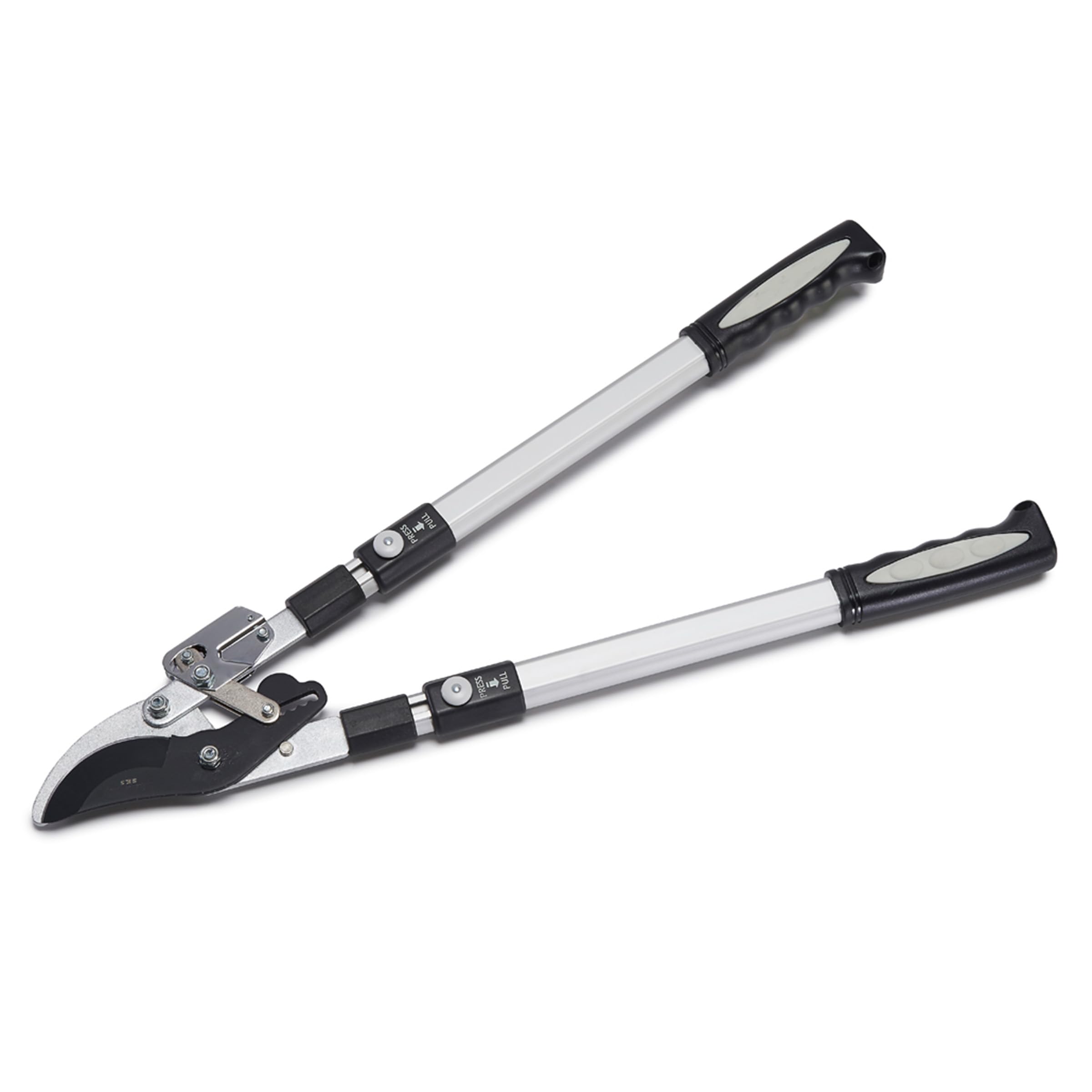
Double ratcheting bypass power meets telescoping reach for maximum versatility.
This is the Swiss Army knife of loppers: a bypass blade for clean cuts, plus a double ratcheting mechanism that multiplies your strength, all on handles that extend from 26 to 40 inches. This gives you the ability to handle a wide variety of jobs — from trimming live green wood near the ground to reaching high, awkward branches, all with less strain on your hands. The ratcheting action is the star here; you squeeze, it grips the wood, you release and squeeze again, the blade takes another bite. This makes cutting through a 2-inch (50 mm) branch possible with far less muscle power than a standard lopper, which is a real help when your hands are already tired.
That said, at 3.8 lbs (1.7 kg), this is one of the heavier models here, and some buyers mention it is noticeably weightier than non-ratcheting units of similar length. The trade-off for all that leverage and telescoping reach is a denser, more substantial tool. One buyer was initially unhappy when a blade broke, but praised the company’s customer service for completely replacing the tool. The good news is that other reviews highlight the sharpness of the blades and the sheer cutting power the ratcheting action provides. This is a terrific option if you want one tool that can adapt to many different pruning situations.
The telescoping feature, with 6 pin-locked stops, is a huge advantage over fixed-length picks like the Corona 33-inch, letting you get into tighter spots or reach higher when needed. It is a heavier setup, but the double ratcheting bypass design is a powerful and versatile package for the serious yard worker who doesn’t want to switch tools frequently.
The Heavy Hitter’s Edge
- Double ratcheting mechanism drastically reduces the effort for thick, 2-inch branches.
- Telescoping handles (26″-40″) for both reach and compact storage.
- Bypass blades provide clean, scissor-like cuts on living wood.
The Weight You Carry
- At 3.8 lbs, it is one of the heaviest models; a buyer found it heavy.
- Some reports of the blade needing to be replaced, though customer service was responsive.
The All-in-One Pick: This is for the person who needs one versatile tool for both reach and serious power on green and dry branches.
Look elsewhere if: You need a light, nimble tool for quick snips; this lopper is built for heavy work, not speed.
3. Corona Tools 33″ Bypass Loppers with DualLINK MAXFORGED

Forged leverage that makes cutting thick branches feel easier than it should.
The DualLINK MAXFORGED design is the defining feature of this Corona lopper. It is a mechanical linkage that multiplies the force you apply; you squeeze the long 33-inch handles, and the pivot point works with you to produce a powerful cut. This makes it very effective on branches up to its claimed 2-inch (50 mm) capacity. The bypass blade is fully forged alloy steel, which gives it a long, sharp life and the ability to make those clean, healing cuts that living trees need. The handles also have nice cushioned grips and impact-reducing bumpers that minimize the jarring feeling on your palms when you snip through a tough limb.
It is important to know that at 4.3 lbs (1.95 kg), this is a heavy, solidly built tool. It feels very substantial in the hands, which inspires confidence but can lead to fatigue in a long session. The handles are the longest of the fixed-length picks here at 33 inches, which gives it a major reach advantage for high branches compared to the 32-inch Corona Orchard lopper above. However, a buyer compared it directly to their 5-year-old Fiskars model and did not find a huge improvement in cutting effort, especially given the higher price tag.
Buyers repeatedly use words like “powerful” and “well built,” with many saying it’s a tool they expect to last for many years. The main decision point here is whether you value the extra leverage and reach of the 33-inch handles over the lighter, more nimble feel of the 32-inch Corona. It is a very capable tool, but its weight makes it a better choice for strong, deliberate cuts than for quick, repetitive snipping.
Forged for Power
- DualLINK MAXFORGED mechanism provides impressive leverage.
- Premium alloy steel bypass blade for clean, precise cuts.
- Long 33″ handles give great reach and pulling power.
Points to Consider
- At 4.3 lbs, it’s the heavier and more sturdy tool in the lineup.
- Some buyers found it didn’t cut noticeably easier than their older, cheaper loppers.
The Leverage Specialist: This pick is ideal if you want the raw, forged cutting power of a long-handled, heavy bypass tool for clearing thick, tough branches.
Consider a lighter pick if: You have a lot of pruning to do above your shoulders; the weight could become a tug of war.
4. GARTOL Heavy-Duty Extendable Loppers
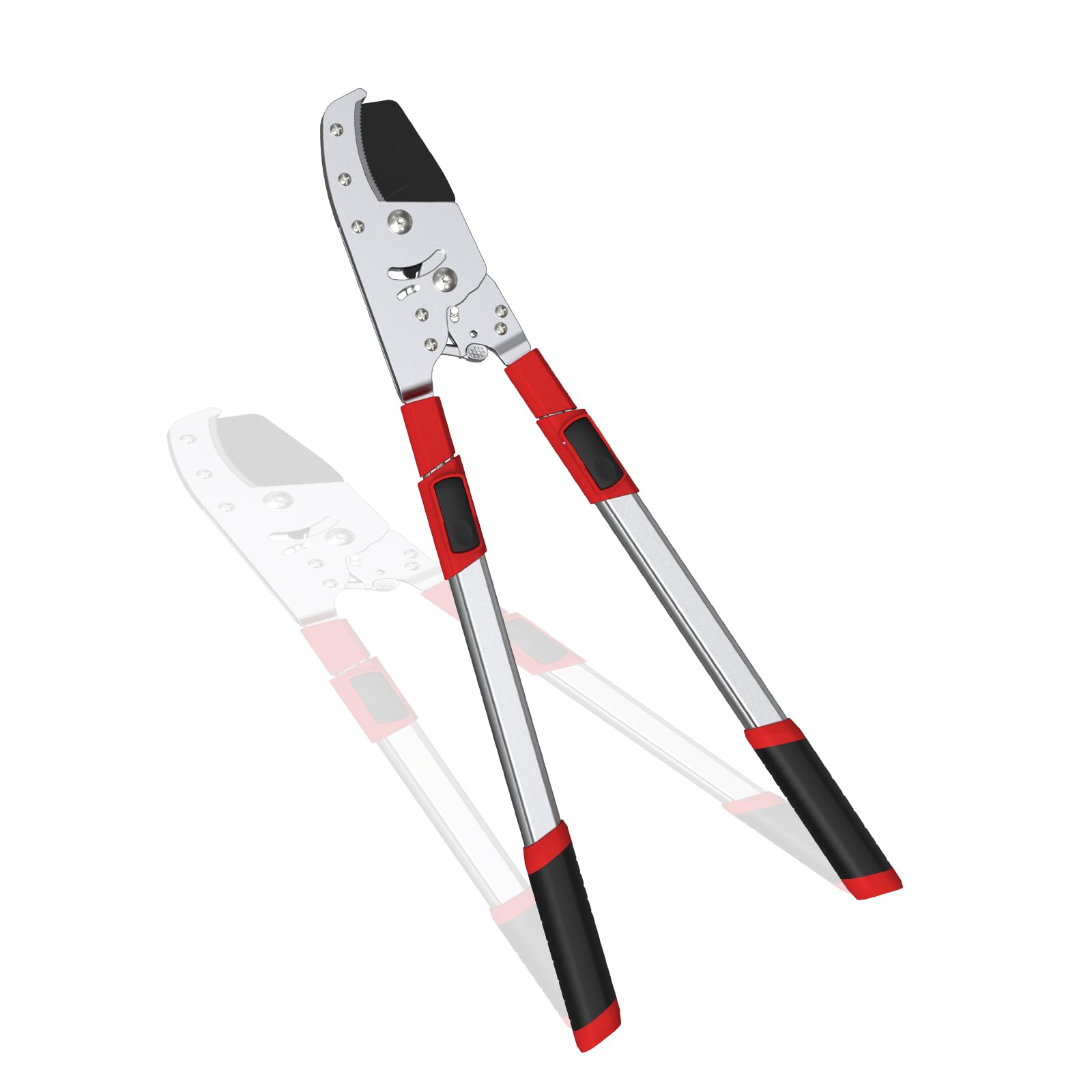
A high-gear ratchet built to chew through dry, stubborn wood you can’t crack by hand.
This GARTOL model is for the job that has defeated other tools: thick, dry, dead branches. It combines a 4-gear ratchet mechanism with an anvil blade, a design that is tune for power over precision. You set a long, tough branch in the anvil jaw, squeeze the handles, and the ratchet clicks forward, taking multiple bites until the cut is through. The manufacturer claims it can handle branches up to 2.5 inches (63.5 mm) in diameter, so it is among the most powerful capacities in this guide. The handles extend from 28 to 41 inches, giving you plenty of reach for high dead limbs that you’d rather not climb a ladder to get.
The biggest risk here is a clear pattern in customer reviews about the blade’s strength. One buyer mentioned their blade snapped clean off on the second cut of a 1.5-inch (38 mm) softwood branch. Another buyer reported the blade fracturing after light use, though the seller in that case helpedfully sent two replacement blades. A third buyer, however, confidently reported cutting a 2.5-inch (63.5 mm) branch easily and noted the tool’s previous 15-year lifespan, highlighting a sharp quality control variance. It is a potent tool when it works, but it’s not the most reliable bet.
Owners mention the tool is very sharp from the start. The 4-gear ratchet truly does make otherwise impossible cuts manageable, and the extendable handles are great for reaching high, hard-to-get branches. But if you’re counting on it for a one-time heavy cleanup, you might get a perfect unit. It is a high-risk, high-reward pick for the toughest dry wood.
Power When It Works
- Powerful 4-gear ratchet slices through dry branches up to 2.5 inches.
- Extendable handles (28″-41″) give you great reach for high limbs.
- Sharp, high-carbon steel blade right out of the package.
The Quality Risk
- Inconsistent quality; some blades snapped on the first few uses.
- Anvil action crushes dead wood but isn’t ideal for clean cuts on live trees.
The Max-Power Hail Mary: This is your tool for a single, brutal session clearing dead, thick branches where you need all the mechanical advantage you can get.
Don’t risk it if: You need a reliable daily worker; the blade snap risk is too high compared to a forged steel lopper.
5. YRTSH Loppers Branch Cutter Heavy Duty Tree Trimmer
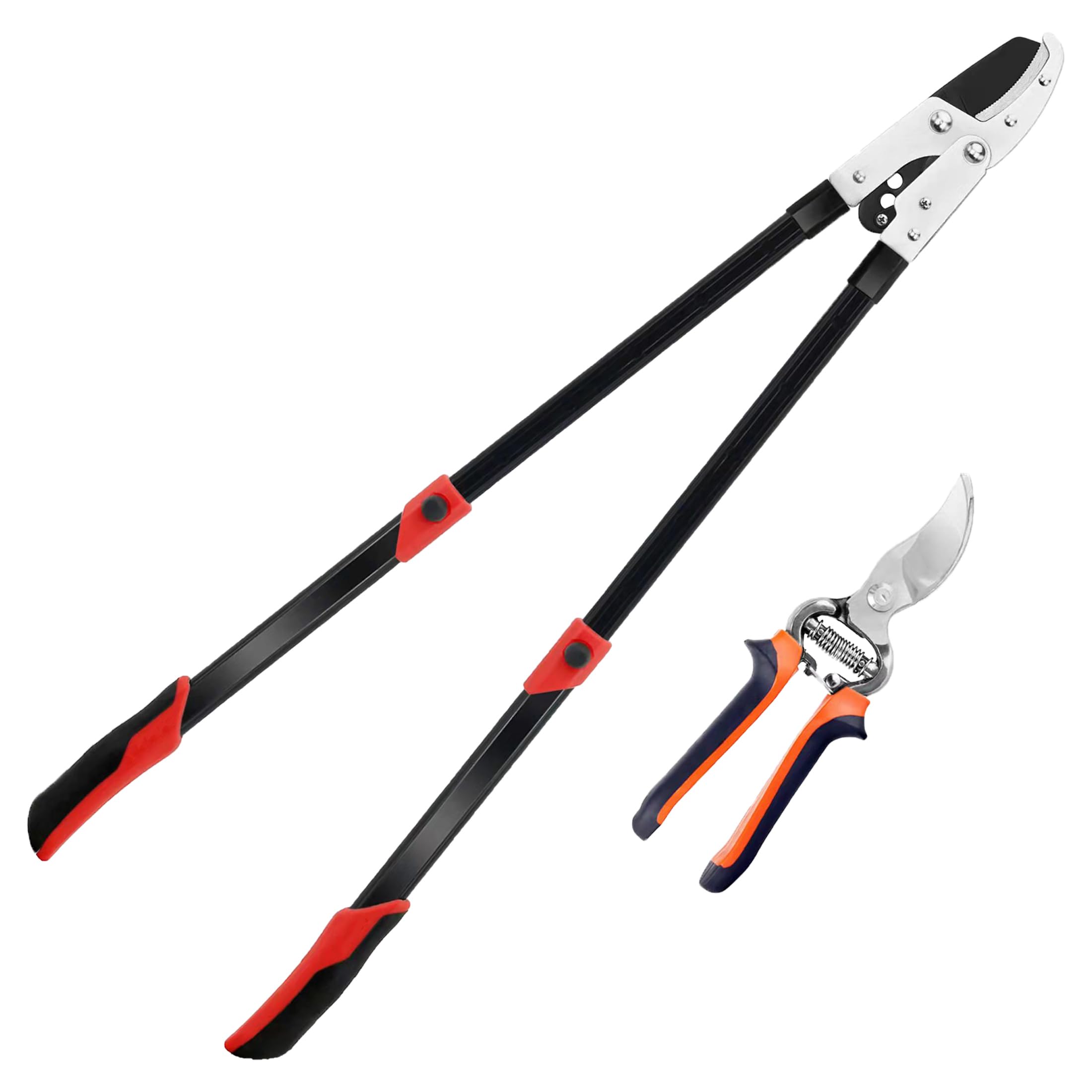
An affordable telescoping lopper that cuts like butter, especially for the first big job.
The YRTSH lopper offers a strong value proposition: a compound action mechanism (geared to provide extra power) paired with 6-step telescoping handles that go from 28 to 41 inches, all at a budget-friendly price point. This makes it a very tempting option for someone who needs the reach of a long-handled lopper but doesn’t want to pay a premium. The anvil-style blade with a Teflon coating is meant to stay sharp for a long time, and the compound action gear setup means you get more cutting force from the same effort compared to a standard, non-geared lopper. One happy customer in Hawaii noted it slices through thick hibiscus branches “the diameter of ping pong balls like butter.”
The trade-off with this price point is noticeable in the build quality. Customers note that if you are cutting a 2-inch (50 mm) green branch while fully extended overhead, the aluminum handles start to bend. The compound action is very effective for standard, 1-inch (25 mm) to 1.25-inch (32 mm) green wood, but it is not a tool for brute-force demolition of massive, dry limbs. Some users also found the included small hand clippers to be a bit awkward and annoying, as their lock loop would engage every few cuts. It’s a great tool for its cost, but it has clear limits.
The YRTSH offers the same extendable reach as the GARTOL but with a compound action gear instead of a multi-step ratchet. The compound action gives one powerful squeeze, whereas the GARTOL’s ratchet works in stages. For the money, you get excellent reach and a good cut on typical green garden branches, but it will show its weaker side if you try to tackle hard, oversized wood.
The Value Champ
- Compound action gear delivers good power for a low price.
- Telescoping handles (28″-41″) for great reach and storage.
- Teflon-coated alloy steel blade resists rust and gumming up.
Where It Falls Short
- Aluminum handles can bend under heavy force when fully extended on thick wood.
- Included small clippers have an annoying auto-lock loop.
The Smart Budget Pick: This is the best entry-level choice for the average homeowner pruning live, green branches and reaching high spots while staying affordable.
Upgrade for heavy wood: If you regularly cut dry, thick branches, invest in a forged-steel handle model to avoid bending the handles.
6. JARDINEER Loppers for Tree Trimming Heavy Duty, 30″ Anvil

A heavy-duty anvil workhorse that comes with its own spare blade for long life.
The JARDINEER lopper is a straightforward, no-frills anvil cutter that is designed to be durable and affordable. Its defining feature is the inclusion of a second SK5 steel blade in the package. This is a very practical move — the anvil blade takes the most abuse, and when it dulls from smashing against dead wood, you have a fresh backup ready to go. This significantly extends the tool’s useful life. The anvil design (a single blade pressing against a flat surface) is excellent for crushing through dry, dead branches up to its 2-inch (50 mm) capacity, and the giant ratchet jaw is designed to help save your labor and effort with each squeeze.
This is a heavy tool at 4.99 lbs (2.26 kg) — the heaviest in this list — and its handles are fixed at 30.5 inches, so you get a lot of raw mass but no telescoping reach. The solid steel handle and soft grip are built for tough, close-range work. One long-term owner in the Florida Keys reported using these for 4 years on a lot with over 100 trees and plants, noting the extra blade is “real handy” and that they simply sharpen it on a grinder when needed. This is exactly the kind of real-world testament to the tool’s value for money.
The downside is that, like the GARTOL, this is an anvil-style lopper. It is not the right tool for precise cuts on living trees, as the crushing action can damage the cambium layer (the growing tissue under the bark). However, if your main task is clearing dead limbs, thick stumps, and tough woody growth, this tool’s simplicity, low price, and included spare blade make it a very smart choice. It’s a pure, rugged beater tool for the job.
Built to Last on a Budget
- Comes with a spare SK5 carbon steel blade.
- Giant anvil jaw with ratchet for reducing effort on tough, dry wood.
- Proven durability; a buyer used it for 4 years on 100+ trees.
Where It Compromises
- Heaviest in the line-up at 4.99 lbs; not ideal for overhead, long sessions.
- Fixed 30.5″ handles give less reach than telescoping models.
The Pure Workhorse: If you mostly clear dead, thick wood on the ground and want a tool that comes with a backup blade, this is the most sensible budget buy.
skip it if: You are pruning living trees and need a bypass blade’s clean cut, or you need to reach high branches.
Understanding the Specs
Anvil vs Bypass Blade
The blade type dictates the cutting action. An anvil blade is a single sharp edge that comes down onto a flat, soft-metal block. It’s like a knife on a cutting board, using a crushing action that is very powerful for dry, dead wood. A bypass blade has two curved blades that slide past each other like scissors. This creates a clean, scissor-like cut that doesn’t crush the branch’s living tissue, helping the tree heal faster. For thick, live branches, bypass is best. For thick, dead or dry branches, anvil is often the more durable choice.
Ratcheting & Compound Action
Both of these mechanisms aim to give you more cutting power with less personal strength. A ratcheting system cuts in stages; you squeeze, the gear holds the blade in the wood, you let go and squeeze again to deepen the cut. This is great for very thick, hard wood. A compound action mechanism uses a system of gears or levers to increase the force you apply from the handles to the blade. It gives you more power in a single, full squeeze. Both are excellent for cutting thick branches with less effort, especially for smaller hands or reduced grip strength.
FAQ
How thick of a branch can a lopper cut?
Are bypass or anvil loppers better for thick branches?
How long should a pair of loppers last?
Can I use anvil loppers on live wood?
What does a ratcheting lopper do?
Are extendable loppers as strong as fixed-length loppers?
Why does my lopper feel so heavy after using it for a while?
What is the best handle length for loppers?
Final Thoughts: The Verdict
If you want one dependable pick, the loppers for thick branches winner is the Corona 32-inch Orchard Loppers because it offers the best balance of lightweight design, premium forged construction, and clean bypass cutting power for the majority of live wood trimming tasks. If you want a versatile tool that can reach high limbs and uses a double ratcheting action to handle 2-inch wood, grab the Kings County Tools Lopper. And for a pure, heavy-duty deadwood beater that includes a spare blade for long life, the standout is the JARDINEER Lopper.
How We Picked
We do not accept paid placement. Every pick is matched to a real buyer and a real use-case; we do not hands-on test units.
Sources & Methodology
Specifications: manufacturer listings and product documentation. Review insights: verified customer reviews, as of July 2026. Pricing: not shown on this page (it changes often); check the current price via the retailer link.
As an Amazon Associate, Lawn Gear Lab earns from qualifying purchases. This does not affect which products we feature.