
Specs are compiled from manufacturer listings and verified buyer reviews and can change over time — please confirm the key details on the product page before buying.
Arborvitae have one simple need: consistent moisture around their shallow roots, without the soil turning into a sponge. The wrong mulch smothers them or invites pests. The right one—organic, slow-breaking, airy—keeps roots cool, suppresses weeds, and maintains deep green foliage with less frequent watering.
I’m Rikta — the founder and writer behind Lawn Gear Lab. This guide is built by comparing the manufacturers’ published specifications and the patterns across verified customer reviews, so you get each pick’s real strengths and trade-offs instead of marketing spin.
Whether you are planting a new hedge, refreshing an established row, or fighting back weeds around your trees, the following picks represent the most practical and proven mulch for arborvitae available right now.
Quick Picks
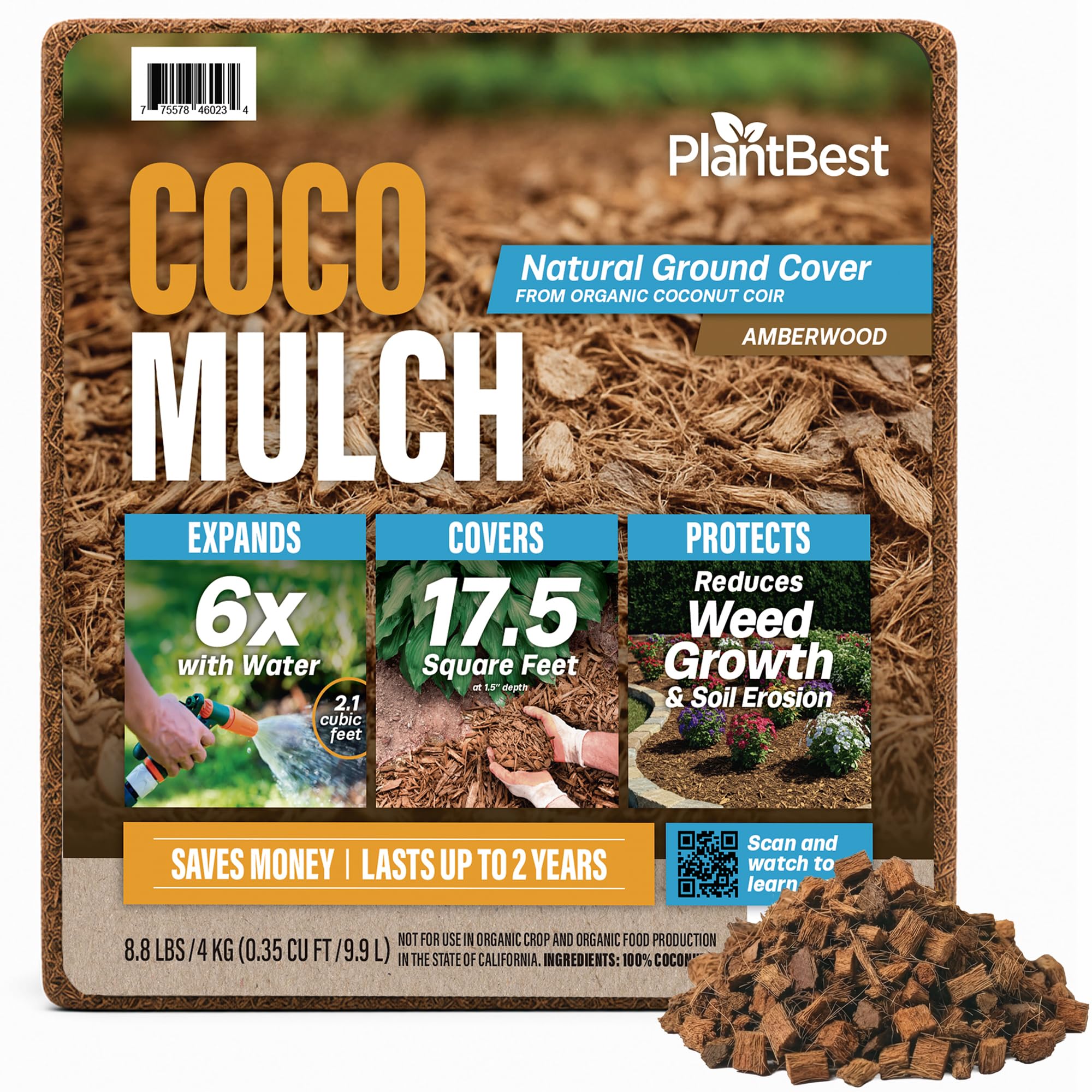
- PlantBest Coco Mulch Compressed Block — Best Overall
- Plantonix Organic Coco Chips (10 lbs) — Value Pick
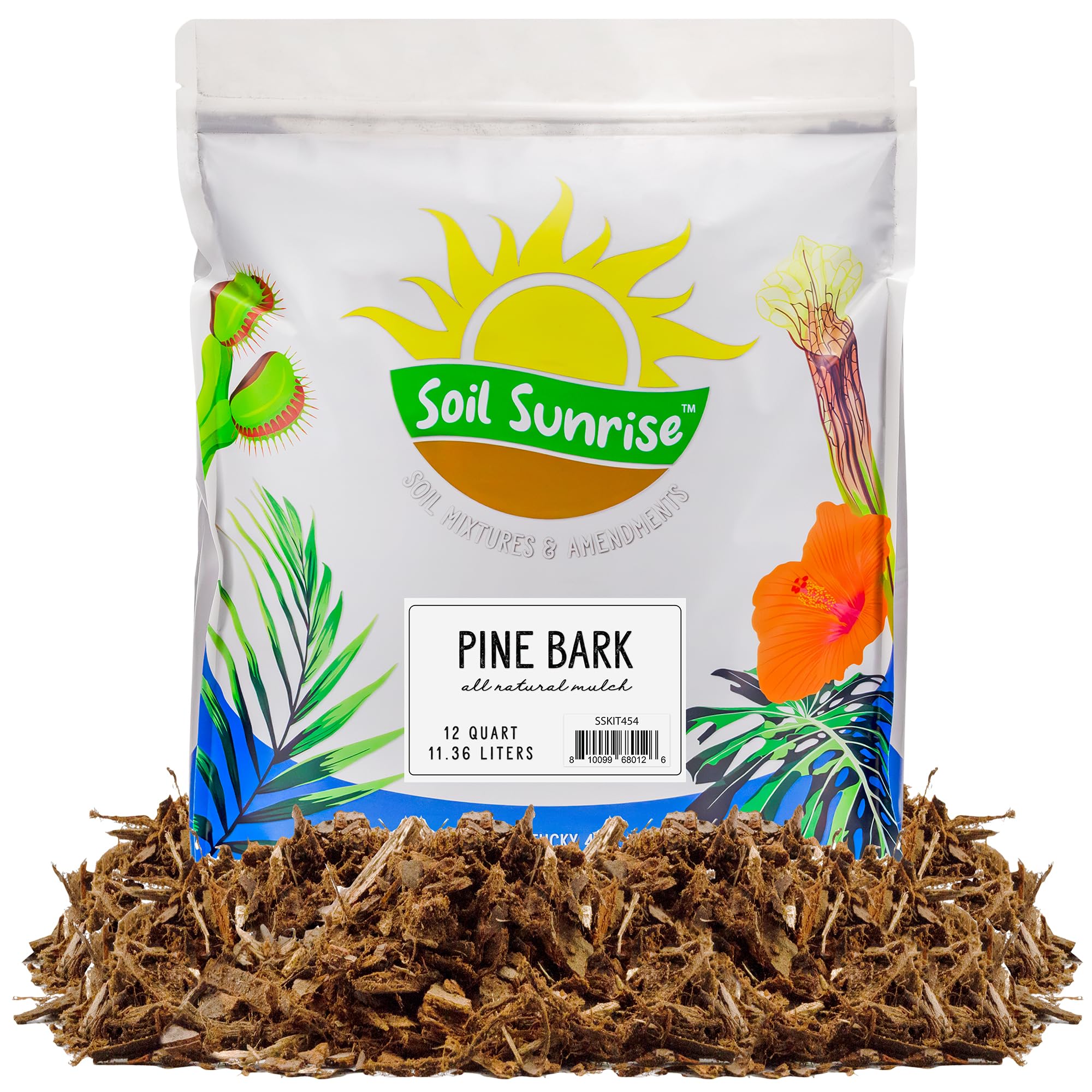
- Soil Sunrise Pine Bark Mulch Nuggets (12 Quarts) — Container Champ
How To Choose The Best Mulch For Arborvitae
Arborvitae need consistent root moisture without waterlogging. Here are the three things to look for before you buy.
Particle Size & Texture
Small, chunky pieces are ideal. They interlock on a slope so rainwater doesn’t wash them away, but they leave enough air gaps that oxygen reaches the root zone. Tiny dust-like mulches can pack down into a crust that blocks water, while huge nuggets might float off in a heavy storm. Look for chips roughly the size of a fingernail to a quarter—big enough to stay put, small enough to breathe.
Moisture Management
Arborvitae roots are shallow and spread wide. They dry out fast when the top layer of soil bakes in the sun. A good mulch absorbs rain and releases it gradually, acting as a slow-release water tank. Coconut coir-based mulches hold many times their weight in water without becoming soggy. Pine bark is better at letting excess water drain away quickly, which matters if your soil already holds water after a rain.
Longevity & Decomposition
Some mulches break down in a single season, feeding the soil but forcing you to reapply. Others last two seasons or more, saving labor but adding less organic matter. For an established arborvitae hedge, a longer-lasting mulch (like a compressed coir block or pine bark nuggets) means you top it up once a year instead of twice. For a new planting where you are improving the soil, a faster-breaking mulch that enriches the ground is a smarter choice.
Quick Comparison
| Model | Best For | Expanded Volume | Item Weight | Material | Amazon |
|---|---|---|---|---|---|
| PlantBest Coco Mulch Block | Large beds & weed control | 64 Quarts (2.5 cu ft) | 8.8 Pounds | Coconut Coir | Amazon |
| Plantonix Organic Coco Chips | Neutral pH & aeration | 15 Gallons | 10 Pounds | Coconut Husk | Amazon |
| Soil Sunrise Pine Bark Nuggets | Containers & drainage | 12 Quarts | 2.32 kg (5.1 lb) | Pine Bark | Amazon |
In‑Depth Reviews
1. PlantBest Coco Mulch Compressed Block
The heavyweight champion for covering ground with minimal effort.
This compressed block delivers the most coverage per pound in this lineup—it expands to 64 quarts (about 2.5 cubic feet) and covers up to 17.5 square feet at a 1.5-inch depth. That is a massive volume of mulch coming from a single 8.8-pound block, making it the clear winner if you have a long arborvitae hedge or multiple trees to ring. Unlike the 10-pound Plantonix block that yields 15 gallons, this one gives you roughly 16 gallons, so you get noticeably more material for similar weight.
Buyers report that it lives up to its claims of retarding weed growth and reducing watering needs, which is exactly what arborvitae roots need—consistent moisture with less competition. The coconut fibers interlock into a stable layer that stays put on slopes, so you won’t find your mulch washed into the grass after a storm. One experienced reviewer noted their previous purchase is holding up longer than the 2-year projection, even in an area getting at least 40 inches of rain annually. The catch is that expanding the block takes some hands-on labor.
Another reviewer described a practical method: place the block in a large storage tub, fill it with water, leave it overnight, then dump it out and break up the chunks with your foot. That is far easier than hauling 50-pound sacks of bark mulch from the store, but you will still need a wheelbarrow to move the expanded material to your garden beds. Some users found that weeds can push through a thin layer, so stick to the recommended 1.5-inch depth for best results.
Why It Works For Arborvitae
- Expands to 64 quarts, enough to cover 17.5 sq. ft. at a 1.5-inch depth
- Holds moisture and releases it slowly, reducing watering frequency
- Interlocking fibers resist washout on slopes and uneven terrain
- Lasts up to 2 seasons, saving you from annual reapplication
The Extra Effort
- Requires soaking overnight and manual breaking apart before spreading
- Wet material is heavy and almost demands a wheelbarrow
- Weeds can push through a layer thinner than 1.5 inches
Reach for this if: you have a large area or a long hedge to protect and want a low-maintenance mulch that you only top up once a year.
Think twice if: you need a dry, ready-to-spread mulch right out of the package—the overnight soak and manual breaking add a step.
2. Plantonix Organic Coco Chips (10 lbs)

The neutral pH mulch that keeps your arborvitae’s root zone healthy.
Arborvitae prefer a slightly acidic to neutral soil, and this coconut husk mulch delivers a neutral pH that helps prevent nutrient lock-up—meaning the fertilizer you apply stays available for the tree instead of getting trapped in the soil. It also has a high cation exchange capacity (CEC), which is a fancy way of saying it holds onto nutrients and releases them as the roots need them. At 10 pounds expanding to 15 gallons, it is a solid mid-range performer that costs less per bag than the PlantBest block.
Owners mention that the brick is compact and breaks into good-sized chips when water is added, with no unpleasant smell. Unlike some coco products that turn to mush, these chips stay distinct and create air pockets in the soil, preventing the compaction that suffocates shallow arborvitae roots. The material absorbs up to 10 times its weight in water, so a single watering session hydrates the mulch for days. One reviewer with raised planters noted it was easy to work with and fast to break up, making it a great choice for filling large beds around trees.
However, one reviewer raised an important point: non-buffered coco coir can absorb nutrients from your soil instead of storing them, potentially starving your plants. This product is not explicitly listed as buffered, so if you are using it around young arborvitae that need steady feeding, you may want to supplement with a slow-release fertilizer or look for a buffered version. It also creates less dust than standard coco coir, which is a nice bonus when you are working close to the house.
Smart trade-off: You get a neutral, soil-improving mulch that holds water extremely well, but you may need to add fertilizer to compensate if the coir is not buffered.
Who it fits: Gardeners who want a sustainable, pH-friendly mulch that improves soil structure as it breaks down, especially for new arborvitae plantings where you are building the soil from scratch.
Who should skip it: Anyone who needs a ready-to-spread block that expands quickly—this one requires pre-soaking and careful nutrient management.
3. Soil Sunrise Pine Bark Mulch Nuggets (12 Quarts)
The clean, chunky bark that prevents overwatering in potted arborvitae.
If your arborvitae are in containers or you have a spot where drainage is the main concern (heavy clay soil, low-lying area), pine bark nuggets are the best choice. Unlike coco coir options that hold water aggressively, these chips let excess water drain through while still retaining enough moisture to keep the root ball from drying out. One reviewer needed them specifically to make a mix for a dwarf orange tree and noted the pine bark provided sufficient drainage for citrus and succulents, so you can imagine how well it works for moisture-sensitive arborvitae in pots.
Reviewers consistently praise the quality of this product. One described the chips as beautiful, clean-smelling, and surprisingly consistent in size—small enough to mix well with potting soil but chunky enough to improve aeration. Another reviewer pointed out they loved that it came in a clear bag, allowing them to inspect the contents before applying, which gave them confidence that there was no mold or insects hiding inside. The small chip size also means it works well as a top dressing for indoor potted arborvitae that you bring inside for winter.
The trade-off is volume versus value. At 12 quarts, this bag covers a much smaller area than either of the coco chip options, and one reviewer noted it felt a little on the expensive side for what you get. It is ideal for container plants or small beds around a single tree, but if you are mulching a full row of arborvitae, you will need several bags, and the cost adds up fast. It is also pine bark, which decomposes faster than coconut coir, so you will need to top it up more often.
Why Containers Love It
- Small, consistent chips improve drainage and aeration in pots
- Clean, natural smell with no mold or insect concerns
- Clear packaging lets you inspect the product before applying
The Coverage Cost
- Only 12 quarts—covers a fraction of the area the coco chips do
- Higher cost per square foot than the PlantBest or Plantonix options
- Pine bark decomposes faster, requiring more frequent replacement
Best for: Container-grown arborvitae or small garden beds where drainage is more important than moisture retention—pots, patios, and indoor winter storage.
Look elsewhere: For large hedges or in-ground beds that need heavy moisture control and minimal annual maintenance—the volume is too small and the cost too high for major areas.
Understanding the Specs
Expanded Volume (Quarts / Gallons / Cubic Feet)
This is the most important number for a compressed block mulch. It tells you how much ground you can actually cover once you add water. Compare quarts or gallons directly between products: 64 quarts equals 16 gallons equals about 2.5 cubic feet. A larger expanded volume means fewer bags or blocks needed to finish the job, which saves you money and labor on big projects around a long arborvitae hedge.
Cation Exchange Capacity (CEC)
This is a soil science term that matters more than you think. CEC measures how well a material holds onto plant nutrients and releases them over time. A high CEC, like the one found in coconut coir, means the mulch acts like a nutrient sponge—it grabs fertilizer and water and gives it back to the roots slowly. Pine bark has a lower CEC, so it is better at just letting water drain through. For arborvitae, which like consistent feeding, a higher CEC material can reduce how often you need to fertilize.
FAQ
Is coconut coir or pine bark better for arborvitae?
How deep should I apply mulch around arborvitae?
How long does a compressed coco coir block last once applied?
Can I use regular bark mulch from a hardware store for arborvitae?
Do I need to wet a compressed coco coir block before spreading it?
Will coconut coir mulch attract pests or bugs?
Can I mix coco mulch with potting soil for container arborvitae?
How do I calculate how much mulch I need for my arborvitae hedge?
Is buffered coco coir important for arborvitae?
Can I use this mulch around other trees besides arborvitae?
Final Thoughts: The Verdict
Across the board, the best mulch for arborvitae overall is the PlantBest Coco Mulch Compressed Block because it delivers the most coverage for the weight, suppresses weeds effectively, and lasts up to two seasons without needing replacement. If you are mulching a small container or a single tree and drainage is your priority, grab the Soil Sunrise Pine Bark Nuggets for their clean texture and excellent aeration. And for the budget-minded gardener who wants a neutral pH soil builder for a new hedge, the Plantonix Organic Coco Chips offer solid value, just be sure to check if it is buffered before buying.
How We Picked
We do not accept paid placement. Every pick is matched to a real buyer and a real use-case; we do not hands-on test units.
Sources & Methodology
Specifications: manufacturer listings and product documentation. Review insights: verified customer reviews, as of July 2026. Pricing: not shown on this page (it changes often); check the current price via the retailer link.
As an Amazon Associate, Lawn Gear Lab earns from qualifying purchases. This does not affect which products we feature.