
Specs are compiled from manufacturer listings and verified buyer reviews and can change over time — please confirm the key details on the product page before buying.
You have the soil, the sun, and the ambition, but wrong planter can turn promising tomato season into a tangled mess of snapped stems and root rot. A planter that lists over under heavy fruit or dries out in an afternoon is the single fastest way to lose your crop before the first harvest. This guide cuts through garden center noise to show you exactly which self-watering, trellised boxes support a full season of heavy vines and which ones leave you staking and tying every week.
I’m Rikta — the founder and writer behind Lawn Gear Lab. This guide is built by comparing the manufacturers’ published specifications and the patterns across verified customer reviews, so you get each pick’s real strengths and trade-offs instead of marketing spin.
Whether you work a patio, a balcony, or a tiny urban yard, the right tomato planters with trellis support and a self-watering reservoir (a bottom chamber that holds water so roots drink as needed) can mean the difference between a few cherry tomatoes and a bounty you cook with — let’s find yours.
Quick Picks
- GREEN MOUNT Raised Garden Bed Planter Boxes — Top Performer
- LINEX Raised Garden Bed Planter Box with Trellis — Best Value
- KOBAZ Raised Garden Bed Tomato Planter Box — Compact Power
- Hydrofarm GCTB2 Heavy Duty Tomato Barrel — Classic Barrels
- DXront Tomato Planter with Trellis Cage Raised — Budget Champion
How To Choose The Best Tomato Planters
Picking a tomato planter is more than grabbing a pot and a cage. You need a container that holds a top-heavy plant through wind and rain, a watering system that forgives a skipped day, and enough soil volume for roots to spread. Here are the three things to check before you buy.
Capacity And Soil Volume
Tomatoes are heavy feeders with aggressive root systems. A planter with capacity under 3 gallons (a measure of internal volume) will likely stunt your plant’s growth and require constant watering. Look for at least 3.1 to 4 gallons for a single plant, and if you have space, a 5 or 6 gallon planter gives your tomatoes room to produce a full harvest.
The Trellis And Frame
A flimsy cage is worse than no cage — it topples under mature fruit weight. The best tomato planters use sturdy alloy steel rods or a metal trellis frame that holds vines, leaves, and tomatoes without bending. Make sure the trellis is at least 31 to 41 inches tall to accommodate a full-sized indeterminate tomato variety (a variety that grows all season until frost).
Self-Watering And Drainage
A self-watering reservoir (a bottom chamber that stores water for roots to draw up through soil) is a standout if you work away from home or forget to water. It keeps roots moist for several days. Just as important are drainage plugs on the sides so you can release excess water after heavy rain, preventing waterlogged roots that cause rot and disease.
Quick Comparison
| Model | Best For | Capacity | Trellis Height | Item Weight | Amazon |
|---|---|---|---|---|---|
| GREEN MOUNT Raised Garden Bed | Maximum growing space & height | 6.1 gallons | 56.7 inches | 5.8 lbs | Amazon |
| LINEX Planter Box with Trellis | Best value self-watering planter | 4 gallons | 41.3 inches | 3.9 lbs | Amazon |
| KOBAZ Raised Garden Bed | Sturdy build with four-sided support | 4 gallons | 41.3 inches | 4.0 lbs | Amazon |
| Hydrofarm Tomato Barrel | Classic barrel design, compact footprint | 14 L (3.7 gal) | 48.0 inches | 3.5 lbs | Amazon |
| DXront Tomato Planter with Cage | Budget-friendly, easy assembly | 3.1 gallons | 41.3 inches | 3.9 lbs | Amazon |
In‑Depth Reviews
1. GREEN MOUNT Raised Garden Bed Planter Boxes with Trellis

Gives tomato roots 6.1 gallons of room compared to the DXront’s 3.1 gallons, so they stretch out and climb high for bigger plants and heavier yields.
This is the largest planter in the lineup with a 6.1-gallon capacity, so your tomato gets significantly more soil volume than the 3.1-gallon options — and that extra space translates directly to bigger plants and heavier yields. The trellis (a vertical metal frame for vines to climb) reaches 56.7 inches tall, giving indeterminate tomato varieties (those that grow until frost) plenty of vertical room to grow.
Buyers report the self-watering reservoir (a bottom chamber that holds water for roots to draw up) is convenient during hot summers, though they note it may only last one to two days in extreme heat. Four lockable swivel casters (small wheels you can lock in place) let you chase the sun or roll the planter to shelter. The side panels connect to multiple units if you want a larger raised bed setup. At 5.8 pounds, it is heavier and more stable than most competitors, but still light enough to move.
One reviewer noted the assembly is tool-free and that the frame stays sturdy on a deck. They appreciated that the four drain plugs (small caps you pull to release excess water) on each side prevent waterlogging. This unit comfortably holds one large tomato plant with room for a few low-growing herbs around its base.
The Big Room: The 6.1-gallon capacity beats the DXront’s 3.1 gallons by a wide margin — roots get more space (6.1 gallons vs. 3.1 gallons) to spread for stronger growth.
The Trade-Off: The water reservoir runs dry faster than larger self-watering systems, so plan to check it every day during a heatwave.
Reach for this if: You have a single determinate or indeterminate tomato plant and want maximum vertical height plus room for companion herbs.
Look elsewhere if: You need a planter that can go several days without watering in hot weather — the reservoir is smaller than the unit’s generous soil capacity suggests.
2. LINEX Raised Garden Bed Planter Box with Trellis
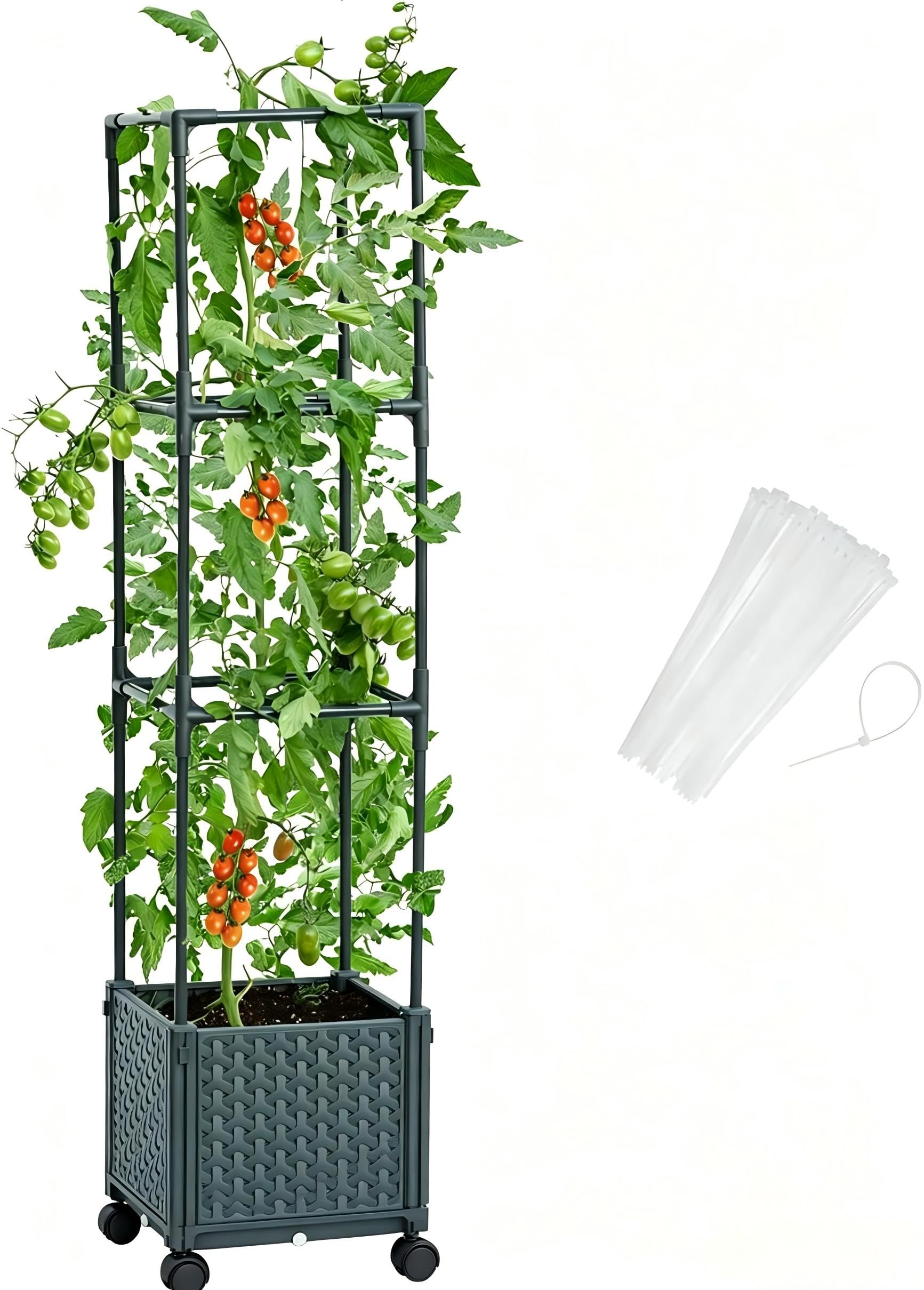
A smart self-watering planter that owners mention actually survives winters outdoors.
The LINEX planter hits a balance with a 4-gallon growing pot and a 41.3-inch trellis, offering solid room for one tomato plant without taking over your patio. Customers note the water reservoir keeps soil moist for days. They specifically note it “survives winters outdoors” — a function of the fade-proof, food-grade reinforced PP material (a durable plastic that resists weather damage).
With a 4-gallon capacity versus the DXront’s 3.1 gallons, the LINEX holds more soil, meaning more nutrients and moisture retention for your plant. Assembly takes about five minutes with no tools required. Four lockable swivel casters let you roll it indoors when frost threatens. The alloy steel trellis frame is sturdy enough to support heavy vines. One buyer mentioned it worked perfectly for passion fruit.
The main weakness is that the plastic base may degrade if left in direct, intense sun year after year, though LINEX backs it with a two-year warranty (a promise to fix defects) that can extend to three years. The squared-off top is also slightly jarring visually if you prefer a classic rounded planter look.
The Smart Reservoir: The self-watering system with drainage plugs means you can overwater without fear — just pull a plug and excess water drains away, preventing root rot (a condition where roots rot from too much moisture).
The Catch: The plastic base is the most vulnerable part in harsh sun, so consider a bit of shade or winter storage to extend its life.
Best for: Anyone who wants a low-maintenance self-watering planter that can stay outdoors year-round and handle a single heavy tomato or climbing vine.
skip it if: You want absolute maximum soil volume — the 4-gallon capacity is adequate but not generous for sprawling indeterminate varieties (those that grow until frost).
3. KOBAZ Raised Garden Bed Tomato Planter Box with Trellis
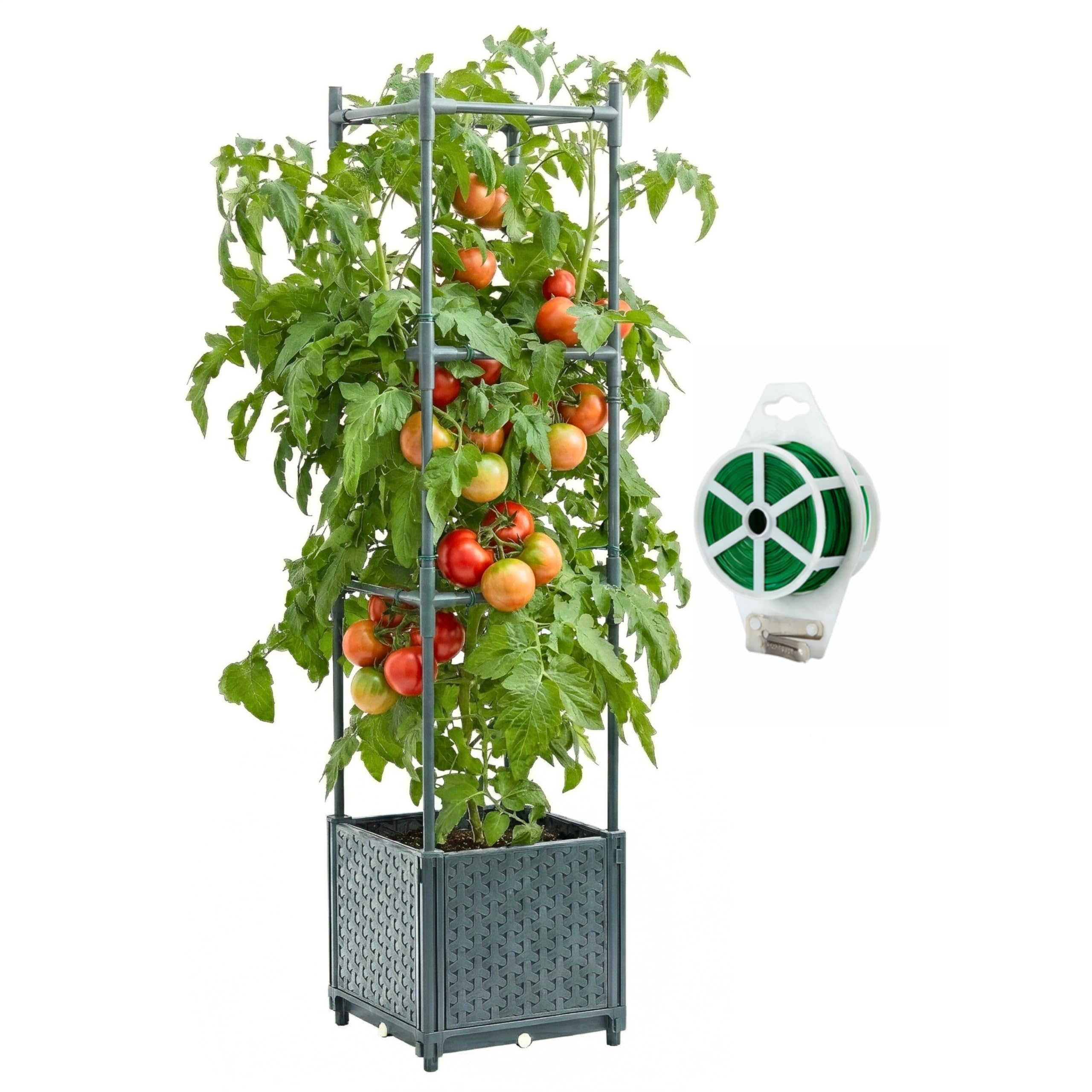
Four-sided steel support keeps your tomato standing tall through wind and heavy fruit, unlike the two-sided trellises on some competitors.
The KOBAZ planter has a 4.1-gallon capacity and a 31.65-inch trellis height but differentiates itself with support on all four sides. The metal trellis is built to hold its shape and bear the weight of vines, leaves, and fruit, so your plant stays upright without constant staking. At 4 pounds, it weighs 4 pounds versus the Hydrofarm’s 3.5 pounds, giving it a touch more stability on a windy balcony.
Reviewers point out mixed results on size — one reviewer loved it for a single plant but noted their tomato “didn’t thrive here vs. my other plant in the raised bed,” suggesting a 50% larger version would be ideal. The self-watering reservoir with side drainage plugs helps maintain consistent moisture. The corner linking poles (connectors that join multiple units) let you connect several planters for a custom garden layout. Assembly is tool-free, and several reviewers called it a breeze.
The key trade-off is that at 4 gallons, this is still a compact planter. If you are growing a large indeterminate variety (a plant that grows all season), you might find the root space limiting by mid-season. For apartment dwellers with small porches or balconies, the KOBAZ is a near-perfect fit.
The Four-Sided Security: Unlike trellises that only support one or two sides, this one wraps your plant on all sides, preventing leaning and reducing stem snap risk under heavy fruit loads.
The Limitation: Several users wished it were larger — if you have space, stepping up to the GREEN MOUNT’s 6.1 gallons gives you a much bigger root zone.
Reach for this if: You want a compact, four-sided trellis that prevents wind damage and works great on a small balcony or porch.
Look elsewhere if: You have a history of growing massive tomato plants and need deep soil — the 4-gallon capacity may leave you wanting more by August.
4. Hydrofarm GCTB2 Heavy Duty Tomato Barrel with 4′ Tower
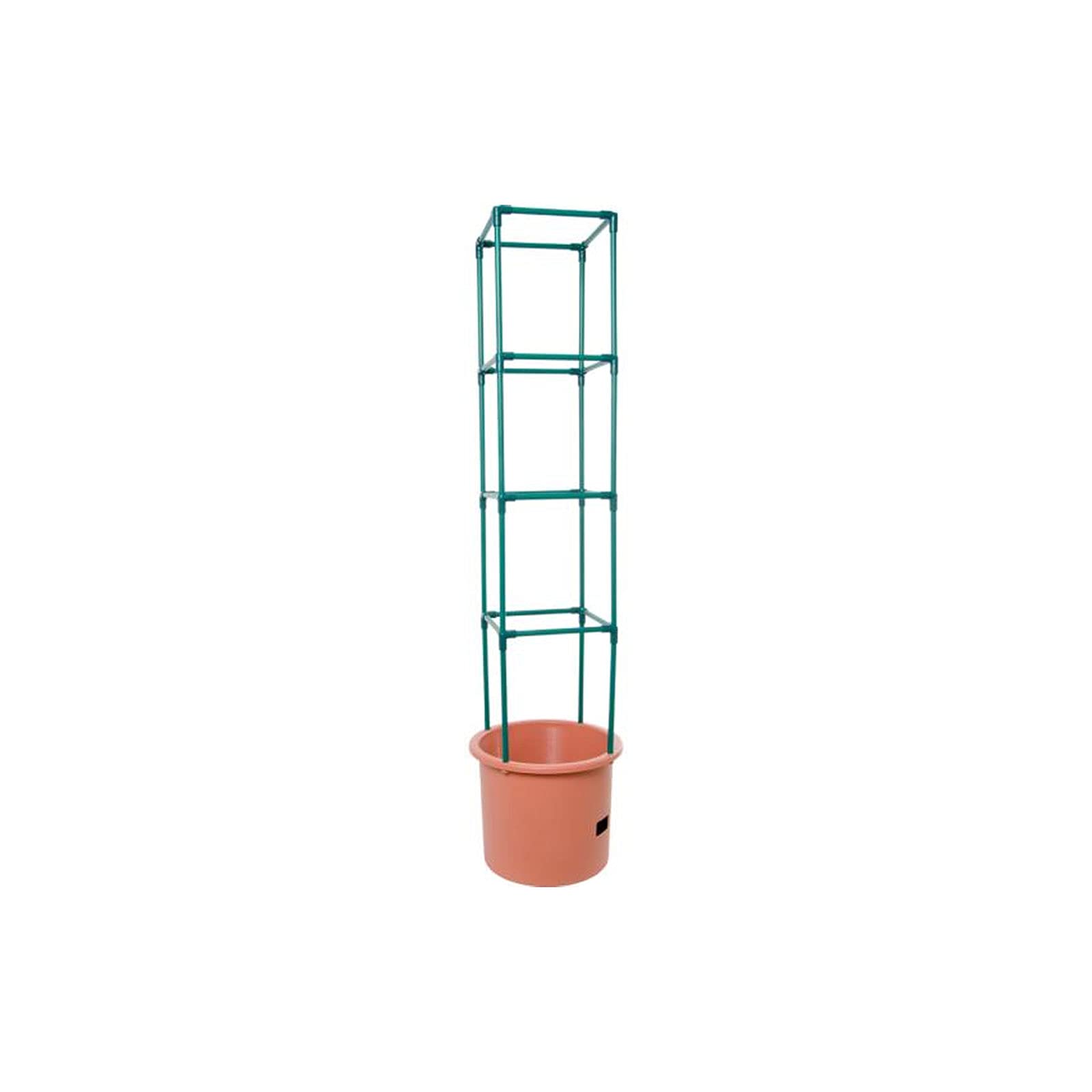
One buyer says it revived a struggling seedling and doubled its size in a week.
The Hydrofarm Tomato Barrel takes a different approach with its classic barrel shape and a 4-foot trellis tower (a vertical cage that expands to full height once assembled). It holds approximately 14 liters (about 3.7 gallons), which puts it between the DXront’s 3.1 gallons and the LINEX’s 4 gallons in soil volume. At 3.5 pounds, it is the lightest option here, making it very easy to lift and reposition.
One buyer reports their plant “doubled in size in one week” after being transplanted from a weak start, crediting the hollow tubes in the upper support that wick (draw) water from the lower chamber. The design does not include a dedicated upper fill tube, but users say a hose or funnel works fine for adding liquid fertilizer. The round base and planter, combined with 16 vertical trellis risers (small vertical rods) and 16 horizontal cross bars, create a sturdy cage that holds up better than most budget wire cones.
The main concern from long-term users is parts support. One reviewer who bought roughly 50 barrels noted that three had broken inserts and one was missing parts, and they could not buy replacements from Amazon or Hydrofarm. This is worth considering if you plan to buy in bulk or need guaranteed long-term support.
The Wicking Action: Hollow tubes in the upper support draw water from the lower reservoir, keeping roots consistently moist without a complex pump system.
The Risk: Replacement parts are hard to find, so treat the barrel carefully — a cracked insert could mean a lost season for that plant.
Best for: Gardeners who love the classic barrel aesthetic and want a proven wicking system that nurseries have used for years.
pass on it if: You need expandable parts or plan to buy multiple units where consistent support and replacement availability matter more than initial price.
5. DXront Tomato Planter with Trellis Cage Raised Garden Bed
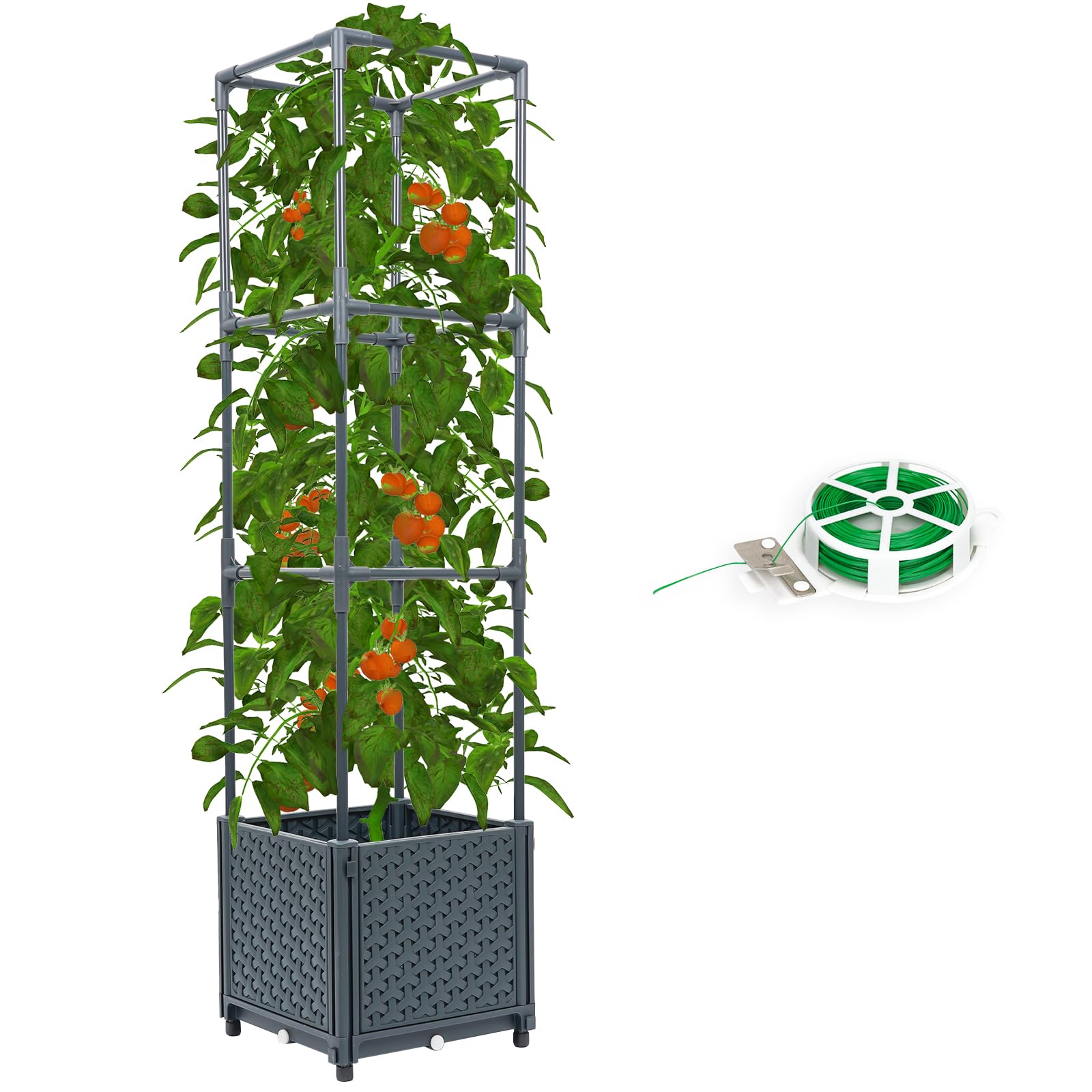
Easy to put together in under half an hour, and one buyer says the alloy steel rods are sturdier than typical wire cages.
The DXront planter is the entry-level option with a 3.1-gallon capacity, making it the smallest soil volume in this lineup. It trades root space for affordability and ease of assembly — shoppers say it takes less than 30 minutes to set up with simple, clear instructions. The alloy steel rods are sturdier than typical wire cages, and the 41.3-inch trellis gives vining plants a decent vertical climb.
One reviewer who uses it in their office called it “perfect” for a seedling, and another noted it works great for climbing cucumbers. The self-watering system hydrates from below, and a convenient water plug lets you manage excess moisture. Four lockable swivel casters make it easy to move around, and the UV-resistant, fade-resistant polypropylene construction holds up in diverse weather.
The big limitation is clear: at 3.1 gallons, this planter is small. Another buyer said “it did seem smaller than I would normally use” for full-sized tomatoes. A third noted it leaks if you do not seal the interior with silicone (a waterproof glue). If you grow compact determinate varieties (types that grow to a fixed size) or herbs, this is a fine budget pick. For indeterminate tomatoes (those that grow all season), you will want more soil volume.
The Fast Assembly: “VERY easy to assemble (less than 30 minutes), simple instructions, perfect fits, and very sturdy,” says one verified buyer — you can be planting within half an hour of unboxing.
The Size Reality: The 3.1-gallon capacity is smaller than the LINEX’s 4 gallons, so your tomato needs more frequent watering and may never reach full potential size.
Reach for this if: You are growing compact determinate tomatoes, peppers, or herbs on a small balcony and want the lowest upfront cost with solid build quality.
Look elsewhere if: You plan to grow a full-season indeterminate tomato variety — the limited root space will likely cap your harvest.
Understanding the Specs
Gallon Capacity (Soil Volume)
This is the single most important number for your tomato’s health. A planter’s capacity, measured in gallons or liters, determines how much soil your plant’s roots can explore. More soil means more nutrients and moisture retention. For tomatoes, look for at least 3 gallons for determinate varieties and 5 gallons or more for indeterminate types that grow all season. The DXront offers 3.1 gallons, while the GREEN MOUNT gives you a generous 6.1 gallons.
Self-Watering Reservoir
A self-watering system consists of a bottom chamber that holds water, which the plant’s roots draw up through the soil as needed. This keeps moisture consistent for several days and reduces the risk of both overwatering and underwatering. Most of the planters here include a drainage plug on the side so you can release excess water after heavy rain — an essential feature to prevent root rot (a condition where roots rot from too much moisture).
FAQ
How many tomato plants can I grow in one of these planters?
Can I leave these planters outside over winter?
How often do I need to refill the self-watering reservoir?
Will the trellis support heavy tomato vines?
Can I connect multiple planters together?
How do the wheels work and are they lockable?
Is assembly really tool-free?
What is the difference between a 3.1 gallon and a 6.1 gallon planter for my tomato?
Can I use these planters indoors?
Do these planters come with a warranty?
Final Thoughts: The Verdict
For the majority of shoppers, the best tomato planters overall is the GREEN MOUNT Raised Garden Bed Planter Box with Trellis because its 6.1-gallon capacity and 56.7-inch trellis give your tomato the root space and vertical climb it needs for a full-season harvest. If you want a self-watering system backed by strong buyer reports of winter durability, grab the LINEX Planter Box. And for a budget-friendly entry that assembles in under 30 minutes and works great for compact determinate tomatoes, the DXront Tomato Planter with Cage is a solid starting point.
How We Picked
We do not accept paid placement. Every pick is matched to a real buyer and a real use-case; we do not hands-on test units.
Sources & Methodology
Specifications: manufacturer listings and product documentation. Review insights: verified customer reviews, as of July 2026. Pricing: not shown on this page (it changes often); check the current price via the retailer link.
As an Amazon Associate, Lawn Gear Lab earns from qualifying purchases. This does not affect which products we feature.