
Specs are compiled from manufacturer listings and verified buyer reviews and can change over time — please confirm the key details on the product page before buying.
Tall grass laughs at a standard trimmer. It wraps around the string, bogs down the motor, and turns a quick chore into a frustrating day. You need a tool purpose-built to handle thick, dense, overgrown vegetation — something that won’t stall out before you make it past the first patch of weeds.
I’m Rikta — the founder and writer behind Lawn Gear Lab. This guide is built by comparing the manufacturers’ published specifications and the patterns across verified customer reviews, so you get each pick’s real strengths and trade-offs instead of marketing spin.
Here are the gas-powered brush cutters and string trimmers that actually deliver on the promise of tackling tall grass, with the power and durability to keep you working. Let’s find the right tool to cut tall grass for your property.
Quick Picks
- Relxxon 52cc 4-in-1 Gas Weed Eater — Top Performer
- Husqvarna 330LK Gas String Trimmer — Best Overall
- ECHO X Series SRM-3020T String Trimmer — Pro Grade
- PROYAMA 40cc Gas Powered Brush Cutter — No-Mix Power
- Husqvarna 122RJ Gas Weed Eater and Brushcutter — Multi-Purpose
- AMERISUN 26cc Gas String Trimmer — Budget Champion
How To Choose The Best Tool To Cut Tall Grass
Picking the right tool for tall grass depends on matching the machine to the thickness of what you are cutting. A lightweight electric trimmer works for a manicured lawn, but for dense, waist-high weeds and woody brush, you need a gas-powered tool with a real engine, a strong blade, and a design that lets you work for more than ten minutes without your shoulders giving out.
Engine Size and Type
Engine displacement, measured in cubic centimeters (cc), is the single biggest indicator of raw cutting power. For tall grass and thick brush, you generally want at least 26cc. A 2-cycle (or 2-stroke) engine is lighter for its power output but requires you to mix oil into the gasoline. A 4-cycle engine runs on straight gas and is usually heavier, but it delivers consistent torque without the mixing hassle.
Cutting Head: String vs. Metal Blade
A string trimmer head works well for grass and light weeds, but once you hit woody stems or thick brush, a metal blade is essential. Many of the best tools are hybrid designs — they come with a string head for regular trimming and a metal blade that you can swap on when the vegetation gets tougher. Cutting width, measured in inches, tells you how wide a path you clear in each pass. Wider means faster coverage, but a narrower width often focuses power into a denser cut.
Weight, Balance, and Harness
Spending an hour or more swinging a heavy tool will wear you out fast. A machine that weighs around 12-16 pounds is manageable for most people. You can handle tools that weigh more than 20 pounds, but only if they come with a good shoulder or full-body harness that transfers the weight off your arms. Look for anti-vibration systems — they reduce hand fatigue and let you work longer without your fingers going numb.
Quick Comparison
| Model | Best For | Engine | Cutting Width | Weight | Amazon |
|---|---|---|---|---|---|
| Relxxon 52cc 4-in-1 | Clearing Overgrown Areas | 52cc 2-Cycle | 17 Inches | 22 Pounds | Amazon |
| Husqvarna 330LK | Large Area String Trimming | 28cc 2-Cycle | 20 Inches | 12.9 Pounds | Amazon |
| ECHO SRM-3020T | Professional Brush Cutting | 30.5cc 2-Stroke | 12 Inches | 50 Pounds | Amazon |
| PROYAMA PBC140 | No-Mix 4-Cycle Power | 40cc 4-Cycle | 18 Inches | 16 Pounds | Amazon |
| Husqvarna 122RJ | Light Brush & Saplings | 28cc 2-Cycle | 17 Inches | 12.6 Pounds | Amazon |
| AMERISUN AM4532 | Value-Priced Versatility | 26cc 2-Cycle | 16 Inches | 18.7 Pounds | Amazon |
In‑Depth Reviews
1. Relxxon 52cc 4-in-1 Gas Weed Eater and Brush Cutter
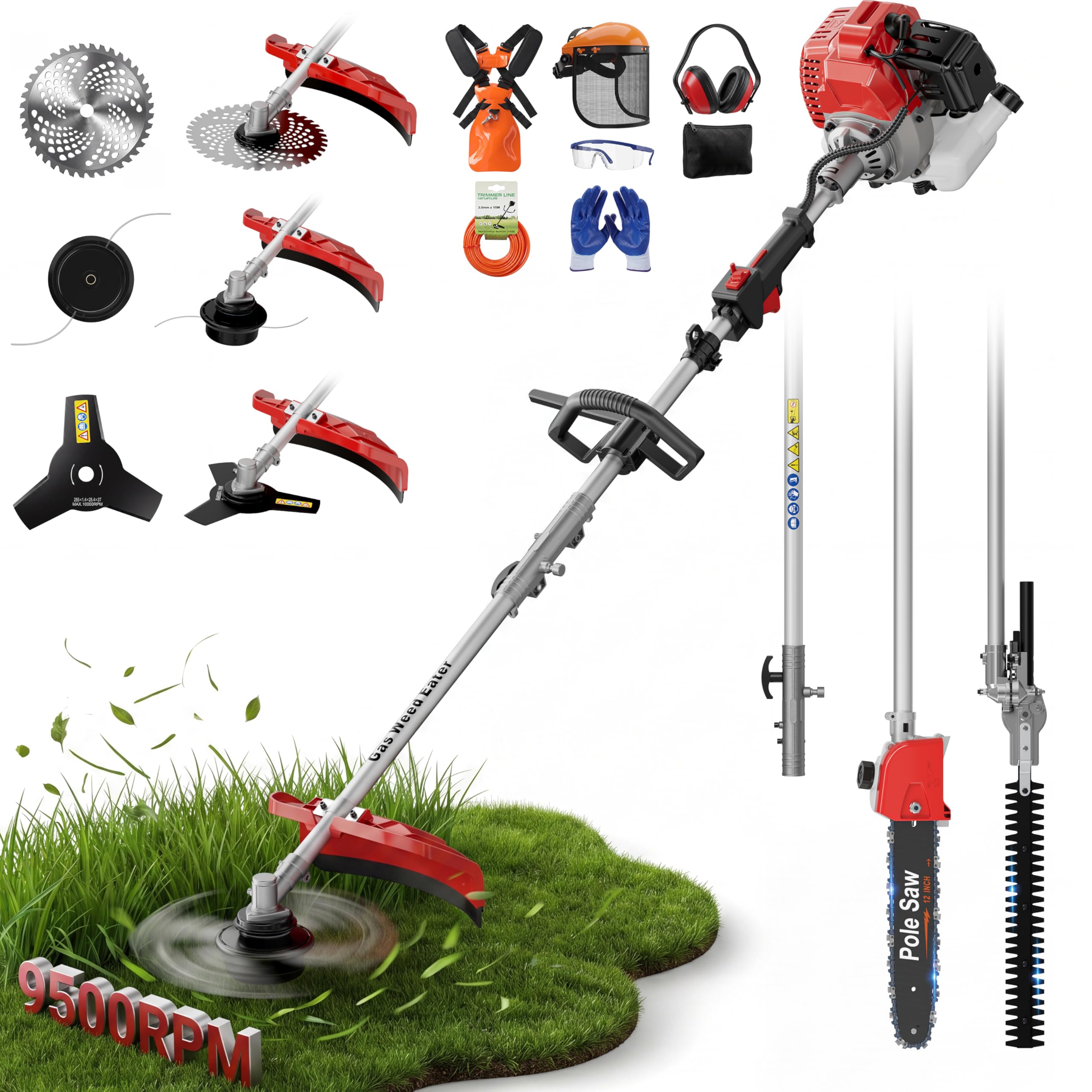
The brute-force answer to a yard that has gotten away from you.
Its 52cc 2-cycle engine is the biggest here, 24cc larger than the Husqvarna 330LK, so it powers through chest-high weeds and saplings without stalling. Buyers report it “cuts through tall, dense weeds without stalling” — exactly the torque you need. The 4-in-1 kit includes a metal blade you swap on for brush, plus a string head for fence-line trimming, so you clear overgrowth with one tool. The 17-inch cutting width clears a decent path each pass.
The trade-off is weight. At 22 pounds, it is 9.4 pounds heavier than the Husqvarna 330LK, and you will definitely need the shoulder strap for any session longer than 20 minutes. The included blades, line, gloves, and goggles add real value. The dual safety switch reassures buyers, and the LowVib-style vibration reduction (a system designed to dampen handle shaking) helps keep fatigue down during longer jobs. Just be prepared for cold starts to take a few extra pulls while you learn the choke.
A blunt instrument for a blunt job: If your property has turned into a jungle, this tool has the displacement to cut it back down to size — just budget for the shoulder workout.
The one thing to know: That power comes at 22 pounds, so the included shoulder strap is mandatory for sustained work; without it, you will tire fast.
Reach for this if: You have dense, overgrown areas with thick weeds and woody brush that a standard trimmer can’t handle.
Look elsewhere if: You need a lightweight tool for weekly trimming around a smaller yard — this is more machine than you need.
2. Husqvarna 330LK Gas String Trimmer

The fastest way to cover ground on a large property.
The 20-inch cutting width covers ground 25% faster than the 16-inch AMERISUN, meaning fewer passes on a big yard. The 28cc engine and spring-assisted starter make pull-starting feel 30% easier. The Rapid Replace trimmer head lets you reload string by aligning, loading, and twisting without tools. At 12.9 pounds, it is the lightest pick here, making it easier to handle for hours than the 22-pound Relxxon.
That Rapid Replace head is also the catch. Multiple owners mention the bump feed works inconsistently — sometimes not extending line and sometimes shooting out too much. The workaround is replacing the head with an aftermarket unit, which is an extra cost. The LowVib anti-vibration system reduces fatigue significantly, and it is attachment capable, so you can add a pole saw or edger later. This is the pick for five acres or more where speed matters more than raw brush-cutting torque.
A fast mover with a known flaw: The 330LK is the right choice for covering large areas quickly, but the stock trimmer head may need replacing to be truly dependable.
Best for: Owners of large properties who want the widest cutting path and the lightest weight in this class.
skip it if: You are not willing to potentially swap the trimmer head to fix the bump-feed issues reported by many users.
3. ECHO X Series SRM-3020T String Trimmer
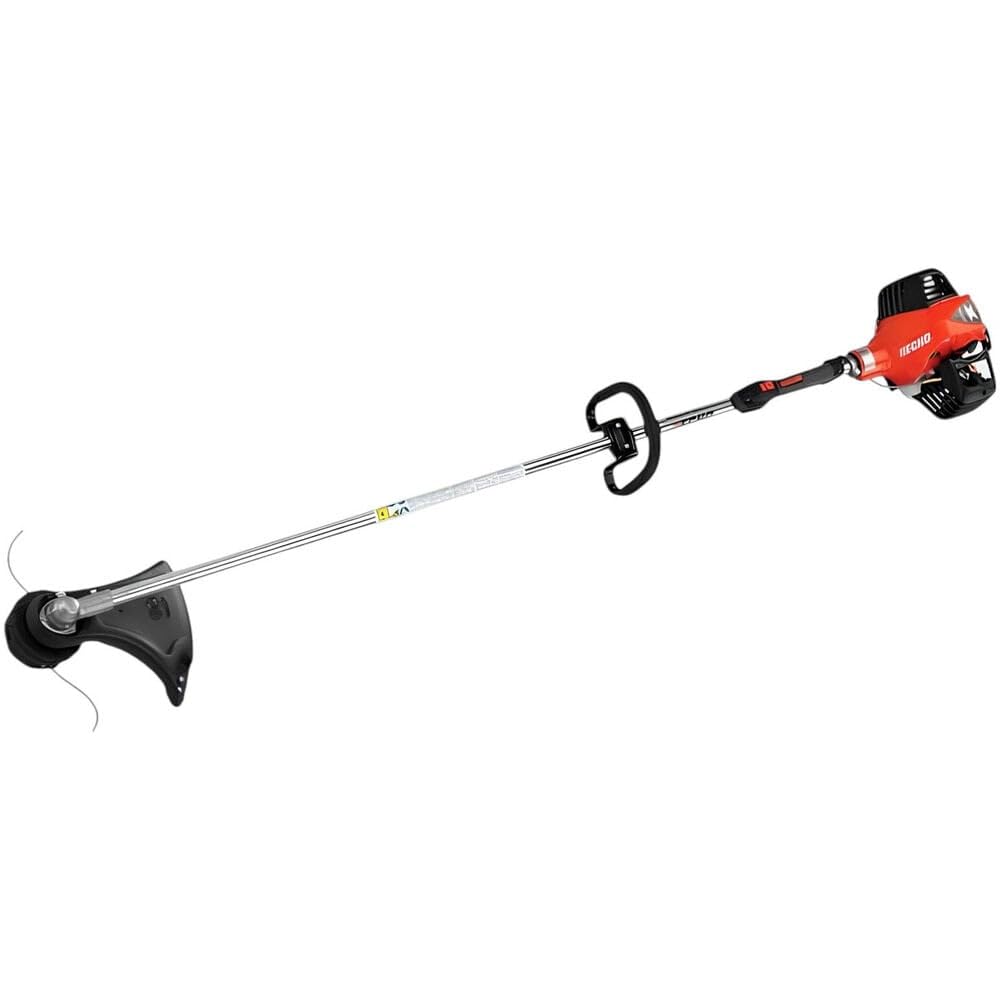
Professional-grade power that turns a 50-pound machine into a brush-destroying weapon.
The 30.5cc 2-stroke engine produces 1.8HP, and a 2:1 high-torque gear ratio rips through tough overgrown grass that would stall lesser tools. One buyer reports it “cuts 6ft brush, 3/4″ weeds, 1/2″ trees,” clearing saplings and thicket-level vegetation. The tool-less access air filtration system means you clean or replace the filter in the field without extra tools. The 5-year consumer and 2-year commercial warranty back its build quality.
At 50 pounds, this is the heaviest tool here by 28 pounds over the Relxxon. You do not carry this for small jobs; it is for sustained professional use or large-scale property maintenance. The 12-inch cutting width is narrow, demanding more passes than the 20-inch Husqvarna 330LK. One long-term owner also notes starting issues, which is worth knowing for long-term reliability. This is a specialist’s machine for weekly heavy brush clearing, not the occasional suburban cleanup.
Built for heavy use
- 1.8HP engine with 2:1 high-torque gear ratio powers through thick brush
- Tool-less air filter access for quick field servicing
- Long 5-year consumer warranty backs the build
The weight trade-off
- Weighs 50 pounds — the heaviest pick by far
- 12-inch cutting width is narrow, demanding more passes
- Some customers note long-term starting reliability issues
One sentence verdict: The ECHO is a high-torque workhorse for professionals with large-scale clearing needs, but its extreme weight and narrow cut make it a specialist tool, not an everyday trimmer for most homeowners.
4. PROYAMA 40cc Gas Powered Brush Cutter

The convenience of a 4-cycle engine with muscle to back it up.
You skip the oil-mixing step entirely with the 40cc 4-cycle engine — it runs on straight gasoline from the pump, which simplifies refueling and eliminates ratio guesswork. Its 1.5 HP engine and 18-inch cutting width give it reach and power for heavy-duty gardening tasks. The included vibration-reduction shoulder harness, ear defenders, gloves, and goggles make the package complete at a mid-range price point. At 16 pounds, it is heavier than the 12.6-pound Husqvarna 122RJ but lighter than the 22-pound Relxxon.
The reviews tell a mixed story. Several reviewers point out the unit “works first use, fails on second: starts then dies under throttle.” Other complaints include the shaft overheating to the point of being painful to touch, the string melting inside the head, and the motor stalling after 30 minutes. The quick-release split shaft is handy for storage, but the unique adapter size means standard attachments do not fit. The PROYAMA looks strong on paper, but the reliability concerns in customer reviews are real and should give a cautious buyer pause.
What stands out
- 40cc 4-cycle engine means no oil mixing
- Includes harness, ear defenders, gloves, and glasses
- 18-inch cutting width covers ground efficiently
What worries buyers
- Reviews report the unit dying under throttle after the first use
- Shaft overheating and string melting in the head
- Proprietary adapter prevents using standard attachments
Best for: The buyer who prioritizes no-mix convenience and likes a generous accessories bundle, and is willing to risk some reliability issues the reviews flag.
Look elsewhere if: Consistent performance is your top priority — reviews suggest a pattern of second-use failures that is hard to ignore.
5. Husqvarna 122RJ Gas Weed Eater and Brushcutter
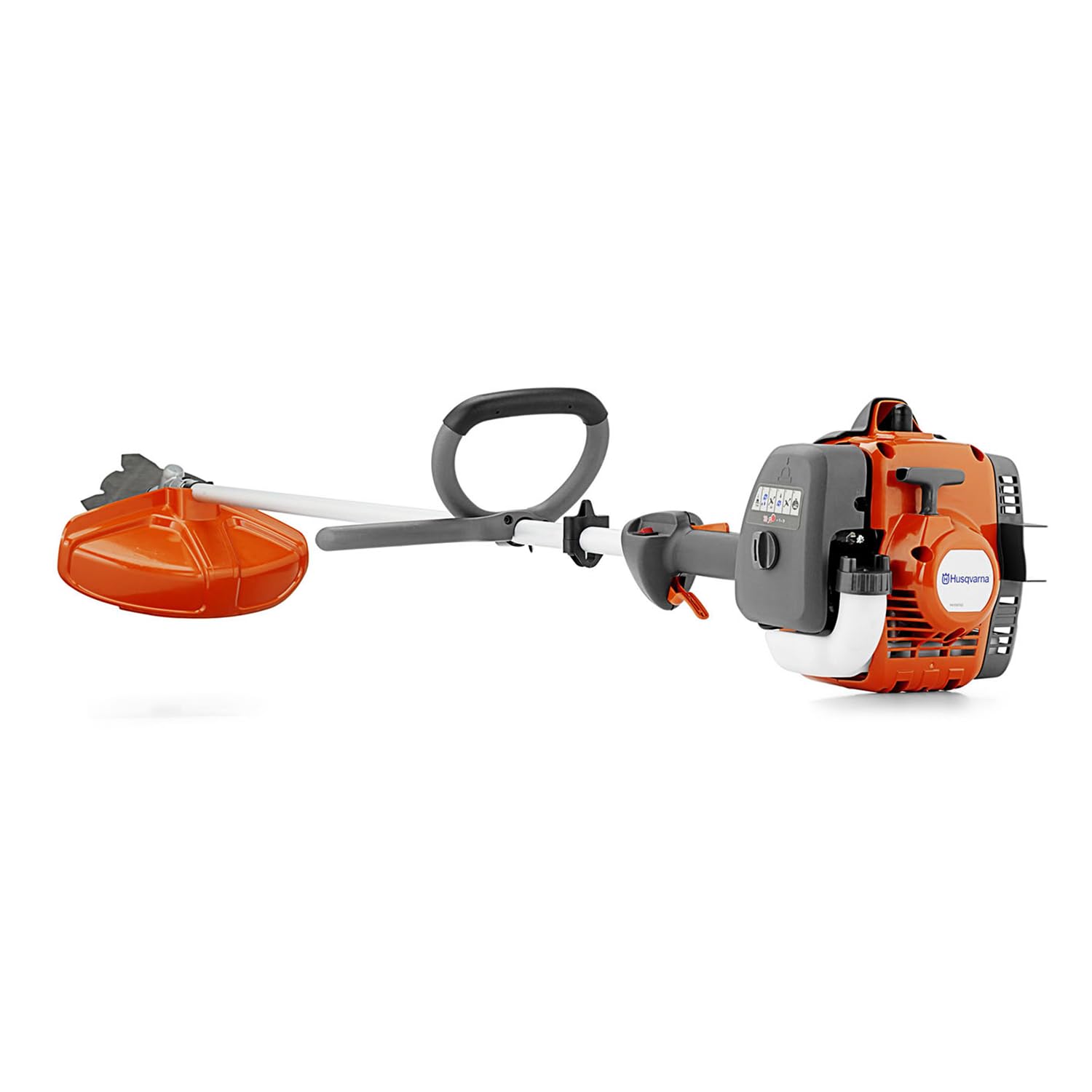
A versatile brush cutter that balances power and a manageable weight.
At 12.6 pounds, it is 9.4 pounds lighter than the Relxxon, making it far easier to handle for longer sessions. It comes as a full kit with both a string trimmer head and a grass blade, so you switch between regular trimming and heavier brush cutting without buying extras. The Smart Start technology and air purge system are designed to get you started with minimal effort. Shoppers say it “cuts 1/2″ brush easily, 1″ branches in passes” — impressive for a machine this light. The J-handle barrier bar gives you better control and keeps your hands away from the blade.
Not every buyer has a perfect experience. Some report that while it starts easily at first, it becomes harder to start after a few weeks, requiring 8 or more pulls. The lack of clear string-reloading instructions in the manual is a minor but common complaint. Despite these issues, many owners call it a “beast” that starts on the first pull after the break-in period. This is a strong choice for a buyer who needs one tool for both light trimming and medium brush work without breaking their back carrying it.
A balanced performer with a sharp edge: The 122RJ earns its spot for combining a brush blade, string head, and low weight — making it a versatile partner for properties with mixed vegetation — but be ready for a potential learning curve on starting.
Reach for this if: You want a single tool that handles string trimming and sapling cutting, and you prioritize a light carry weight at 12.6 pounds.
Look elsewhere if: You need guaranteed first-pull starts every time without any warm-up procedure.
6. AMERISUN 26cc Gas String Trimmer
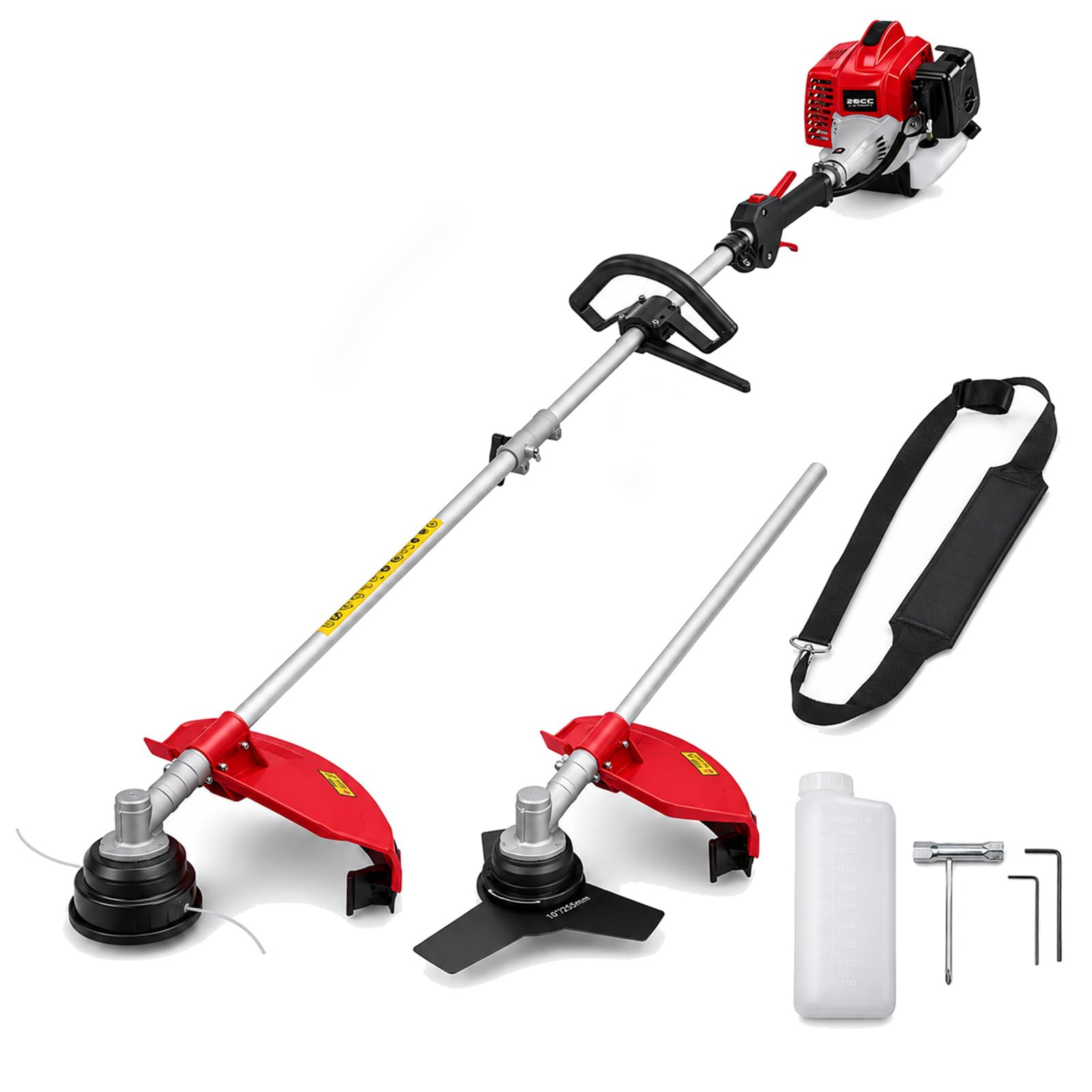
Entry-level gas power that still packs a punch for the price.
Its 26cc 2-cycle engine and 16-inch cutting width are a step up from electric trimmers, and the included 10-inch metal blade lets you handle brush that would destroy a string-only head. One reviewer noted clearing “5 acres of heavy brush/tumbleweeds in High Desert CA over 2 weeks,” showing this budget tool can handle serious work. The 50:1 gas-to-oil ratio is standard for 2-cycle engines but requires careful measuring.
The trade-offs are where the budget savings show up. At 18.7 pounds, it is heavier than the 12.6-pound Husqvarna 122RJ and the 12.9-pound Husqvarna 330LK, making it tiring to use for long stretches. Some durability concerns also appear in the reviews — one buyer mentioned the trigger broke after just two uses, and another found the string change mechanism cumbersome. For someone on a tight budget who needs gas power to cut through tall grass and light brush, the AMERISUN delivers the essential functionality. Just know you may face some assembly and reliability hurdles that are less common with premium brand models.
Where it shines
- Budget-friendly entry into gas-powered tall grass cutting
- Includes a 10-inch metal blade for brush
- Buyers report it can clear acres of heavy brush
Where it cuts corners
- 18.7 pounds is heavy for its engine size
- Some owners mention triggers breaking after minimal use
- String change mechanism is cumbersome
Best for: The buyer who needs gas power on a limited budget and is willing to accept potential fit-and-finish issues to get a functional brush cutter.
Look elsewhere if: You want a tool that will start reliably for years without replacing parts — the premium options offer better long-term value.
Understanding the Specs
Engine Displacement (cc)
This number tells you the raw power of the engine. More cubic centimeters (cc) generally means more torque to spin the blade or string through thick, dense vegetation. For tall grass and brush, 26cc is the minimum you want, while 40cc to 52cc gives you the muscle to clear saplings and woody weeds without bogging down.
2-Cycle vs. 4-Cycle Engine
A 2-cycle (or 2-stroke) engine is lighter and simpler, but it requires you to mix 2-cycle oil with the gasoline before filling the tank. A 4-cycle engine runs on plain gas from the pump, which is more convenient, but it is typically heavier and costs more. Your choice depends on whether you prefer lighter weight with a mixing step, or a heavier machine with simpler refueling.
Cutting Width
Measured in inches, this is the swath of grass the tool clears in one pass. A wider cutting width (like 20 inches) helps you cover large areas faster, but it also demands more power from the engine. A narrower width (12-16 inches) usually concentrates the cutting power into a tighter path, which can be more effective against very thick brush.
Metal Blade vs. String Head
A string trimmer head is perfect for grass and light weeds, but it will quickly wear out or snap when hitting woody stems. A metal blade (often a 3-tooth or circular blade) is designed to chip through brush, vines, and small saplings. The best tools for tall grass often include both, so you can switch between them depending on what you are cutting.
FAQ
Will a string trimmer cut tall grass?
What engine size do I need for tall grass?
Is a 4-cycle trimmer better than a 2-cycle?
Can I use a metal blade on any trimmer?
How heavy is too heavy for a gas trimmer?
What does the cutting width measurement mean?
Do I need to assemble a gas trimmer?
What kind of maintenance does a gas trimmer need?
How long does a gas trimmer last?
Is electric better than gas for tall grass?
Final Thoughts: The Verdict
For the majority of shoppers, the best tool to cut tall grass winner is the Relxxon 52cc 4-in-1 because it combines the largest engine here with a versatile kit that includes a metal blade, making it capable of handling the toughest overgrowth without stalling. If you want the fastest coverage for a large, open property, grab the Husqvarna 330LK with its 20-inch cutting width. And for professional-grade durability and high-torque brush cutting, the standout is the ECHO SRM-3020T, though you must be prepared for its significant weight.
How We Picked
We do not accept paid placement. Every pick is matched to a real buyer and a real use-case; we do not hands-on test units.
Sources & Methodology
Specifications: manufacturer listings and product documentation. Review insights: verified customer reviews, as of July 2026. Pricing: not shown on this page (it changes often); check the current price via the retailer link.
As an Amazon Associate, Lawn Gear Lab earns from qualifying purchases. This does not affect which products we feature.