
Specs are compiled from manufacturer listings and verified buyer reviews and can change over time — please confirm the key details on the product page before buying.
I’m Rikta — the founder and writer behind Lawn Gear Lab. This guide is built by comparing the manufacturers’ published specifications and the patterns across verified customer reviews, so you get each pick’s real strengths and trade-offs instead of marketing spin.
Whether you are hardening off your first set of cotyledons or you are a seasoned gardener looking for a more targeted formula, these five picks cover the spectrum from gentle liquid starters to slow-release granules packed with root-boosting fungi. Choosing the right fertilizer for tomato seedlings is the single most effective decision you make for the entire growing season.
Quick Picks
- FoxFarm Happy Frog Tomato & Vegetable — Top Performer
- Happy Frog Jump Start Fertilizer — 3-4-3 Blend — Seedling Specialist
- MaterAid Tomato Fertilizer — Organic Liquid — Fast-Acting Liquid
- 5-10-10 Tomato & Vegetable Fertilizer — Fruiting Specialist
- True Organic Liquid Preplant Starter — Gentle Starter
How To Choose The Best Fertilizer For Tomato Seedlings
Tomato seedlings need a gentle, balanced nutrient supply that prioritizes root and stem strength over leafy growth. Here are the key factors to consider before you buy.
N-P-K Ratio: The Three Numbers That Matter Most
The three numbers on a fertilizer label (for example 5-10-10) represent the percentage of nitrogen (N), phosphorus (P), and potassium (K) by weight. For seedlings, you want a starter fertilizer with a higher middle number (phosphorus) to promote strong root development and early flower formation. Too much nitrogen (the first number) pushes leggy, weak green growth that flops over after transplanting.
Liquid vs. Granular: Speed vs. Steady Release
Liquid fertilizers, like the True Organic Liquid Preplant Starter, deliver nutrients immediately to the roots and are ideal for giving young transplants a quick, gentle boost every two weeks. Granular options, like the FoxFarm Happy Frog or 5-10-10 from Cz Garden Supply, break down slowly in the soil and feed the plant over several weeks, making them better for mixing into the planting hole at transplant time.
Organic Certification and Beneficial Additives
Organic fertilizers are plant-based or mineral-based and feed the soil microbiome alongside the plant. Look for extras like mycorrhizal fungi, which form a partnership with the roots to pull in more water and nutrients, and calcium, which is the number one defense against blossom end rot later in the season.
Quick Comparison
| Model | Best For | N-P-K Ratio | Form | Weight/Volume | Amazon |
|---|---|---|---|---|---|
| FoxFarm Happy Frog Tomato & Vegetable | Vigorous fruiting & bloom support | 5-7-3 | Granules | 4 lb | Amazon |
| Happy Frog Jump Start Fertilizer | Seedling & transplant root development | 3-4-3 | Granules | 4 lb | Amazon |
| MaterAid Tomato Fertilizer | Fast-acting liquid feed for explosive growth | — | Liquid | 32 fl. oz. | Amazon |
| 5-10-10 Tomato & Vegetable Fertilizer | Fruiting stage and heavy blooms | 5-10-10 | Granules | 4 lb | Amazon |
| True Organic Liquid Preplant Starter | Gentle liquid feeding for young starts | — | Liquid | 32 fl. oz. | Amazon |
In‑Depth Reviews
1. FoxFarm Happy Frog Tomato & Vegetable Fertilizer

A granular powerhouse that pairs a 5-7-3 blend with calcium and mycorrhizal fungi to feed fruit-heavy demands.
This is the pick for gardeners who want a single fertilizer that carries tomatoes from transplant all the way to the final harvest. The 5-7-3 ratio (the three numbers are nitrogen, phosphorus, and potassium) leans hard on the phosphorus for blooming and fruit set, which is exactly what a vigorous feeder needs after the seedling stage. The added calcium targets blossom end rot before it starts, and the mycorrhizal fungi increase how efficiently the roots take up water and nutrients.
Buyers report that this fertilizer produces “bumper tomato crops” when blended with Ocean Forest soil, perlite, and coco coir. They also note it is organic and has no chemical or fish smell.
Acid-loving plant booster: This granular feed works best when you are moving seedlings into their final pots or garden beds, not for very first feeding. Mix it into the soil at planting time once a month to satisfy even the hungriest tomato plants.
Best for: Gardeners who want one bag to cover the whole season and value root-boosting fungi and rot prevention.
Look elsewhere if: You need a liquid feed for tiny seedlings — this is a granular formula designed for established plants.
2. Happy Frog Jump Start Fertilizer — 3-4-3 Blend

A low-nitrogen 3-4-3 granular blend built precisely to reduce transplant shock and build root mass.
If you are moving tomato seedlings from a seed tray into a larger container or the garden bed, this is the formula designed for exactly that moment. The 3-4-3 ratio (nitrogen-phosphorus-potassium) supplies phosphorus as the primary nutrient — that is the middle number — because phosphorus drives early root growth, cell division, and flower bud development. The mycorrhizal fungi in the mix help the young roots establish a connection to the soil faster, which means less wilting and a quicker recovery after transplant.
Reviewers point out that the product is clean of big chunks of wood and gives them confidence when moving fragile seedlings to their first home. They also mention that a small amount goes a long way for the price.
Unlike the 5-7-3 Happy Frog above, this fertilizer is explicitly a Jump Start formula with a lower nitrogen content so you do not push leafy growth too early. Mix it into the soil at the bottom of the transplant hole and water it in well.
Reach for this if: You are transplanting young tomatoes or repotting container plants and want a phosphorus boost for root establishment.
Look elsewhere if: Your seedlings are already in their final spot and show flowers — switch to a higher-phosphorus, more balanced formula for flowering support.
3. MaterAid Tomato Fertilizer — Organic Liquid
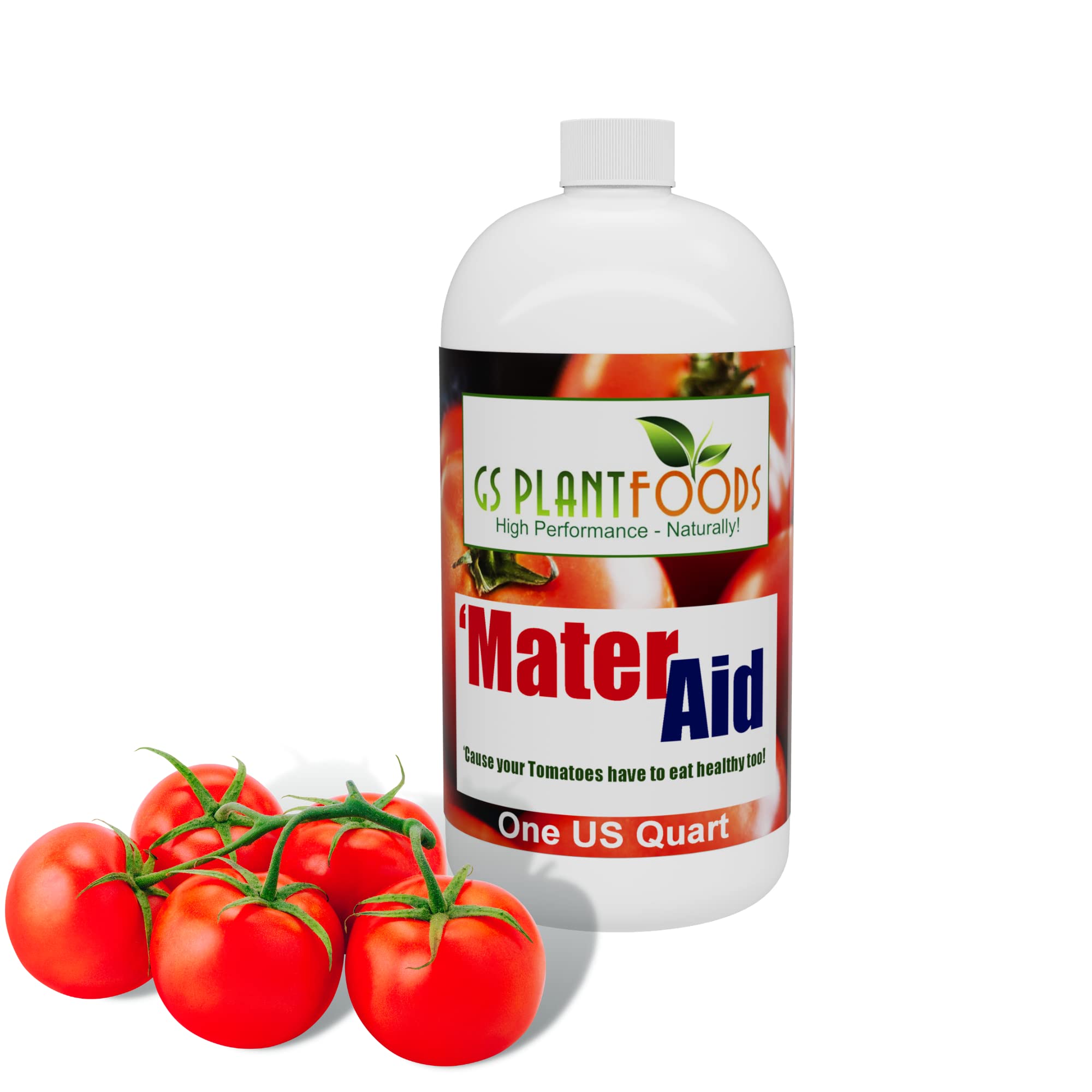
An organic liquid concentrate loaded with magnesium, calcium, and sulfur for explosive leaf and flower response.
This is the one for growers who notice their seedlings look stalled and want to see a visible difference within days. The liquid formulation delivers nutrients in a water-soluble form that the roots can absorb immediately, rather than waiting for soil microbes to break down granules. The formula includes magnesium for improved flowering and fruit quality, calcium for stronger roots and firmer tomatoes, and sulfur for protein and chlorophyll production.
One reviewer noted, “I used this on my plants and they shot up and out overnight,” and other reviews confirm seeing explosive growth within a week. The mixing ratio is 1 ounce per gallon of water, applied every other week until the fruit sets, then once a week.
It requires more frequent application than granular picks like the Happy Frog Jump Start, but for seedlings that need a quick intervention, the immediacy is worth the extra effort.
Best for: Quick-correction feeding when seedlings look pale or stalled — the liquid form gets to work right away.
Look elsewhere if: You only want to fertilize once at planting time and prefer a slow-release granular.
4. 5-10-10 Tomato & Vegetable Fertilizer — Cz Garden Supply

A 5-10-10 granule loaded with 2% iron and micronutrients to push heavy blooms and larger fruit.
This is the fertilizer to reach for when your tomato seedlings have developed into young plants and you are ready to shift their energy from leaf production to flower and fruit development. The 5-10-10 ratio (the middle number is phosphorus, the last is potassium) is what makes this a fruiting-stage specialist — it doubles down on the two nutrients most responsible for energy transfer, disease resistance, and fruit firmness. It also contains 2% iron to keep leaves dark green and healthy during photosynthesis.
Buyers have used this for years and report that their tomato plants grow huge green leaves and lots of fruit with no burning. One buyer mentioned it is “effective veggie fertilizer for fruiting stage” and that a single bag lasts a full season. Apply 1-2 tablespoons per plant around the dripline every two weeks.
Relative to the Jump Start fertilizer, this has a higher nitrogen count (5 vs. 3) so it is better suited for plants that are already established, not for first-week seedlings.
Best for: Feeding plants that have moved past the seedling stage and are entering the flowering and fruiting phase.
Look elsewhere if: Your plants are still tiny seedlings less than four inches tall — the higher phosphorus ratio is more than they need.
5. True Organic Liquid Preplant Starter
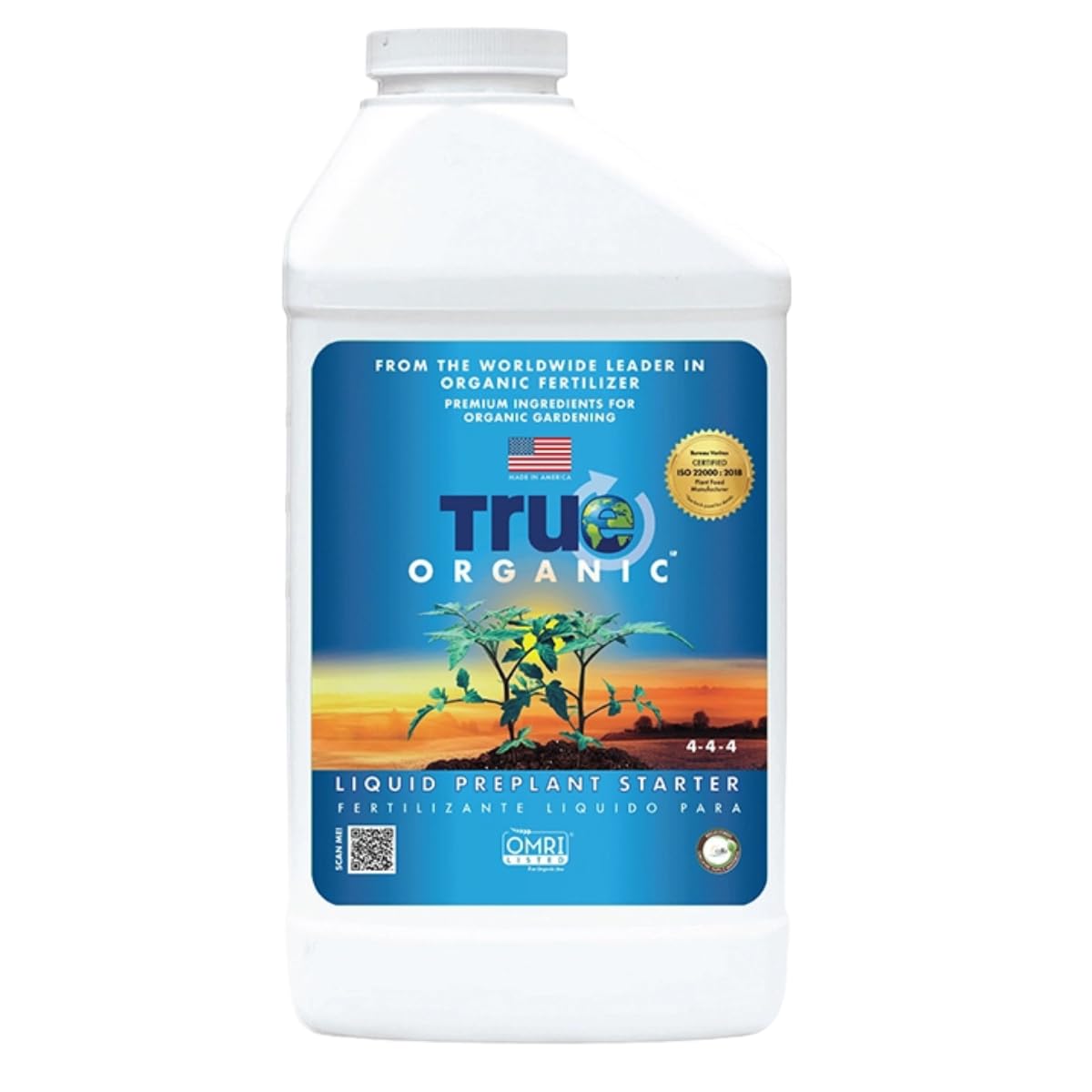
A budget-friendly organic liquid that is mild enough for your youngest transplants and covers 40 sq. ft.
If you are starting tomatoes from seed indoors and want a gentle, no-risk nutrient source for the first week after they develop true leaves, this is the entry-level workhorse. The True Organic Liquid Preplant Starter uses an advanced soy protein hydrolysate formula, which is a fancy way of saying it is a plant-based protein that feeds both the seedling and the soil microbes around its roots. You mix 3 ounces per gallon of water and apply every two weeks.
Owners mention that this fertilizer “worked well for my seedlings” and they appreciate the price point for an organic option. One 32 fluid ounce bottle covers 40 square feet, which is a big area for a small container garden.
It lacks the high-phosphorus kick, the added calcium, or the mycorrhizal fungi found in the premium granular picks above. That said, for a first feeding on indoor seedlings, it is perfectly balanced to avoid burning them.
Best for: First-time indoor seed starters who want an organic, gentle liquid feed that is very hard to mess up.
Look elsewhere if: You need a high-phosphorus formula for flower setting or root-stimulating fungi — consider the Jump Start or Happy Frog Tomato & Vegetable instead.
Understanding the Specs
N-P-K Ratio
Always the first thing to check. The three numbers stand for nitrogen-phosphorus-potassium. Seedlings need a low first number (nitrogen) and a higher second number (phosphorus) to promote root growth and early flowers rather than leggy leaves. A ratio like 3-4-3 is a safe bet for young transplants; 5-10-10 is better for established plants that are about to flower and fruit.
Liquid vs. Granular Form
Liquid fertilizers (like the MaterAid and True Organic) are absorbed instantly and are ideal for a quick boost or for feeding seedlings in containers. Granular fertilizers (like the FoxFarm and Cz Garden options) are mixed into the soil and release nutrients slowly over weeks, making them better for amending the garden bed at planting time. Granular feeds need soil moisture and microbes to break them down, so they work best in outdoor beds.
Calcium and Mycorrhizal Fungi
Calcium is the key ingredient that prevents blossom end rot — the ugly black leathery spot on the bottom of your tomatoes. Mycorrhizal fungi are beneficial soil organisms that attach to the plant’s roots and extend their reach into the soil, effectively making the root system larger and more efficient at pulling in water and nutrients. Premium granular formulas often include both as added-value features.
FAQ
How soon after planting can I start fertilizing tomato seedlings?
What N-P-K ratio is best for young tomato seedlings?
Can I use a balanced 10-10-10 fertilizer on tomato seedlings?
How often should I fertilize tomato seedlings?
What is the difference between liquid and granular tomato fertilizer?
Do I need to add calcium to my tomato seedlings?
Will applying a high-nitrogen fertilizer burn my tomato seedlings?
How do mycorrhizal fungi help tomato seedlings?
Can I use the same fertilizer for seedlings in containers and in-ground beds?
When should I switch from a seedling fertilizer to a fruiting fertilizer?
Final Thoughts: The Verdict
For the majority of shoppers, the best fertilizer for tomato seedlings winner is the Happy Frog Jump Start Fertilizer because its low 3-4-3 ratio is perfectly tuned to the needs of tender young transplants, and the mycorrhizal fungi reduce shock and build root strength. If you want a liquid feed for a visible overnight response, grab the MaterAid Tomato Fertilizer. And for a long-season all-in-one granular that carries tomatoes from transplant to harvest, the standout is the FoxFarm Happy Frog Tomato & Vegetable Fertilizer.
How We Picked
We do not accept paid placement. Every pick is matched to a real buyer and a real use-case; we do not hands-on test units.
Sources & Methodology
Specifications: manufacturer listings and product documentation. Review insights: verified customer reviews, as of July 2026. Pricing: not shown on this page (it changes often); check the current price via the retailer link.
As an Amazon Associate, Lawn Gear Lab earns from qualifying purchases. This does not affect which products we feature.