
Specs are compiled from manufacturer listings and verified buyer reviews and can change over time — please confirm the key details on the product page before buying.
You are likely killing your succulents with kindness — overwatering is the number one cause of death indoors. The fix is simple: use a soil that drains fast and dries quickly, just like the rocky, sharp ground these plants evolved in. The single most important thing you can do for your indoor collection is getting the right mix.
After looking at manufacturers’ published specs and patterns in verified buyer reviews, the Soil Sunrise Cactus and Succulent Potting Mix (8 quarts) stands out because it drains immediately without you adding anything — no tinkering required. If you have delicate cacti, the Spike & Bloom High Drainage Mix (8 liters) adds beneficial fungi that help roots. For a budget starter, Miracle-Gro Succulent Potting Mix (4 quarts) works, but you will need to mix in extra perlite (small white volcanic beads) for drainage.
I’m Rikta — the founder and writer behind Lawn Gear Lab. This guide is built by comparing the manufacturers’ published specifications and the patterns across verified customer reviews, so you get each pick’s real strengths and trade-offs instead of marketing spin.
This article breaks down seven top indoor succulent mixes so you can pick the one that fits your plants and your routine.
Quick Picks
- Soil Sunrise Cactus and Succulent Potting Mix — Best Overall
- Spike & Bloom High Drainage Cactus Soil Mix — Premium Pick
- Miracle-Gro Succulent Potting Mix (4 Quarts) — Best Value
- Agra Life Premium Succulent Soil Mix (4 Quarts) — Compact Pick
- Midwest Hearth Cactus & Succulent Potting — Classic Choice
- Omitgoter Succulent & Cactus Soil Potting — Budget Champion
- Hoffman 10410 Organic Cactus — Two-Bag Value
How To Choose The Best Soil For Succulents Indoors
Succulents and cacti evolved for dry, rocky environments — so the soil you use indoors has one main job: drain fast and never stay wet. Here is what to look for when you scan the bag.
Drainage and Aeration Are Everything
The fastest way to kill a succulent is waterlogged roots. A good mix uses chunky, inorganic materials like perlite (white volcanic glass beads), pumice (lightweight porous rock), sand, or calcined clay (hardened clay bits) to create air pockets. Water should pass through quickly, and the mix should feel loose and gritty, not dense or muddy. If the bag feels heavy and compact, it probably holds too much moisture.
Ingredient List: What to Look For and What to Avoid
Peat moss (a spongy, decomposed plant material) is common in budget mixes, but it retains water — many blends need extra perlite or sand to balance it. Pine bark, silica sand, calcined clay, and pumice drain better and resist compaction. Look for “ready to use” or “no amendments needed” only if the mix already has enough gritty material. Premium blends often skip peat entirely and rely on rocky components, which means water flows through in seconds.
Bag Size and Your Collection
Succulent pots are small — a 4-quart (about 16 cups) bag typically fills 2–3 standard 6-inch pots. If you have a growing collection or larger containers, 8-quart or 10-quart bags save you from running out mid-project. Re-sealable bags or pouches help keep the remaining mix fresh for months.
Quick Comparison
| Model | Best For | Volume | Key Ingredients | Weight | Amazon |
|---|---|---|---|---|---|
| Soil Sunrise Special Blend | Premium gritty mix, no amendments | 8 Quarts | Pine bark, silica sand, calcined clay, pumice | — | Amazon |
| Agra Life Premium Mix | Natural pumice blend | 4 Quarts | Pumice, organic materials | — | Amazon |
| Miracle-Gro Succulent Mix | Beginner-friendly, widely available | 4 Quarts | Sphagnum peat moss, forest products | 0.79 Kilograms | Amazon |
| Midwest Hearth Cactus Mix | Fast drainage, made in USA | 4 Quarts | Peat moss, perlite, vermiculite | — | Amazon |
| Omitgoter Succulent Mix | Gritty organic blend | 2 Quarts | River sand, lava rock, vermiculite, peat moss | 1.22 Kilograms | Amazon |
| Hoffman Organic Mix (2-Pack) | Two-bag value for collections | 10 Quarts (2 bags) | Peat moss, organic ingredients | — | Amazon |
| Spike & Bloom High Drainage Mix | Exotic cacti, mycorrhizae boost | 8 Liters (≈8.5 Quarts) | Clays, sands, organic matter, mycorrhizae | 3.17 Kilograms | Amazon |
In‑Depth Reviews
1. Soil Sunrise Cactus and Succulent Potting Mix (8 Quarts)
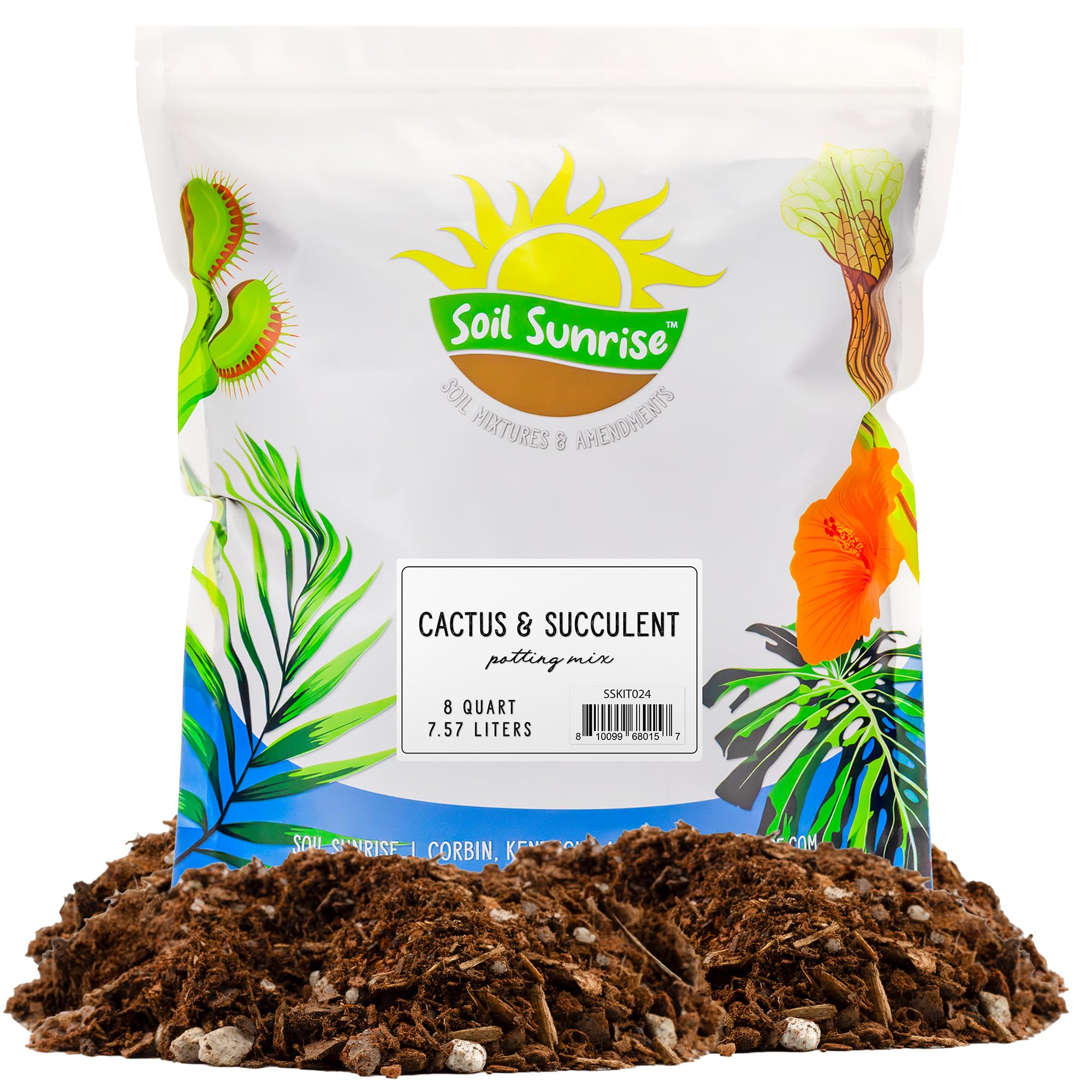
You want true fast drainage without mixing in anything yourself — this hand-blended gritty mix delivers that out of the bag.
The Soil Sunrise mix uses pine bark, silica sand, calcined clay (hardened clay bits), and pumice (lightweight porous rock) — the same premium components serious growers buy separately. Unlike the Miracle-Gro option, which buyers report is “peat moss-based; stays too wet, needs added perlite,” this blend lets you skip that extra step. One reviewer called it “the best gritty mix I have ever bought … true cactus soil with gravel and sand.”
The 8-quart bag holds four times the volume of the 2-quart Omitgoter pouch, so it fits a growing collection without restocking. Owners mention the mix stays fresh with no bugs or gnats, and the hand-blended quality means each batch looks consistent. For low-maintenance root health indoors, this is the most direct path.
Fast-draining cactus blend
- No amendments needed — ready to use from the bag
- Full 8 quarts covers multiple pots or a large 12-inch planter
- Natural ingredients with no artificial additives
Small bag size
- Premium price compared to basic peat-based mixes
grab this if: you want a true gritty mix that drains fast and you don’t want to mess around with amendments — just open, pour, and plant.
skip it if: you are on a tight budget or only need a small amount for one tiny pot. The 8-quart volume is overkill for a single 4-inch container.
2. Spike & Bloom High Drainage Cactus Soil Mix (8 Liters)

This mix earns its spot for delicate cacti because it adds mycorrhizae (beneficial fungi that help roots absorb water and nutrients) — a feature no other pick here offers.
Unlike the Soil Sunrise mix, which focuses purely on drainage, this blend adds mycorrhizal fungi — a web of tiny filaments that help roots take in more water and minerals. The formula is slightly acidic at a pH of 6.5, matching what cacti prefer. Customers note the drainage is exceptional; one reviewer called it “perfect for cactus/succulent lovers” and noted “new growth within weeks.”
The base is a custom blend of clays, sands, and a small amount of organic matter — nothing that holds water for long. At 3.17 kilograms (about 7 pounds), it is the heaviest bag in this roundup, a sign of its dense, rocky composition. One owner using it for a red fishhook barrel cactus in a terracotta pot confirmed water drains quickly, calling it “excellent service from a specialized company.”
High drainage formula
- Contains mycorrhizae for enhanced nutrient uptake and bigger blooms
- pH balanced to 6.5 for optimal cactus health
- Gritty, loose texture prevents waterlogging
Pricey per liter
- Premium price tag; best for small exotic cacti, not large saguaro-sized pots
choose this when: you care about fine details like pH level and mycorrhizae, or you own delicate cacti that rot easily with standard soil.
pass on it if: you only have common succulents and want a cheaper, larger-volume bag. The 8-liter size is about 8.5 quarts, similar to Soil Sunrise, but the price is higher per quart.
3. Miracle-Gro Succulent Potting Mix (4 Quarts)

A beginner-friendly bag that is easy to find, but you will need to add perlite (white volcanic beads) to stop it from staying too wet.
Miracle-Gro is the name most people recognize. This bag contains sphagnum peat moss (a spongy plant material), processed forest products, and built-in plant food. At 0.79 kilograms (about 1.7 pounds), it is noticeably lighter than the 1.22-kilogram Omitgoter mix (about 2.7 pounds) — a clue that it holds more organic material and less rocky grit. One reviewer wrote it is “peat moss-based; stays too wet, needs added perlite.”
That said, it works for beginners if you water carefully — the peat absorbs moisture, but it also provides steady nutrition. Reviewers point out improved growth, color, and health after repotting. A single 4-quart bag fills one 8-inch container, making it a good start for someone with a couple of plants. It is the easiest soil to find locally if you need it in a hurry.
Trusted brand mix
- Packed with Miracle-Gro plant food for immediate nutrition
- Readily available at most garden centers and online
- Easy to use for first-time succulent owners
Retains moisture
- Peat moss base holds moisture — almost always needs extra perlite or sand added for good drainage
best bet for: a new succulent owner who wants a familiar brand and is willing to mix in a handful of perlite.
pass on this if: you want a ready-to-use gritty mix that needs zero amendments — choose Soil Sunrise instead. The 4-quart bag also means you will restock sooner than with the 8-quart Soil Sunrise.
4. Agra Life Premium Succulent Soil Mix (4 Quarts)
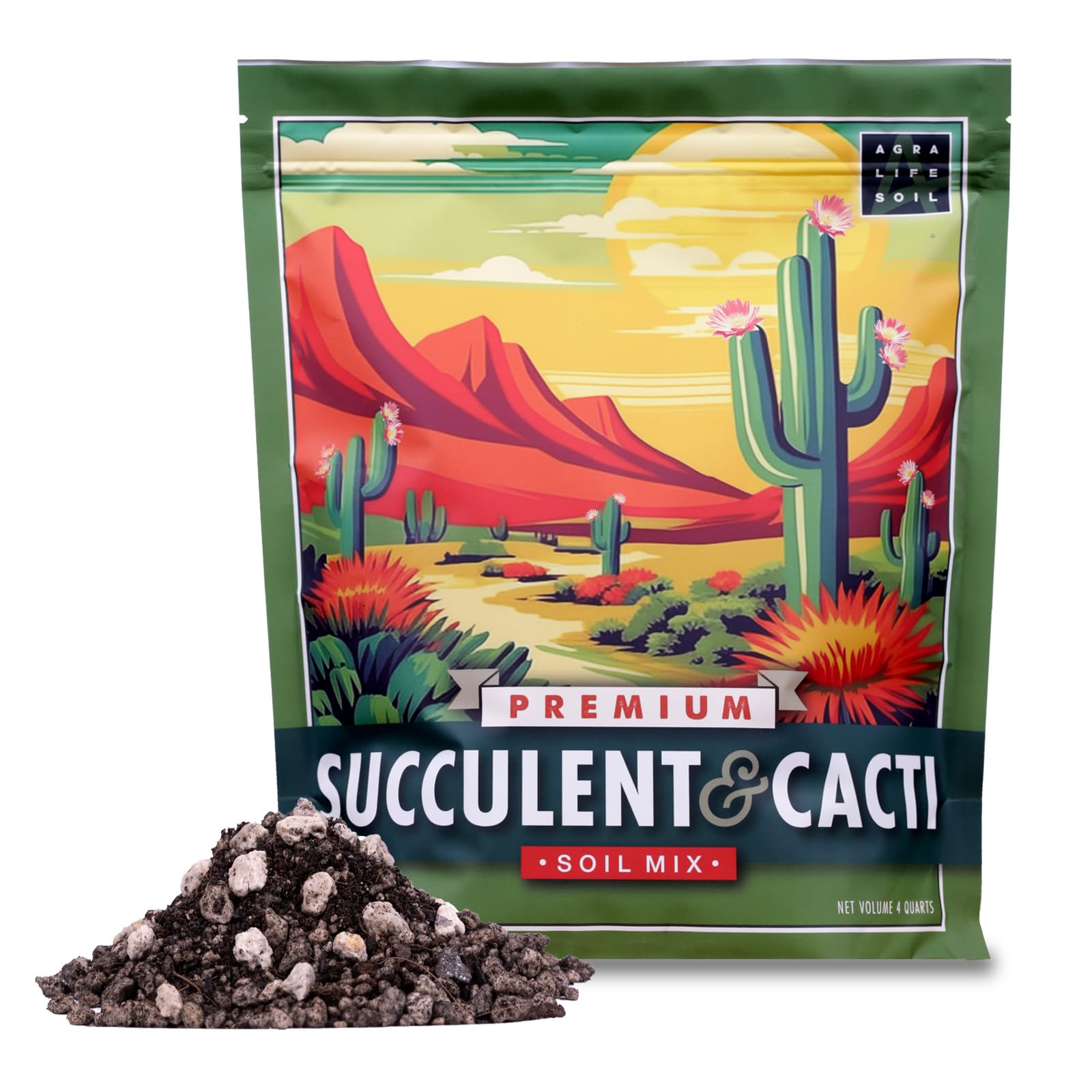
A domestic, pumice-rich mix that works for most succulents, but some buyers found it retains a bit more moisture than expected.
Agra Life blends organic materials with pumice — a volcanic rock that drains well but still holds a touch of moisture for roots. One reviewer called it “best soil for cacti; contains rocks for aeration and moisture prevention,” though another buyer highlighted a catch: the soil “retains water, causing poor drainage” and suggested mixing in real sand. This split feedback means the drainage is decent but not as aggressive as the Soil Sunrise gritty mix.
Shoppers say good results with prickly pear cactus and succulents, noting they “thrived well over last 3 months” after repotting. The bag is made in the USA with sustainably sourced ingredients, and it is free from synthetic chemicals. The pumice adds weight and structure that keeps the mix from compacting over time.
Premium organic soil
- Pumice provides excellent aeration for root health
- Domestically sourced and free from harmful chemicals
- Versatile for both indoor and outdoor succulents
Needs extra perlite
- Some users found it retains water more than expected; blending with sand helps
grab this if: you want a domestically made, pumice-based mix and you don’t mind adding a bit of sand to improve drainage. It works for most succulents, but not all finicky species.
consider other options if: you need a truly gritty, fast-draining formula without any extra mixing — the Soil Sunrise or Spike & Bloom will serve you better.
5. Midwest Hearth Cactus & Succulent Potting Mix (4 Quarts)
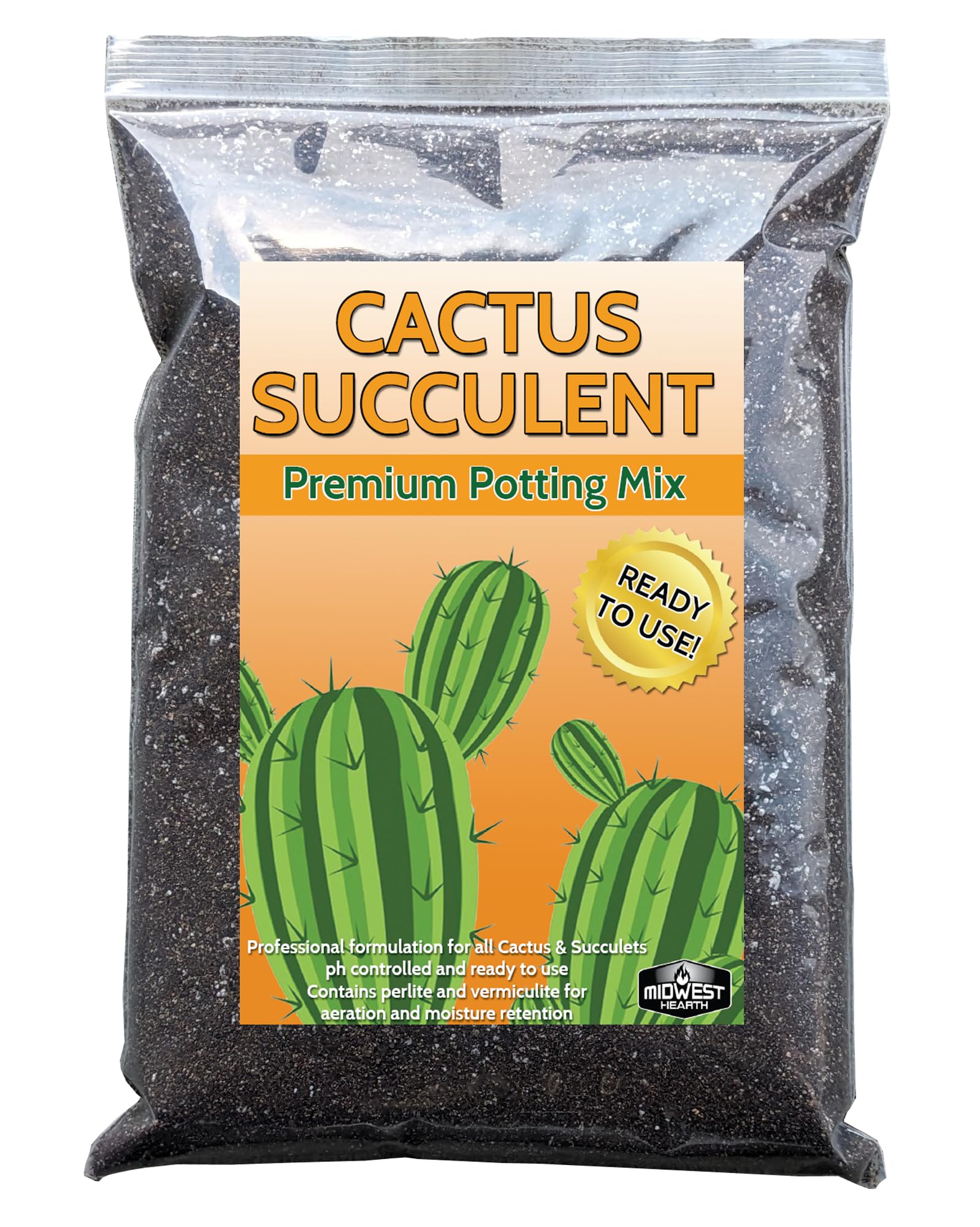
A reliable peat-perlite-vermiculite blend that drains fast out of the bag, but dry particles can blow around near open windows.
Midwest Hearth combines peat moss (for moisture holding), perlite (white volcanic beads for aeration), and vermiculite (flaky mineral that absorbs water) to create a formula that flows water through quickly. One reviewer noted, “I’ve planted 5 succulent dish gardens and so far the plants seem happy.” The blend is pH-balanced for cacti and succulents, so you do not have to worry about acidity levels.
A few owners found a practical downside: the light particles can blow around if you keep your pots near an open window. One review warned it creates “a mess like you wouldn’t believe” when the top layer dries out and catches a breeze. That aside, the 4-quart bag is ready to use with no mixing, and it works for aloe, jade, Christmas cactus, and desert rose. For indoor windowsills that stay shut, this is a solid mid-range option.
Heavy-duty potting
- Blend of peat moss, perlite, and vermiculite for fast drainage and aeration
- pH controlled to match drought-tolerant plants
- Made in the USA and ready to use straight from the bag
Large chunks
- Dry particles can blow around if pots sit near an open window
ideal for: someone who wants a straightforward, no-amendments mix and keeps succulents on a stable windowsill where windows stay shut.
not ideal for: windows that are frequently open — you will end up vacuuming up light soil particles. If you need a heavy, gritty mix that stays put, the Soil Sunrise or Omitgoter option is better.
6. Omitgoter Succulent & Cactus Soil Potting Mix (2 Quarts)

A gritty, rock-heavy mix in a small pouch that drains aggressively — perfect for a single pot or two.
This blend uses river sand, lava rock, vermiculite, and peat moss to create a coarse, rocky texture. At 1.22 kilograms (about 2.7 pounds), it is over 50% heavier than the 0.79-kilogram Miracle-Gro bag, even though it holds half the volume — that weight comes from real rocks and sand, not fluffy peat. One reviewer shared: “I recently propagated ruby necklace cuttings from a declining plant using this soil and within a week it had already produced the most amazing roots.”
The 2-quart resealable pouch is handy for small jobs or trying a new brand before committing to a large bag. Some buyers found it a bit too chunky at first, but their aloe plants thrived. The gritty texture means water passes through quickly, which is exactly what succulents need. Just know that the small size runs out fast if you have multiple pots to fill.
Compact 2-quart bag
- Gritty mix with river sand and lava rock for serious drainage
- Heavy, rocky composition means less risk of waterlogging
- Resealable zipper pouch keeps unused mix fresh
Limited quantity
- Small 2-quart volume — better for a couple of pots, not a large collection
perfect for: trying out a gritty organic mix without spending a lot, or repotting a handful of small succulents. For the price per quart, it is not a budget-stretcher — but the quality per quart is good.
not for: anyone with a big collection who needs a full 8-quart bag — you will have to buy multiple pouches. The 2-quart size is a drawback, not a benefit, for larger projects.
7. Hoffman 10410 Organic Cactus and Succulent Soil Mix (10 Quarts, 2 Pack)

A two-bag bundle that gives you 10 quarts total — more soil than any single bag in this list — but some bags arrive denser than expected.
Hoffman delivers two 5-quart bags in one order, giving you 10 quarts total — more than any single bag here. The soil is organic and designed to encourage bloom and root development. One buyer mentioned it is “best succulent soil; no peat, natural, drains extremely well, dries quickly,” and their succulents “look better than ever.” This is a strong choice if you have multiple pots or want to refresh a whole windowsill at once.
However, not every review is glowing. Some users found the soil “dense and retains moisture” rather than being lightweight and airy, suggesting it may need more perlite for very sensitive succulents. The bags are easy to pour and store, and they arrive ready to use with no mixing required. For the total volume per dollar, this is the most economical option, especially if you are willing to add some perlite.
Organic 10-quart
- 10 quarts total across two bags — highest volume in the roundup
- Organic blend promotes blooms and strong root development
- Convenient pour-and-store bags
Poor drainage
- Some bags arrive dense and moisture-retentive; amending with perlite helps
go for this if: you want the most soil for your budget and don’t mind adding a bit of perlite to improve drainage. At 10 quarts, it is the most economical option per quart.
avoid if: you need a gritty, sandy, truly fast-draining mix straight from the bag without any added work. For that, the Soil Sunrise or Omitgoter mixes are better bets.
Understanding the Specs
Drainage & Aeration
This is the most important feature of any succulent soil. Drainage means how fast water passes through the pot; aeration means how much air reaches the roots. Ingredients like perlite (white volcanic glass beads), pumice (lightweight porous rock), vermiculite (flaky mineral that absorbs water), and sand create air pockets. Avoid soil that looks dark, dense, and uniform — it likely holds too much water.
Ingredients: Peat Moss vs. Gritty Components
Peat moss holds water and breaks down slowly, which is why many budget mixes rely on it. The downside is that it stays wet longer, so you often need to add perlite or sand. Gritty components like pine bark, calcined clay, river sand, and lava rock drain aggressively and dry out fast — they mimic the rocky ground succulents originally grew in. Premium mixes use mostly gritty materials and little to no peat.
Bag Volume and Weight
Most succulent soil comes in quarts or liters. A 4-quart bag fills about 2–3 standard 6-inch pots. Weight is a quick clue: a heavy bag (like 1.22 kilograms for 2 quarts) tells you it is packed with dense, rocky material that drains well. A light bag (like 0.79 kilograms for 4 quarts) is likely peat-heavy and may hold more moisture. Match the bag size to your collection — small pouches for a pot or two, 8–10 quarts for multiple plants.
pH Balance
Succulents and cacti prefer slightly acidic soil, generally between pH 6.0 and 7.0. Some mixes are pH-balanced specifically for these plants, which helps roots take up nutrients efficiently. A bag that mentions “pH controlled” or “slightly acidic” (like Spike & Bloom at pH 6.5) is a good sign. Most standard succulent soils fall in the right range, but if you are growing finicky species, checking the pH can save you headaches.
FAQ
Can I use regular potting soil for succulents indoors?
How do I know if my succulent soil drains fast enough?
What is the difference between peat moss and pumice in succulent soil?
Should I add perlite to store-bought succulent soil?
How much soil do I need for one succulent pot?
Can I mix two different succulent soils together?
Is organic succulent soil better for indoor plants?
Why does my succulent soil have mold on top?
How often should I repot succulents with fresh soil?
Can I use succulent soil for other indoor plants?
Final Thoughts: The Verdict
For most people, the soil for succulents indoors winner is the Soil Sunrise Cactus and Succulent Potting Mix because its hand-blended gritty ingredients provide true fast drainage without any extra amendments. If you want a mycorrhizae (beneficial fungi) boost for delicate cacti, grab the Spike & Bloom High Drainage Mix. And for a budget-friendly beginner option that is easy to find, the Miracle-Gro Succulent Potting Mix works well with a little added perlite.
How We Picked
We do not accept paid placement. Every pick is matched to a real buyer and a real use-case; we do not hands-on test units.
Sources & Methodology
Specifications: manufacturer listings and product documentation. Review insights: verified customer reviews, as of July 2026. Pricing: not shown on this page (it changes often); check the current price via the retailer link.
As an Amazon Associate, Lawn Gear Lab earns from qualifying purchases. This does not affect which products we feature.