
Specs are compiled from manufacturer listings and verified buyer reviews and can change over time — please confirm the key details on the product page before buying.
Getting a hydrangea to bloom the right color is not about luck — it is about the soil pH and the specific nutrients you feed it. The wrong fertilizer can give you lush green leaves with zero flowers, or a bush full of pink blooms when you wanted deep blue. This guide breaks down exactly which formulas deliver on their color and bloom promises, so you stop guessing and start seeing results.
I’m Rikta — the founder and writer behind Lawn Gear Lab. This guide is built by comparing the manufacturers’ published specifications and the patterns across verified customer reviews, so you get each pick’s real strengths and trade-offs instead of marketing spin.
You want big, colorful hydrangea blooms, and the right fertilizer makes that happen. The three picks below each solve a different problem — turning pink flowers blue, feeding your whole garden bed, or reviving a struggling potted plant. Here is what each one does best.
Quick Picks
- Jack’s Classic 7-3-3 Hydrangea Blue — Best Overall
- Espoma Organic Holly-Tone 4-3-4 (36 lb Bag) — Premium Pick
- FoxFarm Happy Frog 4-3-4 Japanese Maple — Budget Champion
How To Choose The Best Fertilizer For Hydrangeas To Bloom
Picking the right fertilizer for hydrangeas is not just about grabbing the plant food on the shelf. You need one that supports flower color, not just leaf growth. Here are the key factors to look at before you buy.
N-P-K Ratio and Blooming
The three numbers on a fertilizer bag — nitrogen (N), phosphorus (P), and potassium (K) — tell you what the plant will do. For hydrangeas, you want a higher phosphorus content (the middle number) to encourage flower development. Look for a P value that is close to or higher than the N value to avoid huge green bushes with no blooms.
Soil pH and Flower Color
Hydrangea petal color depends on aluminum availability in the soil, which is controlled by pH. Acidic soil (pH below 6) lets the plant take up aluminum, turning blooms blue. Alkaline soil (pH above 7) blocks aluminum, leading to pink flowers. If you want blue hydrangeas, you need a fertilizer that acidifies the soil as it feeds, usually with added sulfur or by including aluminum sulfate.
Water-Soluble vs. Granular Organic
Water-soluble powders, like Jack’s Classic, mix with water and feed the plant immediately through the roots or leaves. They are great for potted hydrangeas and fast color correction. Granular organic feeds, like Espoma Holly-Tone or FoxFarm Happy Frog, break down slowly in the soil. They build long-term soil health and are better for established in-ground plants that need a steady nutrient release over weeks.
Quick Comparison
| Model | Best For | N-P-K Ratio | Form | Weight | Amazon |
|---|---|---|---|---|---|
| Jack’s Classic 7-3-3 Hydrangea Blue | Turning pink hydrangeas blue | 7-3-3 | Powder (water-soluble) | 1.5 Pounds | Amazon |
| Espoma Organic Holly-Tone 4-3-4 | Large established garden beds | 4-3-4 | Granules (organic) | 36 Pounds | Amazon |
| FoxFarm Happy Frog 4-3-4 | Container and small-space feeding | 4-3-4 | Powder (organic) | 4 Pounds | Amazon |
In‑Depth Reviews
1. Jack’s Classic 7-3-3 Hydrangea Blue Water-Soluble Fertilizer

The color shifter that actually turns alkaline soil pink blooms to blue.
This is the pick if your single goal is changing your hydrangeas from pink to blue. Jack’s Classic uses a 7-3-3 ratio (higher nitrogen than phosphorus) with added micronutrients to enhance the blue color in many pink and blue varieties. It is a water-soluble powder, so you mix it with water every time you feed — the manufacturer provides a measuring spoon right in the bag. You can use it as a root drench or spray it directly on the leaves as a foliar feed, which means it gets to work fast.
Compared to the granular Espoma Holly-Tone below, the Jack’s Classic is far lighter at just 1.5 pounds, but that is because a water-soluble concentrate makes multiple gallons of liquid fertilizer from a small box. Buyers report it is effective for correcting difficult soil: one verified user said, “I have been using this for about a month & the soil where I live does not facilitate blue hydrangeas” and got deep blue blooms. Another reviewer noted it worked on their alkaline soil at pH 7 after a weekly spring treatment. Not every experience is perfect — some users report healthy plants that stubbornly stay pink, so results can vary depending on your starting pH and aluminum levels.
The catch is that this is not a slow-release soil builder. It feeds the plant immediately, but the effect on color depends on consistent weekly application. If you want a low-maintenance organic approach for a big garden bed, the Espoma below might suit you better. But for targeted color control on a few bushes or container hydrangeas, this is the most direct tool available.
Standout Strengths
- Delivers deep blue blooms even in alkaline soil (pH 7) with weekly use — proven by buyers
- Water-soluble powder mixes easily and works as both root feed and foliar spray
- Comes with a measuring spoon for easy, precise mixing — 7:3:3 ratio
Honest Limits
- Light 1.5-pound bag may need multiple purchases for a large garden with many bushes
- Not all hydrangeas turn blue — a few owners mention healthy green plants that stay pink despite regular use
- Requires consistent weekly application for best color change, unlike slow-release granular feeds
Reach for this if: your main goal is pushing specific hydrangea bushes from pink toward blue, especially in soil that does not naturally support blue flowers.
Hold back if: you want a gentle organic feed for a big garden bed where you fertilize once or twice a year, or if you are happy keeping pink flowers and just want more blooms.
2. Espoma Organic Holly-Tone 4-3-4 (36 lb Bag)
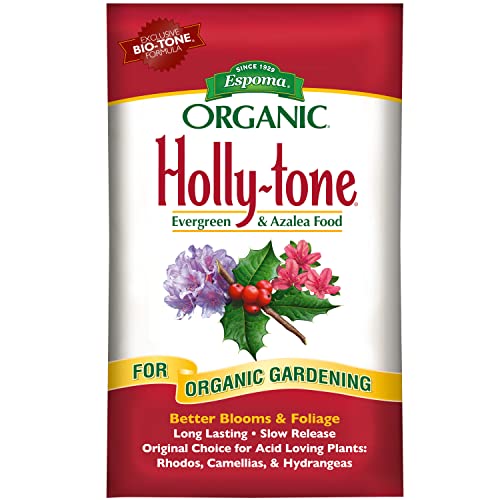
The 36-pound soil builder that transforms your entire garden bed’s bloom output for seasons.
If you have a row of hydrangea bushes, azaleas, rhododendrons, or blueberry plants, this is the heavy lifter. Espoma Holly-Tone is a natural granular feed with a 4-3-4 ratio and 5% sulfur, which helps acidify the soil over time as the organic material breaks down. The 36-pound bag is enormous compared to the 1.5-pound Jack’s Classic above and it is designed for spring and fall application around the drip line of your plants. You do not mix anything; just sprinkle it on the soil and water it in.
Buyers consistently report dramatic results. One verified user wrote, “You will never have so many blooms on your azaleas, hydrangeas, or any of your blooming plants.” Another says they have bought this product every year without switching. Because Holly-Tone is approved for organic gardening and made in the USA (Espoma Company since 1929), it is a trusted choice for gardeners who want to avoid synthetic chemicals.
This is a general food for acid-loving plants, not a dedicated blue-turner. The sulfur in it lowers soil pH (acidity), which helps blue color develop, but the change is slower and gentler than Jack’s Classic, which is a targeted water-soluble fertilizer. For a large, established garden where you want steady long-term health and more blooms overall, a 36-lb (16.3 kg) bag like this gives you great value.
Key Advantages
- Massive 36-pound bag covers a large garden bed for two full feeding seasons (spring and fall)
- Organic ingredients with Bio-tone formula and 5% sulfur gently acidify soil for hydrangeas, blueberries, and evergreens
- Customers note “miracle level” bloom increases across multiple plant types — not just hydrangeas
Trade-offs
- Slow-release granular action means color changes take longer than water-soluble options
- Does not contain aluminum or high phosphorus specifically for forcing blue blooms — soil pH shift is secondary to feeding
- 36 pounds is heavy to carry and store compared to a small box of powder
Best fit for: a gardener with an established flower bed of acid-loving plants (hydrangeas, azaleas, rhododendrons, evergreens) who wants a reliable organic feed that builds soil health and increases bloom numbers season after season.
Not ideal for: someone with just one potted hydrangea on a patio, or anyone needing a quick blue-color correction this week rather than over months.
3. FoxFarm Happy Frog 4-3-4 Japanese Maple Fertilizer (4 lb)

The gentle rescuer that brings struggling acid-loving plants back to life.
FoxFarm Happy Frog 4-3-4 is designed for low-pH feeders like hydrangeas, Japanese maples, dogwoods, and evergreens. It is a 4-pound powder that you mix at a rate of 2 tablespoons per 1 gallon of water. What sets this apart from the other two is the inclusion of beneficial soil microbes and mycorrhizal fungi, which help increase root efficiency and nutrient uptake. This is particularly useful if your hydrangea is in a container or you are trying to revive a plant that has been struggling.
Buyers have used it with impressive results. One verified reviewer said, “Brought one plant back to life and I even use these on my smaller plants.” Another user with container maples called it “the BEST” for organic feeding. The 4-3-4 ratio supports root and bloom development without pushing excessive vegetative growth.
The honest limit: this is not a targeted blue-color fertilizer. While it supports healthy hydrangea growth, it does not contain the sulfur or aluminum compounds needed to actively shift bloom color from pink to blue. Unlike the Jack’s Classic which is built for color change, the Happy Frog is best for overall plant health and bloom volume on existing plants. Use it if you want an organic, microbe-rich feed for a few containers or small beds.
Why It Works
- Contains beneficial soil microbes and mycorrhizal fungi that improve root efficiency and water absorption
- Reviewers point out it revived struggling plants — one said it “brought one plant back to life”
- Easy monthly feeding with a simple mixing ratio — 2 tablespoons per 1 gallon of water
What It Lacks
- Does not specifically target blue hydrangea color — no added sulfur or aluminum for pH shift
- 4-pound bag is small for large gardens; you will need multiple bags for a big bed
- Some users note it is better suited for Japanese maples and container plants than for large-scale soil beds
Choose this for: reviving a struggling hydrangea, feeding container plants, or feeding a small collection of acid-loving ornamentals with an organic boost that includes living soil microbes.
Skip this if: your primary goal is turning pink hydrangeas blue, or if you need to feed an entire garden bed — go with the Espoma for big areas or the Jack’s Classic for color control.
Understanding the Specs
N-P-K Ratio
Every fertilizer bag shows three numbers, like 7-3-3 or 4-3-4. The first is Nitrogen (leaf growth), the second is Phosphorus (bloom and root development), and the third is Potassium (overall plant health and disease resistance). For hydrangeas, you want a middle number (P) that is at least equal to the first number to encourage flowers without huge leaf growth. Jack’s Classic has a 7-3-3 ratio, which is higher in nitrogen but still effective for bloom color because of its targeted formula.
Soil pH and Sulfur Content
Hydrangeas are unique because their flower color depends on soil pH. Acidic soil (pH below 6) allows aluminum uptake, turning blooms blue. Alkaline soil (pH above 7) blocks aluminum, producing pink flowers. Some fertilizers, like Espoma Holly-Tone with 5% sulfur, help lower soil pH over time. Water-soluble formulas like Jack’s Classic may rely on added micronutrients rather than sulfur to influence color. Understanding your soil’s starting pH is the first step before choosing a fertilizer.
FAQ
Can I use a general all-purpose fertilizer on my hydrangeas?
How often should I fertilize hydrangeas for the best blooms?
Why are my hydrangeas green and leafy but have no flowers?
Will Espoma Holly-Tone turn my pink hydrangeas blue?
Is water-soluble fertilizer better than granular for hydrangeas?
Can I use FoxFarm Happy Frog on hydrangeas in containers?
What is the difference between Jack’s Classic 7-3-3 and regular plant food?
How long does it take to see a color change after using Jack’s Classic?
What is the best time of year to fertilize hydrangeas?
Can I use these fertilizers on other acid-loving plants besides hydrangeas?
Final Thoughts: The Verdict
For most people, the best fertilizer for hydrangeas to bloom is the Jack’s Classic 7-3-3 Hydrangea Blue. It is made specifically to turn pink blooms blue, and buyers report seeing color change within weeks, even on alkaline soil (high pH). If you want a large organic feed that improves your whole garden bed season after season, choose the Espoma Organic Holly-Tone 36-lb bag. And for reviving a struggling container hydrangea with beneficial soil microbes, the FoxFarm Happy Frog 4-3-4 is your best bet.
How We Picked
We do not accept paid placement. Every pick is matched to a real buyer and a real use-case; we do not hands-on test units.
Sources & Methodology
Specifications: manufacturer listings and product documentation. Review insights: verified customer reviews, as of July 2026. Pricing: not shown on this page (it changes often); check the current price via the retailer link.
As an Amazon Associate, Lawn Gear Lab earns from qualifying purchases. This does not affect which products we feature.