
Specs are compiled from manufacturer listings and verified buyer reviews and can change over time — please confirm the key details on the product page before buying.
Nothing kills a Saturday faster than a dull saw or loppers that bind halfway through a branch. You need a tool that cuts clean on the first squeeze, reaches high without wobbling, and holds its edge through seasons of work. This guide focuses on six branch cutters that do exactly that — from lightweight pole saws that keep you off a ladder to heavy-duty loppers with compound gearing (a system of multiple pivots that multiplies your squeezing force).
I’m Rikta — the founder and writer behind Lawn Gear Lab. This guide is built by comparing the manufacturers’ published specifications and the patterns across verified customer reviews, so you get each pick’s real strengths and trade-offs instead of marketing spin.
Every model here solves a specific problem: the branch just out of reach, the hardwood limb that fights back, or the long pruning session that leaves your hands aching. Here is how to find the best tree branch cutter for your yard without wasting time on tools that can’t follow through.
Quick Picks
- Fiskars PowerGear2 32-Inch Bypass Lopper — Best Overall
- Corona TP 6870 MAX RazorTOOTH 14-ft. Tree Pruner — Top Performer
- BlumeTrec 8.5FT Pole Saw (Adjustable to 14.5FT) — Best Reach
- TRUPER TR-82M-A Tree Pruner — Precision Pick
- YRTSH Loppers Branch Cutter Heavy Duty Tree — Heavy Duty
- AIRAJ 27-37″ Extendable Anvil Loppers — Budget Champion
How To Choose The Best Tree Branch Cutter
Before you click buy, focus on four key decisions that separate a season-long tool from a one-job regret. You will choose between a pole saw and a lopper, between anvil and bypass blades, the right reach for your trees, and the gearing that does the hard work for you.
Pole Saw vs. Lopper: Which Shape Fits Your Yard
A pole saw is a saw blade on a long stick — you pull it back and forth to cut overhead limbs while standing on the ground. It is the safest option for branches above shoulder height. A lopper is a two-handled clipper with short handles or extendable arms that uses a squeezing motion to snip branches. Loppers work best for branches you can reach with your feet on solid ground, typically up to about head height or slightly above with an extended handle. If your trees are tall and overgrown, a pole saw keeps you off the ladder. If you maintain shrubs, hedges, and low-hanging limbs, a lopper is faster and more precise.
Anvil vs. Bypass Blades: One Clean Cut Matters
An anvil blade has a single sharp edge that closes against a flat metal surface — think of a knife pressing against a cutting board. It crushes the branch slightly as it cuts, which works fine on dead wood and dry branches but can damage living tissue on green limbs. A bypass blade is shaped like a pair of scissors: two sharp blades slide past each other for a clean, scissor-like cut that heals faster on live branches. If you are pruning a living tree or fruit tree, a bypass lopper is the better choice. For clearing deadwood and thick, tough branches, an anvil design gives more raw power.
Reach and Extension: How High Do You Need to Cut
Every extra foot of reach is a safety margin that keeps both feet on the ground. A pole saw typically ranges from 8.5 feet up to 14.5 feet, with removable sections that let you adjust the length. A lopper with an extendable handle usually maxes out around 37 to 41 inches in total length. Measure the height of the branches you need to trim, then add a few feet for the saw or lopper head itself. If your lowest branches are 12 feet up, a pole saw is the only option. If you are trimming at eye level or below, a mid-size lopper is more controllable.
Compound Action and Gearing: Let the Tool Do the Squeezing
Compound action uses a system of multiple pivot points (or gears in models like Fiskars PowerGear2) that multiply the force you apply at the handles, so cutting a 2-inch branch feels like cutting a much smaller one. The Fiskars PowerGear2 uses a modified gear and cam mechanism that pushes through the center of a branch — the point that requires the most force. If you have arthritis, limited hand strength, or a long day of pruning ahead, compound action is not a luxury: it is the difference between finishing the job and quitting halfway.
Quick Comparison
| Model | Best For | Cutting Capacity | Max Reach | Blade Type | Amazon |
|---|---|---|---|---|---|
| Fiskars PowerGear2 32-Inch | Clean bypass cuts on live branches | 2 inches | 32 inches | Bypass | Amazon |
| Corona TP 6870 MAX 14-ft | Heavy orchard work from the ground | 13-inch saw + lopper | 14 feet | Saw + steel lopper | Amazon |
| BlumeTrec 8.5FT Pole Saw | High reach without a ladder | Mn steel saw blade | 14.5 feet | Saw (manual pull) | Amazon |
| TRUPER TR-82M-A | Precision overhead pruning | SK5 saw blade | 7.9 feet | Saw (SK5 steel) | Amazon |
| YRTSH Loppers 28-41″ | Thick dry branches on the ground | 2 inches | 41 inches | Anvil | Amazon |
| AIRAJ Extendable Anvil Loppers | Budget-friendly heavy lopping | 2 inches | 37 inches | Anvil | Amazon |
In‑Depth Reviews
1. Fiskars PowerGear2 32-Inch Bypass Lopper

This bypass lopper multiplies your strength through the toughest part of a branch, so a 2-inch limb feels like a 1-inch twig.
This 32-inch lopper uses PowerGear2 technology — a modified gear and cam mechanism that multiplies leverage as it pushes through the center of a branch, which is the hardest part to cut. The result is that a 2-inch live oak limb feels more like a 1-inch twig. The bypass-style blade (two sharp edges sliding past each other, like scissors) leaves a clean wound that heals fast on live trees, making this a strong pick for fruit trees, maples, and ornamentals. The blade carries a low-friction coating that resists rust and stops sap from gumming up the cut.
The handles have a rounded ergonomic shape with SoftGrip padding, so your hands do not slip even after an hour of steady cutting. At 3.9 pounds, it is noticeably heavier than the YRTSH anvil lopper below, and buyers report that the plastic grip on one handle can detach if a screw shears — one reviewer noted it happened within the first hour and fixed it with super glue. That single manufacturing issue is the main weak point on an otherwise well-engineered tool. Fiskars backs it with a lifetime warranty.
Buyers consistently say the same thing: it cuts through 2-inch branches with almost no effort, and the gearing feels like a cheat code after using old scissor-style loppers. If you prune live trees regularly, this is the tool that saves your hands. skip it if the 3.9-pound weight is too much for extensive overhead work — a pole saw would serve you better.
The gearing advantage: The PowerGear2 cam powers through the branch center where standard loppers stall, so you use less squeeze force per cut compared to the AIRAJ anvil model’s four-pivot compound action.
Reach for this if: You prune live trees regularly and want maximum cutting leverage without exhausting your hands.
Look elsewhere if: The 3.9-pound weight is too much for extensive overhead work — a pole saw would serve you better.
2. Corona TP 6870 MAX RazorTOOTH 14-ft. Tree Pruner
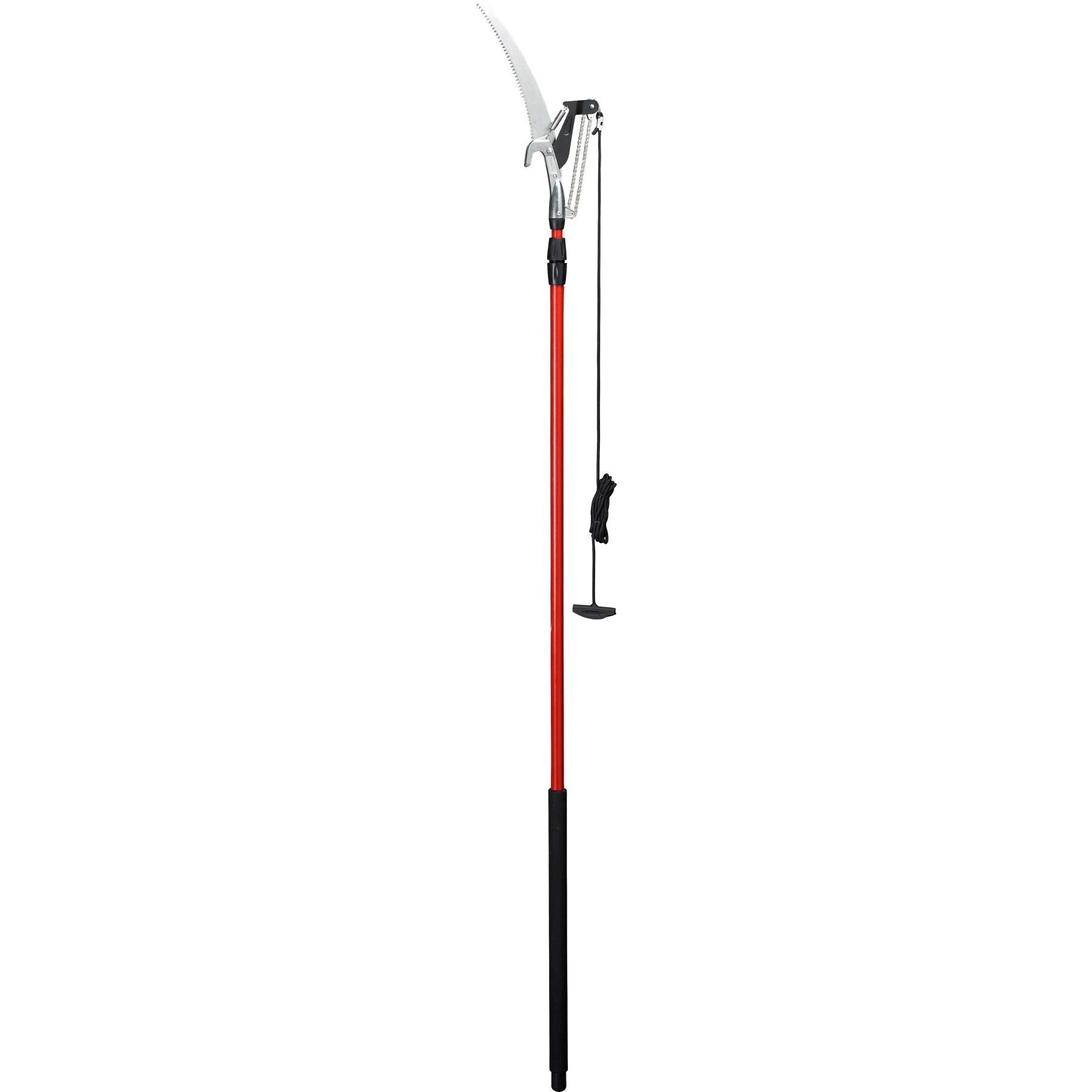
A 14-foot pole pruner that combines a razor saw with a chain-driven lopper, so you cut and snip overhead without stepping on a ladder.
This is a two-tool head on a single fiberglass pole: a curved 13-inch RazorTOOTH saw blade for cutting large limbs, and a built-in lopper that you operate with a rope pull. The lopper uses a chain drive system rather than the rope-pulley design found on cheaper pruners, which owners mention is more reliable and less prone to binding. The 24-inch foam grip on the handle gives you a comfortable hold even when you are craning your neck to sight a branch. The fiberglass pole is sturdy yet flexes slightly at full extension — a trade-off customers note, but one they accept for the 14-foot reach that keeps both feet planted on the ground. That reach is 5.5 feet more than the Truper TR-82M-A, and matches the BlumeTrec’s max setup but with a far more sturdy lopper head.
The saw blade is the standout here. Corona uses a curved 13-inch alloy steel blade with razor-sharp teeth that chew through palm fronds and hardwood limbs quickly. One buyer who pruned palm trees says the saw worked reliably for weeks without dulling. The lopper blade is a sharp steel head that handles smaller branches the saw would be overkill for. The included Powerglide rope pull system makes the lopper action smooth, but some users have said the spring and rope clip could be stronger — they recommend replacing those parts early for trouble-free use. The pole ships in a long box, and the foam handle can arrive slightly damaged if the box is poorly packed. Corona covers it with a limited lifetime warranty.
This is the right tool if you manage multiple tall trees and want both a saw and a lopper in one head. Pass on it if you only need a simple pole saw for occasional trimming — the BlumeTrec will cost less and weigh less.
Why it stands out
- 14-foot reach eliminates ladders entirely for most trees
- Chain-driven lopper outperforms rope-pulley competitors
- Curved 13-inch saw slices thick limbs fast
What to watch for
- Fiberglass pole flexes at full extension
- Foam grip can tear during shipping
- Heavier than a dedicated pole saw
Your move: This is the right tool if you manage multiple tall trees and want both a saw and a lopper in one head.
Pass on it if: You only need a simple pole saw for occasional trimming — the BlumeTrec will cost less and weigh less.
3. BlumeTrec 8.5FT Pole Saw (Adjustable to 14.5FT)
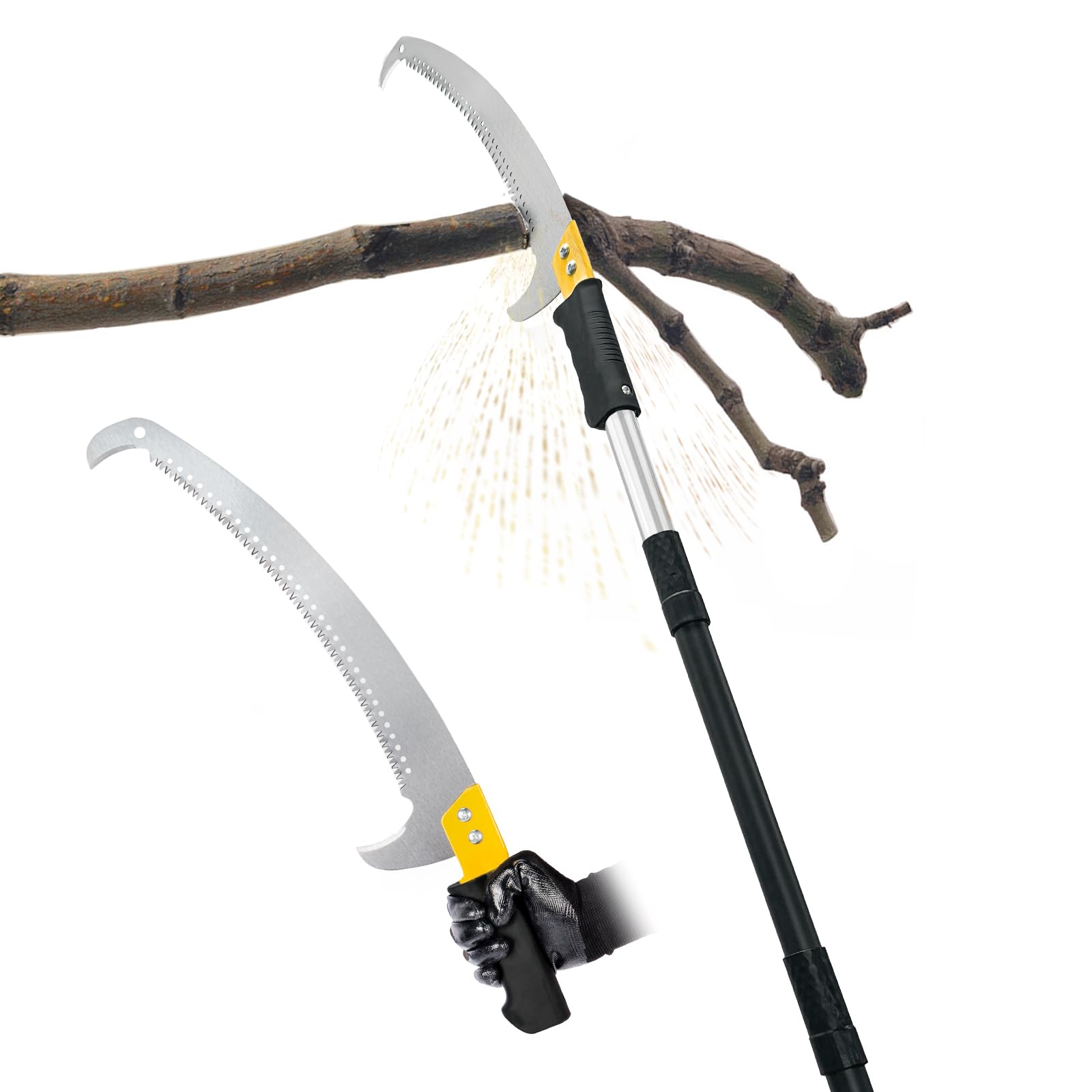
This lightweight pole saw extends to 14.5 feet, so you cut overhead branches from the ground—no ladder needed.
This manual pole saw uses a three-sided Mn (manganese) steel blade with a double-sided barb design that grips branches and saws through them from multiple angles. The precision-ground teeth eject sawdust as you cut, so the blade does not clog up on green wood or wet bark. The pole comes in six sections that you can configure to three lengths: 8.5 feet, 11 feet, or 14.5 feet. Each section is stainless steel with a powder-coated matte finish that resists rust. An extra screw locks the saw head to the top pole section firmly, which matters because a wobbling head turns a quick cut into a frustrating struggle.
Reviewers point out cutting “12-13 ft limbs like butter” and note that the hook on the saw head pulls hung branches down after cutting. One reviewer cut through several 3-inch thick branches with minimal effort and only wished the vendor sold replacement blades. The soft-wrapped handle is replaceable and keeps grip comfortable during long sessions. At a weight of 1.54 kilograms (about 3.4 pounds), it is light enough that shoppers say women and seniors can handle it without fatigue. Reviewers unanimously praise the blade sharpness from the start — “cuts like butter” appears in multiple reviews verbatim.
At 14.5 feet max extension, this adds 6.6 feet beyond the TRUPER TR-82M-A while weighing about 3.4 pounds — truly a ladder-replacement pole. Buy this for tall trees where you need to stay on the ground and a light tool matters more than a built-in lopper. pass on it if you need a lopper head on the pole — the Corona gives you both saw and lopper in one tool.
The reach advantage: At 14.5 feet max extension, this adds 6.6 feet beyond the TRUPER TR-82M-A while weighing about 3.4 pounds — truly a ladder-replacement pole.
Buy this for: Tall trees where you need to stay on the ground and a light tool matters more than a built-in lopper.
it’s not for you if: You need a lopper head on the pole — the Corona gives you both saw and lopper in one tool.
4. TRUPER TR-82M-A Tree Pruner with Extendable Aluminum Pole

This overhead pruner uses a fully tempered SK5 blade with triple-edged teeth to slice through medium-height branches fast.
The Truper TR-82M-A packs a 12-inch SK5 steel blade with triple-edged teeth that are fully tempered for hardness and edge retention. The aluminum telescopic handle extends to a maximum of 2.4 meters (about 7.9 feet), which puts overhead branches within safe reach without a ladder. The blade design is all about speed — the triangular file pattern on the teeth pulls through wood fast, and the triple-edge geometry means you get three cutting surfaces working on each stroke. Buyers who use it regularly call it “one of my very favourite garden tools” and note that the lightweight build (the aluminum pole is notably lighter than the Corona’s fiberglass) makes it ideal for small users who need precise trimming at full length.
One practical tip from the reviews: if you cut sap-heavy trees like jackfruit, wipe the blade with cooking oil immediately after use, or use WD40 if the sap has dried, to keep the saw running smooth. The included cutting head has a comfortable strap, and the pole sections lock securely. The main limitation is the 7.9-foot maximum extension, which falls short of the BlumeTrec’s 14.5-foot reach by a significant margin — it will not reach the highest branches on a mature shade tree. But for fruit trees, patio palms, and medium-height ornamentals, the Truper offers a refined cutting experience at a mid-range price point. The brand has a solid reputation in Latin American markets, and buyers consistently describe the build quality as “excellent.” The handle is lightweight and ideal for extended pruning sessions where a heavier tool would cause arm fatigue.
Grab this for precise, comfortable overhead trimming on medium-height trees and palms. Give it a miss if your branches are above 10 feet — the BlumeTrec or Corona will reach them.
Standout strengths
- Fully tempered SK5 steel blade stays sharp through heavy use
- Triple-edged teeth for fast, aggressive cuts
- Lightweight aluminum pole reduces arm fatigue
Watch points
- 7.9-foot max reach is short for tall trees
- Manual saw only — no built-in lopper head
Grab this for: Precise, comfortable overhead trimming on medium-height trees and palms.
Give it a miss if: Your branches are above 10 feet — the BlumeTrec or Corona will reach them.
5. YRTSH Loppers Branch Cutter Heavy Duty Tree Trimmer 28-41″
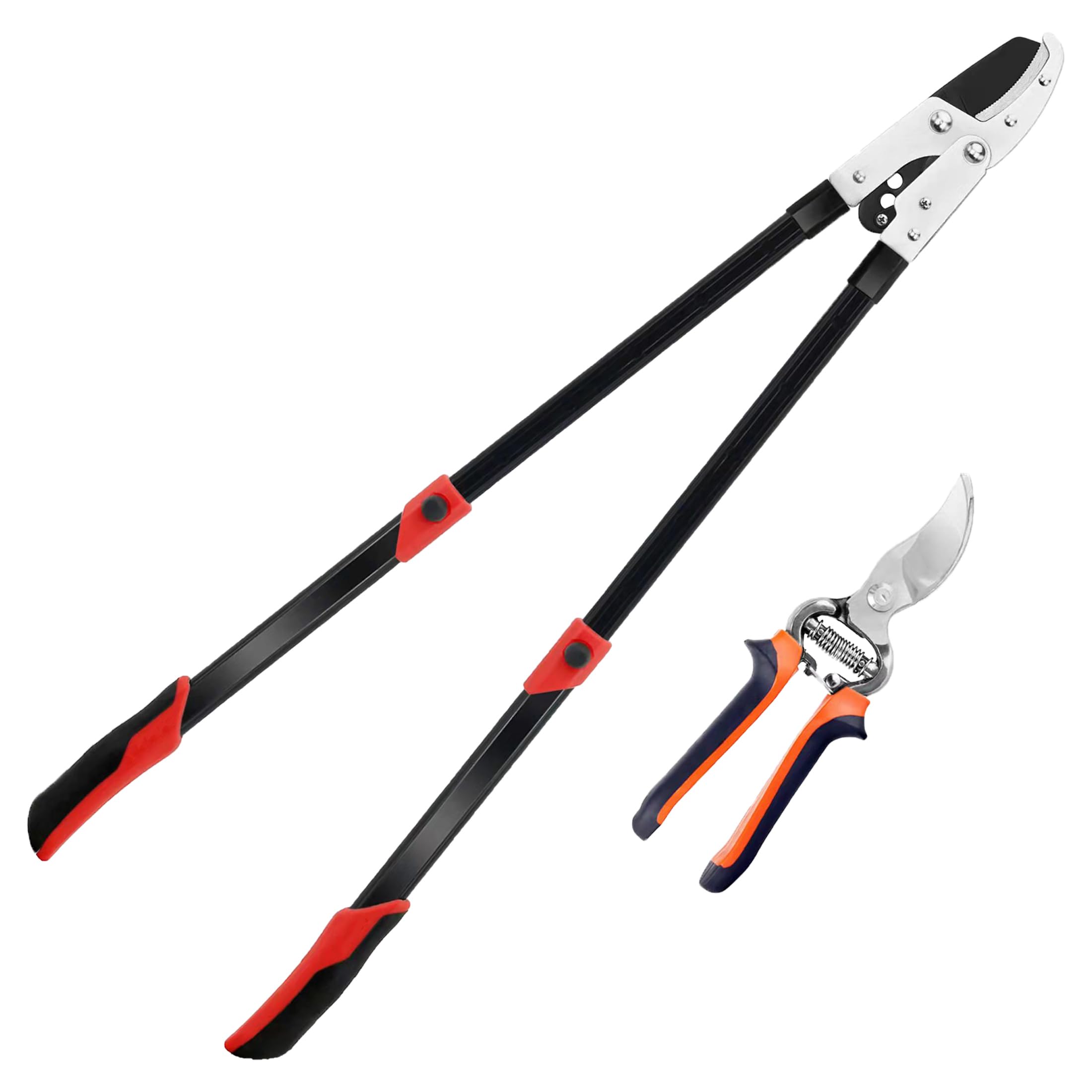
This extendable anvil lopper uses compound action to turn thick, dry branches into clean snap cuts.
This YRTSH lopper uses compound action technology — a system of multiple pivot points that multiply your squeezing force — paired with a Teflon-coated alloy steel anvil blade that handles branches up to 2 inches in diameter. The anvil design (one sharp edge closing against a flat metal plate) works especially well on dry deadwood and tough, seasoned limbs because it does not rely on two sharp edges sliding past each other. The handle extends in six steps from 28 to 41 inches, letting you reach higher limbs or choose a shorter grip for better leverage on ground-level shrubs. The soft rubber non-slip grip keeps the handles planted in your palms through sweaty work.
A reviewer in Hawaii who maintains a half-acre lot says these “lop hibiscus branches that are the diameter of ping pong balls like butter,” and that dry banana leaves that normally resist cutting are no match for this tool. Another buyer noted that cutting 2-inch green wood with the loppers fully extended and above your head can cause the handles to bend — so use the full 41-inch reach for 1.25-inch branches or smaller, and save the thick stuff for closer-range cuts. The included hand clippers are average, but buyers treat them as a bonus rather than a reason to buy. Still, the main lopper head earns consistent 5-star reviews for raw cutting power and ease of use, especially among older users who appreciate not having to fight the tool. Unlike the Fiskars bypass design, the anvil blade here can crush the bark on live branches, making it a better fit for deadwood, storm cleanup, and tough dry shrubs.
Both the YRTSH and AIRAJ loppers claim a 2-inch cutting capacity with compound action, but YRTSH’s six-step 41-inch extension gives 4 inches more reach than the AIRAJ’s 37-inch max — a meaningful difference for slightly taller cuts.
Cutting comparison: Both the YRTSH and AIRAJ loppers claim a 2-inch cutting capacity with compound action, but YRTSH’s six-step 41-inch extension gives 4 inches more reach than the AIRAJ’s 37-inch max — a meaningful difference for slightly taller cuts.
Ideal for: Heavy deadwood removal and dry branch cleanup where anvil crushing action is not a downside.
Not for: Pruning live fruit trees — the bypass Fiskars does not crush bark.
6. AIRAJ 27-37″ Extendable Anvil Loppers with Compound Action
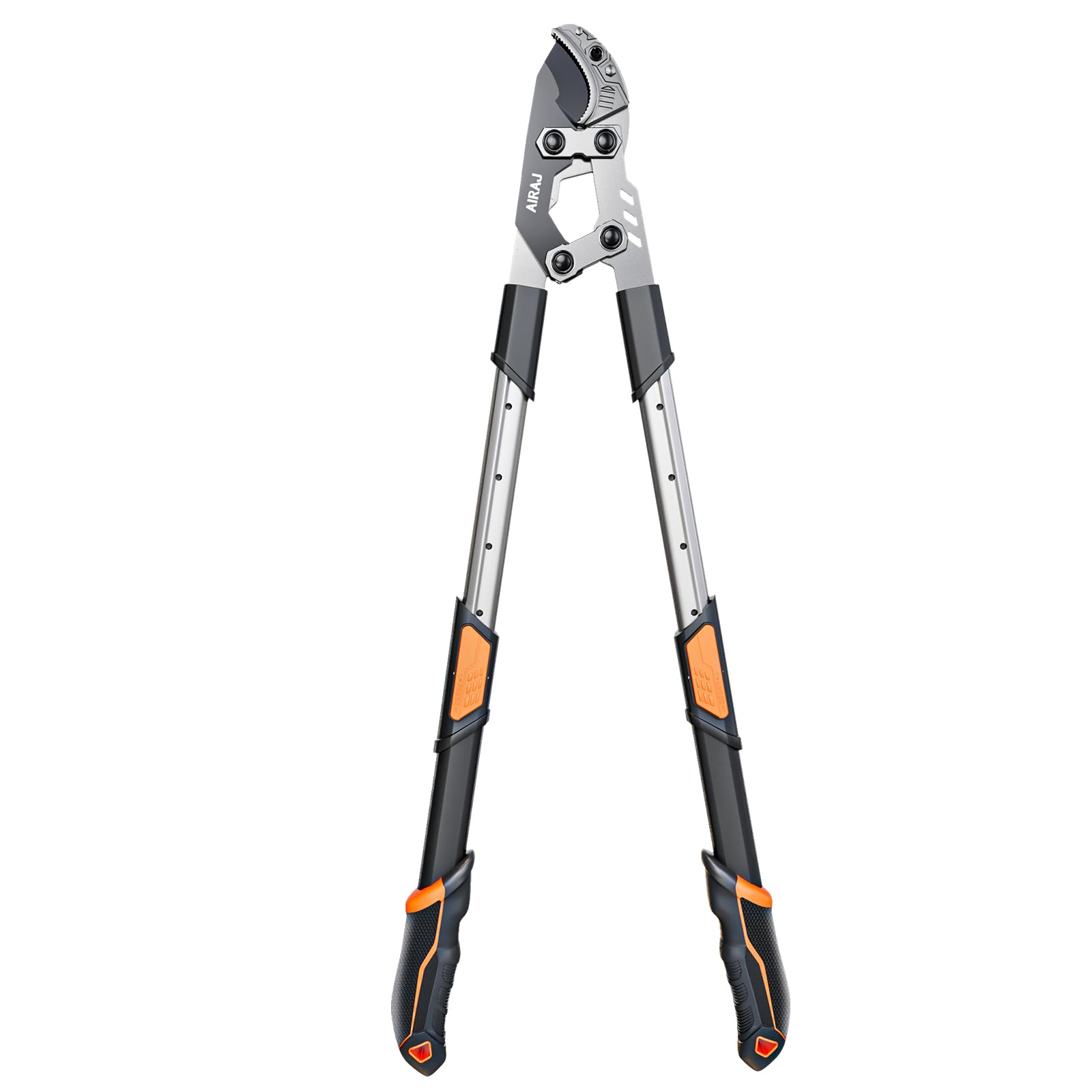
This budget-friendly anvil lopper proves that a low price does not have to mean weak cuts.
The AIRAJ lopper uses a compound action mechanism with four pivot points and an SK5 steel blade coated in Teflon for rust resistance and smooth slicing. It handles branches up to 2 inches in diameter, and the aluminum handle extends from 27 to 37 inches, so you can adjust it for close shrub work or stretch it out for slightly higher branches. The handle opening and closing angles are designed around the lever principle — a scientific approach one buyer mentioned for reducing fatigue during long pruning sessions. One buyer, an elderly woman who described herself as having limited grip strength, said these weeds and small branches “work great without much force.” The trade-off she mentioned was that the tool is “a little heavy” at full extension, though the build quality feels excellent.
The blade edge is serrated, which helps the anvil grip branches and prevent them from slipping sideways during the cut. The included lanyard helps keep hold of the tool when working in awkward positions. The arms, at 37 inches fully extended, are 4 inches shorter than the YRTSH’s 41-inch max, so you lose a bit of overhead reach. For home gardeners tackling bushes, weed trees, and low-hanging limbs, these loppers deliver reliable power without the premium price tag. Buyers who have owned multiple loppers over the years call them “the best loppers I’ve ever used.” The anvil blade is designed for dry deadwood rather than live pruning, but at this entry-level price, it handles the vast majority of weekend trimming tasks without hesitation.
Pick this if you want compound-action force on a budget and mostly cut deadwood and thick shrubs. For live-tree pruning, spend a bit more on the bypass Fiskars for cleaner cuts.
Why it wins
- Compound action multiplies force for 2-inch cuts
- Teflon-coated SK5 blade resists rust and gumming
- Adjustable 27-37 inch handle fits different heights
Things to note
- Heavier than budget loppers without compound action
- Anvil design can crush live branch bark
- Shorter max extension than YRTSH by 4 inches
Pick this: If you want compound-action force on a budget and mostly cut deadwood and thick shrubs.
Choose another: For live-tree pruning, spend a bit more on the bypass Fiskars for cleaner cuts.
Understanding the Specs
Cutting Capacity: What “2 Inches” Actually Means in Your Yard
Cutting capacity is the maximum branch diameter the tool can sever in one clean motion. A 2-inch capacity is the standard across most heavy-duty loppers and means you can cut branches roughly the thickness of a 2-liter soda bottle. Important: green wood (live, wet branches) cuts easier than deadwood (dry, seasoned branches) at the same diameter. If you have many hardwood limbs over 2 inches thick, you will need either a saw blade (which is slower but handles larger diameters) or a bigger lopper. Also, cutting at full handle extension reduces your leverage — a tool rated for 2 inches at close range may only comfortably cut 1.25 inches when you are working overhead with the handles fully extended.
Pole Reach vs. Lopper Handle Length: Height You Can Actually Trim
Pole saw reach is measured from the ground to the top of the saw blade when the pole is fully extended. A 14.5-foot pole saw, for instance, will let you cut branches at about 13 to 14 feet high because the saw head and your arms add height. Lopper handle length is the distance from the bottom of one handle to the top of the blade — a 41-inch lopper lets you cut branches within about 6 feet of the ground when standing, because you have to hold the handles near waist height. If your lowest branches are at 8 feet or higher, a pole saw is the only practical choice. A lopper with an extendable handle can reach a few extra feet, but you will be craning your neck and losing leverage.
FAQ
Will a 2-inch lopper handle most tree branches in my yard?
What is the difference between anvil and bypass loppers for tree trimming?
How high can I safely reach with a 14.5-foot pole saw?
Does compound action really make cutting easier?
Can I use a pole saw on wet or green branches?
How do I maintain my tree branch cutter to keep it sharp?
Is an extendable lopper better than a fixed-length lopper?
Will a tree branch cutter work on palm fronds and banana leaves?
How much does the average tree branch cutter weigh?
What is the difference between manual and rope-pull pole pruners?
Final Thoughts: The Verdict
For most buyers, the best tree branch cutter winner is the Fiskars PowerGear2 32-Inch Lopper because its PowerGear2 gearing turns thick 2-inch pruning into a light squeeze, and the bypass blade keeps live trees healthy. If you need to reach high branches without a ladder, grab the Corona TP 6870 for its 14-foot reach, chain-driven lopper, and razor saw in one head. For budget-conscious deadwood cleanup and dry branch work, the AIRAJ Extendable Anvil Loppers give you compound-action force at an entry-level price.
How We Picked
We do not accept paid placement. Every pick is matched to a real buyer and a real use-case; we do not hands-on test units.
Sources & Methodology
Specifications: manufacturer listings and product documentation. Review insights: verified customer reviews, as of July 2026. Pricing: not shown on this page (it changes often); check the current price via the retailer link.
As an Amazon Associate, Lawn Gear Lab earns from qualifying purchases. This does not affect which products we feature.