
Specs are compiled from manufacturer listings and verified buyer reviews and can change over time — please confirm the key details on the product page before buying.
Your basil turns yellow. Your mint barely grows. The difference between a sad herb and a bushy one is often what is inside the pot. You need a soil for herbs that drains fast so roots never sit in water, but holds enough moisture so you are not watering twice a day. It also needs a light, airy structure so tender new roots spread easily. This guide walks through seven very different potting mixes, from compact coco coir discs (compressed coconut husk pucks that expand with water) meant for a tiny windowsill, to large, nutrient-rich organic bags built for a full raised bed harvest.
I’m Rikta — the founder and writer behind Lawn Gear Lab. This guide is built by comparing the manufacturers’ published specifications and the patterns across verified customer reviews, so you get each pick’s real strengths and trade-offs instead of marketing spin.
Every mix has been evaluated for drainage, aeration (air space in the soil), nutrient content, and real-world performance for herbs. The right soil for herbs means healthier, more flavorful plants with less guesswork.
Quick Picks
- Coast of Maine Bar Harbor Blend — Best Overall
- Espoma Organic Potting Mix — Large Garden
- Brut Organic Potting Soil — Microbe Rich
- Midwest Hearth Premium Potting Soil Mix — Seed Starter
- Miracle-Gro Potting Mix (3-Pack) — Convenient Feed
- ZESTIGREENS Expanding Coco Coir Discs (16-Pack) — Compact & Clean
- AVERGO Coconut Coir Potting Soil Disc — Budget Friendly
How To Choose The Best Soil For Herbs
Herbs like basil, rosemary, and mint are not heavy feeders, but they are very particular about their roots. The most common mistake is using garden soil or a dense potting mix that holds too much water, which leads to root rot (roots suffocate and decay). Choosing a good mix depends on three things: how well it drains, how much air it holds, and whether it has a gentle nutrient supply.
Drainage and Aeration
Herb roots need oxygen as much as they need water. A mix with perlite (small white volcanic rock pieces that create air pockets) or coco coir (fibrous coconut husk material) provides this. The texture should feel light and crumbly, not heavy and wet. If the soil stays muddy after watering, the herbs will struggle.
Nutrient Content
Most herbs grow fine without heavy feeding. A mix with compost, worm castings (nutrient-rich worm manure), or a small amount of slow-release fertilizer is ideal. Overly rich soil encourages lots of leafy growth but less flavor. Look for blends that include organic matter like kelp meal or crab shell meal for steady, gentle nutrition.
Organic vs. Conventional
If you are growing herbs to eat, organic certification such as OMRI (Organic Materials Review Institute) listing gives confidence that no synthetic chemicals were used. Many premium organic mixes also include beneficial microbes that help roots access nutrients naturally. Conventional mixes often include a synthetic fertilizer that feeds for months, which is effective but might not suit everyone.
Quick Comparison
| Model | Best For | Volume | Key Ingredient | Organic | Amazon |
|---|---|---|---|---|---|
| Coast of Maine Bar Harbor Blend | Overall Performance | 16 Quarts | Lobster & Crab Shell Meal | Yes | Amazon |
| Espoma Organic Potting Mix | Large Container Gardens | 2 Cubic Feet | Myco-Tone | Yes | Amazon |
| Brut Organic Potting Soil | Microbe-Rich Soil | 21 Quarts | Worm Castings | Yes (OMRI) | Amazon |
| Midwest Hearth Premium Mix | Seed Starting | 8 Quarts | Peat, Vermiculite, Perlite | No | Amazon |
| Miracle-Gro Potting Mix (3-Pack) | Convenient Feeding | 0.66 (3x 8 qt) | Fertilizer Blend | No | Amazon |
| ZESTIGREENS Coco Coir Discs | Small Pots & Aquariums | 10 Quarts | Coco Coir | Yes (Natural) | Amazon |
| AVERGO Coco Coir Disc | Bonsai & Seedlings | 2.5 Quarts | Coco Coir | Yes (Natural) | Amazon |
In‑Depth Reviews
1. Coast of Maine Bar Harbor Blend
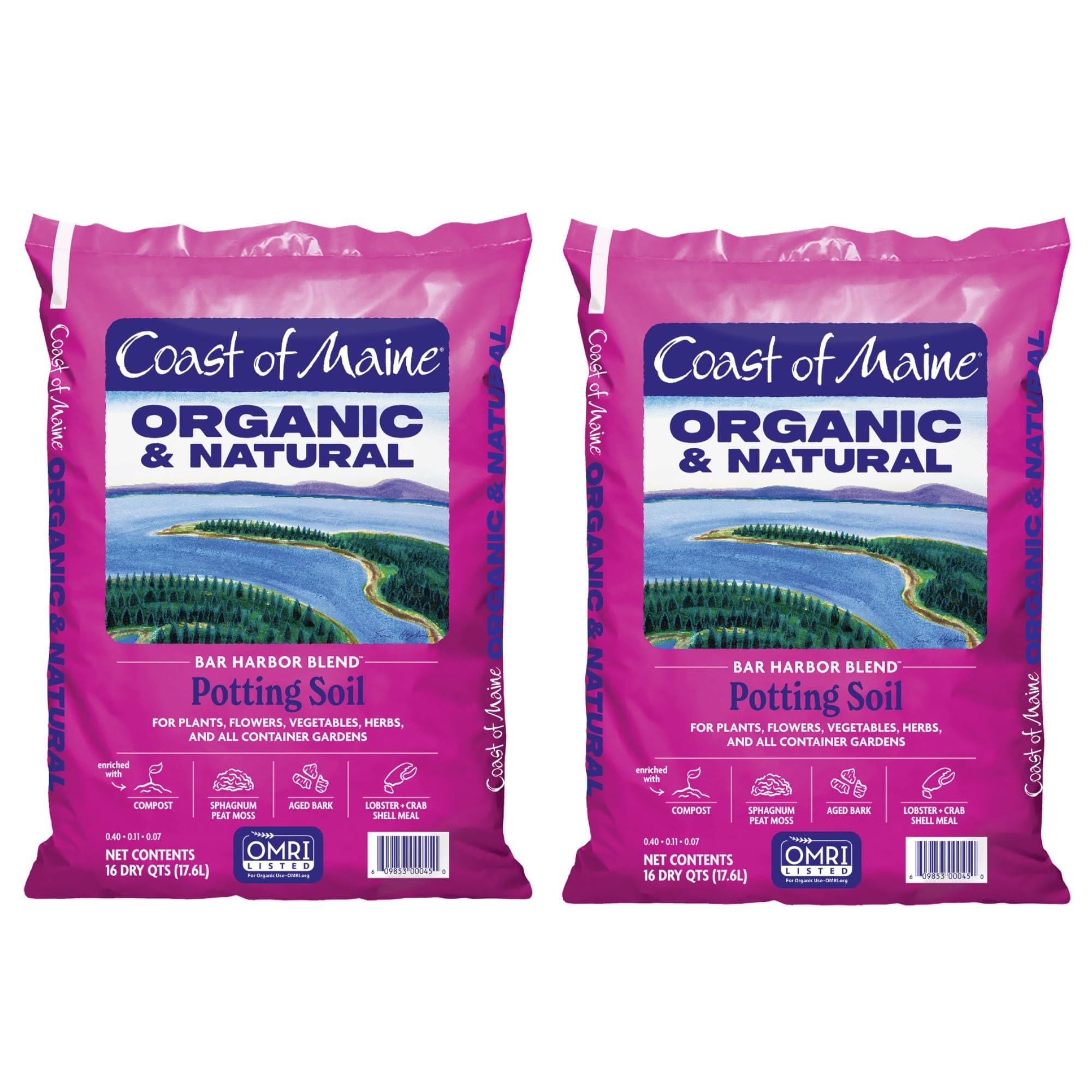
Turns a simple pot into a thriving herb garden with its unique lobster-and-crab-shell recipe.
The Coast of Maine Bar Harbor Blend takes the top spot because it delivers a balanced organic mix straight from the bag. It combines sphagnum peat moss (decomposed bog moss), compost, perlite, and a signature ingredient you will not find in other blends: lobster and crab shell meal and kelp meal. This gives the soil a steady supply of natural slow-release nitrogen (a key nutrient for leaf growth), so your basil and mint get gentle food for weeks without you needing to add fertilizer. It is the only mix here with seafood-based nutrition — a richer ingredient list than the Midwest Hearth mix, which relies just on peat, vermiculite, and perlite.
Buyers report that two bags were enough to mound up 8 potato plants, with extra left over for 2 more planters — showing how much usable soil you get in the 16-quart (2-pack) volume. Reviewers also note the soil looks dark and nutrient-rich with good perlite and coco coir, and that it has no bad smell or unexpected weeds. One buyer who keeps 25-year-old houseplants switched to this mix and said it outperforms “top brand” soils for containers.
The trade-off is the price, which sits at a premium compared to conventional mixes. For small container gardens with a few herb pots, the 16-quart size might be more than you need. If you only need a tiny amount for seed-starting, the smaller Midwest Hearth 8-quart bag is more practical.
Why it takes the top slot
- Unique lobster and crab shell meal for slow-release organic nutrition
- Excellent drainage and aeration thanks to perlite and compost blend
- Buyers confirm it outperforms “top brand” soils for container gardens
- OMRI organic certified and suitable for indoor or outdoor use
Things to consider
- Premium pricing compared to basic potting soils
- 16-quart bag may be large for a single small pot
Grab this if: you want a nutrient-dense organic soil that can handle everything from a single herb pot to a raised bed full of vegetables.
Look elsewhere if: you only need a tiny amount for a few seed-starting pots and want to avoid buying a large bag.
2. Espoma Organic Potting Mix

The bulk-sized bag that keeps herb roots happy with a proprietary mycorrhizae boost.
Espoma is a long-trusted name in organic gardening, and this AP2 mix delivers a rich blend of sphagnum peat moss, humus (decayed organic matter), perlite, earthworm castings, alfalfa meal, kelp meal, and feather meal. What makes it special is the Myco-Tone — a proprietary blend of endo and ecto mycorrhizae (beneficial fungi that form a partnership with plant roots, helping them absorb water and nutrients). This helps roots recover faster after repotting or moving plants. At a volume of 2 cubic feet, this is the largest single bag on the list, dwarfing the Midwest Hearth’s 8-quart (about 0.3 cubic feet) bag by more than 6 times.
Owners mention the mix is loamy and chunky, not dense or crusty, and they appreciate the lack of large sticks or wood pieces. One reviewer noted they use it for houseplants over 25 years old and it keeps them thriving. If you have a big container garden or a raised bed, this single bag saves you from buying multiple smaller ones. However, the bag is physically large and heavy, so it is not convenient for a quick single-pot refill. Buyers also note it is more expensive than generic brands.
Why it stands out
- Massive 2-cubic-foot volume for extensive container gardening
- Myco-Tone mycorrhizae help root recovery after transplanting
- Rich, loamy texture that does not compact or get crusty
- Organic ingredients with no synthetic chemicals
Things to consider
- Large bag is heavy and not ideal for small spaces
- Premium price per bag compared to conventional mixes
Best suited for: anyone with a substantial container garden, raised beds, or a collection of houseplants who wants a single, high-quality organic soil source.
Pass if: you only have one or two small pots and want a more compact, mess-free option.
3. Brut Organic Potting Soil
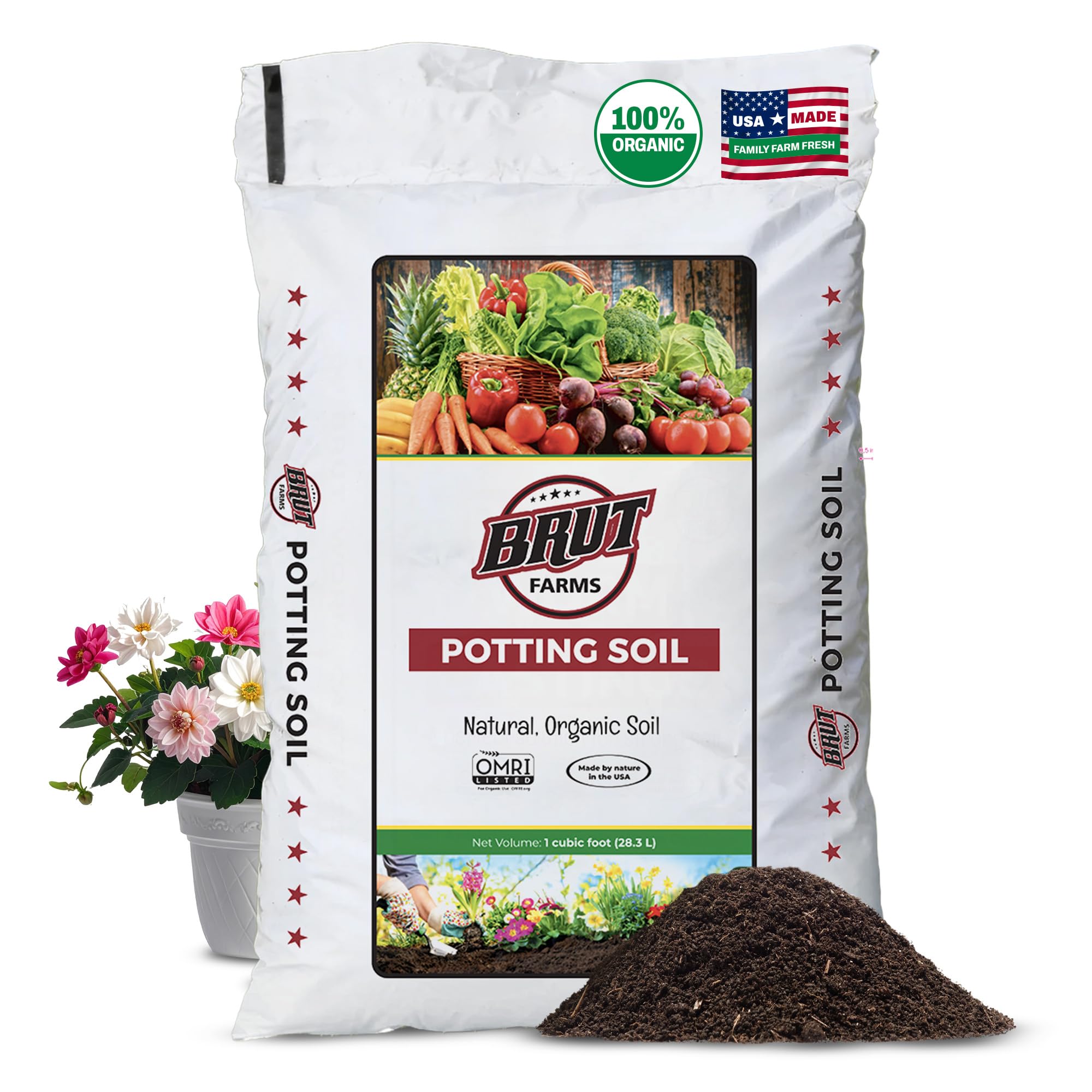
The OMRI-certified powerhouse that feeds herbs from root level with worm castings and trace minerals.
Brut Organic Potting Soil is built around three powerful ingredients: microbe-rich worm castings (worm manure packed with beneficial bacteria), Azomite (a volcanic rock dust that provides trace minerals like calcium and magnesium), and kelp. This combination feeds plants directly from the root zone. The brand claims it is filler-free — no sticks or wood chips, which buyers of other brands sometimes encounter. Unlike the Coast of Maine mix, which uses seafood meal, Brut relies on worm castings for its slow-release nutrition, giving it a different biological profile.
The mix has a naturally balanced pH between 6.3 and 6.5 — slightly acidic, which is the balance for most herbs. At 21 quarts, it sits between the Coast of Maine 16-quart and the Espoma 2-cubic-foot bags in volume. One buyer mentioned their Cara Cara orange tree showed deep green leaves and new growth in just 2 days after transplanting, which suggests an immediate root response. However, buyers also warn the rich organic matter can attract fruit flies if the soil is moved outdoors, and recommend a top layer of sand or gravel to prevent this.
The biggest drawback is the price, which multiple reviewers describe as “pricey.” For a few herb pots, this might feel like overkill, but if you want a clean, powerful, OMRI-listed organic mix with no synthetic ingredients, it is tough to top.
Its strongest points
- Packed with worm castings, Azomite, and kelp for root-level nutrition
- OMRI-listed organic with no synthetic fillers or chemicals
- Naturally pH balanced between 6.3 and 6.5
- Customers note fast, visible growth after transplanting
What to watch for
- High price per bag compared to other mixes
- Rich organic matter can attract pests if used outdoors without a top barrier
Choose this if: you want the most biologically active soil possible for premium container herbs and are willing to pay for it.
skip it if: you are on a tight budget or only need soil for a few small, temporary pots.
4. Midwest Hearth Premium Potting Soil Mix

The light, fluffy mix that gives herb seeds the perfect start without burning them.
Midwest Hearth’s Premium Potting Soil Mix is a classic three-part blend of peat moss, vermiculite (a mineral that absorbs water like a sponge to hold moisture), and perlite (white volcanic rock that creates air pockets). Professional growers use this combination because it provides exceptional aeration while holding just enough moisture. The result is a soil that does not compact around tender roots, which is why one reviewer called it the “excellent potting mix: light, fluffy texture; perfect moisture retention and drainage.” At just 8 quarts, it is the smallest bagged soil here, making it a direct size alternative to the 16-quart Coast of Maine if you only need a little.
This mix is pH-controlled and ready to use. It is not organic, so it lacks the compost or worm castings of the Coast of Maine or Brut blends, but that helps for seed starting — a lean mix prevents damping off (a fungal disease that kills seedlings in overly rich soil). The price is the lowest among the non-expanding soil products here. The trade-off is volume: 8 quarts fills about two 8-inch pots, so for a larger garden you will need multiple bags.
What makes it great
- Light, fluffy texture ideal for seed starting and delicate roots
- Contains peat moss, vermiculite, and perlite for balanced moisture and air
- Resealable bag keeps unused soil fresh
- Budget-friendly price compared to organic blends
Its limitations
- 8-quart bag is smaller than most competitors
- Not organic, and lacks slow-release nutrients for long-term growth
Ideal for: beginner herb growers who want an affordable, reliable mix for starting seeds and a few small pots.
Not the best choice for: large container gardens or growers who prefer organic-certified ingredients.
5. Miracle-Gro Potting Mix (3-Pack)

The no-brainer choice for low-maintenance feeding with a built-in fertilizer that lasts half a year.
Miracle-Gro is the household name in potting soil, and this 3-pack of 8-quart bags is designed for convenience. The mix includes a fertilizer that the brand claims feeds plants for up to 6 months, so you do not need to remember to add liquid feed during the growing season. The brand also claims it grows plants “twice as big” compared to unfed plants. It is made for outdoor container plants, including herbs, vegetables, flowers, and shrubs. Each bag fills two 8-inch containers, and the 3-pack gives you a total of 24 quarts — more total volume than the Coast of Maine 16-quart bag.
Reviewers consistently mention that the soil drains well and does not pack down hard, which helps water reach roots. One owner reported they choose these smaller bags to avoid lugging around the large 50-quart versions. The total 24-quart volume across three bags compares well against the Midwest Hearth single 8-quart bag if you need more soil. The main limitation is that the fertilizer is synthetic — if you want organic soil, this is not it. Also, the 0.66 volume specification on the label is confusing (the actual content is three 8-quart bags).
Why it appeals
- Built-in fertilizer feeds herbs for up to 6 months
- Three 8-quart bags are easy to handle and store
- Well-draining soil that does not compact or harden
- Trusted brand with a long track record
Its downsides
- Synthetic fertilizer not suitable for organic growing
- Volume labeling can be confusing for buyers
Pick it for: a straightforward, low-effort container herb garden where you want built-in feeding and do not require organic certification.
Avoid it if: you are committed to organic gardening or prefer to choose your own fertilizer separately.
6. ZESTIGREENS Expanding Coco Coir Discs (16-Pack)

The mess-free starter that magically expands into fluffy, eco-friendly soil for small pots and fishtanks.
ZESTIGREENS takes a completely different approach from bagged soil. Each 2-inch coco coir disc (a compressed puck made from coconut husk fibers) expands into 2 cups of soil — about 32 cups total for the 16-pack. You just add 5 ounces of water and watch the compressed wafer puff up to fill a 3- to 4-inch pot. This makes it incredibly clean and easy to store — no heavy bags, no damp soil sitting in the garage. Unlike the AVERGO coco coir disc, which produces 2.5 quarts total, this 16-pack yields 10 quarts of soil, giving it a 10-quarts vs 2.5-quarts volume advantage.
Coco coir has a neutral pH (around 6.0-6.5) and provides abundant oxygen to roots, reducing the risk of root rot (roots suffocate in waterlogged soil). Reviewers point out, “Works perfectly in fish tanks,” and note that leftover discs in self-watering planters grew white fur, which is harmless but something to watch for in sealed setups. Another buyer said the discs were “easy and fun to use indoors” and suitable for kids. The catch is that coco coir has very few nutrients on its own — herbs will need fertilizer within a few weeks, unlike the Coast of Maine mix which already contains compost and kelp meal.
What we like
- Ultra-compact, mess-free, and easy to store
- Excellent aeration reduces risk of root rot
- Versatile use for fish tanks, cat grass, microgreens, and herbs
- Eco-friendly natural coconut coir with neutral pH
Keep in mind
- Contains no fertilizer, so herbs need feeding soon after sprouting
- Best suited for small 3-4 inch pots, not large containers
Best for: windowsill herb gardeners who value cleanliness and convenience and do not mind adding their own liquid fertilizer.
Look elsewhere if: you need a large volume of soil for outdoor containers or prefer a mix with built-in nutrients.
7. AVERGO Coconut Coir Potting Soil Disc
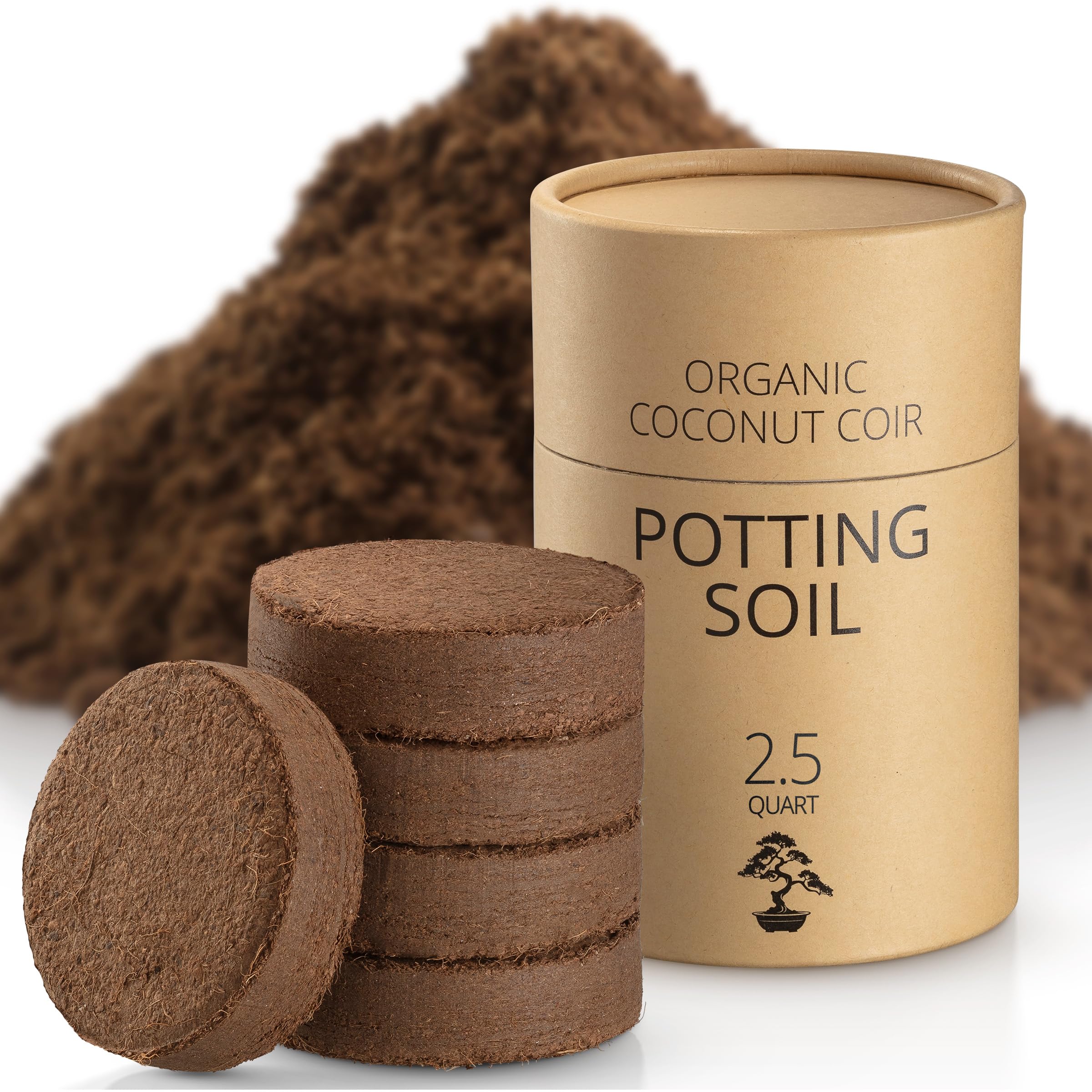
A single disc that hydrates into fluffy, airy soil for bonsai, herbs, and small houseplants.
AVERGO’s compressed coco coir disc is a single 5.5 lb block that expands to 2.5 quarts of soil. One customer observed that “one disc hydrates to fill two 4″ pots,” so you know exactly what you are getting. Like the ZESTIGREENS pack, this is pure coco coir — it is naturally pH balanced, holds moisture well, and provides excellent aeration to prevent root rot. It is specifically marketed as a bonsai starter soil but works for herbs, snake plants, money trees, and general houseplants. The advantage over bagged soil is the compact form factor — the dry disc takes up almost no space until you need it.
Reviewers consistently praise how well it expands and how it holds moisture without becoming waterlogged. One reviewer called it “good value” for small gardens. However, a different reviewer said it “produces less dirt than claimed and than cheaper alternatives (e.g., Dollar Tree),” so the actual volume might be lower than advertised. Like the ZESTIGREENS disc, this is pure coco coir with no added nutrients — you will need to mix in compost or use liquid fertilizer for a full grow-out. Its 2.5-quarts final volume is one-quarter of the ZESTIGREENS 10-quarts total.
Why it works
- Compact, space-saving dry disc that expands quickly with water
- Excellent aeration and moisture retention for healthy roots
- Natural, eco-friendly product suitable for bonsai and herbs
- Easy to use: add warm water and pot up
Things to check
- Single disc is small (2.5 quarts) and may not match claimed volume
- No nutrients, so herbs need supplemental feeding
Reach for this if: you need a small, clean amount of soil for a few herb pots or a bonsai tree and want a highly aerated, natural medium.
pass on it if: you need a large volume of soil with built-in nutrients for a bigger garden.
Understanding the Specs
Perlite & Aeration
Perlite is the small, white, volcanic glass pebbles you see mixed into potting soil. Its purpose is to create air pockets so water drains through quickly and roots can breathe. Without perlite, potting soil can become dense and waterlogged, which is the main cause of root rot in herbs. Look for a mix where you can visibly see perlite flecks scattered throughout — that is a sign the mix will stay light and fluffy.
Coco Coir vs. Peat Moss
Coco coir is a fibrous material made from coconut husks, while peat moss comes from decomposed sphagnum moss harvested from bogs. Coco coir has a neutral pH (around 6.0-6.5) that herbs prefer, and it re-wets easily even after drying out. Peat moss is more acidic (pH 3.5-4.5) and can be harder to re-wet once it dries completely. Many premium mixes use both, balancing the moisture retention of coir with the structure of peat. Coco coir is also considered more sustainable because it is a byproduct of the coconut industry.
Worm Castings & Microbes
Worm castings are the nutrient-rich waste produced by earthworms. They are packed with beneficial bacteria and micronutrients that help roots grow strong. Mixes that include worm castings (like the Brut Organic soil) fuel the soil food web, creating a living ecosystem that helps plants access nutrients naturally. This is particularly useful for long-term container gardens where the soil needs to stay healthy for months.
Organic Certification (OMRI)
OMRI stands for the Organic Materials Review Institute. Products listed with OMRI have been reviewed and approved for use in certified organic production. For herb growers who plan to eat what they grow, an OMRI-listed soil gives assurance that no synthetic pesticides, herbicides, or chemical fertilizers were used. It is a reliable standard, not a marketing claim.
FAQ
Can I use garden soil from my yard for herbs in pots?
How often should I fertilize herbs grown in coco coir?
What is the difference between vermiculite and perlite?
Is an organic potting soil necessary for growing herbs?
How many herb pots will an 8-quart bag fill?
Can I reuse potting soil from last season for new herbs?
Why does my potting soil smell bad?
What does it mean if my potting soil has white fuzzy mold on top?
Final Thoughts: The Verdict
For the majority of shoppers, the soil for herbs winner is the Coast of Maine Bar Harbor Blend because it combines organic certification, unique slow-release ingredients like lobster and crab shell meal, and excellent drainage in a generous 16-quart bag. If you want a large, single-bag supply for a big container garden, grab the Espoma Organic Potting Mix with its 2-cubic-foot volume and beneficial mycorrhizae. And for a compact, mess-free start on a windowsill, the ZESTIGREENS Coco Coir Discs are the easiest way to get going without lugging heavy bags of damp soil.
How We Picked
We do not accept paid placement. Every pick is matched to a real buyer and a real use-case; we do not hands-on test units.
Sources & Methodology
Specifications: manufacturer listings and product documentation. Review insights: verified customer reviews, as of July 2026. Pricing: not shown on this page (it changes often); check the current price via the retailer link.
As an Amazon Associate, Lawn Gear Lab earns from qualifying purchases. This does not affect which products we feature.