
Specs are compiled from manufacturer listings and verified buyer reviews and can change over time — please confirm the key details on the product page before buying.
You see yellowing leaves, a strange white powder on your tomatoes, or black spots spreading across your rose bushes. That is probably a fungal infection. The right fungicide stops the damage and gives your plants a chance to recover, but with so many bottles on the shelf, picking the one that works for your specific problem can feel like guesswork.
I’m Rikta — the founder and writer behind Lawn Gear Lab. This guide is built by comparing the manufacturers’ published specifications and the patterns across verified customer reviews, so you get each pick’s real strengths and trade-offs instead of marketing spin.
If you are fighting powdery mildew, root rot, or blight on vegetables and ornamentals, this breakdown of the best fungicide for plants will help you choose a treatment that matches the disease, the plant, and your gardening style.
Quick Picks
- Bonide Revitalize Biofungicide — Best Overall
- Earth’s Ally Disease Control Concentrate, 32 oz — Best Value
- Bonide Fung-onil Multi-Purpose Fungicide — Heavy Hitter
- Grower’s Ally Crop Defender 3 — Clean Grower
- Southern Ag Garden Friendly Bio Fungicide, 8 oz — Bio Shield
- Monterey Complete Disease Control — Organic Workhorse
- Quali-Pro Propiconazole 14.3, 32 oz Concentrate — Lawn Savior
How To Choose The Best Fungicide For Plants
Not all fungicides work the same way. Some sit on the leaf surface and stop spores from germinating (contact fungicides), while others move through the plant’s vascular system to stop an infection from the inside (systemic fungicides). Your choice depends on the disease, the plant type, and how much time you have before harvest.
Match the active ingredient to the disease
Chlorothalonil is a broad-spectrum contact fungicide effective against blight, leaf spot, and mildew on vegetables and ornamentals. Bacillus amyloliquefaciens (a beneficial bacterium) colonizes roots and fights root rot and soil-borne pathogens. Propiconazole (a systemic triazole) moves through grass and tree tissue to treat brown patch, dollar spot, and rust over weeks. Citric acid works as a contact fungicide for milder infections like powdery mildew on roses and ornamentals. Read the label to confirm your specific disease is listed.
Concentrate vs ready-to-use
A concentrate like Earth’s Ally Disease Control makes 10 gallons of spray from one 32-ounce bottle, which is far more economical if you have a large garden or multiple plants to treat. A ready-to-use spray like Grower’s Ally Crop Defender 3 is convenient for small container gardens or targeted spot treatment, but the cost per application is higher. If you treat more than a few plants per season, a concentrate usually pays off.
Organic vs synthetic
OMRI Listed fungicides (like Southern Ag Garden Friendly Bio Fungicide or Monterey Complete Disease Control) use naturally occurring bacteria or plant oils that break down quickly and are safe to use on edible crops right up to harvest. Synthetic options like Bonide Fung-onil (chlorothalonil) or Quali-Pro Propiconazole provide stronger, longer-lasting control for persistent or widespread infections, but typically have a pre-harvest interval of several days and require protective gear during application.
Quick Comparison
| Model | Best For | Active Ingredient | Bottle Size | Application Method | Amazon |
|---|---|---|---|---|---|
| Grower’s Ally Crop Defender 3 | Daily pest & mildew control | Botanical oils | 24 oz (RTU) | Spray | Amazon |
| Southern Ag Bio Fungicide | Root rot & hydroponics | Bacillus amyloliquefaciens | 8 oz concentrate | Drench / spray | Amazon |
| Earth’s Ally Disease Control | Powdery mildew on ornamentals | Citric acid | 32 oz concentrate | Spray / drench | Amazon |
| Bonide Revitalize Biofungicide | Fire blight on fruit trees | Bacillus amyloliquefaciens | 16 oz concentrate | Spray / soil drench | Amazon |
| Bonide Fung-onil Concentrate | Broad-spectrum vegetable disease | Chlorothalonil | 16 oz concentrate | Spray | Amazon |
| Monterey Complete Disease Control | Organic garden & lawn | Bacillus amyloliquefaciens | 16 oz concentrate | Spray / drench | Amazon |
| Quali-Pro Propiconazole 14.3 | Lawn diseases (brown patch) | Propiconazole | 32 oz concentrate | Spray | Amazon |
In‑Depth Reviews
1. Bonide Revitalize Biofungicide, 16 oz Concentrate

A biological soil drench that triggers the plant’s own defenses against blight and black spot.
This 16-ounce concentrate uses Bacillus amyloliquefaciens (a beneficial bacterium) that does not just kill the fungus on contact — it revs up the plant’s immune system to fight off diseases like anthracnose, powdery mildew, and fire blight. You mix it with water and apply it as a foliar spray or as a soil drench, which is especially useful for fruit trees where spraying the canopy is difficult.
Buyers report that after applying this every 3–4 days as a soil drench for about a month, their pear trees with fire blight started showing new leaves and stopped dropping blackened foliage. One reviewer noted that it turned around a years-long septoria leaf spot issue on tomatoes, a disease they had assumed was untreatable. The concentrate gives you roughly 16 oz of product that yields several gallons of finished spray, making it more economical than a ready-to-use bottle for medium-sized gardens.
Compared to the Southern Ag biofungicide (8 oz), the Bonide Revitalize offers 16 oz in the bottle versus the Southern Ag 8 oz — so you cover more plants before needing a refill. Unlike the contact-only approach of Bonide Fung-onil, this one works systemically through the plant, meaning it keeps protecting new growth as it develops.
revitalize systemic defense
- Triggers plant immune response instead of just surface protection
- Can be used as a soil drench for trees and large shrubs
- Approved for organic gardening; safe to use up to harvest day
needs patient application
- Needs reapplication every 3–4 days for active infections
- Results take several weeks with severe cases like fire blight
systemic guardian: Gardeners who want a biological, systemic option that works on fruit trees, vegetables, and ornamentals without harsh residues.
slow acting: You need patience and consistent application — it does not offer the instant knockdown of a synthetic broad-spectrum fungicide.
2. Earth’s Ally Disease Control Concentrate, 32 oz
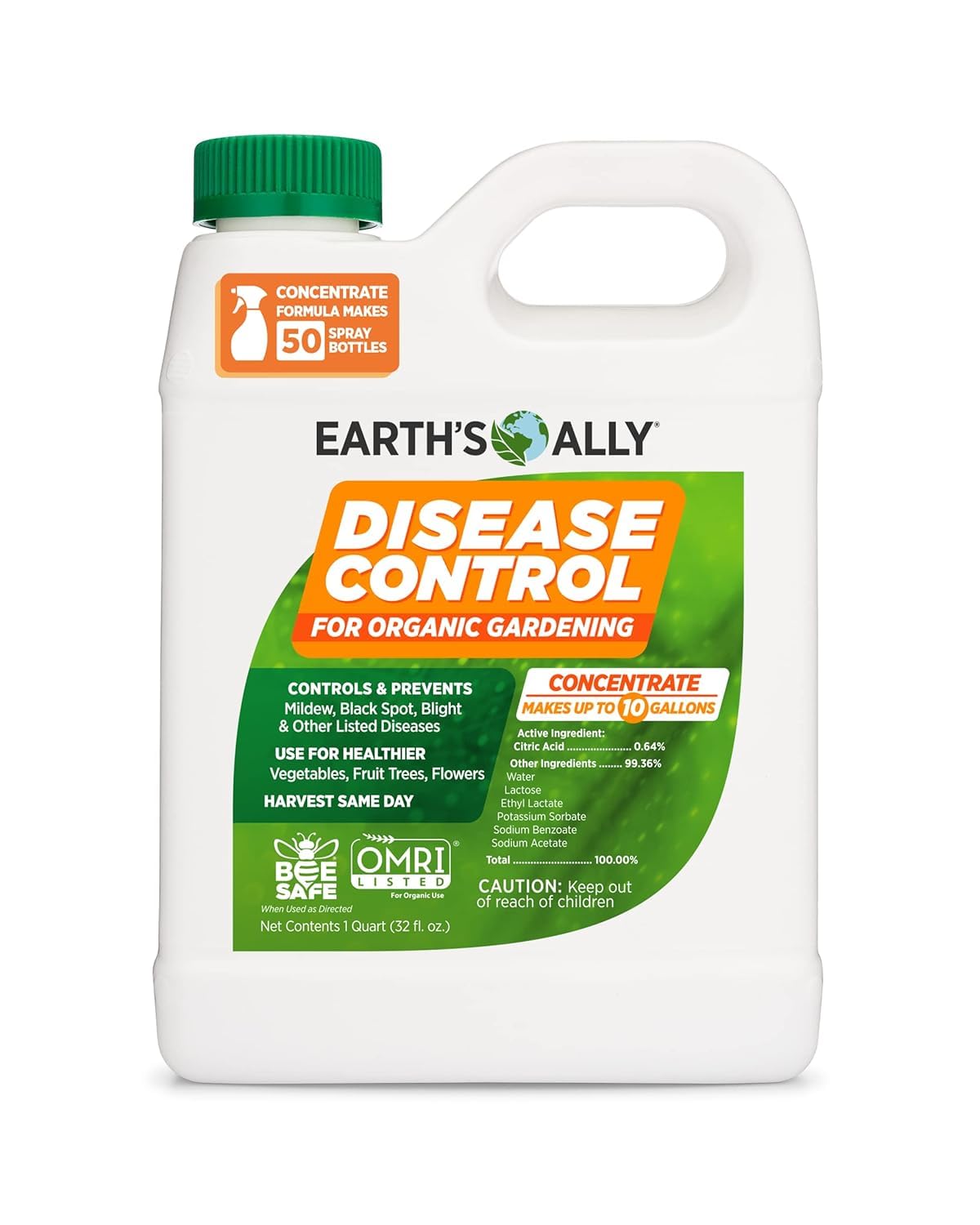
A citric-acid concentrate that treats seven common diseases and stretches to 10 gallons of spray.
This 32-ounce bottle tackles powdery mildew, downy mildew, blight, black spot, canker, and leaf spot using citric acid as the active ingredient — a contact fungicide that is OMRI Listed and safe for organic gardening. You mix 6 tablespoons per gallon of water, and the whole bottle makes 10 gallons of ready-to-use spray. That is a huge amount of coverage at a very low cost per treatment.
One reviewer shared that two deep soil applications (a mix of this fungicide plus phosphorus fertilizer) revived a Palo Verde tree that an arborist had recommended removing for root fungus — within a week the tree was green, leafing, and flowering again. Rose growers also report noticeably healthier leaves after a few sprays. The formula is a safer alternative to harsh chemicals and leaves no harmful residues, so you can use it on fruits and vegetables up until the day of harvest.
At 2.26 pounds per bottle, it weighs 2.26 pounds versus the Grower’s Ally 1.7 pounds, but that is because it is a concentrate rather than a ready-to-use spray. For the same money you get far more treatments here than with the 24 oz RTU bottle of Grower’s Ally.
broad coverage spray
- 32 oz concentrate yields 10 gallons of spray — huge value
- Treats 7 listed diseases including blight and leaf spot
- OMRI Listed; no harsh chemical residues
protects surface only
- Citric acid acts on contact — does not move systemically through the plant
- May need more frequent reapplication during wet weather
coverage king: Gardeners with a large area to treat who want an economical, OMRI-listed concentrate that handles common foliage diseases.
contact limited: It will not cure advanced systemic infections — it works best as a protective or early-treatment spray.
3. Bonide Fung-onil Multi-Purpose Fungicide Concentrate, 16 oz

A potent chlorothalonil concentrate that stops early blight and leaf spot on vegetables fast.
Chlorothalonil (a broad-spectrum synthetic contact fungicide) in this 16 oz concentrate controls leaf spot, rust, blight, mildew, scab, and mold on beans, vegetables, fruits, ornamentals, shrubs, and trees. The milky concentrate mixes with water and clings well to plant surfaces, so it stays put even through light rain.
Owners mention that two applications spaced ten days apart, combined with fresh mulch, stopped the spread of a bad fungus that was yellowing tomato leaves during a record rainy season. One buyer mentioned a white residue on the fruit that was easily removed by washing and left no flavor change. Another gardener who had battled early blight for three years with other products finally saw improvement in 7 days and full control in 21 using weekly sprays. The key difference from a biofungicide like Bonide Revitalize is speed — chlorothalonil provides immediate contact protection and works on a wider range of fungal pathogens.
The 16-ounce bottle contains the same liquid volume as the 16 oz Bonide Revitalize, but the active ingredient is drastically different. Fung-onil is a synthetic contact fungicide; Revitalize is a biological systemic. For a sudden, aggressive outbreak on tomatoes or ornamentals, Fung-onil is the faster acting choice.
rapid knockdown power
- Broad-spectrum control of many common fungal diseases
- Milky texture clings well for lasting coverage
- Quick results — improvements often visible within a week
requires careful handling
- Leaves a white residue that needs washing on edible crops
- Not suitable for organic gardening; has pre-harvest interval
quick striker: Conventional gardeners who need a fast, reliable synthetic fungicide for a serious blight or leaf spot outbreak on vegetables.
synthetic caution: Not for use on organic crops, and the white residue on fruit is cosmetic but harmless after a rinse.
4. Grower’s Ally Crop Defender 3, 24 oz Ready-to-Use
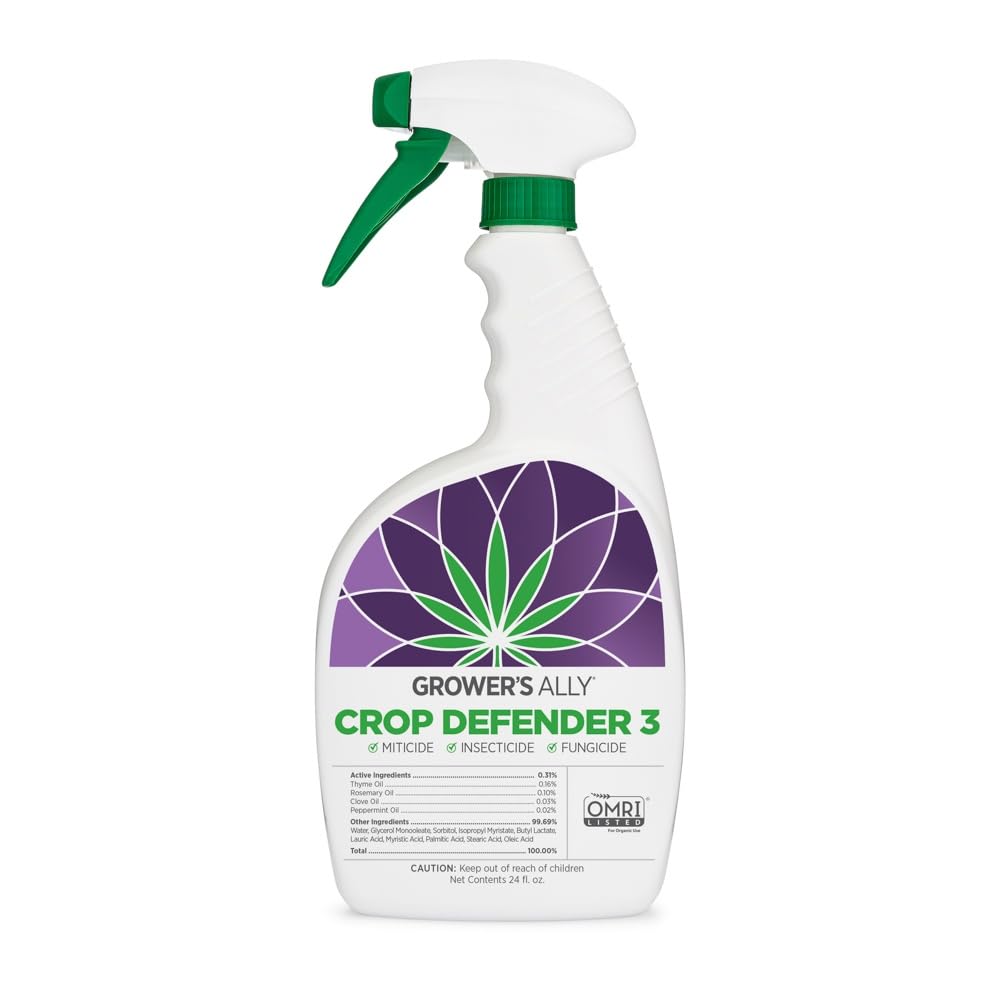
A ready-to-use spray that kills powdery mildew, spider mites, and aphids without burning leaves.
Grower’s Ally Crop Defender 3 combines botanical oils and a built-in surfactant (a substance that helps the spray spread evenly on leaves) into a single 24-ounce ready-to-use bottle. It is a miticide (kills mites), an insecticide, and a fungicide in one — so it targets powdery mildew while also knocking down spider mites, russet mites, thrips, and aphids on contact. The formula is FIFRA 25(b) exempt and OMRI Listed, meaning it tests clean for synthetic pesticides and heavy metals.
One buyer called it the “best spray for aphids and mites” and noted it smells good and does not burn leaves, even on very young seedlings. Another grower who had struggled with spider mites in an indoor garden for months said this was the first product that truly eradicated them, even after other organic and DIY solutions failed. Because it is ready-to-use, you do not need to measure or mix anything — just pull the trigger and spray.
Compared to the Earth’s Ally concentrate (32 oz), this is a smaller 24 oz bottle and it is ready-to-use, not a concentrate. You pay for convenience, so the cost per ounce is higher. But for a small indoor garden or a few patio pots, having a spray that works on both fungus and insects saves you from buying two separate products.
multi-pest shield
- Triple action kills fungus, mites, and soft-bodied insects
- Ready-to-use — no mixing, no measuring
- Safe for seedlings and flowering plants; bee safe
small bottle volume
- 24 oz bottle runs out fast on larger gardens
- Higher cost per application than a concentrate
versatile defender: Indoor gardeners, container growers, and anyone who wants a single spray that handles both fungus and pests without mixing.
limited quantity: For a large vegetable patch, the concentrate options will be far more economical.
5. Southern Ag Garden Friendly Bio Fungicide, 8 oz

A potent bacterial concentrate that thrives in hydroponic reservoirs and defeats root rot.
This 8-ounce bottle packs 98.85% Bacillus amyloliquefaciens strain D747 (a beneficial bacterium) that colonizes plant roots and outcompetes disease-causing fungi and bacteria. It works as a biofungicide (fungus-killer) and bactericide (bacteria-killer) for vegetables, ornamentals, fruit trees, lawns, and potted plants. For hydroponic growers, this is a direct alternative to far more expensive products like Hydroguard.
One buyer shared that they added 3.5 mL of this concentrate to a liter of distilled water and it worked great in their hydroponic system — the water stayed slightly cloudy, but root rot vanished. Another reviewer with hydroponic tanks said 2 mL per 5-gallon tank nearly solved their algae problem and kept roots clean and healthy, calling it “far more potent” than pricier alternatives. Unlike synthetic fungicides, this one is USDA-compliant for organic gardening and does not require any waiting period before harvest.
The liquid volume is just 8 oz, while the Bonide Revitalize is 16 oz. But because it is so concentrated — a few milliliters per gallon — that small bottle lasts a long time. The trade-off is that it comes in a smaller package for the same mid-range price as a larger concentrate like Earth’s Ally (32 oz).
hydroponic champion
- Excellent for root rot prevention in hydroponic reservoirs
- Highly concentrated — tiny doses go a long way
- USDA-compliant for organic production
tiny bottle size
- 8 oz bottle is small for the price compared to other concentrates
- Not a contact killer — works over time by colonizing roots
hydro hero: Hydroponic and indoor growers who need a potent biological solution for root rot without artificial chemicals.
small supply: If you need immediate contact control of leaf diseases, this is not the right tool — it works from the roots up.
6. Monterey Complete Disease Control, 16 oz Concentrate
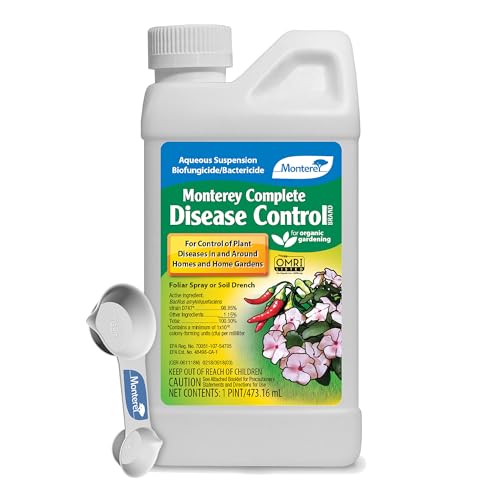
An organic concentrate that colonizes root hairs to block disease from the ground up.
This 16-ounce concentrate uses a Bacillus-based biological action that not only sprays onto leaves but also colonizes root hairs, preventing disease-causing fungi and bacteria from establishing a foothold in the first place. It is OMRI Listed for organic gardening, so it meets USDA National Organic Program standards. You use it as a foliar spray for powdery mildew, rust, leaf blight, and anthracnose, or as a soil drench to protect roots and tubers from rot.
Gardeners in high-humidity regions report this is their go-to for tomatoes, especially during long rainy spells. One long-time user in the South said this is their favorite fungicide because it truly works and can also be applied as a drench to be absorbed internally — a dual action that many biofungicides do not offer. A grower in California also reported it was outstanding for peach leaf curl, though it required multiple spring applications as the leaves emerged. The concentrate is far more cost-effective than pre-mixed sprays, and the included measuring spoon makes dosing easy.
It shares the same Bacillus amyloliquefaciens active ingredient as the Southern Ag and Bonide Revitalize, but Monterey positions it for both root drench and foliage use, which separates it. Compared to the Quali-Pro Propiconazole, this is a softer, biological approach that is safe for use on edibles right up to harvest.
dual mode action
- Works as both a foliar spray and a root-colonizing drench
- OMRI Listed for organic gardening on vegetables and fruits
- Comes with a measuring spoon
slow control rate
- Biological action is slower than synthetic contact fungicides
- Requires consistent reapplication for severe outbreaks
double threat: Organic gardeners who want a single product that protects both leaves and roots, especially on tomatoes and stone fruits.
delayed effect: It will slow a disease but may not eliminate it 100% on its own if the infection is already widespread.
7. Quali-Pro Propiconazole 14.3, 32 oz Concentrate

A systemic lawn fungicide that stops brown patch and dollar spot within a week of application.
This 32-ounce bottle uses propiconazole 14.3 in a microemulsion formulation — meaning it has less odor than older fungicides, stays stable in the tank, and provides excellent coverage on grass blades. It is designed for turf, landscape beds, trees, and shrubs, and it is especially effective against brown patch, dollar spot, summer patch, gray leaf spot, rusts, and powdery mildew on cool- and warm-season grasses. Because it is locally systemic, the fungicide moves into the plant tissue and provides long-lasting disease control that holds up between mowings.
One homeowner with a 1/3-acre lawn that developed large brown patches during hot, humid weather applied this at 2 oz per gallon per 1000 sq ft on the bad areas and saw new grass growing in the bare spots within the first week. A second application 14 days later produced “incredible results” — the brown patches were nearly gone a month later. Another buyer used it to stop orange rust on blackberry bushes; three sprays kept the rust from returning all summer. Reviewers also report it has saved Bermuda and St. Augustine lawns from various fungal diseases with one or two applications per year.
Unlike any of the other picks on this list, Quali-Pro is the only one that targets turf diseases specifically. It is also the largest bottle at 32 oz, but the concentration means you only need 1-2 oz per gallon of water for most applications, so one bottle can treat a full season of lawn maintenance for an average-sized yard.
turf disease expert
- Systemic action provides weeks of disease control in grass
- Treats 10+ turf diseases including brown patch and dollar spot
- 32 oz concentrate covers a full lawn for a season
strong chemical mix
- Requires PPE (gloves, goggles, respirator) for safe handling
- Not intended for edible vegetable gardens
lawn specialist: Homeowners with a lawn riddled with brown patch or dollar spot who want a powerful systemic treatment that works fast.
harsh formula: This is a professional-grade fungicide — handle it with proper protective gear and keep it away from edible crops.
Understanding the Specs
Contact vs Systemic
A contact fungicide (like Bonide Fung-onil or Earth’s Ally Disease Control) stays on the leaf surface and kills fungal spores when they land. It provides immediate protection but washes off in rain and does not protect new growth. A systemic fungicide (like Bonide Revitalize or Quali-Pro Propiconazole) is absorbed into the plant’s tissue and moves through the vascular system, providing longer protection even on parts of the plant that were not directly sprayed. If you are treating an established infection or a plant that is actively growing, a systemic product often gives better results.
Active Ingredient
The active ingredient determines what diseases the product controls and how it works. Chlorothalonil (Bonide Fung-onil) is a broad-spectrum synthetic contact fungicide effective on many diseases. Citric acid (Earth’s Ally) is a natural contact fungicide for milder infections. Bacillus amyloliquefaciens (Southern Ag, Bonide Revitalize, Monterey) is a beneficial bacterium that colonizes roots and fights soil-borne disease. Propiconazole (Quali-Pro) is a systemic triazole that moves through grass and tree tissue. Always check the label to ensure your specific plant and disease are listed.
FAQ
Can I use a lawn fungicide on my vegetable garden?
How often should I apply fungicide to my plants?
What is the difference between a fungicide and a bactericide?
Is it safe to use fungicide on plants that are flowering or fruiting?
Will fungicide kill spider mites or aphids?
What is the best fungicide for powdery mildew on roses?
Can I use a fungicide as a soil drench?
How long does a fungicide last on the plant?
What does OMRI Listed mean for a fungicide?
Final Thoughts: The Verdict
For most gardeners, the best fungicide for plants is the Bonide Revitalize Biofungicide because it provides systemic, long-lasting disease control through an organic-friendly biological approach that works on fruit trees, vegetables, ornamentals, and even as a soil drench. If you need a fast, broad-spectrum synthetic for a serious blight outbreak, grab the Bonide Fung-onil Concentrate. And for those fighting turf diseases on a lawn, the standout is the Quali-Pro Propiconazole 14.3.
How We Picked
We do not accept paid placement. Every pick is matched to a real buyer and a real use-case; we do not hands-on test units.
Sources & Methodology
Specifications: manufacturer listings and product documentation. Review insights: verified customer reviews, as of July 2026. Pricing: not shown on this page (it changes often); check the current price via the retailer link.
As an Amazon Associate, Lawn Gear Lab earns from qualifying purchases. This does not affect which products we feature.