
Specs are compiled from manufacturer listings and verified buyer reviews and can change over time — please confirm the key details on the product page before buying.
Picking a bag of potting soil feels simple until you are staring at a wall of options — light mixes, heavy mixes, organic, moisture-control, with or without fertilizer. The wrong bag leaves you with plants that struggle, soil that packs into a brick, or a bag you cannot lift. This guide breaks down the seven best options by what actually matters: how the bag drains, how much weight you are hauling, and what real buyers discovered after planting.
I’m Rikta — the founder and writer behind Lawn Gear Lab. This guide is built by comparing the manufacturers’ published specifications and the patterns across verified customer reviews, so you get each pick’s real strengths and trade-offs instead of marketing spin.
Whether you are potting a single houseplant or filling a raised bed for tomatoes, knowing which bag of potting soil delivers the right texture, nutrients, and drainage saves you from a season of disappointing growth.
Quick Picks
- FoxFarm Ocean Forest Potting Soil — Best Overall
- Coast of Maine Organic & Natural Bar Harbor — Top Organic
- Coast of Maine Organic & Natural Planting — Best for Veggies
- Premium Potting Soil Mix with Peat Moss — Seed Starter
- Miracle-Gro Potting Mix, For Container Plants — Fast Growth
- Miracle-Gro Moisture Control Potting Mix — Water Guard
- Gaia Green Organic Living Soil — Living Soil
How To Choose The Best Bag of Potting Soil
Potting soil is not just dirt in a bag. The right mix has a specific texture, nutrient profile, and water-holding ability that matches what you are planting. Here are the three factors that separate a great bag from a disappointing one.
Drainage and Aeration
Roots need air as much as they need water. A good potting soil contains perlite (small white volcanic rocks), vermiculite (a spongy mineral that holds water), or both. These create tiny pockets in the soil so water flows through and oxygen reaches the roots. If the bag feels heavy and dense, water pools at the bottom and roots rot.
Nutrient Content — Organic vs. Synthetic
Some bags come pre-loaded with slow-release fertilizer that feeds plants for months. Organic mixes use compost, worm castings, kelp meal, and bone meal — natural ingredients that break down slowly. Synthetic mixes like Miracle-Gro add chemical fertilizers that plants absorb fast but may require reapplication. Organic bags are gentler on seedlings; synthetic bags boost leafy growth immediately.
Bag Size and Weight
Bags are measured in quarts, cubic feet, or cubic inches — and the difference is huge. A 20-quart bag fills about two large planters, while a 1.5-cubic-foot bag (about 45 quarts) fills a small raised bed. The weight matters too: dry mixes with peat moss and perlite are lighter but still tough to carry when wet. Check the item weight on the label before loading your cart if you have to haul it up stairs.
Quick Comparison
| Model | Best For | Volume | Item Weight | Key Ingredient | Amazon |
|---|---|---|---|---|---|
| FoxFarm Ocean Forest | Premium all-around performance | 1.5 Cubic Feet | 34 Pounds | Aged forest products & fertilizer | Amazon |
| Coast of Maine Bar Harbor Blend | Organic container growing | 16 Quarts | 14 Pounds | Lobster & crab shell meal | Amazon |
| Coast of Maine Vegetable & Tomato | Vegetable beds | 20 Quarts | 21 Pounds | Composted manure & peat moss | Amazon |
| Premium Potting Soil Mix (Midwest Hearth) | Seed starting & small pots | 8 Quarts | 1.25 Kilograms | Peat moss, vermiculite, perlite | Amazon |
| Miracle-Gro Potting Mix (2-pack) | General potting & fast growth | 1 cu. ft. per bag (2-pack) | — | Fertilizer (feeds up to 6 months) | Amazon |
| Miracle-Gro Moisture Control | Overwaterers & first-time planters | 2 Cubic Feet | 40.51 Pounds | AquaCoir Formula | Amazon |
| Gaia Green Organic Living Soil | Completely organic, no-mix needed | 1728 Cubic Inches | 35 Pounds | Worm castings, insect frass | Amazon |
In‑Depth Reviews
1. FoxFarm Ocean Forest Potting Soil with 2 Plant Tags, 1.5 cu ft – Light
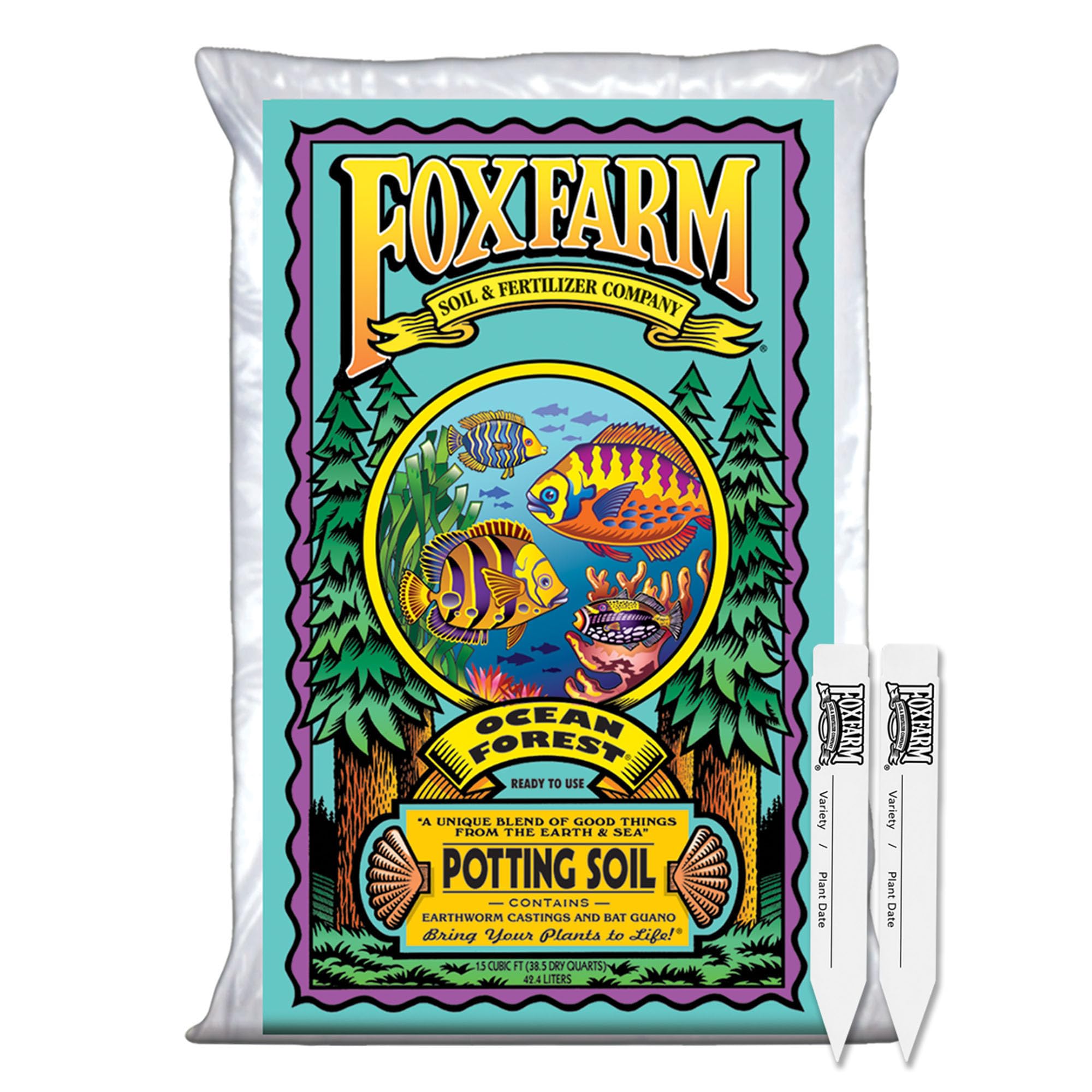
The rich, aerated mix that makes tomatoes outpace the competition from the first week.
FoxFarm Ocean Forest is the bag that serious gardeners reach for when they want results they can see. It weighs 34 pounds per 1.5-cubic-foot bag, but that heft comes from quality ingredients — aged forest products, sphagnum peat moss, perlite, and a blend of fish emulsion, crab meal, shrimp meal, earthworm castings, kelp meal, and oyster shell. The texture stays light and fluffy, so water soaks in immediately instead of pooling on top.
Buyers report that Fox Farm soil outperforms Miracle-Gro for tomatoes, with plants from same-size seeds showing dramatic growth difference with identical watering. The bag includes two plant tags for labeling varieties and planting dates. Unlike some denser mixes, the sandy loam and perlite in Ocean Forest provide excellent drainage that helps prevent root rot — a common issue when roots sit in stagnant water.
If you are filling containers for vegetables, houseplants, or seedlings and want a single bag that delivers vigorous growth without needing to add amendments, this is your pick. Just be prepared for the 34-pound weight and the price, which sits at the premium end of the lineup.
What makes it worth the money
- Ready-to-use with pre-mixed fertilizer: fish emulsion, crab meal, oyster shell
- Light, aerated texture that absorbs water immediately instead of repelling it
- Includes 2 plant tags for labeling varieties and planting dates
The real trade-offs
- At 34 pounds, this is a heavy bag to carry from car to backyard
- Price is higher than standard big-box store mixes
Grab it if: you want a premium, ready-to-use soil that beats cheaper mixes on plant growth — buyers saw a dramatic growth difference with identical watering versus standard brand.
Look elsewhere if: you need a lightweight, small bag for a single houseplant or a budget-friendly fill for a huge raised bed.
2. Coast of Maine Organic & Natural Bar Harbor Blend Potting Soil (16 QT)
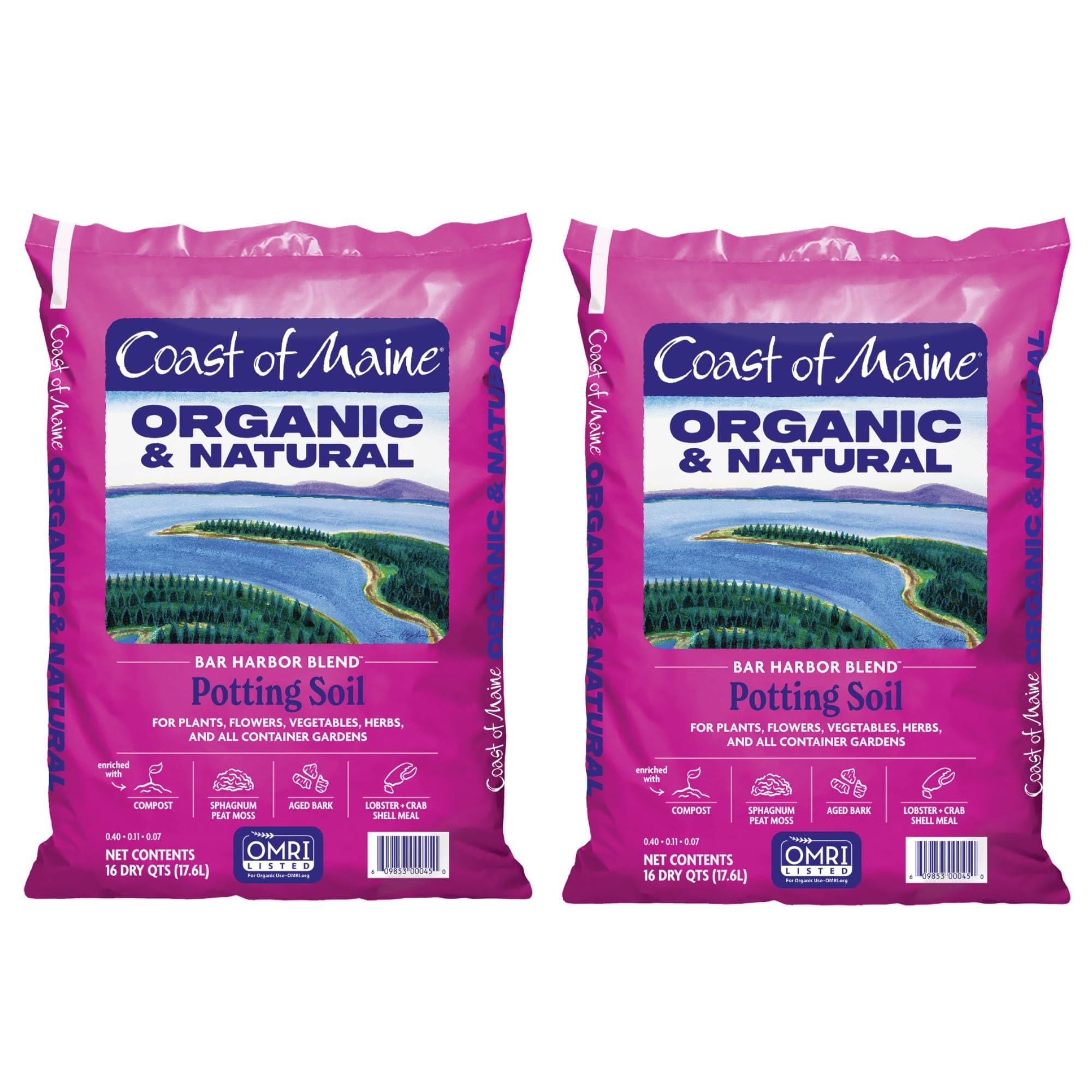
The lobster-and-kelp blend that feeds plants naturally without a single synthetic drop.
Coast of Maine’s Bar Harbor Blend weighs just 14 pounds for 16 quarts — noticeably lighter than the FoxFarm bag, which weighs 34 pounds for a similar volume (a 2.4x gap). That light weight comes from the sphagnum peat moss, compost, and perlite base, but the real story is the nutrient mix: lobster and crab shell meal plus kelp meal provide slow-release nitrogen, so you do not need to fertilize as often.
Owners mention this soil is nutrient-rich with a dark color that indicates less peat moss and more compost. One reviewer noted that two bags were enough to mound up 8 potato plants, with extra for 2 more planters. The organic formula is approved for organic gardening and works for vegetables, indoor plants, fruits, and herb gardens in hanging baskets, raised beds, or containers. It is a dedicated organic mix — no chemical fertilizers here — designed to revitalize soil structure by balancing moisture retention and drainage.
Reach for this if you want organic, planet-friendly ingredients and a light mix that makes container gardening easier on your back. skip it if you need a huge volume for a large raised bed or prefer a synthetic fertilizer boost.
Best for organic container gardens: the lobster and crab shell meal delivers natural nitrogen that sustains vegetables and herbs without synthetic chemicals — customers note it is perfect for potted plants and raised beds.
Watch for: at 16 quarts, this is a mid-size bag; large raised beds will need multiple bags.
3. Coast of Maine Organic & Natural Planting Soil for Vegetables & Tomatoes (20 Qt)
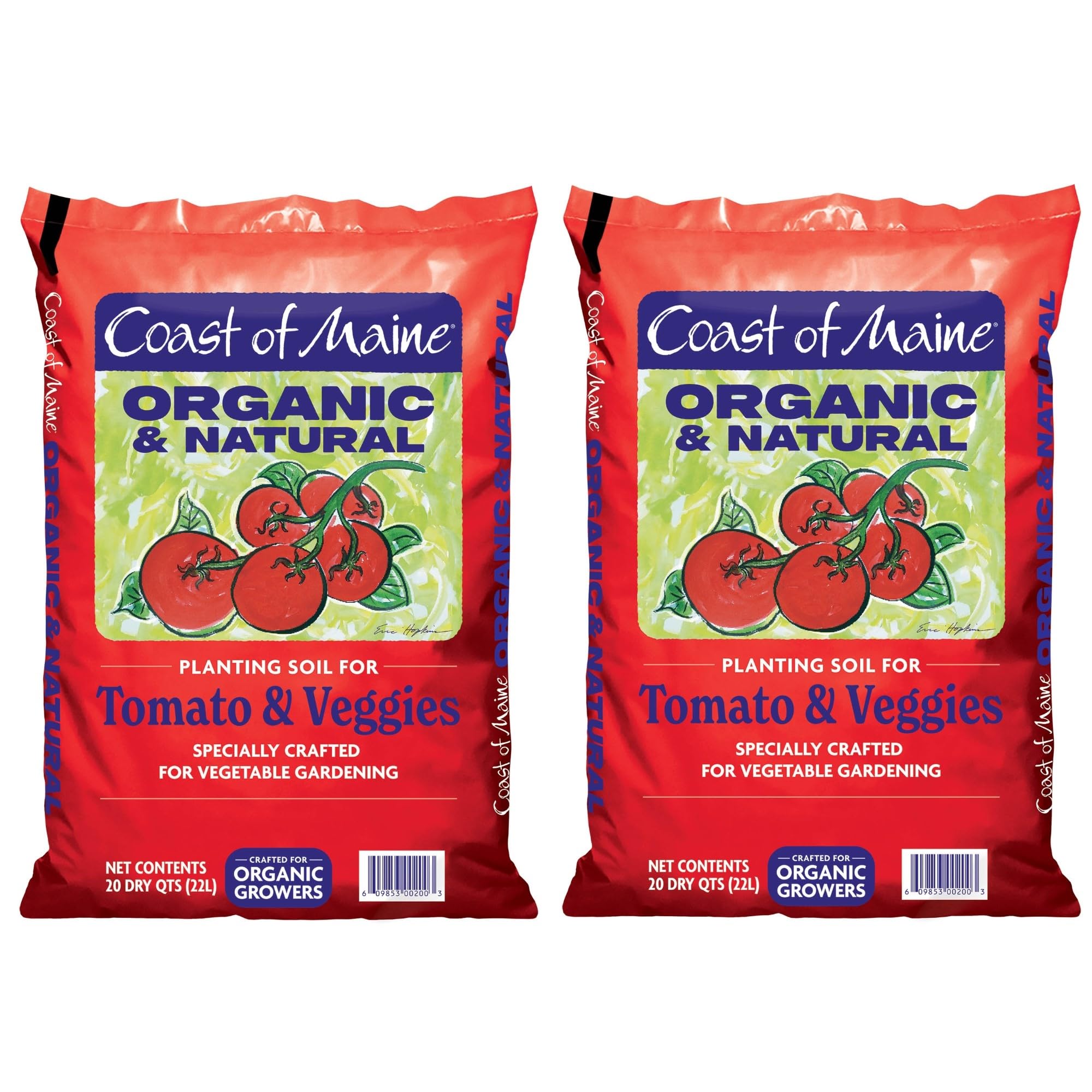
The compost-and-manure blend built specifically for hungry tomato and vegetable plants.
This Coast of Maine bag comes in at 20 quarts and 21 pounds — 2.4x lighter than the 34-pound FoxFarm bag despite holding a similar volume. It is formulated specifically for tomatoes and vegetables, with composted manure and sphagnum peat moss that balance moisture retention and drainage. The mix is OMRI-listed for organic use, meaning it meets organic gardening standards.
Reviewers point out excellent moisture retention and drainage, high in nutrients, with visible rapid plant growth. One reviewer called it the best soil their wife had tried so far. The bag is lightweight for its volume, though one buyer mentioned it may contain undecomposed twigs that need removal for a fine, uniform soil. The aromatic wood in the mix helps deter insects naturally.
If you are planting a vegetable garden — especially heirloom tomatoes that need good drainage — this bag delivers organic nutrition in a manageable 21-pound carry. pass on it if you need a general-purpose potting soil for houseplants or flowers.
What gardeners love
- Specifically formulated for tomatoes and vegetables with composted manure
- OMRI-listed for organic gardening — no synthetic chemicals
- Lightweight at 21 pounds; shoppers say excellent moisture retention
A note on handling
- May contain small undecomposed twigs that some gardeners prefer to sift out
Perfect for tomato beds: the composted manure and peat moss mix supports rapid growth with balanced drainage — buyers saw visible rapid growth after planting.
Think twice if: you want a fine, uniform texture for seed starting; you might need to sift out occasional woody bits.
4. Premium Potting Soil Mix with Peat Moss, Vermiculite, Perlite (Made in USA) (8 Dry Quarts)

The light, fluffy 8-quart bag that makes seed starting simple and mess-free.
At 8 quarts and just 1.25 kilograms (about 2.75 pounds), this is the smallest and lightest bag in the lineup — a 2.5x volume gap versus the Coast of Maine Vegetable & Tomato bag at 20 quarts. It is made by Midwest Hearth with a simple three-ingredient formula: peat moss for moisture, vermiculite for water retention, and perlite for aeration. Buyers describe it as a light, fluffy texture with perfect moisture retention and drainage.
This mix is pH-controlled for a broad spectrum of plant types, and the same formulation is used by professional growers. Buyers report it promotes strong roots and faster growth in herbs and flowers, and one user found it great for germinating petunias. The bag is easy to open and resealable — a small convenience that matters when you are using a little at a time.
Grab this if you are starting seeds, filling a few small pots, or need a lightweight bag for indoor herbs. it’s not for you if you are filling a large raised bed or planting multiple big containers — you will need several bags.
Best for small projects: the 8-quart bag and ultra-light weight make it the easiest choice for seed starting and small container plants — buyers call it great seed starter material.
The limit: at 8 quarts, you will need multiple bags for any large planting project.
5. Miracle-Gro Potting Mix, For Container Plants, Flowers, Vegetables, Shrubs, 1 cu. ft., 2-pack

The two-bag bundle that feeds container plants for six months with zero extra fertilizing.
Miracle-Gro is the name most casual gardeners recognize, and this 2-pack of 1-cubic-foot bags delivers a simple promise: feed plants for up to 6 months without reapplying. The potting mix grows plants twice as big compared to unfed plants, according to the manufacturer. Each bag fills two 12-inch containers, so the bundle covers a solid season of potting.
Owners mention the texture is good and easy to work with, helping plants settle quickly and maintain moisture. One owner reported that quality varies slightly between bags with occasional small debris, but overall it is a reliable go-to soil that produces healthy growth for indoor and outdoor plants. This is a synthetic-fertilizer mix — not organic — so it gives a fast nutrient boost that is ideal for leafy vegetables and annual flowers.
Choose this if you want a straightforward, no-fuss potting mix that feeds consistently for months without measuring fertilizer. look elsewhere if you strictly want organic ingredients or need a single, larger bag instead of two 1-cubic-foot bags.
Why it works
- Feeds container plants for up to 6 months without extra fertilizer
- Two 1-cubic-foot bags fill four 12-inch containers total
- Good texture that helps plants settle quickly and maintain moisture
What to watch for
- Not organic — uses synthetic fertilizer for the fast growth boost
- Quality can vary slightly between bags with occasional small debris
Great for general potting: the 6-month feeding formula makes it a set-and-forget mix that keeps container plants healthy without extra work — buyers confirm it helps plants settle quickly.
Not ideal if: you prioritize organic, chemical-free gardening or are starting sensitive seedlings that prefer a gentler nutrient release.
6. Miracle-Gro Moisture Control Potting Mix, For Container Plants, Protects against Over- and Under-Watering, 2 cu. ft.

The giant 40-pound bag that forgives forgetful watering with its AquaCoir reservoir.
At 2 cubic feet and 40.51 pounds, this is the largest and heaviest bag in the lineup — double the volume of the FoxFarm bag and nearly three times the weight of the Coast of Maine Bar Harbor Blend. The standout feature is the exclusive AquaCoir Formula, which absorbs up to 33% more water than basic potting soil that does not contain sphagnum peat moss, coir, and wetting agent. It protects against both over- and under-watering, making it a safety net for inconsistent waterers.
Customers note excellent results: one gardener said pepper plants in pure Moisture Control mix showed a 100% turnaround with greener foliage, faster growth, and abundant fruit. Another reviewer has used it for 10 years, starting 500-700 seeds annually with near-perfect germination and rapid growth. The mix also feeds plants for up to 6 months and grows plants twice as big versus unfed plants. One 2-cubic-foot bag fills two 14-inch containers.
Pick this if you often forget to water, tend to overwater, or want a large-volume bag for multiple containers. steer clear if you need an organic mix or prefer the lighter weight of a smaller bag.
Best for inconsistent waterers: the AquaCoir formula stores extra water so plants survive your busy weeks — a reviewer with a decade of use calls it excellent for starting 500-700 seeds annually.
The catch: at 40.51 pounds, this bag is a serious haul; factor in delivery or a strong carrying partner.
7. Gaia Green Organic Living Soil, 1.5 cu ft – Premium Potting Mix for Indoor & Outdoor Plants

The biologically active mix that arrives pre-charged and ready to plant without any mixing.
Gaia Green takes the organic concept further than any other bag here. At 35 pounds for 1.5 cubic feet (measured as 1728 cubic inches in the specs), it is similar in volume to the FoxFarm bag but one pound heavier. The key difference is that this is a living, biologically active soil made with worm castings, insect frass, and composted inputs — plus peat, perlite, and coco coir for a light, well-draining structure. It also contains kelp meal, alfalfa, bone meal, glacial rock dust, and oyster shell for slow-release organic nutrition.
Reviewers point out it is exactly as advertised — no punctures or tears — and works great with Gaia Green fertilizer and worm castings. One reviewer calls it one of the best out-of-the-bag soils on the market. The mix is CDFA-registered and free from synthetic chemicals, made from sustainably sourced materials. You do not need to amend, measure, or mix anything — just fill your pot or bed, plant, and water.
Reach for this if you want a fully organic, pre-charged living soil for indoor or outdoor plants. skip it if the premium price or the 35-pound weight is a dealbreaker for your setup.
What makes it special
- Pre-charged with slow-release organic nutrients — no mixing or amending required
- Contains worm castings, insect frass, kelp meal, glacial rock dust, and oyster shell
- CDFA-registered, sustainably sourced, free from synthetic chemicals
Consider the downsides
- Price is the highest in this lineup at the premium tier
- At 35 pounds, it is heavy to carry and ship
Best for pure organic growers: the living soil with worm castings and insect frass creates a biologically active environment that feeds plants naturally from day one — buyers call it one of the best out-of-the-bag soils.
Think twice if: you are on a tight budget or need a standard synthetic-fertilizer mix for fast green growth.
Understanding the Specs
Volume — Quarts vs. Cubic Feet vs. Cubic Inches
These three units measure the same thing (how much soil you get), but they are confusingly different. 1 cubic foot equals about 25.7 dry quarts. A 20-quart bag is roughly 0.78 cubic feet. The Gaia Green bag is measured in 1728 cubic inches — exactly 1 cubic foot (since 12x12x12 = 1728). Always check the volume in quarts or cubic feet, not the bag size, to know how many containers it will fill. A good rule: 1 cubic foot fills two 12-inch pots.
Item Weight — What You Haul
Potting soil weight depends on moisture content and ingredients. Dry peat-based mixes are light when you buy them but absorb water and get heavier after planting. Bags range from 14 pounds (Coast of Maine Bar Harbor Blend) all the way up to 40.51 pounds (Miracle-Gro Moisture Control). If you carry bags up stairs or across a yard, check the item weight before adding to your cart. You can also order delivery to save your back.
Perlite, Vermiculite & Aeration
Perlite is the small white rocks you see in potting soil — they do not hold much water, but they create air pockets so roots can breathe. Vermiculite is a gold-brown mineral that soaks up water like a sponge and releases it slowly. A good potting mix uses both: perlite for drainage, vermiculite for moisture retention. The Premium Potting Soil Mix uses both ingredients, while FoxFarm relies more on perlite and sandy loam for drainage.
Slow-Release vs. Synthetic Fertilizer
Slow-release fertilizers (organic bone meal, kelp meal, worm castings) break down over weeks as soil microbes digest them — gentle, steady feeding. Synthetic fertilizers (like those in Miracle-Gro mixes) give plants an immediate nitrogen boost for fast green growth but can burn roots if over-applied. Organic bags like Coast of Maine and Gaia Green use slow-release natural ingredients, while Miracle-Gro uses synthetic nutrients that feed for up to 6 months.
FAQ
How much potting soil do I need for a 5-gallon bucket?
Can I reuse potting soil from last year?
What is the difference between potting soil and garden soil?
Is organic potting soil better for vegetables?
Why does my potting soil have white fuzzy mold on top?
Can I use potting soil for seed starting?
How do I store an open bag of potting soil?
What does the AquaCoir formula in Miracle-Gro Moisture Control actually do?
Final Thoughts: The Verdict
For the majority of shoppers, the best bag of potting soil winner is the FoxFarm Ocean Forest Potting Soil because it delivers a proven, nutrient-rich, aerated mix that outperforms standard brands on plant growth — as confirmed by buyers who saw dramatic growth differences with identical watering. If you want a lighter organic option for vegetables and herbs, grab the Coast of Maine Bar Harbor Blend. And for forgetful waterers who need a safety net, the standout is the Miracle-Gro Moisture Control Potting Mix.
How We Picked
We do not accept paid placement. Every pick is matched to a real buyer and a real use-case; we do not hands-on test units.
Sources & Methodology
Specifications: manufacturer listings and product documentation. Review insights: verified customer reviews, as of July 2026. Pricing: not shown on this page (it changes often); check the current price via the retailer link.
As an Amazon Associate, Lawn Gear Lab earns from qualifying purchases. This does not affect which products we feature.