
Specs are compiled from manufacturer listings and verified buyer reviews and can change over time — please confirm the key details on the product page before buying.
You want a bean trellis that stays upright through storms, supports heavy vines, and makes picking easy — not a kit that wobbles during assembly and flops under the first good wind. This guide cuts through the options to find the trellises that actually deliver on that promise of sturdy vertical growth.
I’m Rikta — the founder and writer behind Lawn Gear Lab. This guide is built by comparing the manufacturers’ published specifications and the patterns across verified customer reviews, so you get each pick’s real strengths and trade-offs instead of marketing spin.
For a small raised bed or a sprawling garden plot, the right bean trellis saves ground space, improves airflow, and makes harvesting a breeze — all while keeping your vines off the dirt.
Quick Picks
- Gardeners Supply Company Large Bean Tower Plant Support — Top Performer
- yotoworth A-Frame Garden Trellis — Best Overall
- OTOSUNNY Cucumber Trellis for Raised Garden Beds — Best for Airflow
- FOLLOOK 65×48 Arch Trellis — Wide Span
- FOLLOOK 63×63 U-Shape Trellis — Tall Arch
- LifeisLuck 2-Pack A-Frame Trellis — Two-Pack Value
- FOLLOOK 48×48 Mini Arch Trellis — Compact Starter
How To Choose The Best Bean Trellis
A bean trellis is more than just a support — it is your garden’s vertical backbone. Before you buy, focus on three things that separate a one-season headache from a multi-year workhorse.
Material and Coating
The frame material determines whether your trellis rusts after a single rainy spring or stands strong for years. Look for polyethylene-coated or powder-coated steel — the coating resists rust and prevents the metal from heating up enough to burn tender stems. Thin bare metal often bends under the weight of mature bean vines, while a thicker 0.55-inch pipe or coated steel core gives you the rigidity you need without adding excessive weight.
Design Shape and Stability
The shape of the trellis directly affects how stable it feels once installed. An arched design looks attractive and encourages airflow, but some models rely on clips that can pop loose under heavy loads. An A-frame design spreads the weight across two sloping sides, giving you a lower center of gravity that resists tipping in wind. If you live in a windy area or grow heavy-fruiting varieties like pole beans, an A-frame or a tower (like the 75-inch tower) usually holds up better without wobbling.
Assembly Ease and Included Parts
Some trellises claim tool-free assembly but arrive with missing stakes, poorly fitting clips, or vague instructions. Check the reviews for mentions of missing hardware or parts that require extra zip ties. A bean trellis that takes more than 30 minutes to assemble and leaves you hunting for replacements in your toolbox is not a time-saver. Look for kits that include netting, stakes, and connectors that fit snugly right from the start.
Quick Comparison
| Model | Best For | Dimensions (W x H) | Material | Weight | Amazon |
|---|---|---|---|---|---|
| Gardeners Supply Large Bean Tower | Tall, heavy-duty support | 14.5″ x 75″ | Powder-coated steel | 9.4 lbs | Amazon |
| yotoworth A-Frame Trellis | Double-sided growing | 31.5″ x 70.8″ | PE-coated metal | 5.95 lbs | Amazon |
| OTOSUNNY Arch Trellis | Wide arch for airflow | 63″ x 63″ | PE-coated steel | — | Amazon |
| FOLLOOK 65×48 Arch Trellis | Wide reach for raised beds | 65″ x 48″ | Poly-coated steel | — | Amazon |
| FOLLOOK 63×63 U-Shape | Tall arch with thicker tubing | 63″ x 63″ | PE-coated steel | 6.4 lbs | Amazon |
| LifeisLuck 2-Pack A-Frame | Two-pack value for small spaces | 17″ x 42″ each | Powder-coated metal | — | Amazon |
| FOLLOOK 48×48 Mini Arch | Compact bed entry-level | 48″ x 48″ | Poly-coated steel | 3.37 lbs | Amazon |
In‑Depth Reviews
1. Gardeners Supply Company Large Bean Tower Plant Support

This 75-inch tower stays planted through storms and heavy harvests — no clips, no netting, no fuss.
If you want a bean trellis you can set up once and forget about for years, this is it. At 75 inches tall and 9.4 pounds, it is the tallest and heaviest pick here; the next tallest is 70.8 inches tall. The powder-coated steel frame resists rust (unlike typical PE-coated PE-coated steel) and stands firm in high winds. The 7.5-inch square openings let you reach in and pick beans without tangling your arm, a detail buyers praise during peak harvest.
Buyers report that the hinged panels snap together in minutes and fold flat for off-season storage. One review put it simply: “will outlast me.” The trade-off is that some corner joints can pop out during handling, but a firm press solves it. Unlike every arch design here, this tower does not rely on clips or netting for its structure.
What gives it staying power
- 75-inch height gives climbing beans the vertical room they need; the next tallest pick is 70.8 inches
- Powder-coated steel frame is heavy-duty enough to support mature vines and resist strong winds
- Easy snap-together assembly with fold-flat storage for the off-season
A small handling quirk
- Some corner joints may pop out during handling before you stake the tower down
- At 14.5 inches wide, the footprint is narrow, so it works best as a dedicated bean tower rather than a wide arch covering a bed
Reach for this if: You want one heavier-duty tower that handles tall climbing beans, peas, or even clematis without wobbling.
Look elsewhere if: You need a wide arch to cover an entire raised bed — this is a single tower, not a spanning trellis.
2. yotoworth A-Frame Garden Trellis
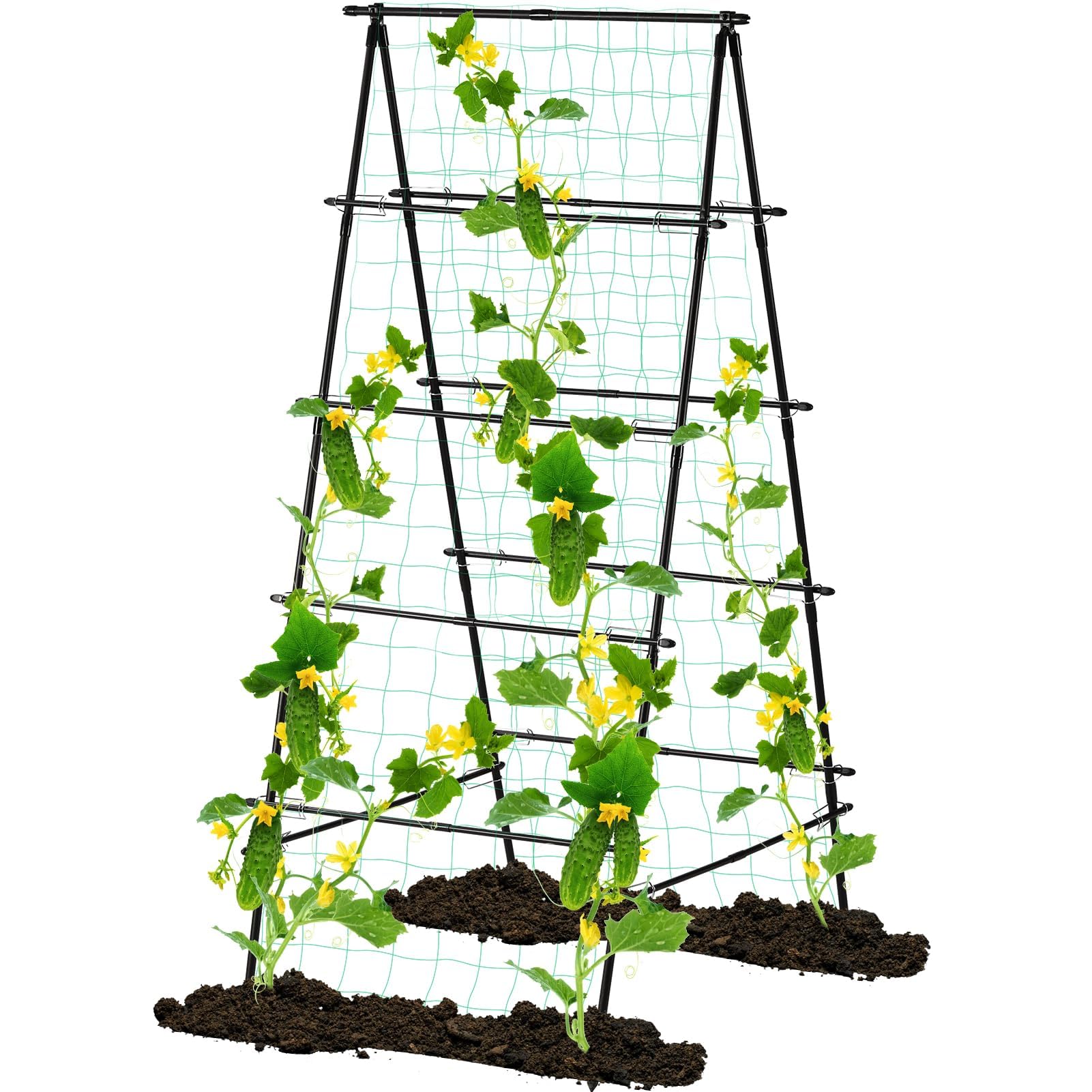
The A-frame design lets you grow two sides of beans in one footprint, doubling your yield per square foot.
This trellis rethinks the shape: instead of a single arch, the A-frame gives you two sloping sides so you can plant climbing plants on both faces. At 70.8 inches tall and 31.5 inches wide, it is sturdy enough for heavy loads — one reviewer grew 30+ watermelons on it without failure. The frame uses PE-coated metal pipes (polyethylene-coated, meaning a plastic layer protects against rust) that resist corrosion and give bean tendrils a textured surface to grip.
Compared to the FOLLOOK arches which buyers describe as flimsy, the yotoworth’s triangular bracing and strong clamps anchor the frame securely into the soil. Assembly takes about 20 minutes without tools. One reviewer noted you must use every included clip or the joints stay loose. At 5.95 pounds, it is lighter than the Gardener’s Supply tower, so firm soil or extra staking is key in sandy gardens.
Double the growing space
- A-frame shape lets you plant on both sides, maximizing yield per square foot of bed space
- PE-coated metal pipes resist rust and give vines a textured surface for climbing
- Buyers reported holding 30+ watermelons — well beyond the usual cucumber or bean load
What to watch for
- Some joints may feel unstable if you do not use every supplied clip and clamp
- Lighter frame (5.95 lbs) means it needs firm soil or extra staking to stay planted in a gust
Best for: Gardeners who want to double their vertical growing area without doubling their garden footprint.
skip it if: You have very sandy or loose soil — you will need to add stakes or buried anchors for a rock-solid hold.
3. OTOSUNNY Cucumber Trellis for Raised Garden Beds
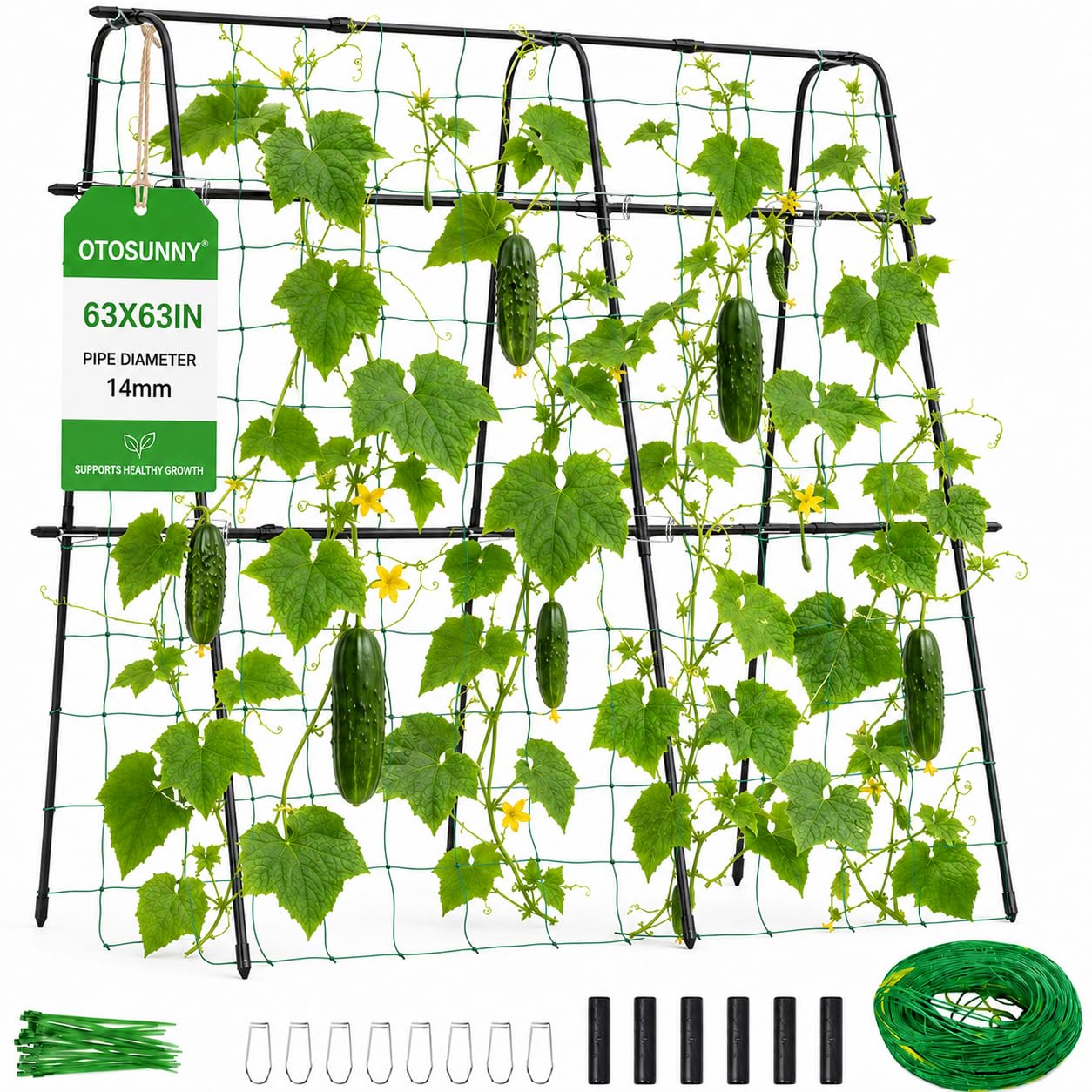
A symmetrical arch with thick 0.55-inch polyethylene-coated steel tubing that resists rust for years.
The OTOSUNNY gets the basics right: a full 63-by-63-inch semicircular frame made from 0.55-inch polyethylene-coated steel tubing. That thicker tubing provides noticeably more rigidity than thinner alternatives, and the 4×4-inch netting grid (4-inch squares) makes it easy to pull ripe beans and cucumbers through without tearing the mesh. The base width adjusts from 20 to 35 inches, so you can fit a narrow raised bed or spread wider for stability on open ground.
Buyers praise quick 5-minute assembly and compact storage, but one reviewer warned that the effective height drops to about 5 feet once you bury the legs 12 to 14 inches deep as instructed — not tall enough for indeterminate tomatoes or very tall beans. Another reviewer found the frame too weak for several cucumber plants. It is sturdier than the FOLLOOK arch trellises at the same 63×63 size thanks to the reinforced tubing, but it still relies on clip-on joints that some reviewers found frustrating solo.
What makes it stand out
- Thick 0.55-inch polyethylene-coated steel tubing resists rust far longer than lighter-gauge competitors
- 4×4-inch netting grids are large enough for easy harvesting of beans and cucumbers
- Adjustable base width (20-35 inches) lets you fit raised beds of different sizes
Where it falls short
- Effective height drops to around 5 feet once the legs are buried, which may not be enough for tall pole beans
- Some buyers found the structure wobbly under the weight of multiple heavy vines
Best for: Gardeners who want a wide, rust-resistant arch with easy netting and adjustable width for raised beds.
Not ideal for: Very tall climbing beans or anyone who prefers not to wrestle with clip-on connections during assembly.
4. FOLLOOK 65×48 Arch Trellis
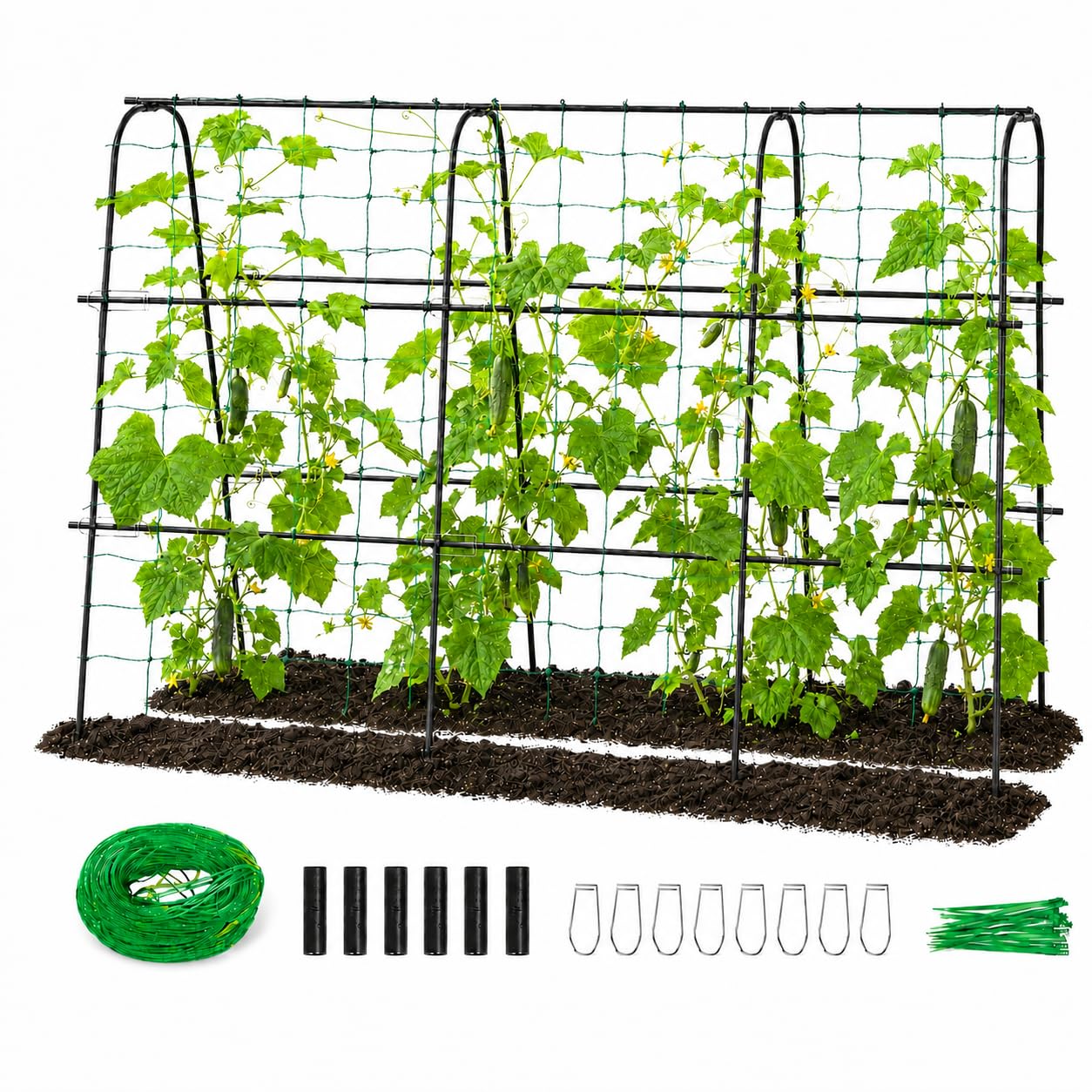
A 65-inch-wide arch that spans big raised beds but tests your patience with fiddly clips.
This FOLLOOK arch is the widest entry-level pick at 65 inches across, covering a full 4-foot raised bed with overhang. At 48 inches tall, it is shorter than the FOLLOOK 63×63 and the OTOSUNNY, so it works best for lower-growing crops like bush beans or determinate cucumbers. The frame uses poly-coated steel (plastic-coated for rust resistance), and it comes with nylon netting and clear assembly instructions.
The honest catch is assembly. Multiple owners mention the clips are “extremely difficult to attach” and one arch arrived uneven, making the structure unbalanced and flimsy. Another reviewer summed it up: “I wish I had spent more for a stronger-made arch.” Compared to the OTOSUNNY’s thicker 0.55-inch pipe, the FOLLOOK’s frame feels lighter and wobbly under heavy vines. If you need a wide trellis and have patience for fiddly clips, the 65-inch span is useful — but the OTOSUNNY offers a sturdier build for a small step up in budget tier.
Where the width helps
- 65-inch width easily spans a full 4-foot raised bed with room to spare
- Nylon netting and detailed assembly guide included for straightforward setup
Known assembly challenges
- Clips are extremely difficult to attach, especially without gloves
- Uneven arches reported — one buyer found the structure unbalanced and flimsy once assembled
Suits: Gardeners who cover a wide raised bed and are comfortable managing clips and zip ties during setup.
Consider carefully if: You want a tool-free, frustration-free assembly — the OTOSUNNY at similar width is easier to put together.
5. FOLLOOK 63×63 U-Shape Trellis
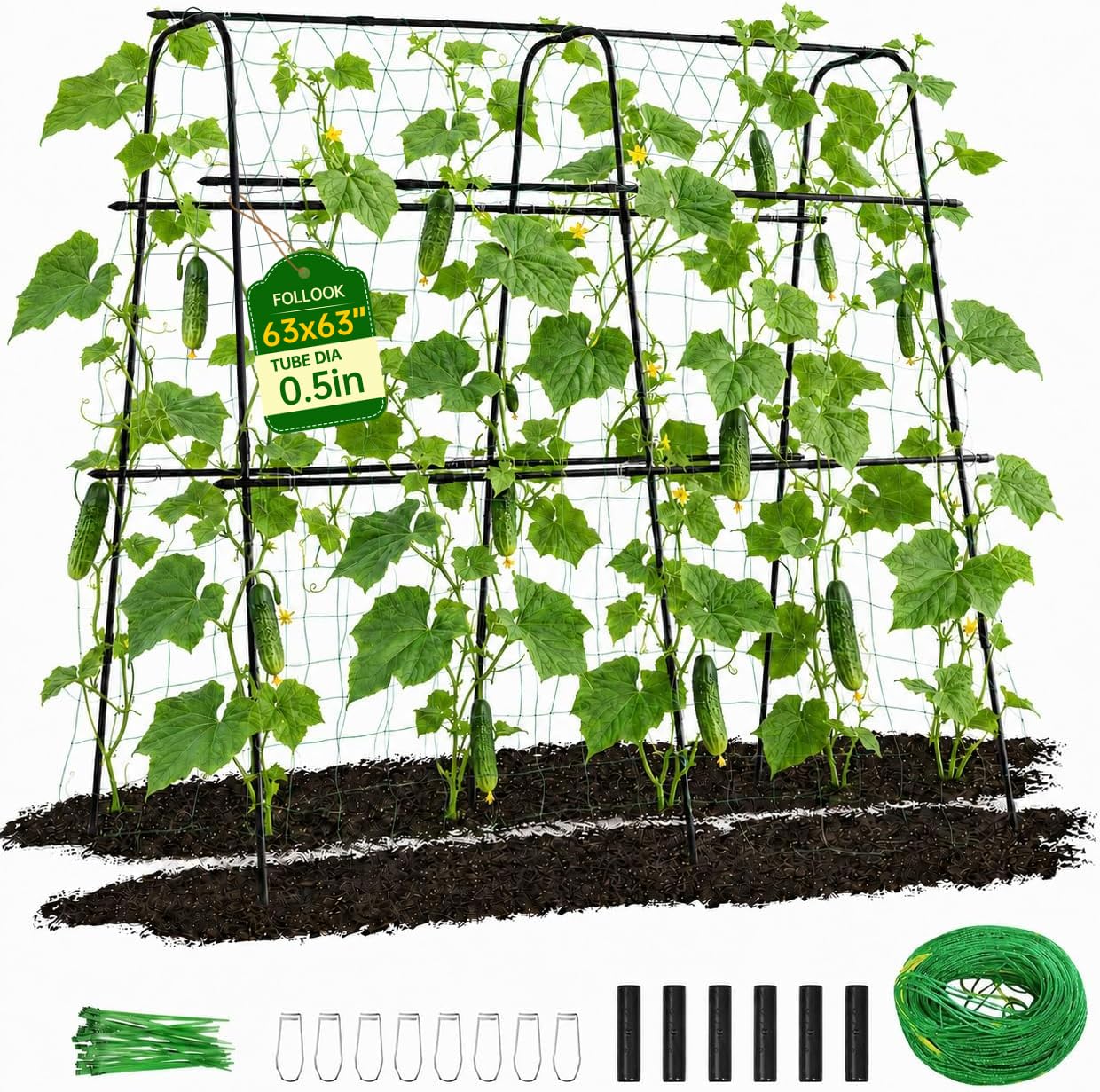
A full 63-inch U-arch that feels solid when it works, but quality control is a real gamble.
At 63 inches tall and 63 inches wide, this FOLLOOK U-shape trellis matches the OTOSUNNY in height with a slightly different profile. The polyethylene-coated steel tubes are thicker than the company’s 48-inch arch, and the adjustable base (17 to 32 inches) lets you dial in the fit for your raised bed. Buyers who got a complete unit praised its stability and rust resistance after months outdoors, saying it supports heavy plants without wobbling.
However, the reviews are mixed. One buyer who intended this for black raspberries reported the assembled height was only about 3.5 feet, far short of the advertised 63 inches, and that ground stakes and parts were missing. The 30-day warranty had expired by the time they opened the box. Another arrived with a dented metal tube and a missing piece, though the seller resolved the issue. The 63×63 is a step up from FOLLOOK’s 48-inch model in height and pipe thickness, but the risk of QC issues means you should open and inspect it immediately upon arrival.
Strengths when it works
- Full 63-inch height supports climbing beans and cucumbers through the entire growing cycle
- Thicker 0.55-inch PE-coated steel tubes provide better rust resistance and rigidity
- Adjustable base width (17-32 inches) adapts to different raised bed sizes
QC and assembly risks
- Missing parts and dented tubes reported in several shipments — inspect immediately on arrival
- One buyer measured the actual assembled height at only ~3.5 ft instead of the advertised 63 inches
Reach for this if: You want a tall arch with a good height-to-width ratio and do not mind checking the box for missing parts right away.
Think twice if: You need guaranteed sturdiness for very heavy vines — the OTOSUNNY’s U-frame was more consistently praised for build quality.
6. LifeisLuck 2-Pack A-Frame Trellis
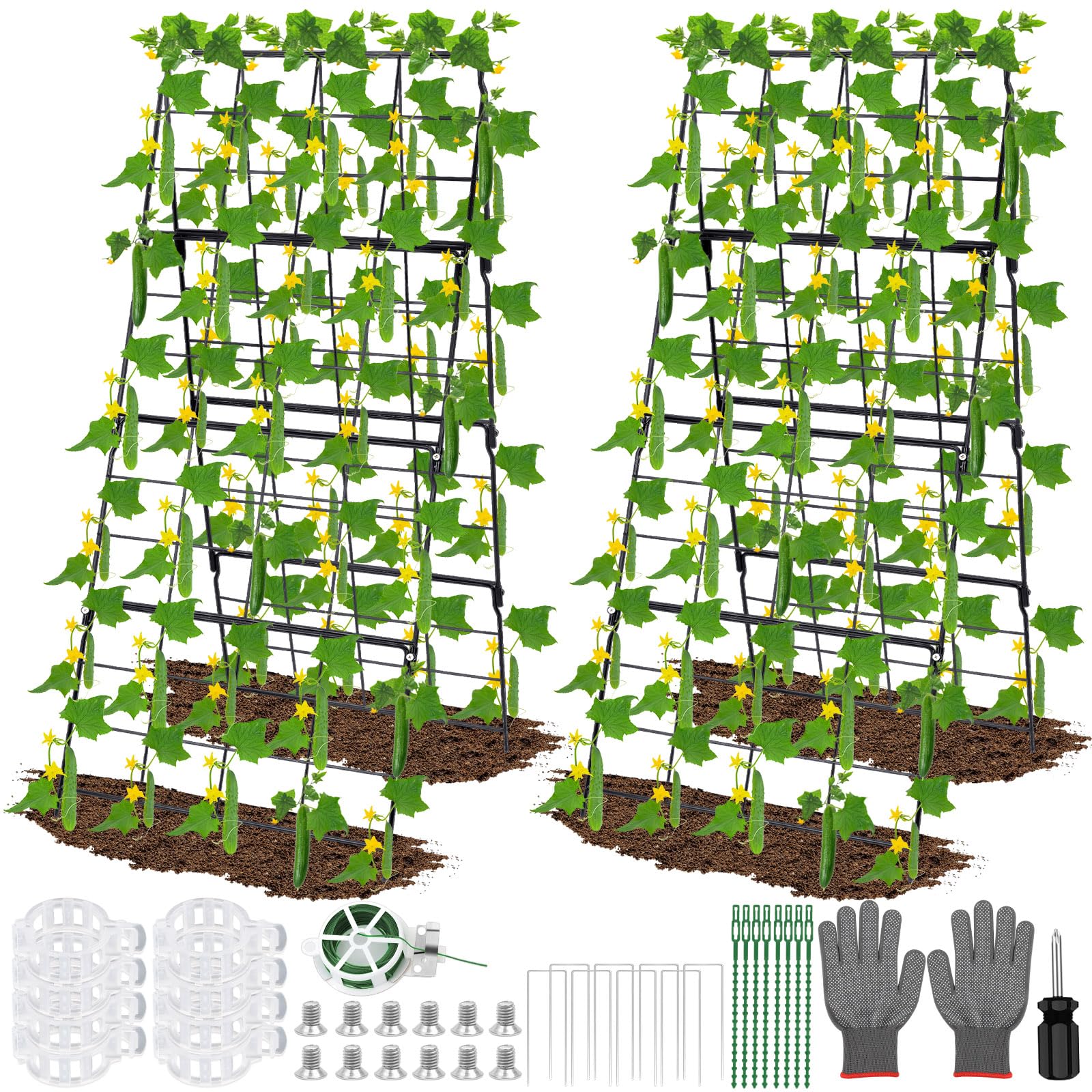
Two foldable A-frames that fit in compact raised beds and store flat in winter — all hardware included.
If you have multiple raised beds or want to separate bean varieties, this two-pack delivers a pair of 17-by-42-inch A-frame trellises. Each unit is made from powder-coated black metal and folds flat for storage. The kit includes 16 mesh panels, 14 screws, 10 U-stakes (U-shaped stakes you push into the ground), 20 tomato clips, 50 zip ties, and a screwdriver — everything you need. Customers note it is much sturdier than their old trellises and survived a windy storm without tipping.
The 42-inch height is shorter than the yotoworth or Gardener’s Supply tower, so tall pole beans may run out of climbing space. One buyer mentioned a design flaw in the top bar — the splice pieces do not fit the top clips perfectly, requiring a quick fix with bamboo and tape. Another called it basic and a little unstable. For compact gardens where height is not the priority, the two-pack gives great coverage per dollar, but serious bean growers may find the 42-inch limit restrictive.
Why the two-pack wins
- Two trellises in one box — perfect for separating crop types or planting multiple raised beds
- Complete all-in-one kit with stakes, clips, zip ties, and a screwdriver included
- Foldable design stores flat, saving garage or shed space between seasons
Height and stability limits
- At 42 inches tall, indeterminate pole beans will quickly outgrow the available climbing height
- Top bar splice pieces do not always fit the clips, requiring a DIY repair with tape or bamboo
Ideal for: Gardeners with two smaller raised beds or anyone who wants a complete kit with zero trips to the hardware store.
Pass on this if: You are growing tall pole beans that need 60+ inches of climbing space.
7. FOLLOOK 48×48 Mini Arch Trellis
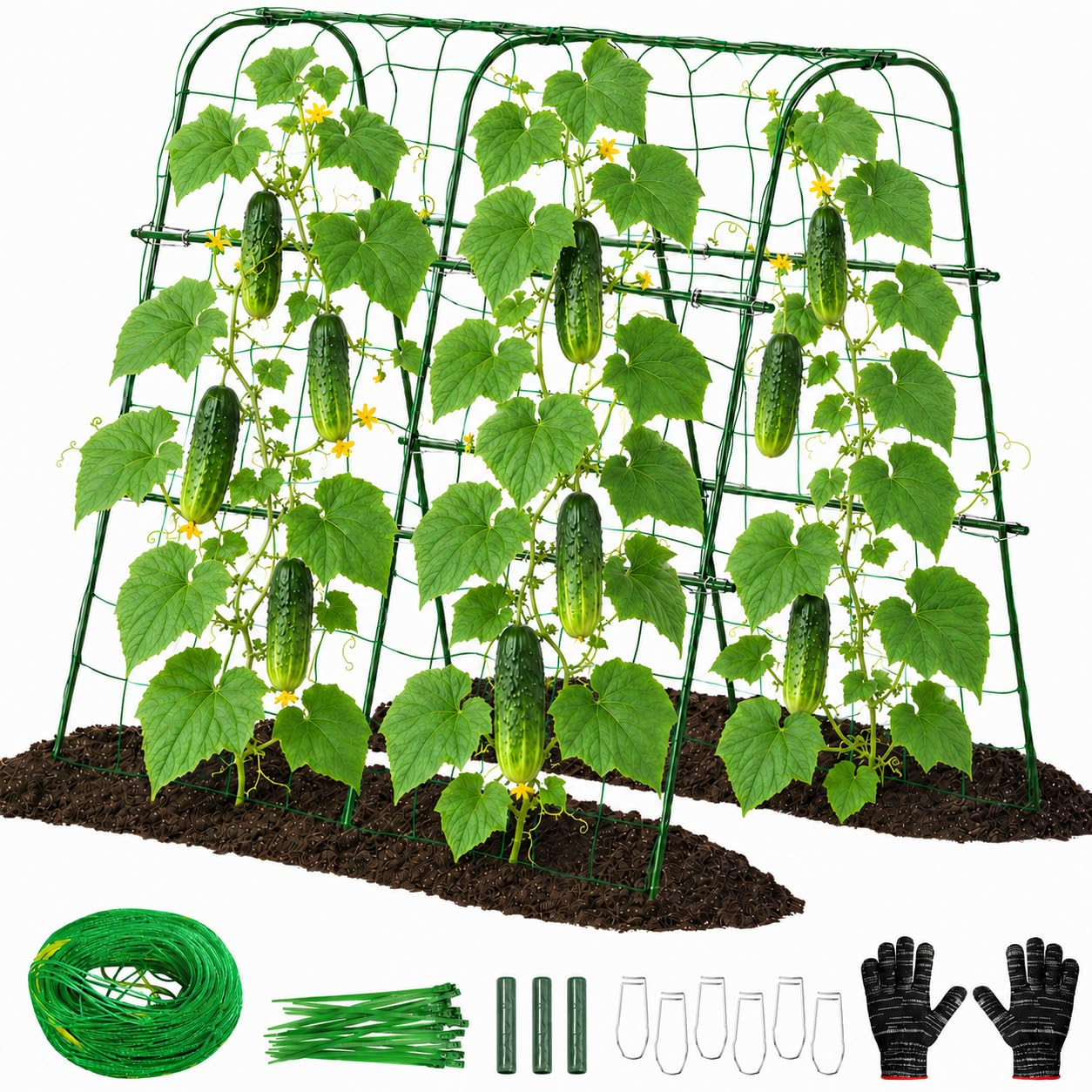
A modest 48-inch arch that fits small raised beds but is too light for heavy bean vines.
The smallest pick in the lineup, this FOLLOOK arch measures 48 inches wide and 48 inches tall, with a base that adjusts from 16 to 26 inches wide — a fit for compact 4-foot raised beds and small-space gardens. The U-shaped frame uses a poly-coated steel core (plastic-coated for weather resistance), and the kit includes nylon netting. Assembly is advertised as tool-free and takes roughly 15 to 25 minutes for one person.
Buyer reviews reveal a split experience: some find it useful for chicken yards and compact storage, while others describe it as flimsy. One reviewer wrote: “the clips were extremely difficult to attach, and once completed was just flimsy.” Another noted unclear instructions for the top pole bracket and needed extra zip ties for stability. At 48 inches tall and 3.37 pounds, the frame is lightweight; the FOLLOOK 63×63 weighs 6.4 pounds — it works for light crops like snap peas or bush beans, but heavy pole beans will likely pull it out of shape by mid-season.
What works for small spaces
- 48-inch width and height fit neatly into compact 4-ft raised beds without overhang
- Lightweight poly-coated steel frame is easy to move and reposition as needed
Where it struggles
- Multiple reviewers point out flimsy construction with unbalanced arches and difficult-to-attach clips
- At 3.37 pounds, the frame is too light to support heavy bean vines without bending or wobbling
Best for: Light climbing crops like snap peas or determinate cucumbers in a small raised bed on a tight budget.
Not for: Heavy pole beans, strong wind areas, or anyone who wants a frustration-free assembly experience.
Understanding the Specs
Frame Material and Coating
The material determines how long your trellis survives outdoors. Polyethylene-coated steel (often called PE-coated) resists rust and moisture much better than bare metal. Powder-coated steel is even more durable, providing a thicker protective layer that holds up against scrapes and weather. Avoid thin, uncoated metal pipes — they will rust and weaken within one or two seasons, especially if left in the ground over winter.
Height and Adjustable Base
Bean vines can easily reach 6 to 8 feet, so a trellis that stands at least 60 inches tall gives you the vertical room for a full season of growth. Many arches come with an adjustable base width (typically 17 to 35 inches), which lets you fit the trellis into different raised bed dimensions. A wider base also improves stability by spreading the load across a broader footprint. If you bury the legs deep into the soil, subtract roughly 12 to 14 inches from the advertised height to get your actual climbing space.
Netting Grid Size
The netting attached to the trellis should have openings large enough for your hand to reach through for harvesting. A 4×4-inch grid is common and works well for beans and cucumbers — it provides enough support for the vines while leaving space to pluck the harvest without tearing the mesh. Smaller grids (2×2 inches) can trap foliage and make picking frustrating, while very large openings may not support the weight of heavy vines.
Assembly Method
Tool-free snap-together assembly sounds great, but the quality of the connectors makes all the difference. Clips that are hard to snap or that pop loose under vine weight will frustrate you throughout the season. Look for trellises that use slide-lock connectors or screw-in joints rather than friction-fit clips. A quick scan of buyer reviews for “assembly” and “clips” will tell you if the setup is smooth or a knuckle-busting chore.
FAQ
Will a bean trellis fit in a standard 4-foot raised bed?
How tall should a bean trellis be for pole beans?
Is an arch or an A-frame trellis better for beans?
Can I leave a metal bean trellis outside in winter?
How do I keep my bean trellis from tipping over in strong wind?
What is the difference between PE-coated steel and powder-coated steel?
Can I use a cucumber trellis for beans?
Do I need to put netting on the trellis, or can beans climb the frame directly?
How long does a coated steel bean trellis typically last?
Can I assemble a bean trellis by myself?
Final Thoughts: The Verdict
For the majority of shoppers, the best bean trellis is the one that balances height, stability, and low-maintenance assembly — which is the Gardener’s Supply Company Large Bean Tower because its 75-inch powder-coated steel frame handles heavy vines and wind without wobbling, and it folds flat for storage. If you want a double-sided A-frame that boost growing space per square foot, grab the yotoworth A-Frame Trellis. And for a wide arch with thick 0.55-inch tubing that resists rust for years, the OTOSUNNY Arch Trellis is the arch to beat.
How We Picked
We do not accept paid placement. Every pick is matched to a real buyer and a real use-case; we do not hands-on test units.
Sources & Methodology
Specifications: manufacturer listings and product documentation. Review insights: verified customer reviews, as of July 2026. Pricing: not shown on this page (it changes often); check the current price via the retailer link.
As an Amazon Associate, Lawn Gear Lab earns from qualifying purchases. This does not affect which products we feature.