
Specs are compiled from manufacturer listings and verified buyer reviews and can change over time — please confirm the key details on the product page before buying.
You toss apple cores and grass clippings into a bin, wait months, and open it to find a slimy, stinking mess instead of dark, crumbly soil. The fix is not luck — it depends on the right airflow, the right capacity, and whether you pick a tumbling bin (which you spin to mix air in) or a static bin (which sits on the ground and lets worms do the work). This guide compares six models by their published specs and real buyer patterns, so you know exactly which one fits your yard, your strength, and your patience.
I’m Rikta — the founder and writer behind Lawn Gear Lab. This guide is built by comparing the manufacturers’ published specifications and the patterns across verified customer reviews, so you get each pick’s real strengths and trade-offs instead of marketing spin.
The best DIY compost bin is the one you will actually use. That means matching the bin’s capacity, type, and assembly effort to your household size and how much work you want to put in.
Quick Picks
- F2C Compost Bin 80 Gallon — Best Overall
- Nova Microdermabrasion 43 Gallon Dual Chamber Tumbler — Top Performer
- Hourleey 43 Gallon Dual Chamber Tumbling Composter — Great Value
- EJWOX 80 Gallon Large Capacity Static Compost Bin — Premium Pick
- EJWOX 2021 Upgraded Tumbling Composter — Unique Feature
- Marcytop 45 Gallon Dual Chamber Rotating Composter — Budget Champion
How To Choose The Best DIY Compost Bin
Picking the right compost bin is not about which one looks best in the garden catalog. The real choices come down to how much waste you generate, how much effort you want to put into turning it, and whether your local climate encourages or fights decomposition. Here are the three factors that separate a bin that works from a bin that just sits there.
Static vs. Tumbling: Which method suits your back?
A static bin sits on the ground with an open bottom, relying on earthworms and microbes to move in from the soil below. It takes minimal physical effort to set up — you just toss waste in through the top and shovel finished compost out through a bottom hatch. The catch is that it can take several weeks longer to break down than a tumbling model, and you may need to poke it with an aeration tool now and then. A tumbling bin, on the other hand, sits on a metal frame and spins on an axle. Tumbling mixes oxygen into every layer, which speeds up decomposition to as fast as a few weeks in hot weather. The trade-off is that you are the engine — if your bin is heavy with wet waste, spinning it can be a real workout.
Capacity: How much waste do you actually produce?
Bin capacity is measured in gallons. For a single person or a couple who mainly toss vegetable peels and coffee grounds, a bin in the 43-gallon range is plenty of room. A family of four with a garden that produces grass clippings, leaves, and plant trimmings will fill an 80-gallon bin quickly — and benefit from the extra volume because a larger pile holds heat better, which speeds up decomposition. The number on the spec sheet is the total volume, but remember that with a tumbling dual-chamber design, you get two separate compartments, so you can fill one side while the other finishes breaking down.
Construction quality: The parts you actually touch (and the ones you don’t)
The plastic panels that make up the bin walls are the critical part. Thicker polypropylene (PP) resists cracking in freezing temperatures and UV rays. Pay attention to the lid latch and the sliding doors — reviews show these are the most common failure points across all price tiers. A bin with a flimsy lid will either blow open in the wind or let raccoons and rats help themselves to your food scraps. On tumbling models, the axle and the metal frame are what determine long-term stability. A heavy-duty powder-coated steel frame will outlast a thin tubular frame by years, especially in humid climates where rust is a threat.
Quick Comparison
| Model | Best For | Capacity | Type | Weight | Amazon |
|---|---|---|---|---|---|
| F2C 80 Gal | Large-volume static composting | 80 gal | Static | 14.44 lb | Amazon |
| Nova Micro 43 Gal Tumbler | Fast, hot-weather composting | 43 gal | Tumbling | 21.5 lb | Amazon |
| Hourleey 43 Gal Tumbler | Dual-chamber continuous feed | 43 gal | Tumbling | 21.7 lb | Amazon |
| EJWOX 80 Gal Static | Premium large-scale static bin | 80 gal | Static | 12 lb | Amazon |
| EJWOX Tumbler 43 Gal | Temperature-monitored tumbling | 43 gal | Tumbling | 22.9 lb | Amazon |
| Marcytop 45 Gal Tumbler | High-end dual chamber ease | 45 gal | Tumbling | — | Amazon |
In‑Depth Reviews
1. F2C Compost Bin 80 Gallon
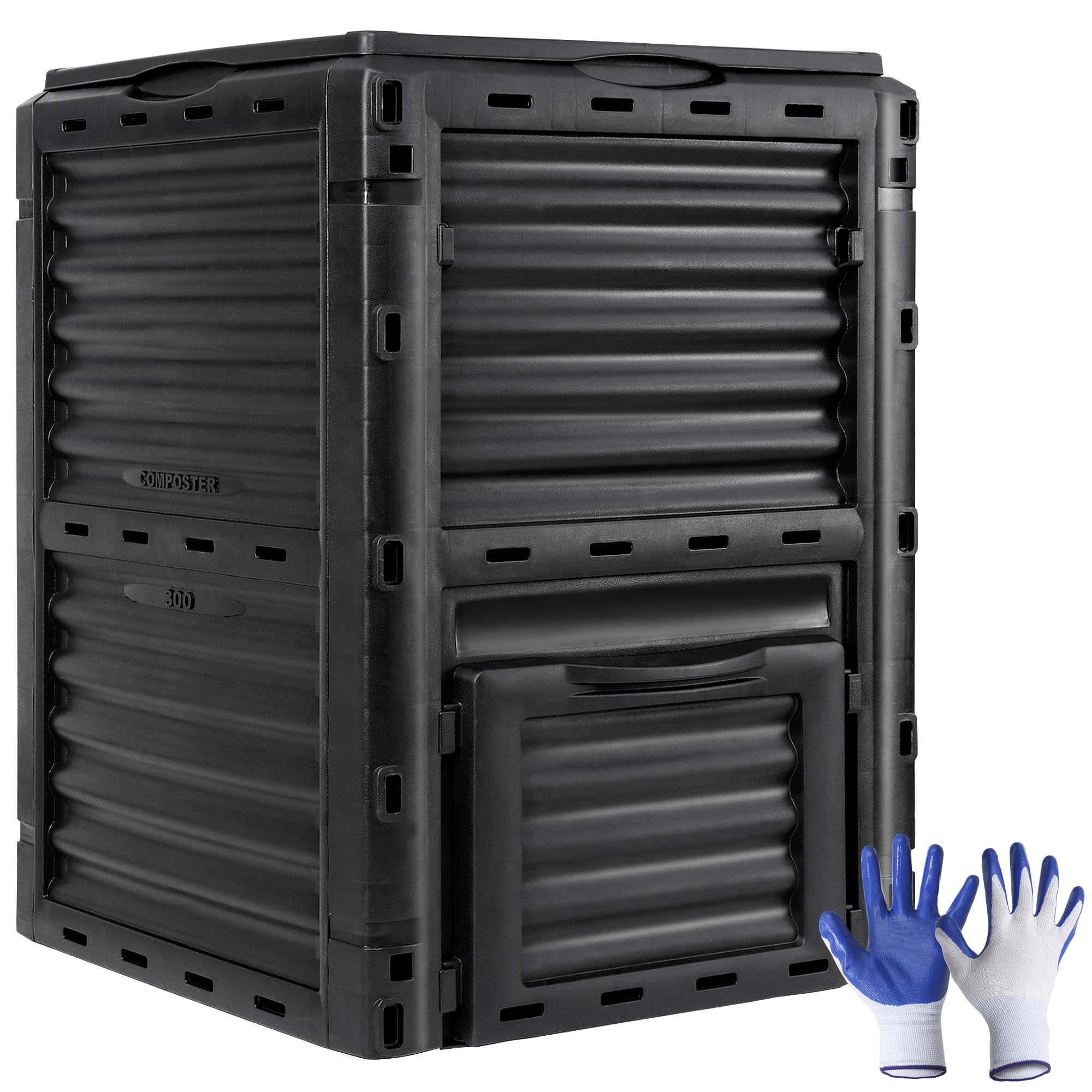
The 80-gallon behemoth that turns waste into soil with zero spinning required
If you want to process a huge volume of leaves, grass, and kitchen scraps without ever having to spin a heavy barrel, this is your bin. The 80-gallon capacity gives you a full 86% more space than the 43-gallon tumbling competitors, so you can dump a season’s worth of garden waste in one go. Because the bottom is open to the ground, buyers report the “open-bottom design is superior to spinners” — earthworms and beneficial bacteria migrate up from the soil, which breaks the material down with very little effort from you. Assembly takes about 5 minutes, according to multiple owners, and the black PP plastic absorbs sunlight to keep the pile warm for faster decomposition.
The catch is that the plastic panels are on the thin side. Several reviewers mention the lid tabs are likely to break over time and that the bottom door can be difficult to close once opened until the bin is empty. At 14.44 pounds, it is much lighter than the tumbling models — 21.7 pounds for the Hourleey tumber — but that lightness also means the bin can blow over in strong wind until it is half-full. You may want to place a heavy stone on the lid to keep raccoons out and the lid secure.
Massive volume, minimal fuss
- 80-gallon capacity reduces emptying frequency drastically compared to 43-gallon bins
- 5-minute snap-together assembly requires no tools (a rubber mallet helps)
- Open bottom lets worms and microbes do the heavy lifting for you
Where corners were cut
- Thin plastic panels and lid tabs prone to cracking over time
- Bottom door tends to pop open when the bin is full or being turned
- Lid needs a weight on top to stay closed in windy conditions
Best for heavy-volume gardeners: If you have a large yard, a pile of leaves, and prefer a “fill it and forget it” approach, this static bin delivers the most capacity for the least daily work.
Consider something else if: You want finished compost in under four weeks — a tumbling bin will be faster, and this one’s thin plastic may not survive freezing winters for many years.
2. Nova Microdermabrasion 43 Gallon Dual Chamber Tumbler

A tumbling twin that delivers finished compost in about a month when the heat is on
This 43-gallon dual-chamber tumbler is built for speed. Because you can fill one side while the other cooks, you eliminate the waiting period that single-chamber bins force on you. Owners mention it “produces compost in ~1 month in hot weather” — a claim that aligns with the aeration system built into the PP plastic walls and the tumbling action that mixes oxygen into every load. The metal frame and polypropylene body feel sturdy in the hand, and the green color blends into the garden rather than shouting for attention. Assembly is a project, however: one reviewer counted over 50 screws, and you will want an electric screwdriver to keep the process under an hour.
Compared to the F2C static bin, this tumbler is heavier at 21.5 pounds (21.7 pounds for the Hourleey) but that weight reflects the steel frame that keeps it stable during rotation. The sliding doors on each chamber make it easy to add fresh scraps or scoop out finished compost, though one owner noted emptying is “suboptimal” if you have a lot of material. The big win is that a tumbling bin does not require open-bottom ground contact, so you can place it on concrete, gravel, or a patio without losing performance.
Two chambers, double the output
- Dual chambers let you start a new batch while the other finishes — continuous composting
- Sturdy construction with a metal frame that keeps the drum stable as you spin
- Ventilation holes and tumbling action create fast decomposition in warm months
Assembly takes time and tools
- Over 50 screws to drive; an electric screwdriver is almost mandatory
- Small sliding doors make emptying a bit awkward compared to a wide hatch
- Instructions could be clearer — you need to add the middle divider early in the build
Great for gardeners who want speed: If you live in a warm climate and want to turn kitchen scraps into garden gold in weeks instead of months, this dual-chamber tumbler is the most efficient tool for the job.
Not ideal if: You dislike spending an hour on assembly with a power tool, or if you have a bad back — spinning a wet 43-gallon load takes some effort.
3. Hourleey 43 Gallon Dual Chamber Tumbling Composter

A reliable dual-chamber spinner that produced good compost in a year of continuous use
The Hourleey 43-gallon tumbler competes directly with the Nova Microdermabrasion model above, and the numbers are very close — 43 gallons capacity, 21.7 pounds weight, and a similar metal frame design. The key difference is the shape: this bin is cylindrical rather than rectangular, which some gardeners find easier to roll and turn. Customers note it “produced good compost in a year,” which speaks to its long-term reliability. The dual-bin setup means you can load one side with fresh waste while the other side matures, keeping the compost pipeline flowing without interruption.
Where this bin falls short of the Nova Micro model is in the small design details. Several owners note there is no handle for turning — you grip the barrel directly, which can be awkward when wearing gardening gloves. A few also mention that some compost leaks out during rotation, especially if the bin is packed full and wet. Assembly is a moderate challenge: reviewers point out it takes about an hour with two people, and the instructions require you to attach the door to the “b” panel last or you will have to backtrack.
Continuous feed, continuous output
- Two separate chambers allow you to age compost on one side while adding fresh material to the other
- Sturdy frame and weather-resistant plastic hold up well across seasons
- Cylindrical shape rotates smoothly with less resistance than square tumblers
Leaks and missing handles
- No dedicated handle makes turning the barrel less comfortable than it could be
- Small amount of liquid can leak out of the aeration holes during rotation
- Assembly requires careful step-by-step attention to avoid rework
Good for small families on a budget: If you are a couple or a small family who composts consistently and wants a reliable dual-chamber tumbler without paying a premium, this bin delivers proven results over a year of use.
Look elsewhere if: You want a completely mess-free operation — the small leaks during spinning may bother you if the bin sits on a deck or patio.
4. EJWOX 80 Gallon Large Capacity Static Compost Bin

A premium static bin that assembles from just six parts with no screws or tools
The EJWOX 80-gallon bin is the upmarket cousin of the F2C static bin. It shares the same massive 80-gallon capacity and open-bottom design that lets soil organisms in, but it refines the construction with a simpler 6-component assembly that takes about five minutes. The lid snaps securely and includes holes for staking it to the ground, which addresses the wind issue that plagues lighter bins. At 12 pounds, it is actually 2.44 pounds lighter than the F2C model, making it easy to reposition in the yard. The manufacturer claims an accelerated composting cycle of 6 to 8 weeks, which is consistent with the experience of buyers who use an aeration tool to fluff the pile periodically.
The honest trade-off is material quality. Multiple shoppers say that while the bin is easy to assemble and functionally effective, the plastic feels thin — one owner described the lid as “wonky” and said the material was too flimsy to hold the weight of a brick used to keep it closed. Compared to the sturdy steel-framed tumblers, this bin relies entirely on the integrity of its plastic panels, and cold weather may make them brittle over time. If you are in a region with harsh winters, consider whether the convenience of a 5-minute setup outweighs the risk of cracked panels down the road.
Fast setup, huge capacity
- Only six parts to snap together — genuinely ready in minutes with no tools
- 80-gallon capacity processes massive amounts of yard and kitchen waste at once
- Lid stakes and ground-contact design promote faster, worm-assisted decomposition
Thin plastic is the Achilles’ heel
- Panels feel flimsy; several buyers report the lid does not snap shut tightly
- Plastic may crack in freezing temperatures or under heavy snow loads
- You will likely need to weight the lid down to keep critters out
Best for the convenience-minded gardener: If you want the largest possible static bin with the absolute simplest assembly and you live in a moderate climate, this is the easiest path to composting at scale.
skip it if: You need a bin that will survive a decade of freeze-thaw cycles without cracking — consider a thicker-walled tumbler or a wooden bin instead.
5. EJWOX 2021 Upgraded Tumbling Composter with Compost Thermometer

A dual-chamber tumbler with a built-in thermometer so you know when the pile is cooking
This EJWOX tumbling composter brings one unique advantage to the table that no other bin in this list offers: a compost thermometer mounted right into the drum. The gauge tells you the internal temperature of the pile, which is critical because the fastest decomposition happens when the core of the pile reaches between 130°F and 160°F. You can see at a glance if you need to add more nitrogen-rich greens (like grass clippings) or carbon-rich browns (like dry leaves) to get the temperature up. The 43-gallon capacity is split into two chambers, and the deep groove design — 50mm deep — makes it easier to rotate the drum than on many competitors with shallower fins. Assembly is shorter than the Nova Micro tumber because the newer version reduced the screw count, and several owners mention a solo 45-minute build is realistic.
The catch: one reviewer found that the thermometer shows a lower temperature than the actual internal pile temperature, so treat it as a relative guide rather than a lab-grade instrument. A few owners also mention that the included screws can be defective, though extra ones are included in the package. At 10.38 kilograms (about 22.9 pounds), it is the heaviest tumbler in this comparison, which reflects the galvanized steel frame that provides stability during rotation. The octagonal shape is more visually interesting than a round drum, and it sits low enough that loading and unloading do not require a step stool.
Temperature awareness changes how you compost
- Thermometer lets you monitor the heat of decomposition and adjust ingredients accordingly
- 50mm deep grooves make the drum noticeably easier to spin than shallow-finned tumblers
- Galvanized steel frame resists rust and provides a stable base for years of use
Gadget precision is not perfect
- Thermometer readout can be off by 10–20°F compared to the true internal temperature
- Some screws in the kit can be defective (though extras are provided)
- Heaviest tumbler on this list at nearly 23 pounds
Ideal for the obsessive composter: If you love dialing in the perfect carbon-to-nitrogen ratio and want a concrete data point to guide your decisions, the built-in thermometer justifies the higher price tag.
Not for beginners: If you just want to dump scraps and forget about it, the thermometer is an unnecessary feature and the weight makes this bin harder to move than lighter models.
6. Marcytop 45 Gallon Dual Chamber Rotating Composter
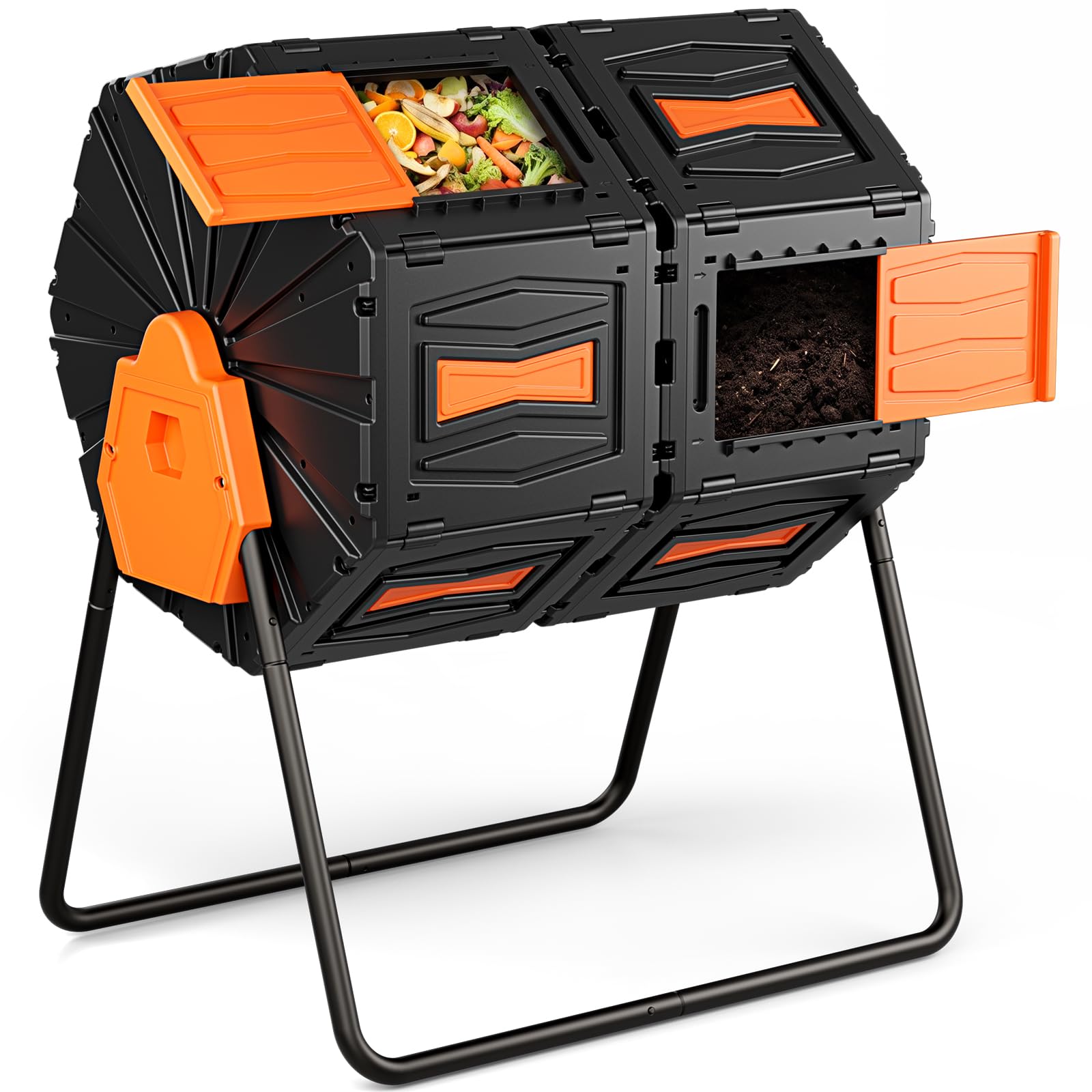
A 45-gallon dual-chamber bin that a 71-year-old assembled solo — and that is beginner-friendly
Marcytop built this 45-gallon tumbler with extra-thick polypropylene panels and a reinforced powder-coated steel frame, which addresses the thin-plastic complaint that runs through many of the other reviews on this list. One buyer who is 71 years old reported assembling it “fairly easily” on her own, which is a strong signal that the design does not require a workshop full of tools or brute strength. The two 22.5-gallon chambers let you run a continuous composting cycle, and the manufacturer recommends spinning the drum 5–6 times every few days — no digging or manual turning required. In hot climates, users report fast composting in a matter of weeks.
The weak point is the spring button clips on the legs that lock the frame together. A few buyers mention that one clip barely clicked into place during assembly and seems likely to fail over time. Unlike the EJWOX thermometer model, this bin gives you no feedback on internal temperature, so you are flying blind unless you buy a separate compost thermometer. Still, for the price tier it occupies, the Marcytop delivers the thickest plastic panels of any bin in this roundup, and the hexagonal shape adds visual interest to the garden while providing structural rigidity that a rectangular bin lacks.
Built tougher than most budget tumblers
- Extra-thick polypropylene walls feel more durable than the flimsy plastic on many competitors
- Reinforced powder-coated steel frame provides excellent stability during rotation
- 40-minute solo assembly with basic tools — no marathon build session required
Details that need attention
- Spring button clips on the legs are a known weak point; one side may fail over time
- No thermometer included, so you cannot monitor internal temperature without buying a separate tool
- When both chambers are full and wet, the drum can be too heavy to spin easily as a single unit
Best for the budget-conscious beginner: If you want a tumbler with noticeably thicker plastic than competing bins at a similar price, and you value easy solo assembly, this is the most user-friendly entry point into tumbling composting.
Pass on it if: You plan to fill both chambers completely with wet material — you may find the drum too heavy to spin and need to keep the two chambers separate for manageable rotation.
Understanding the Specs
Capacity (Gallons)
The total internal volume of the bin, measured in gallons. A larger capacity means you can process more waste before the bin is full, and the pile stays hotter because there is more mass holding heat. For a single person, 43 gallons is plenty. For a family of four with a garden, 80 gallons lets you go longer between empties and keeps the composting bacteria active even in cooler weather. Dual-chamber bins split this capacity into two separate compartments — for example, a 45-gallon bin gives you two 22.5-gallon chambers — so you can let one side finish while you fill the other.
Static vs. Tumbling
The fundamental design choice. A static bin sits on the ground with an open bottom, allowing earthworms and beneficial bacteria from the soil to enter the pile and break it down naturally. You do not have to spin, lift, or turn the bin, but you may need to poke the pile with an aeration tool every few weeks to keep oxygen flowing. A tumbling bin sits on a metal frame and rotates on an axle. Spinning the drum mixes oxygen into the waste, which speeds up decomposition to a few weeks in warm weather. The trade-off is physical effort — a full, wet 43-gallon drum can be heavy to turn.
FAQ
How long does it take to get finished compost from a DIY bin?
Can I put meat, dairy, or bread in a compost bin?
Will a compost bin attract rats or raccoons?
Do I need to add worms to a static compost bin?
How do I know when the compost is ready to use?
Should I buy a static bin or a tumbling bin?
How many people does a 43-gallon bin serve?
Will the plastic crack in winter?
Final Thoughts: The Verdict
For the majority of shoppers, the best diy compost bin winner is the F2C 80-Gallon Static Bin because it offers the largest capacity at a budget-friendly price with a 5-minute assembly and an open-bottom design that works with nature instead of against it. If you want the speed of tumbling and the clarity of knowing your pile temperature, grab the EJWOX Tumbler with Thermometer. And for a beginner who wants extra-thick plastic walls and a frame that will not wobble, the Marcytop 45-Gallon Rotating Composter is the safest bet for long-term durability without breaking your budget.
How We Picked
We do not accept paid placement. Every pick is matched to a real buyer and a real use-case; we do not hands-on test units.
Sources & Methodology
Specifications: manufacturer listings and product documentation. Review insights: verified customer reviews, as of July 2026. Pricing: not shown on this page (it changes often); check the current price via the retailer link.
As an Amazon Associate, Lawn Gear Lab earns from qualifying purchases. This does not affect which products we feature.