
Specs are compiled from manufacturer listings and verified buyer reviews and can change over time — please confirm the key details on the product page before buying.
You layer fresh mulch on a garden bed, and within weeks, weeds push right through it. A weed barrier stops that by blocking sunlight so weed seeds never sprout, while still letting water and air reach your plants. The right one for you depends on material weight (ounces per square yard — the fabric’s density), weave type, and how long you want it to last under mulch or gravel.
I’m Rikta, founder of Lawn Gear Lab. This guide compares each model’s published specs and patterns from verified customer reviews, so you see real strengths and trade-offs instead of marketing claims.
The picks here range from budget rolls to commercial-grade 5oz fabrics, and each one fits a different garden problem. The key to choosing a barrier for weeds in garden is matching the fabric weight and dimensions to how big your project is and how much foot traffic or heavy stone that area will get.
Quick Picks
- VIVOSUN Premium Weed Barrier Landscape Fabric Heavy Duty — Best Overall
- Snail Weed Barrier Landscape Fabric Premium 5oz, 3ft x 100ft — Heavy-Duty Commercial
- GRASSCLUB 3ft x 300ft Weed Barrier Landscape Fabric — Massive Coverage
- GRASSCLUB 4ft x 100ft Weed Barrier Landscape Fabric — Best 4ft Wide
- Winisok 4FT x 100FT Weed Barrier Landscape Fabric, 3.2oz — Extra Thick 3.2oz
- FEED GARDEN 3FT x 100FT Landscape Fabric Weed Barrier Fabric — Budget Champ
- UWIOFF Landscape Fabric Weed Barrier Fabric — Compact Starter
How To Choose The Best Barrier For Weeds In Garden
You grab the cheapest roll at the store, lay it down, and by mid-summer weeds punch through. A good weed barrier needs a dense weave to block light, enough weight to stay put under mulch, and UV resistance so the sun does not turn it into brittle shreds after one season. You will roll it across beds, paths, or a vegetable patch, so the dimensions matter as much as the material.
Fabric weight and weave density
Weight is measured in ounces per square yard (oz). A standard 3.2oz fabric works for flower beds and vegetable gardens where you cover it with mulch or soil. The commercial 5oz fabrics are for driveways, gravel paths, and areas with heavy foot traffic or large stones. A heavier fabric also resists tearing when you pull it tight during installation.
Water permeability and soil health
A barrier that blocks water is plastic sheeting that suffocates plant roots and causes runoff. Look for fabrics that let rain and irrigation through while stopping sunlight — that is the woven construction. Some premium designs use a dual-layer with non-woven fibers (a felt-like layer) that actively pull moisture downward through molecular attraction, keeping the soil underneath consistently moist.
UV resistance and longevity
Sunlight degrades any barrier left exposed. UV-resistant additives in the polypropylene or polyethylene fabric slow this breakdown. Most 3.2oz fabrics claim a lifespan of more than five years, but that drops fast if the barrier is not covered with mulch, stone, or soil. For permanent installations under gravel or artificial grass, a 5oz commercial-grade fabric is the safer bet.
Quick Comparison
| Model | Best For | Weight | Dimensions | Material | Amazon |
|---|---|---|---|---|---|
| VIVOSUN 4ftx50ft 5oz | Premium dual-layer performance | 5oz | 4ft x 50ft | Dual-layer woven/non-woven | Amazon |
| Snail 3ft x 100ft 5oz | Commercial heavy-duty ground cover | 5oz | 3ft x 100ft | Woven polypropylene | Amazon |
| GRASSCLUB 3ft x 300ft | Massive coverage at 3.2oz value | 3.2oz | 3ft x 300ft | Woven polypropylene | Amazon |
| GRASSCLUB 4ft x 100ft | Durable 3.2oz with high tensile strength | 3.2oz | 4ft x 100ft | Woven polypropylene | Amazon |
| Winisok 4ft x 100ft 3.2oz | Thick weed barrier for permanent beds | 3.2oz | 4ft x 100ft (2 pack 4×50) | Woven polypropylene | Amazon |
| FEED GARDEN 3ft x 100ft | Budget-friendly with included staples | — | 3ft x 100ft (2 pack 3×50) | Woven polypropylene | Amazon |
| UWIOFF 4ft x 30ft | Light-duty small project coverage | 3.175oz | 4ft x 30ft | PE fabric | Amazon |
In‑Depth Reviews
1. VIVOSUN Premium Weed Barrier Landscape Fabric Heavy Duty, 4ftx50ft 5oz

The 5oz dual-layer roll that lets water through six times faster than standard woven fabrics.
This is the pick for gardeners who want commercial-grade weed suppression without puddling. VIVOSUN uses a needle-punching process (a method that presses fibers together) to combine a woven layer with a non-woven layer. The dense woven side blocks sunlight to prevent weed growth, while the non-woven fibers create a molecular draw that pulls water downward into the soil — so your raised beds do not stay soggy. The maker states that this design delivers six times more water permeability (how easily water passes through) than traditional woven ground covers, so your plants get moisture even under thick mulch.
At 5oz per square yard, it is noticeably heavier than the 3.2oz rolls in this list. Buyers report that the cut edges fray and unravel less than other fabrics because of the special construction. Green line guides appear every foot to help you align plants in straight rows. The 4ft x 50ft size covers a solid 200 square feet, but the upfront cost is higher than entry-level options — reviewers who used it for a full season call it durable, noting it holds up under daily foot traffic around garden beds.
Why the dual-layer matters
- Unique woven and non-woven combo for superior drainage and root aeration
- Six times greater water permeability than standard woven ground covers
- Frays less than typical fabrics when cut to size
What to keep in mind
- Higher price point than basic 3.2oz rolls
- Only comes in a single 4ft x 50ft roll, so large projects may need multiple rolls
Ideal for: Gardeners who want the best-performing barrier for raised beds, flower borders, or vegetable patches and are willing to pay more for faster drainage and longer fabric life.
Trade-off: The 50-foot length means you will need to buy two rolls for big 100-foot runs, which pushes the total cost higher than single-roll competitors like the GRASSCLUB 4ft x 100ft.
2. Snail Weed Barrier Landscape Fabric Premium 5oz, 3ft x 100ft
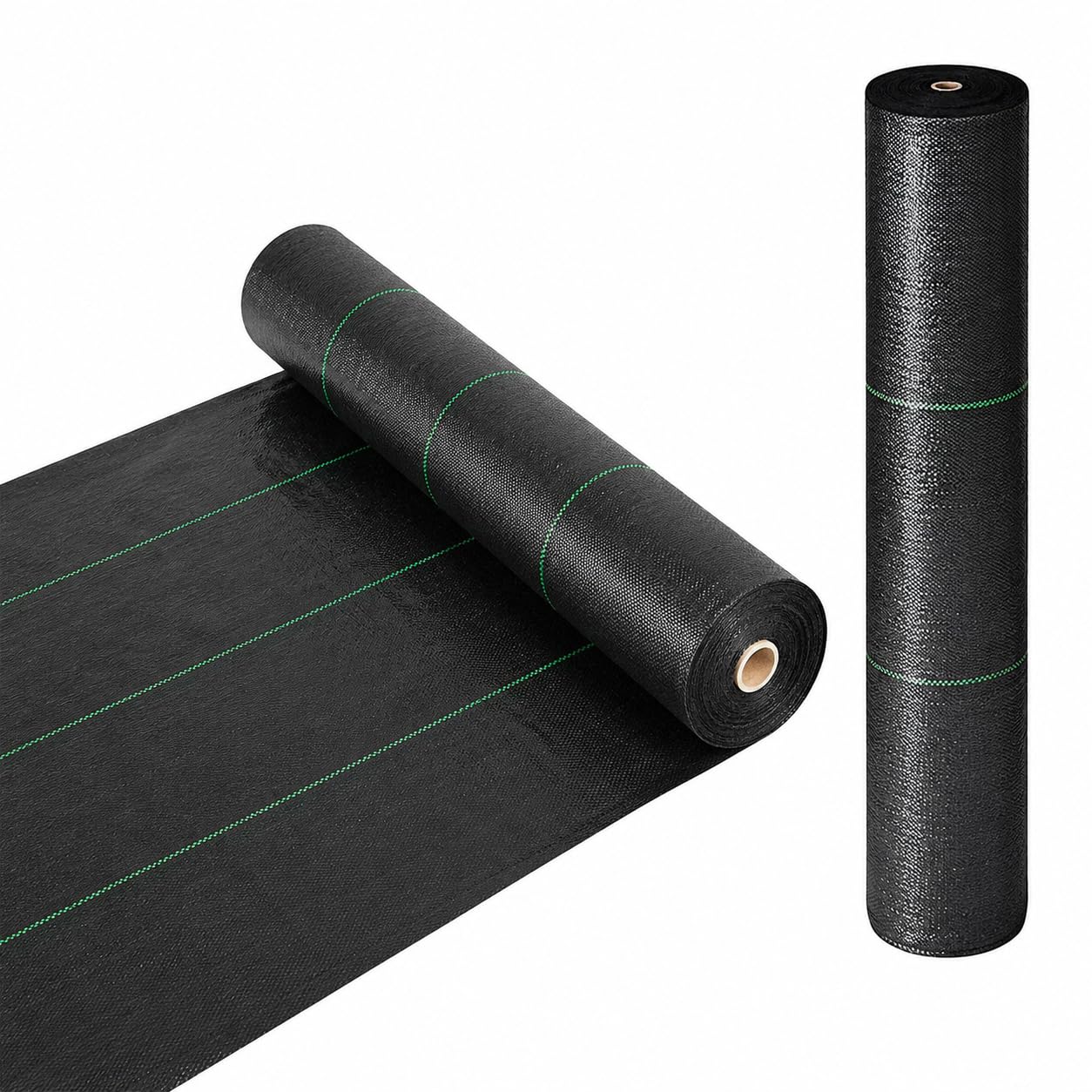
The 5oz professional-grade fabric that one reviewer says handled 88,000 pounds of rock without tearing.
When your project involves heavy gravel, flagstone, or a driveway underlayment, this roll from Snail is built for that punishment. At 10.13 pounds for a 3ft x 100ft roll, the 5oz woven polypropylene (polypropylene — a tough plastic fiber) is markedly heavier than standard 3.2oz options — that density translates into tear resistance and long-term weed suppression. The material is UV stabilized (treated to resist sun damage) to handle direct sun without breaking down quickly.
Buyers consistently describe it as thick, heavy-duty, and far superior to what you find at big-box home improvement stores. One reviewer who laid it under a massive gravel load noted that water puddled temporarily but seeped through; another who used it for two growing seasons ordered it again the next year. Green stripe guides make alignment straightforward for straight vegetable rows. On the downside, the 5oz weave is tough to cut — multiple reviewers mention needing a sharp blade or even a torch to burn clean holes for planting, so factor in extra installation effort.
Built for abuse: The 5oz weight and woven polypropylene construction make this the best choice for areas with heavy rock or foot traffic. It is noticeably heavier than the VIVOSUN above at 10.13 pounds, meaning it stays put better under load.
Downside: Cutting clean holes for plants takes extra effort — reviewers recommend a sharp utility knife or a butane torch to prevent fraying around the edges.
When to buy this one: You are covering a gravel driveway, a stone pathway, or a high-traffic area where a lighter fabric would tear within a year — the Snail roll is the better long-term investment than a 3.2oz fabric.
When to skip it: For a simple flower bed where you just need basic weed suppression under mulch, a 3.2oz roll will save you money and be easier to cut.
3. GRASSCLUB 3ft x 300ft Weed Barrier Landscape Fabric

900 square feet of 3.2oz fabric that costs less per foot than any other premium pick here.
If you are laying barrier across a large vegetable plot, an entire backyard, or a lengthy driveway border, this single roll covers 300 feet long by 3 feet wide — three times the length of most 100-foot rolls at a similar total price. The fabric is 3.2oz high-density woven polypropylene with a manufacturer-stated 400 LBS tensile strength (the pulling force it can take before tearing), meaning it can be stretched taut during installation and support a decent layer of stone without ripping.
Both GRASSCLUB models share the same 3.2oz material and 400 LBS tensile strength rating, so you get the same commercial-grade underlayment in a much bigger footprint. Reviewers report it stays thick enough to keep weeds at bay even a year later, and that it cuts easily to fit irregular garden shapes. The trade-off is physical: at 13.77 pounds, this is the heaviest roll on the list to carry, so you will want a helper or a wheelbarrow to get it from the car to the garden.
Why this stretch makes sense
- 900 square feet of coverage in one roll — fewer joints mean fewer spots for weeds to sneak through
- 400 LBS tensile strength provides good stability under gravel and stone
- Costs less per square foot than buying multiple 100-foot rolls
The handling hurdle
- Weighs 13.77 pounds, making it the most physically demanding roll to unroll and position alone
- At 3 feet wide, you need to lay multiple strips side-by-side to cover a 4-foot-wide bed
Perfect for: Large-scale projects like market gardens, long pathways, or covering a whole yard section where buying multiple small rolls would be wasteful and expensive.
Consider this first: If you have a standard 4-foot-wide raised bed, the 4ft-wide GRASSCLUB below may be a better fit since it covers the full width without seams.
4. GRASSCLUB 4ft x 100ft Weed Barrier Landscape Fabric
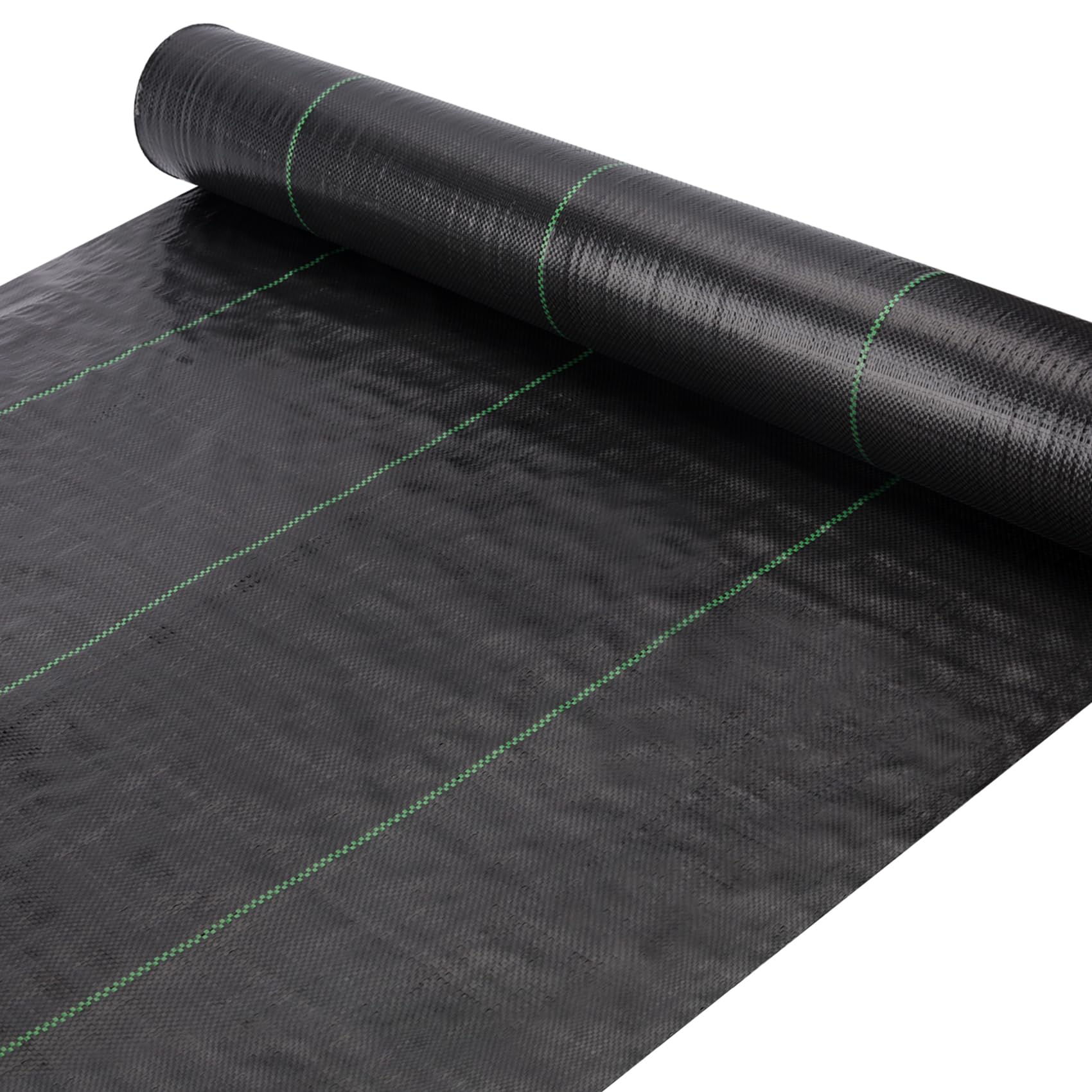
The 4-foot-wide 3.2oz fabric that a reviewer says kept weeds at bay even a year after installation.
This GRASSCLUB roll matches the same 3.2oz material and 400 LBS tensile strength as the 300-foot version, but in a more practical 4-foot width that covers a standard raised bed or flower border in a single strip. At 100 feet long, it gives you 400 square feet of coverage — enough for most medium-sized garden projects without the weight of the massive 13.77-pound roll.
Reviewers love that it is easy to unroll and stake down. One buyer who laid it in a garden with quack grass (an aggressive perennial weed) reported that it stopped the invasion. Another noted the fabric stays tough enough to work well over a year later. Compared to the Snail 5oz above, the GRASSCLUB is lighter at 3.2oz, meaning it cuts more easily with standard scissors but will not withstand the same heavy rock load — it is best for areas covered with a few inches of mulch or soil.
Solid mid-range value: At 7.61 pounds, the 4ft x 100ft roll is about half the weight of the 300-foot version, making it far easier to handle solo. The 400 LBS tensile strength means it will not tear when you pull it taut.
Heads-up: Like most 3.2oz woven fabrics, the edges can fray when cut. Some buyers recommend using a hot knife or melting the cut edges with a lighter to prevent loose strands.
Best for: The gardener who needs a 4-foot-wide barrier for raised beds or flower borders and wants the reliable 3.2oz build without paying for a premium 5oz fabric you do not need.
Not for: Driveways or heavy gravel paths where the weight and thickness of a 5oz fabric like the Snail are required to prevent punctures.
5. Winisok 4FT x 100FT Weed Barrier Landscape Fabric, 3.2oz

The 3.2oz barrier that arrives as two 50-foot sheets and feels thick enough to need a razor to cut.
Winisok takes the standard 3.2oz woven polypropylene and delivers it as a two-pack of 4ft x 50ft rolls — handy if you need to cover two separate areas or want a more manageable size for carrying. Owners mention that this is a very thick weed barrier requiring a sharp blade to cut; one reviewer noted the blade actually dulled mid-cut, so you get visibly denser material than some other 3.2oz options.
The fabric comes with green stripe guides for alignment, and the manufacturer claims a lifespan of more than five years. Reviewers praise how well it lets water pass through while keeping the garden weed-free, with several noting their plants grow great underneath it. One buyer pointed out that the fabric shreds easily when cut, leaving plastic strands in the soil, so it is better suited for permanent installations where you cut it once and leave it rather than temporary beds that get moved each season.
What stands out
- Comes as two 50-foot rolls instead of one 100-foot roll — easier to handle and store
- Buyers confirm it is noticeably thick and blocks weeds effectively
- Water still passes through despite the dense weave
What to watch for
- Cut edges shred and leave plastic strands in the soil, so it is not ideal for temporary gardens
- You need a very sharp razor or utility knife to cut it cleanly
Reach for this if: You have two separate garden beds a few feet apart and want a roll for each one without wrestling a massive 100-foot roll across the yard.
Look elsewhere if: You plan to move your garden layout every year — the shedding plastic strands make this a better fit for permanent mulch-covered beds.
6. FEED GARDEN 3FT x 100FT Landscape Fabric Weed Barrier Fabric, Heavy Duty
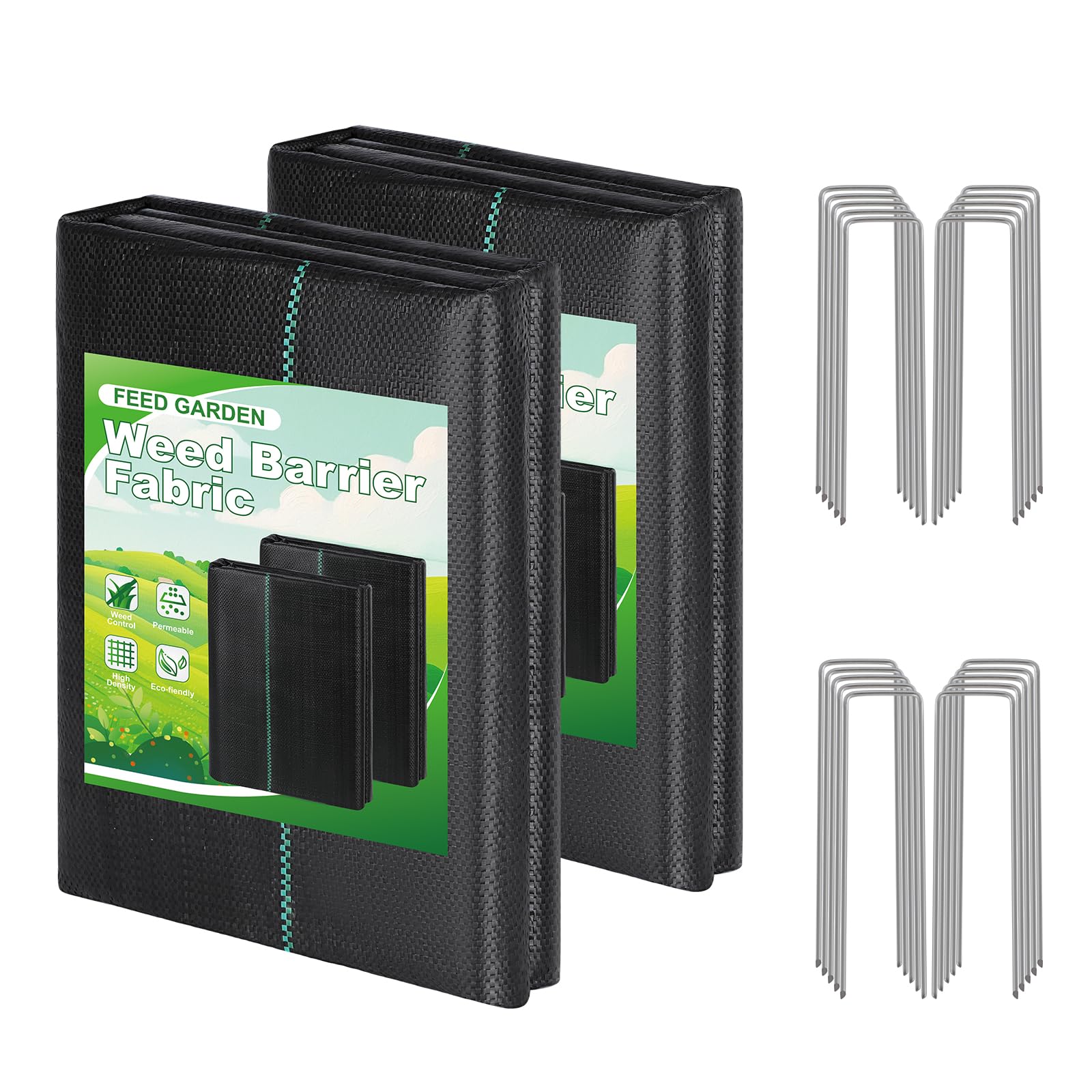
The entry-level woven fabric that comes with 20 staples and lets you reline all your garden beds with one pack.
FEED GARDEN’s woven polypropylene fabric is a straightforward, budget-friendly choice for the gardener who just needs to cover 3-foot-wide beds without paying for premium weight. The roll splits into two 50-foot sections, and it includes 20 U-shaped stakes (landscape staples) right in the box, which saves you a separate trip to the hardware store. One buyer summarized it simply: “1 pack relined all gardens.”
Compared to the heavier picks above, the FEED GARDEN fabric is noticeably thinner — one reviewer described it as “like a thinner tarp” and noted it may need to be replaced every year if left exposed. The woven polypropylene construction does let water through as advertised, but buyers caution that the edges fray and shred when cut, and a hole started in the middle of one roll during handling. For permanent beds where you cover the fabric with thick mulch, it offers solid value. For areas with heavy foot traffic or sharp gravel, the extra cost of the Winisok or GRASSCLUB above is money well spent.
Best for the budget-conscious: You get 100 feet of fabric plus the staples to pin it down. The included stakes work well in normal soil, according to reviewers.
The catch: Multiple buyer reports confirm the fabric is on the thinner side and prone to fraying along cut edges. Plan on covering it with at least a few inches of mulch to protect it from sun and wear.
Pick this for: Annual or seasonal flower beds where you are okay replacing the fabric every year or two, and you want a low upfront cost with the staples included.
Skip it for: Permanent landscaping under gravel, stone, or artificial grass where a 5oz or even a high-quality 3.2oz fabric would last several times longer.
7. UWIOFF Landscape Fabric Weed Barrier Fabric, 4ft x 30ft Durable & Heavy-Duty
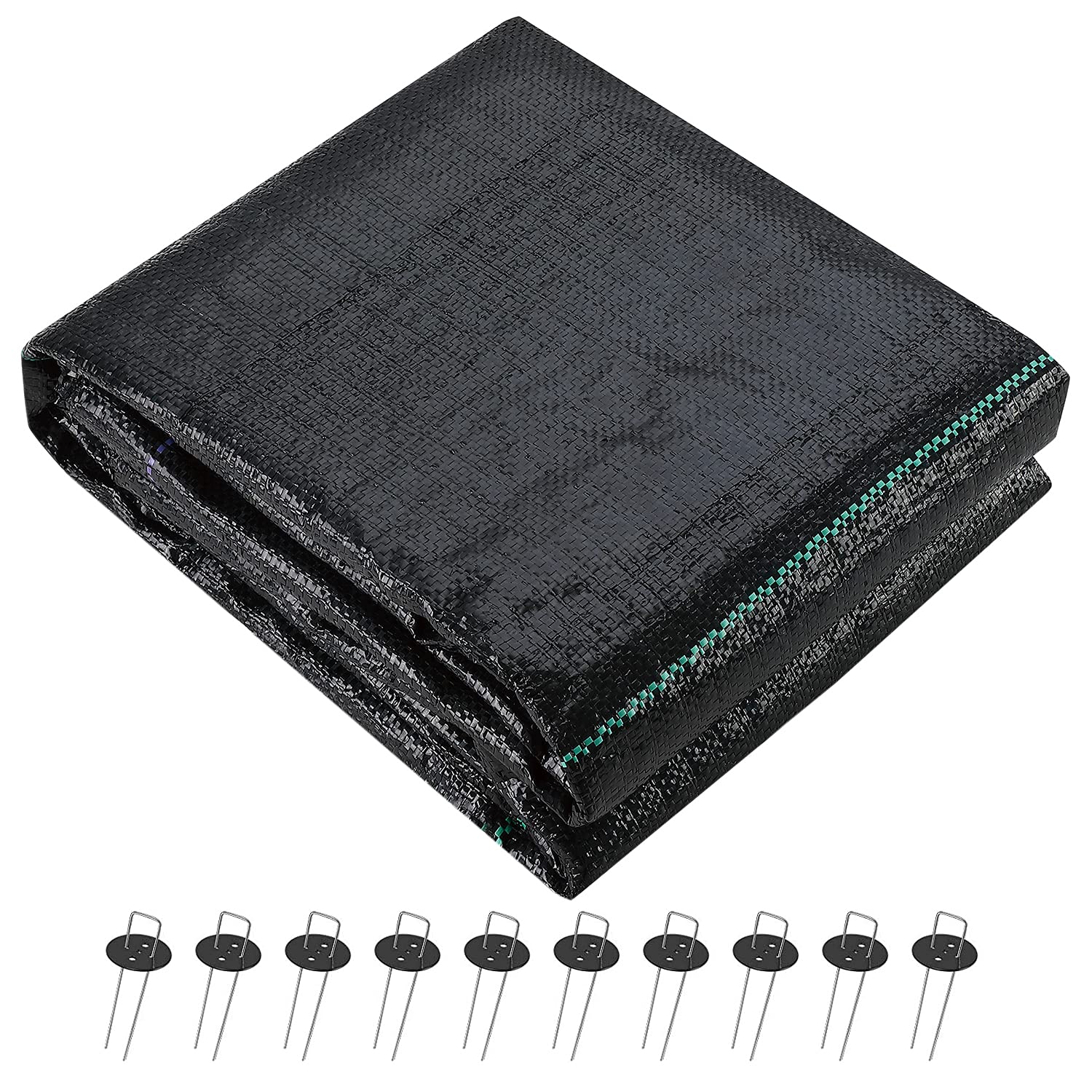
The lightweight 30-foot roll that fits small projects and feels easier to handle than any 100-foot competitor.
Not every garden project needs a 100-foot roll. For a single flower bed border, a small vegetable patch, or a narrow walkway, this UWIOFF fabric gives you 30 feet at 4 feet wide — enough coverage to finish the job without having a massive leftover roll taking up shed space. At just 2.4 pounds, it weighs about a third of the FEED GARDEN roll above, making it the easiest to carry and position alone.
The material is 3.175oz PE fabric (polyethylene — a flexible plastic) rather than the woven polypropylene used by most competitors. The maker claims this PE material is more flexible and aging-resistant than PP (polypropylene) landscaping fabric, with UV resistance for more than 5 years. Customers note that it works perfectly for flower bed stone coverage projects and that water seeps through quickly after rain without puddling. One reviewer who walked on it daily during a gardening season noted it showed no wear. The main downside is that the fabric unravels along cut edges — multiple reviewers suggest using black duct tape on the cut edges or burning holes with a butane torch to avoid fraying.
Why the short roll wins
- Weighs only 2.4 pounds — the lightest and most portable option here
- Flexible PE material lays flat and feels less stiff than woven polypropylene
- Buyers confirm it holds up to daily foot traffic without tearing
Where it comes up short
- Unravels aggressively once cut — plan on using duct tape or a torch to seal the edges
- 30 feet goes fast; not suitable for large garden beds or long pathways
Ideal for small-scale jobs: If you are covering a single flower bed border or a narrow 30-foot path, this is the easiest and least wasteful roll to buy.
Not the right pick for: Anyone who does not want to deal with edge fraying — the unraveling issue means this fabric requires extra care during installation that heavier woven fabrics do not.
Understanding the Specs
Fabric Weight (oz per square yard)
This is the most important number for a weed barrier — it tells you how dense and durable the material is. Lighter fabrics around 3.2oz work for mulch-covered flower beds and vegetable gardens where the barrier is not under heavy loads. Heavier 5oz fabrics are built for driveways, gravel paths, and areas with frequent foot traffic — they resist tearing under sharp rocks and hold up longer in direct sun. A higher weight also means the fabric stays flat and does not wrinkle or shift as easily during installation.
Tensile Strength (LBS)
Tensile strength measures how much pulling force the fabric can take before it tears. A fabric rated at 400 LBS, like the GRASSCLUB models, can be stretched tight across a garden bed and support a layer of stones without ripping. For simple flower beds under a few inches of mulch, tensile strength matters less. For driveways where you shovel gravel on top, a higher tensile strength means the fabric will not develop small tears that let weeds push through.
FAQ
How long does a weed barrier actually last in the garden?
Which side of the fabric faces up during installation?
Will water and fertilizer still reach my plants through the barrier?
Can I lay weed barrier directly over existing grass or weeds?
How do I cut holes in weed barrier for planting?
What is the difference between PE and PP weed barrier fabric?
Do I need to put mulch or gravel on top of the fabric?
How do I keep the fabric from blowing away before I stake it down?
Can I use weed barrier under artificial grass or a play area?
Will weed barrier stop bamboo or other invasive runners?
Final Thoughts: The Verdict
For most people, the barrier for weeds in garden winner is the VIVOSUN 4ftx50ft 5oz because its dual-layer design delivers both the weed-blocking density of a 5oz fabric and six times better water permeability than standard woven barriers, making it the single best investment for raised beds and flower borders. If you want massive coverage for a large vegetable patch or driveway underlayment, grab the GRASSCLUB 3ft x 300ft for its unbeatable 900-square-foot value. And for a budget-friendly starting point that includes the staples you need, the FEED GARDEN 3ft x 100ft gets the job done with two 50-foot rolls and a set of U-shaped stakes in the box.
How We Picked
We do not accept paid placement. Every pick is matched to a real buyer and a real use-case; we do not hands-on test units.
Sources & Methodology
Specifications: manufacturer listings and product documentation. Review insights: verified customer reviews, as of July 2026. Pricing: not shown on this page (it changes often); check the current price via the retailer link.
As an Amazon Associate, Lawn Gear Lab earns from qualifying purchases. This does not affect which products we feature.