
Specs are compiled from manufacturer listings and verified buyer reviews and can change over time — please confirm the key details on the product page before buying.
Getting plump, juicy tomatoes from your garden depends on what you put in the ground or pot before that first seedling goes in. The right mix feeds your plants from the start, helps roots breathe, and holds onto just enough water without drowning them.
I’m Rikta — the founder and writer behind Lawn Gear Lab. This guide is built by comparing the manufacturers’ published specifications and the patterns across verified customer reviews, so you get each pick’s real strengths and trade-offs instead of marketing spin.
Whether you are filling raised beds or a row of patio pots, these are the top contenders for the planting soil for tomatoes that deliver the nutrients and texture your plants actually need.
Quick Picks
- FoxFarm Ocean Forest Potting Soil (1.5 cu ft) — Best Overall
- Espoma Organic Vegetable & Flower Garden Soil (1 cu ft) — Great Value
- Coast of Maine Organic Planting Soil — Budget Champion
How To Choose The Best Planting Soil For Tomatoes
Tomatoes are heavy feeders that demand consistent moisture without soggy roots. The right bag should feel light and crumbly, not dense and clumpy—that is your clue about aeration and drainage.
Volume and Pot Coverage
One cubic foot fills a standard 10- to 12-inch pot, but tomato plants in 5-gallon containers need roughly 0.7 to 1 cubic foot per pot. Match the bag size to your planned number of containers or raised-bed square footage so you do not run short mid-season.
Organic Ingredients and Nutrient Source
Look for compost, earthworm castings, kelp meal, or mycorrhizae (a beneficial fungus that attaches to tomato roots and helps them grab more water and minerals from the soil). These natural ingredients slowly feed your plants over weeks rather than hitting them all at once.
Quick Comparison
| Model | Best For | Volume | Key Ingredient | Use | Amazon |
|---|---|---|---|---|---|
| FoxFarm Ocean Forest Potting Soil (1.5 cu ft) | Best Overall | 1.5 Cubic Feet | Aged forest products, crab meal | Container plants | Amazon |
| Espoma Organic Vegetable & Flower Garden Soil (1 cu ft) | Great Value | 1 Cubic Feet | Myco-tone mycorrhizae, earthworm castings | In-ground & transplanting | Amazon |
| Coast of Maine Organic Planting Soil (20 Qt) | Best Budget | 20 Quarts | Composted manure, sphagnum peat moss | In-ground & containers | Amazon |
In‑Depth Reviews
1. FoxFarm Ocean Forest Potting Soil (1.5 cu ft)
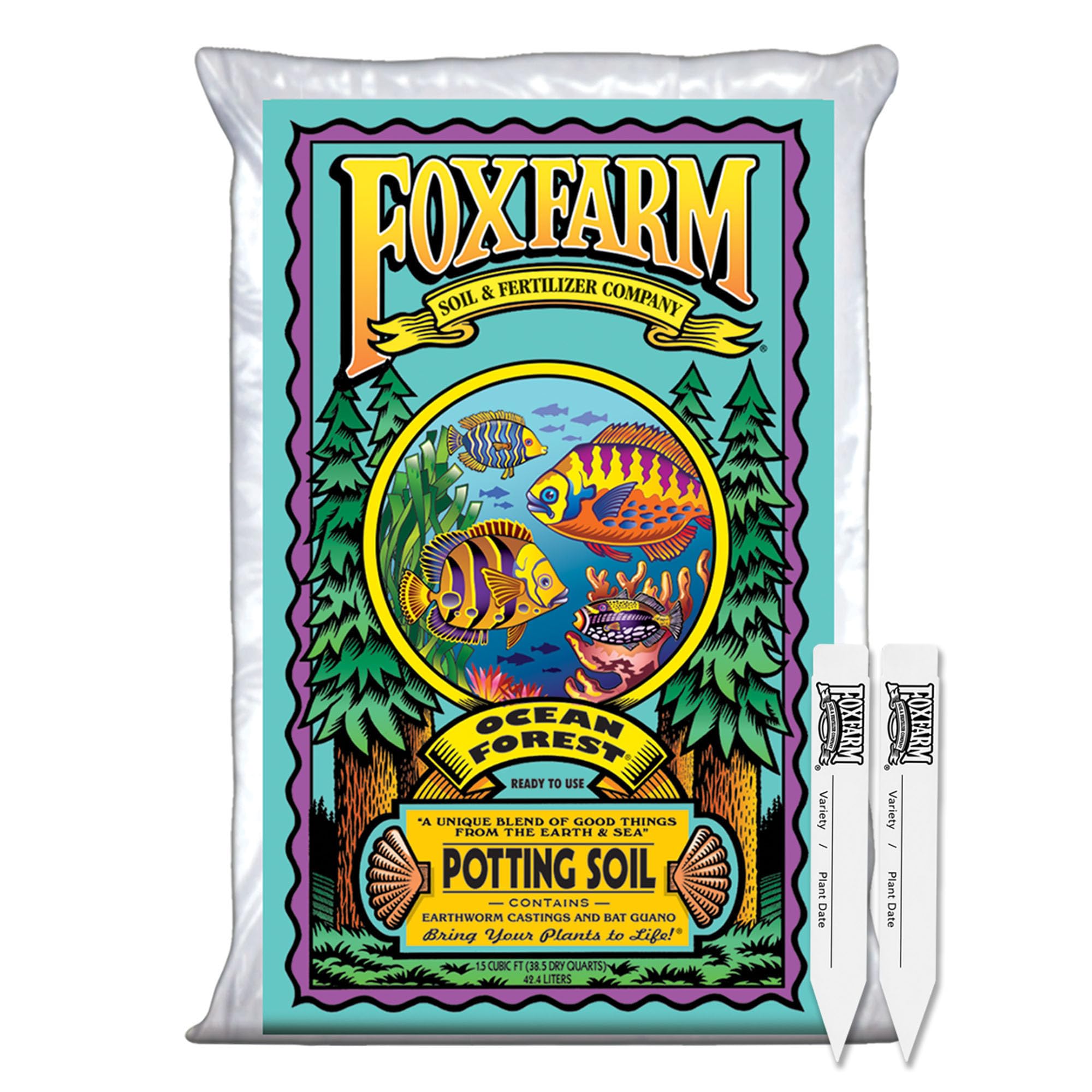
The go-to bag that makes every other brand the runner-up for tomato growers.
The first thing you notice when you open this bag is the texture: light and fluffy, ready to pour straight into a container without needing extra perlite or compost. Buyers report Fox Farm soil outperforms Miracle-Gro for tomatoes (photo evidence)—same seeds, same watering schedule, but the Fox Farm plants grew significantly larger, according to one review. The 1.5 Cubic Feet volume means you get a 50% more soil than the Espoma bag below, so you can fill three to four 5-gallon pots from a single bag.
It includes crab meal, shrimp meal, earthworm castings, and kelp meal as its nutrient source—ingredients that feed plants steadily over weeks. It also contains aged forest products and peat moss for moisture retention, plus sandy loam and perlite so excess water drains fast, which matters a lot for tomatoes that rot easily in stagnant water. The two plant tags included are a nice extra for labeling varieties in the garden.
But because it is ready to use straight out of the bag and owners mention seeing visibly larger tomato plants within days, many growers find the upfront cost worthwhile.
The top performer: The only bag you need if you want immediate, nutrient-loaded soil for container tomatoes.
One honest trade-off: It is the priciest bag per cubic foot here, and at 34 pounds it is heavy to move around the yard.
Grab it if: You grow tomatoes in pots or raised beds and want the highest-quality pre-mixed soil with no extra work—just open, fill, and plant.
Look elsewhere if: You are on a tight budget or need a much larger volume for in-ground beds; the 1.5 cu ft bag goes fast across many containers.
2. Espoma Organic Vegetable & Flower Garden Soil (1 cu ft)

A nutrient-dense organic mix designed to be mixed into your native garden soil.
This is not a standalone potting mix—it is a rich blend meant to be tilled into existing ground soil when you plant or transplant tomatoes. Customers note that “tomatoes and marigolds thrived” when using it, and one review noted that plants in Espoma soil significantly outperformed those in a store-bought organic alternative. The 1 Cubic Feet bag gives you enough to mix into a 4×4-foot raised bed, though it holds less total volume per bag than the FoxFarm above (which has 50% more soil).
It includes a proprietary blend of endo & ecto mycorrhizae (a beneficial fungus that forms a partnership with tomato roots to help them absorb water and nutrients more efficiently), plus earthworm castings for gentle, slow-release feeding. It contains no synthetic plant foods or chemicals, and it is OMRI-listed for organic gardening. The texture is rich and well-structured, so when you mix it with your lighter native soil, it improves moisture retention and drainage at the same time.
A minor drawback: one reviewer noted that two indoor plants later developed soil gnats, though they clarified the gnats did not originate from the Espoma bag itself. If you are using it exclusively outdoors with proper drainage, this should not be an issue.
Smart choice for in-ground beds: Mix it into your garden soil and watch your tomatoes take off without harsh chemicals.
One thing to consider: It is not a standalone potting mix—you need to blend it into existing soil, so it does not work straight out of the bag for pure containers.
Best for: Gardeners who plant tomatoes in-ground or in raised beds and want to enrich their native soil with a trusted organic brand.
skip it if: You need a ready-to-use soil for patio containers—pick the FoxFarm above instead since this one is designed to be mixed with your existing dirt.
3. Coast of Maine Organic Planting Soil for Vegetables & Tomatoes (20 Qt)

An affordable organic blend that balances moisture retention with good drainage.
If you are filling several large containers on a budget, this bag keeps costs low without skimping on organic ingredients. It is formulated with composted manure and sphagnum peat moss to hold water near the roots while still letting excess drain away. Reviewers point out it is lightweight, high-quality soil for potting—one reviewer filled one 5-gallon pot per bag, and noted their plants were thriving with no signs of stress. A buyer mentioned it may contain small undecomposed twigs, so if you are planting fine-seeded crops like carrots you might want to sift it, but for tomatoes it works perfectly as-is.
However, its lightweight texture makes it easier to lift and carry than heavier bags, and the OMRI-listed organic compost assures you are putting natural ingredients into the ground. The bag also works for both in-ground gardens and containers, giving you flexibility with a single product.
The main limitation is that some tomatoes may need an extra dose of organic fertilizer mid-season, as the nutrient load in this bag is lighter compared to the richer formulations from FoxFarm or Espoma. A few buyers mentioned the heavy bag weight for this volume—it is not the lightest 20-quart bag on the market—but the plants themselves grew well and visibly within days, according to multiple reviews.
Best for the price-conscious grower: A decent organic soil that holds moisture and supports growth, without the premium price tag.
The honest trade-off: Less nutrient density than pricier options—you might need a mid-season tomato fertilizer to keep plants going strong through harvest.
Reach for this if: You are growing a few tomatoes in containers or in-ground and need an affordable, OMRI-listed organic soil that does not drain too fast.
pass on it if: You want the highest nutrient load straight out of the bag or need to fill multiple large raised beds with one purchase—the volume is small and the feed is lighter.
Understanding the Specs
Bag Volume
Measured in cubic feet or quarts, this tells you how many pots or beds one bag fills. A 1.5 cu ft bag roughly fills three 5-gallon pots; a 20-quart bag fills about one standard 5-gallon container. Match the bag volume to the number of plants you plan to grow to avoid multiple trips to the store mid-season.
Organic Ingredients
Ingredients like composted manure, earthworm castings, kelp meal, and mycorrhizae are the primary nutrient sources. These release nitrogen, phosphorus, and potassium slowly over weeks, unlike synthetic fertilizers that deliver a quick one-time burst. Organic soil also feeds the soil microbes that help tomato roots absorb nutrients.
FAQ
Can I use tomato soil in a raised bed?
How many 5-gallon pots can one bag fill?
Do I need to add fertilizer to planting soil for tomatoes?
What is mycorrhizae and why does it matter for tomatoes?
Can I use strawberry or flower potting soil instead of tomato-specific soil?
How do I store leftover bagged tomato soil?
Does organic soil attract bugs or pests?
What is the difference between potting soil and garden soil for tomatoes?
Is it okay to plant tomato seeds directly into these soils?
Can I reuse tomato soil from last season?
Final Thoughts: The Verdict
For the majority of shoppers, the planting soil for tomatoes winner is the FoxFarm Ocean Forest Potting Soil because it is ready to use straight from the bag, has the richest blend of organic ingredients, and produces visibly larger tomato plants right from the start. If you want an affordable organic option for mixing into your garden beds, grab the Espoma Organic Vegetable & Flower Garden Soil. And for budget-conscious container growers who need a lightweight, OMRI-listed (Organic Materials Review Institute certified) soil, the Coast of Maine Organic Planting Soil keeps costs low while still giving your tomatoes a solid foundation.
How We Picked
We do not accept paid placement. Every pick is matched to a real buyer and a real use-case; we do not hands-on test units.
Sources & Methodology
Specifications: manufacturer listings and product documentation. Review insights: verified customer reviews, as of July 2026. Pricing: not shown on this page (it changes often); check the current price via the retailer link.
As an Amazon Associate, Lawn Gear Lab earns from qualifying purchases. This does not affect which products we feature.