
Specs are compiled from manufacturer listings and verified buyer reviews and can change over time — please confirm the key details on the product page before buying.
A bloom booster is the single biggest swing factor between a garden that gets polite nods and one that stops people mid-stride. The right high-phosphorus formula sends energy straight to flower production, turning leafy plants into flower factories. The wrong one leaves you with green growth and disappointment.
I’m Rikta — the founder and writer behind Lawn Gear Lab. This guide is built by comparing the manufacturers’ published specifications and the patterns across verified customer reviews, so you get each pick’s real strengths and trade-offs instead of marketing spin.
We focus on the precise NPK ratios, water-soluble mixing ease, and real-world results that define the very best bloom booster for flowers money can buy today.
Quick Picks
- Grow More Super Bloomer 15-30-15 Fertilizer – 3lbs — Best Overall
- Carl Pool BR-61 Plant Food 9-58-8 3 Lbs — Extreme Phosphorus
- Grow More Super Bloomer 15-30-15 Fertilizer – 1.5lbs — Value Size
- Schultz Bloom Plus Water Soluble Plant Food 10-54-10 — Heavy Bloomer
- Jack’s Classic 10-30-20 Blossom Booster Water-Soluble — Versatile Feeding
- FoxFarm Open Sesame Water Soluble Fertilizer 5-45-19, 6 oz — Early Flowering
- Miracle-Gro LiquaFeed Bloom Booster Flower Food, 16 Fl Oz — Easy Application
How To Choose The Best Bloom Booster For Flowers
A bloom booster is not a general-purpose fertilizer. Its entire job is to push phosphorus — the middle number in the NPK ratio — into your plants at the right moment. Picking the wrong ratio or form wastes money and can even burn tender roots if over-applied.
NPK Ratio: The Middle Number Is Everything
The NPK label (Nitrogen-Phosphorus-Potassium) tells you what the formula prioritizes. For a bloom booster, the second number should be the highest. A ratio like 10-54-10 or 15-30-15 means the product is heavily loaded with phosphorus, which drives bud set, flower size, and bloom count. Low phosphorus numbers (like 5-3-4) are for green growth, not flowering.
Water-Soluble vs. Liquid
Powdered water-soluble boosters let you mix exactly the strength you need, and they store for years without losing potency. Liquid concentrates are more convenient for small containers or frequent feeding because you just squeeze and go. The trade-off is cost per feeding — powders generally go further for the same money.
Application Ease and Consistency
Look for a formula that dissolves cleanly without clumps or sediment. Uneven mixing means some plants get too much and some get too little. A measuring spoon or clear mixing instructions are worth their weight in saved frustration.
Quick Comparison
| Model | Best For | NPK Ratio | Item Weight | Item Form | Amazon |
|---|---|---|---|---|---|
| Grow More Super Bloomer 15-30-15 (3lbs) | Best Overall | 15-30-15 | 3 Pounds | Powder | Amazon |
| Carl Pool BR-61 Plant Food 9-58-8 | Extreme Phosphorus | 9-58-8 | 3 Pounds | Powder | Amazon |
| Grow More Super Bloomer 15-30-15 (1.5lbs) | Value Size | 15-30-15 | 1.5 Pounds | Powder | Amazon |
| Schultz Bloom Plus 10-54-10 | Heavy Bloomer | 10-54-10 | 1 Pounds | Powder | Amazon |
| Jack’s Classic 10-30-20 Blossom Booster | Versatile Feeding | 10-30-20 | 8 Ounces | Powder | Amazon |
| FoxFarm Open Sesame 5-45-19 | Early Flowering | 5-45-19 | 0.45 Pounds | Jar | Amazon |
| Miracle-Gro LiquaFeed Bloom Booster | Easy Application | — | 16 Fluid Ounces | Liquid | Amazon |
In‑Depth Reviews
1. Grow More Super Bloomer 15-30-15 Fertilizer – 3lbs

A 3-pound arsenal of balanced phosphorus that covers beds, borders, and baskets without constant reordering.
You get more blooms that are visible from across the yard thanks to the 15-30-15 ratio (15% nitrogen, 30% phosphorus, 15% potassium). The phosphorus (the nutrient that fuels flower production) is high enough to push blooms, while the nitrogen and potassium keep foliage healthy. Buyers report plants reach about twice the size with two to three times the blooms after regular use.
Unlike the 1.5-pound version of the same formula, this 3-pound bag delivers nearly double the feedings for a very modest upcharge. It is a full 6.7x heavier than the 0.45-pound FoxFarm bag, making it the clear value champion for anyone with multiple beds or a long growing season. The water-soluble powder dissolves cleanly for soil drench or foliar spray, and the added chelated iron and manganese prevent the leaf yellowing that sometimes follows heavy phosphorus application.
Deep bench value: 3 pounds of 15-30-15 powder in one bag, made in the USA, that handles everything from vines to fruiting shrubs.
One real trade-off: The bag is not resealable — you will want your own airtight container after opening.
Reach for this if: you want one booster that works across your whole flower garden, from annuals to perennials, season after season.
Look elsewhere if: you need a resealable package or prefer a liquid that needs no mixing at all.
2. Carl Pool BR-61 Plant Food 9-58-8 3 Lbs
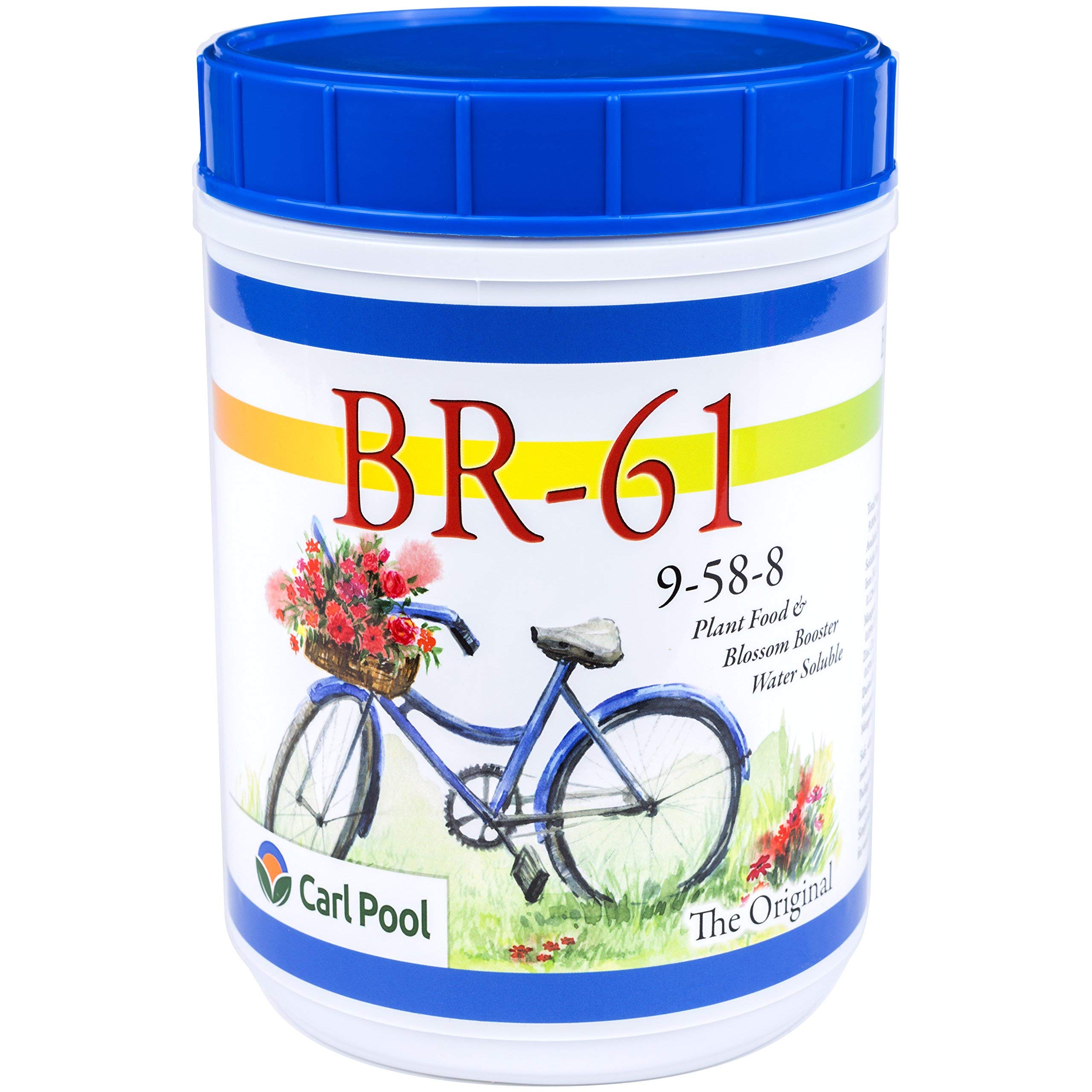
A whopping 58 in the phosphorus slot makes this the biggest bloom push in the lineup.
The 9-58-8 ratio is not subtle. It is designed for the moment you want to boost flower count and size on plants that are already healthy and leafy. The Carl Pool BR-61 also doubles as a plant starter, so it works at transplant time too. One reviewer who feeds plumeria with it noted it “perked my plants up and flowered more than in previous years” — a pattern repeated across tropical and flowering perennials.
At 3 pounds, the BR-61 ties with the Grow More 3-pound bag for the heaviest package here, but its phosphorus content is nearly double that of the 15-30-15 formulas. One buyer raved they “love the size of this one, it’s hard to find in a store and this one lasts.” The mixing ratio is an easy one tablespoon per gallon of water, so you can feed multiple beds in one go without complicated math.
Power player: The 9-58-8 ratio is the highest-phosphorus mix here, purpose-built for a final push into heavy flowering.
One real trade-off: The nitrogen content is low at 9, so this is not a general-use food — reserve it for the blooming phase only.
Grab this for: tropical flowers like plumeria, hibiscus, or any plant that needs an intense phosphorus jolt to set buds.
skip it if: your plants are still in early growth and need balanced nutrition across all three numbers.
3. Grow More Super Bloomer 15-30-15 Fertilizer – 1.5lbs
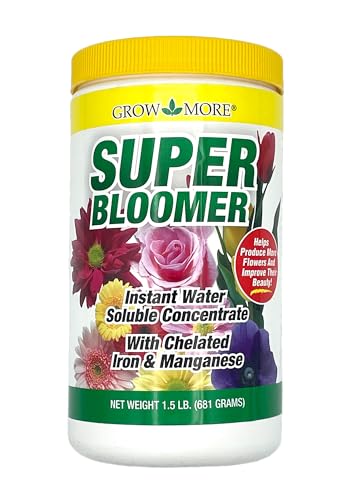
Half the size, same exact 15-30-15 formula — perfect for small gardens or first-time users.
If the 3-pound Grow More bag feels like too much commitment, this 1.5-pound option gives you the identical 15-30-15 blend at a lower entry point. The water-soluble powder works for soil soaks or foliar sprays, and the chelated iron plus manganese keeps leaves from looking pale after bloom feeding starts.
Seasoned users say this booster produces plants that are about twice the size with two to three times the blooms, and the formula stays shelf-stable for the next season. The 15-30-15 ratio lands right between the moderate Jack’s Classic 10-30-20 and the extreme Carl Pool 9-58-8, making it a safe bet for anyone who wants results without worrying about overdoing a single nutrient.
Right-sized starter: 1.5 pounds of the same 15-30-15 blend that powers the 3-pound bag, just in a smaller, more affordable package.
One real trade-off: You will run out faster than the 3-pound version if you have a large garden, so plan your season.
Best for: a gardener with a modest flower bed or container garden who wants proven 15-30-15 performance without a bulk bag.
Not for you if: you have extensive beds or want the lowest cost per feeding — the 3-pound bag is more economical long-term.
4. Schultz Bloom Plus Water Soluble Plant Food 10-54-10, 1.5-Pound

A 10-54-10 formula with a cult following among houseplant owners who want Christmas cactus blooms.
Schultz Bloom Plus is the long-running workhorse of this category. One loyal buyer reported using it for years and their flowers are “the envy of the neighborhood” — and another noted that houseplants “that have never flowered will surprise you” after feeding with this.
The formula is concentrated — 1 pound of powder goes a long way because you mix only what you need. The manufacturer says it “feeds like nature” by dissolving nutrients evenly each time it rains, which means outdoor plants get gradual feeding rather than a shock. Unlike the Grow More 15-30-15, the Schultz 10-54-10 packs noticeably more phosphorus, giving it a slight edge for plants that are stubborn bloomers.
Bloom specialist: A 10-54-10 ratio that sends a massive phosphorus signal to your plants, backed by decades of user loyalty.
One real trade-off: The manufacturer advises against using it on bushes, trees, or cactus, so read the label before applying broadly.
Reach for this: for houseplants, flower gardens, and vegetable patches where you want bigger blooms and more fruit set.
Look elsewhere if: you need a single food for trees and shrubs — this one is strictly for flowers and veggies.
5. Jack’s Classic 10-30-20 Blossom Booster Water-Soluble Fertilizer, 8oz
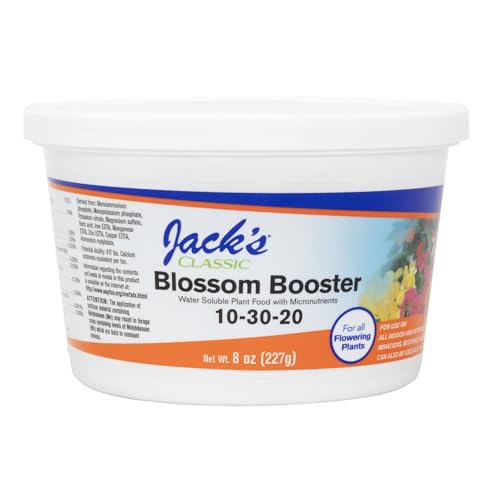
A 10-30-20 blend with a potassium boost that strengthens stems as flowers fatten up.
The Jack’s Classic Blossom Booster stands apart from the other picks here because its potassium number (20) is higher than its nitrogen (10). That extra potassium helps flowering plants build stronger cell walls and resist disease while they are pouring energy into blooms. The 10-30-20 ratio is 50% more potassium than the Grow More 15-30-15, which can make a difference for top-heavy flowers like hydrangeas and lilacs that owners mention respond beautifully.
One thing to watch: the 8-ounce container caught more than one buyer off guard. As one reviewer put it, “the 8oz container is basically sample size” and they used the whole thing in a single day on their outdoor beds. Jack’s Classic does include a measuring spoon and the powder can be used for both foliar feeding and root drenching, but the small size means this is best for containers or a small collection of pots.
Potassium-forward: The 10-30-20 ratio includes a 20 potassium hit that supports bloom quality and plant stamina.
One real trade-off: An 8-ounce tub runs out fast on outdoor beds — check your garden size before ordering.
Best for: indoor flowering plants, a few outdoor pots, or specialty plants like hoyas and hydrangeas that benefit from extra potassium.
Not ideal for: large flower gardens or heavy feeders that will deplete an 8-ounce package in a single application.
6. FoxFarm Open Sesame Water Soluble Fertilizer 5-45-19, 6 oz
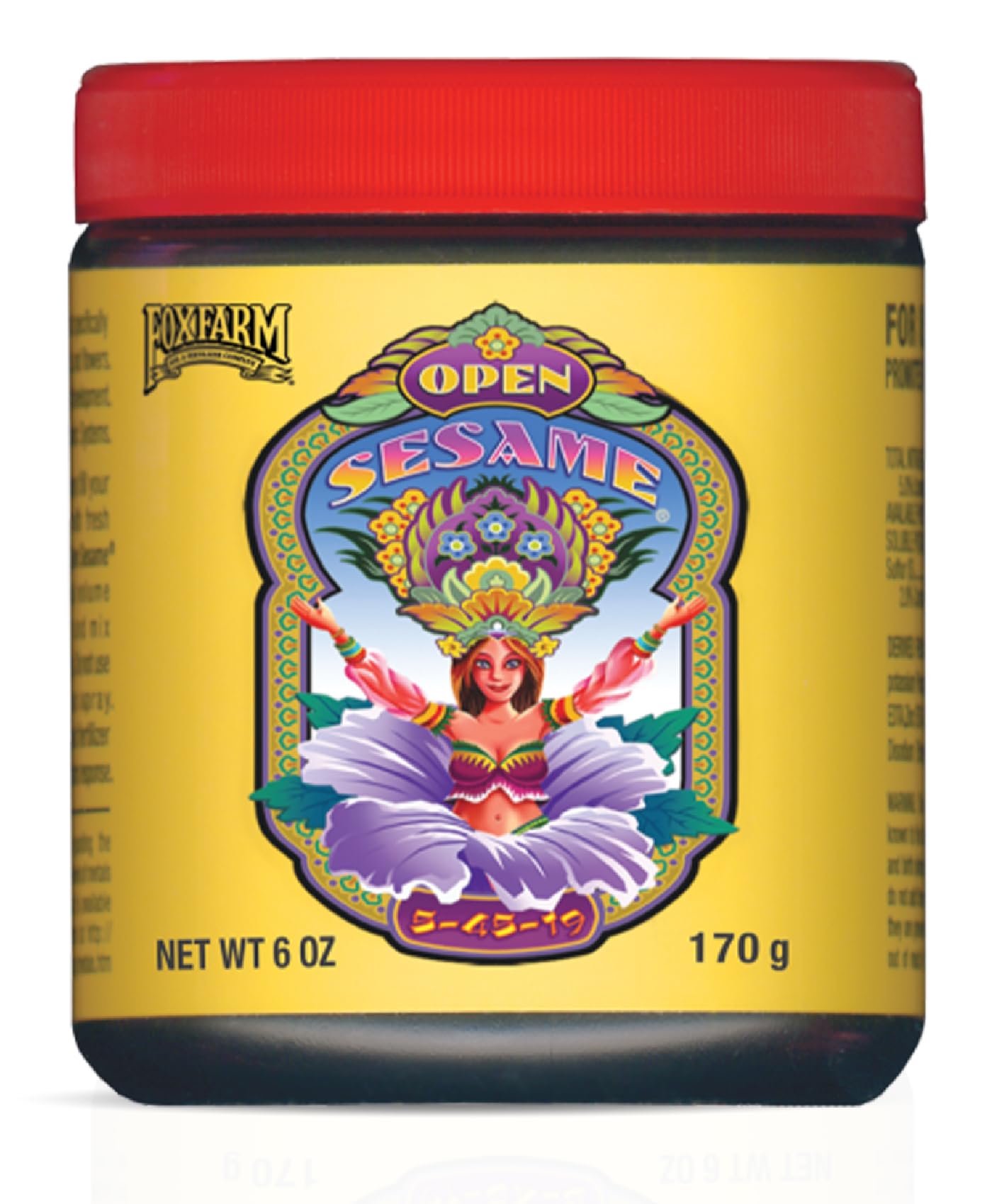
A 5-45-19 formula timed for weeks 5-6 of growth, when buds first decide their final size.
FoxFarm Open Sesame is built for a specific window — the early flowering stage when initial bud formation sets the ceiling for your final harvest. The 45 in the phosphorus slot triggers the plant to shift from leafy growth to flower production, while the 19 potassium supports the bud structure from the start. One reviewer noted the product “seems to make for larger initial bud formation, which is a prerequisite to larger finished buds.”
At 0.45 pounds, this is the smallest package by weight in the lineup — 6.7x lighter than the Grow More 3-pound bag. It is also the most specialized: FoxFarm advises feeding every other watering starting from week five or six, then switching to a different formula later. That makes it a precise tool for hydroponic or container growers who run a scheduled nutrient program, not a grab-and-feed solution for a backyard flower bed.
Window-specific booster: 5-45-19 ratio engineered for the early flowering phase to boost bud size potential from the start.
One real trade-off: The 0.45-pound jar is tiny and the product is meant as part of a multi-stage feeding system, not a standalone all-season food.
Grab this for: hydroponic or container growers who follow a phased nutrient schedule and want a targeted early-flower push.
pass on it if: you want a single all-purpose bloom booster for a traditional outdoor flower garden.
7. Miracle-Gro LiquaFeed Bloom Booster Flower Food, 16 Fl Oz

The squeeze-and-feed liquid that skips the scoop, the mix, and the mess of powder fertilizers.
Miracle-Gro LiquaFeed is the only liquid in this roundup, and it trades the cost-per-feeding efficiency of powders for pure convenience. You attach the bottle to the LiquaFeed feeder (sold separately), squeeze the trigger, and water. No measuring spoon, no dissolving, no dust cloud. Customers note using it two to three times a week and seeing “big blooms and flowers” with noticeable results in “a fairly short time.”
The 16-fluid-ounce pack contains two refill bottles. Since it is a ready-to-use concentrate, the NPK ratio is not listed in the standard powder format, but the formula is specifically designed for flower growth. This product stands opposite the FoxFarm Open Sesame in philosophy — where FoxFarm is a precise tool for a short window, the LiquaFeed is an easy all-season feeder for anyone who hates mixing powder. It is also safe for bees, birds, and beneficial insects when used as directed.
No-mix convenience: A liquid concentrate that attaches to a hose-end feeder for instant bloom feeding with zero measuring.
One real trade-off: Liquid concentrates cost more per feeding than water-soluble powders, and you need the proprietary LiquaFeed feeder to use it.
Best for: the gardener who values speed and simplicity over cost optimization — squeeze, water, done.
Not for you if: you already have a measuring spoon and prefer the lower cost and longer shelf life of powder fertilizers.
Understanding the Specs
NPK Ratio: The Three Numbers That Matter
The three hyphenated numbers on any fertilizer bag stand for Nitrogen (N), Phosphorus (P), and Potassium (K) — the primary nutrients plants need. For a bloom booster, you want the second number, phosphorus, to be the highest. Phosphorus is what tells a plant to set buds and produce flowers. A ratio like 15-30-15 or 10-54-10 signals a high-phosphorus formula. A balanced ratio like 10-10-10 is for general feeding, not bloom boosting.
Water-Soluble vs. Liquid Concentrate
Water-soluble powders (like the Grow More and Schultz picks) arrive as dry granules that you mix with water in a watering can or sprayer. They are concentrated, so a small bag makes many gallons of feed, and they store almost indefinitely if kept dry. Liquid concentrates (like the Miracle-Gro LiquaFeed) come pre-dissolved and are instantly ready when attached to a hose or feeder — faster to use but generally more expensive per feeding and have a shorter shelf life once opened.
FAQ
When should I start using a bloom booster on my flowers?
Can I use a bloom booster on vegetable plants?
Will a high-phosphorus fertilizer burn my plants?
How often should I feed with a bloom booster?
What does the middle number (phosphorus) actually do for my flowers?
Is a powder or liquid bloom booster better?
Can I use a bloom booster on indoor flowering houseplants?
How long does a bag of bloom booster last?
Final Thoughts: The Verdict
Across the board, the best bloom booster for flowers is the Grow More Super Bloomer 15-30-15 (3lbs) because it balances a proven phosphorus-rich ratio with a generous 3-pound supply at a reasonable cost per feeding. If you want the highest phosphorus intensity for tropical blooms, grab the Carl Pool BR-61 9-58-8. And for a gardener who hates measuring and mixing, the Miracle-Gro LiquaFeed Bloom Booster offers the convenience of a no-mix, squeeze-and-feed bottle.
How We Picked
We do not accept paid placement. Every pick is matched to a real buyer and a real use-case; we do not hands-on test units.
Sources & Methodology
Specifications: manufacturer listings and product documentation. Review insights: verified customer reviews, as of July 2026. Pricing: not shown on this page (it changes often); check the current price via the retailer link.
As an Amazon Associate, Lawn Gear Lab earns from qualifying purchases. This does not affect which products we feature.