
Specs are compiled from manufacturer listings and verified buyer reviews and can change over time — please confirm the key details on the product page before buying.
Picking a mulch for your vegetable garden means choosing between suppressing weeds, holding moisture, and feeding your soil — without choking your plants or inviting pests. The wrong mulch can trap too much heat, introduce weed seeds, or break down before the season ends. The right one makes your entire growing season smoother, from the first planting to the final harvest.
I’m Rikta — the founder and writer behind Lawn Gear Lab. This guide is built by comparing the manufacturers’ published specifications and the patterns across verified customer reviews, so you get each pick’s real strengths and trade-offs instead of marketing spin.
Whether you are mulching a few raised beds or a whole backyard patch, here is what the mulch for vegetable garden options actually deliver, based on spec sheets and real buyer experience.
Quick Picks
- Back to the Roots 100% Organic Mulch, 58 Quart (2 Cubic ft) — Best Overall
- HealthiStraw GardenStraw, 3 cu ft (20 lbs) All-Natural Mulch — Large Coverage
- Dewitt Garden Weed Barrier Natural Paper Mulch — Eco Soil Builder
- CZ Grain Wheat Straw Garden Mulch, 12 Ounces (4 Sq. Ft.) — Starter Patch
How To Choose The Best Mulch For Vegetable Garden
Start by considering your garden’s layout, your local climate, and how much work you want to do at the end of the season. A paper mulch that tills directly into the soil suits a bed you plan to replant each year, while a thick layer of coconut husk or straw might be better for permanent perennial beds where you do not disturb the ground often.
Weed suppression vs. soil feeding
Some mulches act mainly as a physical weed barrier (paper mulches, dense coconut husk), while others break down and add organic matter to the soil (straw). If your soil is rich and you mostly need to stop weeds, a barrier approach works. If you are trying to build poor soil, choose a mulch that decomposes over the season.
Water retention and temperature
Coconut husk and straw both hold moisture well, but straw allows more airflow. In a hot, dry climate, a thicker layer of straw (2–3 inches) slows evaporation. In a cool, damp climate, a thinner layer of paper or a lighter straw application prevents the soil from staying too wet.
Cleanliness and seed content
The biggest headache with straw mulch is the seeds it can bring. Look for “cleaned” or “seed-reduced” processing. Paper mulches avoid this issue entirely because they have no seeds. Coconut husk is naturally seed-free, which is a major advantage if you want no surprises.
Quick Comparison
| Model | Best For | Coverage | Weight | Material | Amazon |
|---|---|---|---|---|---|
| Back to the Roots Organic Coconut Husk Mulch | Best Overall (seed‑free, expands) | 2 cu ft | 10 lbs | Coconut Husk | Amazon |
| HealthiStraw GardenStraw | Water‑conserving, large coverage | 3 cu ft | 20 lbs | Wheat Straw | Amazon |
| Dewitt Natural Paper Mulch | Budget‑friendly, tills into soil | 2′ x 40′ | 2 lbs | Paper | Amazon |
| CZ Grain Wheat Straw Mulch | Small patch, lightweight starter | 4 sq ft | 12 oz | Wheat Straw | Amazon |
In‑Depth Reviews
1. Back to the Roots 100% Organic Mulch, 58 Quart (2 Cubic ft)
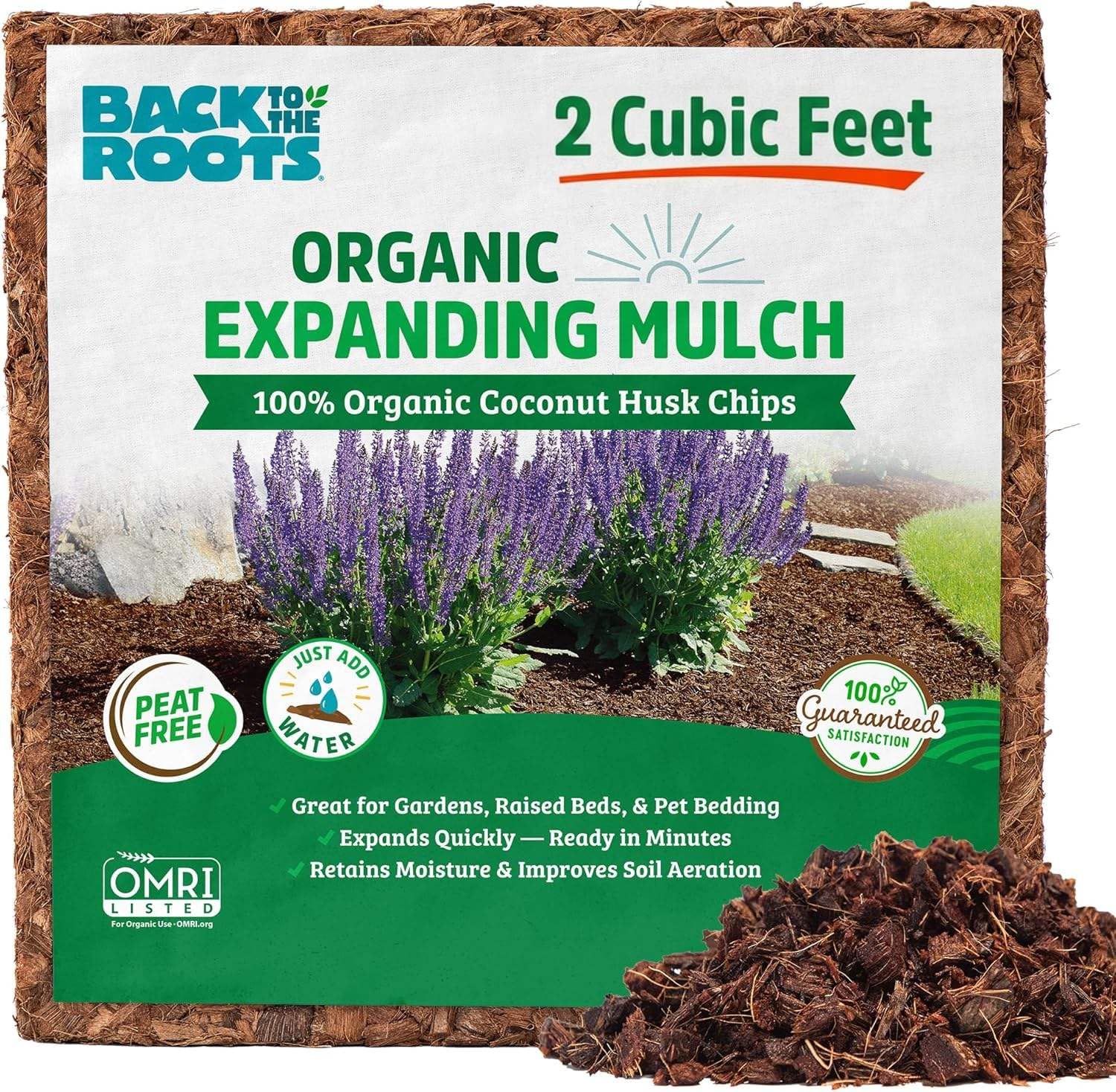
A compressed cube that grows into a wheelbarrow-full of seed‑free mulch.
This 10-pound block of compressed coconut husk expands to 2 cubic feet after you add water — buyers report it fills a wheelbarrow three-quarters full and a kiddie pool, which means you get a lot of coverage from a single compact package. Unlike straw, coconut husk contains zero seeds, so you will not be pulling surprise wheat or grass shoots from your beds later. It is OMRI Listed (certified for organic production), handling, and processing, so it is a natural fit for vegetables you plan to eat.
Owners mention that the chips are small enough to fit around tiny plants and pots, and the mulch retains moisture noticeably longer in full sun compared to bare soil. Because it weighs 10 pounds dry versus the 2-pound paper roll, you get a heavy-duty layer that stays put — but it still saves your back because you only carry the compressed block, not a wet, heavy bag. One thing to know: you need a large container (a wheelbarrow or a tub) to rehydrate it fully, so plan ahead.
The Expansion Advantage
- Expands from a 10 lb block to 2 cu ft of usable mulch
- Completely seed‑free and organic
- Fills small gaps easily around delicate plants
Prep Work Needed
- Needs a large container and time to rehydrate before spreading
- Heavier per square foot than paper or straw when wet
Your garden’s best match: This pick suits any vegetable gardener who wants a seed‑free organic mulch that expands for easy transport and covers a large area without heavy lifting.
The honest catch: You need to plan for the rehydration step — it is not a tear‑and‑spread product.
2. HealthiStraw GardenStraw, 3 cu ft (20 lbs) All-Natural Mulch
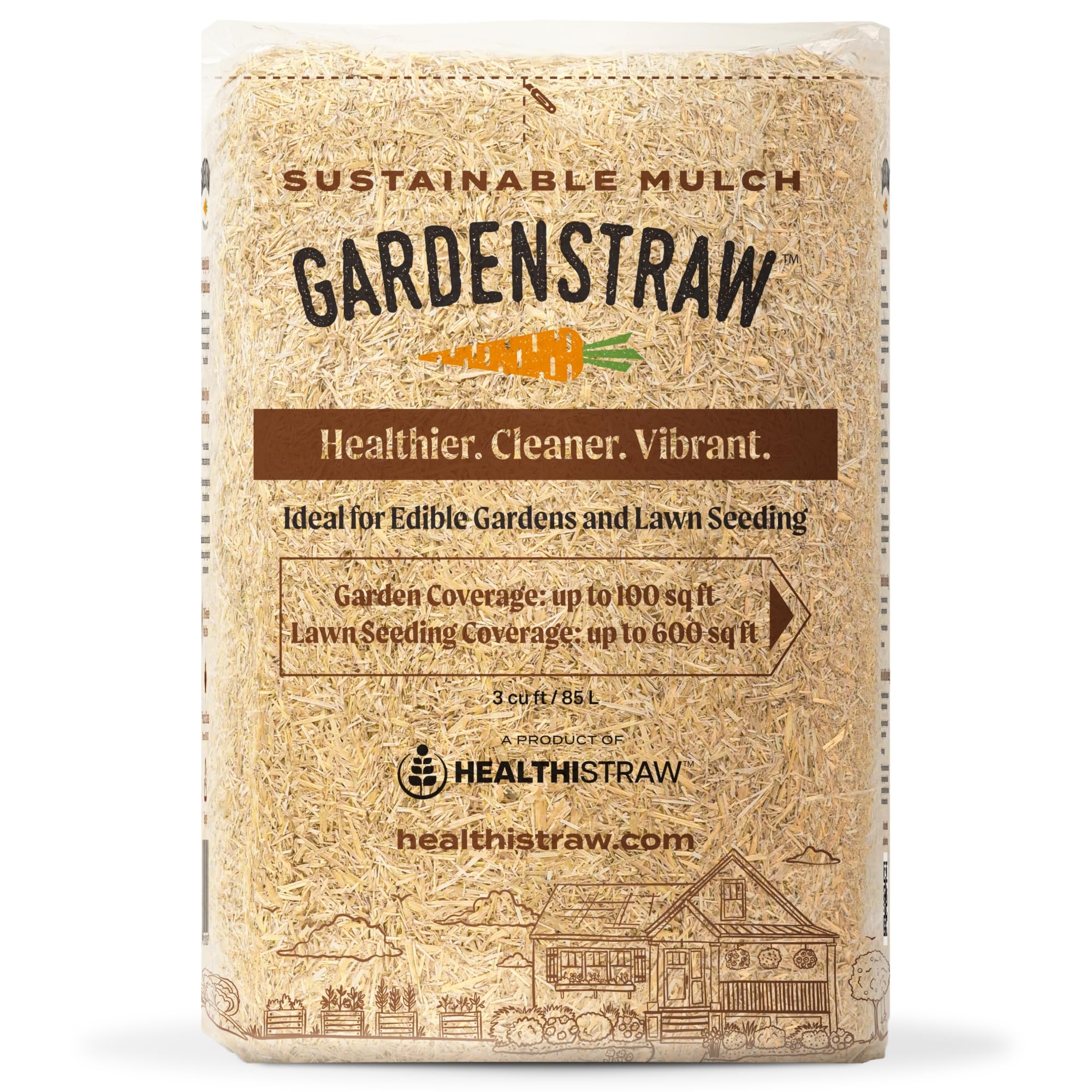
A big bale of cleaned straw that stays put and saves water.
At 3 cubic feet and 20 pounds, this bale covers up to 100 square feet at a 2–3 inch layer — or 600 square feet for lawn seeding at a ¼ inch thickness. The straw is naturally filtered to remove dust, dirt, and as many seeds as possible, and one buyer specifically noted, “I’ve had no wheat seeds germinate.” That is not universal (another reviewer reported many seeds), but the design goal is cleaner mulch than a standard farm bale. The fiber pieces are cut so they interlock when watered, which means the straw resists wind and rain without chemical binders.
The water‑conserving claim is backed by a real figure: the maker says it reduces watering needs by up to 50%. At the end of the season, the straw breaks down quickly and you can till it into the soil, adding organic matter and carbon. Compared to the 2 cubic feet of the coconut husk block above, HealthiStraw gives you 50% more volume per bale, which makes it a better choice if you have a bigger garden or several raised beds. The biggest trade-off is the seed risk — some batches clearly have more than others, so check your bale as you spread it.
Volume king with caveats: The 3 cu ft bale is the largest single‑package straw mulch here, but seed consistency varies by batch. Buyers who got a clean bale love the low maintenance; others had to pull wheat shoots.
Reach for this if: You have a large vegetable patch (100 sq ft or more) and want a straw that stays in place during wind and cuts your watering.
Look elsewhere if: You cannot tolerate any stray wheat seeds and want zero‑risk, seed‑free material.
3. Dewitt Garden Weed Barrier Natural Paper Mulch, Black, 2 x 40 Feet

A paper roll that blocks weeds without blocking your soil.
This 2′ x 40′ roll of natural paper mulch weighs only 2 pounds — a stark contrast to the 10‑pound coconut block or 20‑pound straw bale, making it the lightest option here by far. It lets air, water, and nutrients move into the soil while blocking light, so weeds do not sprout. One reviewer noted, “I put this paper down 2 weeks ago and NO WEEDS in my vegetable and flower gardens.” The paper gradually breaks down over the season, and at the end you can till it directly into the soil, returning organic matter with no cloth or plastic to tangle in your tiller.
The trade-off is stability. Multiple customers note that the paper curls up if you do not cover it with plenty of soil or a thin layer of other mulch, and storms can tear it unless you use many pins (one reviewer recommends pins every 6 inches). It is also fragile if you step on it after tilling. When installed correctly — with two layers and 0.5–1 inch of top mulch — it lasts about 6 months. For a seasonal vegetable garden where you want to avoid plastic and tilling headache at the end, this is a smart, low‑weight solution.
Simple End‑of‑Season Cleanup
- Roto‑tills into soil — no cloth to collect or dispose of
- Allows water and air to reach plant roots
- Stops Johnson grass and most annual weeds effectively
Needs Anchoring Work
- Curls and tears in wind without many soil pins or top layer
- Too fragile to walk on directly after installation
Ideal for no‑till fans: Choose this paper mulch if you want to suppress weeds without plastic and till everything back into the soil at the end of the season.
skip it if: You want a “lay it and leave it” solution — this paper needs careful pinning and a protective top layer to stay flat.
4. CZ Grain Wheat Straw Garden Mulch, 12 Ounces (4 Sq. Ft.)
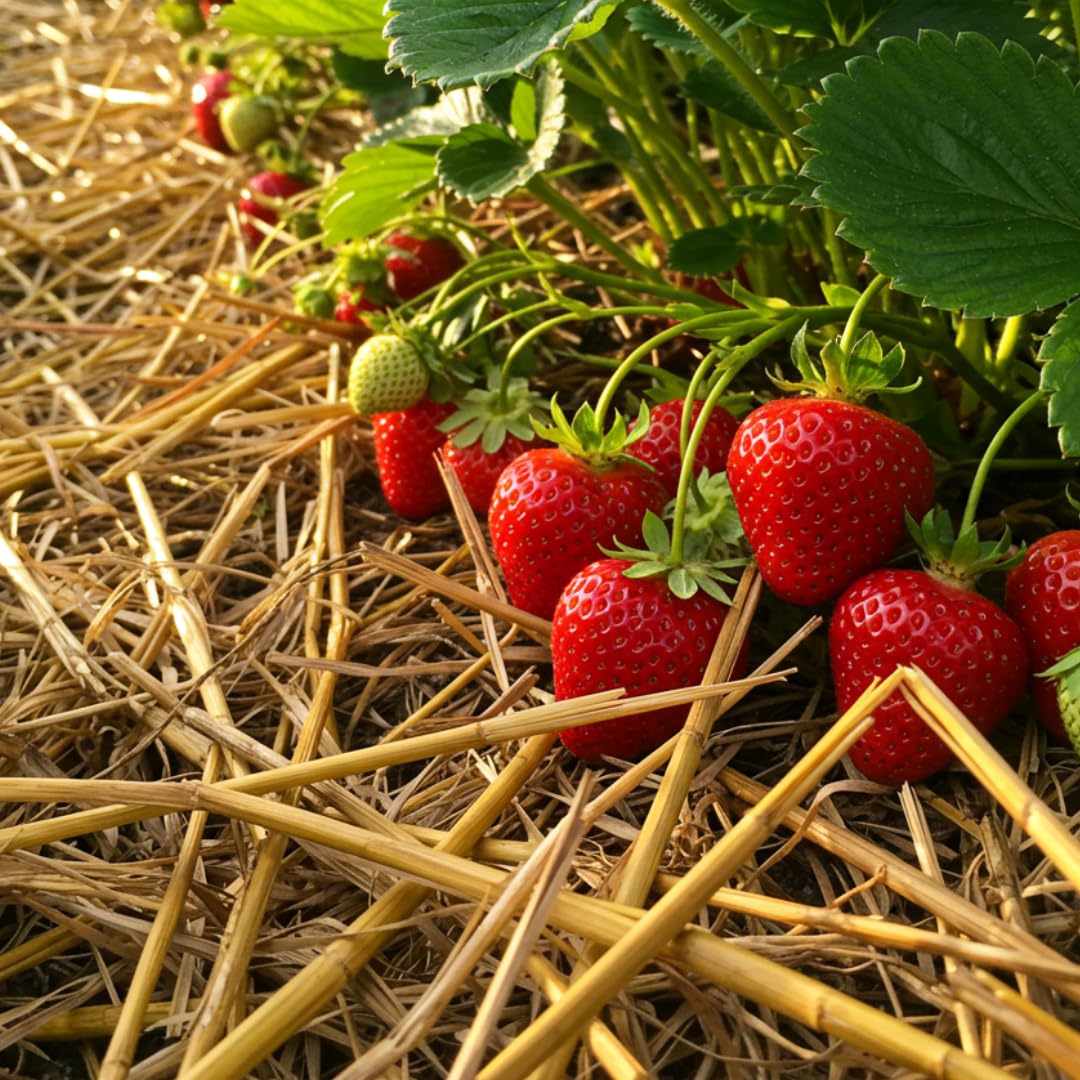
A small bag of all‑natural straw for a small plot or a test patch.
This 12‑ounce bag covers about 4 square feet at a 1‑inch thickness, which makes it the smallest option here — a good size for a few strawberry plants, a single raised bed, or testing how straw mulch behaves in your local climate before committing to a bigger bale. The straw is grown on a farm in Iowa and is Non‑GMO, so it is a clean, straightforward product. One buyer mentioned, “It worked great for the small amount that I needed, but I wish there was a reasonably priced one with a little bit bigger size.”
The straw pieces are long and need a good watering to pack down, as several buyers mentioned. It does not blow away in wind once wet, which is a plus. At only 12 ounces, the bag is lighter than the paper mulch roll (2 pounds) and far lighter than the coconut block (10 pounds). For the price, you get a small, no‑fuss introduction to straw mulching. If you are sure about straw, the HealthiStraw bale above gives you much more volume per dollar and is filtered for fewer seeds.
Fine for a tiny bed: The 4‑square‑foot coverage is ideal for a few vegetable plants or a test patch, but you will outgrow it quickly if your garden expands. Buyers wish it came in a larger bag at a similar value.
Best for a test run: Pick this if you are new to straw mulching and want to try it on a small area before buying 2–3 cubic feet.
Too small for a real garden: If you have more than a few square feet of beds, move up to the HealthiStraw or the coconut block for better coverage per dollar.
Understanding the Specs
Coverage (in cubic feet or square feet)
This tells you how much area a single package will cover at a given thickness. A 2‑cubic‑foot block covers roughly 100 square feet at a 2‑inch depth. A 3‑cubic‑foot bale covers about 100 square feet at a 2–3 inch layer. A paper roll measured in square feet (like 2′ x 40′ = 80 square feet) works as a flat sheet. Match the coverage to your garden size so you do not run out mid‑spread.
Weight and expandability
A compressed block (coconut husk, some straw bales) weighs much less dry than the same volume of wet mulch. You carry the compression weight (10 lbs for 2 cu ft) and then add water to expand it. That saves your back compared to buying pre‑expanded, wet mulch bags. Paper rolls are the lightest (2 lbs for a 40‑foot roll) because they are just flat sheets with no moisture.
Seed content
Straw mulches, even cleaned ones, can contain wheat or grass seeds. “Cleaned” or “filtered” means the manufacturer has tried to remove most seeds, but a few can sneak through. Paper and coconut husk mulches have zero seeds by nature, so they are a better choice if you absolutely cannot tolerate surprise plants.
FAQ
Will straw mulch introduce weed seeds into my vegetable garden?
How thick should I spread mulch in a vegetable bed?
Does paper mulch really break down and till into the soil?
Does coconut husk mulch attract insects or pests?
How much mulch do I need for a 4×8 raised bed?
Can I use paper mulch on a windy day?
Is organic mulch worth the extra cost?
Does straw mulch reduce watering needs?
Can I reuse mulch from one season to the next?
What is the difference between straw and hay for garden mulch?
Final Thoughts: The Verdict
For most vegetable gardeners, the mulch for vegetable garden winner is the Back to the Roots Organic Coconut Husk Mulch because it is completely seed‑free, expands from a lightweight 10‑pound block to 2 cubic feet, and carries OMRI organic certification you can trust. If you want the largest coverage for a big garden at a good value, grab the HealthiStraw GardenStraw. And for a budget‑friendly, biodegradable option that tills right into your soil at the end of the season, the Dewitt Natural Paper Mulch is a smart choice for seasonal beds.
How We Picked
We do not accept paid placement. Every pick is matched to a real buyer and a real use-case; we do not hands-on test units.
Sources & Methodology
Specifications: manufacturer listings and product documentation. Review insights: verified customer reviews, as of July 2026. Pricing: not shown on this page (it changes often); check the current price via the retailer link.
As an Amazon Associate, Lawn Gear Lab earns from qualifying purchases. This does not affect which products we feature.