
Specs are compiled from manufacturer listings and verified buyer reviews and can change over time — please confirm the key details on the product page before buying.
You want garden tools that actually last — not something that snaps mid-season or leaves the handle loose after a few weekends. American-made garden tools have a reputation for thicker steel, better welds, and fewer compromises, but picking the right one still means sorting through different handle lengths, head weights, and specific jobs like edging versus weeding versus tilling.
I’m Rikta — the founder and writer behind Lawn Gear Lab. This guide is built by comparing the manufacturers’ published specifications and the patterns across verified customer reviews, so you get each pick’s real strengths and trade-offs instead of marketing spin.
if you need a new rake, hoe, edger, or broadfork for your yard, the best american made garden tools share one trait: heavy-gauge steel heads and handles built to take years of abuse without failing.
Quick Picks
- Hoss Stirrup Hoe — Best Overall
- Hoss Tools Push Pull Hoe — Best Value
- Bully Tools Bow Rake 16″ Tines — Top Performer
- Bully Tools 12-Gauge Manual Lawn Edger — Best for Edging
- BULLY TOOLS Warren Hoe Professional 12-Gauge — Budget Champion
- Bully Tools 5-Tine Broadfork — Premium Pick
How To Choose The Best American Made Garden Tools
The difference between a tool that lasts a season and one that lasts decades usually depends on steel thickness, handle construction, and whether the company backs it with a warranty. Here are the key factors to weigh before buying.
Steel Gauge — Thicker Isn’t Just Heavier, It’s Stronger
The gauge number is the key: lower numbers mean thicker steel. A 10-gauge head is thicker and more resistant to bending than a 12-gauge head — about 20% more material by some measures — which matters if you are breaking up compacted soil or prying roots. For lighter weeding, 12-gauge still holds up well without being overly heavy.
Handle Material — Fiberglass vs Ash vs Steel
Fiberglass handles (common on Bully Tools products) will not splinter or rot like wood, and they resist weather better over many seasons. Ash wood handles (like on the Hoss stirrup hoe) offer a classic feel and good shock absorption but require a bit more care to prevent cracking Dry climates can dry out wood, so waxed or oiled finishes help. Steel handles provide maximum durability but add weight, which can fatigue your arms during long sessions.
Match the Tool Shape to the Task
A bow rake is for spreading mulch and leveling soil. A stirrup hoe cuts weeds just below the surface with a sawing motion. A warren hoe is for digging and trenching, and a broadfork aerates soil without the need for tilling. Buying the wrong shape for your yard’s main chore will lead to frustration, even if the tool itself is well-made.
Quick Comparison
| Model | Best For | Head Material | Handle Length | Item Weight | Amazon |
|---|---|---|---|---|---|
| Hoss Stirrup Hoe | Weeding & Edging | Spring Steel | 60″ | 1 lb | Amazon |
| Hoss Push Pull Hoe | Ergonomic Weeding | Tempered Steel | — | 1 lb | Amazon |
| Bully Tools Bow Rake | Leveling & Mulch | 10-gauge steel | 58″ | 3.5 lb | Amazon |
| Bully Tools Lawn Edger | Edging & Sod Cutting | 12-gauge steel | 39.25″ (overall) | 3.69 lb | Amazon |
| Bully Tools Warren Hoe | Digging & Cultivating | 12-gauge steel | 60″ (approx) | 3.07 lb | Amazon |
| Bully Tools Broadfork | Tilling & Aerating | 10-gauge steel | 56″ | 11.8 lb | Amazon |
In‑Depth Reviews
1. Hoss Stirrup Hoe

The Hoss Stirrup Hoe glides under weeds without the back strain of chopping.
The 6″ spring steel blade is sharpened on both sides, so you cut weeds on both the forward and backward stroke — the blade rocks 20 degrees each way to make that happen. At just 1 pound, it is much lighter than a standard hoe, and the 60-inch ash wood handle gives you plenty of reach without bending severely. Buyers report that the “very sharp blade cuts through roots and small shrubs easily with sawing motion,” which is a big step up from a typical warren hoe for clearing large garden beds.
Unlike the Bully Tools Bow Rake (3.5 pounds with a 58-inch fiberglass handle), the Hoss Stirrup Hoe weighs 3.7x less at 1 pound, making it a far better choice for long weeding sessions where fatigue is the main enemy. The handle is waxed (not varnished), so it won’t peel or crack over time as some coated wood handles do. One caveat: a few buyers noted the blade can lose its edge faster than expected after an hour of work in tough soil, so keeping a sharpening tool handy may be wise.
Best for shallow weeding: This stirrup hoe excels in soft or wet soil where you can slide it just below the surface — ideal for vegetable beds and flower borders.
Not ideal for dry or hard-packed clay: The blade struggles to penetrate very compacted ground, and the narrow handle can feel slippery to some users.
Reach for this if: you spend most of your time weeding large areas and want a tool that moves with you instead of fighting back.
Look elsewhere if: your soil is dense clay or you need a heavy-duty tool for breaking up hard ground.
2. Hoss Tools Push Pull Hoe

A V-shaped blade that slides under weeds without chopping.
The Push Pull Hoe works by slicing forward and backward just below the surface, so you don’t have to swing or lift the tool at all. The tempered steel head is sharpened and designed to navigate around plant stems without damaging them — a real advantage when you are weeding close to tomatoes or peppers. It also slides under drip irrigation lines without cutting them, which gardeners with soaker hoses will appreciate.
Weighing only 1 pound, this hoe feels nearly weightless compared to a standard hoe, and buyers consistently say it “makes weeding my flower bed quick and easy.” The Amish-made construction signals attention to detail, and Hoss backs it with a lifetime warranty. This is also notably lighter than the Bully Tools Warren Hoe (3.07 pounds), so if ergonomics are your priority, this is the smarter pick for large beds.
What works well
- V-shaped head protects nearby plants and drip lines
- Cuts in both directions — no repetitive swinging motion
- Very lightweight at 1 pound, reduces fatigue
- Made by Amish craftsmen with a lifetime warranty
Trade-offs
- Not designed for breaking up hard, compacted soil
- Some buyers find the narrow handle can slip in wet hands
Perfect for: gardeners who want to weed close to plants or around irrigation lines without risk of damage.
skip it if: you need a tool for digging tough ground or deep-rooted brush.
3. Bully Tools Bow Rake 16″ Tines
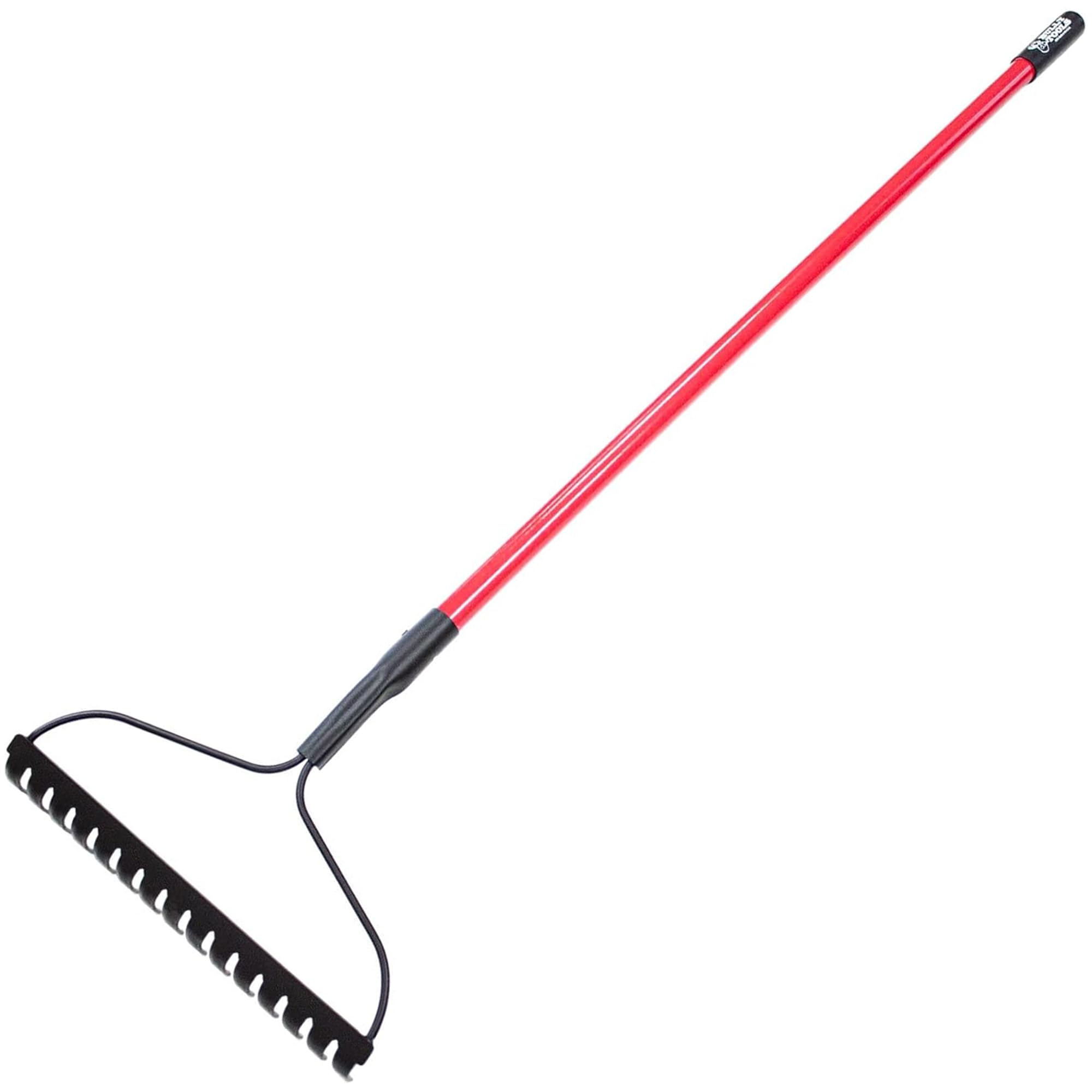
The 16-inch bow rake that replaced two broken wood-handled rakes for one buyer.
This rake’s 10-gauge American steel head is thicker than foreign competitors (up to 30% more durable, per the manufacturer), and the robotically overwelded connections between tines and the head resist snapping even when you lean into a heavy load of gravel or compacted soil. The 58-inch fiberglass handle is coated in a polyester veil to prevent splintering, and the rubber grip reduces hand fatigue during long sessions of spreading mulch or breaking up soil clods.
Owners mention that it “replaced two broken wood-handled rakes” and feels rock solid. The 16 tines are ribbed for extra strength, and the rake head has reinforced ridges for digging into tough ground. One tall reviewer (6’2″) noted the 58-inch handle works well for them, though some users expressed a desire for a longer 66-inch option — which is available if you prefer more reach. This rake is noticeably heavier than the Hoss Stirrup Hoe (3.5 pounds vs 1 pound), but that weight translates to more digging power when you need it.
Built for heavy tasks: This rake handles soil leveling, gravel spreading, and mulch distribution without bending or loosening.
Minor considerations: Some buyers mention the rake feels slightly short for very tall users, and the weight takes a session or two to get used to.
Choose this if: you need a rake that won’t snap under heavy loads of gravel, soil, or debris.
Consider another if: you are over 6’4″ and prefer a longer handle for better posture.
4. Bully Tools 12-Gauge Manual Lawn Edger

A 12-gauge steel edge that cuts through roots and soil for sharp lawn borders.
The Bully Tools lawn edger uses an extra-thick 12-gauge steel head to slice along sidewalks, driveways, and garden beds without bending or warping. The steel T-style grip gives you good leverage for a steady, straight cut, and the foot platform is wide enough to press down without slipping. Customers note it has a “factory sharp, solid feel” and that it works well on damp soil — a key detail if your ground is often moist.
At 3.69 pounds, it is slightly heavier than the Warren Hoe (3.07 pounds) but offers a different action: you step on the blade and push forward rather than swinging. The all-steel construction means no wood handle to rot, and the detachable blade allows replacement if it ever wears out. A few reviewers point out that the rubber handles can twist off after extended use unless secured with adhesive, but they also emphasize that edging performance is excellent and the tool is “worth the purchase.”
What stands out
- 12-gauge steel resists bending on roots and rocks
- T-style grip provides steady control along straight lines
- Detachable blade extends tool life
- Foot platform is wide enough for comfortable pressing
What to know
- Rubber grip can slip off if not secured with adhesive
- Best results on damp soil; hard dry dirt requires more effort
Ideal for: anyone who wants crisp, defined edges along patios and beds without gas-powered equipment.
Not for: those who prefer a lightweight plastic tool for occasional touch-ups — this is a heavy-duty tool.
5. BULLY TOOLS Warren Hoe Professional 12-Gauge
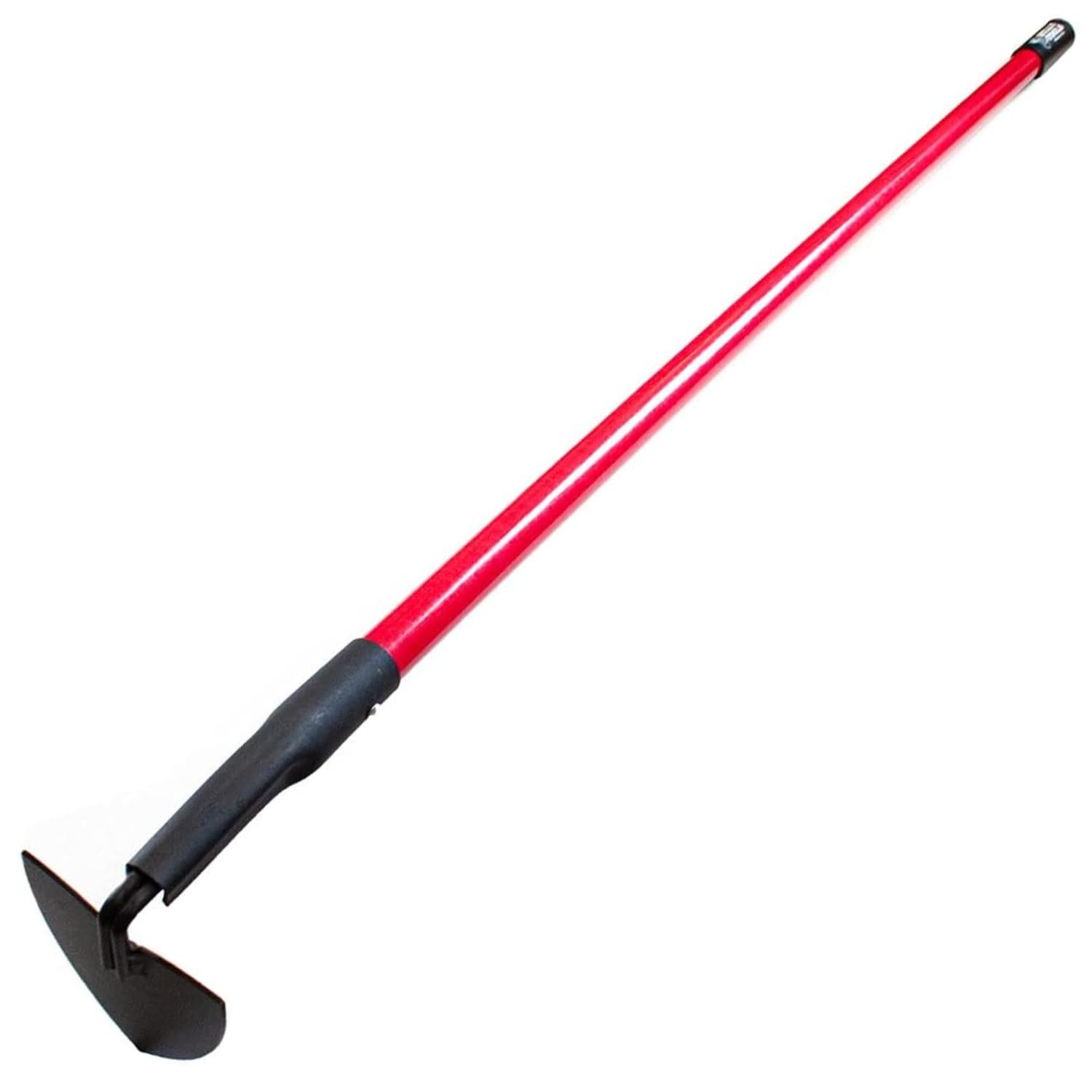
A 12-gauge warren hoe with an extended steel ferrule for tough digging.
This warren hoe is built for serious digging, trenching, and weeding in tight spaces. The 12-gauge steel head (6.25 inches wide) cuts through compacted soil and roots without bending, and the extended steel ferrule adds structural strength where the head meets the handle — a common failure point on cheaper hoes. The fiberglass handle has triple-wall construction to resist splitting, and the whole tool weighs 3.07 pounds, making it manageable for extended sessions.
One reviewer noted that “Bully Tools are durable, American-made, and backed by a low-maintenance limited lifetime warranty” — a line that reflects the company’s reputation. The head is welded securely, and the handle connection feels solid. Compared to the Hoss Stirrup Hoe (1 pound), this hoe is noticeably heavier, which helps it punch through hard ground but may tire your arms faster if you are using it for light weeding all afternoon. Buyers praise the quality: “well made and solid for digging” is a common refrain.
Why it works
- 12-gauge steel head resists bending in tough soil
- Extended steel ferrule strengthens the head-handle joint
- Fiberglass handle with triple-wall construction won’t splinter
- Backed by a limited lifetime warranty from Bully Tools
Limitations
- Heavier than some alternatives at 3.07 pounds
- Some buyers find it “too much hoe” for light weeding tasks
Great for: digging garden beds, trenching, and working in tight spaces where a full-size hoe is too big.
Less suited for: large-area weeding where a lighter stirrup hoe would be faster.
6. Bully Tools 5-Tine Broadfork

The broadfork that aerates without tilling — and without killing earthworms.
This broadfork uses five 10-gauge steel tines (each 11 inches long) to loosen and aerate soil to a depth no rake or hoe can reach. You step on the crossbar, rock the tool back, and pull — no heavy lifting required. At 11.8 pounds, it is the heaviest tool in this lineup, but the weight works in your favor: once the tines are in the ground, you don’t lift again; you just rock and repeat. A steel encasement around the fiberglass handles and a reinforcing wood core add strength, and the rubber grips reduce hand fatigue over long sessions.
One buyer with 312 linear feet of raised beds (compacted clay, blackberry roots, and rocks) called it “the best tool I’ve purchased in a long time” and noted that it went through roots easily. Another gardener described it as “genuinely useful,” saying it does the job of a bottom plow without creating a hardpan layer. The 56-inch total length accommodates most heights, and the detachable handles make storage simpler. Some shoppers say the handle bolts can work loose over time, but they also say the tool remains functional even with that play.
Perfect for soil health: A broadfork aerates without destroying soil structure or harming earthworms — a huge advantage over rotary tillers.
Not a quick weeder: This is a soil-prep tool, not a light weeder. It takes effort and time but pays off in better root growth and drainage.
Best for: gardeners with large beds or compacted soil who want to aerate without a gas-powered tiller.
pass on it if: you need a quick weeding tool for small flower beds — this is a heavy-duty investment.
Understanding the Specs
Steel Gauge (10 vs 12)
Gauge numbers work backwards: lower numbers mean thicker steel. A 10-gauge head is roughly 20% thicker than a 12-gauge head, which translates to higher resistance to bending when you are prying roots or breaking up compacted clay. For light weeding or edging, 12-gauge is plenty strong and keeps the tool a bit lighter. For heavy prying or for spreading gravel, 10-gauge gives you more confidence.
Handle Material and Length
Fiberglass handles won’t rot or splinter like wood, and they hold up to rain and mud between seasons. Ash wood handles offer a classic feel and good shock absorption but need occasional oiling to prevent drying and cracking. Handle length matters for posture: a 58-inch handle suits most users, while a 60-inch or 66-inch handle helps taller gardeners avoid stooping. A 3% difference (58″ vs 60″) may not sound like much, but over a full afternoon of raking or hoeing, every inch of extra reach reduces back strain.
FAQ
Are Bully Tools actually made in the USA?
What is the difference between a stirrup hoe and a warren hoe?
Will a 58-inch rake handle be long enough for a tall person?
How does a broadfork compare to a rototiller?
What does “12-gauge” mean in practical terms?
Can I use a stirrup hoe on dry, hard soil?
Do fiberglass handles last longer than wood handles?
What does a limited lifetime warranty cover on Bully Tools?
Final Thoughts: The Verdict
Across the board, the best american made garden tools winner is the Hoss Stirrup Hoe because its 60-inch ash handle and 1-pound spring steel blade make weeding large areas feel easy. If you need a rake that handles gravel and compacted soil without breaking, grab the Bully Tools Bow Rake. And for serious soil aeration and bed prep without a gas tiller, the Bully Tools 5-Tine Broadfork is the standout choice for heavy work.
How We Picked
We do not accept paid placement. Every pick is matched to a real buyer and a real use-case; we do not hands-on test units.
Sources & Methodology
Specifications: manufacturer listings and product documentation. Review insights: verified customer reviews, as of July 2026. Pricing: not shown on this page (it changes often); check the current price via the retailer link.
As an Amazon Associate, Lawn Gear Lab earns from qualifying purchases. This does not affect which products we feature.