
Specs are compiled from manufacturer listings and verified buyer reviews and can change over time — please confirm the key details on the product page before buying.
The best mix for raised beds isn’t topsoil from a bag, and it isn’t plain compost either — it’s a specifically blended growing medium that gives roots room to roam, holds moisture without turning into mud, and feeds your vegetables from the moment you fill the frame. Picking the wrong one usually means stunted plants, constant watering, or the frustration of adding fertilizer a few weeks in just to keep things green.
I’m Rikta — the founder and writer behind Lawn Gear Lab. This guide is built by comparing the manufacturers’ published specifications and the patterns across verified customer reviews, so you get each pick’s real strengths and trade-offs instead of marketing spin.
After digging into the specs and real buyer experiences for five of the most popular bagged options, these are the mixes that actually deliver on the promise of the best mix for raised beds this season.
Quick Picks
- Coast of Maine Castine Blend — Best Overall
- Espoma Organic Raised Bed Mix — Best Value
- BuildASoil Light Garden Soil — Best Texture
- Organic Mechanics Planting Mix Compost Blend — Best Peat-Free
- Wiggle Worm Raised Bed Mix — Worm Boost Pick
How To Choose The Best Mix For Raised Beds
A raised bed is a small ecosystem. The mix you pour into it determines how often you need to water, whether your seeds rot or sprout, and if your plants run out of gas halfway through the season. Three things matter most.
Volume and Bag Size
Raised beds are measured in cubic feet — a standard 4×4 foot bed that is 12 inches deep needs 16 cubic feet of mix. Bag sizes vary widely from 1 cubic foot up to 2 cubic feet, so checking the volume per bag keeps you from ordering way too many or too few.
Organic Ingredients and Nutrient Sources
The best mixes list specific organic ingredients like worm castings, kelp meal, alfalfa meal, or compost. These feed soil microbes and release nutrients slowly. A mix that is mostly bark or wood without those labeled inputs may need heavy fertilizing within weeks.
Texture and Drainage
You want a loamy, crumbly feel — not dense clay or long strips of bark. Ingredients like coconut coir (coconut husk fiber), aged pine bark, and mycorrhizae (beneficial fungi that connect to plant roots) improve aeration and drainage so roots don’t sit in water.
Quick Comparison
| Model | Best For | Bag Volume | Key Ingredients | Item Weight | Amazon |
|---|---|---|---|---|---|
| Coast of Maine Castine Blend | Premium all-in-one | 2 Cubic Feet | Worm castings, mycorrhizae, biochar, kelp meal | 40.25 Pounds | Amazon |
| Espoma Organic Raised Bed Mix | Value and brand trust | 1.5 Cubic Feet | Worm castings, alfalfa meal, kelp meal, feather meal | — | Amazon |
| BuildASoil Light Garden Soil | Low-sodium loamy texture | 1 Cubic Feet | Worm castings, compost | 30 Pounds | Amazon |
| Organic Mechanics Planting Mix | Peat-free and fine texture | 1 Cubic Feet | Compost, aged pine bark, coconut coir, worm castings | 21 Pounds | Amazon |
| Wiggle Worm Raised Bed Mix | Worm casting boost | 640 Fluid Ounces | Compost soil, worm castings, worm eggs | 40 Pounds | Amazon |
In‑Depth Reviews
1. Coast of Maine Castine Blend
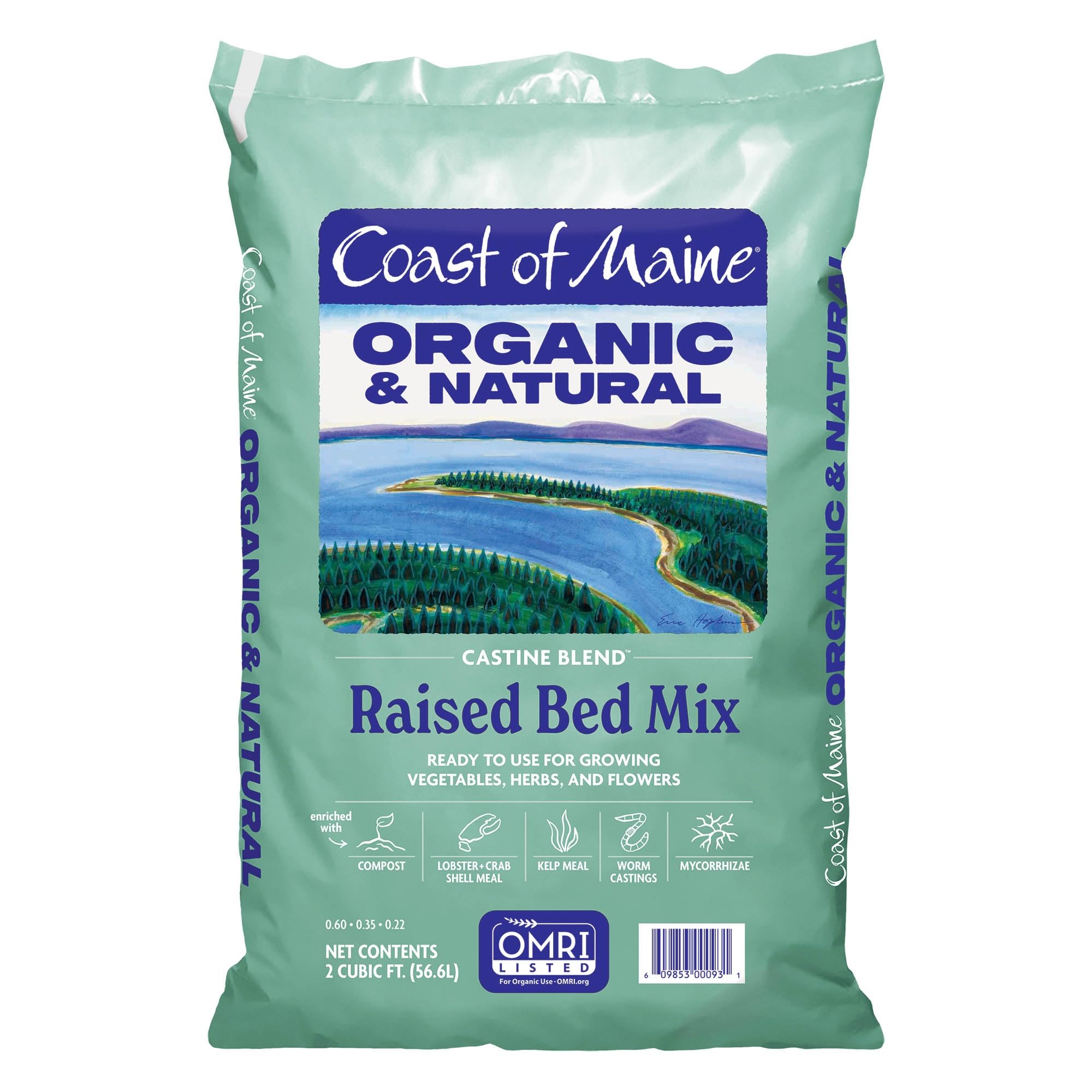
The only bag here that packs biochar, mycorrhizae, and lobster shell into a complete growing medium.
This mix is engineered so you don’t have to blend your own. It includes worm castings, mycorrhizae (beneficial root fungi), biochar (a charcoal-like material that holds moisture and nutrients), greensand, kelp meal, and lobster and crab shell meal all in one 2 cubic foot bag.
Buyers report this soil has excellent texture — one reviewer described it as “light, fluffy soil” and another noted “no twigs or bugs” when they opened the bag, just soft, dark dirt. At 40.25 pounds per bag, it is noticeably heavier than most 1 cu ft options, which you feel carrying it to the garden.
The catch is the premium price, but for a single-bag fill with no extra amendments needed, this is the most complete option. One reviewer noted using it for three years straight in the same beds.
Why it stands out
- 2 cubic feet bag — the biggest volume here
- Seven organic ingredients including biochar and mycorrhizae
- Reviewers praise the loose, rock-free texture
The trade-offs
- Heaviest bag on this list at 40.25 pounds
- Higher upfront cost per bag than most competitors
Reach for this if: you want the highest ingredient density in a single bag and don’t mind carrying a heavier load for a bigger volume.
Look elsewhere if: your budget is tight or you only need a small top-off layer for a single planter box.
2. Espoma Organic Raised Bed Mix

A mid-priced 1.5 cubic foot bag that packs four organic meals plus mycorrhizae into every scoop.
This is the largest volume you get without stepping into premium pricing. It contains earthworm castings, alfalfa meal, kelp meal, and feather meal, plus Espoma’s proprietary Myco-Tone blend of endo and ecto mycorrhizae — the two types of fungi that attach to different root structures.
Buyers like the clean smell and report it retains moisture well without getting soggy. One reviewer in Southwest Florida grew eggplant, green beans, and several herbs from seed in it and noted low bug activity. But there is a real drawback: several owners mention it looks like mostly wood and mulch once the bag is opened. One wrote that seeds germinated but plants turned yellow three weeks later, suggesting the initial fertility may run out fast.
Unlike the Coast of Maine bag that comes fully loaded for a full season, this mix may need a fertilizer boost a few weeks in for heavy-feeding crops like tomatoes or peppers.
What works well
- Generous 1.5 cubic foot bag size
- Myco-Tone includes both endo and ecto mycorrhizae
- Fresh, clean smell with no manure odor
What to watch for
- Some bags are heavy on wood and mulch content
- A few customers note plants stalling after germination
Best for: gardeners on a mid-range budget who want mycorrhizae and organic meals in a generous bag and plan to add supplemental fertilizer later.
Not ideal for: anyone who wants a single-bag solution with no follow-up feeding, or for growers who dislike woody texture.
3. BuildASoil Light Garden Soil
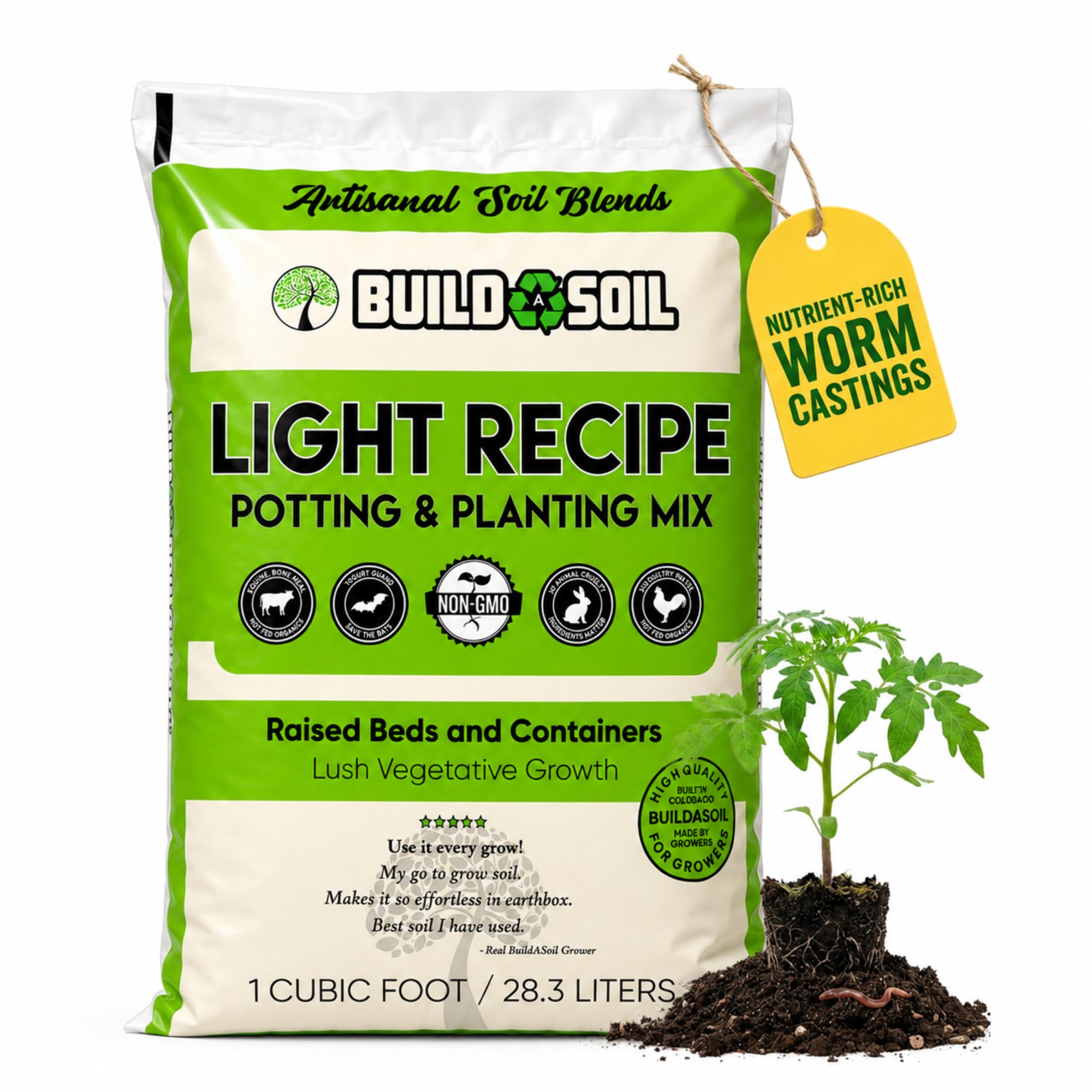
A loamy, low-sodium formula that feels more like garden soil than shredded bark.
BuildASoil markets this as their most popular recipe, and the spec sheet backs that up. It is high in worm castings and certified organic, but the standout detail is the low sodium formula designed to reduce salt stress on roots. High sodium levels in some bagged soils can burn tender roots; this mix keeps sodium, chlorides, and bicarbonates low to protect the soil biology.
At 30 pounds for a 1 cubic foot bag, it is denser than the Organic Mechanics mix (21 pounds for the same volume), which suggests less woody filler and more actual soil. Buyers describe the quality as “amazing” and note it won’t burn plants.
Compared to the Coast of Maine bag, this one gives you only half the volume and no mycorrhizae or biochar, so it suits smaller beds or containers better. The ingredient transparency — every input is listed on the bag — appeals to growers who want full control over what goes into their soil.
Strengths
- Low sodium formula protects root health
- Loamy, soil-like texture with high worm casting content
- Complete ingredient transparency
Limitations
- Only 1 cubic foot per bag
- Premium price for a smaller volume
Choose this for: container gardens, small raised beds, or when you want a clean, fine-textured soil that won’t stress seedlings with excess salts.
Consider another option if: you are filling a 4×8 foot bed and need multiple bags to keep costs reasonable.
4. Organic Mechanics Planting Mix Compost Blend
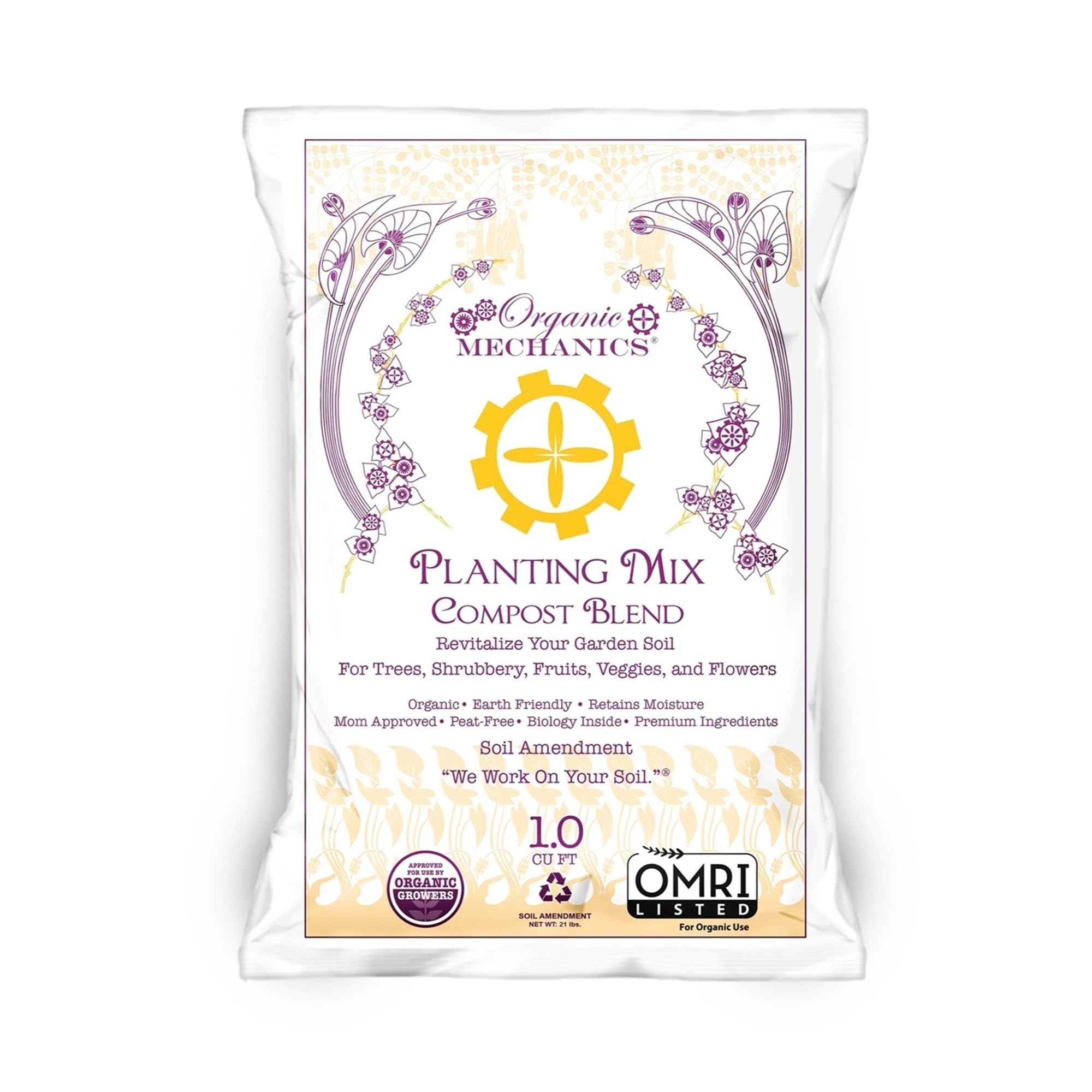
The lightest bag here at 21 pounds, and it is completely peat-free for eco-conscious growers.
Organic Mechanics replaces peat moss with coconut coir (a sustainable fiber from coconut husks) for moisture retention, and blends it with compost, aged pine bark, and worm castings. The result is a mix that stays soft and crumbly even after watering. One buyer described it as “really lovely to work with” and noted it has very few sticks or wood pieces.
A buyer reported growing carrots that were noticeably wide and long after using this mix, which speaks to how loose and rock-free the texture is — carrots need unobstructed depth to develop fully. The bag also works as a natural mulch on top of beds, which is a dual-use bonus. At 21 pounds per bag, it is the lightest option here, making it the easiest to carry multiple bags from the car to the garden.
The trade-off is volume: 1 cubic foot means you need two bags to match the Espoma bag’s volume, and the ingredient list is simpler than the Coast of Maine blend (no mycorrhizae or biochar). For small beds or as a top-dressing mix, that simplicity is fine.
What we like
- Peat-free and eco-friendly formula
- Fine, soft texture with minimal wood
- Lightest bag on the list at 21 pounds
What it lacks
- Smaller 1 cubic foot bag
- No mycorrhizae or advanced amendments
Great for: root vegetables like carrots, and for gardeners who want a peat-free, easy-to-carry mix that doubles as mulch.
skip it if: you need more volume per trip or want a mix with biochar and mycorrhizae already included.
5. Wiggle Worm Raised Bed Mix
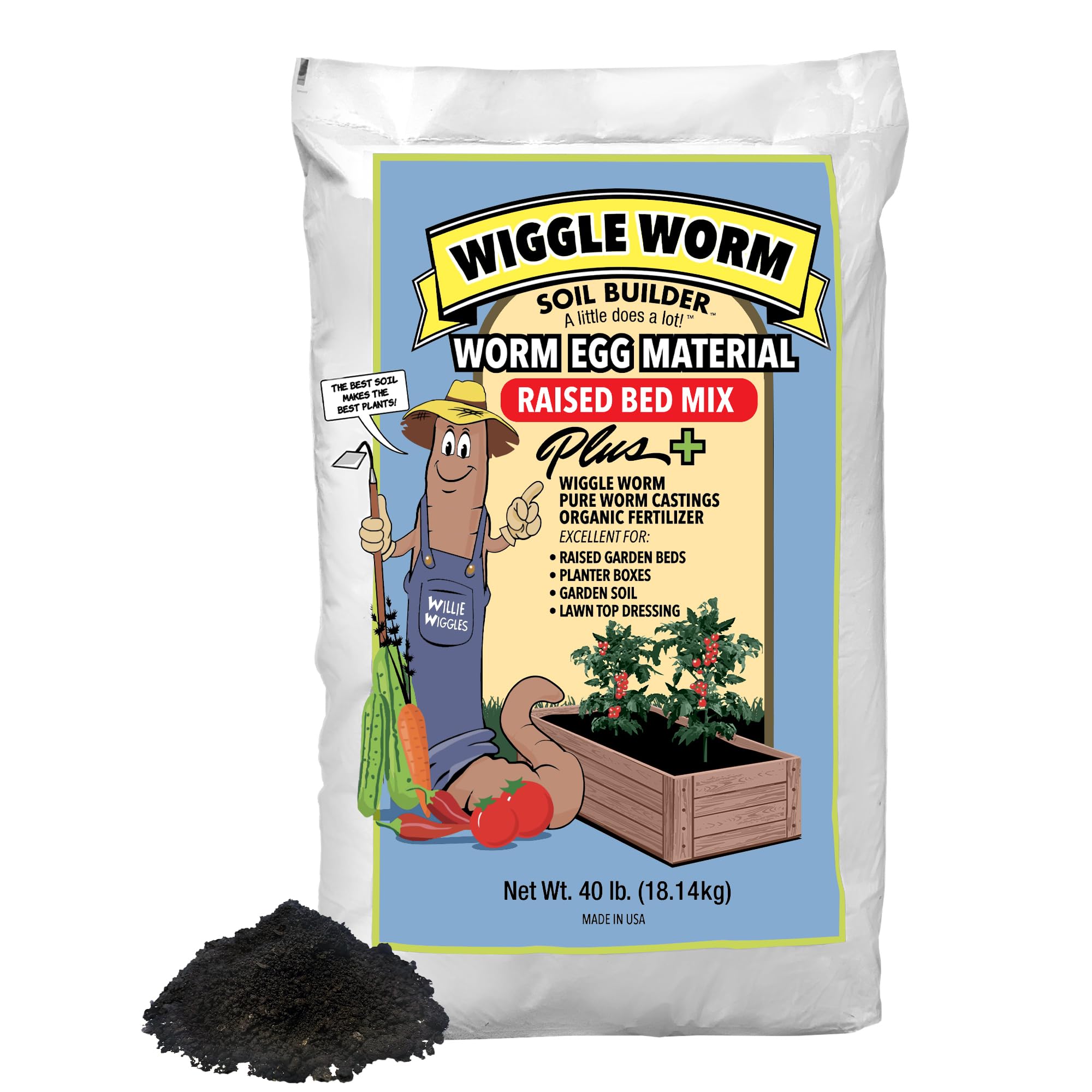
A 40-pound bag that mixes compost soil with actual worm eggs for ongoing soil improvement.
This is the only product here that includes worm eggs in the mix, not just castings. The idea is that the eggs hatch in your bed, the worms tunnel through the soil improving aeration and drainage, and they produce more castings steadily. One buyer mentioned that a small scoop at the bottom of a planting hole made seedlings “take off like wildfire.” Another said the product worked well in their raised beds and they plan to keep using it annually.
At 40 pounds, this bag is a heavy lift compared to the 21-pound Organic Mechanics bag, but the weight is partly the compost soil base that provides structure. Reviewers point out mixed experiences on debris — some found no rocks, others complained about gravel and twigs. Since the bag is organic and minimally processed, some natural variation is expected.
This is not a complete raised bed mix on its own for a full bed; it works best as a top dressing or a base layer mixed with other organic materials. For a dedicated worm-casting boost, it pairs well with the Organic Mechanics or Coast of Maine blends.
The unique angle
- Contains worm eggs for self-sustaining soil improvement
- Heavy 40-pound bag offers good value if worms hatch
- Works as a concentrated booster for other mixes
Honest downsides
- Some bags contain noticeable gravel and twigs
- Not a standalone complete raised bed mix
Choose it for: a concentrated worm-casting and worm-egg boost to sprinkle into your existing bed mix for long-term soil health.
Not for: anyone who wants a clean, uniform soil straight from the bag to fill an entire new bed.
Understanding the Specs
Bag Volume (Cubic Feet)
This is the single most practical spec for a raised bed buyer. A standard 4×4 foot bed that is 12 inches deep needs 16 cubic feet of mix. A 2 cubic foot bag means you need 8 bags; a 1 cubic foot bag means you need 16. Always calculate your bed volume and divide by the bag size before ordering — nothing is worse than running out halfway through filling.
Key Organic Ingredients
Worm castings (a nutrient-rich worm waste product), mycorrhizae (beneficial fungi that connect to plant roots and help them absorb water and nutrients), and biochar (a charcoal-like material that holds moisture and nutrients in the root zone) are the three most effective ingredients you can find in a bagged mix. Alfalfa meal, kelp meal, and feather meal are slow-release nitrogen sources that feed plants over weeks. If the only ingredients listed are “compost” and “bark,” the mix is likely low in fertility and will need regular feeding.
FAQ
How much raised bed mix do I need for a standard bed?
Can I use regular garden soil instead of raised bed mix?
What is the difference between raised bed mix and potting soil?
Does organic raised bed mix smell bad?
How long does a raised bed mix last before I need to replace it?
Will worm eggs in my bag actually hatch in the bed?
Should I add fertilizer to raised bed mix at planting time?
Is peat-free raised bed mix better for the environment?
What does mycorrhizae do in a raised bed?
Can I use raised bed mix for container gardening?
Final Thoughts: The Verdict
For most gardeners, the best mix for raised beds winner is the Coast of Maine Castine Blend because it packs the most organic ingredients (biochar, mycorrhizae, kelp meal, and lobster shell) into the biggest bag at 2 cubic feet, so you need fewer bags and less work. If you want a peat-free, light-textured mix that root vegetables love, grab the Organic Mechanics Planting Mix. And for a budget-friendly mid-range option that still brings mycorrhizae to the bed, the Espoma Organic Raised Bed Mix covers a lot of ground.
How We Picked
We do not accept paid placement. Every pick is matched to a real buyer and a real use-case; we do not hands-on test units.
Sources & Methodology
Specifications: manufacturer listings and product documentation. Review insights: verified customer reviews, as of July 2026. Pricing: not shown on this page (it changes often); check the current price via the retailer link.
As an Amazon Associate, Lawn Gear Lab earns from qualifying purchases. This does not affect which products we feature.