
Specs are compiled from manufacturer listings and verified buyer reviews and can change over time — please confirm the key details on the product page before buying.
A cedar raised garden bed sounds simple, but pick the wrong one and you will deal with boards that bow, splinters when you reach in, and soil trickling out through gaps a year later. What decides if a bed lasts for seasons or falls apart fast depends on three things: how thick the wood is, how the corners join together, and if you need an improve bed to protect your back or a ground-level bed for deep-rooted crops.
I am Rikta — the writer behind Lawn Gear Lab. This guide relies on the manufacturers’ published specs and patterns across verified customer reviews. You will get each pick’s real strengths and trade-offs, not marketing language.
The best cedar raised garden beds come down to five top options I looked at by wood thickness, soil capacity, and assembly quality. The winner is the one that handles tough weather without needing a full workshop to build.
Quick Picks
- Infinite Cedar Premium 4′ x 4′ x 11″ Raised Garden Bed — Best Overall
- Infinite Cedar Premium 3′ x 6′ x 11″ Raised Garden Bed — Largest Growing Area
- SoliWood Raised Garden Bed with Legs, 48x24x30″ — Back-Saving improve
- Greenes Fence Original Cedar improve Garden Bed — Patio-Friendly improve
- Greenes Fence Classic Cedar Raised Garden Bed — Budget Large Bed
How To Choose The Best Cedar Raised Garden Beds
The right raised bed for your yard depends on three things: the wood thickness, the assembly design, and whether an improve or ground-level bed makes sense for the space you have.
Wood Thickness: 1 Inch vs 1/2 Inch
The single biggest predictor of how many seasons a cedar bed will survive is the thickness of its boards. A 1-inch-thick board resists bowing, cracking, and swelling as it soaks up rain and thaws through winter. The 1/2-inch boards used in budget-friendly beds are lighter and cheaper, but reviewers consistently report warping and fraying after a few seasons — especially on longer spans like an 8-foot bed. If you plan to move the bed or you live in a wet climate, the thicker wood pays off fast.
Ground Level vs improve
A ground-level bed with an open bottom lets deep-rooted crops (tomatoes, carrots, squash) grow unrestricted into the native soil below, and it holds more soil overall. An improve bed — typically sitting 30 inches or higher on legs — spares your knees and lower back, keeps animals out, and works on patios or decks where you cannot dig. The catch is that improve beds have a shallow planting depth (usually around 7 inches), so you are limited to shallow-rooted plants like lettuce, herbs, and strawberries.
Assembly and Joinery Quality
Some beds use interlocking dovetail slots that slide together without tools, while others use pre-drilled holes and bolts. The dovetail style goes together fast, but if the slots are cut too tight you may need sandpaper or a mallet. The bolt-together style takes about 30 minutes but creates a more rigid structure. Check reviews for notes on pre-drilled hole alignment and whether the wood tends to split — this is a common frustration in this category.
Quick Comparison
| Model | Best For | Wood Thickness | Soil Capacity | Assembly Style | Amazon |
|---|---|---|---|---|---|
| Infinite Cedar 4×4 | Long-term durability | 1 inch | — | Bolts & nuts | Amazon |
| Infinite Cedar 3×6 | Largest growing area | 1 inch | 16.5 cu ft | Tool-free / bolts | Amazon |
| SoliWood improve | Back-friendly raised bed | 0.7 inch frame | 6 cu ft | Bolts & nuts | Amazon |
| Greenes Fence improve | Patio / no-bend gardening | — | 4.8 cu ft | Slats & mallet | Amazon |
| Greenes Fence Classic 2×8 | Budget large bed | 1/2 inch | — | Tool-free dovetail | Amazon |
In‑Depth Reviews
1. Infinite Cedar Premium 4′ x 4′ x 11″ Raised Garden Bed

A square bed built from 1-inch-thick cedar that handles wet New England winters without cracking.
If your number-one concern is how long the bed will hold together, this is the pick. The 4-foot-by-4-foot square is made from 100% North American Western Red Cedar with boards a full 1 inch thick — double the thickness of the budget-tier Greenes Fence Classic line. Infinite Cedar backs this with a five-year warranty on workmanship and materials, which tells you how confident they are in the wood quality. At 38 pounds, it sits right at the same weight as the SoliWood improve bed (38.9 pounds), but the Infinite Cedar is more compact in footprint, so it feels heavier and more substantial than the numbers suggest.
Buyers report these beds last three-plus years in New England weather, and they note the wood does discolor (that is natural western red cedar weathering to silver-gray, not a defect). The assembly uses pre-drilled boards with bolts and nuts — one owner found that the included nuts with seal rings prevented a tight fit and caused wobble, so they swapped in standard nuts for a rigid corner join. That is a minor complaint on an otherwise solid system. Unlike the Greenes Fence Classic, which some reviewers describe as flimsy with fraying wood, this Infinite Cedar bed feels like furniture-grade lumber.
The only real limitation: it is a 4×4 square, so the total growing area is 16 square feet, and you will need a lot of soil to fill it. But if you want one tough, long-lasting bed for vegetables and herbs without messing with legs, this is the one to build around.
Straightforward verdict: If you can handle swapping two nuts during assembly, this is the most durable ground-level bed in the lineup — best for the gardener who wants to install once and not think about it again.
Reach for this if: You live in a wet or freeze-thaw climate and want 1-inch cedar with a five-year warranty.
Look elsewhere if: You need a large footprint — this is a 4×4 square, and the 3×6 model below is better for bigger yields.
2. Infinite Cedar Premium 3′ x 6′ x 11″ Raised Garden Bed

A rectangular bed with 16.5 cubic feet of capacity — enough for a serious vegetable patch in one sturdy box.
This is the big brother to the 4×4 above, and it shares the same 1-inch-thick Western Red Cedar, the same five-year warranty, and the same “handmade in Maine” build quality. The real difference is the usable volume: at 16.5 cubic feet, this bed holds nearly three times the soil of the SoliWood improve bed (6 cubic feet), which translates into space for a real mix of deep-rooted crops. The assembled size is 6 feet long by 3 feet wide, so you can plant rows of tomatoes, peppers, and basil side by side.
Unlike the 4×4 bolted design, Infinite Cedar markets this as tool-free assembly — the boards slide together with interlocking tabs, much like the dovetail system on the Greenes Fence Classic. One 72-year-old buyer reported putting it together solo in minutes. However, a detailed reviewer noted that some boards arrived warped and the bolt-free corners can bulge under soil pressure. That same reviewer praised Infinite Cedar’s customer service, saying the company sent a replacement kit immediately. So the trade-off here is a gorgeous, high-capacity bed that may require a customer-service call if the wood quality-control slips on your unit.
When you compare the price to the cheaper Greenes Fence Classic at 2×8, you are paying a premium for wood that is twice as thick and a warranty that backs it. For a gardener who wants to boost yield in a small yard and has dealt with flimsy beds splitting apart, this is the upgrade that is worth the budget stretch.
Tolerance for good but not perfect: The capacity is class-leading among these picks, but you may need a mallet and patience — and hope your boards arrive straight.
Best for: Gardeners who want the largest growing area in a single bed and are willing to roll the dice on occasional quality-control issues.
skip it if: You need perfection from the start — the 4×4 Infinite Cedar above is a more reliable bet for a first-time buyer.
3. SoliWood Raised Garden Bed with Legs, 48x24x30″
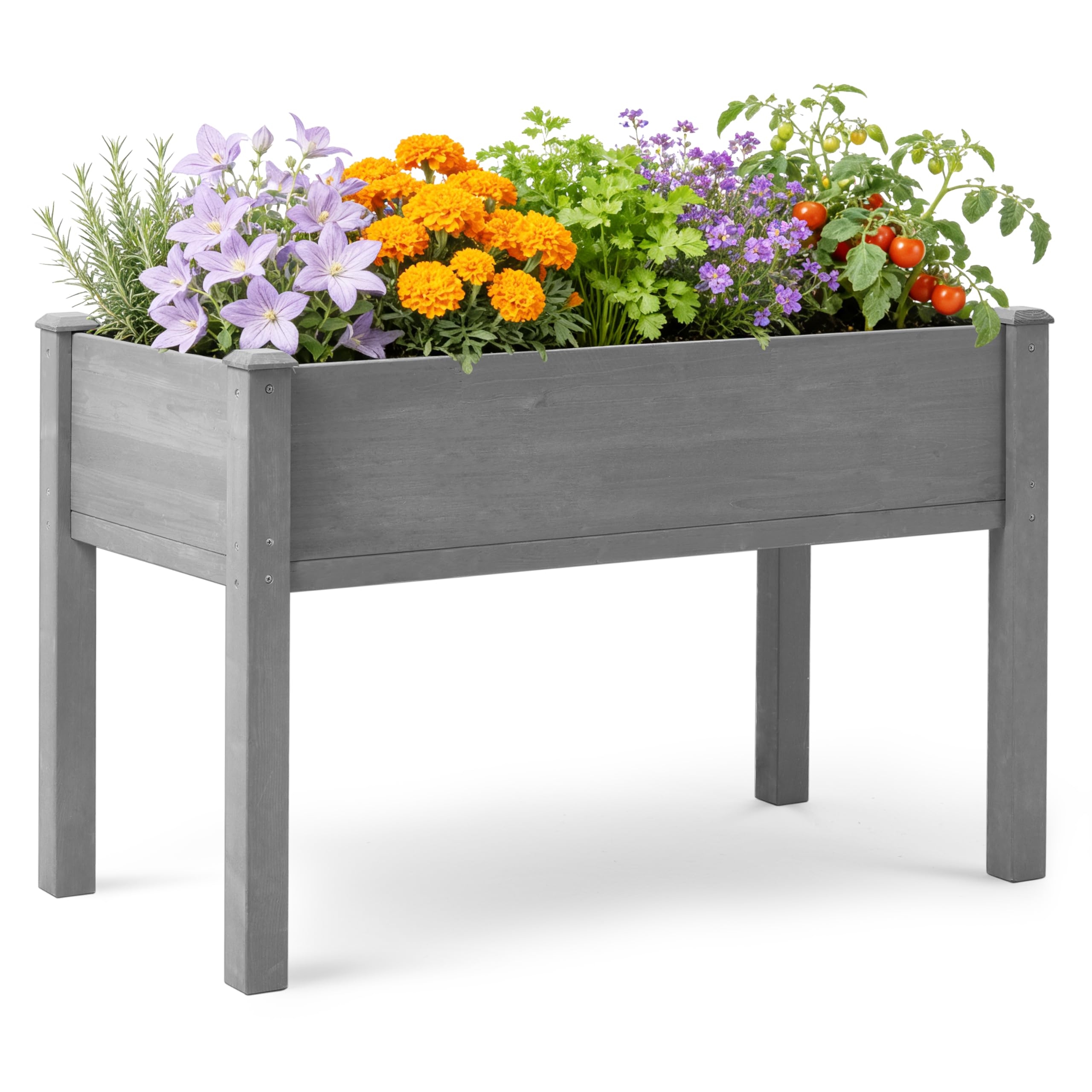
An improve bed that stands 30 inches tall so you garden standing up straight — no bending, no kneeling.
If your knees or lower back make ground-level gardening a pain, this SoliWood bed is the best backup plan. It lifts the soil 30 inches off the ground using 2.4-inch-thick pole legs, and the overall weight capacity is rated at 300 pounds — enough for wet soil and full-grown plants. One 76-year-old buyer reported that the pre-drilled holes aligned perfectly and the height completely eliminated the need to bend over while tending vegetables and flowers.
The SoliWood uses a water-based eco finish (grey paint) rather than leaving the cedar unfinished like the Greenes Fence options. That means no roughness or splinters on the frame panels, though the wood can still split if you screw too aggressively — one reviewer noted this as a caution. Assembly takes about 30 minutes and the kit includes a liner to hold soil in. At 38.9 pounds, it is essentially the same empty weight as the Infinite Cedar 4×4 (38 pounds), but the legs make it feel easier to move around your yard before filling.
The catch is the shallow planting depth: the interior box is only about 7 inches deep, which limits you to lettuce, herbs, strawberries, and flowers. Deep-rooted tomatoes or carrots need the ground-level beds instead. But for a patio, deck, or a gardener with mobility concerns, this is the most thoughtfully designed improve option in the lineup.
Why it works for bad backs
- 30-inch height eliminates bending — verified by a 76-year-old reviewer
- 6 cu ft capacity beats the Greenes Fence improve by 25%
- Water-based finish means no rough cedar splinters
What limits it
- Shallow 7-inch depth limits you to shallow-rooted plants
- Wood may split if you over-torque screws
Your back, your call: If you are 50+ or have knee/back issues and want to keep gardening, this improve bed is worth the mid-range price — just do not expect to grow carrots or potatoes in it.
4. Greenes Fence Original Cedar improve Garden Bed, 24″ x 48″ x 31″

A rough-cut cedar improve bed that smells like a sauna and lets you garden without bending over on a patio.
This is the improve alternative to the SoliWood — it stands 31 inches tall and holds 4.8 cubic feet of soil, which is about 150 quarts (or roughly 7 cubic feet, depending on how tightly you pack, according to one reviewer). The bed uses unfinished, untreated North American Cedar, so you get that natural aromatic smell that buyers consistently rave about. Assembly is tool-free in theory: the sides slot together with a rubber mallet, and only the decorative caps need a screwdriver. Most reviewers put it together in 15 minutes and praised the natural drainage between the bottom slats.
The honest trade-off here is the roughness. Multiple owners mention that the lumber is very splintery and has a rough cut, so wearing gloves is not optional — you will want to sand the edges if bare hands touch the sides regularly. The interior planting depth is shallow at 7.5 inches, identical to the SoliWood, so this is another herbs-and-flowers-only bed. And unlike the SoliWood, there is no painted finish protecting the wood; it will weather to gray over time, which some people love and others see as deterioration.
For the price, this is a solid entry point into improve gardening. It is roughly the same cost as the Greenes Fence Classic ground-level bed, but it saves your back and works on a deck where you cannot dig a hole. Just budget for a pair of thick gloves.
Rough but ready: The unfinished cedar smells fantastic and goes together fast — but you are trading smooth finish for affordability, so sandpaper and work gloves are part of the package.
Best for: A casual gardener with a patio or balcony who wants to grow herbs and salad greens without bending over.
Not for: Anyone who wants a smooth, painted finish — the wood is rustic and splintery from the start.
5. Greenes Fence Classic Cedar Raised Garden Bed, 2′ x 8′ x 10.5″
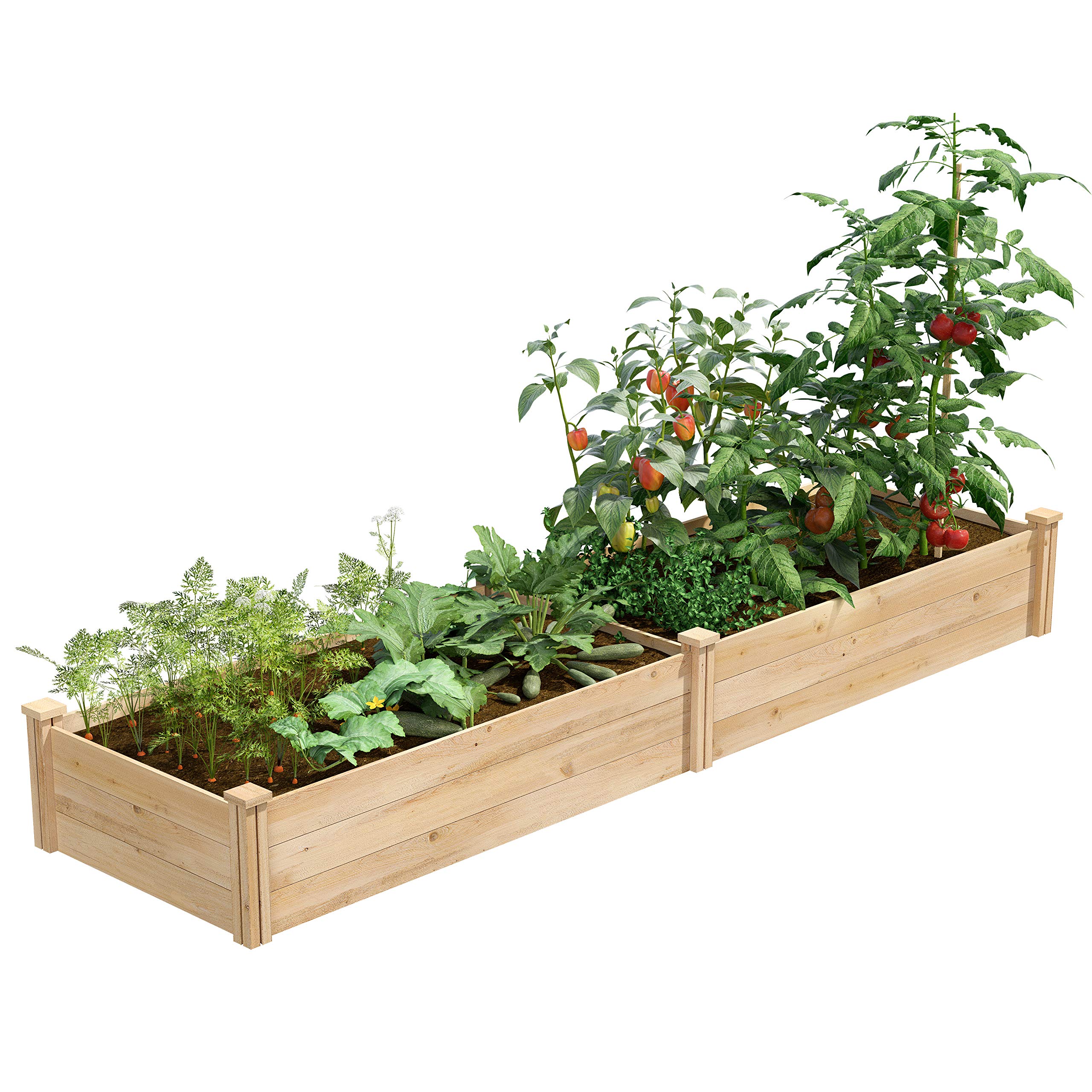
An 8-foot-long bed that assembles in under 10 minutes — at a price that leaves room in the budget for soil.
If your garden plan calls for a lot of linear feet and your wallet says keep it under the premium tier, this Greenes Fence Classic bed is the most affordable way to get a large planting area. The 2-foot-wide by 8-foot-long frame gives you 16 square feet of growing space with an open bottom (so deep-rooted plants can reach native soil), and the dovetail interlocking joints slide together without any tools. One buyer mentioned assembling two complete beds in under 10 minutes.
The catch comes back to wood thickness. The boards are only 1/2 inch thick, which is half the thickness of the Infinite Cedar beds. Some reviewers found the wood flimsy, with fraying edges and warping that creates gaps for soil to spill through. One 3-star review called it “not the quality advertised” and noted the decorative caps arrived unfinished. On the other hand, a different reviewer said the bed held up for three years with no deterioration at all. So the outcome depends heavily on the specific batch you receive, and the thinner boards are simply less tolerant of ground contact and moisture than the 1-inch Infinite Cedar.
Compared to the Infinite Cedar 3×6, this Greenes Fence bed costs significantly less and offers a longer (8-foot) run, but the wood feels closer to what Home Depot sells as a budget garden bed. It is a fine starter bed or temporary solution, but do not expect it to outlast the thicker premium options by much.
What you get for the low price
- Tool-free assembly in under 10 minutes
- 8-foot length provides lots of growing space for the price
- Open bottom allows deep-rooted vegetables
The thin-wood reality
- 1/2-inch boards can warp and fray — some customers note gaps and soil loss
- Some units arrive with rough edges and unfinished decorative caps
Go for it if: You need a lot of bed length on a tight budget and can accept that the wood may not last beyond a few seasons.
Look at the Infinite Cedar instead if: You want a bed that will survive wet weather and heavy use for five-plus years without warping.
Understanding the Specs
Wood Thickness
This is the single most important number on a raised bed’s spec sheet. Boards that are 1 inch thick resist cracking and bowing under wet soil pressure across multiple seasons. Boards that are 1/2 inch thick are lighter and cheaper, but on long spans (like a 6-foot or 8-foot bed) they tend to warp over time, creating gaps where soil leaks out. If you live in a region with freeze-thaw cycles or heavy rain, the 1-inch thickness is not a luxury — it is the minimum for durability.
Soil Capacity
The cubic-feet rating tells you how much soil a bed holds when filled to the brim. A ground-level bed like the Infinite Cedar 3×6 holds 16.5 cubic feet — enough for tomatoes, peppers, and squash. An improve bed like the SoliWood holds 6 cubic feet, which works for shallow-rooted plants. The rule of thumb: for deep-rooted vegetables you need about 10 inches of soil depth; for leafy greens and herbs, 6 to 8 inches is fine. Always match the capacity to what you plan to grow.
FAQ
Will a cedar raised garden bed last longer than a plastic or metal one?
Does untreated cedar leach chemicals into my vegetables?
How much soil do I need to fill a 4×4 raised bed?
Can I place a raised bed directly on grass or concrete?
How do I prevent cedar from splitting when I screw it together?
Does a raised garden bed need drainage holes?
Which vegetables grow best in a shallow improve bed?
Can I stain or paint my cedar raised bed?
How do I stop weeds from growing up through the bottom of a ground-level bed?
What is the difference between the Greenes Fence Classic and Greenes Fence Original lines?
Final Thoughts: The Verdict
For most buyers, the best cedar raised garden beds winner is the Infinite Cedar 4×4 because its 1-inch-thick Western Red Cedar, five-year warranty, and bolted assembly deliver the best balance of durability and ease for the price. If you want the largest growing area and can accept occasional quality-control quirks, grab the Infinite Cedar 3×6. And for back-friendly gardening on a patio without bending over, the standout is the SoliWood improve Bed.
How We Picked
We do not accept paid placement. Every pick is matched to a real buyer and a real use-case; we do not hands-on test units.
Sources & Methodology
Specifications: manufacturer listings and product documentation. Review insights: verified customer reviews, as of July 2026. Pricing: not shown on this page (it changes often); check the current price via the retailer link.
As an Amazon Associate, Lawn Gear Lab earns from qualifying purchases. This does not affect which products we feature.