
Specs are compiled from manufacturer listings and verified buyer reviews and can change over time — please confirm the key details on the product page before buying.
Throwing fertilizer at a patchy lawn or a sad tomato plant without knowing what is actually going on in the dirt is a gamble. A soil test kit takes the guesswork out of the equation — it tells you the pH, nitrogen, phosphorus, and potassium numbers hiding underground so you can fix the real problem instead of wasting money on the wrong bag of pellets.
I’m Rikta — the founder and writer behind Lawn Gear Lab. This guide is built by comparing the manufacturers’ published specifications and the patterns across verified customer reviews, so you get each pick’s real strengths and trade-offs instead of marketing spin.
Whether you are tending a vegetable patch, babying a flower bed, or trying to green up a tired lawn, the best soil test kit for your situation depends on how much precision you need, how many test cycles you want, and whether you prefer instant results or a mailed-in lab report.
Quick Picks
- MySoil Test Kit PRO Pack — Lab Grade
- Soil Savvy Soil Test Kit — Best Value
- LaMotte Model EL Turf and Garden Soil Test Kit — Heavy Duty
- Premium Soil Test Kit (Dewilde Trading Co) — Smart Buy
- Soil Test Kit 140 Tests — Most Tests
- Luster Leaf Rapitest Soil Test Kit — Budget Champion
How To Choose The Best Soil Test Kit
A soil test kit saves you from guessing, but not all of them measure the same things or deliver results the same way. The right choice depends on if you want a snapshot in ten minutes or a full lab breakdown that tells you exactly how many pounds of fertilizer to spread.
Type of Test: At-Home Chemistry vs. Mail-In Lab
At-home kits use a liquid or tablet that changes color when mixed with soil. You match that color to a chart to read the pH, nitrogen, phosphorus, and potassium levels. Mail-in kits have you collect a sample, ship it to a lab in a prepaid envelope, and wait a few days for a detailed PDF report. At-home kits give you instant results for routine checks. Mail-in kits give you far more precision and a custom fertilizer recommendation, but you have to wait a week.
Number of Tests Per Kit
Kits range from a handful of tests up to 140. If you have multiple garden beds, a front lawn and a back lawn, or plan to test several times through the growing season, a higher test count saves you from buying a second kit. Some kits let you test each nutrient once per sample, so a “40-test” kit actually gives you 10 pH tests, 10 nitrogen tests, 10 phosphorus tests, and 10 potassium tests — not 40 separate samples.
What It Measures: The Four Essentials
Every reliable kit covers pH (how acidic or alkaline your soil is) plus the three major plant nutrients: nitrogen (N), phosphorus (P), and potassium (K). A few premium mail-in kits go further by testing secondary nutrients and trace elements like calcium, magnesium, sulfur, iron, and manganese. If your soil has a specific problem like yellowing leaves or stunted fruit, those extra readings can point to the exact deficiency.
Quick Comparison
| Model | Best For | Total Tests | Nutrients Measured | Weight | Amazon |
|---|---|---|---|---|---|
| MySoil Test Kit PRO Pack | Full lab precision | 2 (mail-in) | 13 + pH | — | Amazon |
| Soil Savvy Soil Test Kit | Lab report with recommendations | 1 (mail-in) | 14 + pH | 8 ounces | Amazon |
| LaMotte Model EL Turf & Garden | Durable classroom-grade reusability | 15 NPK, 30 pH | pH, N, P, K | 2.85 pounds | Amazon |
| Premium Soil Test Kit (Dewilde Trading Co) | Balanced at-home value | 40 (10 each) | pH, N, P, K | 6.4 ounces | Amazon |
| Soil Test Kit 140 Tests | Highest test count without mail-in | ~140 | pH, N, P, K, Ammonia | — | Amazon |
| Luster Leaf Rapitest 1601 | Budget entry-level reliability | — | pH, N, P, K | — | Amazon |
In‑Depth Reviews
1. MySoil Test Kit PRO Pack

Professional-grade lab analysis that tells you exactly what your soil needs down to the pound.
This mail-in kit from MySoil is the closest thing to what a professional landscaper uses, without needing an account with a testing lab. You get two single-use sample kits, an 8-inch soil probe that easily pushes through grassy turf, and two prepaid envelopes addressed to the lab. The process is simple: collect the sample, drop it in the mail, and your results arrive in 6-8 days. Buyers report results are easy to read with clear charts and suggestions, and one reviewer noted the analysis came back with predicted deficiencies and good fertilizer guidance.
Unlike the Soil Savvy kit, which tests 14 nutrients but only gives you one sample per purchase, the PRO Pack gives you two tests in the box — so you can test the front yard and back yard separately or test at the start and middle of the season without reordering. The report also offers both organic and non-organic fertilizer recommendations, which saves you from having to convert synthetic bag rates into something compost-friendly on your own. Reviewers mention that if your soil has an uncommon trace element deficiency, the provided product links may point to a single expensive all-micronutrient blend rather than targeted fixes, but that is a rare complaint for most home lawns.
detail-driven lab analysis: If you want a professional-level soil audit with a custom feeding plan and you are comfortable waiting a week for the PDF, this two-pack gives you the most actionable data of any kit here.
higher cost per test: At-home kits give you instant results for routine checks, but the MySoil’s lab precision and tailored fertilizer recommendations justify the higher cost for anyone serious about optimizing their lawn or garden yields.
2. Soil Savvy Soil Test Kit
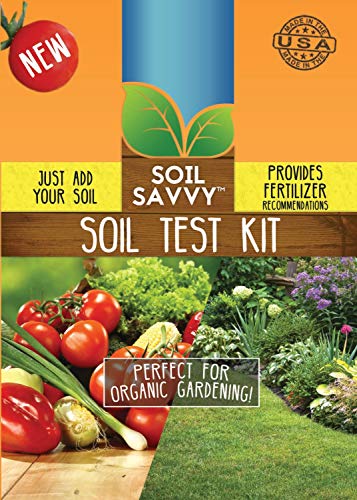
A mail-in lab test that hands you a complete nutrient report and a specific fertilizer plan.
Soil Savvy uses a resin capsule — a small pouch you bury in the soil that acts like a synthetic root, absorbing available nutrients over time. After burying the capsule, you mail it in the included prepaid envelope, and the lab sends back a full report measuring pH plus 14 nutrients including nitrogen, phosphorus, and potassium. The report includes a fertilizer recommendation in pounds per 1000 square feet, so you know exactly how much 16-16-16 (a common balanced fertilizer) to spread. At 8 ounces the kit is heavier than the Premium Soil Test Kit’s 6.4 ounces, but the difference comes from the capsule and envelope hardware, not from having more tests — Soil Savvy is a single-use mail-in, while the Premium kit gives you 40 at-home tests.
Owners mention the results arrive as a PDF within 3-4 days, and the emailed report includes a bar graph comparing your soil’s levels to the optimal range for each nutrient. One reviewer who is a third-year user praised the kit for saving their blueberries, which needed more iron. The honest limit: if your soil pH comes back very low (like 5.0), the report explains the pH but does not tell you how much lime to add — you will need to do a little external research on liming rates. Compared to the county extension lab tests some reviewers have used, Soil Savvy is more expensive but faster and easier, with a much clearer presentation.
grab for convenience: The home gardener who wants a comprehensive lab report with a clear N-P-K recommendation in pounds per square foot without mailing two separate samples.
if instant read needed: You need more than one test per season without paying for another kit, or if your soil is severely acidic and you want the report to also calculate lime quantity.
3. LaMotte Model EL Turf and Garden Soil Test Kit

A classroom-grade chemistry kit that gives you the most reusability and accuracy at home.
The LaMotte kit looks and feels like the real equipment from a high school chemistry lab — and that is its biggest strength. It includes rapid test procedures, laminated color charts, and enough reagent for 15 tests each of nitrogen, phosphorus, and potassium, plus 30 pH tests. The kit also comes with a Garden Guide manual and a LaMotte Soil Handbook that teach you how to interpret results and adjust your soil. At 2.85 pounds, the contents include durable glass vials, plastic droppers, and a full set of reagent bottles that you can refill later instead of throwing away.
Reviewers consistently say this kit is more reliable than cheap electronic meters and gives results comparable to university lab tests. The trade-off is the extra preparation work: customers note you need to dry and sift the soil, and the instructions are scattered across multiple booklets. You can only run three tests at a time because the kit provides just three test tubes, so if you plan to sample several areas across your property, expect to spend an afternoon working through them one at a time. Unlike the Luster Leaf Rapitest, which uses a simpler capsule system, the LaMotte requires you to manually mix soil with extraction solution, shake, filter, and then add the reagent — a bit more work, but the upside is you control the quality of each step.
reach for accuracy: You want the most accurate chemical test at home, plan to test repeatedly over years, and do not mind buying refills instead of a whole new kit.
if digital preferred: You want instant pocket-sized results or find soil prep and multi-step mixing tedious — the Premium kit or the 140-test kit will feel faster.
4. Premium Soil Test Kit (Dewilde Trading Co)
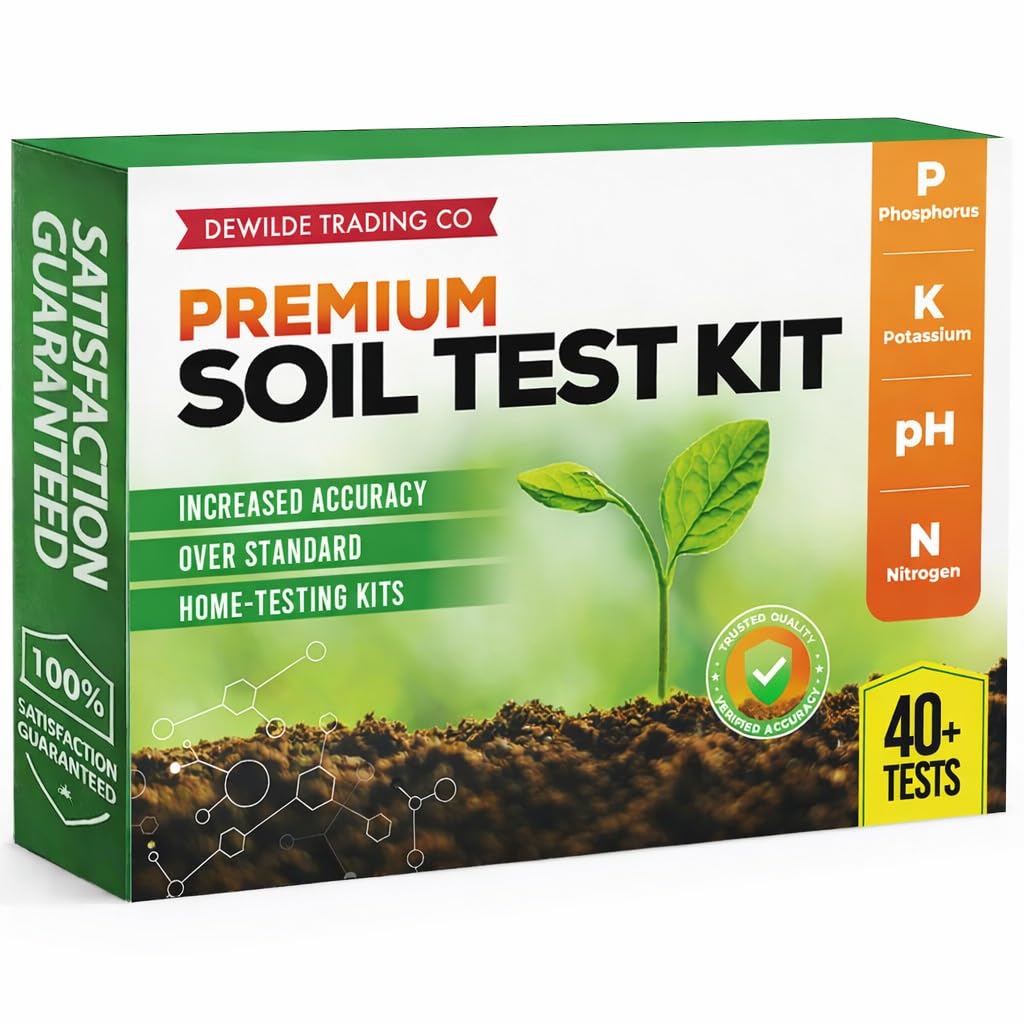
A balanced at-home kit that gives you 10 test cycles for each major nutrient.
This kit from Dewilde Trading Co hits a practical balance. It provides components for 40 tests total — 10 each for pH, nitrogen, phosphorus, and potassium — which is enough to monitor a lawn and a few garden beds through a full growing season. The package includes two bottles of test strips, two test tubes, 40 tablets, a dropper, a mixing stick, and a color card. At 6.4 ounces, you can toss it into a gardening bag without worrying about bulk. Unlike the Soil Test Kit 140 Tests, which uses separate liquid reagents for each parameter and requires washing beakers between steps, this kit uses a simpler tablet-based system that most beginners find less fiddly.
One buyer mentioned that the test clearly identified low nitrogen on their lawn, which let them apply the right fertilizer instead of guessing. Another said the kit is high quality and has a longer shelf life than comparable products. The main limit is shared with all at-home chemical kits: the color matching is subjective, so you compare the liquid color to a printed chart, and two people may read the result slightly differently. That said, for routine checks between lab tests, this kit provides enough accuracy to tell you whether your soil is severely deficient or roughly balanced. The instructions include a quick guide and a detailed manual, so both new gardeners and experienced growers can follow along.
quick routine checks: Use this when you want dependable at-home results season after season without the pricier upfront Lab investment or waiting for a mail-in turnaround.
limited depth: If you are on a very tight budget and only need a couple of tests, the Luster Leaf Rapitest is an option, but this kit gives you a slightly easier tablet system.
5. Soil Test Kit 140 Tests
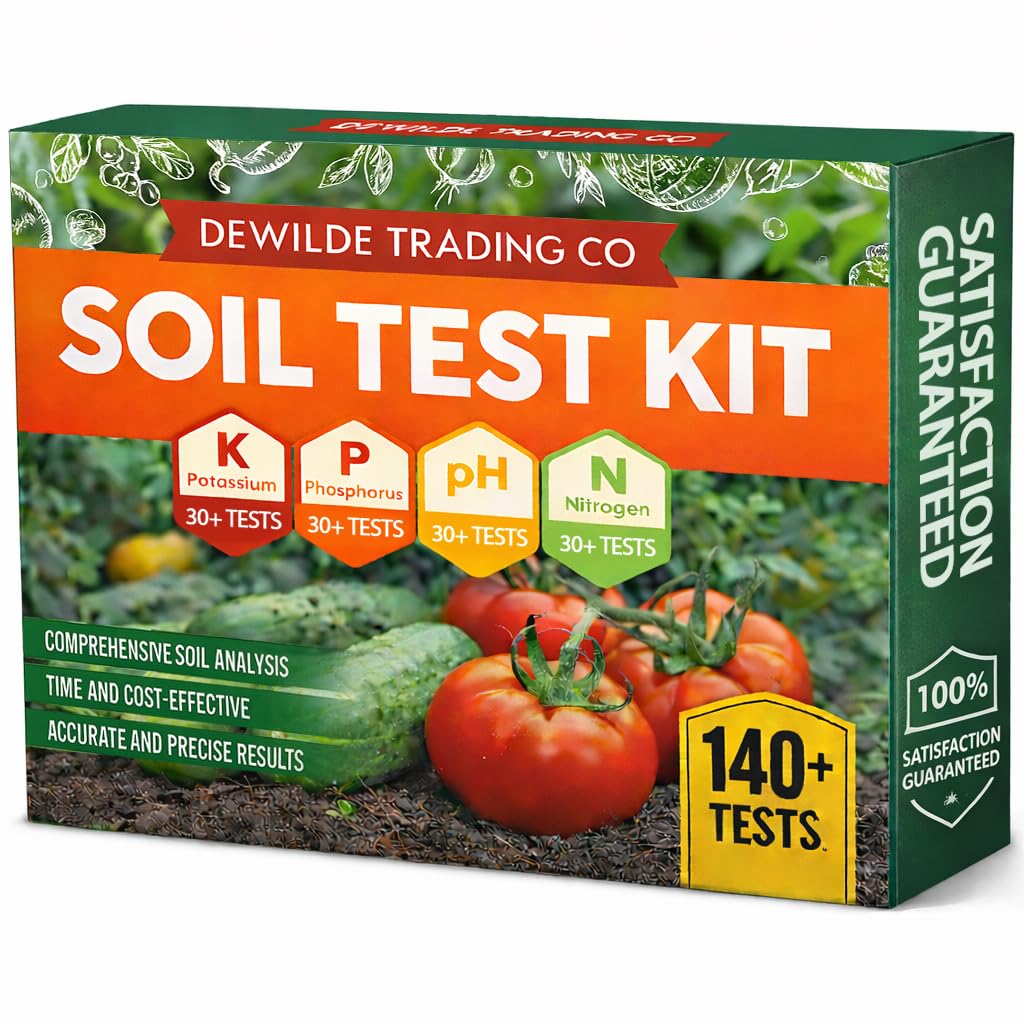
The highest test count in one box, including ammonia alongside the usual four nutrients.
If you manage multiple garden plots, a community garden, or you simply want to test often without reordering, this 140-test kit is the most economical choice. Use a liquid reagent dropper system rather than tablets, and you mix the soil with water in the small beakers before adding the chemical drops. One owner reported the results came in less than one hour and that the kit performed well for their garden. Another reviewer found the pH test adequate but noted the nitrogen test felt less refined than the aquarium testing solutions they already owned, which split nitrogen into more specific categories.
The Premium Soil Test Kit provides 40 tests; this kit provides approximately 140 tests, making it the obvious pick if you plan to test frequently. The trade-off is the smaller beakers: several buyers noted the beakers are small enough that they needed to run the test in two stages, mixing soil and water in a separate container first. The kit also includes less guidance on interpreting results than the LaMotte handbook, so if you are brand new to soil science, you may want to do some quick online reading after your results come back. But for the sheer volume of tests and the addition of ammonia measurement, this is the best value-per-swipe option in the at-home category.
go for volume: You test many different spots on your property or want to monitor soil changes throughout the season without buying multiple kits — the 140-test count is class-leading here.
if precision matters: You strongly prefer tablet-based testing over liquid drops, or if very small mixing containers sound frustrating; the Premium kit or Luster Leaf use different systems.
6. Luster Leaf Rapitest Soil Test Kit

The classic entry-level kit that uses a simple capsule-and-water method for reliable results.
This kit from Luster Leaf uses a capsule system: you add soil and water to a chamber, drop in a capsule, shake, and let the color develop. Then you match the resulting color against a unique plastic comparator that holds the color standard right next to the sample, which makes reading the pH, nitrogen, phosphorus, and potassium levels easier than holding a paper chart up to a test tube. Many experienced home gardeners know this kit because it has been around for years and multiple reviewers call it reliable for both beginners and pros. One reviewer even compared the results to their college lab tests and found it close enough to determine what soil amendments were needed, all at a fraction of the cost.
The honest catch: several buyers reported that the nitrogen test showed zero even in soil they had just enriched with fertilizer, which suggests the nitrogen-specific capsule may not always trigger correctly. If nitrogen is your primary concern, you may want to double-check with a second test method. On the plus side, the kit is easy enough for kids to help with, and the instructions are direct and clear. Unlike the Soil Savvy mail-in kit, you get results in minutes — no waiting for a PDF — so you can amend your soil the same afternoon. At its price point, it is the best way to get started with soil testing without overcommitting.
for curious newbies: If you have never tested your soil before, this is a low-cost, low-fuss way to discover whether your dirt is acidic or lacking nutrients before spending more on a lab kit.
for pro results: Nitrogen levels are your main concern — the test’s known issue with false-zero results means you may end up cross-checking with another kit or a lab.
Understanding the Specs
Total Test Count
This number tells you how many individual test cycles the kit supports before you run out of reagents. A kit advertised as “40 tests” usually means 10 pH tests, 10 nitrogen tests, 10 phosphorus tests, and 10 potassium tests — not 40 complete sample analyses. If you want to test the same sample for all four nutrients, you use up four of those 40 counts. The higher the number, the more spots around your yard you can test without buying refills.
Nutrients Measured
The three big letters are N (nitrogen, for leafy growth), P (phosphorus, for roots and flowers), and K (potassium, for overall plant health and disease resistance). Most kits also measure soil pH, which determines how acidic or alkaline your soil is and directly controls whether nutrients are available to plant roots. Kits that measure ammonia give you a more complete picture of nitrogen in your soil. Lab-based kits test far more elements like calcium, magnesium, iron, and zinc.
FAQ
How often should I test my garden soil with a soil test kit?
How accurate are at-home soil test kits compared to a lab test?
What does a “14 nutrient” test actually measure that a 4-nutrient test misses?
Can I reuse a soil test kit or do I have to buy a new one each time?
What is the difference between testing pH with strips vs. a tablet/method?
Will a soil test kit work for all soil types including clay, sandy, or potting mix?
Can I test the soil in my raised garden bed with the same kit I use for my lawn?
How long does it take to get results from a mail-in soil test kit?
Final Thoughts: The Verdict
Across the board, the best soil test kit winner is the MySoil Test Kit PRO Pack because it combines the precision of professional lab analysis with the convenience of two tests per box and a clear fertilizer recommendation tied to your exact soil needs. If you want a single comprehensive lab check with the fastest turnaround and a full 14-nutrient report, grab the Soil Savvy Soil Test Kit. And for the budget-conscious gardener who prefers instant results and enough tests to run multiple checks per season, the Premium Soil Test Kit delivers excellent value with its 40-test tablet system.
How We Picked
We do not accept paid placement. Every pick is matched to a real buyer and a real use-case; we do not hands-on test units.
Sources & Methodology
Specifications: manufacturer listings and product documentation. Review insights: verified customer reviews, as of July 2026. Pricing: not shown on this page (it changes often); check the current price via the retailer link.
As an Amazon Associate, Lawn Gear Lab earns from qualifying purchases. This does not affect which products we feature.