
Specs are compiled from manufacturer listings and verified buyer reviews and can change over time — please confirm the key details on the product page before buying.
Grabbing the cheapest bag of soil on the shelf often backfires — you end up with wood chips, slow-draining sludge, or fungus gnats in your living room. A good bagged soil makes the difference between a plant that just survives and one that pushes out new leaves every week. The wrong one can rot your roots and stunt growth for an entire season. This guide cuts through the marketing to tell you exactly which mix is worth buying based on what is actually inside the bag.
I’m Rikta — the founder and writer behind Lawn Gear Lab. This guide is built by comparing the manufacturers’ published specifications and the patterns across verified customer reviews, so you get each pick’s real strengths and trade-offs instead of marketing spin.
if you need a heavy 50-pound bale (that is about 22.7 kg) for raised beds, a chunky aroid blend for a fussy Monstera, or an organic mix for your tomato pots, the right bagged soil makes every other part of gardening easier.
Quick Picks
- FoxFarm Ocean Forest Potting Soil — Best Overall
- Miracle-Gro Moisture Control Potting Mix — Protection Pick
- Coast of Maine Bar Harbor Blend Potting Soil — Premium Blend
- Coast of Maine Organic & Natural Planting Soil — Veggie Specialist
- Michigan Peat General All Purpose Premium Potting Soil — Budget Bulk
- Midwest Hearth Premium Potting Soil Mix — Seed Starter
- Grow Queen Craft Aroid Potting Mix — Specialty Pick
How To Choose The Best Bagged Soil
Choosing the right bagged soil is not as simple as grabbing the biggest bag. The best mix for a succulent pot on your desk is a disaster for a tomato plant in a raised bed. Here is what you need to look at before you buy.
Match the Texture to the Plant Type
The single most important thing in a bagged soil is its drainage and aeration (how easily water flows through and how much air gets to the roots). Root-bound houseplants like Monsteras and Alocasias need a chunky, well-draining mix with bark fines, pumice (a lightweight, porous volcanic rock), and lava rock — something that will not stay wet for a week. Vegetables and annuals (plants that complete their life cycle in one season) prefer a lighter, peat- or compost-based mix that holds some moisture but still drains well. Anything labeled “all-purpose” is usually a compromise that works for neither extreme.
Understand What is Actually in the Bag
Read the ingredient list before you look at the price. Peat moss (partially decomposed plant material from bogs) is the standard base and holds water well, but its harvest harms peat bogs. Coco coir (fibers from coconut husks) is a sustainable alternative that also retains moisture. Perlite (white volcanic glass that looks like little popcorn pieces) helps drainage — but it is energy-intensive to make. Pumice and lava rock do the same job with less environmental cost. A mix with worm castings (worm manure), composted manure (decomposed animal waste), or kelp meal (dried seaweed) gives your plant a natural slow-release feeding without extra fertilizer.
Size Matters — But Volume vs Weight Confuses Everyone
A 50-pound bag and a 2-cubic-foot bag hold very different amounts of soil because wet peat is heavy. Always compare by volume (quarts or cubic feet) rather than by pounds. A 1.5-cubic-foot bag is roughly 45 dry quarts, while a 20-quart bag is less than a quarter of that. Know how much you need for your project before you buy.
Watch Out for Pests and Fillers
Some inexpensive potting soils arrive packed with undecomposed wood chips that rob nitrogen (a key nutrient) from your plants, or with moisture that breeds fungus gnats (tiny flying insects that live in damp soil). Verified customer reviews reveal this pattern clearly — a soil that is cheap per bag may cost you in plant health and pest control later. Stick with brands that have consistent feedback about being “clean” and “germ-free.”
Quick Comparison
| Model | Best For | Volume | Weight | Key Ingredients | Amazon |
|---|---|---|---|---|---|
| FoxFarm Ocean Forest | Serious container gardeners | 1.5 cu ft | 34 lbs | Aged forest products, kelp meal, oyster shell | Amazon |
| Miracle-Gro Moisture Control | Protecting against overwatering | 2 cu ft | 40.5 lbs | AquaCoir formula, sphagnum peat moss | Amazon |
| Coast of Maine Bar Harbor Blend | Organic container growing | 16 qt | 14 lbs | Lobster/crab shell meal, kelp meal, compost | Amazon |
| Coast of Maine Veg & Tomato | Vegetable beds in-ground or pots | 20 qt | — | Composted manure, sphagnum peat moss | Amazon |
| Michigan Peat All Purpose | Large budget indoor/outdoor jobs | 50 lbs | 50 lbs | Reed sedge peat, perlite, sand | Amazon |
| Midwest Hearth Premium Mix | Seed starting and repotting small pots | 8 qt | 1.25 kg | Peat moss, vermiculite, perlite | Amazon |
| Grow Queen Craft Aroid Mix | Pickey indoor tropical plants | 2 qt | 2 lbs | Fir bark, pumice, lava rock, tree fern fiber | Amazon |
In‑Depth Reviews
1. FoxFarm Ocean Forest Potting Soil
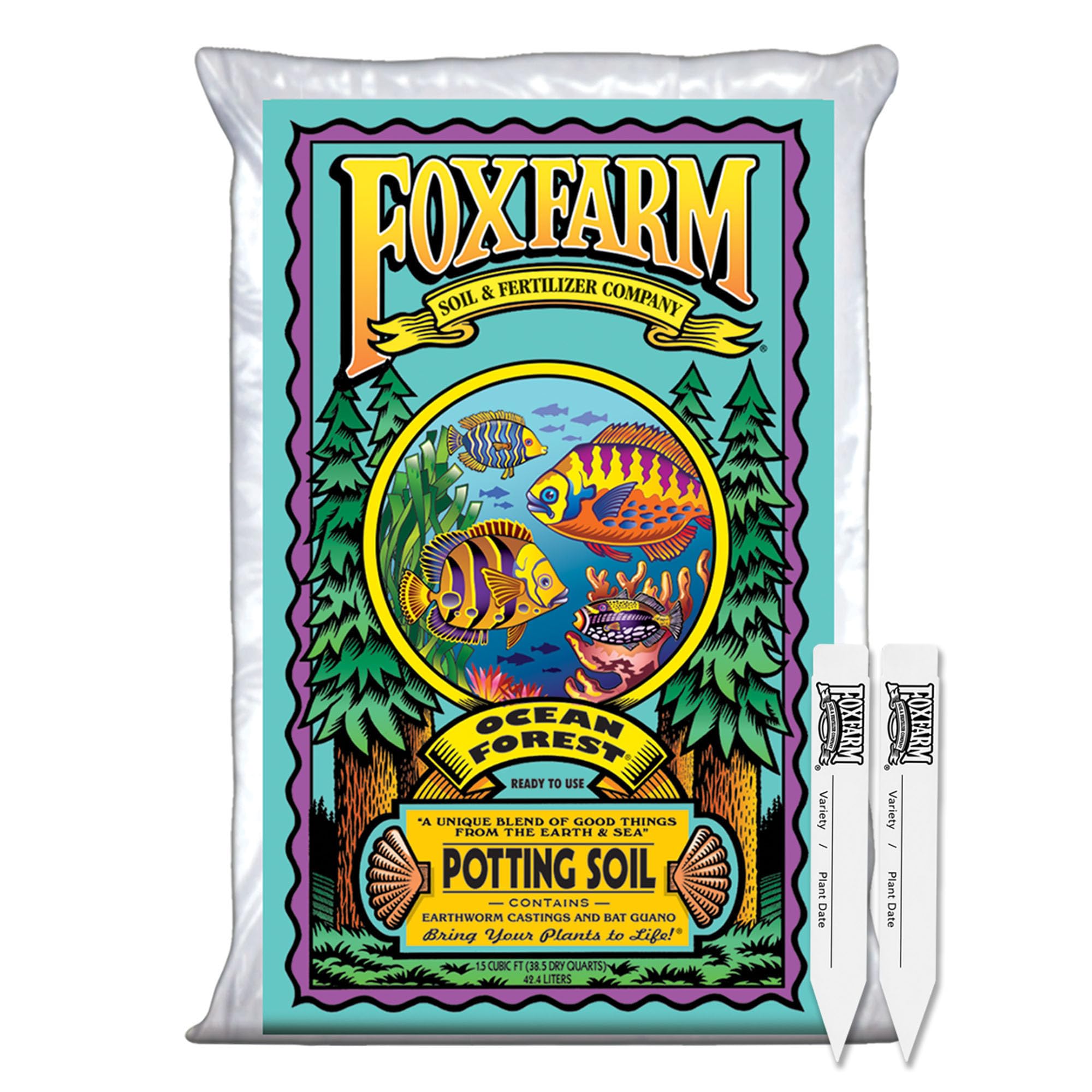
For a nutrient-packed mix ready to use straight from the bag, this is the one container growers reach for first.
FoxFarm Ocean Forest gives you instant drainage and a built-in meal for your plants. The ingredient list reads like a premium recipe: aged forest products, sphagnum peat moss, perlite (white volcanic bits for aeration), sandy loam, and a fertilizer blend derived from fish emulsion, crab meal, shrimp meal, earthworm castings, kelp meal, and oyster shell. The result is a light, aerated texture that absorbs water immediately upon watering, as buyers consistently report. One reviewer noted that FoxFarm outperforms the Miracle-Gro Moisture Control Mix for tomato plants started from seed when used with the same watering schedule, showing “significantly larger” growth. It works for container gardens, houseplants, trees, shrubs, and even seedlings — you can plant directly into the 1.5-cubic-foot bag (roughly 45 dry quarts) because it is ready for immediate use with no additional ingredients needed. The main downside is the price point; many buyers wish it was cheaper, but the consensus is clear that it beats cheaper brands in quality.
If you grow vegetables in pots or start seeds indoors, this mix saves you the hassle of mixing your own. Avoid it if you are on a tight budget for just one pot — a smaller, generic mix might suffice for a single job.
What makes it stand out
- Loaded with natural nutrients — fish emulsion, crab meal, oyster shell — no extra fertilizer needed early on
- Immediate water absorption prevents run-off and wasted watering
- Versatile enough for vegetables, flowers, houseplants, and seedlings
- Light, aerated texture prevents compaction around roots over time
The honest catch
- Premium price that keeps climbing, per long-term buyers
- 34-pound bag means Amazon delivery is the only way to avoid hauling it yourself
2. Miracle-Gro Moisture Control Potting Mix

For anyone who has ever killed a plant by watering it too much, this mix acts as a safety net against overwatering.
Miracle-Gro’s Moisture Control line uses an exclusive “AquaCoir formula” (a blend of coconut coir and other moisture-holding ingredients) that, according to the brand, absorbs up to 33% more water than basic potting soil that does not contain sphagnum peat moss, coir, and a wetting agent (a substance that helps water spread evenly). More importantly, it protects against both over- and under-watering by releasing moisture slowly. The mix also feeds plants for up to 6 months and, according to the brand, is designed to grow plants “twice as big” compared to unfed plants. Buyers confirm near-100% germination rates starting 500 to 700 annual flowers per year. One reviewer specifically noted that two “weak pepper plants” transplanted from garden soil to this mix in 1-gallon containers (about 3.8 liters) showed a “100% turnaround” with faster growth, greener foliage, and abundant fruit. A long-term user noted that this mix is far more forgiving with watering than the FoxFarm Ocean Forest, which dries out faster. The 2-cubic-foot bag is heavy at 40.5 pounds, but reviewers appreciate that Amazon delivers it so they do not have to carry it from a store, and they consistently report no visible bugs or gnats in the mix.
This is for forgetful or busy gardeners, seed starters, and anyone wanting a single-bag solution for flowers and vegetables. skip it if you need a chunky aroid mix that dries out fast for Monsteras — this holds too much moisture for those plants.
Why experienced growers choose it
- AquaCoir formula absorbs and holds moisture better than plain peat-based soils — a real difference for busy plant owners
- Fertilizer included feeds for up to 6 months, so you skip the feeding schedule
- Fine texture with few sticks or chunks, especially in bags bought in spring
- No weed seeds and no flying bugs reported across many long-term reviews
Where it falls short
- Later-season bags sometimes contain larger chunks that need sifting
- Needs a thorough initial deep watering; can be overwatered despite the moisture control claim if you water too frequently
3. Coast of Maine Bar Harbor Blend Potting Soil
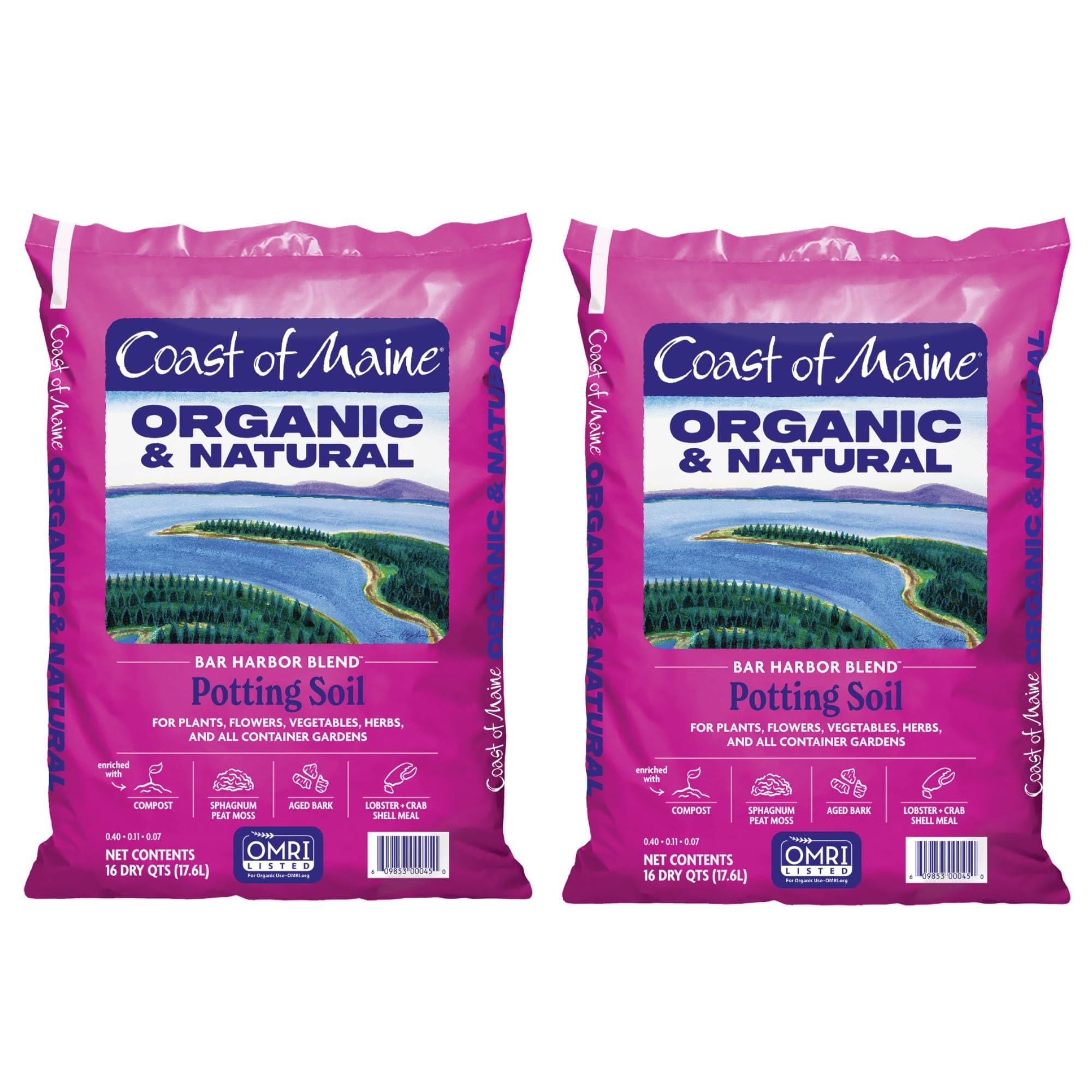
Gardeners say the organic lobster and crab shell meal in this Maine-made blend actually makes vegetables taste better.
Coast of Maine’s Bar Harbor Blend uses sphagnum peat moss, compost, perlite, lobster and crab shell meal, and kelp meal. The shellfish meal provides a slow-release nitrogen source that feeds plants over time, while the compost gives the soil a dark, rich color that signals organic matter rather than just peat filler. Reviewers consistently describe this as “the best soil,” with one noting it is “rich and not full of sticks like some others.” Another buyer reported that their “tomatoes never looked so good” after switching from a top brand. This blend is approved for organic gardening (OMRI listed, meaning the Organic Materials Review Institute certifies it for organic use) and suits indoor and outdoor container gardens, hanging baskets, and raised beds. It is lighter than the FoxFarm Ocean Forest bag (14 pounds for 16 quarts versus 34 pounds for 1.5 cubic feet), meaning you use more for the same pot-filling volume.
This is for organic gardeners, vegetable container growers (especially tomatoes), and anyone who hates picking sticks out of their soil. Not for indoor tropical plant owners who need a chunky, bark-heavy aroid mix instead of this peat-compost blend.
what separates it
- Organic slow-release nitrogen from lobster and crab shell meal and kelp meal — no synthetic fertilizers
- Balances moisture retention and drainage perfectly for container vegetables and herbs
- No unexpected weeds, sticks, or funky smells, per multiple buyer reports
- Coast of Maine has been committed to sustainable, regenerative practices since 1996
The one downside
- Priced at the premium end of the market — cheaper all-purpose blends exist if you are not focused on organic ingredients
4. Coast of Maine Organic & Natural Planting Soil for Vegetables & Tomatoes

For heavy-feeding vegetables like tomatoes and zucchini, this dedicated organic mix provides a nutrient-rich base that supports abundant growth.
This is Coast of Maine’s vegetable and tomato soil, using composted manure (decomposed animal waste) and sphagnum peat moss to create a lightweight mix. It holds moisture well while draining properly — exactly what tomatoes and zucchini need. Unlike the Bar Harbor Blend, this one is specifically formulated for in-ground vegetable gardens as well as containers. The FoxFarm Ocean Forest is more versatile for a mix of plant types, but this Coast of Maine blend is designed to sustain heavy feeders longer. One buyer mentioned it was “fabulous soil” with “visible and amazing” plant growth within days. The 20-quart volume is about half the size of the FoxFarm bag (which is roughly 45 dry quarts), so plan accordingly for larger projects.
Grab this for tomatoes, zucchini, peppers, and any heavy-feeding vegetable in-ground or in large containers. It is not the best choice for houseplants like succulents or Monsteras that need fast drainage, or for seed starting where you want a fine, clump-free texture.
Why vegetable gardeners love it
- Composted manure provides a rich organic base that feeds vegetables heavily through the growing season
- Low weight per bag compared to similar-volume mixes, making it easier to move around the yard
- Holds moisture well while draining — a hard balance to find for tomatoes that hate wet feet
- Contains organic aromatic wood material that helps repel unwanted insects
What to watch for
- Some undecomposed bits and twigs may need sifting for fine-seed crops like carrots
- Bag weight is substantial — one buyer described it as “heavy” — be prepared for a workout
5. Michigan Peat General All Purpose Premium Potting Soil

This 50-pound (about 22.7 kg) behemoth covers the most ground for the lowest cost, but it has a gnat-sized catch.
Michigan Peat’s mix uses rich dark reed sedge peat (a type of peat from sedge plants), perlite, and sand. It includes both starter and slow-release fertilizers so you do not have to mix anything in yourself. One buyer simply called it “perfect consistency for potting.” However, multiple buyers warn: “good soil but lots of gnats come out of it.” This is a consistent pattern in the reviews — the bag arrives moist and functional, but you may deal with fungus gnats emerging after you open it. Other buyers were perfectly satisfied, calling it “good quality” and “nice potting soil good price.” At 50 pounds, it is a full 16 pounds heavier than the FoxFarm Ocean Forest bag, but you get more volume for the cost if you are filling a large raised bed or many containers.
Go for it if you need to fill a large raised bed or many containers on a strict budget and are willing to manage potential gnats. Pass on it if you are potting indoor plants in your living room — the gnat risk makes it a poor choice inside your home.
The budget advantage
- Huge 50-pound bag covers large areas — raised beds, multiple big pots, or entire garden sections
- Pre-blended with perlite and sand for good drainage right out of the bag
- Includes both starter and slow-release fertilizers, so no extra mixing
- Arrives moist and ready to use, which saves the step of wetting dry peat
The honest trade-off
- Fungus gnats are a known issue — buyers consistently warn about them emerging from the bag
- At 50 pounds, this is a back-heavy bag to move around your garden
6. Midwest Hearth Premium Potting Soil Mix

For the indoor gardener who needs a reliable seed-starting mix without committing to a 50-pound bale, this 8-quart (about 7.6 liters) bag is a precise tool.
Midwest Hearth uses peat moss, vermiculite (a lightweight mineral that holds moisture and air), and perlite — the classic three-ingredient recipe that professional growers use. It is pH-controlled (acid balanced) for a “broad spectrum of different plant types,” which saves you from adjusting acidity yourself. The texture is light and fluffy, helping delicate roots push through without resistance. The bag is resealable, easy to open, and pours cleanly. For small projects like repotting a few houseplants or starting a tray of seeds, this is a far cleaner option than the Michigan Peat bag, which risks gnats. The main complaint is that some buyers think it is too expensive for the 8-quart size, but “it’s well worth it” say those who have used it.
Reach for this if you are starting seeds indoors, repotting a few houseplants, or need a clean, sterile mix without gnats. pass on it if you are filling a raised bed or a large container — you will need many bags, which gets expensive fast.
What works well
- Light, fluffy texture does not harden around roots — exactly what seedlings and young plants need
- Easy-open, resealable bag makes storage simple for small projects
- No weeds, bugs, or hard clumps reported across multiple reviews
- pH-balanced so it works for a wide variety of plants without testing
The mismatch
- 8 quarts is a small volume — some buyers complained “the bags are too small” for their needs
- Per-quart price is higher than bulk alternatives like Michigan Peat
7. Grow Queen Craft Aroid Potting Mix
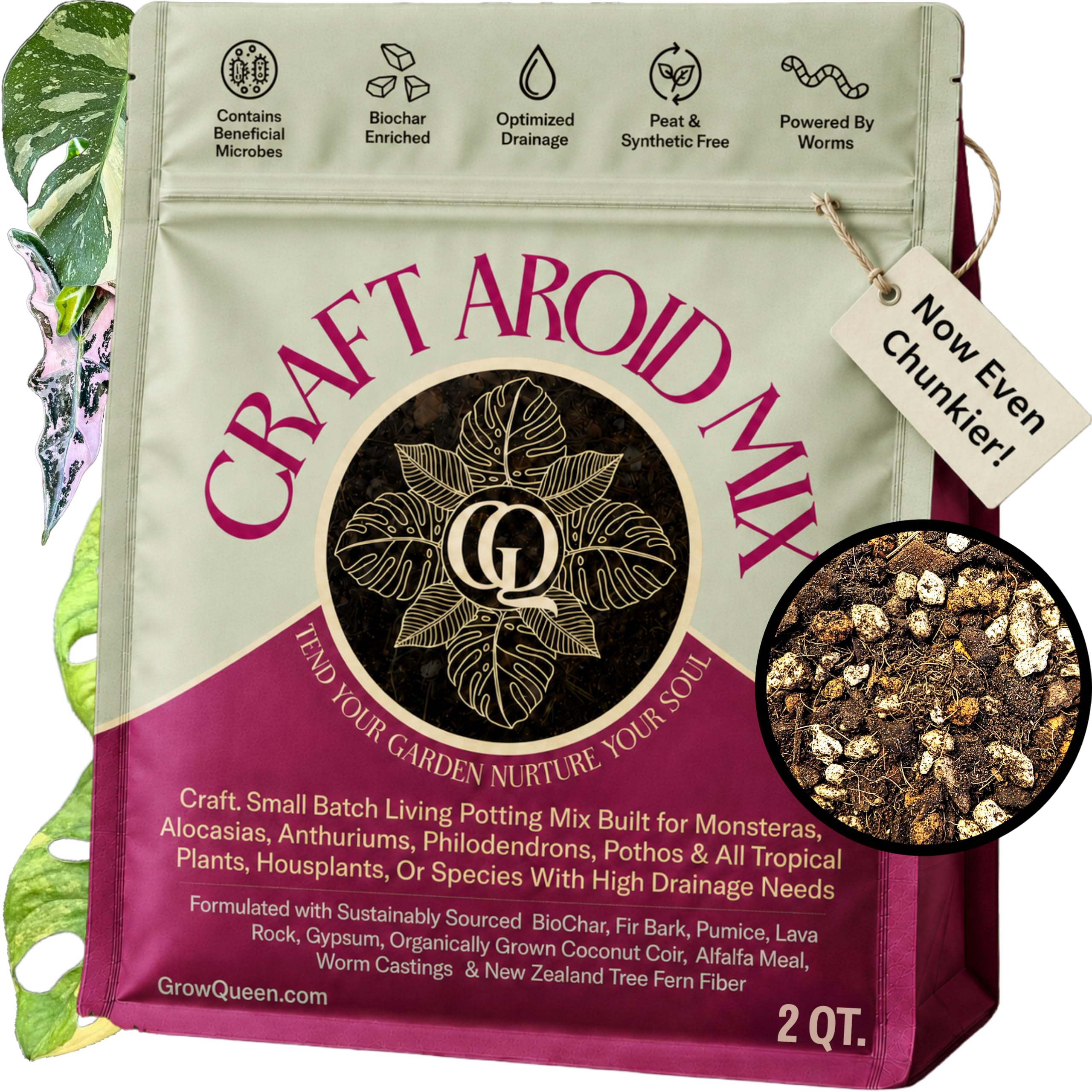
For fussy Monsteras and Alocasias, this chunky, peat-free aroid mix makes it almost impossible to overwater them.
This is a very different kind of bagged soil — built specifically for Monsteras, Alocasias, Philodendrons, Hoyas, and other tropical aroids (plants that grow in the Araceae family) that rot in standard peat-based mixes. The ingredients are entirely peat-free and perlite-free: large Douglas fir bark fines (small pieces of bark), pumice, lava rock, New Zealand Tree Fern Fiber (fibers from tree ferns), and coco coir. The result is a chunky, airy mix that the manufacturer states provides “instant drainage and consistent airflow.” Buyers confirm this works as advertised — one owner reported it is “good for small aroids (6-inch pots or smaller)” and praised the chunky texture. Another called it “my forever soil” after five orders with no bugs or mold. The 2-quart volume is designed for small pots and repotting only, not for large containers. Some reviewers warn that it retains too much moisture for larger pots (12 inches or wider) and may cause root rot in those cases. Unlike the FoxFarm Ocean Forest, which works for almost everything, the Grow Queen mix is a precision tool for specific plants.
Made for indoor plant parents with aroids in small to medium pots who want to avoid root rot without mixing their own recipe. Not the right bag for vegetable gardeners, seed starters, or anyone filling large floor pots.
Why aroid owners love it
- Peat and perlite free — uses eco-friendly pumice and lava rock instead
- Large bark fines and tree fern fiber create channels for air to reach roots, preventing root rot
- Contains worm castings and beneficial microbes for natural fertilization
- Ready to use straight out of the bag, already moist and pre-mixed
Where it has limits
- Only 2 quarts — ideal for small pots only; not cost-effective for large plants or multiple big pots
- Some users found it retains too much moisture for pots larger than 6 inches, contradicting the “almost impossible to overwater” claim
Understanding the Specs
Volume (Quarts vs Cubic Feet)
This is the number that matters most for planning your project — not the bag weight. A 2-cubic-foot bag holds roughly 60 dry quarts, enough to fill two 14-inch pots (pots that are 14 inches across). A 2-quart bag is for a single small pot. Compare bag sizes in quarts or cubic feet, not pounds, because wet peat can weigh much more than dry mineral soil at the same volume. Always buy about 10-20% more than you think you need because soil settles after watering.
Texture: Chunky vs Fine
The physical feel of the soil determines how water moves through it. Chunky mixes with large pieces of bark, pumice, or perlite create air pockets so water drains fast and roots get oxygen — essential for houseplants like Monsteras and succulents (plants that store water in their leaves and need very fast drainage). Fine-textured mixes with mostly peat and vermiculite hold onto water longer, which is better for moisture-loving vegetables and annuals in containers. A mix that is fine for tomatoes will suffocate a cactus, and a chunky aroid blend will leave a tomato plant thirsty.
FAQ
What is the difference between potting soil and garden soil?
How do I know if a bagged soil has fungus gnats before I buy?
Can I use the same bagged soil for indoor and outdoor plants?
How long does an opened bag of potting soil stay good?
Is peat-free potting soil better for the environment?
What does “OMRI listed” mean on a bag of soil?
Should I add fertilizer to bagged soil that already has plant food in it?
My bagged soil has white lumps or fuzzy mold — is it safe to use?
How much bagged soil do I need for a 5-gallon container?
Can I reuse bagged soil from last year’s pots?
Final Thoughts: The Verdict
For most people, the bagged soil winner is the FoxFarm Ocean Forest Potting Soil because it delivers the best all-around nutrient load, texture, and water absorption straight out of the bag for container vegetables, flowers, and houseplants alike. If you want a protective mix that forgives occasional overwatering and feeds for 6 months, grab the Miracle-Gro Moisture Control Potting Mix. And for indoor plant parents who need a chunky, peat-free aroid blend that will not drown a Monstera, the standout is the Grow Queen Craft Aroid Potting Mix.
How We Picked
We do not accept paid placement. Every pick is matched to a real buyer and a real use-case; we do not hands-on test units.
Sources & Methodology
Specifications: manufacturer listings and product documentation. Review insights: verified customer reviews, as of July 2026. Pricing: not shown on this page (it changes often); check the current price via the retailer link.
As an Amazon Associate, Lawn Gear Lab earns from qualifying purchases. This does not affect which products we feature.