
Specs are compiled from manufacturer listings and verified buyer reviews and can change over time — please confirm the key details on the product page before buying.
You just built your raised beds, and now every bag of soil on the shelf looks the same. Pick the wrong one and you get a pile of wood chips instead of dark, living dirt that grows tomatoes. The short rule: buy a bag that names real ingredients like worm castings or kelp meal, skip anything that just says “premium blend,” and ignore any bag where buyers keep complaining about sticks.
I’m Rikta, the founder behind Lawn Gear Lab. This guide compares the manufacturers’ published specs and patterns from verified customer reviews, so you see each pick’s real strengths and trade-offs without the marketing spin.
Whether you’re filling a fresh 4×4 bed or topping up an old one, this breakdown of the best garden soil for raised beds helps you grab the bag that actually grows stuff.
Quick Picks
- Coast of Maine Castine Blend Soil — Top Performer
- Espoma Organic Raised Bed Mix — Best Overall
- Brut Organic Potting Soil — Pure & Honest
- Gaia Green Organic Living Soil — Living Soil Pick
- Wiggle Worm Raised Bed Mix — Booster Mix
- Michigan Peat Baccto Premium Potting Soil — Budget Pick
How To Choose The Best Garden Soil For Raised Beds
Not every bag labeled “raised bed mix” is the same. Some are just repackaged potting soil with a higher price. Here’s what actually separates a good mix from a regret.
Check the ingredient list, not the label
A bag that says “premium” but lists only peat, sand, and perlite (the little white rocks that improve drainage) is just basic potting soil. You want ingredients like worm castings, kelp meal, alfalfa meal, biochar (a charcoal-like material that holds onto nutrients and water), or mycorrhizae (root-friendly fungi that help plants pull more water and nutrients from soil) — these feed the soil biology, not just the plant for two weeks.
Watch out for wood filler
Multiple buyer reports mention bags full of sticks and bark instead of actual soil. If a mix is cheap per pound, it likely contains composted forest products that rob nitrogen as they break down. Look for customer reviews that specifically say “no sticks” or “filler-free.”
Volume matters more than bag weight
A 40-pound bag sounds like a lot, but if it’s dense with sand, it fills less space than a lighter 1.5 cubic foot bag with good aeration. Compare cubic feet, not pounds, to figure out how many bags you need.
Organic certification vs. marketing
OMRI listing (the Organic Materials Review Institute seal, which independently verifies organic inputs) is the real certification. Some bags say “natural” or “organic” without it, which means nothing is verified. If organic matters to you, look for the OMRI seal in the specs.
Quick Comparison
| Model | Best For | Volume | Weight | Key Additives | Amazon |
|---|---|---|---|---|---|
| Coast of Maine Castine Blend | Premium organic growing | 2 cu ft | 40.25 lbs | Mycorrhizae, biochar, lobster/crab meal | Amazon |
| Espoma Organic Raised Bed Mix | Balanced all-purpose raised bed | 1.5 cu ft | — | Myco-Tone, worm castings, alfalfa/kelp meal | Amazon |
| Brut Organic Potting Soil | Filler-free indoor/outdoor | 21 quarts | 480 oz | Worm castings, Azomite, kelp | Amazon |
| Gaia Green Organic Living Soil | Living soil for fuss-free growing | 1.5 cu ft | 35 lbs | Worm castings, insect frass, glacial rock dust | Amazon |
| Wiggle Worm Raised Bed Mix | Worm-casting booster | 640 oz | 40 lbs | Worm castings, worm eggs | Amazon |
| Michigan Peat Baccto Potting Soil | Budget-friendly seed starting | — | 25 lbs | Perlite, sand, starter/slow-release fertilizer | Amazon |
In‑Depth Reviews
1. Coast of Maine Castine Blend Soil
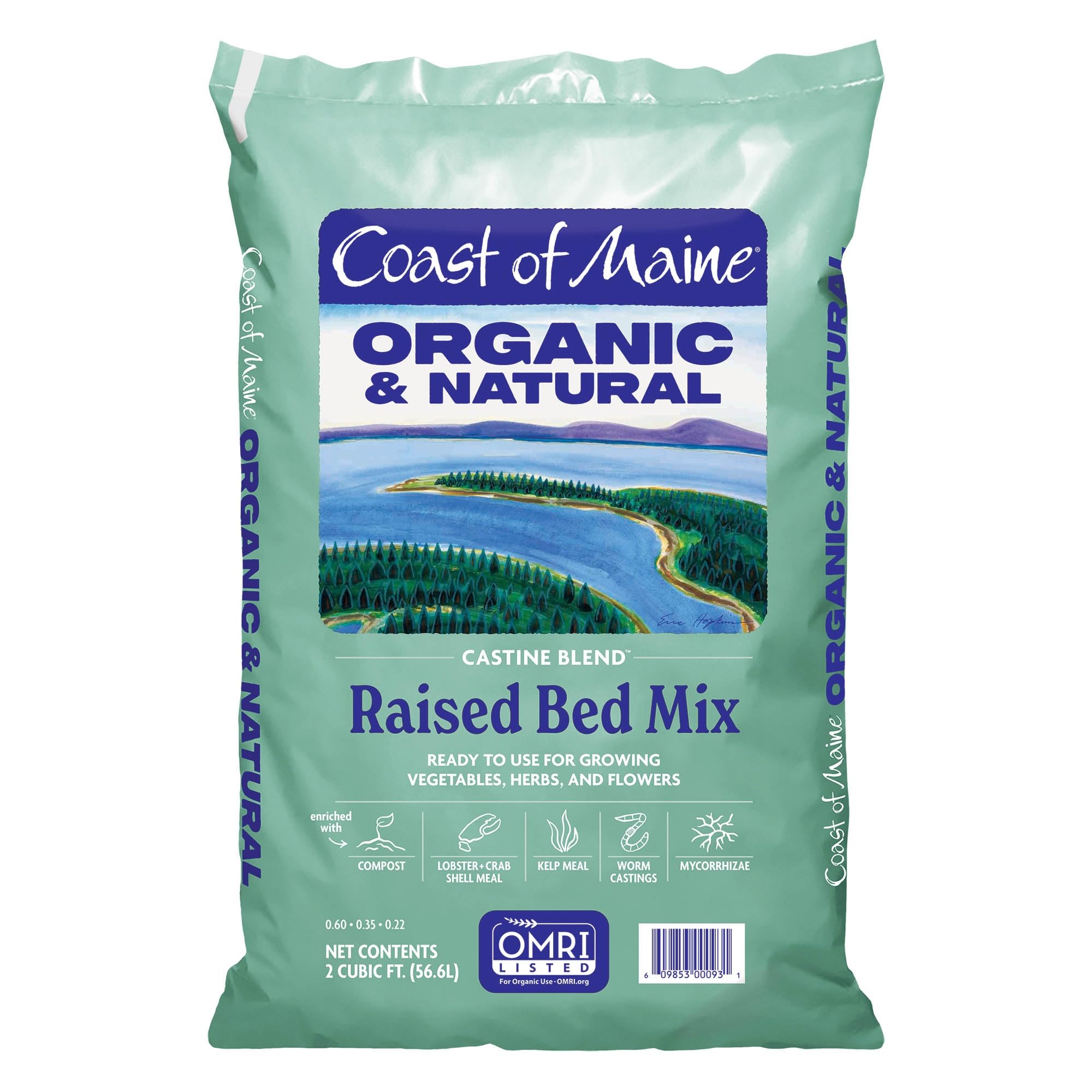
The dark, crumbly soil that buyers call “beautiful dirt” bag after bag
You open this bag and find soft, dark organic soil with no twigs or bugs — exactly what you want when you are filling a bed you will eat from. Coast of Maine packs 2 cubic feet per bag (40.25 lbs) with worm castings, mycorrhizae (root-friendly fungi that help roots absorb more water and nutrients), biochar (a charcoal-like material that holds nutrients and water), green sand, kelp meal, and lobster and crab shell meal. That is a lot of ingredients doing different jobs, so your soil stays alive longer than a basic peat blend.
Buyers report it loosens existing soil in beds and grows “pretty awesome tomatoes and sunflowers.” The texture is noticeably lighter and fluffier than most bags at this price — one reviewer noted it is ideal for amending hard clay. Unlike the Michigan Peat bag below, reviewers consistently mention zero debris in this mix.
Why it leads the list
- 2 cu ft bag means fewer bags per bed compared to 1.5 cu ft competitors
- Lobster and crab shell meal add calcium that tomatoes and peppers love
- Multiple 5-star reviews confirm no sticks, bugs, or debris
The honest trade-off
- Premium price reflects the ingredients — not a budget option
- Some buyers may not need biochar if soil is already healthy
Reach for this if: You want a ready-to-go mix with proven ingredients and don’t want to sift out sticks.
For large gardens on a tight budget, the Espoma or Brut mixes below stretch your dollar further.
2. Espoma Organic Raised Bed Mix

The bag that arrives perfectly sealed and pours like real soil should
Espoma’s raised bed mix comes in a 1.5 cubic foot bag with a blend of earthworm castings, alfalfa meal, kelp meal, and feather meal. It also includes Myco-Tone, a proprietary blend of endo and ecto mycorrhizae (two types of root-friendly fungi that help plants pull more nutrients from the soil). You can use it straight from the bag for new beds or mix it into existing soil. One buyer reports the 1.5 cu ft bag arrived “perfectly sealed, no mold or dry spots” — the compost was evenly blended and poured well, supporting nine vegetables and 12 flowers through a wet, cool California season.
Compared to the Coast of Maine bag above, Espoma uses feather meal instead of lobster shell, so the nitrogen release is slightly different. It holds moisture well without getting soggy, and owners mention it supports strong root growth from seed. A minority of customers note it is “mostly wood” and caused yellowing in seedlings — but those are the clear outliers against dozens of positive reports.
What you get
- Rich blend of organic meals and worm castings for steady nutrition
- Myco-Tone mycorrhizae help roots access more nutrients
- Buyers praise consistent bag quality and no mold issues
What to know
- A few reviewers point out wood content that hurt seedling growth
- 1.5 cu ft bag is smaller than Coast of Maine’s 2 cu ft bag
Reach for this if: You want a reliable organic mix from a well-known brand that works in most raised bed setups.
If you had bad luck with woody compost in the past, the Brut mix below has a stronger filler-free guarantee.
3. Brut Organic Potting Soil
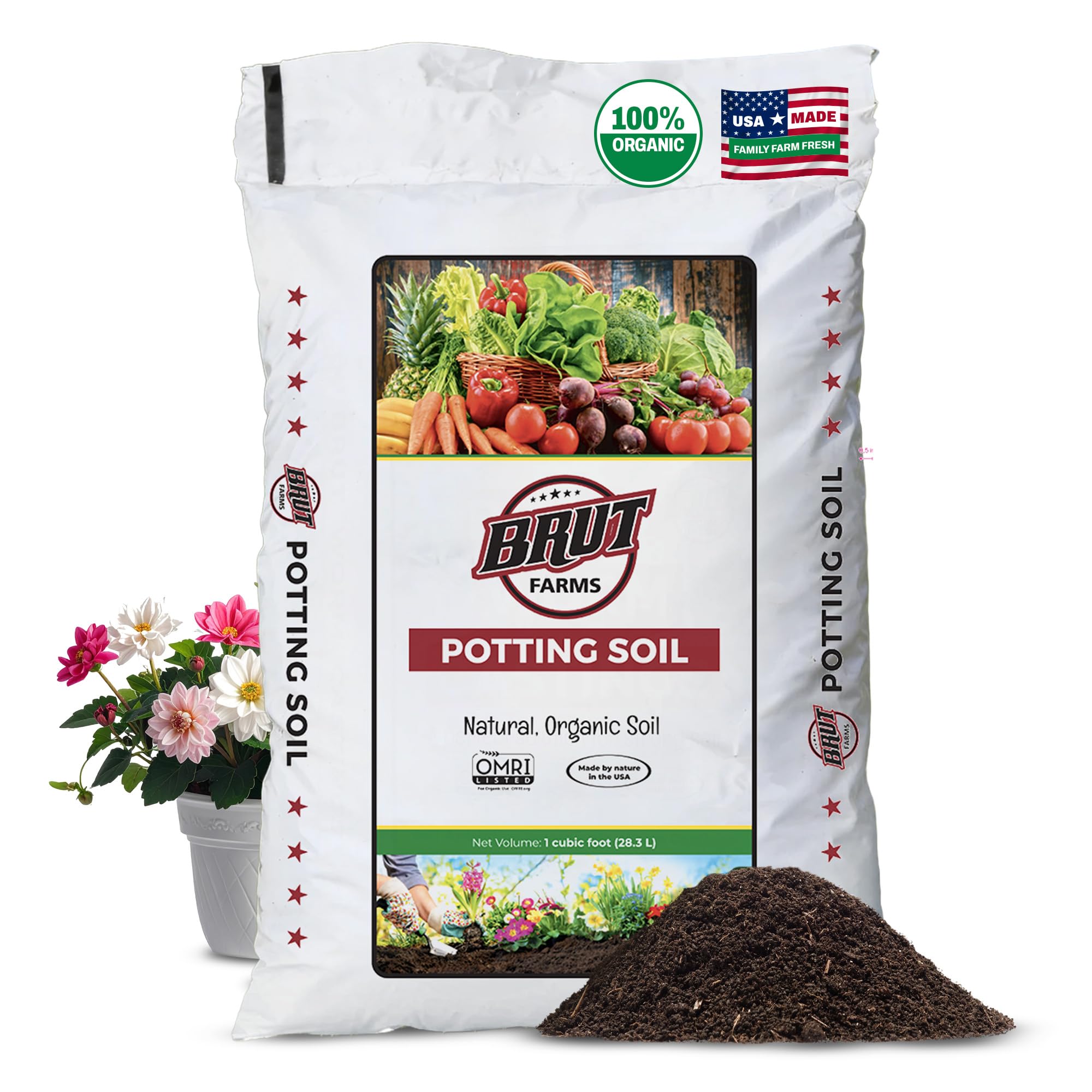
A filler-free mix that makes leaves go deep green in two days
Brut calls this “pure, filler-free” and backs it up with OMRI listing (the independent Organic Materials Review Institute seal that confirms the inputs meet organic standards). The soil comes in 21 quarts with worm castings, trace minerals from Azomite (a naturally occurring mineral dust that adds over 70 trace elements), and kelp. The pH sits between 6.3 and 6.5, which is the balance for most vegetables and herbs. One buyer mentioned their Cara Cara orange and Lapins cherry trees showed “leaves deep green in 2 days, new growth” after using this mix — that is fast feedback from the soil.
The catch: shoppers say the fish and bone meal in the mix attracts flies if the bag sits open outdoors, with one reviewer mentioning a maggot infestation. A simple top layer of sand or gravel solves that. But if you want zero wood chips and verified organic inputs, this is one of the cleanest bags you can buy.
Filler-free guarantee
- No sticks, wood chips, or artificial additives confirmed in reviews
- pH 6.3–6.5 is ideal for most vegetables and herbs
- OMRI listed — real organic certification, not just marketing
The downside
- Fish/bone meal attracts flies if soil is left exposed outdoors
- Expensive per cubic foot compared to larger bags
Choose this for: Small raised beds or container gardens where you want verified organic soil with zero wood filler.
Avoid if: You need to fill a large bed on a budget — the Espoma or Coast of Maine bags give you more volume for the money.
4. Gaia Green Organic Living Soil

A bag of biologically active soil that is ready to plant with zero mixing
Gaia Green’s living soil is pre-charged with slow-release nutrients — kelp meal, alfalfa, bone meal, glacial rock dust, and oyster shell — so you open the bag, fill your bed or pot, and water. The mix includes worm castings, insect frass (a fancy term for insect waste, which is rich in nitrogen and beneficial microbes), peat, perlite, and coco coir to keep the texture light and well-draining. At 35 pounds for 1.5 cubic feet, it is noticeably lighter than a sand-heavy mix of the same volume, which means better aeration for roots.
Buyers call it “one of the best out of the bag soils on the market.” The soil is CDFA-registered (California Department of Food and Agriculture organic registration) and free from synthetic chemicals. Unlike the Wiggle Worm bag where some buyers found gravel and rocks, Gaia Green consistently gets reports of clean, fresh soil. The price is higher than most — but you are paying for a living mix that you can plant into immediately without adding fertilizers.
Why it stands out
- Pre-charged with slow-release nutrients — no amending needed
- Light, well-draining texture with coco coir and perlite
- Biologically active with worm castings and insect frass
The trade-off
- Premium price tag — the most expensive bag per cubic foot on this list
- 1.5 cu ft may leave you short if filling a large bed
Best suited for: Gardeners who want a true “open and plant” living soil without mixing or measuring anything.
skip it if: You are on a strict budget — the Espoma mix gives similar organic benefits for less money.
5. Wiggle Worm Raised Bed Mix
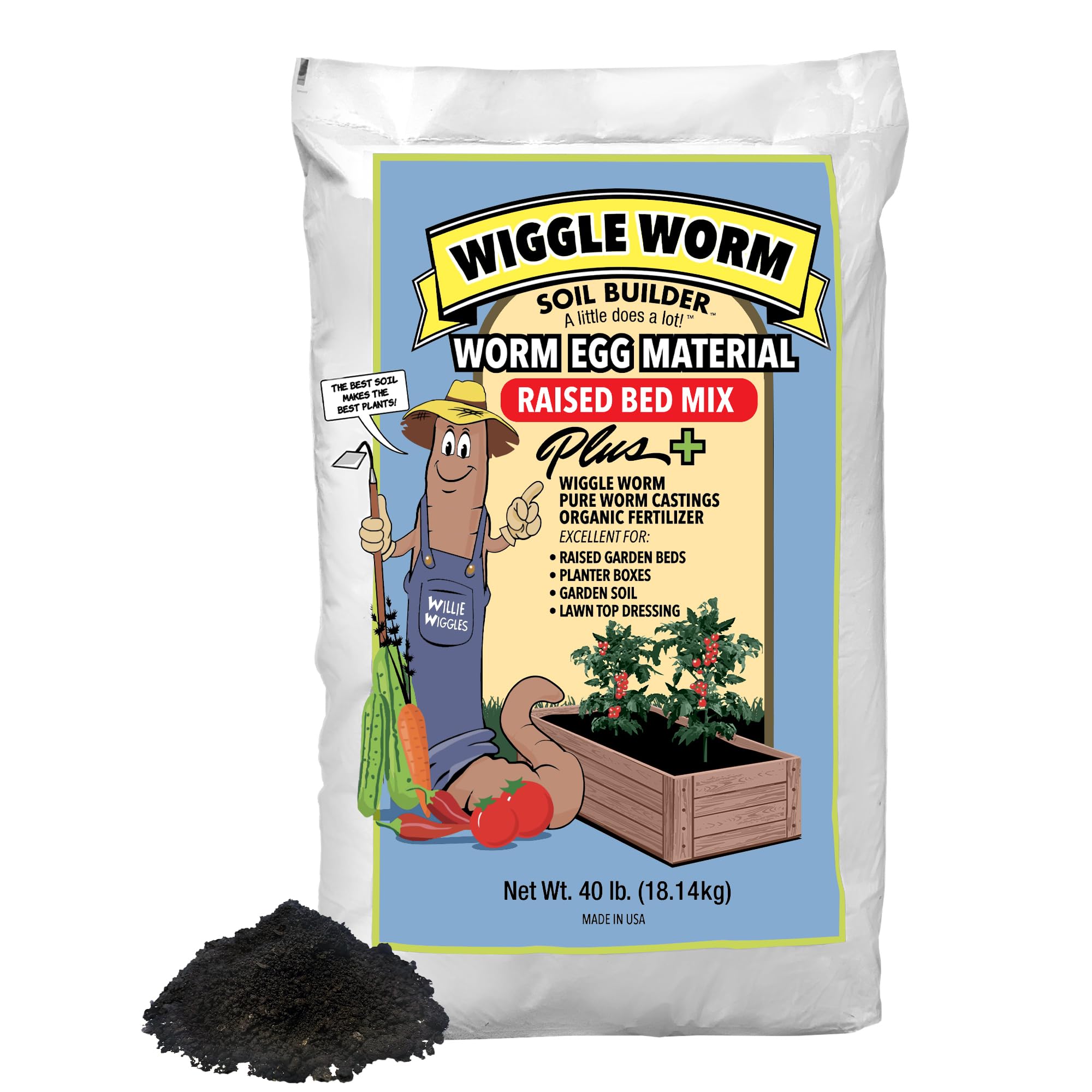
A worm-casting concentrate that makes plants “take off like wildfire”
The bag contains worm eggs that can hatch in your soil and start improving aeration and drainage. One buyer describes putting “a small scoop in the bottom of where you’re going to plant it, and the plant takes off like wildfire.” That is the real use case — mix a scoop into each planting hole rather than filling an entire 4×4 bed with it.
The main complaint is inconsistent quality: a reviewer found “rocks and twigs and chunks of wood” and had to sift half the bag. Another said there were “no rocks” but could not confirm worm eggs. But the debris reports mean you may need to sift before using. This is not a bag you rely on as your single soil source — it is a powerful additive that works best alongside a cleaner base mix.
The upside
- Worm eggs can hatch and create a self-sustaining soil ecosystem
- Buyers report dramatic growth boosts when used as a planting-hole additive
- Good value — 640 oz is more than the Brut 480 oz bag
The catch
- Some bags arrive with rocks, twigs, and gravel that need sifting
- Not ideal as a full raised-bed fill — better as a concentrate
Use it as: A planting-hole booster rather than a full bed fill — a scoop per hole gives you the worm-casting benefit without the debris risk.
Not for: Anyone who wants a clean, ready-to-use soil they do not have to sift first.
6. Michigan Peat Baccto Premium Potting Soil
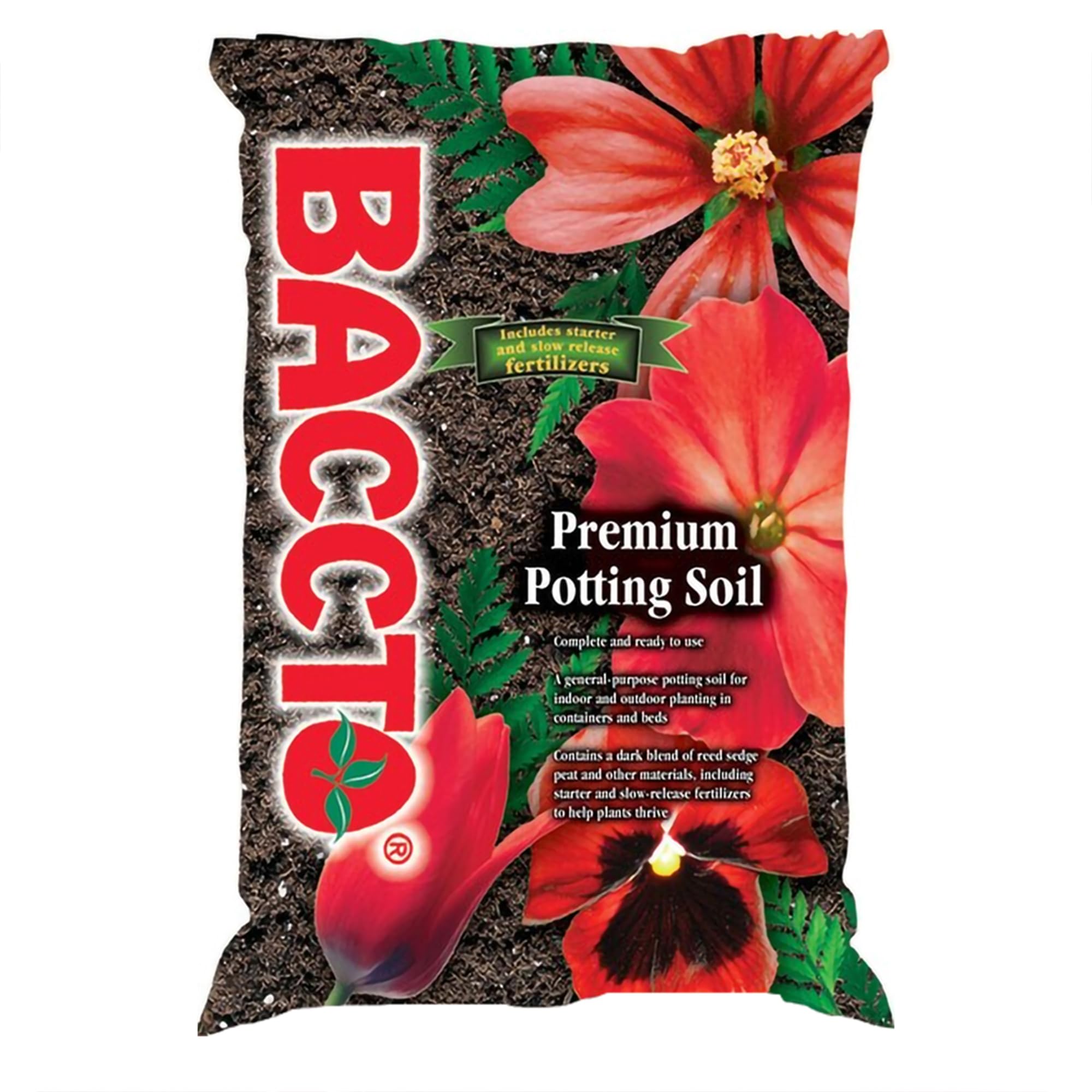
The budget bag that works for seed starting but watch for the sticks
Michigan Peat’s Baccto mix is a straightforward blend of reed sedge peat, perlite (the little white rocks that improve drainage and aeration), and sand, with starter and slow-release fertilizers included. It is ready to use straight from the bag and works for pots, planters, and raised beds. At 25 pounds, it is the most affordable option on this list by weight — but the value depends entirely on what is inside your particular bag. One buyer called it the “best-performing potting soil tried among 25+ brands” for seed starting, with vigorous plant growth.
The problem is inconsistency. A detailed buyer report says a “25lb bag yielded ~2 gallons of soil; rest was sticks” — that is a devastating ratio if you get a bad batch. Other reviewers confirm finding “non composted sticks” in the bag. Compared to the Brut mix which guarantees filler-free soil, Michigan Peat is a gamble. If you get a good bag, it is excellent for starting seeds. If you get a bad one, you lose half the volume to debris. For raised beds where the root zone goes deep, that risk feels too high for anything other than a tight budget.
Budget appeal
- Lowest upfront cost — good for seed starting if you get a clean bag
- Includes starter and slow-release fertilizer for steady nutrition
- Some buyers rate it as their best-performing soil ever
Quality risk
- Frequent reports of bags being mostly sticks and wood debris
- Yield can be as low as 2 gallons of usable soil from a 25lb bag
- Inconsistent quality makes it unreliable for large bed fills
Only buy if: Your budget is very tight and you are willing to sift the soil before using it in raised beds.
Skip it for: Any serious raised bed — spend a little more on the Brut or Espoma bags for consistent quality.
Understanding the Specs
Volume vs. Weight
A bag sold by weight (25 lbs, 40 lbs) tells you how heavy it is, not how much space it fills. A dense mix with lots of sand or clay weighs more per cubic foot but holds less air for roots. A mix sold by volume (1.5 cu ft, 2 cu ft) is usually fluffier and gives you more planting space per bag. When filling a raised bed, always compare cubic feet between bags.
Worm Castings
Worm castings are the digested output of earthworms — essentially natural, slow-release fertilizer packed with microbes. They improve soil structure, water retention, and nutrient availability without burning roots like synthetic fertilizers can. A bag that lists worm castings high in the ingredient list will feed your soil biology, not just the plant.
Mycorrhizae
Mycorrhizae are beneficial fungi that attach to plant roots and extend their reach into the soil, helping the plant absorb more water and nutrients. In exchange, the plant gives the fungi sugars. Not all bags include them, but they are a strong sign the mix is designed to support long-term soil health rather than just a single growing season.
OMRI Listing
The Organic Materials Review Institute (OMRI) independently verifies that a product meets organic standards. If a bag says “organic” but does not show the OMRI seal, that claim is not verified by a third party. For certified organic gardening, OMRI listing is the only label that carries real weight.
FAQ
How many bags of raised bed soil do I need for a 4×4 bed?
Can I use regular potting soil in raised beds?
What does OMRI listed mean on a soil bag?
Why do some soil bags have sticks and wood chips?
Is raised bed soil the same as garden soil?
Can I reuse raised bed soil from last year?
What is the difference between worm castings and compost?
Does raised bed soil expire in the bag?
Should I add fertilizer to pre-mixed raised bed soil?
What does biochar do in garden soil?
Final Thoughts: The Verdict
For most buyers, the garden soil for raised beds winner is the Coast of Maine Castine Blend because it delivers 2 cubic feet of clean, nutrient-dense soil with no twig complaints — the most consistent bag in the lineup. If you want a balanced organic mix at a lower volume, grab the Espoma Organic Raised Bed Mix. And for a filler-free bag with verified organic certification, the standout is the Brut Organic Potting Soil.
How We Picked
We do not accept paid placement. Every pick is matched to a real buyer and a real use-case; we do not hands-on test units.
Sources & Methodology
Specifications: manufacturer listings and product documentation. Review insights: verified customer reviews, as of July 2026. Pricing: not shown on this page (it changes often); check the current price via the retailer link.
As an Amazon Associate, Lawn Gear Lab earns from qualifying purchases. This does not affect which products we feature.