
Specs are compiled from manufacturer listings and verified buyer reviews and can change over time — please confirm the key details on the product page before buying.
You want a walking path that feels solid underfoot, not one where every step sends pebbles skittering or digs a trench with each rain. The trick is picking gravel small and angular enough to lock together into a firm surface — something that drains well but stays put. This guide matches you with the right stone based on your path’s purpose, from a quick garden shortcut to a broad driveway border you actually walk on daily.
I’m Rikta — the founder and writer behind Lawn Gear Lab. This guide is built by comparing the manufacturers’ published specifications and the patterns across verified customer reviews, so you get each pick’s real strengths and trade-offs instead of marketing spin.
Below, I break down the key physical specs and real-world feedback on four different bags of pea gravel and crushed granite, so you can zero in on the right gravel for walking path without hauling home the wrong rock.
Quick Picks
- All Purpose Pea Gravel 50 lb — Best Overall
- SHIZWU 20LB Aquarium Gravel, 1/4″ — Compact Pick
- Engine 109 40 LBS Grey Pea Gravel — Best for Slopes
- MIGHTY109 Granite Pea Gravel 40 Lbs — Best Interlock
How To Choose The Best Gravel For Walking Path
Not all gravel is the same under your feet. Big round pebbles shift and roll with every step, while small angular stone compacts into a firm, walkable surface. Here is what to look for so your path stays put through weather and traffic.
Stone Size
For a walking path, you want stone between about 1/8 inch and 3/8 inch — small enough that the pieces lock together, but not so fine that it turns to mud or dust. Look for “pea gravel” or “crushed granite” that describes a size around 1/4 inch to 3/8 inch. Anything bigger than 1/2 inch tends to feel loose and uneven underfoot.
Shape and Material
Angular, crushed stone (like granite) interlocks better than smooth, rounded river gravel. On a slope or high-traffic area, crushed material stays in place far longer. Smooth pea gravel looks nice but easily scatters sideways with foot traffic, especially on a hill.
Bag Weight and Coverage
Most bags weigh 40 or 50 pounds. A 40-pound bag covers roughly 2 to 3 square feet at a 2-inch depth. You will need multiple bags for even a short path — measure your space and calculate depth carefully before ordering.
Quick Comparison
| Model | Best For | Weight | Stone Size | Material | Amazon |
|---|---|---|---|---|---|
| All Purpose Pea Gravel 50 lb | Best Overall sheer coverage per bag | 50 lb | — | Brown pea gravel | Amazon |
| SHIZWU 20LB Aquarium Gravel | Compact paths or planter edging | 19.71 lb | 4-8MM (1/4 inch) | Natural river gravel | Amazon |
| Engine 109 40 LBS Grey Pea Gravel | Slope stabilization and weed control | 40 lb | 1/4 – 3/8 inch | Grey pea gravel | Amazon |
| MIGHTY109 Granite Pea Gravel 40 Lbs | Crushed granite stability for high-traffic paths | 40 lb | 1/8 inch average | Crushed granite | Amazon |
In‑Depth Reviews
1. All Purpose Pea Gravel 50 lb

The heavyweight bag that delivers the most coverage for your money.
If you are covering any real ground — say a path from the patio to the gate — this is the bag that moves the needle fastest. At 50 pounds it is the heaviest option here (2.5x heavier than the 19.71-pound aquarium gravel), which means fewer bags to haul and less per-square-foot cost. One reviewer noted that “it weighed enough to hold the pool ladder down,” giving you a sense of just how dense this gravel really is. The brown color blends naturally into soil and garden beds, so your path looks like it belongs rather than standing out as a bright white stripe.
The trade-off is that these are very tiny pea gravel pebbles — “very tiny compared to what I’m used to,” one buyer mentioned. That small size means it packs down tighter than larger stone, which is actually a plus for foot traffic, but it also means you need a deeper layer to keep the path feeling substantial. For a straight, level walking path where you want maximum coverage per trip to the delivery door, this is the most efficient pick.
Buyers report it is a “great value/size for the money” and that the gravel came as ordered with no dust issues. Because the stones are small and rounded, they do not interlock as tightly as crushed granite, so you will want an edging border to keep them on the path and off the lawn.
Why It Leads on Coverage
- 50 pounds per bag — the biggest single-bag weight here, so fewer bags to buy
- Brown tone hides dirt and blends into natural landscapes
- Buyers confirm consistent size with little dust
One Limitation
- Rounded pea gravel shifts underfoot compared to crushed stone
- Stone is very tiny — may not look as substantial as larger 3/8-inch gravel
Reach for this if: you need to cover a lot of ground on a budget and don’t mind adding edging to keep the stones in place.
Look elsewhere if: your path is on a slope — the rounded shape will migrate downhill over time without crushed angular stone.
2. SHIZWU 20LB Aquarium Gravel, 1/4″

A lightweight 20-pound bag perfect for narrow borders or planter edging.
This is not your primary path-filler, but it is a great option for topping up a thin section, lining a short flower-bed border walk, or adding a stable surface to a small side path where you only take a few steps. At 19.71 pounds it is about 60% lighter than the 50-pound bag, which makes it easy to carry in one hand and pour exactly where you need it. The stones are 4-8MM (about 1/4 inch), a size that owners mention is “nice for covering the surface of a planter and hiding the dirt underneath.”
Because these are natural river gravel, the stones are smooth and rounded — not ideal for a main walking path that gets daily foot traffic, but perfectly fine for a light-use decorative path where appearance matters. One reviewer liked the “natural look” for use in an aquarium, and another uses them as “ground cover for potted cactuses.” The smooth surface also means no sharp edges against bare feet if your path connects to a garden seating area or pool surround.
The bag does not reseal, so you will want to have a bucket or container ready for the leftover stone. Customers note the stones tend toward the larger side of the 4-8MM range, so expect mostly 1/4-inch pebbles with a few slightly smaller mixed in. For a very small, low-traffic path where you care about appearance over compaction, this fits neatly.
Best for Light Duty
- Light 19.71-pound bag is easy to carry and pour by hand
- Natural smooth stones look clean in decorative garden paths
- Reviewers point out no need to rinse — clean right from the bag
Not for Heavy Traffic
- Rounded shape does not lock together for a firm walking surface
- Small 20-pound bag covers very little area compared to the 50-pound option
Grab this for: a short decorative border path or a planter-top walking line where you want natural smooth stone.
Skip it for: a main driveway walk or any path on a slope where stability matters more than looks.
3. Engine 109 40 LBS Grey Pea Gravel
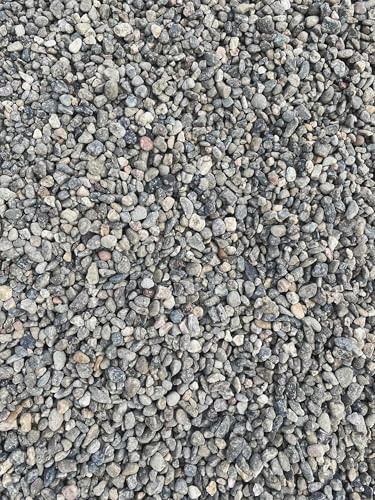
Angular grey gravel sized to stay put on sloped or high-traffic paths.
This 40-pound bag uses a mix of 1/4-inch to 3/8-inch stone — a noticeably larger and more angular particle than the tiny rounded gravels above. The bigger, chunkier shape means the pieces wedge together when you walk on them, creating a more stable surface that does not roll sideways with each step. One buyer called it “a practical choice for stabilizing any sloped area and keeping weeds down,” which is exactly the feedback you want for a path on a grade. Another reviewer said it “covers up the mud in front of the house,” solving that classic entryway issue.
The grey color works well in modern landscapes and does not clash with concrete or stone pavers if you are using it as a filler between stepping stones. The manufacturer, Engine 109 (The Bulk Depot), explicitly notes it is for “creating pathways, driveways, and other outdoor flooring surfaces,” so it is designed with walking in mind.
One honest caveat from a reviewer: it is “too heavy for USPS,” meaning shipped via the Postal Service the 40-pound bag was a strain on the mail carrier. Also, while 40 pounds looks decent, one owner reported they “wish it was more than 40lbs though” — so plan to order multiple bags for a path longer than a few feet. For the person with a short but sloped path who wants the gravel to actually stay in one place, this is the smartest buy.
Built for Stability
- Stone size 1/4-3/8 inch locks together better than smaller pea gravel
- Buyers confirm it stabilizes slopes and suppresses weeds
- Grey color matches concrete and stone landscaping elements
What to Watch
- 40 pounds still feels heavy to ship via USPS as one customer observed
- You will need multiple bags for a path longer than about 3-4 feet at 2 inches deep
Choose this one for: a short sloped path or an area where mud is a problem and you need the gravel to stay in place.
Pass it by if: you need a very large volume of gravel — the 50-pound bag above gives more coverage per order.
4. MIGHTY109 Granite Pea Gravel 40 Lbs
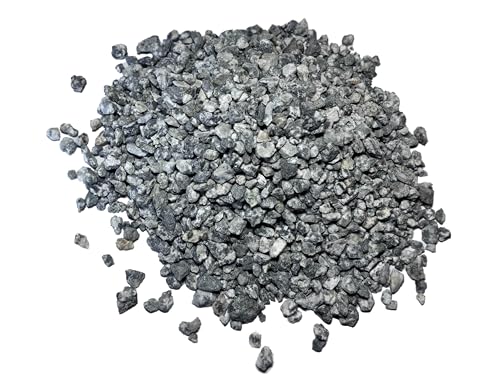
Crushed granite that locks into a firm surface — the best walking feel of the bunch.
This is the only crushed-stone option here, and it makes a real difference under your feet. Instead of smooth round pebbles that roll, each piece of granite is fractured with sharp, irregular edges that grip the next piece like puzzle pieces. The average stone diameter is about 1/8 inch, which is smaller than the 1/4-inch stone in the Engine 109 bag, but the angular faces create a much denser, more compacted surface. One buyer used it “to level the surface before I put down my pavers” — a sign of how well it flattens and stabilizes.
The color is described as a very light gray with “attractive variations of gray, white and blue tones,” though at least one buyer found it “lighter than is pictured here,” so expect a pale, almost silvery stone rather than a dark gray. That light color makes it pop against dark soil or green grass, which can be a nice look for a garden path. A cactus rock gardener specifically bought it because “the small size and color helps cactus show up well.”
It is also note the customer service reputation: one buyer had the wrong rocks shipped, but the company “responded within minutes, asked for some quick photos, and then sent me the correct replacement immediately.” That kind of fast fix matters when you are waiting on materials for a weekend project. The only downside beyond the color surprise is that the 1/8-inch average size is very small — borderline sand-like — so it may not give the visual gravel look you expect if you want chunky stone. For a firm, walkable path surface that compacts like a trail, this is the top choice.
The Walking Surface Winner
- Crushed granite interlocks much better than rounded pea gravel for stability
- Buyers confirm it levels surfaces and works well under pavers
- Responsive customer service from MIGHTY109
Know Before You Buy
- 1/8-inch average stone is much smaller than typical pea gravel — almost a fine grit
- Color is lighter gray than product photos may suggest
Best for: a high-traffic path where you want a firm, compacted walking surface that does not shift underfoot.
Not ideal if: you want a classic chunky pebble look — the small crushed-granite size looks more like fine gravel or decomposed granite.
Understanding the Specs
Stone Size (Diameter)
This is the single most important spec for a walking path. Stones between 1/8 inch and 3/8 inch lock together when compacted, creating a surface that shifts less underfoot. Smaller than 1/8 inch feels like sand and washes away easily. Larger than 1/2 inch feels lumpy and rolls under your shoes. Look for a labeled size like “4-8MM” (about 1/4 inch) or “1/4-3/8 inch” for the best walking surface.
Weight vs Coverage
Gravel is sold by weight, but you actually care about depth. A 40-pound bag of 1/4-inch pea gravel covers roughly 2 to 3 square feet at a 2-inch depth — barely enough for a stepping-stone path. For a continuous walkway 2 feet wide and 10 feet long, you need about 7-8 bags of 40-pound gravel. The 50-pound bag saves you one extra bag, which adds up on larger projects.
Rounded vs Crushed
Rounded gravel (river rock, pea gravel) looks polished and natural but scatters sideways underfoot. Crushed stone (granite, limestone) has jagged edges that lock together, giving a much firmer walking surface that resists sliding on slopes. If you have children, elderly visitors, or any incline on your path, crushed material is dramatically safer and more comfortable to walk on.
Color and Staining
Light gray and tan gravels show dirt less than pure white stone, which quickly looks dingy. Brown gravel blends into soil and leaf litter, while gray stone contrasts with green grass. Be aware that some dyed gravel can stain light-colored concrete or pavers when wet — undyed natural stone like the options here avoids that problem.
FAQ
How deep should my gravel path be for walking?
Can I put gravel directly on dirt?
How many bags of 40-pound gravel do I need for a 10-foot path?
What is the difference between pea gravel and crushed granite for walking?
Will gravel damage my lawn mower if it gets kicked onto the grass?
Can I use aquarium gravel for a walking path?
Does gravel need to be washed before putting it down?
What is the best gravel for a path on a slope?
Will this gravel wash away in heavy rain?
Can I mix two different gravel colors together?
Final Thoughts: The Verdict
For most people, the gravel for walking path winner is the MIGHTY109 Granite Pea Gravel 40 Lbs because its crushed granite interlocks into the most stable, walkable surface of any option here. If you want sheer coverage volume per bag and are working on flat ground with edging, grab the All Purpose Pea Gravel 50 lb. And for a short sloped path where staying in place matters most, the Engine 109 40 LBS Grey Pea Gravel is the practical choice with solid buyer proof behind it.
How We Picked
We do not accept paid placement. Every pick is matched to a real buyer and a real use-case; we do not hands-on test units.
Sources & Methodology
Specifications: manufacturer listings and product documentation. Review insights: verified customer reviews, as of July 2026. Pricing: not shown on this page (it changes often); check the current price via the retailer link.
As an Amazon Associate, Lawn Gear Lab earns from qualifying purchases. This does not affect which products we feature.