
Specs are compiled from manufacturer listings and verified buyer reviews and can change over time — please confirm the key details on the product page before buying.
Lavender is a picky plant. It needs soil that drains fast and leans alkaline, and most bagged potting mixes hold too much water and turn the roots to mush. The right mix changes everything — you get bushy plants and flowers that actually last instead of a sad wilted stem.
I’m Rikta — the founder and writer behind Lawn Gear Lab. This guide is built by comparing the manufacturers’ published specifications and the patterns across verified customer reviews, so you get each pick’s real strengths and trade-offs instead of marketing spin.
This guide covers the best potting soil for lavender, from premium blends packed with worm castings and perlite to budget-friendly quarts for a single patio pot, so you can stop guessing and start growing.
Quick Picks
- Soil Sunrise Lavender Potting Soil Mix (8 Quarts) — Best Overall
- Gardenera Lavender Planting Soil (10 Quarts) — Premium Bulk
- Rosy Soil Herb Mix (4 Quarts) — Peat-Free Pick
- GARDENERA Lavender Planting Medium (2 Quarts) — Compact Choice
- Gardenera Lavender Potting Soil (1 Quart) — Entry-Level
How To Choose The Best Potting Soil For Lavender
Lavender comes from the dry, rocky hills of the Mediterranean, so it hates wet feet. Picking the right potting soil means checking a few key things before you buy.
Drainage Is Everything
Lavender roots rot fast in soggy soil. Look for mixes that list perlite, sand, pumice, or horticultural charcoal among the first ingredients. These create air pockets so water flows through instead of pooling around the roots.
Look for Lime to Raise the pH
Most garden soils are slightly acidic, but lavender prefers a higher pH (around 6.5 to 8.0). A good lavender mix includes lime, which gently nudges the pH upward so the plant can actually absorb the nutrients it needs.
Worm Castings for Steady Nutrition
Lavender is not a heavy feeder, but a small amount of organic matter makes a difference. Worm castings provide a slow-release nutrient boost without burning the roots, which is why many of the top-rated blends include them.
Volume Matters for Your Container
A single 6-inch pot needs about 1 to 2 quarts of soil, while a large 12-inch planter needs around 8 quarts. Buying too little means mixing in another bag, and buying too much leaves you with half a bag you have to store. Match the bag size to your project.
Quick Comparison
| Model | Best For | Volume | Key Ingredients | Peat-Free | Amazon |
|---|---|---|---|---|---|
| Soil Sunrise Lavender Potting Soil Mix | Larger containers & heavy bloomers | 8 Quarts | Peat moss, perlite, charcoal, pumice, sand, worm castings, lime | No | Amazon |
| Gardenera Lavender Potting Soil (10 Qt) | Serious multi-pot setups | 10 Quarts | Canadian peat moss, charcoal, worm castings, perlite, sand, pumice, lime | No | Amazon |
| Rosy Soil Herb Mix | Organic, peat-free herb gardens | 4 Quarts | Biochar, compost, worm castings, bark fines, mycorrhizae | Yes | Amazon |
| Gardenera Lavender Planting Medium (2 Qt) | Single patio pot projects | 2 Quarts | Canadian peat moss, charcoal, worm castings, perlite, sand, pumice, lime | No | Amazon |
| Gardenera Lavender Potting Soil (1 Qt) | Starting seeds or a single herb pot | 1 Quart | Canadian peat moss, charcoal, worm castings, perlite, sand, pumice, lime | No | Amazon |
In‑Depth Reviews
1. Soil Sunrise Lavender Potting Soil Mix (8 Quarts)

The bag that turned a lavender-killer into a flower factory.
This is the one buyers keep coming back to when they have “killed more lavender plants than I can count.” The Soil Sunrise mix comes in an 8-quart bag — enough to fill a big 12-inch pot — and it brings the full toolkit: peat moss for moisture balance, perlite and pumice for drainage, sand for structure, worm castings for gentle feeding, and lime to push the pH (acidity level) where lavender likes it. Unlike the 1-quart Gardenera bag, this has eight times the volume, so you are not running back to the store mid-planting.
Buyers report something rare: big bushy lavender that produces so many flowers they “have enough to last through the dormant season.” A separate reviewer noted their grocery-store lavender went from not blooming to blooming in just two days after repotting. The only thing to watch for is that it is not peat-free — the peat moss does help with water retention, but if you prefer a completely peat-free option you will want to look at the Rosy Soil mix.
The Real Payoff
- 8 quarts fills a large 12-inch container in one go
- Includes both perlite and pumice for serious drainage
- Worm castings and lime create ideal root conditions
The Honest Trade-Off
- Contains peat moss, so not fully sustainable for eco-focused buyers
- One reviewer noted the plant was already too far gone to test it
The best all-around pick: This is the bag for anyone who has struggled with lavender before and wants a mix that does all the work — drainage, pH, and nutrition in one pour. Go for the Rosy Soil if you must have peat-free.
2. Gardenera Lavender Planting Soil (10 Quarts)
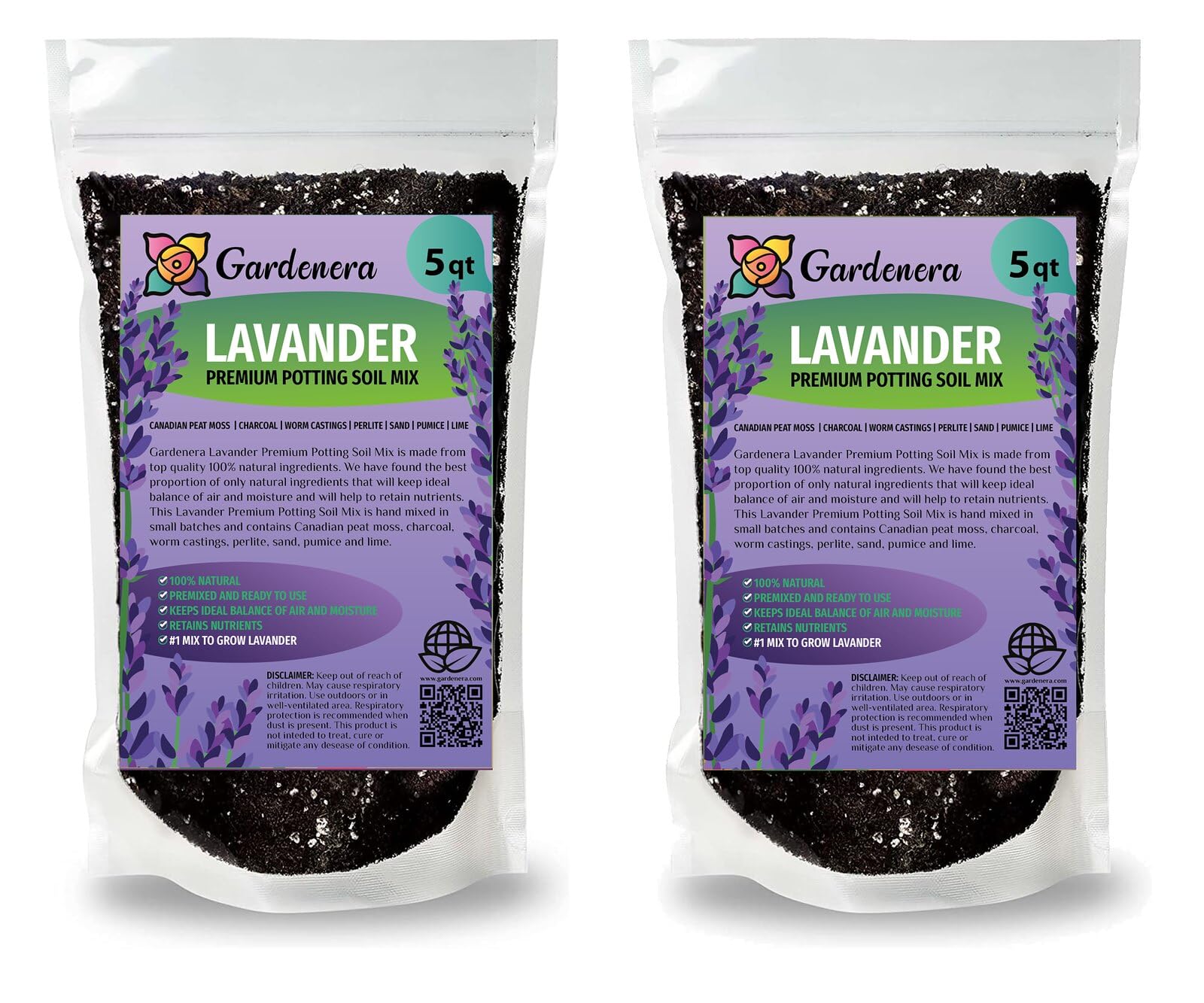
A full 10 quarts of premium mix for the serious lavender grower.
When you have more than one pot to fill, this is the bag to reach for. Gardenera pours the same recipe — Canadian peat moss, charcoal, worm castings, perlite, sand, pumice, and lime — into a 10-quart bag, making it the largest single-volume offering among the picks. That is a clear advantage over the 8-quart Soil Sunrise bag if you are managing multiple containers or a raised bed. The mix is also labeled for indoor and outdoor use, so you can use it on a kitchen windowsill or on a sunny patio.
Buyers had positive results, with several noting their lavender sprouted and grew fast in southern Michigan, a region where lavender often struggles. One reviewer did report all their potted lavender died, blaming the water level — which is a reminder that even the best-draining soil cannot fix overwatering. If you only need soil for a single small pot, the 1-quart or 2-quart Gardenera bags will save you from storing extra mix.
Why Choose This
- 10 quarts is the biggest bag — enough for several large pots
- Same proven ingredient list as the smaller Gardenera bags
- Suitable for both indoor containers and outdoor gardens
Consider This First
- Higher initial cost than smaller bags, even per quart
- A few buyers lost plants to water issues, likely from overwatering
Best for the multi-pot gardener: If you are planting three or more lavender plants in containers, this bag keeps you from buying multiple smaller ones. The 8-quart Soil Sunrise is a better value if you only need one large pot.
3. Rosy Soil Herb Mix (4 Quarts)
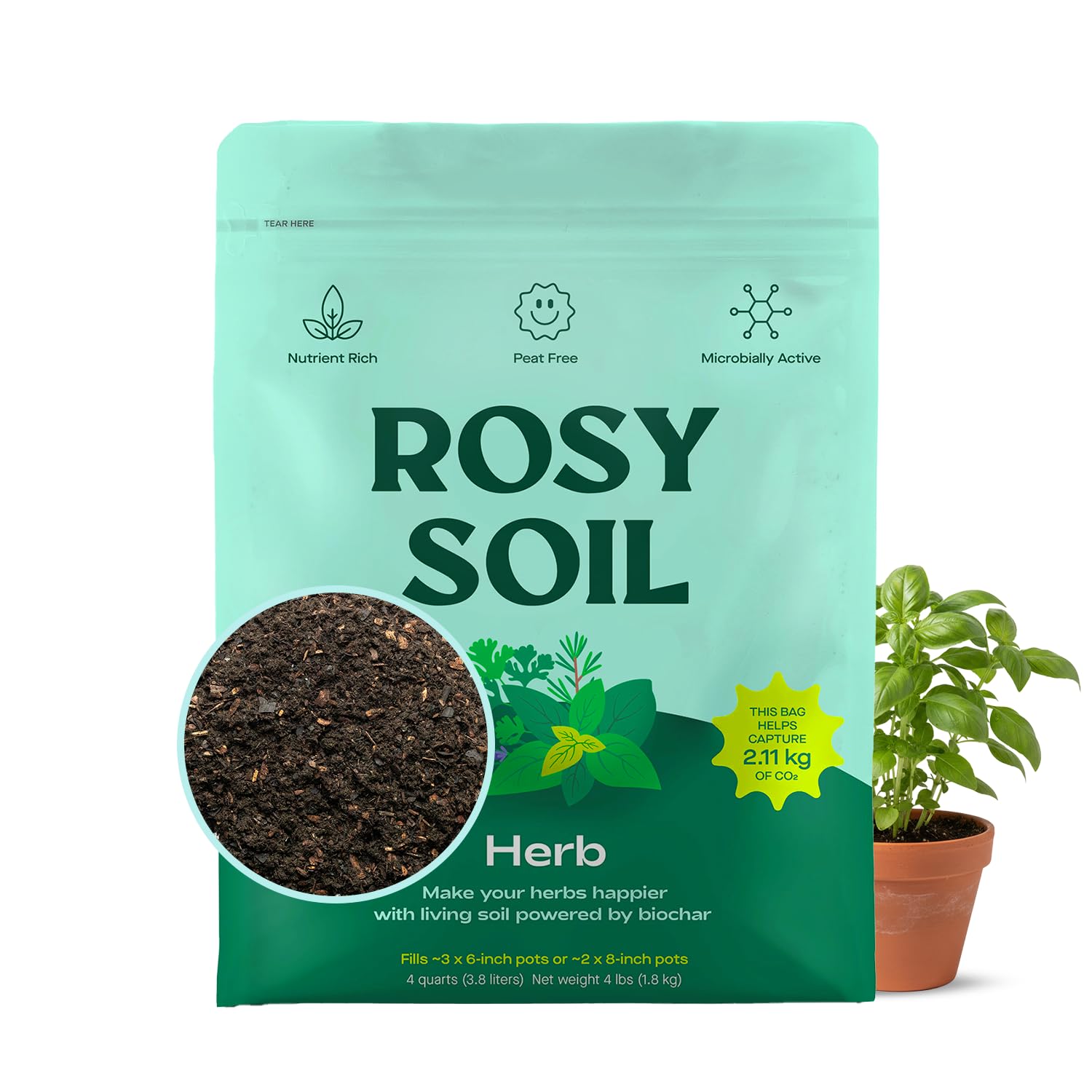
A living, peat-free soil that feeds herbs without synthetic additives.
This bag stands apart because it skips peat moss entirely and uses biochar — a charcoal-like material that acts like a sponge to hold nutrients and water while hosting beneficial microbes. The mix also includes worm castings, compost, bark fines, and mycorrhizae fungi (a beneficial fungus that helps roots absorb water and nutrients). The result is a fluffy, fast-draining soil that works well for lavender, basil, mint, and rosemary. At 4 quarts, the bag fills 2 to 3 medium 6-inch pots, which is right in the middle between the tiny 1-quart bags and the bulk 8 to 10-quart bags.
Owners mention that seedlings sprouted in record time, and one reviewer called it “the best Herb Mix I have used,” noting they were growing lavender, mint, and basil all in the same soil. The only catch is that the bag is smaller than the Soil Sunrise or bulk Gardenera mixes, so if you are filling a single 12-inch pot you will run short.
The Upside
- Peat-free and made from upcycled, carbon-negative ingredients
- Biochar and mycorrhizae build a living soil ecosystem
- Fast-draining structure prevents waterlogged roots
The Downside
- 4 quarts is not enough for a large 12-inch container
- Not formulated exclusively for lavender — better for mixed herb gardens
Perfect for eco-conscious growers: If you want a sustainable, peat-free mix that is also fast-draining, this is the choice. For a larger single-pot lavender project, pair it with the Soil Sunrise mix instead.
4. GARDENERA Lavender Planting Medium (2 Quarts)
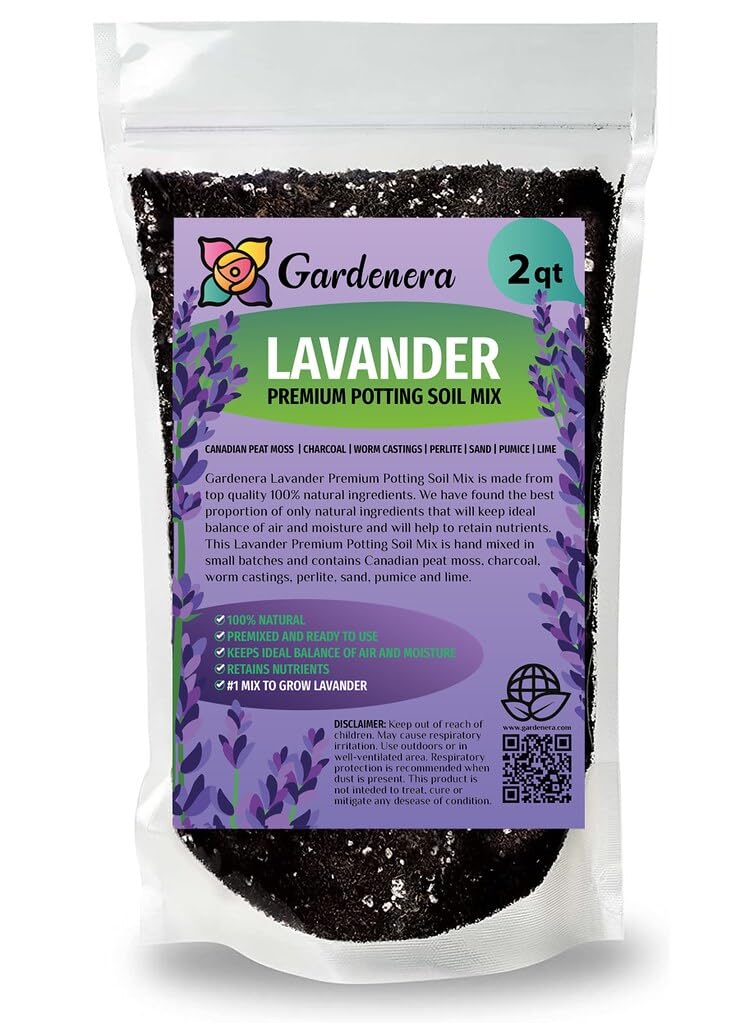
The exact right amount for one patio pot with no leftovers.
This 2-quart bag hits a balance for people potting a single lavender plant. It is twice the size of the 1-quart Gardenera bag, but still compact enough to store easily. The ingredient list is identical to the other Gardenera bags — Canadian peat moss, charcoal, worm castings, perlite, sand, pumice, and lime — so you get the same drainage and pH (acidity) balance in a smaller package. That matters because mixing a larger bag for a single pot leaves you with leftover soil that can dry out or get stale.
Buyers in southern Michigan reported that this mix helped their lavender sprout and grow, with one saying “my plants look great and are growing fast” after using it in a new container. Another reviewer noted the price felt high for the size. Unlike the 8-quart Soil Sunrise bag (which is 4x larger), the 2-quart size limits you to one small-to-medium pot, so measure your container before buying.
What Works
- No wasted soil — exact fit for a single 6 to 8-inch pot
- Same high-quality ingredients as the larger Gardenera bags
- Works for both indoor and outdoor containers
The Catch
- Higher price per quart compared to bulk bags
- Not enough for a large 12-inch pot
Best for the one-pot gardener: If you are planting a single lavender plant on a balcony or windowsill, this bag is exactly right. Need more than one pot? Save and buy the 10-quart Gardenera bag instead.
5. Gardenera Lavender Potting Soil (1 Quart)
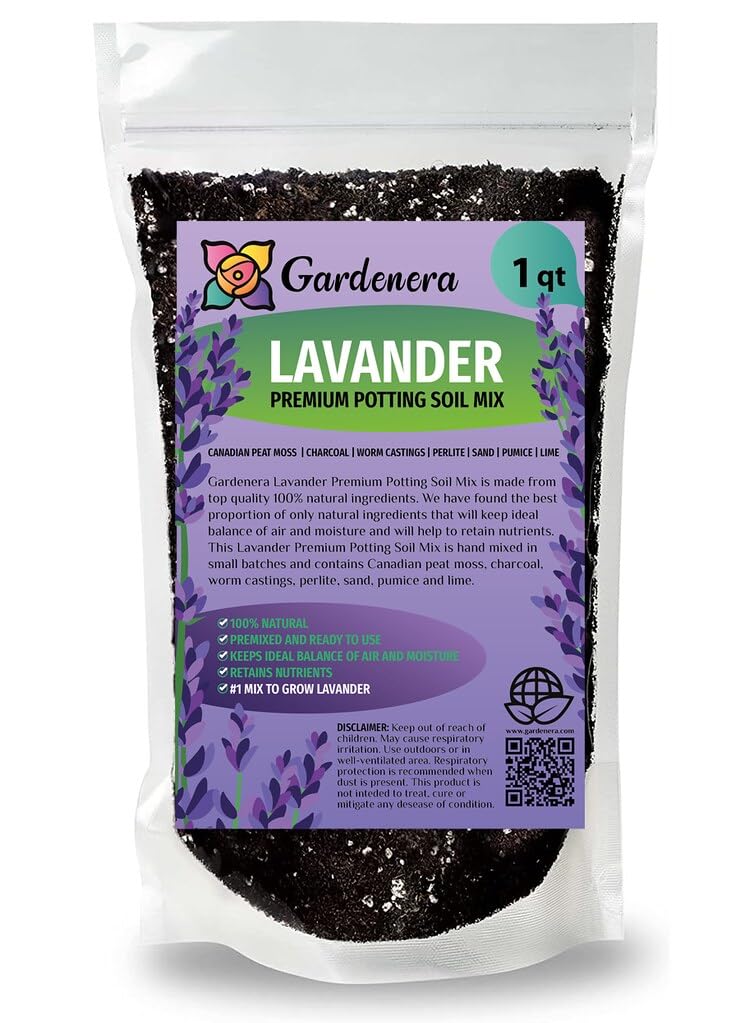
A tiny bag with a big ingredient list for one small lavender start.
This is the smallest option among the picks — just 1 quart, which is enough for a single small pot or for starting a few lavender seeds. It uses the same premium line-up of Canadian peat moss, charcoal, worm castings, perlite, sand, pumice, and lime as the larger Gardenera bags, so you are not sacrificing quality for size. For someone who wants to test a lavender plant for the first time without committing to a whole bag, this makes it easy.
Customers note success with seeds sprouting on a patio in southern Michigan, which is a notoriously tough climate for lavender. A separate user called the price high for such a small amount — roughly the same formula found in the 10-quart bag but at a much higher per-quart cost. If you have more than one pot or plan to repot later, the 2-quart or larger bags stretch your money further.
Why It Works
- Perfect for trial runs and single small pots
- Complete ingredient list with lime, perlite, and worm castings
- Uses proven Gardenera formulation
The Reality
- Most expensive per quart of any bag on this list
- One reviewer lost all their potted lavender plants to water issues
The taster’s portion: This is the bag to grab if you are trying lavender in a pot for the very first time. If you already know you want a full plant, grab the 2-quart or 8-quart options to get better value per quart.
Understanding the Specs
Perlite & Pumice — The Drainage Heroes
Perlite is a white, lightweight volcanic glass that is popped like popcorn to create tiny air pockets in the soil. Pumice is a heavier volcanic rock that does the same job but lasts longer without breaking down. Both are in these mixes to stop water from pooling around lavender roots, which is how you avoid rot. The more you see listed in the ingredients, the faster your soil will drain.
Lime — The pH Adjuster
Lime is a powdered rock that raises the pH of the soil, making it less acidic. Lavender prefers a pH between 6.5 and 8.0, which is slightly alkaline. Most standard potting mixes are neutral or slightly acidic, which is why a lavender-specific mix includes lime. Without it, your lavender may survive but will struggle to take up nutrients, leading to pale leaves and weak growth.
Worm Castings — Gentle Slow-Release Food
Worm castings are essentially worm manure, and they are packed with beneficial microbes and nutrients like nitrogen, phosphorus, and potassium. Unlike synthetic fertilizers, they release nutrients slowly and do not burn roots. In a lavender mix, a small amount of worm castings gives the plant a steady food supply without pushing it into soft, leafy growth that attracts pests.
Volume — Quart Sizes Explained
A quart is a unit of volume, roughly equal to four cups. A standard 6-inch nursery pot holds about 1 to 2 quarts of soil, while a 12-inch pot can take 6 to 10 quarts. That is why you see bags from 1 quart (for one small pot) up to 10 quarts (for multiple pots or one large container). Matching the bag size to your project avoids waste or a last-minute soil shortage.
FAQ
Can I use regular potting soil for lavender?
What pH should lavender soil be?
How often should I water lavender in a pot?
Is peat moss good for lavender?
Can I mix my own lavender potting soil?
How much potting soil do I need for a 12-inch pot?
Do I need fertilizer for lavender in a pot?
Why is my potted lavender turning yellow?
Can I plant lavender in the same soil as other herbs?
Does lavender need full sun in a pot?
Final Thoughts: The Verdict
For the majority of shoppers, the potting soil for lavender winner is the Soil Sunrise Lavender Potting Soil Mix because it delivers 8 quarts of a perfectly balanced blend — perlite, pumice, sand, worm castings, and lime — in one bag that fills a 12-inch pot. If you want a sustainable peat-free option that also works for rosemary and basil, grab the Rosy Soil Herb Mix. And for a smaller single-pot project where you do not want leftover soil, the GARDENERA Lavender Planting Medium (2 Quarts) gives you the exact amount with no waste.
How We Picked
We do not accept paid placement. Every pick is matched to a real buyer and a real use-case; we do not hands-on test units.
Sources & Methodology
Specifications: manufacturer listings and product documentation. Review insights: verified customer reviews, as of July 2026. Pricing: not shown on this page (it changes often); check the current price via the retailer link.
As an Amazon Associate, Lawn Gear Lab earns from qualifying purchases. This does not affect which products we feature.