
Specs are compiled from manufacturer listings and verified buyer reviews and can change over time — please confirm the key details on the product page before buying.
Getting the right slow release fertilizer means the difference between a lawn that fights through a hot summer and one that fades by July. You want something that feeds steadily, cuts down on the chore of reapplying, and actually builds up your soil instead of just adding a quick green spike that fades in a week. This guide walks through seven of the most reliable options, from granular feeds for big lawns to mess-free spikes for individual trees, so you can match one to exactly what you are growing.
I’m Rikta — the founder and writer behind Lawn Gear Lab. This guide is built by comparing the manufacturers’ published specifications and the patterns across verified customer reviews, so you get each pick’s real strengths and trade-offs instead of marketing spin.
You will learn which formulas deliver steady nourishment over weeks rather than hours, and how to match the NPK numbers to your specific grass type or garden bed to get a deep, dark green without the surge-and-crash cycle of quick-release options. This is your complete look at the slow release fertilizer landscape for 2025.
Quick Picks
- GreenView Fairway Formula Lawn Fertilizer — Best Overall
- Yard Mastery 24-0-6 Flagship Granular Lawn Fertilizer — Premium Pick
- The Andersons Professional PGF 16-0-8 Fertilizer with Humic DG — Best Value
- Jobe’s Tree Fertilizer Spikes, 16-4-4 Time Release — Best for Trees
- FoxFarm Happy Frog All Purpose Fertilizer — Best for Gardens
- Espoma Organic Plant-Tone 5-3-3 — Best Organic
- EarthPods Bio-Organic Indoor Plant Food Capsules — Best for Indoors
How To Choose The Best Slow Release Fertilizer
The first thing to know is that “slow release” is not one single technology. Some granules are coated with a resin or sulfur membrane that lets water seep in slowly, releasing nutrients over time. Others rely on organic matter that must be broken down by soil microbes before the plant can use them. Understanding which mechanism is at work helps you pick a product that matches your climate, soil temperature, and how often you are willing to apply.
Match the N-P-K to your goal
The three numbers on the bag stand for Nitrogen (N), Phosphorus (P), and Potassium (K). A high first number, like 27-0-5, pushes thick green leaf and blade growth — ideal for an established lawn that just needs a spring boost. A more balanced 5-3-3 is better for a mixed flower and vegetable garden where you want steady root and bloom support without overwhelming any one type of plant. Pick the ratio that fits your target, not the biggest number on the shelf.
Consider the form it comes in
Granules are the standard for covering large lawn areas and are usually spread with a rotary or drop spreader. Fertilizer spikes are pushed into the soil right at the drip line of a tree or shrub — they eliminate the risk of drift onto paths or flower beds but feed a smaller area per spike. Capsules and pods work best for potted indoor plants where measuring a liquid dose is messy and a handful of granules is too much for a small container. Pick the form that matches your planting setup.
Quick Comparison
| Model | Best For | NPK Ratio | Weight | Coverage | Amazon |
|---|---|---|---|---|---|
| GreenView Fairway Formula | Medium to large lawns | 27-0-5 | 33 lb | 10,000 sq ft | Amazon |
| Yard Mastery Flagship | Deep green color and thick turf | 24-0-6 | 18 lb | 6,000 sq ft | Amazon |
| The Andersons PGF | Phosphorus-sensitive lawns | 16-0-8 | 18 lb | Not listed | Amazon |
| Jobe’s Tree Spikes | Individual trees and shrubs | 16:4:4 | 30 spikes | — | Amazon |
| FoxFarm Happy Frog | Flowers, vegetables, ornamentals | Not listed | 4 lb | Full | Amazon |
| Espoma Plant-Tone | Organic all-purpose garden feeding | 5-3-3 | 4 lb | All-purpose | Amazon |
| EarthPods Indoor Capsules | Potted indoor houseplants | Not listed | 3.9 oz | 100 capsules | Amazon |
In‑Depth Reviews
1. GreenView Fairway Formula Lawn Fertilizer

The 33-pound spring workhorse that keeps feeding long after the first mow.
If you have a medium to large lawn and want one application to carry you into summer, this is the bag to reach for. The 27-0-5 ratio means it is heavy on nitrogen (the first number, N) to drive that thick green blade growth you expect from a well-fed lawn, and 63% of that nitrogen is slow release, so the grass gets a steady meal rather than a quick green flash that fades in two weeks. The coverage is a full 10,000 square feet per bag, which lines up well with the typical suburban yard.
Buyers report that it “feeds your lawn for 12 weeks, which will get it good and ready for the summer heat,” and multiple owners note their grass turned a dark green within days after a good rain. This product weighs 33 lb versus the FoxFarm Happy Frog bag at 4 lb, but that bulk is exactly what you want when you are covering a large area rather than tending a few garden beds. It contains no phosphate (the middle number is zero), so it is a smart pick if your soil already tests high in phosphorus.
Why it stands out
- 33 lb bag covers 10,000 sq ft in one go
- 63% slow release nitrogen for steady 12-week feeding
- No phosphate protects local waterways
Things to watch
- Heavy 33 lb bag is harder to carry and store
- Nitrogen-only formula (27-0-5) needs a separate balanced feed for garden beds
A smart one-stop spring feed: Perfect for the homeowner with a medium to large lawn who wants to apply once and not think about fertilizer again until summer heat sets in.
Not for small yards: The 33 lb size is overkill for a tiny patch of grass; a smaller bag or spike system makes more sense there.
2. Yard Mastery 24-0-6 Flagship Granular Lawn Fertilizer
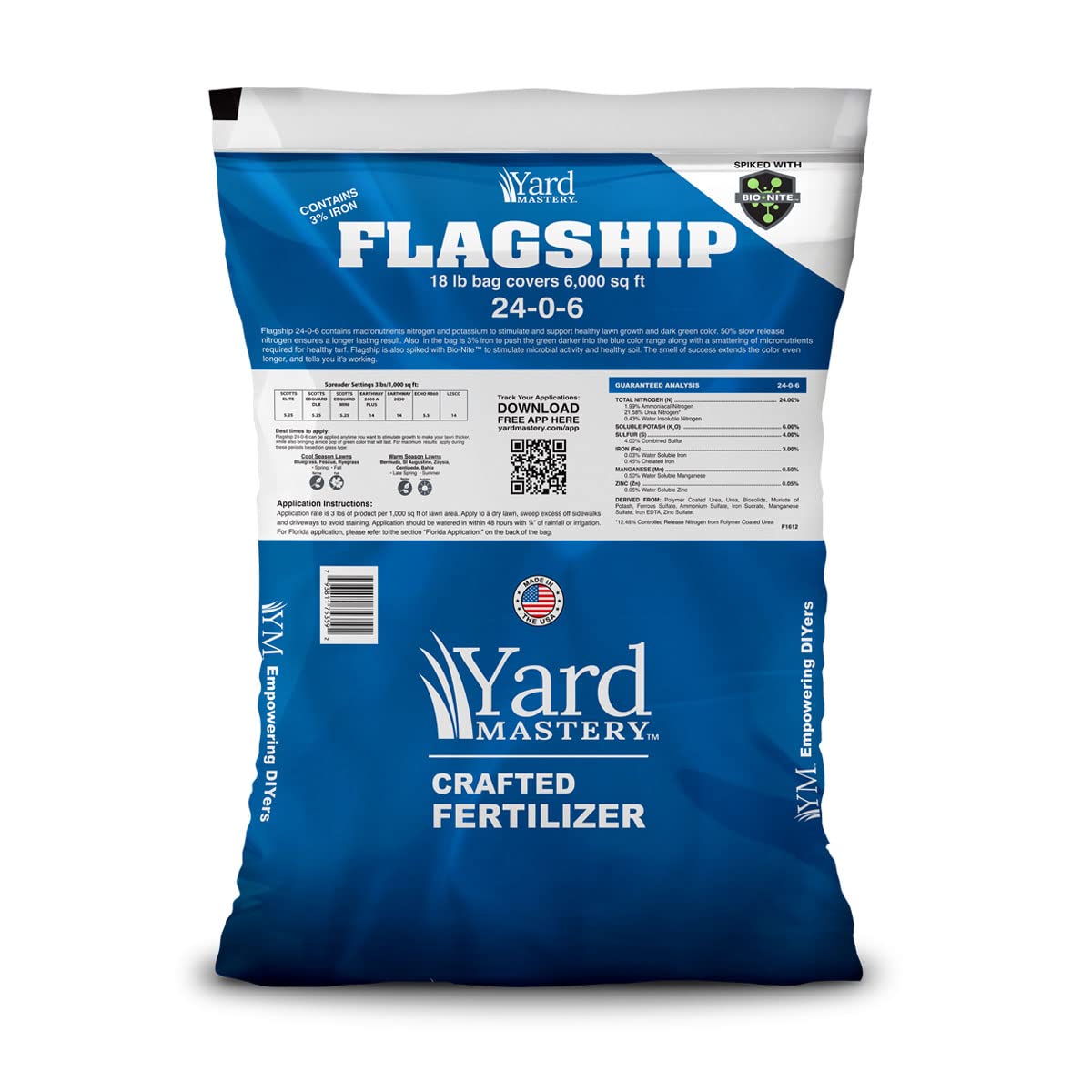
The bag that makes neighbors ask which lawn service you hired.
This one goes a step beyond a standard nitrogen boost. The 24-0-6 formula includes 3% iron, which is what gives the grass that deep blue-green color you see on golf courses and well-kept turf. It also packs a lineup of micronutrients — boron, copper, manganese, molybdenum, and zinc — that address deficiencies a basic N-P-K (nitrogen-phosphorus-potassium) bag might miss. The bag weighs 18 lb and covers 6,000 square feet, which is a lighter load than the GreenView but still plenty of reach for a mid-sized lawn.
Owners mention that the Yard Mastery blend “revived dead, patchy brown lawn to full, deep green within a week” and one owner noted it “outperformed 3 years of professional yard service after one bag.” The ammonium nitrogen content delivers quick greening while the slow release component keeps the color lasting. The trade-off is that you will be cutting grass more often — one buyer specifically mentions having to cut twice a week during peak growth because the formula really stimulates growth. It also costs more per square foot than the GreenView, so it fits best when you want quick visual results and a truly thick stand of grass.
What gives it the edge
- 3% iron for deep blue-green color
- Broad micronutrient package (boron, copper, manganese)
- Slow release nitrogen for steady summer feeding
What to know
- Price per sq ft is higher than standard lawn fertilizers
- Strong growth means more frequent mowing
Grab it for curb appeal: Ideal if you are willing to pay a premium for the fastest, most dramatic green-up and a thicker lawn that chokes out weeds.
skip it if you mow less often: The growth kick means you will be on the mower more — not everyone wants that extra weekend chore.
3. The Andersons Professional PGF 16-0-8 Fertilizer with Humic DG
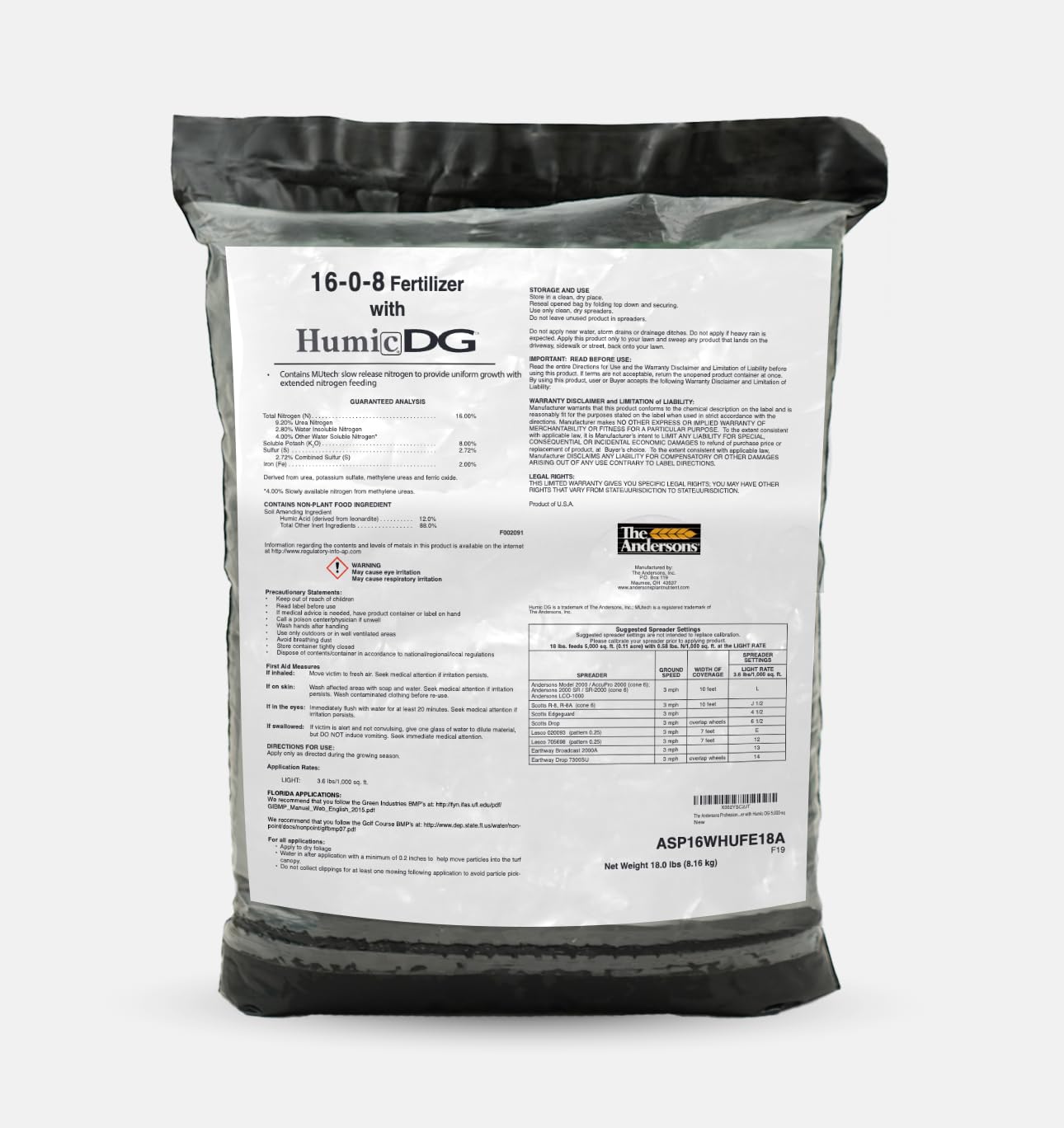
The phosphorus-free pro-grade feed that works around your soil test results.
This one is built for the homeowner who has actually tested their soil and knows the phosphorus level is already high. The 16-0-8 ratio skips phosphorus entirely and goes heavy on potassium (the third number, K) to support root health and stress tolerance. The granules are much finer than typical lawn fertilizer, which means twice the number of particles per square foot for a more even spread — no streaks or dark spots across the yard. It includes Humic DG, a soil conditioner that helps roots take up nutrients more efficiently.
Customers note the Andersons PGF “made my home lawn the best on the block” and note that the super-fine granules are easier to distribute accurately than the chunky pellets some brands use. The quick-release portion of the nitrogen gives you a visible green-up within days, while the slow-release side feeds for up to 8 weeks. The main caveat is that it is not sold in California or Oregon, so double-check availability before adding it to your cart. The bag weighs 18 lb, while the GreenView bag weighs 33 lb.
Why it wins
- Phosphorus-free for high-P soils
- Humic DG improves nutrient uptake at root level
- Fine particles for streak-free spread
Limitations
- Not available for shipment to California or Oregon
- Over-application or wrong timing can burn turf
Best for the soil-aware buyer: If you know your phosphorus is high and want a premium slow release feed with a soil conditioner built in, this is your bag.
Not for beginners: The application timing is a bit more exacting; a general-purpose lawn food might be simpler if you do not want to read instructions.
4. Jobe’s Tree Fertilizer Spikes, 16-4-4 Time Release

The mess-free spike that feeds a drought-stressed tree back to health.
When you need to feed a specific tree or shrub without broadcasting granules onto the lawn or sidewalk, these spikes solve the problem neatly. The 16-4-4 ratio delivers a solid nitrogen dose plus phosphorus for root growth and potassium for general vigor. You push the spike into the soil at the drip line (the circle where the branches end overhead), and it releases nutrients gradually without any runoff, smell, or measuring. A package contains 30 spikes, enough to treat several medium trees or a larger shrub border.
Reviewers point out they were “effective for drought-stressed trees; tree recovered well” and that the spikes make it easy to feed shrubs year after year without mess. One owner mentioned using them on hydrangeas, lilacs, and roses of Sharon with consistent blooming results. The main difference from granular fertilizers is that the spikes feed a more concentrated area — you need to space them correctly around the root zone to get even coverage. They are also more expensive per pound than bulk granular feeds, but you avoid the risk of over-application because each spike is a pre-measured dose.
The big plus
- Zero mess, zero smell, zero runoff
- Pre-measured spike removes guesswork
- Slow release feeds for a full season
The trade-off
- Cost per tree is higher than bulk granular
- Only feeds a small area per spike, not a whole lawn
Great for targeted feeding: Reach for these if you have a few special trees or shrubs that need a steady boost without you having to drag a spreader out.
Skip for lawns: These spikes are completely the wrong tool for covering a big grassy area — stick to granular for that.
5. FoxFarm Happy Frog All Purpose Fertilizer

The granular garden booster that revived yellow plants within a week.
This one is for the flower bed, vegetable patch, and ornamental containers rather than a big lawn. It comes in a compact 4 lb bag and is OMRI Listed (approved for organic growing, verified by the Organic Materials Review Institute) for organic use, so it fits into a garden where you are avoiding synthetic chemicals. The formula includes beneficial soil microbes and mycorrhizal fungi that help roots absorb water and nutrients more efficiently over time. It works on just about anything you grow — tomatoes, squash, roses, monsteras, ornamentals — and the granules are applied to the soil surface and watered in.
Shoppers say it “revived yellow tomato/zucchini plants to green within a week” and that it is easy to spread even in tight container gardens. The strong manure smell is a real thing — several reviews mention the odor, especially after watering. It is also only a 4 lb bag compared to the 33 lb GreenView, which means the coverage area is smaller, so it suits a gardener rather than a lawn owner. FoxFarm comes in a 4 lb bag, while GreenView comes in a 33 lb bag, which is a good thing when you are carrying it to a raised bed but a limitation if you are feeding a big yard.
What you get
- OMRI Listed for organic gardening
- Contains soil microbes and mycorrhizal fungi
- Works on vegetables, flowers, and ornamentals
Downsides
- Strong manure smell after watering
- Small 4 lb bag covers limited area
Best for the organic gardener: If you grow vegetables and flowers in beds or containers and want a slow release granular that feeds the soil life as well as the plant, this is a solid go-to.
Not a lawn feed: The bag is far too small for a big grassy area — look at the GreenView or Yard Mastery for turf.
6. Espoma Organic Plant-Tone 5-3-3

The old-school organic blend that has been feeding gardens since 1929.
Espoma is among the most recognized names in organic gardening, and Plant-Tone is their all-purpose workhorse. The 5-3-3 analysis is a balanced formula with a little nitrogen for leaves, some phosphorus for roots and blooms, and potassium for overall plant health. It also includes 5% calcium, which helps with cell wall strength. The granules are applied directly to the soil around the drip line of the plant, then watered in. It works on flowers (annuals and perennials), vegetables (tomatoes, peppers, squash, lettuce), trees, and shrubs.
Buyers report “I use this twice a year and it works like a champ” and note they saw immediate results in spring growth on their ornamentals and landscaping. The smell is one you need to plan for — reviewers describe it as “foul smelling as chicken poop” and advise standing upwind during application. The 4 lb bag is compact, and the pack of two gives you a full growing season’s supply for a moderate garden. Unlike the GreenView, which is strictly a lawn feed, this one crosses over easily from flowers to vegetables to shrubs.
Why reach for it
- Balanced 5-3-3 ratio plus 5% calcium
- Approved for organic production
- Works across flowers, vegetables, trees, and shrubs
Watch out for
- Strong manure odor during and after application
- Small bag size means frequent reapplications on big gardens
A reliable organic staple: Perfect for mixed gardens where you want one bag for everything from tomato plants to rose bushes, backed by a long track record.
Not for the smell-sensitive: If the idea of chicken-manure odor putting you off, the EarthPods capsules are a completely odor-free alternative for container plants.
7. EarthPods Bio-Organic Indoor Plant Food Capsules
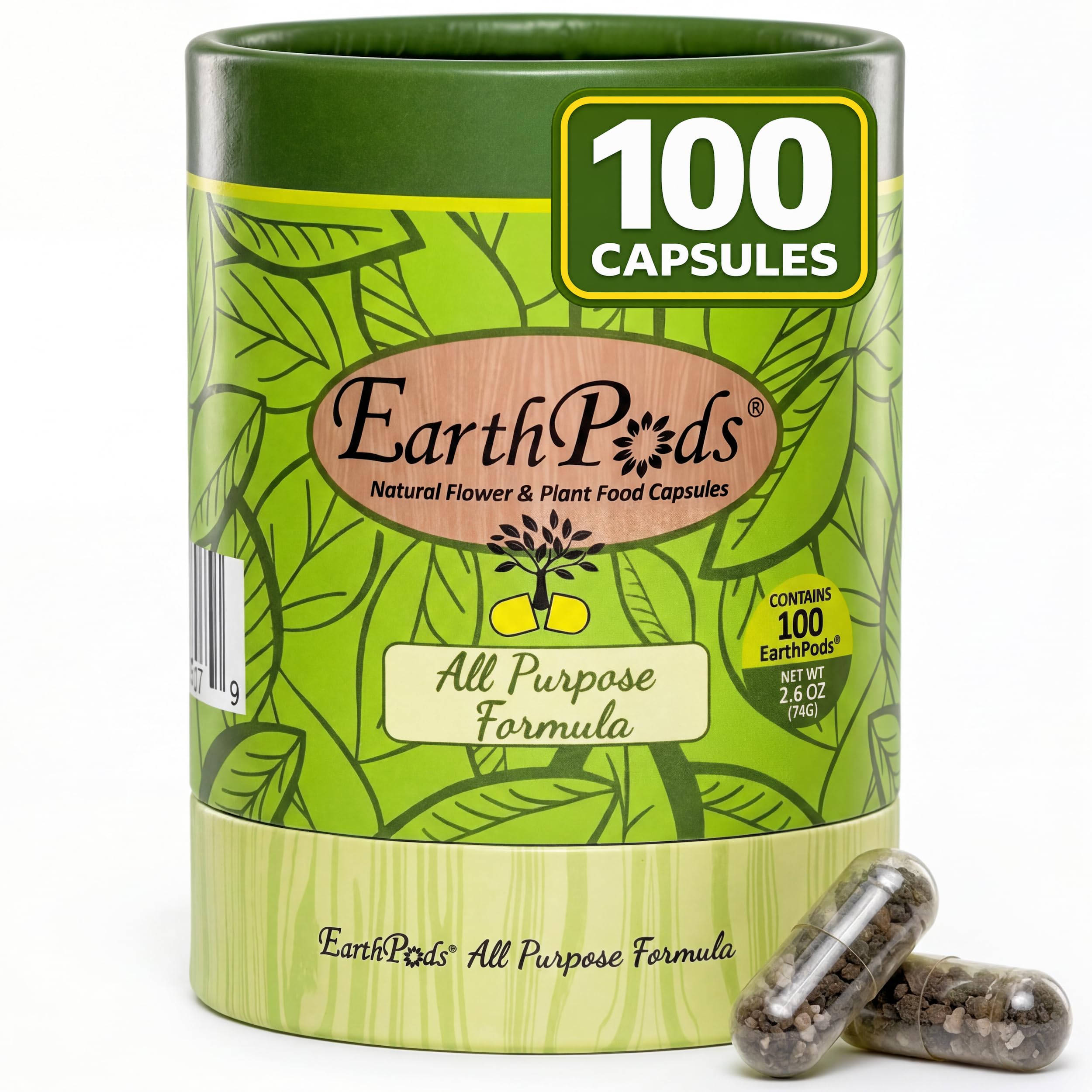
The 5-second capsule feed that makes houseplant care almost too easy.
If you are feeding houseplants in pots, hanging baskets, or self-watering planters, this is the easiest slow release method available. Each tube holds 100 small capsules — you push one into the soil near the base of the plant, water normally, and the capsule breaks down gradually to release a blend of 70+ minerals and nutrients. No measuring scoops, no mixing jugs, no liquid mess. It is formulated with worm castings, humic acids, and rock minerals, and the company hand-makes each batch at their US facility.
Owners mention their plants “doubled in size within 1 week” and that the capsules are gentle enough to prevent the root burn you sometimes get with synthetic granular feeds. The capsules are also friendly around kids, cats, and dogs when used as directed, and the packaging is recyclable with no single-use plastic. The biggest difference from the other picks on this list is that these are strictly for indoor or potted plants — you cannot spread them over a lawn. They also cost more per feeding than bulk granular, but the convenience and safety for indoor use justify the price for houseplant enthusiasts.
What makes it different
- Push-and-water application, no mixing or measuring
- Contains worm castings, humic acids, and rock minerals
- Safe around pets and kids when used as directed
Limits
- Not designed for outdoor lawns or large garden beds
- Higher cost per feeding than bulk granular fertilizers
Best for the houseplant lover: If you have a shelf full of pothos, monsteras, peace lilies, or snake plants and want a low-maintenance feeding method that is safe and clean, this is your pick.
Skip for anything outdoors: These capsules are too small and too expensive per unit for lawn or garden use — grab a granular bag for outdoor areas.
Understanding the Specs
N-P-K Ratio
The three numbers on the bag tell you the percentage by weight of nitrogen (N), phosphorus (P), and potassium (K). Nitrogen drives leaf and blade growth — that is the number you care about most for a green lawn. Phosphorus supports root development and blooms, but many soils already have enough of it. Potassium strengthens the plant against drought, disease, and heat stress. A 27-0-5 is high-nitrogen with no phosphorus. A 5-3-3 is balanced for a mixed garden. Match the ratio to what you are feeding.
Slow Release vs. Quick Release
Slow release nitrogen is coated with a material like sulfur or resin, or it is bound in an organic compound that microbes must break down. This means the nitrogen is released gradually over weeks instead of all at once after the first watering. Quick release nitrogen gives an immediate green-up but fades fast and can burn the grass if you apply too much. A product that lists a percentage of slow release nitrogen — like the GreenView with 63% slow release — gives you the best of both: a quick visual response plus steady feeding that lasts the season.
FAQ
How often should I apply slow release fertilizer to my lawn?
Can I use a lawn fertilizer on my vegetable garden?
What does 63% slow release nitrogen mean on a bag?
Are fertilizer spikes better than granular for trees?
Will slow release fertilizer burn my lawn?
What is an OMRI Listed fertilizer?
Can I use indoor plant capsules like EarthPods in my outdoor garden?
What is Humic DG and why is it in the Andersons fertilizer?
How do I know if my soil needs phosphorus?
Final Thoughts: The Verdict
For the majority of shoppers, the slow release fertilizer winner is the GreenView Fairway Formula because it covers a large area with a single bag and keeps feeding for 12 weeks. If you want the deepest green color in the shortest time, grab the Yard Mastery Flagship. And for feeding individual trees or shrubs without mess, the standout is the Jobe’s Tree Spikes.
How We Picked
We do not accept paid placement. Every pick is matched to a real buyer and a real use-case; we do not hands-on test units.
Sources & Methodology
Specifications: manufacturer listings and product documentation. Review insights: verified customer reviews, as of July 2026. Pricing: not shown on this page (it changes often); check the current price via the retailer link.
As an Amazon Associate, Lawn Gear Lab earns from qualifying purchases. This does not affect which products we feature.