
Specs are compiled from manufacturer listings and verified buyer reviews and can change over time — please confirm the key details on the product page before buying.
Plumeria are heavy feeders — they need a specific balance of nutrients to push out those fragrant, waxy flowers instead of just growing tall and leafy. The wrong fertilizer can leave you with a lanky plant and zero blooms season after season.
I’m Rikta — the founder and writer behind Lawn Gear Lab. This guide is built by comparing the manufacturers’ published specifications and the patterns across verified customer reviews, so you get each pick’s real strengths and trade-offs instead of marketing spin.
You need a fertilizer for plumeria that matches the plant’s growth stage and your own schedule — whether you grow in pots on a patio or in the ground in a tropical landscape. The NPK ratio (the three numbers on the bag that show percentages of nitrogen, phosphorus, and potassium by weight) is the main thing that controls whether you get blooms or just leaves.
Quick Picks
- Professional Nursery Grade Plumeria Fertilizer 4 LB 6 Month Slow Release — Best Overall
- BloomBiscus® Hibiscus 4LB Plant Food – 10-4-12 with 2% Iron — Great Value
- Nelson Plumeria Plant and All Flowering Tropicals Food NutriStar 5-30-5 (2 lb) — Bloom Booster
- 32oz Plumeria Fertilizer by HiThrive — Makes 32 Gallons — Liquid Value
- Plumeria Fertilizer by TPS Nutrients — Liquid Plant Food, 32 oz — Easy Liquid
- Espoma Organic Palm-Tone 4-1-5 — Pack of 3 — Organic Choice
- EarthPods Bio-Organic Tropical Hibiscus Fertilizer Capsules — 100 Count — No-Mess Pods
How To Choose The Best Fertilizer For Plumeria
Plumeria, also called frangipani, are tropical plants that crave phosphorus to flower and potassium for overall health. Picking a fertilizer is less about brand loyalty and more about matching the three numbers on the bag to what your plant needs right now.
NPK Ratio — The Three Numbers That Control Everything
The NPK ratio (nitrogen, phosphorus, potassium) tells you the percentage of each macronutrient by weight. For plumeria, the middle number (phosphorus) is the bloom driver. A ratio high in phosphorus, like 5-30-5, pushes flowers. A balanced ratio like 10-4-12 supports general health with a bit more iron for leaf color.
Slow Release vs. Liquid — Your Schedule Decides
Slow-release granules feed your plumeria over months with a single application — perfect if you do not want to measure and mix every week. Liquid fertilizers give you control and deliver nutrients immediately, but you need to apply them every 1-2 weeks during the growing season.
Organic vs. Synthetic — Consistency vs. Complexity
Synthetic fertilizers give you predictable, fast results with exact NPK numbers. Organic blends feed the soil biology first, which can lead to slower but more sustainable growth. Some organic formulas also have a noticeable smell right after application, which fades quickly.
Quick Comparison
| Model | Best For | NPK Ratio | Weight | Form | Amazon |
|---|---|---|---|---|---|
| Professional Nursery Grade | Set-and-forget feeding | 18:5:12 | 4 Pounds | Slow-Release Granules | Amazon |
| BloomBiscus 4LB | Balanced tropical feeding | 10-4-12 | 4 Pounds | Granules | Amazon |
| Nelson Plumeria 5-30-5 | Maximum bloom push | 5:30:5 | 2 Pounds | Granules | Amazon |
| HiThrive 32oz Liquid | Quick liquid feeding | — | 2.6 Pounds | Liquid | Amazon |
| TPS Plumeria Liquid | Weekly feeding routine | — | 32 Ounces | Liquid | Amazon |
| Espoma Palm-Tone | Organic tropical care | 4:1:5 | 4 Pounds | Organic Granules | Amazon |
| EarthPods Capsules | No-mess precision | — | 3.9 Ounces | Capsules | Amazon |
In‑Depth Reviews
1. Professional Nursery Grade Plumeria Fertilizer 4 LB 6 Month Slow Release

The pro-grade granular feed that keeps your plumeria fed for half a year with one application.
You feed your plumeria once with this and forget about it for 5-6 months. The Professional Nursery Grade fertilizer uses an 18:5:12 NPK ratio (18% nitrogen, 5% phosphorus, 12% potassium by weight). That is 3.6 times more nitrogen than the Nelson 5-30-5 below, which helps if your plants look pale or lean toward leafy growth. The slow-release coating on the granules meters out nutrition steadily so you do not need a weekly schedule. It also includes micronutrients like magnesium, manganese, and iron — these keep plumeria leaves dark green and healthy, preventing the yellowing that often frustrates growers.
Buyers report that after re-potting 15 plumeria plants with this fertilizer, 11 of the 15 were flowering in the same season — something that had not happened in four years. The bag blends slow-release pellets with a small percentage of instant-release ones, so you see a quick greening effect right after application while the rest works below the surface over time.
One trade-off: a few buyers received theirs loose in a plain envelope without manufacturer packaging, which is unsettling. But when it arrives correctly, it is the same nursery-grade fertilizer used by large-scale production nurseries in Florida. At 4 pounds, it gives you the most coverage per weight among the granular picks here.
Why it wins: A single 4-pound bag feeds your plumeria for months, with micronutrients that support roots and flowers together.
The catch: Packaging inconsistency from the seller can make you wonder what you actually received — buy from reputable stock.
Reach for this if: You want the lowest-maintenance feeding schedule possible and trust the professional-grade formula on a collection of potted or in-ground plumeria.
Look elsewhere if: You need an organic certification or prefer to control the exact nutrient mix week by week with liquid feed.
2. BloomBiscus® Hibiscus 4LB Plant Food – 10-4-12 with 2% Iron
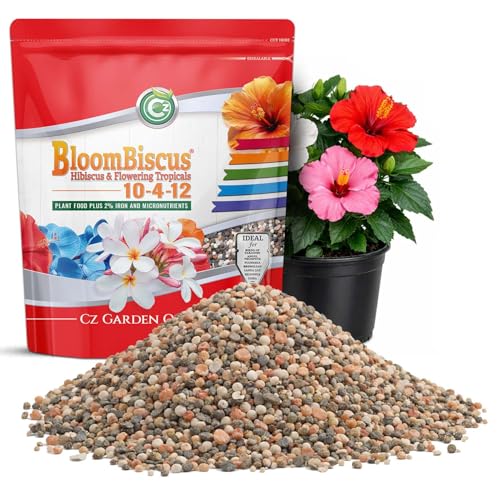
The budget-friendly granular feed that brings tropical blooms back with extra iron for deeper green leaves.
Yellow leaves on your plumeria? The 2% iron in BloomBiscus targets that directly — iron prevents the pale, chlorotic leaves common in potted plants where micronutrients get depleted fast. This is a granular formula with a 10-4-12 NPK ratio (10% nitrogen, 4% phosphorus, 12% potassium by weight). You apply it once a month during blooming and let the pellets break down with watering. The phosphorus percentage (4%) is 3.6 times lower than the Nelson 5-30-5 below, so this works better as an all-rounder for plants that also need nitrogen and potassium. If you grow hibiscus, bird of paradise, or angel trumpets alongside your plumeria, one bag covers them all. It is manufactured in the USA and comes in a resealable heavy-duty pouch.
Owners mention this fertilizer “works better than 4-5 other brands” and that tropical and hardy plants became “covered in gorgeous blooms after use.” The only complaint from multiple buyers: no scoop is included, so you need your own measuring tool.
Strongest point: The 2% iron content prevents the pale, chlorotic leaves that frustrate many plumeria growers, and the resealable pouch keeps the granules dry between uses.
One missing piece: No scoop in the bag — you need to measure yourself based on pot size.
You will like this if: Your plumeria leaves look a little yellow and you want a single granular product that supports blooms and leaf color for multiple tropical varieties.
skip it if: You prefer a precise measuring system or need a liquid feed for immediate absorption.
3. Nelson Plumeria Plant and All Flowering Tropicals Food NutriStar 5-30-5 (2 lb)
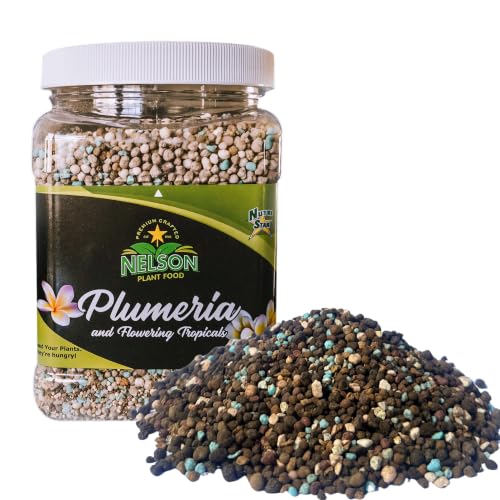
The phosphorus-heavy formula designed to push out as many plumeria blooms as possible in a single season.
If your plumeria has healthy leaves but refuses to flower, Nelson’s NutriStar 5-30-5 is the targeted solution. The middle number — 30% phosphorus — is the highest in this lineup and acts as a direct bloom trigger. The bag weighs 2 pounds, half the weight of the Professional Nursery Grade 4-pound option. It contains five nitrogen sources for a more consistent release, plus elemental sulfur to increase soil acidity, which plumeria prefer. Customers note it “brought it back after it suffered through a particularly cold winter,” and many mention using it for years with consistent results.
The higher phosphorus does mean it is less of an all-purpose feed — if your plumeria also needs a nitrogen boost for foliage, you may need to supplement. At 2 pounds, it is also a smaller package than the 4-pound competitors, so the cost per application runs higher if you have many plants. One reviewer got lots of leafy growth but no flowers yet — patience matters, as the sulfur and phosphorus work with the soil biology over time.
Best for: Plumeria that have gone dormant, suffered winter damage, or simply refuse to flower despite healthy leaves — the 5:30:5 ratio is a direct bloom trigger.
Keep in mind: The 2-pound bag is smaller than the other granular options, so on a large collection you will reorder more often.
Grab this when: You are done with leafy growth and want to force a flowering response from a stubborn plumeria or tropical plant.
Pass if: Your plants also need nitrogen for foliage — this is a dedicated bloom formula, not a general feed.
4. 32oz Plumeria Fertilizer by HiThrive — Makes 32 Gallons
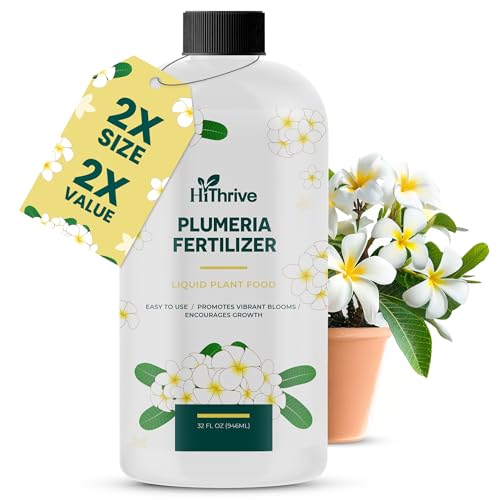
A liquid concentrate that stretches to 32 gallons of feed — designed for weekly feeding through the growing season.
HiThrive gives you immediate nutrition. The 32-ounce bottle mixes with water to make 32 gallons of ready-to-use fertilizer. That means each watering delivers nutrients straight to the roots. The formula includes nitrogen for leafy growth, phosphorus for strong roots, and potassium for plumeria flowers, plus micronutrients like calcium, magnesium, and zinc. Reviewers point out seeing “visible results in 1 month” and that it “revived a frost-damaged tree.” It works on all plumeria varieties, from Aztec Gold to Singapore.
Unlike the slow-release granules above, this requires you to mix and apply every 1-2 weeks during the growing season and every 4 weeks in cooler months. That is more hands-on work, but it gives you direct control over dosage. One buyer mentions using a plastic ml dropper for accuracy and warns against over-fertilizing. The bottle weighs 2.6 pounds with liquid included, so shipping weight is light, but you will go through it faster on a large collection.
Works well for
- 32-gallon yield from one bottle — strong coverage for the price
- Includes calcium, magnesium, and zinc for comprehensive nutrition
- Visible results within one month reported by many buyers
Needs attention
- Requires mixing every 1-2 weeks — less convenient than slow-release
- Easy to over-fertilize if you do not measure carefully
Choose this if: You prefer liquid feeding and want a single bottle that covers an entire season of weekly applications for multiple plants.
Consider alternatives if: You want a one-time application that feeds for months with no measuring.
5. Plumeria Fertilizer by TPS Nutrients — Liquid Plant Food, 32 oz
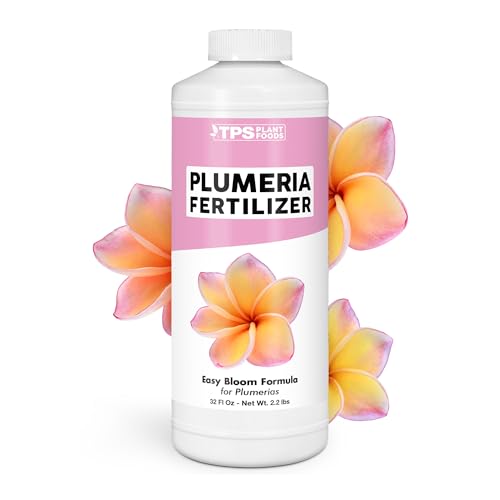
The straightforward liquid feed with a simple mixing rule — 2 tablespoons per gallon of water, once a month.
TPS Nutrients makes their plumeria-specific liquid with a clear dosage: 2 tablespoons per 1 gallon of water. That simplicity is the main appeal — no complex ratios or multi-part mixing. It is formulated specifically for plumeria and tropical flowering plants, though shoppers say it also works on hibiscus and ferns. One buyer’s plumeria had been dormant for two years; after monthly feeding with this liquid, the plants “grew beautifully” and bloomed again.
Not all liquid fertilizers are the same, and one reviewer candidly noted their plumeria had healthy leaves for four summers but never bloomed despite using this product — they are trying more sun alongside the feed. That is a reminder that fertilizer alone cannot fix a light deficiency. The 32-ounce bottle weighs 32 ounces (2 pounds), which is lighter than the HiThrive’s 2.6 pounds, but with a similar liquid volume. It is made in the USA.
If you want a mixing guide, the instruction to use 2 tbsp per gallon is written on the bottle, and one application per month is less frequent than some liquid competitors that need weekly doses.
Why you would pick it: The 2-tablespoon-per-gallon rule is the simplest liquid dosage in this lineup; you do not need to calculate or measure precisely.
What to watch: Some growers report lush leaves but no blooms — combine with adequate sunlight for best results.
Best for: Infrequent liquid feeders who want a no-fuss monthly schedule and a single straightforward mixing instruction.
Not ideal if: Your plumeria is already in good sun but still failing to bloom — you may need a higher-phosphorus product like the Nelson 5-30-5.
6. Espoma Organic Palm-Tone 4-1-5 — Pack of 3
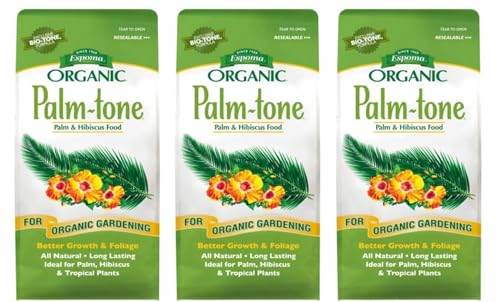
The organic granular option with a 4-1-5 ratio — designed for palms but loved by tropical plant growers.
Espoma’s Palm-Tone is technically formulated for palms, hibiscus, and tropical plants, and many plumeria growers use it with great success. It has a 4-1-5 NPK analysis with 5% calcium and uses the company’s exclusive Bio-tone formula — a mix of natural organic ingredients. This is a pack of three 4-pound bags, giving you 12 pounds total, which is the largest total weight in this list. The granules are ready to use with no mixing required; you apply them to the soil around the drip line and water in. For tropical plants, Espoma recommends monthly feeding during the growing season.
Buyers report excellent results on hibiscus, producing “beautiful blooms and green leaves.” However, multiple reviews mention a strong barnyard smell right after application. It fades quickly, but it is noticeable. The organic nature also means it works slower than synthetic options — you feed the soil biology first, which then feeds the plant. That is great for long-term soil health but not the fastest fix for a nutrient-starved plumeria.
Given its 4-1-5 ratio, it is low in phosphorus compared to the bloom-focused Nelson 5-30-5, so it is better suited as a year-round maintenance feed than as a bloom trigger.
Best quality: Approved for organic gardening with a rich blend of natural ingredients plus 5% calcium — feeds the soil, not just the plant.
Honest trade-off: The strong initial smell can be off-putting if you apply near windows or sitting areas.
Pick this for: Organic gardeners growing a mix of tropicals and palms who want a single granular feed with proven results and don’t mind a brief odor.
Skip if: You need a fast-acting or high-phosphorus solution for a non-blooming plumeria.
7. EarthPods Bio-Organic Tropical Hibiscus Fertilizer Capsules — 100 Count
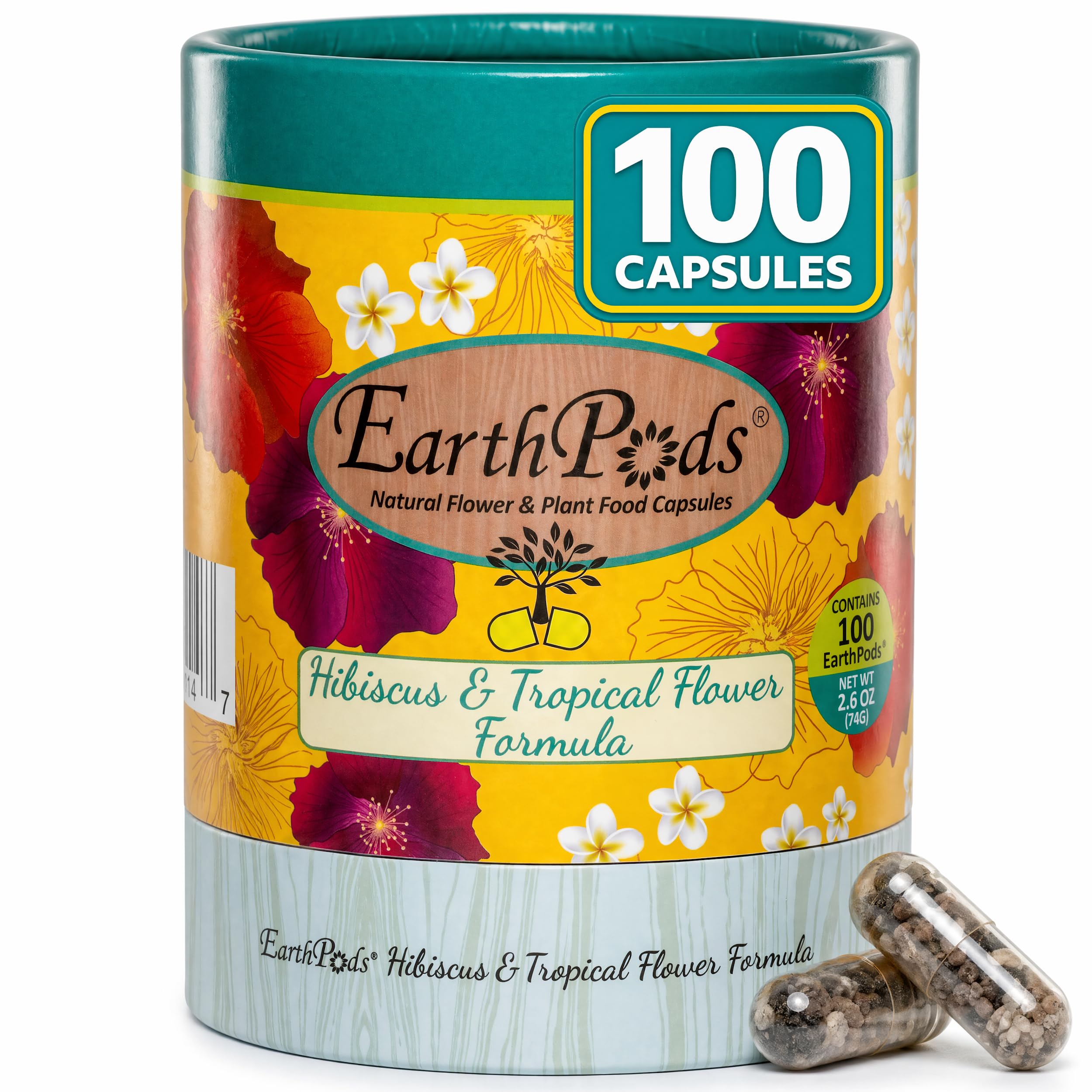
The capsule-based system that eliminates measuring, mixing, and mess — just push into soil and water.
EarthPods take a totally different approach from every other product here. Instead of granules or liquid, you get 100 small capsules (the tube weighs only 3.9 ounces) that you push into the potting soil near the center of the plant. Each capsule is a concentrated dose of organic nutrients, trace minerals, humates, and soil biology. The maker claims one tube is a 4-year supply for a single plumeria, or enough for a whole collection of potted tropicals. They break down slowly and release nutrients directly to the root zone with each watering.
Owners mention a “noticeable difference in 2-4 days” — one hibiscus went from dropping buds and yellowing leaves to daily blooms within two weeks after using the pods. They are odorless, pet-friendly, and eco-friendly, made in the USA with a recyclable paperboard tube. The catch is the cost per plant: a 4-foot hibiscus needs three pods, so a collection of several large plumeria will consume the tube faster than expected. At a heavier price per capsule compared to bulk granular or liquid options, this is more of a convenience premium.
If you hate measuring and want the cleanest possible application, these pods are as simple as it gets.
Why choose pods
- Zero mess — no granules to spill, no liquids to measure, no smell
- Fast results — some users report visible plant improvement in 2-4 days
- 100% organic and pet-friendly
Before you buy
- Higher cost per application — larger plants need multiple pods
- Less control over exact nutrient ratios compared to synthetic granules or liquids
Reach for these if: You want the absolute easiest application method with no storage of heavy bags or bottles, and you have a manageable number of potted plumeria.
Look elsewhere if: You have many large in-ground plumeria — the pod cost adds up quickly, and you are better off with bulk granules.
Understanding the Specs
NPK Ratio — The Bloom Decoder
The three numbers on a fertilizer label (e.g., 10-4-12) are the percentages of nitrogen, phosphorus, and potassium by weight in that bag. Nitrogen fuels leafy growth, phosphorus drives flower and root development, and potassium supports overall plant health and disease resistance. For plumeria, a high middle number (phosphorus) encourages blooming, while a more balanced ratio supports general vigor.
Slow-Release vs. Liquid — Time vs. Control
Slow-release granules are coated to feed your plant steadily over months — they are ideal if you travel or simply want fewer chores. Liquid fertilizers provide immediate nutrition to the roots and let you adjust the dose week by week, but they demand a consistent schedule. Some products blend both modes, with a small instant-release fraction for a quick green-up and a larger slow-release portion for long-term feeding.
Micronutrients — The Hidden Helpers
Beyond NPK, plumeria need iron, magnesium, manganese, calcium, and zinc for healthy leaves and vibrant flowers. Iron in particular prevents the yellowing between leaf veins that plagues potted plumeria. Products that list specific micronutrients on the label (like iron or magnesium) address deficiencies that an NPK-only mix may miss.
Organic vs. Synthetic — Speed vs. Soil
Synthetic fertilizers deliver precise, predictable nutrient ratios that plants absorb quickly — ideal for a fast bloom push. Organic fertilizers feed the microbes in the soil, which then break down nutrients for the plant; this process is slower but builds long-term soil structure. Organic blends often require more frequent application to match the effect of synthetics, and some have a strong natural smell after application.
FAQ
What NPK ratio is best for plumeria?
Can I use a general-purpose fertilizer on my plumeria?
How often should I fertilize my plumeria during the growing season?
Is slow-release or liquid fertilizer better for plumeria?
Why are my plumeria leaves turning yellow even after fertilizing?
Can I use a fertilizer made for hibiscus on my plumeria?
Will organic fertilizer make my plumeria bloom as well as synthetic?
How do I know if my plumeria is getting too much fertilizer?
Should I fertilize plumeria during winter dormancy?
Can I mix two different plumeria fertilizers together?
Final Thoughts: The Verdict
For the majority of shoppers, the best fertilizer for plumeria is the Professional Nursery Grade 18:5:12 Slow Release because it combines a 6-month feeding window, essential micronutrients, and the highest coverage per weight in this lineup. If you want to push maximum blooms from a stubborn plant, grab the Nelson NutriStar 5-30-5. And for the lowest-maintenance, no-mess routine on a few container plants, the EarthPods capsules are the cleanest solution.
How We Picked
We do not accept paid placement. Every pick is matched to a real buyer and a real use-case; we do not hands-on test units.
Sources & Methodology
Specifications: manufacturer listings and product documentation. Review insights: verified customer reviews, as of July 2026. Pricing: not shown on this page (it changes often); check the current price via the retailer link.
As an Amazon Associate, Lawn Gear Lab earns from qualifying purchases. This does not affect which products we feature.