
Specs are compiled from manufacturer listings and verified buyer reviews and can change over time — please confirm the key details on the product page before buying.
Picking the wrong potting soil for your roses is a fast track to yellow leaves, root rot, and disappointing blooms. The perfect mix needs to do three things at once — hold enough moisture so the roots don’t dry out, drain fast enough so they never sit in water, and deliver steady nutrients for months. This guide cuts through the marketing to find the bag that actually does the job.
I’m Rikta — the founder and writer behind Lawn Gear Lab. This guide is built by comparing the manufacturers’ published specifications and the patterns across verified customer reviews, so you get each pick’s real strengths and trade-offs instead of marketing spin.
Whether you are repotting a single miniature rose or filling a whole garden bed, these are the five best rose potting soil options ranked by value, ingredient quality, and real-world performance for the money.
Quick Picks
- Specialty Rose Planting Mix by Perfect Plants (8qt) — Best Overall
- Coast of Maine Organic & Natural Planting Soil for Roses & Flowers (20 Qt) — Best for Large Beds
- Specialty Rose Planting Mix by Perfect Plants (4qt) — Smart Value
- Rose Soil Potting Soil 4qt by Omitgoter — Budget Champion
- Rose Soil Potting Soil 2qt by Omitgoter — Compact Starter
How To Choose The Best Rose Potting Soil
Not all potting soils work for roses. These plants need a specific structure that balances moisture and air, along with a steady meal plan that lasts. Here is what to look for when you are staring at the garden center shelf.
Drainage and Aeration
Rose roots breathe oxygen and hate sitting in wet mud. Look for ingredients like perlite, sand, or composted pine bark chunks mixed in. These create tiny air pockets so water flows through instead of pooling at the bottom.
Nutrient Content and Fertilizer
Premium mixes come with a slow-release fertilizer already blended in. The numbers you will see — like 18-6-8 (a blend of 18% nitrogen, 6% phosphorus, and 8% potassium) — tell you how much food the soil provides over time. A mix with a built-in 12-month feed saves you from remembering to fertilize every few weeks.
Bag Size and Your Garden Plan
Small 2-quart bags are perfect for repotting one or two miniature roses in pots. An 8-quart bag handles several container plants. If you are refreshing a whole flower bed, the 20-quart size saves a second trip to the store — but a smaller, more nutrient-dense bag can sometimes outperform a giant bag of filler.
Quick Comparison
| Model | Best For | Volume | Fertilizer Included | Ingredients Highlight | Amazon |
|---|---|---|---|---|---|
| Perfect Plants 8qt | Serious rose gardeners | 8 Quarts | 18-6-8 Slow-release | Composted pine bark, sand, peat moss | Amazon |
| Coast of Maine 20qt | Large beds and containers | 20 Quarts | Organic compost | Composted manure, sphagnum peat moss | Amazon |
| Perfect Plants 4qt | Repotting a few containers | 4 Quarts | 18-6-8 Slow-release | Composted pine bark, sand, peat moss | Amazon |
| Omitgoter 4qt | Budget-friendly option | 4 Quarts | Long-lasting nutrients | Peat, coconut coir, perlite, bark, humus | Amazon |
| Omitgoter 2qt | Small repotting jobs | 2 Quarts | Long-lasting nutrients | Peat, coconut coir, perlite, bark, humus | Amazon |
In‑Depth Reviews
1. Specialty Rose Planting Mix by Perfect Plants (8qt)
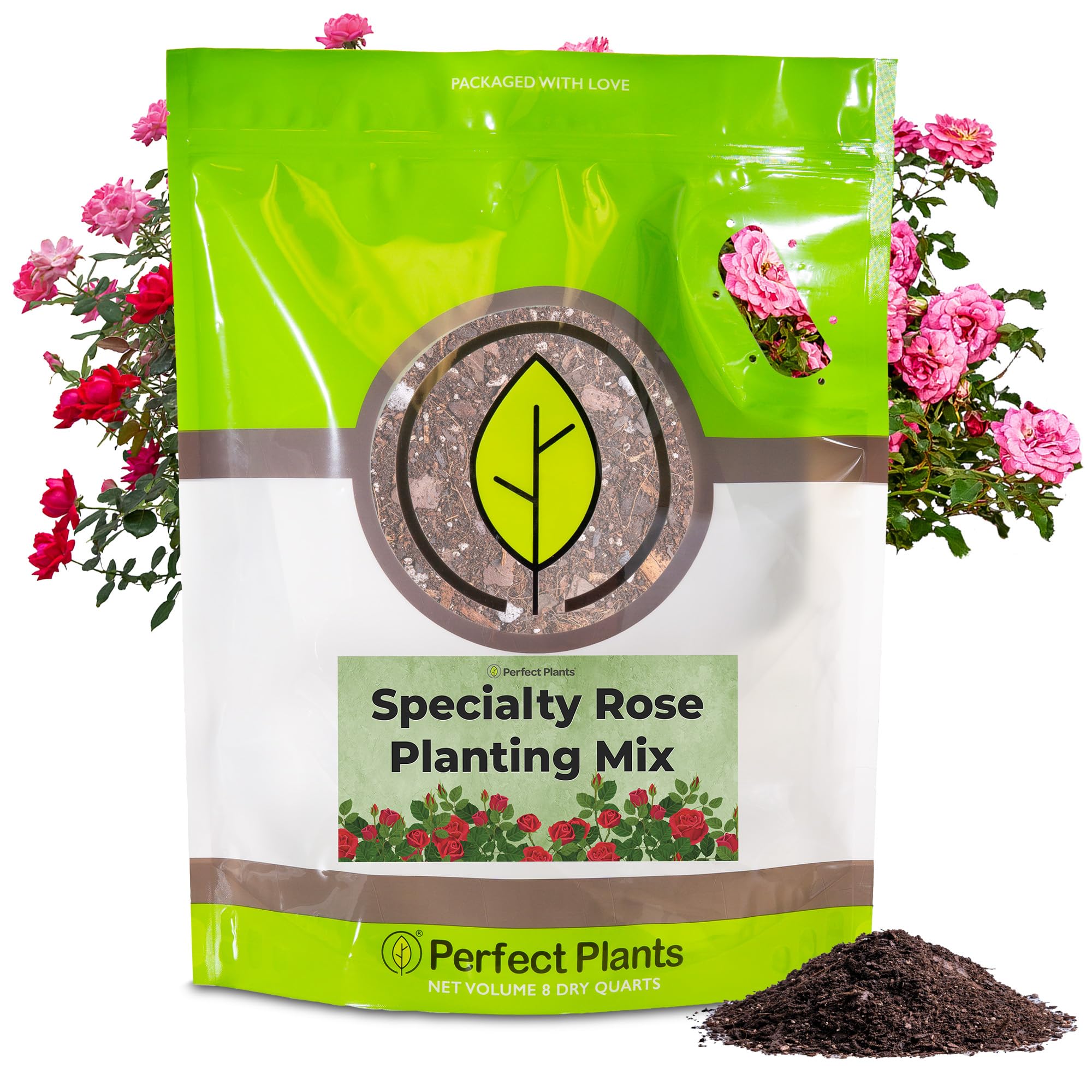
The one bag that feeds your roses for a full year without you lifting a finger.
This mix comes with an 18-6-8 slow-release granular fertilizer (18% nitrogen for green leaves, 6% phosphorus for flowers, 8% potassium for root health) already blended in. Over the course of 12 months, those nutrients dissolve into the soil with every watering so your roses get a steady meal without you needing to mix extra fertilizer every few weeks. The 8-quart bag holds 256.0 ounces — enough volume for several container roses or one good-sized flower bed refresh, and a big step up from the 4-quart version below.
The texture is the real story here. Composted pine bark chunks and granite sand create that loose, fast-draining structure roses need, while peat moss holds just enough moisture. One reviewer shared that after repotting store-bought mini roses with this mix, “new buds popping and flowers blooming.” That matches the experience of another buyer who noted, “I repotted two store bought mini roses using this soil and it worked beautifully.” Unlike the Coast of Maine bag below, this one comes resealable, so any leftover mix stays fresh for your next potting session.
A fair trade-off: if your rose bush is already struggling from root rot or a poor start, the soil alone may not turn it around. One reviewer noted their plant “is still not doing well but the soil seems amazing and rich” — they planned to start fresh with a new bush instead.
Why it earns the top spot
- Built-in 18-6-8 slow-release fertilizer lasts 12 months
- Sand and pine bark chunks deliver excellent drainage and aeration
- Resealable 8qt bag keeps unused mix fresh
- Hand-mixed on a US farm with 40+ years of experience
The one real limitation
- Won’t fix a rose already past the point of recovery
Reach for this if: you want the best blend of nutrient density and long-lasting drainage — one bag of this Perfect Plants mix does the feeding for a whole year so you focus on the blooms, not the calendar.
Look elsewhere if: you need a giant bag for a huge in-ground rose bed — the 20-quart Coast of Maine bag below stretches farther for that job.
2. Coast of Maine Organic & Natural Planting Soil for Roses & Flowers (20 Qt)

The giant bag that feeds a whole garden bed with organic compost, not synthetic chemicals.
At 20 quarts (740.0 ounces), this bag is 20 quarts versus the 2-quart Omitgoter bag and the 8-quart Perfect Plants bag. That makes it the obvious choice if you are filling multiple containers or mixing into an outdoor flower bed. The formula combines composted manure with sphagnum peat moss to create a rich, dark soil that balances moisture retention and drainage. It is OMRI listed for organic use, which means it meets strict standards for natural gardening.
Buyers report the soil looks and feels high quality — “dark, rich soil with textural variations, no mold or pests, smells good” was one verified review. The Coast of Maine brand has been making soil since 1996, and this mix is made in the USA. However, there is one honest catch that several reviewers flagged: the smell. One buyer mentioned the “new, strong smell attracting dogs and flies.” If you are planning to use this near a patio or open window, that is a real consideration that the more neutral Perfect Plants mix avoids.
What makes it stand out
- 20-quart volume is the biggest bag in this list — 20 quarts versus the 2-quart Omitgoter
- OMRI listed organic with composted manure and sphagnum peat moss
- Made in the USA by a company with decades of experience
The honest trade-off
- Strong compost odor can attract dogs and flies, per multiple reviews
Grab this for: large-scale planting where volume matters more than bag count — the 20-quart Coast of Maine bag gives you more volume than an 8-quart bag for roughly the same price tier.
skip it if: you are sensitive to earthy compost smells or your roses live on a patio where odors could be an issue.
3. Specialty Rose Planting Mix by Perfect Plants (4qt)
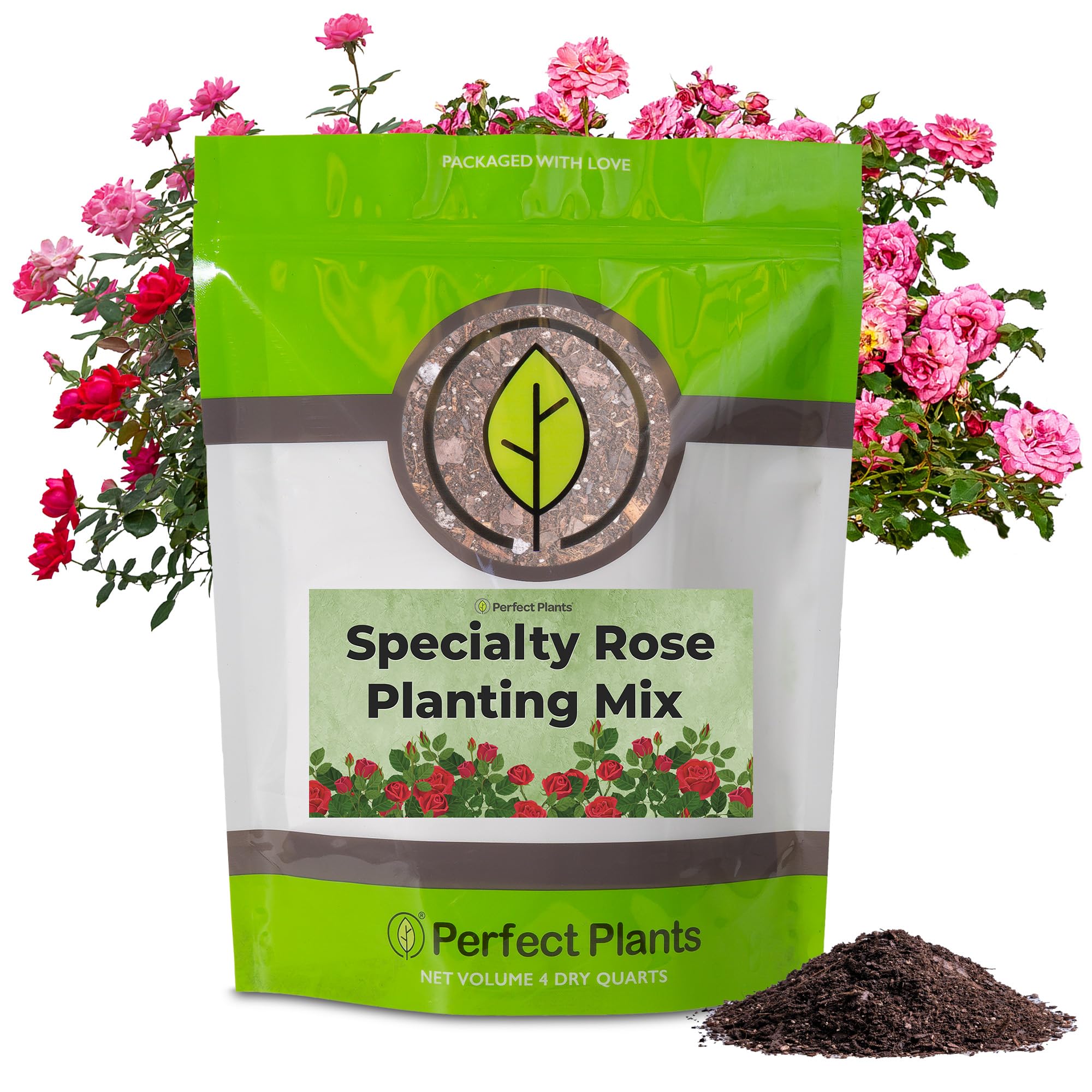
The same premium 18-6-8 slow-release recipe in a smaller bag for smaller jobs.
This is the 4-quart sibling of the 8-quart top pick, with exactly the same formula — composted pine bark chunks for drainage, granite sand for aeration, peat moss for moisture, and the 18-6-8 slow-release fertilizer that feeds for up to 12 months. The difference is size: at 4 quarts versus 8 quarts for the larger bag, it fits the buyer who only needs to repot a couple of container roses or a single small flower bed without leftover bags sitting in the garage.
The reviews mirror the bigger bag’s success. One owner reported, “I repotted two store bought mini roses using this soil and it worked beautifully. My pink minis are thriving.” The resealable bag means you can close it up tight after scooping out what you need, and the mix is hand-mixed on a US family farm with 40+ years in the business. Unlike the Omitgoter 4-quart bag below, this Perfect Plants bag has the slow-release fertilizer pre-blended, so you don’t need to add anything for a full year.
What makes it a value pick
- Same premium 18-6-8 slow-release formula as the 8qt top pick
- Resealable bag keeps unused mix fresh
- US farm-mixed with quality ingredients
One thing to know
- 4 quarts versus 8 quarts for the larger bag — the 8qt is better value if you have multiple containers
Choose this if: you need the best soil for one or two pots and don’t want a giant bag sitting around — the 4-quart Perfect Plants mix gives you the same nutrient-rich formula in a compact, resealable size.
Size up if: you have more than a few roses — the 8-quart version costs less per quart and saves a second purchase.
4. Rose Soil Potting Soil 4qt by Omitgoter
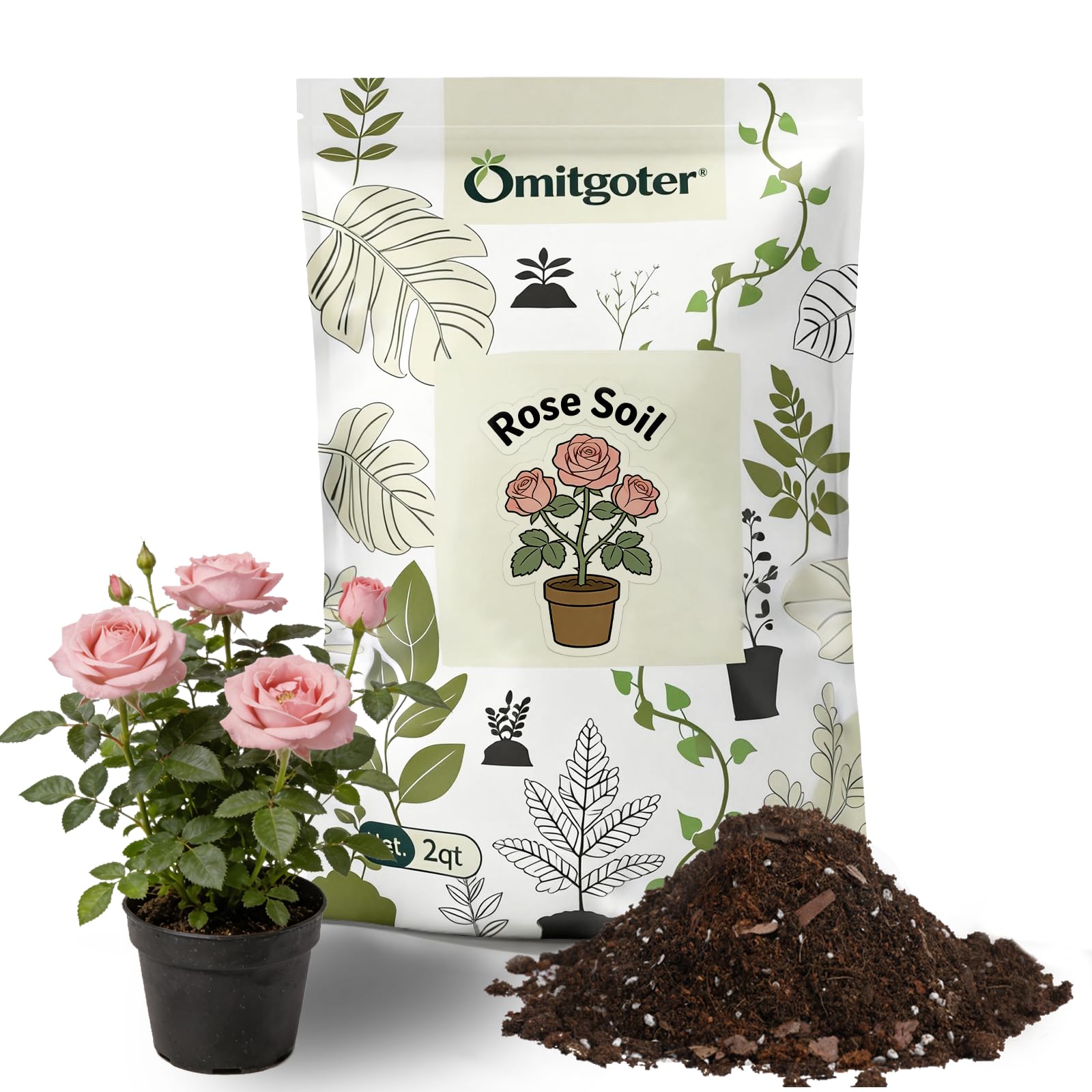
A no-frills organic mix that gets the basics right without the premium price tag.
This 4-quart bag (128.0 ounces) is the larger version of the 2-quart Omitgoter bag below, using the same 100% natural ingredients: peat, coconut coir, perlite, bark, and humus. The formula is designed specifically for drainage and breathability — the perlite (volcanic glass that creates air pockets) and coconut coir (which holds water without getting soggy) work together to stop waterlogging and root rot. It is ready to use right out of the bag with no mixing required, which makes it a solid entry-level option.
Buyers tend to agree on the basics. One reviewer called it “good starter soil” for roses, and another said it “works really well for the miniature roses.” The straightforward ingredient list avoids any chemical additives, so it meets the organic-minded gardener’s requirements. The trade-off here is that unlike the Perfect Plants bags, this Omitgoter mix does not include a slow-release fertilizer — so you will need to add your own rose feed every few weeks to keep the blooms coming. It also comes in a plain bag without a resealable closure, so plan to use it up or store it in your own container.
What works well
- 100% natural ingredients with no chemical additives
- Perlite and coconut coir provide good drainage for small pots
- Ready to use straight out of the bag
The missing piece
- No slow-release fertilizer included — you need to add your own
- Bag is not resealable
Reach for this if: you want a simple, organic base soil for a few container roses and you already have a separate rose fertilizer on hand — the Omitgoter 4-quart bag gives you a clean natural start without paying for extras you do not need.
Upgrade if: you want a soil that feeds your roses by itself for months — the Perfect Plants mixes have the pre-mixed slow-release fertilizer that this one lacks.
5. Rose Soil Potting Soil 2qt by Omitgoter
The smallest bag that exists just for one miniature rose in a single pot.
At 2 quarts (64.0 ounces), this bag is 2 quarts versus the Coast of Maine 20-quart bag. It is the smallest, most focused option on this list — enough soil to refresh one or two small pots without excess. The ingredient list is the same as the 4-quart Omitgoter above: peat, coconut coir, perlite, bark, and humus, all natural with no chemical additives. The “superior drainage and breathability” the maker describes comes from the perlite and coconut coir preventing the waterlogged conditions that cause root rot.
Owners mention satisfaction for specific small-scale jobs. One reviewer called it “perfect but wished bag was bigger” — the most common sentiment across the Omitgoter brand, reflecting that the soil quality is fine but the bag size leaves you wanting more. Other happy users mentioned it works “really well for the miniature roses” and as a “good starter soil.” Because this is the smallest bag in the roundup, it makes the most sense for someone who just bought a single rose plant at the nursery and needs a quick repotting fix.
Why this size works
- Perfect single-use size for one small pot — no leftover soil
- 100% natural ingredients, no chemical additives
- Good drainage for miniature rose varieties
The honest limit
- At 2 quarts, you will likely run out fast and wish the bag was bigger
- No built-in fertilizer — you will need a separate rose food
Reach for this if: you are repotting exactly one small rose and want the smallest, cheapest bag that gets the job done — the 2-quart Omitgoter is the minimum viable option.
Buy the 4-quart instead if: you need soil for more than one pot — the 2-quart bag leaves most buyers wishing they had grabbed the larger size.
Understanding the Specs
Fertilizer Analysis (18-6-8)
The three numbers on a fertilizer bag (like 18-6-8) stand for nitrogen (N), phosphorus (P), and potassium (K). Nitrogen drives leafy green growth. Phosphorus supports flower and root development. Potassium strengthens the plant’s overall health and disease resistance. A slow-release fertilizer means these nutrients dissolve gradually every time you water, delivering a steady meal over many months instead of one big jolt that washes away quickly.
Drainage Ingredients
Perlite is white volcanic glass that looks like small foam balls — it creates air pockets in the soil so roots can breathe and water flows through instead of pooling. Composted pine bark chunks do the same job but add organic matter that breaks down slowly. Coconut coir (made from coconut husks) holds water without getting soggy, balancing the drainage so the soil does not dry out completely between waterings.
FAQ
Can I use regular potting soil for roses?
How much soil does one rose bush need?
Should I add fertilizer to rose potting soil?
What does 18-6-8 mean on a rose soil bag?
Is organic rose soil better than non-organic?
How long does rose potting soil stay fresh in the bag?
Can I mix different brands of rose soil together?
Why does my rose potting soil smell bad?
What is the difference between 4qt and 8qt rose soil bags?
Final Thoughts: The Verdict
For the majority of shoppers, the best rose potting soil winner is the Specialty Rose Planting Mix by Perfect Plants (8qt) because it combines excellent drainage ingredients with a built-in 18-6-8 slow-release fertilizer that feeds for 12 months — all in a resealable bag made on a US farm. If you need a giant batch for a full flower bed, grab the Coast of Maine 20-quart bag. And for a simple, affordable organic base for a few pots, the Omitgoter 4-quart mix gets the job done without any chemical additives.
How We Picked
We do not accept paid placement. Every pick is matched to a real buyer and a real use-case; we do not hands-on test units.
Sources & Methodology
Specifications: manufacturer listings and product documentation. Review insights: verified customer reviews, as of July 2026. Pricing: not shown on this page (it changes often); check the current price via the retailer link.
As an Amazon Associate, Lawn Gear Lab earns from qualifying purchases. This does not affect which products we feature.