
Specs are compiled from manufacturer listings and verified buyer reviews and can change over time — please confirm the key details on the product page before buying.
You water and you weed, but your zucchini plants stay all leaves with no fruit, or your squash vines just look pale. The difference between a so-so patch and a bin full of straight-neck squash is often one bag — but picking the wrong fertilizer for squash and zucchini can actually stunt growth or push all the energy into leaves instead of the vegetables you want to eat.
I’m Rikta — the founder and writer behind Lawn Gear Lab. This guide is built by comparing the manufacturers’ published specifications and the patterns across verified customer reviews, so you get each pick’s real strengths and trade-offs instead of marketing spin.
We break down five proven options — from slow-release organic granules that feed for months to fast-acting liquid concentrates that revive a struggling vine in days — so you can match the right fertilizer for squash and zucchini to your garden style and season.
Quick Picks
- Espoma Organic Plant-Tone 5-3-3 — Best Overall
- Espoma Organic Garden-Tone 3-4-4 — Best for Fruit
- FOOP Organic All-Purpose Liquid Plant Food — Best Liquid
- Pumpkin Juice 11-8-5 Foliar Fertilizer — High Nitrogen
- Great Big Tomatoes and Vegetables Liquid Booster — Yield Maximizer
How To Choose The Best Fertilizer For Squash And Zucchini
Squash and zucchini are heavy feeders — they pull a lot out of the soil to pump out those fast-growing fruits. A fertilizer that works great for flowers can give your vines too much nitrogen (great for leaves, bad for fruit) or not enough phosphorus and potassium (what actually triggers blossoms and holds the fruit on the vine). The key is matching the N-P-K ratio to what your plants need at each stage.
N-P-K Ratio
The three numbers on every bag (nitrogen, phosphorus, potassium) tell the story. For squash and zucchini you want a middle number (phosphorus) that is equal to or higher than the first number (nitrogen). A ratio like 3-4-4 pushes energy toward flowers and fruit, while a 5-3-3 feeds the whole plant more evenly and works as an all-purpose garden builder. A very high first number like 11-8-5 delivers a powerful nitrogen punch for explosive vine growth but needs careful timing so the plant doesn’t just grow leaves.
Granular vs Liquid
Granular fertilizers (like Espoma Plant-tone or Garden-tone) break down slowly in the soil, feeding roots over weeks or months. You sprinkle them on top, water them in, and they keep working. Liquids (like Pumpkin Juice or FOOP All-Purpose) go to work within hours — the plant takes them up through both roots and leaves. Liquids are great for a rescue feed or a mid-season boost but require mixing and more frequent application than granules.
Organic Ingredients
If you are growing for your own kitchen, organic inputs matter. All five picks here use natural ingredients — no synthetic sludges or toxins. Look for a blend that includes things like fish emulsion, kelp, mycorrhizae (a beneficial fungus that helps roots absorb water and nutrients), or rock minerals (calcium, boron, zinc) because squash and zucchini are prone to blossom-end rot (a black, sunken spot at the bottom of the fruit caused by calcium deficiency) when they lack calcium. An organic slow-release formula also feeds the soil microbes, creating richer dirt season after season.
Quick Comparison
| Model | Best For | N-P-K Ratio | Form | Unit Count | Amazon |
|---|---|---|---|---|---|
| Espoma Plant-tone 5-3-3 | All-around organic feeding | 5-3-3 | Granules | 128 Ounce | Amazon |
| Espoma Garden-tone 3-4-4 | Fruit-focused vegetable gardens | 3-4-4 | Granules | 64.0 Ounce | Amazon |
| FOOP All-Purpose Liquid | Quick rescue feed | 1:32 Mix | Liquid | 32.0 Fluid Ounces | Amazon |
| Pumpkin Juice 11-8-5 | Aggressive vine growth | 128:1 Mix | Liquid | 32 Fluid Ounces | Amazon |
| Great Big Tomatoes Booster | Massive fruit production | 1 Tbs per Pint | Liquid | 32.0 Fluid Ounces | Amazon |
In-Depth Reviews
1. Espoma Organic Plant-Tone 5-3-3

This bag is the slow-release workhorse. It feeds your entire squash patch all season with just one purchase — no mixing, no guesswork.
The 5-3-3 ratio delivers a balanced supply of nitrogen, phosphorus, and potassium along with 5% calcium — a critical addition because calcium deficiency is the main cause of blossom-end rot on zucchini (that black, sunken spot at the bottom of your fruit). As a granular fertilizer (small dry pellets), you just sprinkle it around the drip line of each plant and water it in once a month throughout the growing season. No mixing, no measuring.
Buyers report it “works quickly, seen rapid spring growth” and note it is recognized by plant organizations as a preferred organic fertilizer. The 128-ounce count (twice as much as the 64-ounce Garden-tone below) means you cover a lot more ground with the same purchase. Approved for organic gardening, so you feed the soil biology alongside the plant.
What you actually get
- 128 total ounces — enough for a large garden across multiple seasons
- Contains 5% calcium to help prevent blossom-end rot
- No mixing required, just sprinkle and water
The honest trade-offs
- Has a strong manure-like smell when applied (buyers advise standing upwind)
- Slower to show results than a liquid feed if plants are already stressed
This pick works best for: The gardener who wants one bag for everything in the vegetable bed — tomatoes, peppers, squash, lettuce — and prefers a low-maintenance schedule.
Catch: The 5-3-3 ratio has a bit more nitrogen relative to phosphorus than a specialized fruiting formula, so if your soil is already nitrogen-rich, the vines may outgrow the fruit set.
2. Espoma Organic Garden-Tone 3-4-4

This formula prioritizes blossoms over leaves, so you get heavier squash harvests per vine than with the Plant-tone.
Garden-tone shifts the N-P-K ratio to 3-4-4, meaning the phosphorus (the middle number) is 67% higher than the first number in the ratio relative to Plant-tone’s 5-3-3 — which matters because phosphorus is what drives flower and fruit development. For zucchini and summer squash that need to keep producing over a long season, this ratio pushes energy into the fruit instead of just leaves. It also contains 5% calcium to prevent end rot.
One reviewer noted, “After using Espoma products for the past year, my garden has thanked me by the show of growth, blooms and beauty.” You apply it monthly throughout the growing season, sprinkling it around the drip line or alongside planting rows and watering in. At 64 ounces total (half the volume of Plant-tone), it is a more concentrated option for gardeners focused specifically on fruiting vegetables rather than everything in the yard.
Why it stands out
- Fruit-focused 3-4-4 ratio encourages more squash and zucchini per vine
- Ready-to-use granules with no mixing required
- Owners mention no risk of burning plants even with generous application
What to watch
- 64-ounce total count is half the volume of the Plant-tone, so you’ll repurchase sooner for a large garden
- Has a noticeable smell after application, like many organic fertilizers
Reach for this if: Your main goal is a heavy harvest of fruit — zucchini, yellow squash, tomatoes, peppers — and you are willing to buy a specialized formula rather than an all-purpose blend.
Look elsewhere if: You need a single product that also feeds shrubs, trees, and flowers, because the lower nitrogen in 3-4-4 is less suited for leafy ornamentals.
3. FOOP Organic All-Purpose Liquid Plant Food

When granules are too slow and your zucchini vines are yellowing in summer heat, this fast-acting liquid revives them within hours.
When your zucchini plants are yellowing or wilting in summer heat, you do not want to wait weeks for granules to break down. FOOP All-Purpose Liquid delivers nutrients within hours through both roots and leaves. It mixes at 1:32 (one part concentrate to 32 parts water), making 32 gallons total from the 32-ounce bottle — a stark contrast to the 128:1 mix ratio of Pumpkin Juice. Ingredients include fish emulsion, kelp, mycorrhizae (beneficial root fungi), and fish manure for a broad spectrum of nutrients including calcium, magnesium, and silica.
Customers note it “works exceptionally well for replanting in summer heat; standout for bringing plants back to life.” The mild smell is tolerable for indoor use, though a few reviewers point out the bottle size feels small for the price if you need frequent applications across a large garden. It is made in the USA and contains no synthetic ingredients.
What makes it useful
- Acts within hours — ideal for mid-season rescue or transplant shock
- 1:32 mix ratio is less concentrated than the 128:1 of Pumpkin Juice, so it is gentler on young plants
- Includes calcium, magnesium, and silica alongside N-P-K
Where it falls short
- Liquid requires mixing and more frequent application than a granular feed
- 32-ounce bottle covers 32 gallons, which may run out quickly for large vegetable beds
Best suited for: Gardeners who want a quick-acting organic option for transplants, stressed plants, or a mid-season boost between granular applications.
Not ideal if: You prefer a single-application solution for a whole season — this needs regular mixing and dosing every week or two.
4. Pumpkin Juice 11-8-5 Foliar Fertilizer

This high-concentrate foliar spray makes squash vines explode in size fast — but you must time it so leaves do not crowd out fruit.
This is the specialist option for growers who want massive vine growth and are comfortable with a more aggressive approach. The 11-8-5 ratio is very high in nitrogen (the first number), so it is designed to accelerate leaf and vine development rapidly. The mixing ratio of 128:1 (much more concentrated than FOOP’s 1:32) means one ounce of concentrate makes a full gallon, and the 32-ounce bottle makes up to 32 gallons total. It feeds through both roots and leaves as a foliar spray (sprayed directly onto the leaves).
Shoppers say it “doubles plant size (leaves and vines) quickly; healthier growth.” One experienced grower reports using it for years and yielding “personal best weights” on pumpkins. However, one buyer mentioned their plants responded better to a standard synthetic fertilizer, so results can vary by soil condition. The bottle has an integrated measure-and-pour system so you can squeeze the right dose without extra tools.
What you get
- 128:1 concentrate is very economical — 32 ounces makes 32 gallons of fertilizer
- Micro-nutrients including boron, iron, manganese, and zinc
- Easy squeeze-bottle measuring system
The risk
- Very high nitrogen can push vines to grow leaves instead of fruit if not timed right
- Some reviewers saw better results from standard synthetic fertilizers, so it is not a guaranteed winner for every soil type
Use this for: Boosting vine growth early in the season or for large pumpkin/squash projects where you want maximum plant size before fruits set.
skip it if: You prefer a balanced all-season feed and do not want to risk nitrogen overload that can delay fruiting.
5. Great Big Tomatoes and Vegetables Liquid Booster
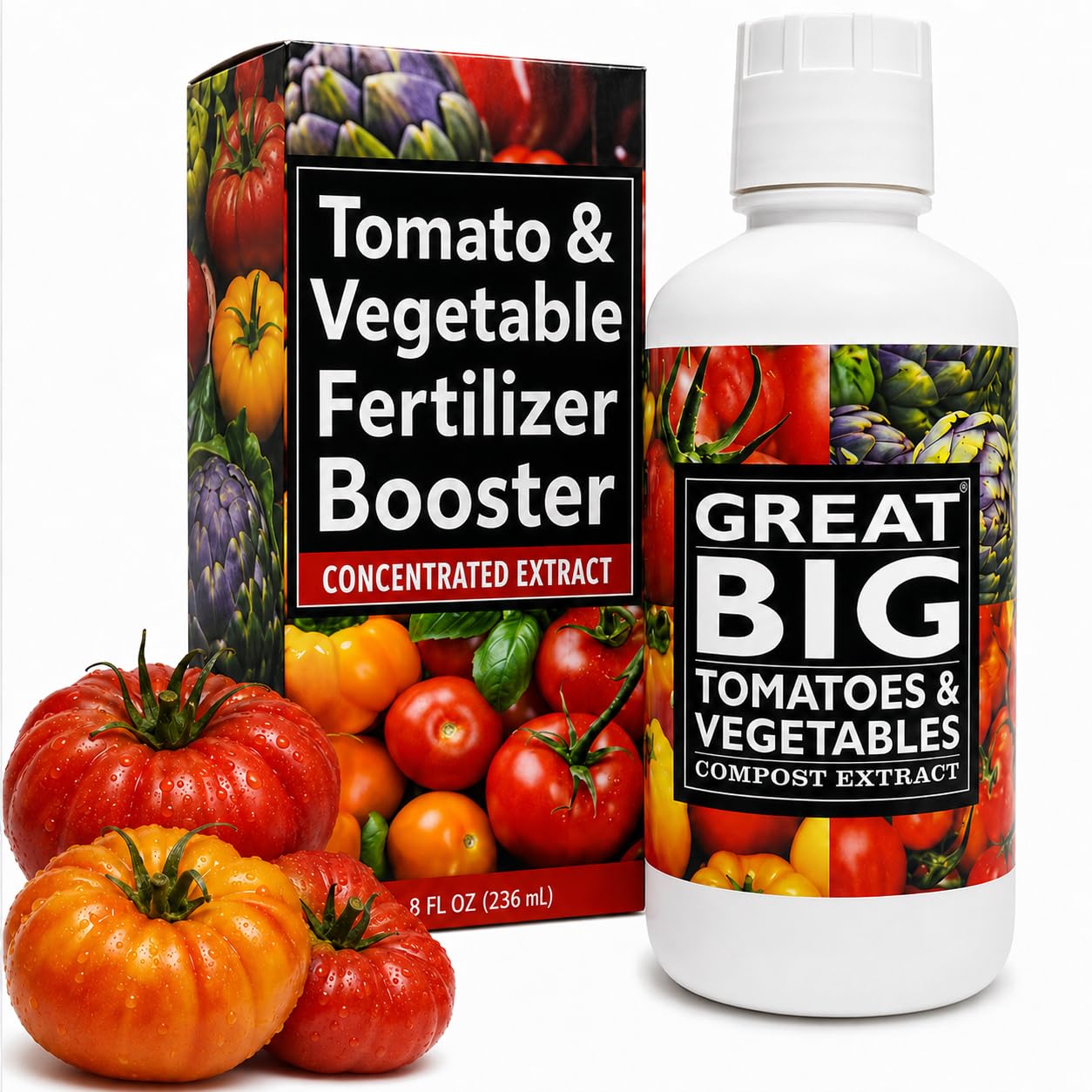
This compost-extract booster turns average soil into a nutrient factory for heavy fruit — but it works alongside, not instead of, your main fertilizer.
This is not a standard fertilizer — it is an organic compost extract that works as a soil conditioner alongside any existing fertilizer program. It supplies bioavailable humic acid (a natural compound from decomposed organic matter that helps roots absorb nutrients), kelp seaweed, over 70 chelated trace minerals (minerals bonded to organic molecules so roots can take them up easily), potassium sulfate, and citric acid. The idea is that it unlocks nutrients already in the soil so your plants can access them. You mix 1 tablespoon per pint of water and apply to the soil around the root zone.
Buyers report that “customer harvests reach the 1-pound-plus range, with vines requiring double or triple staking to manage the weight.” One gardener in zone 8b said it was the best tomato production they had ever had. Another noted it “certainly appeared to rejuvenate the tomato plant” after hot days and wilting. It is registered by the California Department of Food and Agriculture as a true organic input material.
Why it earns a spot
- Humic acid and 70+ chelated trace minerals make soil nutrients more available to roots
- Can be used alongside any existing fertilizer for a synergistic boost
- Works for tomatoes, peppers, cucumbers, squash, zucchini, pumpkins, and beans
The nuance
- It is a soil conditioner, not a standalone N-P-K source — best paired with a base fertilizer
- 32-ounce bottle covers a moderate area; needs remixing often
Best for: Gardeners who already use a base granular feed and want to push yields further by improving soil nutrient availability.
Not for: Anyone looking for a single-bottle complete feed — this works alongside, not instead of, a primary fertilizer.
Understanding the Specs
N-P-K Ratio
The three numbers on every fertilizer bag (nitrogen, phosphorus, potassium) tell you exactly what the plant gets. For squash and zucchini you want a formula where the middle number (phosphorus) is close to or higher than the first number (nitrogen) during the fruiting stage. Too much nitrogen relative to phosphorus and your plant grows massive leaves but few flowers. A 3-4-4 is ideal for fruit, while a 5-3-3 works as a balanced all-purpose feed for the whole garden.
Organic vs Synthetic
Organic fertilizers feed the soil microbes that in turn feed the plants. They break down slowly (granules) or provide immediate bioavailable nutrients (liquids) without synthetic salts that can build up in the soil. All five products here are organic or natural-input based. Organic blends typically include ingredients like fish emulsion, kelp, mycorrhizae, bone meal, or rock minerals that also improve soil structure over time.
Granular vs Liquid Form
Granular fertilizers are applied dry and need water and soil microbes to break down — they provide a steady, long-lasting nutrient release but take a week or two to show results. Liquid fertilizers are mixed with water and absorbed immediately through roots and leaves — they are best for a quick rescue feed or a mid-season boost but need more frequent application (every 7-14 days).
Micro-nutrients and Calcium
Beyond the three big numbers, look for calcium, boron, iron, and zinc. Squash and zucchini are prone to blossom-end rot (a black, dry spot at the fruit’s bottom) when calcium levels are low. Formulas containing 5% calcium (like both Espoma options) help prevent this. Boron supports flower development and fruit set, while iron and zinc support overall plant vigor and disease resistance.
FAQ
What is the best N-P-K ratio for squash and zucchini?
Should I use granular or liquid fertilizer for zucchini?
Can I use tomato fertilizer on squash and zucchini?
How often should I fertilize squash and zucchini?
What causes squash to flower but not produce fruit?
How do I prevent blossom-end rot on zucchini?
Is organic fertilizer better than synthetic for squash?
Can I use the same fertilizer for squash in containers and in-ground beds?
What is the mixing ratio for Pumpkin Juice fertilizer?
Final Thoughts: The Verdict
If you want one dependable pick, the best fertilizer for squash and zucchini is the Espoma Organic Plant-Tone 5-3-3 because it combines 128 total ounces, 5% calcium for rot prevention, and an all-purpose balance that feeds squash vines, fruit, and soil at the same time. If you want a fruit-specific formula with higher phosphorus to maximize zucchini production, grab the Espoma Garden-tone 3-4-4. And for a quick liquid rescue feed that turns around stressed plants in hours, the standout is the FOOP All-Purpose Liquid Plant Food.
How We Picked
We do not accept paid placement. Every pick is matched to a real buyer and a real use-case; we do not hands-on test units.
Sources & Methodology
Specifications: manufacturer listings and product documentation. Review insights: verified customer reviews, as of July 2026. Pricing: not shown on this page (it changes often); check the current price via the retailer link.
As an Amazon Associate, Lawn Gear Lab earns from qualifying purchases. This does not affect which products we feature.