
Specs are compiled from manufacturer listings and verified buyer reviews and can change over time — please confirm the key details on the product page before buying.
An 8-inch pot sits right in the balance of houseplant life — big enough to give roots room to grow, small enough to fit on a shelf or windowsill. The problem is most options are either so light they tip over the first time your cat brushes past or so fragile a bump chips the rim. This guide cuts past the glossy listing photos and gets straight to which pots actually hold up, drain well, and look good doing it.
I’m Rikta — the founder and writer behind Lawn Gear Lab. This guide is built by comparing the manufacturers’ published specifications and the patterns across verified customer reviews, so you get each pick’s real strengths and trade-offs instead of marketing spin.
If you need a deep pot for a thirsty peace lily or a shallow one for a bonsai tree, the 8 inch pot you choose depends on material, weight, and drainage — and we break down exactly how four very different options compare.
Quick Picks
- LE TAUCI 8 Inch Plant Pot, Ceramic Pot with Drainage Hole & Rubber Plug — Premium Pick
- D’vine Dev Medium 8 Inch Terracotta Plant Pot with Drainage Hole and Saucer — Best Value
- Phoenix Vine 8 Inch Planter Pot with Drainage Hole & Saucer, Deep Water Catch Tray — Compact & Light
- EPFamily 8 Inch Ceramic Bonsai Planter Pot, Glazed Shallow Succulent Planter with Bamboo Saucer — Budget Champion
How To Choose The Best 8 Inch Pot
An 8-inch pot is a common size for houseplants, but not every pot labeled “8 inch” works the same way. Three things decide whether it will be a good home for your plant: the material, the drainage system, and the physical stability once the plant is inside.
Material — What the Pot Is Made Of
Terracotta is the traditional choice — porous walls let soil breathe and dry out evenly, which helps plants that hate soggy roots. Ceramic pots come in two finishes: glazed (non-porous, holds moisture longer) and unglazed (closer to terracotta in breathability). High-quality plastic is the lightest option and can mimic a ceramic look at a fraction of the weight, but it traps more moisture inside.
Drainage — How Water Exits the Pot
A drainage hole is non-negotiable for most plants, but some pots add extras that make a real difference. A deep saucer catches overflow without spilling onto your table. A removable rubber plug lets you switch between draining and sealed modes. A mesh pad or stainless steel net keeps soil from washing out the bottom. Each extra piece changes how you water day-to-day.
Weight and Stability
An 8-inch pot filled with damp soil and a full-grown plant gets heavy fast. A lightweight plastic pot can tip over if the plant grows tall and top-heavy. A heavy ceramic or terracotta pot stays planted where you set it. The trade-off is that heavier pots are harder to move when you need to rearrange or clean underneath them. Your floor surface and your plant’s growth habit decide which side of that trade-off matters more.
Quick Comparison
| Model | Best For | Material | Weight | Height | Amazon |
|---|---|---|---|---|---|
| LE TAUCI 8 Inch Plant Pot | Premium durability and root health | High-fired ceramic | Heavy (buyers report substantial weight) | 8.35 inches | Amazon |
| D’vine Dev Medium 8 Inch Terracotta Pot | Stable, heavy duty terracotta with extras | Terracotta | 7.3 Pounds | 8.8 inches | Amazon |
| Phoenix Vine 8 Inch Planter Pot | Lightweight style with deep saucer | Thick plastic | 2.3 Pounds | 8 inches | Amazon |
| 8 Inch Ceramic Bonsai Planter Pot | Shallow pots for bonsai and succulents | Glazed ceramic | 16 ounces | 3.14 inches | Amazon |
In‑Depth Reviews
1. LE TAUCI 8 Inch Plant Pot, Ceramic Pot with Drainage Hole & Rubber Plug
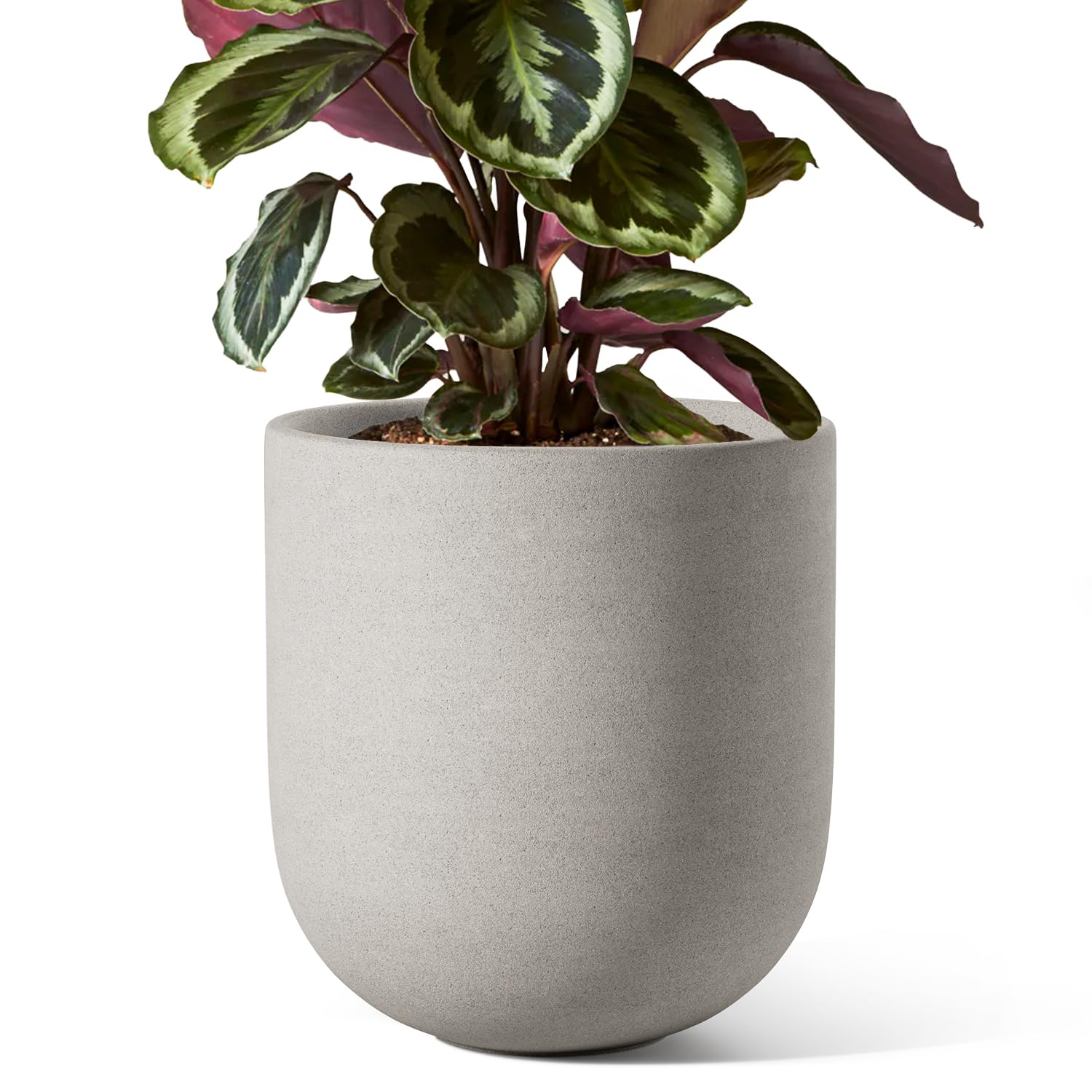
A ceramic heavyweight that keeps roots happy and your shelf clean.
The LE TAUCI breathes like terracotta but looks more modern because of its unglazed interior (raw clay on the inside) and neutral gray surface. That unglazed interior wicks moisture gently and lets air circulate through the walls, which encourages stronger roots and helps prevent overwatering damage — a concrete advantage over the glazed EPFamily bonsai pot where moisture lingers longer. This 8-inch pot (8.35 inches tall) holds enough soil for a large houseplant like a snake plant or rubber tree. Owners mention the pot is “beautiful, high-end ceramic planter; thick, heavy, well-finished.” The included rubber plug gives you two watering modes — leave it open for direct drainage or plug it to turn the pot into a cachepot (a decorative outer pot) for a nursery liner. The mesh pad keeps soil from clogging the hole. The neutral gray unglazed surface shows subtle clay variations that blend into modern or farmhouse décor without shouting.
What You Gain
- Unglazed interior breathes like terracotta for root aeration
- Rubber plug and mesh pad give flexible watering control
- Thick kiln-fired ceramic feels premium and resists chipping
The Trade-Offs
- Price is higher than most 8-inch options
- Intended for indoor use only, not frost-proof for outdoor winter
Worth the spend if: you want a durable ceramic pot that breathes like terracotta but looks more modern, and you are comfortable paying a premium for the build quality.
Not your match if: you need something lightweight to move around frequently or you plan to leave the pot outside in freezing weather.
2. D’vine Dev Medium 8 Inch Terracotta Plant Pot with Drainage Hole and Saucer

A terracotta brick house that refuses to tip over.
At 7.3 pounds, this is the heaviest pot in the lineup; the Phoenix Vine plastic pot weighs 2.3 pounds. That mass is the whole point. When you fill it with damp soil and a top-heavy plant like a Norfolk Island pine, this pot stays put. The porous terracotta walls let the soil dry out evenly, which buyers confirm is ideal for plants prone to waterlogging. One owner called it “the BEST” after potting an olive tree and marjoram. The 1.2-gallon interior (7.8 inches across) gives roots room to spread without being so deep that the bottom stays wet.
D’vine Dev includes extras most terracotta pots skip: a stainless steel drainage mesh net to stop soil from washing out, a protective pad for your tabletop, and a perfectly fitting terracotta saucer. The handcrafted nature means slight size variations, but the listed dimensions are 8.8 inches tall — noticeably taller than the LE TAUCI’s 8.35 inches. Customers note it is “costly but worth it” and that the packaging kept it intact on arrival. The catch, one owner warns, is that “these clay pots are worth the lift” — moving this pot once the plant is in is a two-hand job.
Standout Features
- 7.3 pounds of terracotta provides maximum stability for tall plants
- Stainless steel mesh net prevents soil loss through drainage hole
- Includes a protective tabletop pad and saucer
What to Consider
- Very heavy to move once filled with soil and plant
- Handcrafted size variations mean the fit might not be perfectly uniform
Reach for this if: you have a top-heavy plant that needs a pot that won’t budge, and you prefer natural terracotta breathability for moisture control.
Look elsewhere if: you plan to move the pot often or you need a lighter option for a hanging or shelf setup.
3. Phoenix Vine 8 Inch Planter Pot with Drainage Hole & Saucer, Deep Water Catch Tray
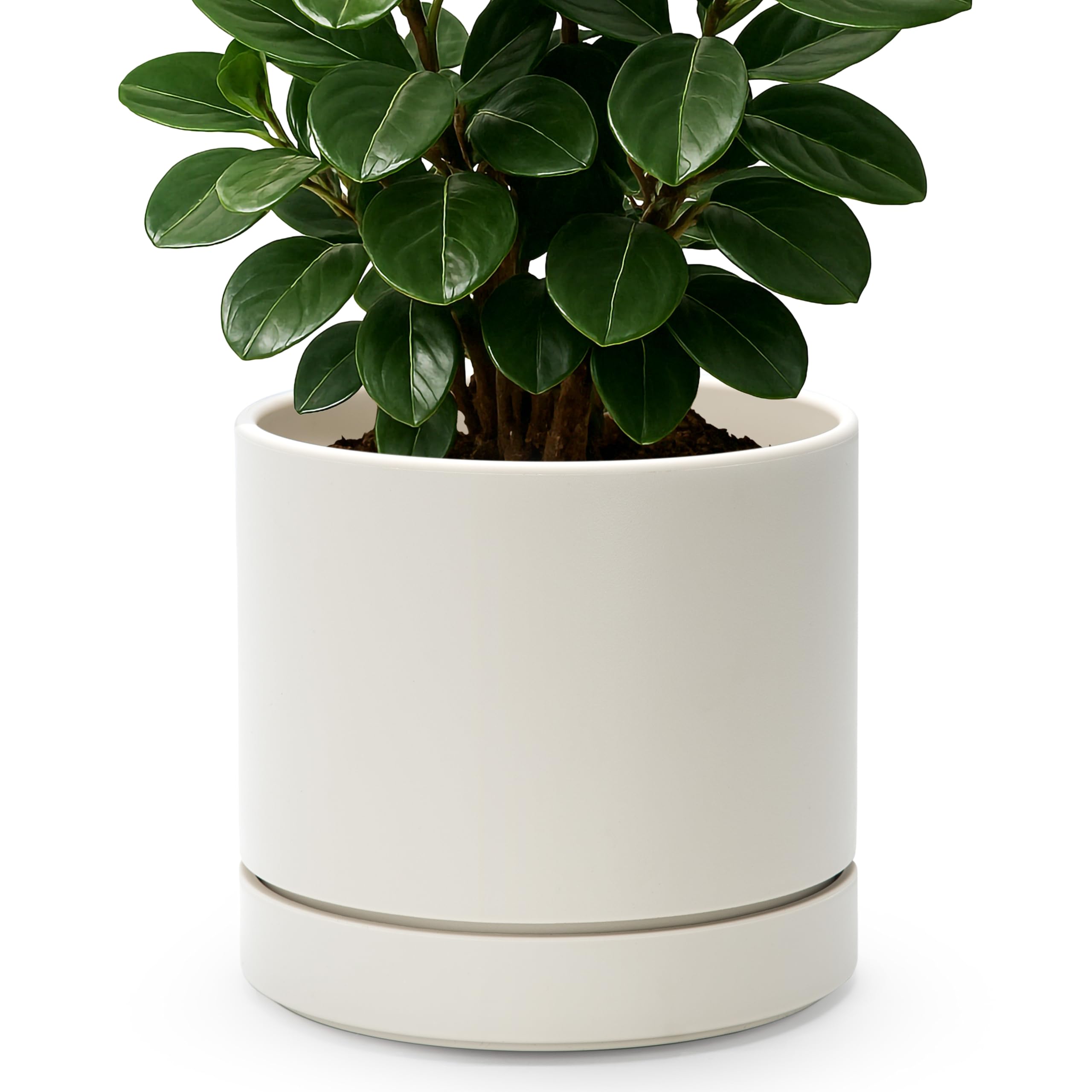
The lightweight looker that won’t break your back or your budget.
If you have ever lugged a terracotta pot across a room and regretted it, the Phoenix Vine is the relief you are looking for. At 2.3 pounds, it is a fraction of the D’vine Dev’s weight — making it far easier to lift, move, and swap between shelves. The thick plastic has a smooth, ceramic-like finish that reviewers point out “looks beautiful” and is “excellent for the price.” One reviewer noted “despite it being plastic, it’s a thick sturdy one of good quality.” At 8 inches tall and 8 inches wide, it holds the same volume as heavier pots but without the strain.
The deep saucer is designed for bottom watering — you fill the tray and the plant pulls water up through the drainage holes as needed, which helps prevent the root rot that overwatered plants are “very prone to get,” according to one owner. The straight cylindrical shape gives it a clean, modern silhouette in Oatmeal. Unlike the glazed ceramic EPFamily pot, this one has a simple solid color and texture that blends into any room. The catch is that it is plastic, so it won’t breathe the way terracotta or unglazed ceramic does — moisture stays inside longer, meaning you need to adjust your watering habits for plants that prefer dry soil.
Why You’d Pick This
- 2.3 pounds makes it easy to lift and reposition as needed
- Deep saucer allows bottom watering for healthier roots
- Thick plastic mimics ceramic appearance without the weight
Worth Noting
- Plastic traps moisture longer than porous materials
- Not as visually unique as handcrafted terracotta or textured ceramic
Best for: renters, shelf-stackers, and anyone who moves plants seasonally — the light weight and deep saucer make daily care simple.
Not ideal for: succulents or cacti that need fast-drying soil, unless you water very sparingly.
4. EPFamily 8 Inch Ceramic Bonsai Planter Pot, Glazed Shallow Succulent Planter with Bamboo Saucer

A shallow dish that shows off bonsai and succulents without overwhelming them.
This is a completely different shape than the other three pots here. At 8.07 inches wide and just 3.14 inches tall, the EPFamily pot is a shallow planter designed for bonsai trees, succulents, and cacti that have shallow root systems. The glazed finish inside and out means the walls do not absorb moisture — water stays in the soil until the roots take it up or it drains out. The included bamboo saucer (6.1 inches wide) is gentler on tabletops than a terracotta saucer and blends into natural décor styles.
Buyers are consistent in their praise: “great bonsai tree pot, very pretty and unique,” and “very well-made with large drainage hole.” One owner pointed out that the “drainage tray fits nicely with no wobbles.” At 16 ounces (1 pound), this is the lightest pot in the comparison — a stark contrast to the D’vine Dev’s 7.3 pounds. That makes it easy to move, but also means a tall, heavy bonsai tree could tip it. Compared to the deeper LE TAUCI or D’vine Dev pots, this one is for plants that spread sideways rather than grow deep roots. The main complaint? One buyer felt the pot was “quite small” for the price, so check your plant’s root ball before buying.
Why It Works
- Shallow 3.14-inch depth is ideal for bonsai and succulent root systems
- Glazed finish is easy to clean and prevents moisture staining
- Bamboo saucer looks natural and won’t scratch surfaces
Limitations
- Only 3.14 inches deep — not suitable for deep-rooted houseplants
- Light weight (16 ounces) makes it easier to tip with a tall plant
Grab this for: a bonsai tree, jade plant, or succulent arrangement that needs a wide, shallow home with good drainage and a clean look.
skip it if: your plant has deep roots or you need a pot that stays planted during a bump — the light weight won’t anchor a top-heavy tree.
Understanding the Specs
Drainage Hole & Saucer Design
The drainage hole is the most important feature on any pot — it lets excess water escape instead of pooling around the roots. A pot without one is a recipe for root rot (a condition where roots rot from too much moisture). But the design of the hole and saucer matters just as much. A large single hole drains fast but can let soil wash out, which is why some pots include a mesh pad or stainless steel net. A deep saucer, like the one on the Phoenix Vine, lets you water from the bottom by pouring water into the tray and letting the plant pull it up through the holes. A shallow saucer, like the bamboo tray on the EPFamily pot, is better for catching drips from overhead watering.
Pot Weight and Material Density
The weight of an empty pot tells you a lot about how it will behave once filled. A heavy terracotta pot like the D’vine Dev at 7.3 pounds is stable and hard to knock over, but moving it is a chore. A lightweight plastic pot at 2.3 pounds is easy to lift but can tip if the plant grows tall and the canopy gets heavy. Ceramic and terracotta are porous materials that let the pot walls breathe — moisture evaporates through the clay, which helps soil dry evenly. Glazed ceramic and plastic are non-porous (they do not let air or water pass through) and trap moisture longer, so you water less often but have to be more careful not to overwater.
FAQ
Will an 8 inch pot fit a standard nursery pot (the black plastic pot plants come in)?
What does an 8 inch pot mean — diameter or height?
How much soil does an 8 inch pot hold?
Can I leave an 8 inch terracotta pot outside in winter?
How do I clean an 8 inch ceramic pot?
What is the difference between glazed and unglazed ceramic pots?
Do I need a saucer with my 8 inch pot?
My plant is root bound (roots are packed tight in the old pot) — will an 8 inch pot be big enough?
How do I prevent soil from falling out of the drainage hole?
Is a heavier pot always better for a tall houseplant?
Final Thoughts: The Verdict
Across the board, the 8 inch pot winner is the LE TAUCI 8 Inch Plant Pot because it combines the breathability of unglazed ceramic with modern design and the flexibility of a rubber drainage plug. If you want a heavy, stable pot that keeps a tall indoor plant from tipping, grab the D’vine Dev Medium 8 Inch Terracotta Pot. And for a lightweight option with a deep saucer that makes watering from the bottom easy, the Phoenix Vine 8 Inch Planter Pot is your pick.
How We Picked
We do not accept paid placement. Every pick is matched to a real buyer and a real use-case; we do not hands-on test units.
Sources & Methodology
Specifications: manufacturer listings and product documentation. Review insights: verified customer reviews, as of July 2026. Pricing: not shown on this page (it changes often); check the current price via the retailer link.
As an Amazon Associate, Lawn Gear Lab earns from qualifying purchases. This does not affect which products we feature.