
Specs are compiled from manufacturer listings and verified buyer reviews and can change over time — please confirm the key details on the product page before buying.
If your pond looks more like a green soup than a garden feature, the problem isn’t your fish—it’s the fine particles, string algae, and sludge build-up that your filter alone can’t handle. A good pond cleaner cuts through that mess by clumping floating dirt, skimming leaves off the surface, or sucking muck straight off the bottom, saving you from hours of netting and scrubbing.
I’m Rikta — the founder and writer behind Lawn Gear Lab. This guide is built by comparing the manufacturers’ published specifications and the patterns across verified customer reviews, so you get each pick’s real strengths and trade-offs instead of marketing spin.
Cloudy water, bottom sludge, or decades of decay—each problem needs a different pond cleaner. A liquid clarifier clears floating particles in hours, a bacteria treatment digests muck over weeks, and a powered vacuum lifts out heavy debris in minutes.
Quick Picks
- API POND ACCU-CLEAR Pond Water Clarifier 1-Gallon Bottle — Best Overall
- Pond Sludge Remover – 5 Pounds Beneficial Pond Bacteria & Enzyme Treatment — Natural Choice
- OASE SwimSkim Floating Pond Skimmer — Smart Skimmer
- Aquascape SAB Stream and Pond Cleaner Water Treatment (7 lbs) — Pro Ecosystem
- Half Off Ponds CleanSweep 1400 Pond Vacuum — Bulldog Vacuum
- OASE PondoVac Classic Pond Vacuum Cleaner — Premium Vac
How To Choose The Best Pond Cleaner
Pond cleaners come in different forms because ponds get dirty in different ways—cloudy water is a different problem than a thick layer of muck on the bottom, and a skimmer handles neither. Understanding what type of junk you are fighting first saves you from buying the wrong solution.
Clarifiers vs. Sludge Removers
A chemical clarifier (usually a liquid) clumps tiny floating particles into bigger clumps so your filter can catch them. It clears up milky or cloudy water fast but does nothing for muck on the pond floor. A sludge remover uses natural bacteria and enzymes that you sprinkle in—traveling to the bottom to digest organic waste layer by layer. For a really healthy pond, you often need both, but you have to know which stage of dirt you are dealing with.
Surface Skimmers vs. Vacuums
A floating skimmer sits right on the waterline, drawing in leaves, pine needles, and floating debris before they sink and rot. It is a passive solution that runs continuously. A pond vacuum, on the other hand, is for active clean-up: you suck up settled sludge, dead algae mats, and gravel gunk directly, like a shop vac for your pond. Vacuums cost more and require you to be present for the job, but they empty out years of buildup in a single session.
How Much Water Do You Have?
Some products like those bacteria pellets dosage is based on the surface area or gallons—too much in a small pond and you can actually hurt your fish. Vacuums have recommended depths; pushing beyond that strains the motor. Always match the cleaner’s recommended treatment volume or suction depth to your actual pond size, or you will either waste product or burn out the tool.
Quick Comparison
| Model | Best For | Type | Weight | Treatment / Capacity | Amazon |
|---|---|---|---|---|---|
| API POND ACCU-CLEAR | Quickly clearing cloudy water | Liquid Clarifier | 6.5 Pounds | 1 Gallon | Amazon |
| Cabin Obsession Pond Sludge Remover | Digesting bottom muck naturally | Bacteria Pellets | 5 Pounds | 50 ft shoreline | Amazon |
| OASE SwimSkim Floating Skimmer | Preventing surface debris buildup | Floating Skimmer | 16 ounces | 270 sq ft ponds | Amazon |
| Aquascape SAB Stream and Pond Cleaner | Ecosystem balance and maintenance | Granules | 7 Pounds | 1 scoop per 1000 gal | Amazon |
| Half Off Ponds CleanSweep 1400 | Heavy-duty suction for stubborn debris | Pond Vacuum | — | 6 Gallon tank | Amazon |
| OASE PondoVac Classic | Deep pond vacuuming with auto-empty | Pond Vacuum | 23.5 Pounds | 27 Liters | Amazon |
In‑Depth Reviews
1. API POND ACCU-CLEAR Pond Water Clarifier 1-Gallon Bottle

Clumps floating silt into filter-sized chunks so your pond clears up fast.
Cloudy water is often just tiny dirt and algae particles floating around that your filter can’t trap. This liquid clarifier grabs those particles and sticks them together into larger clumps your filter can actually catch, fixing the milky look in a day or two. At 6.5 Pounds per gallon jug, you get enough to treat a pond for a whole season with weekly dosing—just pour it in when the water starts looking hazy.
Unlike bacteria treatments that work on bottom muck, this clarifies the water column itself, making it the best first step for sudden cloudiness. Buyers report it works “fairly well” for algae clumping, though one noted they “have to clean the filter every other day” because all those clumps pile up fast. It is safe for fish ponds, including your koi and goldfish, and it pairs well with an aerator for better circulation.
Best spot: The fast-acting liquid for fish ponds that just turned cloudy.
The trade-off: Works short-term; you will filter-clog and may need repeated doses to keep the effect going.
Reach for this if: You need clear water in a stocked fish pond quickly without dragging out a vacuum.
Look elsewhere if: You have thick bottom sludge—this clumps particles in the water, not on the floor.
2. Pond Sludge Remover – 5 Pounds Beneficial Pond Bacteria & Enzyme Treatment

Gradual-release pellets that eat muck from the bottom up without chemicals.
This five-pound bucket of pellets sinks to the pond floor and slowly releases concentrated enzymes and bacteria that digest organic waste—stuff like leaves, fish waste, and dead algae that turns into sludge. The maker says it can remove up to 2 inches of sludge per month, deepening your pond naturally and cutting out expensive dredging. Each bucket has 10 scoops, treating 50 feet of shoreline for up to 10 months of regular maintenance.
Unlike the liquid clarifier above that cleans the water column, this targets the layer of gunk on the bottom where the worst smells and nutrients live. Owners mention a “notable difference in pond muck in 24 hours,” although some found it worked slowly and—reading reviews—one cautioned that aggressive treatment can kill fish if you overdo it. Because it is 100% natural, it is safe for swimming and fishing right after use.
Best pick for: Breaking down bottom sludge without renting a dredge or vacuuming.
The honest catch: Results take weeks, and some buyers saw little effect or worried it was a placebo—go slow with the dosage.
Choose this when: You want to naturally reduce the muck layer and stinky odors in a large pond or shoreline.
skip it if: Your water is just cloudy—this does nothing for suspended particles.
3. OASE SwimSkim Floating Pond Skimmer

Floats on the surface and sucks leaves straight out before they sink and rot.
If your pond sits under trees, you are fighting a losing battle against falling leaves and pine needles. This skimmer floats at the waterline (it needs at least 16 inches of water depth), auto-adjusts to changing water levels, and draws in surface debris through an internal-suction flap into a removable leaf basket. It integrates right into your existing pond and also aerates the water as it runs—a dual benefit for fish health.
Compared to the chemical and bacteria treatments above, this is a mechanical stopgap that prevents the problem before it becomes sludge. Customers note it is an “effective surface skimmer prevents debris buildup,” and one owner said it lasted 5 years running continuously. A practical heads-up from users: you must turn it off when feeding fish because it will suck the food right in. The basket needs cleaning every few days under heavy trees.
Its winning move: Prevents leaves from turning into bottom sludge in the first place—set it and empty the basket.
Limitation to know: Only works for ponds up to 270 square feet; aeration is minimal, so do not rely on it as your main air pump.
Get this for: Small to medium ponds under trees where surface debris is your biggest daily hassle.
Not for: Deep sludge or cloudy water issues—this skims the top, not the bottom.
4. Aquascape SAB Stream and Pond Cleaner Water Treatment (7 lbs)
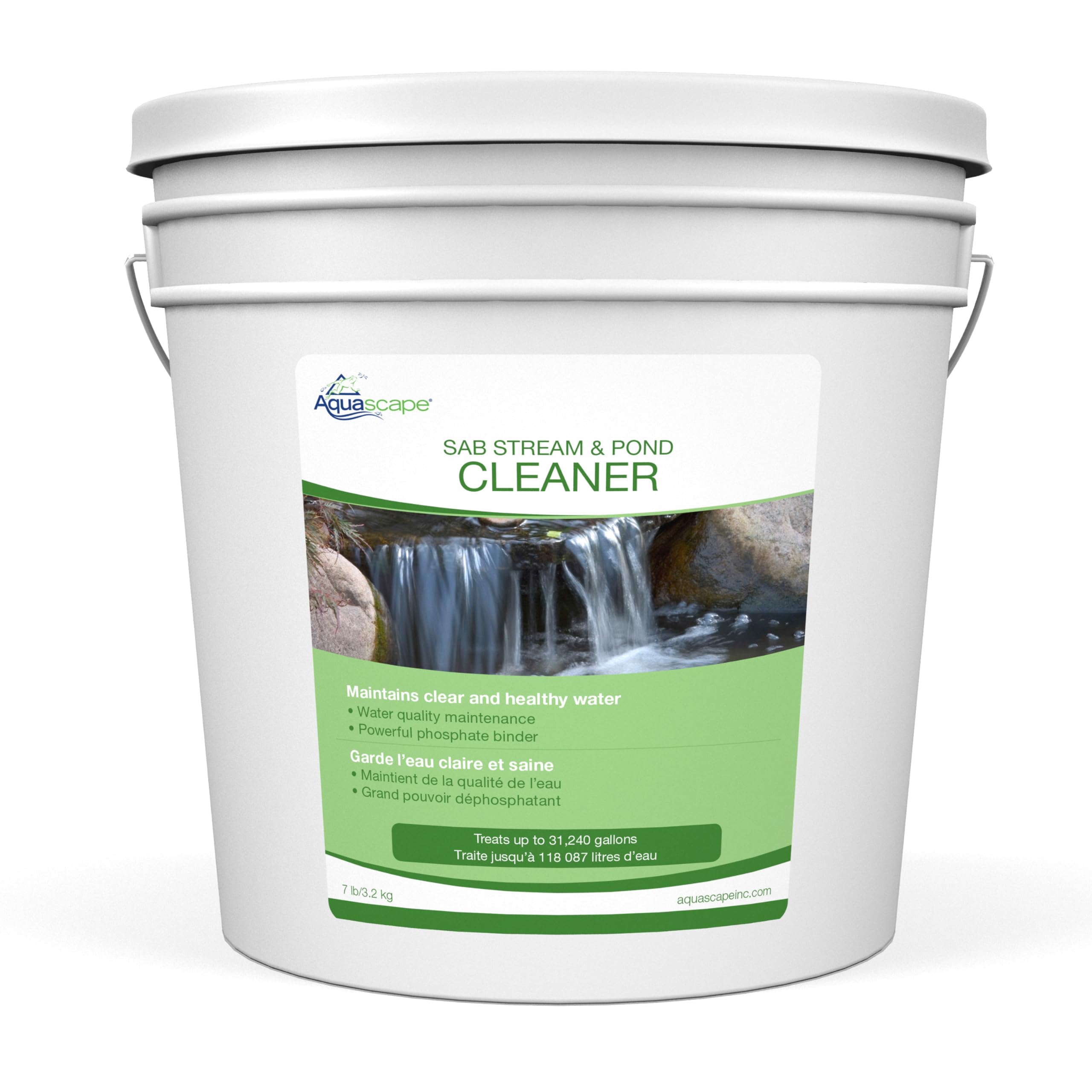
Granules that break down debris while cutting ammonia and phosphate levels.
This 7-pound container of granules tackles more than just clarity—it works on the chemical side of pond health by reducing ammonia, nitrite, and phosphate, which are the nutrients that feed algae blooms and stress your fish. A single scoop treats up to 1000 gallons (3784 liters), so this container lasts season after season for most backyard ponds. It is designed for ponds, streams, and waterfalls, making it a versatile maintenance tool for the whole water feature.
In contrast to the API clarifier which clumps particles for your filter to grab, this actually digests the organic waste at a molecular level. Reviewers point out it “works on hair algae but not as quickly as I hoped,” with a user noting it didn’t bother any fish, frogs, or plants. One reviewer warned it can make the water foamy for a while. It is pricier per dose than the basic clarifier, but a long-time user called it “worth every penny” for keeping fish healthy and maintenance easy.
Best for: Complete water quality management in ponds, streams, and waterfalls with fish.
The honest catch: Not a quick fix—slower than liquid clarifiers and may foam if you use too much.
Perfect for: The pond owner who wants balanced chemistry and cleaner water without weekly dosing of multiple products.
Not ideal for: Emergency cloudiness—you will get faster results from the liquid clarifier.
5. Half Off Ponds CleanSweep 1400 Pond Vacuum
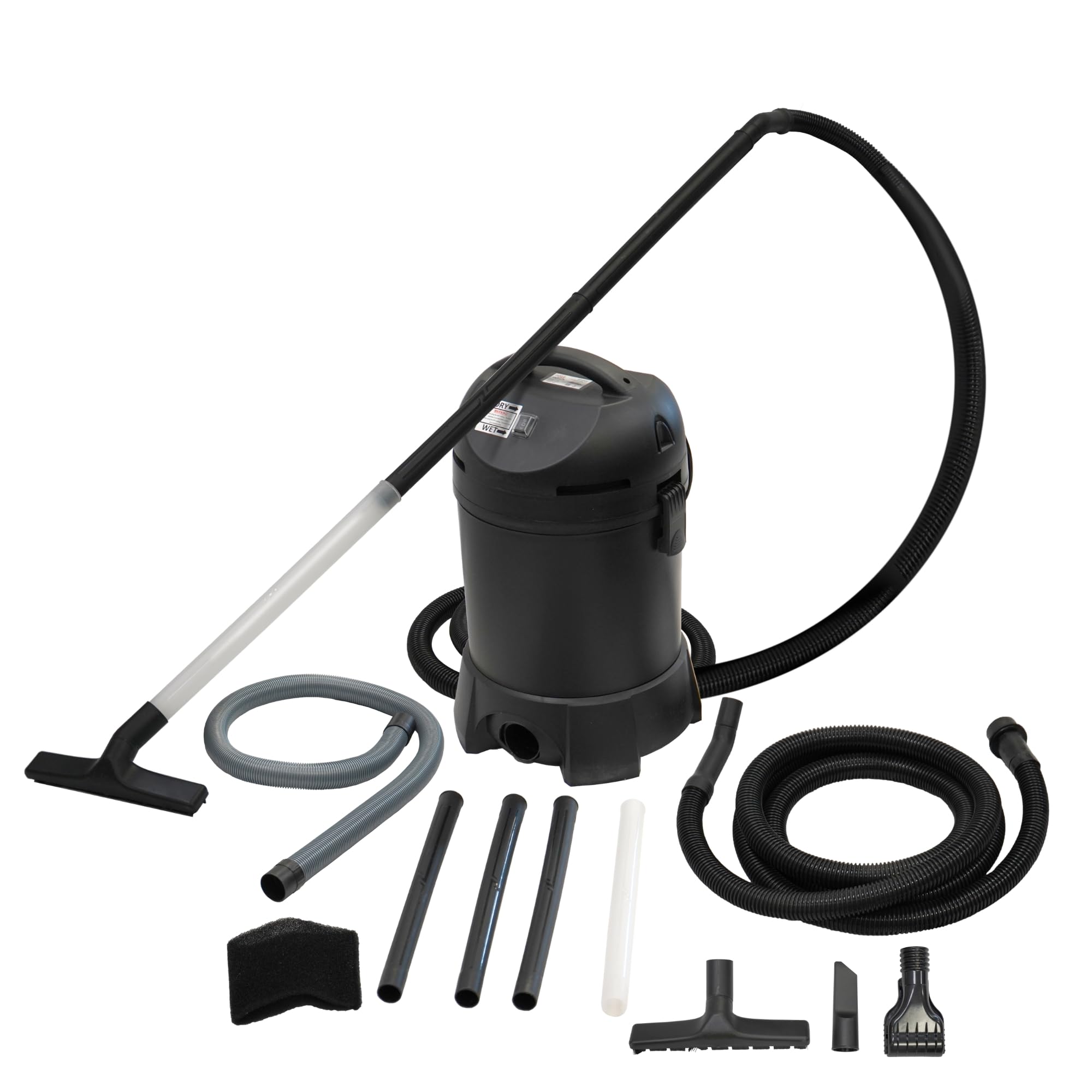
1400 watts of suction to pry out sludge that other vacuums leave behind.
This pond vacuum runs on an intermittent cycle—it fills a 6-gallon chamber, the motor shuts off, the chamber drains through a debris bag, and then the motor restarts automatically. It comes with a 13-foot intake hose, four extension tubes, three nozzles, and a 6.5-foot output hose. The recommended suction depth is 3 feet, so it is meant for shallow water gardens and the edges of fish ponds rather than deep koi ponds.
One buyer says the “extremely strong suction removes fine dead algae that other vacuums can’t,” which is the key advantage over gentler models. Another reviewer noted it is easy to set up and the clear tubing shows you exactly where the debris is flowing. That said, the intermittent cycling can feel annoying—it shuts off for about every 15 seconds of work to drain. The extension tubes are on the flimsy side, and a few buyers got defective units that lost suction.
Where it shines: Yanking out settled fine debris and dead algae mats that leave your water green.
Where it stumbles: The stop-start cycle can test your patience, and the plastic parts feel cheap for the price.
Choose this if: You need brute suction power for shallow ponds with thick bottom gunk that other vacuums miss.
Avoid if: You want a continuous vacuum experience—the on/off cycling will annoy you.
6. OASE PondoVac Classic Pond Vacuum Cleaner
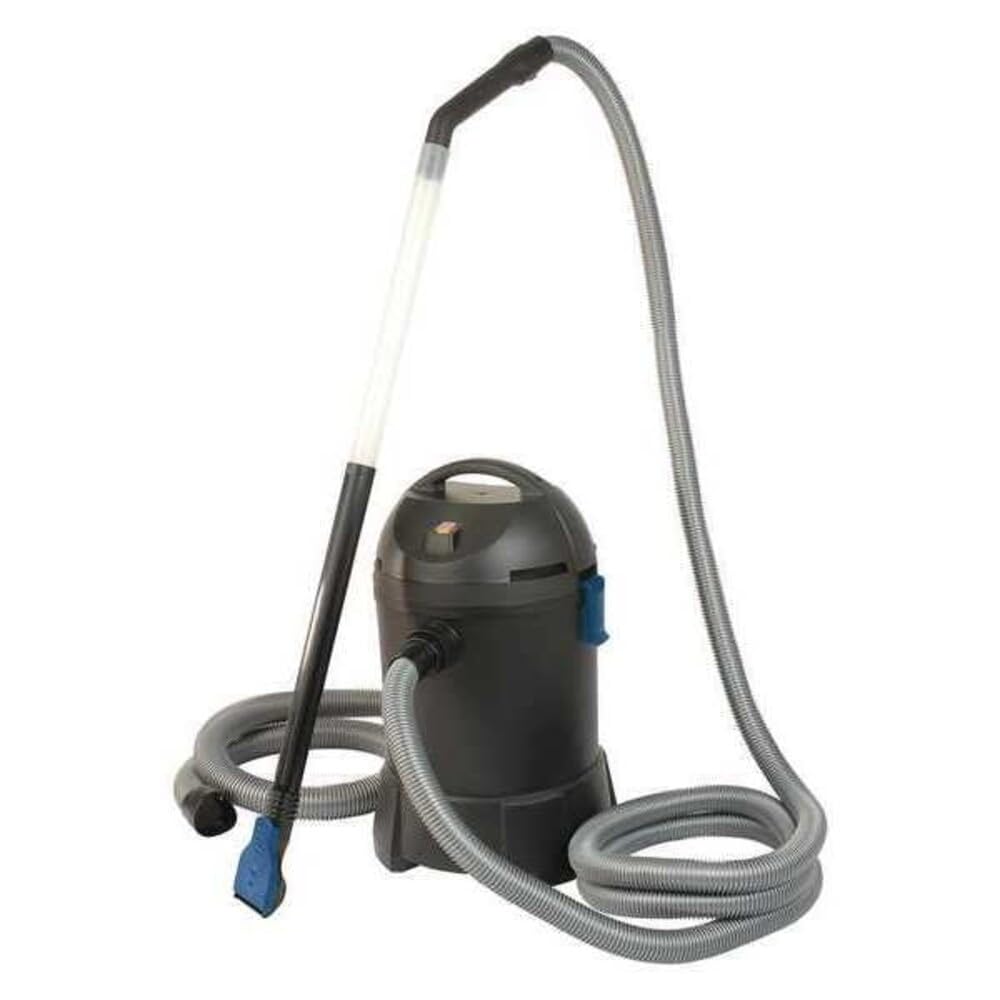
Deep suction to 6 feet with an auto-empty cycle that keeps you working.
While the Half Off Ponds CleanSweep stops at 3 feet, this OASE PondoVac Classic reaches down to a maximum suction depth of 78 inches (6.5 feet), making it the right tool for deeper koi ponds and water gardens. Its 1200–1400 watt motor pulls muck through a 13-foot suction hose, and the 27-liter (about 7-gallon) collection chamber auto-empties in seconds so you don’t have to stop and dump it manually. It comes with modular nozzles for cleaning the bottom and sides, and the extension poles mean you work standing up instead of leaning over.
Reviewers consistently call it the “best pond vacuum tried” and praise the auto-stop feature that restarts quickly—just lift the hose. One owner said the suction is strong enough that they use it weekly to control heavy debris. A caveat from a dissatisfied buyer: they had weak suction and the unit shut off immediately, so quality control is not perfect. At 23.5 Pounds, it is heavy to move around, but it saves time over a wet/dry vac.
Its calling card: Deep suction for large ponds and an auto-empty that doesn’t break your rhythm.
The trade-off: Some units arrive with weak suction, and the heavy weight makes it a storage commitment.
Best for: Deep ponds and serious vacuum sessions where the extra reach and auto-empty are worth the higher cost.
Pass if: Your pond is shallow and small—the CleanSweep 1400 will cost less and do the same job at 3 feet.
Understanding the Specs
Clarifiers vs. Bacteria Treatments
A liquid clarifier like the API ACCU-CLEAR makes floating particles clump together so your filter can catch them. It clears cloudy water in hours to days, but it does nothing for bottom sludge. A bacteria treatment such as the Pond Sludge Remover uses live enzymes (microorganisms that digest organic waste) to eat away muck on the pond floor—it takes weeks to reduce the layer, but it is the only method that tackles the source of foul odors and nutrient buildup without manual labor.
Active vs. Passive Cleaners
Passive cleaners like clarifiers and bacteria pellets are “set and forget”—you dose them and wait. They work continuously with low effort but cannot fix a pond that already has thick sludge. Active cleaners like pond vacuums use a motor to physically suck out debris—they require your time and attention but can remove years of buildup in a single use. The best routine often uses a passive cleaner for daily/weekly maintenance and a vacuum for deep seasonal cleanouts.
Suction Depth and Tank Capacity
Pond vacuums have a maximum depth they can pull water from effectively. The Half Off Ponds CleanSweep is rated for a 3-foot maximum depth, which is fine for shallow water gardens and pond edges. The OASE PondoVac Classic goes down to 78 inches (6.5 feet), so it handles deeper koi ponds. The tank capacity (6 gallons vs. 27 liters/7 gallons) determines how often you must empty it—bigger tanks mean longer runs before the intermittent cycle kicks in.
Pond Size and Dosage
Every chemical or bacteria product has a specific treatment volume. The Aquascape SAB treats 1000 gallons per scoop, while the sludge remover bucket covers 50 feet of shoreline for up to 10 months. If you overdose, especially with bacteria, you can deplete oxygen and stress your fish. Always measure your pond’s volume or surface area and follow the dosing instructions to the letter.
FAQ
Can I use a pond clarifier and a bacteria treatment at the same time?
Will a pond vacuum hurt my fish?
How often should I use a pond cleaner?
Is the OASE SwimSkim hard to install?
Will the Half Off Ponds CleanSweep work in a deep koi pond?
How long does a bucket of Pond Sludge Remover last?
Can I vacuum my pond without draining it?
What is the difference between the Aquascape SAB and the API ACCU-CLEAR?
Do I need to remove my fish before using a pond cleaner?
Why does my pond stay cloudy even after using a clarifier?
Final Thoughts: The Verdict
For the majority of shoppers, the pond cleaner winner is the API POND ACCU-CLEAR because it fixes cloudy water in stocked fish ponds fast without dragging heavy equipment around. If you want to naturally digest bottom muck and reduce odors, grab the Pond Sludge Remover. And for deep vacuuming with auto-empty ease, the OASE PondoVac Classic is the one to pick.
How We Picked
We do not accept paid placement. Every pick is matched to a real buyer and a real use-case; we do not hands-on test units.
Sources & Methodology
Specifications: manufacturer listings and product documentation. Review insights: verified customer reviews, as of July 2026. Pricing: not shown on this page (it changes often); check the current price via the retailer link.
As an Amazon Associate, Lawn Gear Lab earns from qualifying purchases. This does not affect which products we feature.