
Specs are compiled from manufacturer listings and verified buyer reviews and can change over time — please confirm the key details on the product page before buying.
Your tomatoes and peppers need living soil, not just bagged filler that dries into a brick. A good mix holds moisture, feeds roots, and keeps plants growing strong without weekly fertilizer chasing. This guide cuts through the marketing to find the bag that delivers, whether you work a raised bed, a patio pot, or an in-ground garden.
I’m Rikta — the founder and writer behind Lawn Gear Lab. This guide is built by comparing the manufacturers’ published specifications and the patterns across verified customer reviews, so you get each pick’s real strengths and trade-offs instead of marketing spin.
You will find moisture-lock mixes, organic compost blends, and heavy-duty bags with built-in slow-release plant food — here is what to know before picking the best dirt for planting vegetables.
Quick Picks
- Espoma Organic Potting Soil Mix — Best Overall
- Miracle-Gro Moisture Control Potting Mix 2-Pack — Best Overall
- Coast of Maine Organic Planting Soil for Vegetables & Tomatoes — Premium Pick
- Espoma Organic Land and Sea Gourmet Compost — Best Amendment
- R&M Organics Premium Organic Compost 10 lb Bag — Quick Fix
- Miracle-Gro Potting Mix 3-Pack — Mid-Range Feed
- Michigan Peat General All Purpose Premium Potting Soil — Budget Bulk
How To Choose The Best Dirt For Planting Vegetables
Most new vegetable gardeners grab the cheapest bag and wonder why their plants struggle. The secret is matching the soil’s texture, feeding schedule, and organic content to your setup — containers need a lighter, faster-draining mix than in-ground beds, and heavy feeders like tomatoes want a compost boost that general-purpose bags often skip.
Moisture Control vs Standard Mix
If you grow in pots on a patio or balcony, your soil dries out fast. A moisture-control mix uses sphagnum peat moss, coir (coconut fiber), and a wetting agent (a substance that helps dry soil reabsorb water evenly) to absorb up to 33% more water than basic potting soil. That extra water gives you a buffer between waterings on hot days, so your plants don’t wilt. For raised beds or in-ground gardens, a standard all-purpose blend with perlite is usually enough — but never skip drainage holes.
Organic Compost vs Potting Soil
Potting soil is a ready-to-use growing medium with peat, perlite, and often slow-release fertilizer built in. Organic compost is a soil amendment — you mix it into your existing garden bed or top-dress around plants to add nutrients and improve soil structure. For the best results with vegetables, many experienced gardeners do both: start with a quality potting mix and add a layer of compost.
Bag Size and Feeding Duration
Read the coverage details on the bag, not just the weight. A 16-quart bag may fill one 12-inch container, while a 2-cubic-foot bag covers a small raised bed. Some mixes, like the Miracle-Gro options, feed your plants for up to 6 months — meaning you don’t need to add liquid fertilizer as often. Others, like pure compost, rely on you to water in a balanced vegetable feed later in the season.
Quick Comparison
| Model | Best For | Bag Size | Feed Duration | Organic | Amazon |
|---|---|---|---|---|---|
| Espoma Organic Potting Mix | Premium all-around container gardening | 2 Cubic Feet | Not specified | Yes | Amazon |
| Miracle-Gro Moisture Control | Container plants, forgetful waterers | 16 qt. x 2 | Up to 6 months | No | Amazon |
| Coast of Maine Organic Soil | Tomatoes & heavy feeders | 20 Qt | Not specified | Yes | Amazon |
| Espoma Organic Land & Sea Compost | Soil enrichment with lobster & crab meal | 1 Cubic Foot | Not specified | Yes | Amazon |
| R&M Organics Premium Compost | Quick soil amendment, small gardens | 10 lb bag | Not specified | Yes | Amazon |
| Miracle-Gro Potting Mix (3-Pack) | Mid-range feed, small containers | 8 qt. x 3 | Up to 6 months | No | Amazon |
| Michigan Peat All Purpose Potting Soil | Budget bulk, general use | 50 Pounds | Starter + slow-release fertilizers | No | Amazon |
In‑Depth Reviews
1. Espoma Organic Potting Soil Mix

A premium organic blend that feeds from the bag, not a bottle.
This mix gives you a rich foundation of sphagnum peat moss, humus, and perlite — the perlite creates tiny air pockets so roots never sit in water. It also includes earthworm castings, alfalfa meal, kelp meal, and feather meal for natural, slow-release nutrition. Unlike the synthetic feeds in many all-purpose bags, every ingredient here is organic, so you get edible vegetables without chemical residues.
The 2 Cubic Foot bag is 2.0x larger than a single bag of the Miracle-Gro Moisture Control mix (which is 16 quarts). That means you can fill more containers or a small raised bed in one go. Myco-Tone, a proprietary blend of endo and ecto mycorrhizae (beneficial fungi that attach to plant roots and help them absorb water and nutrients), is also mixed in. Use it for any indoor or outdoor container, from herbs on a kitchen windowsill to patio tomatoes.
Buyers report that this soil stays fluffy and light even after several waterings, though some note it does not include a long-term fertilizer timer like the moisture-control Miracle-Gro options. If you are growing heavy feeders like squash or peppers, you will still need a liquid feed halfway through the season. The catch: it lacks the moisture-lock technology of the Miracle-Gro Moisture Control, so you need to water more frequently in hot weather.
Who it wins for: Organic gardeners who want one bag that works for both indoor herbs and outdoor vegetable containers.
Who should pass: Anyone in very hot, dry climates needing a moisture-control formula — this is a standard blend, not a drought-buster.
Top pick for: organic container growers who want a large, clean bag with natural feed.
skip it if: you need built-in moisture control for patio pots in full sun.
2. Miracle-Gro Moisture Control Potting Mix 2-Pack

The insurance policy against over-watering and under-watering your plants.
If you have ever turned a potted tomato into a swamp or a dry husk, this mix solves both problems. The Moisture Control formula absorbs up to 33% more water than basic potting soil — that extra water stays in reserve between waterings. It also protects against over-watering by releasing only what the plant needs, so roots don’t drown.
This 2-pack comes with two 16-quart bags — each one fills a single 12-inch container. The mix feeds your plants for up to 6 months, and Miracle-Gro claims it grows plants twice as big versus unfed plants. You get moisture control plus a built-in feeding schedule that frees you from weekly fertilizer reminders. Unlike the Espoma organic mix, this is a synthetic formula, so it is not suited for certified organic vegetable gardens.
Compared to the 8-quart 3-pack of standard Miracle-Gro Potting Mix, this 2-pack gives you a higher total volume — 32 quarts versus 24 — and the added moisture-control technology. The catch: the 16-quart bags are heavier and bulkier to carry than smaller bags, so moving them from the car to your garden is a two-handed job.
Why it works for beginners
- Moisture control is forgiving if you water irregularly
- Feeds for 6 months, no extra fertilizer needed
- Large 2-pack covers multiple containers
The trade-offs
- Not organic — uses synthetic plant food
- Each 16-quart bag is heavy to lift and move
Best for: container vegetable growers on a patio or balcony who need a forgiving, low-maintenance mix.
Look elsewhere if: you run a certified organic garden and need all-natural ingredients.
3. Coast of Maine Organic Planting Soil for Vegetables & Tomatoes
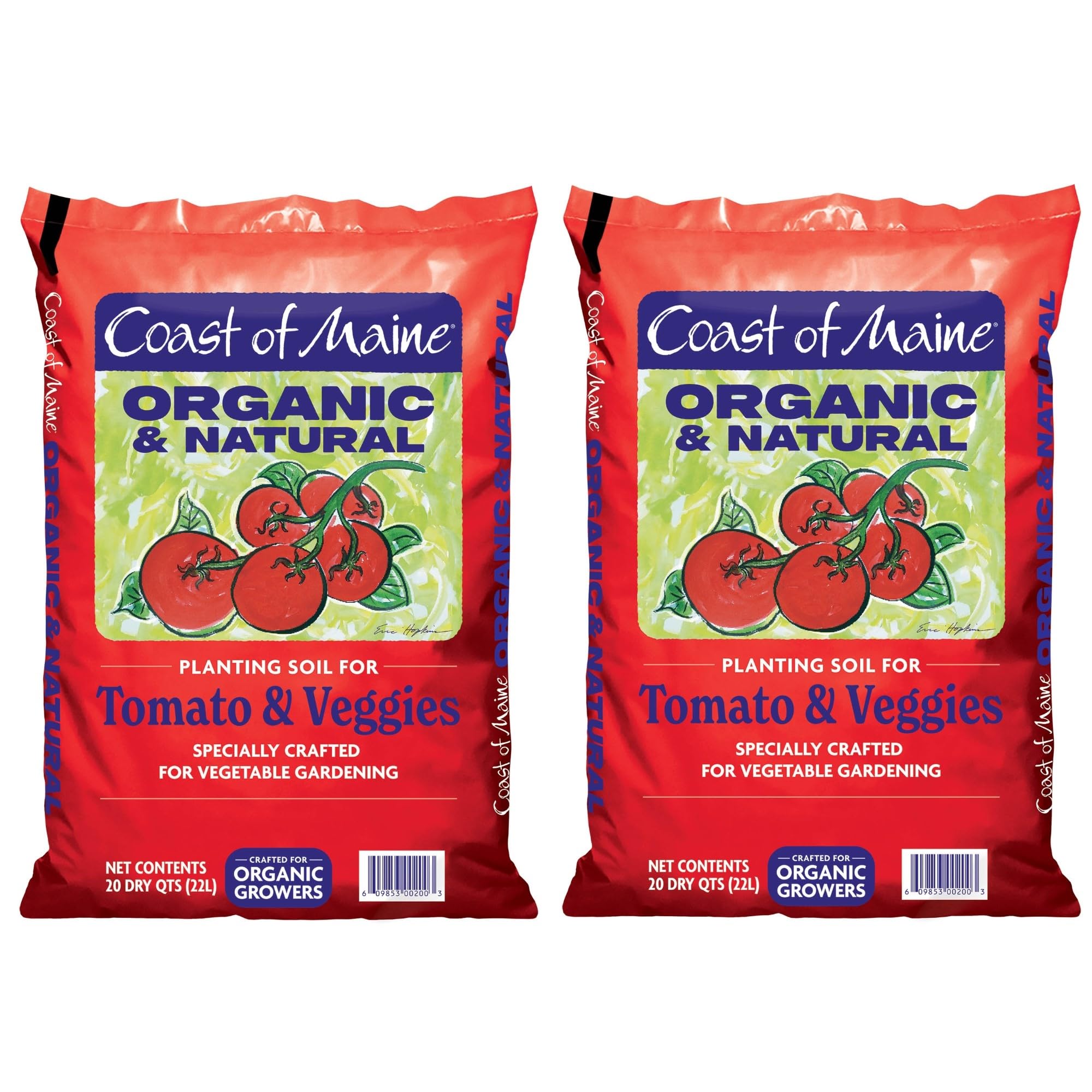
Crafted for tomatoes and heavy feeders, this bag is ready to go.
Coast of Maine tailors this blend specifically for vegetable gardens and tomatoes. The formula uses composted manure and sphagnum peat moss to balance moisture retention and drainage — so your plants get a consistent drink without sitting in a puddle. It comes in a 20-quart bag (the 2-pack means two of those, for a total of 40 quarts), and at 21 pounds per bag, it is lighter than bulk options like the 50-pound Michigan Peat bag.
This soil is OMRI-listed for organic use, meaning it meets strict standards for organic gardening. Use it for seeding, transplanting, or topping off an in-ground vegetable garden or a container. The lightweight texture makes it easy to work with, and the composted manure gives a gentle nutrient boost right out of the bag. One drawback: unlike the Miracle-Gro mixes, it does not include long-term slow-release fertilizer, so you will need to feed your plants yourself after about a month.
Owners mention this mix works especially well for sturdy tomato seedlings and pepper plants, though some note it can be a bit dense for very small containers if used alone — mixing in a handful of perlite helps. It is a reliable mid-range premium option that leans heavily on real organic ingredients without relying on synthetic feeds.
Perfect for: dedicated tomato and pepper growers who want an organic mix with composted manure, ready out of the bag.
Not for: anyone who needs a moisture-control or self-feeding formula — you will be on a regular watering and fertilizing schedule.
Reach for this if: you grow tomatoes and want an OMRI-listed organic soil that drains well.
Look elsewhere if: you prefer a mix that feeds itself for months without extra work.
4. Espoma Organic Land and Sea Gourmet Compost

A soil-boosting blend with lobster and crab meal that reinvigorates tired garden beds.
This is not a standalone potting mix — it is a compost blend meant to improve your native soil. Made with lobster and crab meal, it adds trace minerals and chitin (a natural compound that can help plants resist soil-borne pests) that most composts lack. The 24-pound bag is concentrated: a little mixed into your existing soil goes a long way.
Compared to the 10-pound R&M Organics bag, this Espoma bag weighs 2.4x more, giving you a much larger volume of amendment per purchase. It also includes Myco-Tone, a proprietary mix of mycorrhizae that builds a healthier root zone. Use it when planting or transplanting vegetables, flowers, trees, or shrubs, or mix it into containers and window boxes. The granules are easy to work into the top few inches of soil.
One real-world note: because it is a concentrated compost with seafood meal, some customers note a noticeable ocean-like smell when the bag is first opened — it fades after a few days in the soil. It is ideal for vegetable gardens that have been harvested several seasons and need a nutrient reset, but pass on it if you need a complete potting mix that can fill a pot by itself.
What stands out
- Unique lobster and crab meal for natural mineral boost
- 24-pound bag delivers 2.4x the volume of smaller compost bags
- Myco-Tone fungi improve root nutrient uptake
What to know
- It is an amendment, not a standalone potting soil
- Seafood smell can be strong at first
Ideal for: rejuvenating depleted garden soil with a nutrient-dense organic compost.
it’s not for you if: you need a ready-to-use potting mix for containers.
5. R&M Organics Premium Organic Compost 10 lb Bag
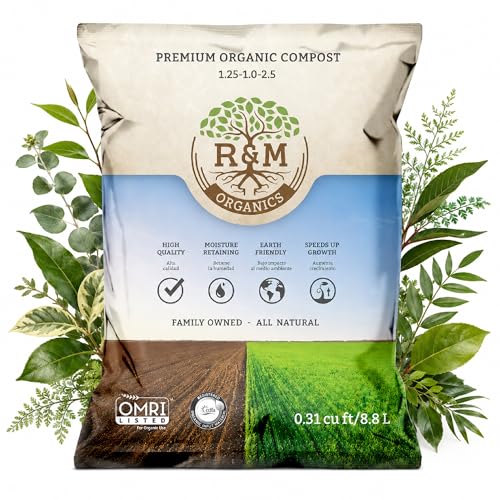
The 10-pound bag that revived a dying tomato in a week — reviewers point out it works.
This is a concentrated, fully composted dairy cow manure product for use as a soil amendment. It comes in a compact 10-pound bag (0.31 cubic feet of volume) — much smaller than the large Espoma compost, but ideal for small gardens, a few containers, or spot-treating struggling plants. The composting process uses continuous aeration to reduce odor, so it has a clean, earthy smell rather than a strong manure scent.
One buyer reports it “revived ailing tomato plant: yellow leaves turned green, new growth and flower buds appeared within a week of mixing into 27-gallon planter soil.” The 5:1 mixing ratio means one bag stretches further than you might think — mix a quarter-inch layer into existing soil for established beds, or blend more heavily for new plantings.
The main limitation: at 10 pounds, you are buying a small amount of pure compost, not a full potting mix. For a large raised bed or multiple containers, you will need several bags. It works great as a quick top-dress for vegetable gardens between seasons, but it is not a complete growing medium.
Perfect for: small gardens or individual plants that need an immediate nutrient boost, especially tomatoes.
Not for: filling a whole raised bed or replacing a bag of potting soil from scratch.
Best for: reviving a single struggling plant or top-dressing a small patch.
Look elsewhere if: you need to fill multiple large containers or a full bed.
6. Miracle-Gro Potting Mix 3-Pack

Three small bags for small containers, each with a 6-month feeding guarantee.
This bundle gives you three 8-quart bags of standard Miracle-Gro Potting Mix — each bag fills two 8-inch containers, making it a good fit for herb gardens, small flower pots, or a couple of pepper plants. Like the Moisture Control version, it feeds plants for up to 6 months and is formulated to grow plants twice as big versus unfed plants, but it lacks the moisture-control technology.
The advantage is convenience: three separate bags are easier to carry and store if you have limited space, and you only open one at a time to keep the rest fresh.
The honest trade-off: if you have multiple medium or large containers, the 2-pack of Moisture Control gives you more soil and the added water management. But if you are doing a few small pots and want the feeding benefit without the heavy 16-quart bag size, this 3-pack is a lighter, more manageable alternative.
Why pick this
- Easy to carry and store three small bags
- Feeds container plants for up to 6 months
- Good for a few small pots or herbs
Why pass
- Less total soil volume than the Moisture Control 2-pack
- No moisture control — you must water carefully
Reach for this if: you only have a few small pots and want the feeding convenience of Miracle-Gro.
look elsewhere if: you have larger containers or want moisture control — the 2-pack is a better value.
7. Michigan Peat General All Purpose Premium Potting Soil

A heavyweight 50-pound bag that goes straight into pots without mixing.
This is the no-nonsense bulk option: a 50-pound bag of pre-blended potting soil that is ready to use from the moment you open it. It combines rich dark reed sedge peat, perlite, and sand — the perlite provides aeration and drainage, while the sand adds weight and stability for larger containers. Starter and slow-release fertilizers are already mixed in, so your vegetables get a gentle initial feed and a steady nutrient supply over time.
It is versatile enough for vegetables, flowers, bulbs, containers, and raised beds. But there is one catch that buyers frequently mention: “Good soil but lots of gnats come out of it.” That is a direct quote from a verified review. Fungus gnats are a common issue with bagged soil that contains peat moss, especially if the bag has been stored in damp conditions. If you use this mix indoors, be prepared for a potential gnat hatch — letting the soil dry out slightly between waterings helps.
The bottom line: you get a lot of soil for a very low price, and the pre-mixed texture is genuinely good for vegetables in raised beds or large planters. But the gnat risk makes it less ideal for indoor container gardens compared to the sterilized blends from Espoma or Miracle-Gro.
Best for: filling large raised beds or outdoor containers on a budget, where gnat risk is minimal.
Not for: indoor use or small pots where gnat infestations are harder to manage.
Perfect for: budget-minded gardeners with big in-ground or raised bed projects.
steer clear if: you garden indoors or want a sterilized mix with no pest risk.
Understanding the Specs
Sphagnum Peat Moss
This is a partially decomposed plant material harvested from bogs. It holds many times its weight in water, helping soil stay moist longer. It also adds a light, fluffy texture that roots can spread through easily. Many premium potting mixes list it as the first ingredient.
Perlite
Those small white rocks you see in potting soil are perlite — a naturally occurring volcanic glass that is heated until it pops like popcorn. Perlite creates tiny air pockets in the soil so roots get oxygen and water drains freely instead of pooling around root crowns.
Mycorrhizae
These are beneficial fungi that form a partnership with plant roots. The fungi attach to the root system and help the plant pull more water and nutrients (especially phosphorus) out of the soil. In return, the plant gives the fungi sugars. You will see them listed as endo and ecto mycorrhizae on Espoma bags.
Moisture Control Technology
This is a mix of sphagnum peat moss, coir (coconut fiber), and a wetting agent. Coir absorbs water like a sponge, while the wetting agent helps the soil re-wet evenly if it dries out completely. Together they allow the soil to absorb up to 33% more water than basic potting soil and hold it longer.
FAQ
Can I use potting soil directly in the ground for vegetable beds?
What is the difference between potting soil and compost?
How do I know if my dirt needs perlite added?
Will a moisture-control mix work for all vegetables?
How long does a bag of organic compost last after opening?
Is the Espoma Land and Sea compost safe for seedlings?
How much dirt do I need for a 4×8 raised bed?
Can I mix different brands of dirt and compost together?
Why do some potting soils have fungus gnats?
What does OMRI listed mean for vegetable dirt?
Final Thoughts: The Verdict
For most people, the dirt for planting vegetables winner is the Espoma Organic Potting Mix because it combines a large 2-cubic-foot bag with clean organic ingredients, natural slow-release nutrition from worm castings and kelp meal, and a second shipment of Myco-Tone for root health — all without synthetic additives. If you want built-in moisture control that forgives irregular watering, grab the Miracle-Gro Moisture Control 2-Pack. And for budget-conscious gardeners filling large raised beds, the standout is the bulk value of the Michigan Peat All Purpose Potting Soil at 50 pounds per bag.
How We Picked
We do not accept paid placement. Every pick is matched to a real buyer and a real use-case; we do not hands-on test units.
Sources & Methodology
Specifications: manufacturer listings and product documentation. Review insights: verified customer reviews, as of July 2026. Pricing: not shown on this page (it changes often); check the current price via the retailer link.
As an Amazon Associate, Lawn Gear Lab earns from qualifying purchases. This does not affect which products we feature.