
Specs are compiled from manufacturer listings and verified buyer reviews and can change over time — please confirm the key details on the product page before buying.
Every spring, you face the same choice: buy another pack of thin, brittle seed trays that crack before the first transplant, or finally invest in something that will actually hold up. The best reusable seed starting trays save you money and frustration season after season, but picking the right ones means looking past the marketing and focusing on the plastic thickness, the design of the cell, and how easy they make transplanting.
I’m Rikta — the founder and writer behind Lawn Gear Lab. This guide is built by comparing the manufacturers’ published specifications and the patterns across verified customer reviews, so you get each pick’s real strengths and trade-offs instead of marketing spin.
The key is finding a tray that survives being washed, stacked, and handled year after year. Thick, durable plastic that will not crack under pressure is the foundation of any good reusable tray.
Quick Picks
- Hemlock Home Brewing 1020 Seed Starting Trays (5-Pack) — Premium Build
- Epic Gardening Reusable Seed Starter Tray (6-Pack) — Easiest Transplant
- Mr. Pen Seed Starter Tray Kit (10-Pack, 400 Cells) — Complete Kit
- Gardzen 10 Pack Seed Trays (No Drain Holes) — Budget All-Rounder
- YoleShy 10 Pack Seed Starter Trays (No Drain Holes) — Thickened Plastic
- VIVOSUN 6-Pack Seed Starter Trays (72 Cells) — Best Value Kit
How To Choose The Best Reusable Seed Starting Trays
The difference between a tray you use for one season and one you use for ten depends on a few concrete specs. Here is what to look for when you shop.
Plastic Thickness and Material
Thicker plastic resists cracking, warping, and sagging when you fill the tray with wet soil. Look for trays made from polypropylene (PP) or high-density plastic, with a measured thickness above 0.8mm. Thinner trays around 0.4mm flex too much and often break at the corners when lifted.
Drainage and Watering Design
Solid trays without holes let you bottom-water seedlings by filling the base, which encourages deep root growth and keeps the foliage dry. Trays with drainage holes prevent overwatering but need a second tray underneath to catch drips. Some combine both: a solid base tray and a cell insert with drain holes.
Cell Size and Ease of Transplanting
Large cells give roots more room before you have to pot up, but take up more space on your shelf. The critical feature is how easy it is to remove the seedling — look for trays with large finger holes at the bottom of each cell so you can push the root ball out without damaging the plant.
Quick Comparison
| Model | Best For | Tray Dimensions | Cell Count | Material / Thickness | Amazon |
|---|---|---|---|---|---|
| Hemlock Home Brewing 1020 Trays | High-volume greenhouse users | 21″ x 10.75″ x 2.5″ | — (solid tray) | Polypropylene, 1.2mm thick | Amazon |
| Epic Gardening 6-Cell Trays | Gentle transplanting | 4.92″ x 3.3″ x 2.52″ | 6 per tray (36 total) | UV-treated recycled plastic | Amazon |
| Mr. Pen 10-Pack Kit | All-in-one starter kit | 14.5″ x 9″ x 4.3″ | 40 per tray (400 total) | Plastic | Amazon |
| Gardzen 10 Pack Trays | Budget bottom-watering | 14.5″ x 9″ x 1.8″ | — (solid tray) | Sturdy plastic | Amazon |
| YoleShy 10 Pack Trays | Medium-sized organized setups | 14.5″ x 9″ x 2.1″ | — (solid tray) | Thickened plastic | Amazon |
| VIVOSUN 6-Pack Kit | Budget cell trays with domes | Not listed | 72 total (6 trays, 12 cells each) | Plastic | Amazon |
In‑Depth Reviews
1. Hemlock Home Brewing 1020 Seed Starting Trays (5-Pack)

The industrial-grade 1020 tray that laughs at flimsy alternatives.
If you have ever lifted a loaded tray only to watch the corners crack and soil spill everywhere, these Hemlock trays are the fix. Their 1.2mm thickness stops that. Buyers report a caliper-measured thickness of 1.2mm, versus 0.4mm for standard store trays and 0.8mm for the pro Jiffy trays some reviewers compared it against. The outer dimensions are a true standard 1020 fit (21 x 10.75 x 2.5 inches), so it works with any standard grow rack or heat mat.
The solid tray base (no drainage holes) lets you bottom-water without worrying about drips on your floor. Owners mention the polypropylene (PP, a durable food-safe plastic) does not sag even when carrying a full load of seedlings, and the green color makes it easy to spot on a cluttered shelf.
Built to endure: Extra-thick, BPA-free, food-safe polypropylene that resists cracking and sagging, sized for standard 1020 setups.
The honest trade-off: Higher upfront cost and solid base means you cannot use cell inserts directly without a separate drain tray.
Reach for this if: You fill a greenhouse or need trays that can carry heavy pots without flexing.
Look elsewhere if: You want a complete kit with cells and domes, or you are on a tight budget.
2. Epic Gardening Reusable Seed Starter Tray (6-Pack)
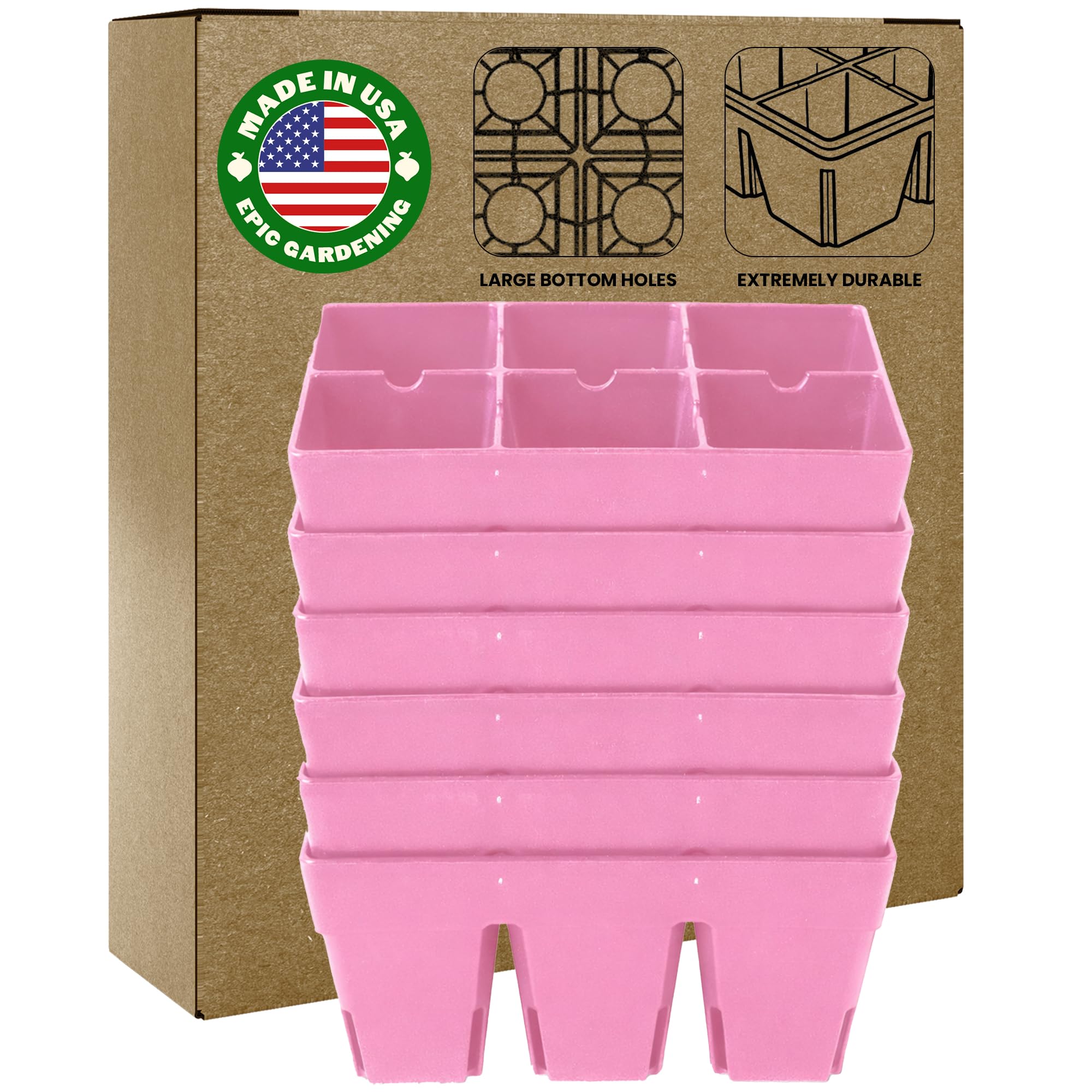
The smartly engineered tray that pops seedlings out with zero root damage.
Epic Gardening took the pain out of transplanting. Each of the six cells has large finger holes on the bottom, so you just push gently and the seedling pops out — no digging, no tearing roots. The trays also have air pruning slots (openings on the sides and base that stop roots from circling) on all four corners and an open base, which encourages roots to branch out instead of circling the pot. The trays themselves are small (each cell measures 1 9/16 x 1 9/16 x 2 1/4 inches), but reviewers rave that six-cell trays fit snugly in a standard 10×20 tray, giving you a neat modular system.
The UV-treated, recycled American plastic is thick and sturdy — one reviewer described it as “built like a tank.” Unlike the Gardzen tray, which measures 14.5 x 9 x 1.8 inches, the Epic tray measures 4.92 x 3.3 x 2.52 inches. Compared to the solid Hemlock tray, the Epic tray gives you air-pruned roots for stronger plants, but it holds only six seedlings per tray, not dozens. The trade-off is price: this is a premium pick, and you only get six small trays, so you need to buy multiple packs for a big seed-starting operation.
Why it shines
- Air pruning slots and open base prevent root circling
- Large finger hole makes seedling removal easy
- UV-treated recycled plastic is durable for years
What to watch for
- Small cell size limits how long you can let seedlings grow before potting up
- Expensive per tray compared to standard cell packs
Best for: Gardeners who hate damaging seedlings during transplant and want a durable, modular system.
skip it if: You need large volumes of cheap trays for a big greenhouse.
3. Mr. Pen Seed Starter Tray Kit (10-Pack, 400 Cells)
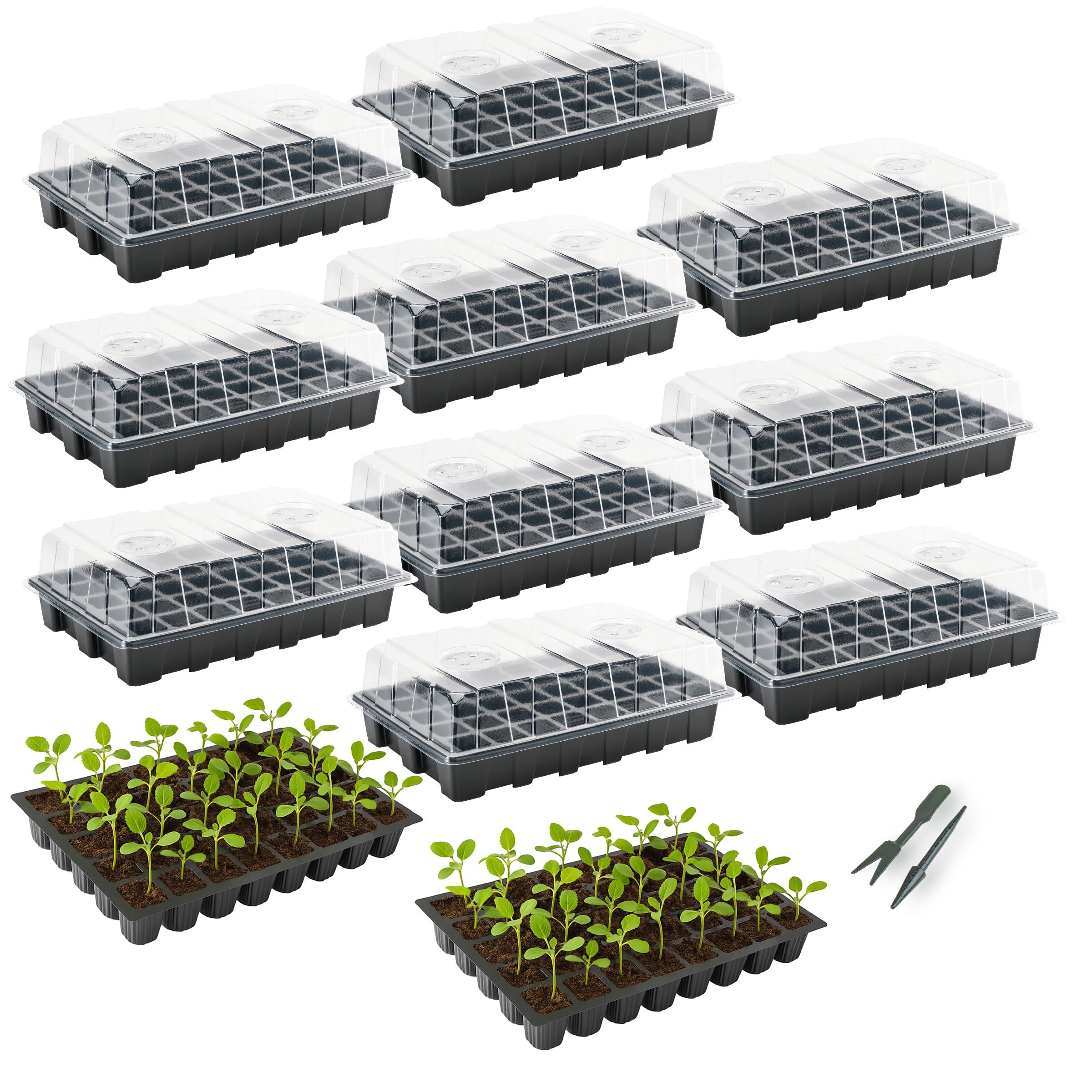
The all-in-one kit that gives you cells, domes, and tools in one box.
Mr. Pen packs everything you need to start hundreds of seedlings: 10 trays each with 40 cells (400 cells total), 10 humidity domes (clear covers that trap warmth and moisture for faster germination) with adjustable vents, 10 base trays, plus a dibber (a pointed tool for making planting holes) and a widger (a tiny shovel for lifting seedlings) for sowing and transplanting. The 14.5 x 9 x 4.3 inch trays are a compact size that fits neatly on a windowsill or under grow lights without crowding. Reviewers mention the trays are “sturdy, not flimsy — worth double the price,” and that the humidity domes with the vent inserts removed hold moisture so well that seeds sprout faster.
A clever detail: the domes can prop under the trays to raise plants closer to the lights. Some buyers reported that a couple of trays arrived cracked, but noted they were still functional with a mat underneath. This kit saves you from buying separate humidity domes and tools like the VIVOSUN 6-pack does, but you get more trays and a higher cell count for your money.
Kitted and ready: 400 cells, 10 vented domes, and two tools let you start a large garden in one purchase.
One catch: A few shipments have had minor cracking — inspect upon arrival and the brand offers replacements.
Choose this if: You want a complete setup with no extra shopping — just add soil and seeds.
Pass on this if: You only need a few trays and the bulk 10-pack feels like overkill.
4. Gardzen 10 Pack Seed Trays (No Drain Holes)
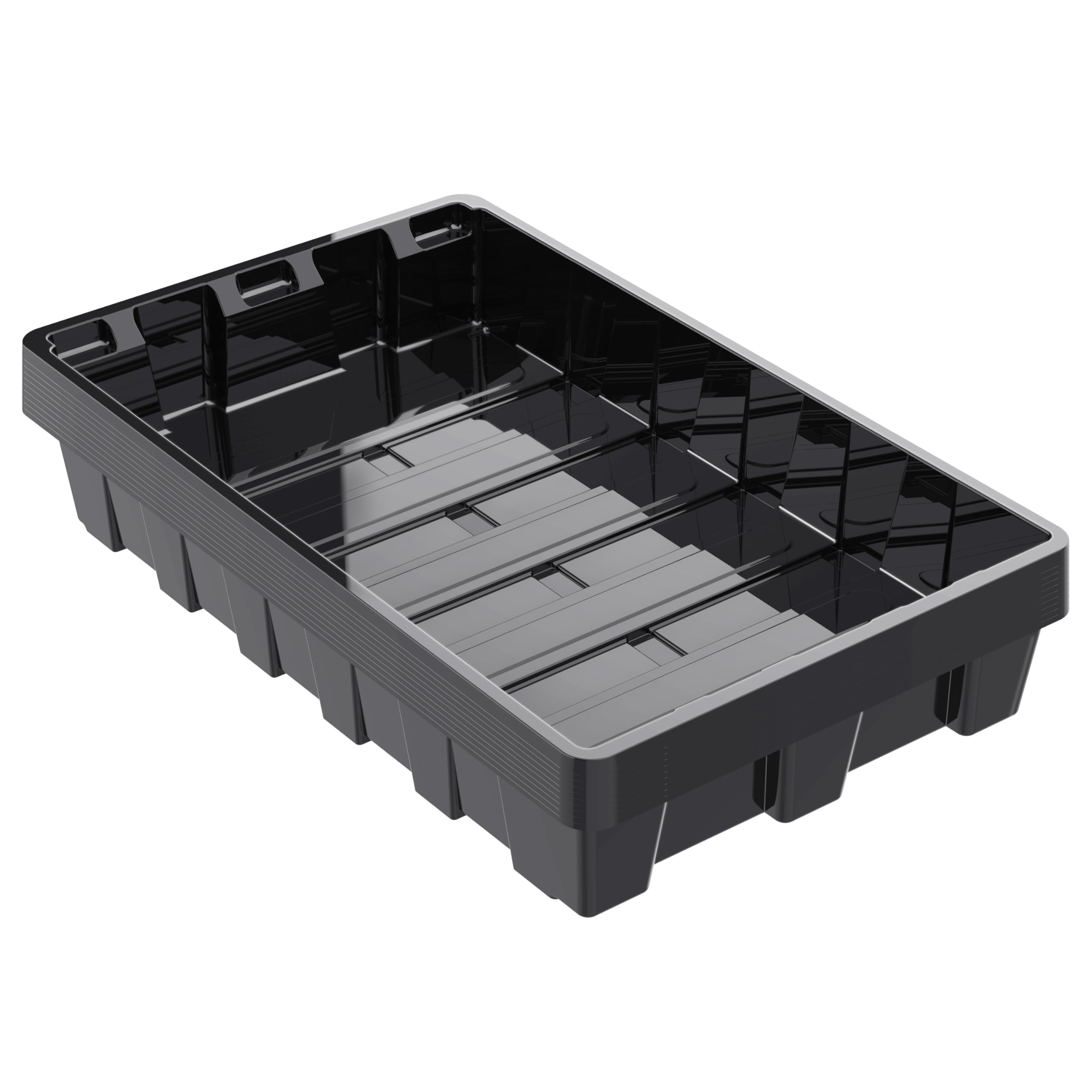
The affordable workhorse tray that handles bottom watering like a pro.
Gardzen’s 10-pack gives you solid black trays without drain holes, purpose-built for bottom watering without making a mess. Each tray measures 14.5 x 9 x 1.8 inches, which is a bit shallower than the 2.1-inch YoleShy trays, but still deep enough to hold water for a good soak. Reviewers call them “pretty sturdy” and note they work perfectly as drip trays under greenhouse pots or for sprouting microgreens (tiny edible greens from seeds like broccoli or kale). Unlike the VIVOSUN kit, you get solid trays here — no cells or domes — so you use them as bases for separate cell inserts or directly under 4-inch nursery pots.
One reviewer noted a tray cracked but that they were “overall functional and perfect for my 4″ pots.” The plastic is a step up from ultra-flimsy trays, though it is not as thick as the Hemlock 1.2mm trays. This is a no-frills value pack — you get 10 trays for a low price, and they stack cleanly for off-season storage.
What works
- Solid base holds water for effective bottom-watering
- Good value at 10 trays per pack
- Lightweight and stackable for easy storage
What to note
- Plastic is functional but can crack under heavy use
- Shallower depth means less water-holding capacity
Grab these if: You need a bulk set of solid trays for bottom watering and you want the lowest cost per tray.
Avoid if: You need thick, industrial-grade trays that will withstand daily heavy lifting.
5. YoleShy 10 Pack Seed Starter Trays (No Drain Holes)

The moderately thick tray that stays rigid without the premium price.
YoleShy thickened the plastic and added deeper ripples and ridges around the perimeter to resist warping. Each tray measures 14.5 x 9 x 2.1 inches, making it slightly deeper than the Gardzen trays and better at holding water for extended bottom-watering sessions. One buyer mentioned the tray was “durable for 6 months; cracks only at folded top edge,” suggesting the main body holds up well — just watch the rim. Reviewers also note the grooves drain well when used with small pots, and the trays are reusable and easy to clean.
The weight is 2.6 pounds for the pack of 10, so they are not featherlight but feel solid in hand. Unlike the Mr. Pen kit, these are solid trays only, so you bring your own cells or use them as drip catchers.
Better than basic: Thickened sidewalls and deeper capacity mean less flex under weight and more water retention.
The size reality: Smaller than a full 1020 tray, so larger pots may not fit without careful arrangement.
Best for: Growers who want a durable, mid-sized tray for a moderate number of seedlings without spending top dollar.
Not ideal for: Full greenhouse rows that rely on standard 1020 dimensions for rack compatibility.
6. VIVOSUN 6-Pack Seed Starter Trays (72 Cells)
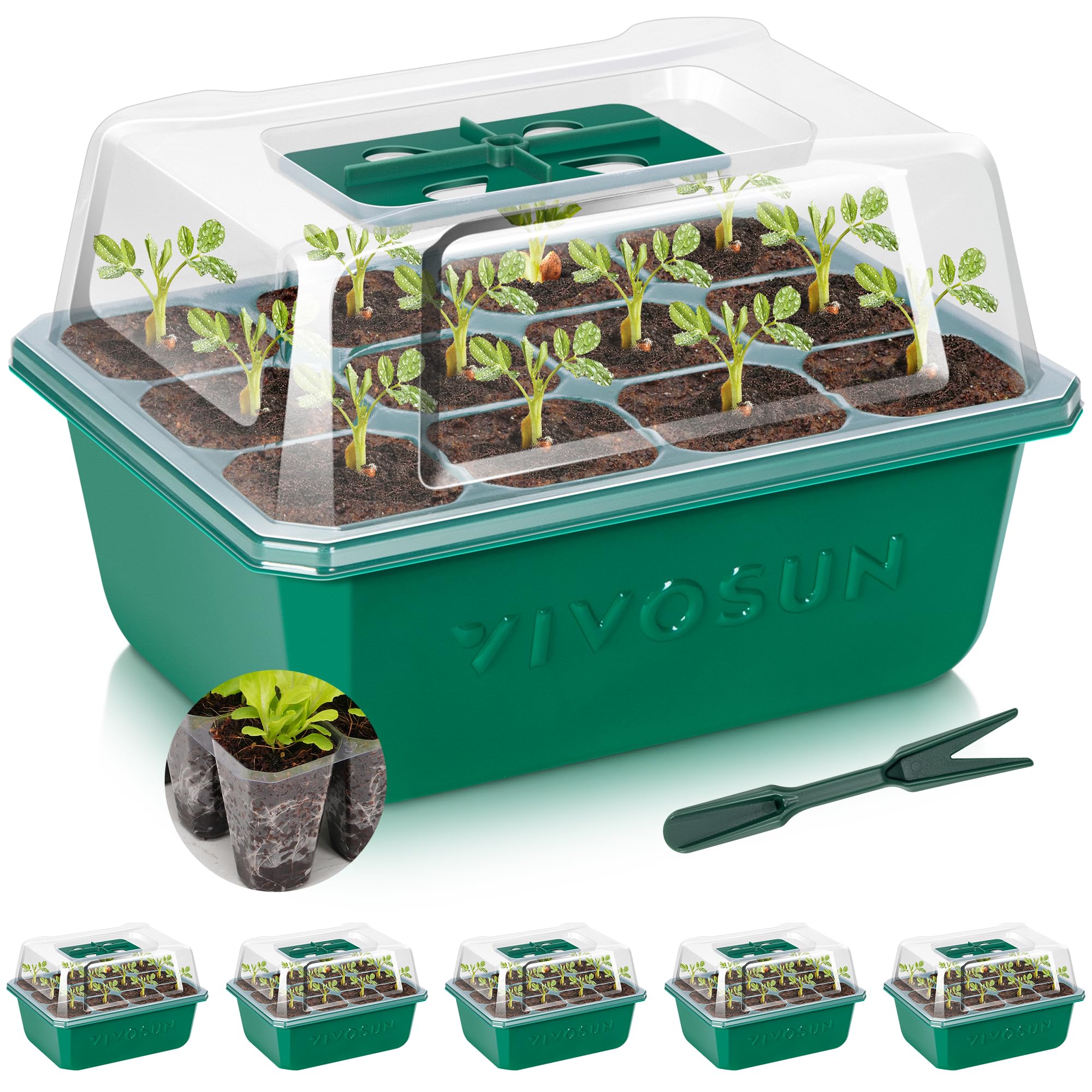
The cheap-and-cheerful starter kit that gets seeds going on a tight budget.
VIVOSUN’s 6-pack gives you 72 cells total (six 12-cell trays) plus six humidity domes with adjustable vents, six base trays, a set of garden tools, and 10 plant labels — everything in one box. The domes have an adjustable vent to manage temperature and humidity, and the cell trays have drain holes to help prevent overwatering. Reviewers report “75% germination after 2 weeks” and describe it as an inexpensive but effective mini-greenhouse system. One owner reported the trays are “smaller than expected but perfect for seed starting,” and that the included seed depth tool is a handy extra.
The catch is durability: the plastic is on the thinner side, and multiple reviews warn not to leave the trays in direct sun above 65°F because heat buildup can damage them. The Mr. Pen kit is a better value overall for the price, but the VIVOSUN is the cheapest way to get a complete dome-and-tray system. Unlike the Hemlock trays which are built for years, these are better thought of as a multi-season tool if handled gently. For the price, though, you get a full system with domes that the Gardzen and YoleShy solid trays lack.
Why it is a steal
- Complete set with domes, trays, tools, and labels
- Adjustable vent on the dome helps control moisture and temperature
- Very low price for 72 cells and 6 domes
Areas to be careful
- Thinner plastic that can warp under high heat or heavy use
- Small 12-cell trays limit how many seeds you can start at once
Pick this if: You want the lowest-cost full kit to start a small garden and you are gentle with your gear.
pass on it if: You need trays that can survive rough handling or direct sun on a greenhouse bench.
Understanding the Specs
Plastic Thickness
Measured in millimeters, this is the single best predictor of how long a tray lasts. Standard flimsy trays are around 0.4mm and often crack within one season. Good reusable trays start at 0.8mm, while heavy-duty trays like the Hemlock option hit 1.2mm. Thicker plastic resists sagging when full and survives being washed, stacked, and dropped.
1020 Tray Size
The standard nursery tray size is 21 x 10 inches (roughly 10 x 20 inches). A true 1020 tray fits standard heat mats, grow rack shelves, and humidity domes. Smaller trays around 14.5 x 9 inches are more compact and fit on windowsills better, but you cannot use standard 1020 accessories with them.
Drainage and Vents
Solid trays without holes let you bottom-water by filling the base, which keeps the soil surface dry and prevents fungus gnats. Trays with drainage holes need a second tray underneath. Humidity domes with adjustable vents let you control moisture — keep them closed for germination, then open them to harden off seedlings.
Cell Design
Wide cells with large bottom holes make transplanting easy because you push out the root ball without tearing roots. Air pruning slots (openings on the sides or base of each cell) stop roots from circling, which leads to stronger plants after transplanting. Deeper cells allow longer growth before you need to pot up.
FAQ
How do I clean reusable seed starting trays?
Can I reuse trays that had diseased plants?
How many seasons do reusable seed starting trays last?
What is the difference between a solid tray and a cell tray?
Are humidity domes necessary for seed starting?
Can I use these trays with a heat mat?
Why do some trays have no drainage holes?
How do I store seed trays between seasons?
What size pots fit in a standard 1020 tray?
Are seedling trays BPA-free?
Final Thoughts: The Verdict
For most buyers, the best reusable seed starting trays winner is the Hemlock Home Brewing 1020 Trays because the 1.2mm thick polypropylene plastic gives you decades of reliable service. If you want gentle transplanting with air-pruned roots, grab the Epic Gardening 6-Cell Trays. And for a complete budget-friendly kit with humidity domes, the Mr. Pen 10-Pack Kit gives you 400 cells and tools in one box.
How We Picked
We do not accept paid placement. Every pick is matched to a real buyer and a real use-case; we do not hands-on test units.
Sources & Methodology
Specifications: manufacturer listings and product documentation. Review insights: verified customer reviews, as of July 2026. Pricing: not shown on this page (it changes often); check the current price via the retailer link.
As an Amazon Associate, Lawn Gear Lab earns from qualifying purchases. This does not affect which products we feature.