
Specs are compiled from manufacturer listings and verified buyer reviews and can change over time — please confirm the key details on the product page before buying.
The first real decision you face every spring is choosing a fertilizer that actually wakes your lawn up without scorching it. You want deep green color and steady growth, but one wrong bag can leave you with patchy burns or a growth surge you have to mow every other day. This guide cuts through the NPK numbers to show you exactly which product matches your lawn type, your schedule, and your patience for reapplication.
I’m Rikta — the founder and writer behind Lawn Gear Lab. This guide is built by comparing the manufacturers’ published specifications and the patterns across verified customer reviews, so you get each pick’s real strengths and trade-offs instead of marketing spin.
Whether you are starting a new lawn from seed, waking up an established yard, or fixing a nitrogen deficiency, these are the best contenders for the best yard fertilizer for spring, ranked by what actually works when the bag hits the spreader.
Quick Picks
- Yard Mastery 24-0-6 Flagship Granular Lawn Fertilizer with 3% Iron, Bio-Nite™ — Best Overall
- The Andersons Green Shocker 7-1-2 Fertilizer with Humic DG 16 lb Bag — Fastest Green-Up
- Petramax Liquid Nitrogen Fertilizer 28-0-0 NPK – 32 Oz Spring & Summer — Liquid Power
- GreenView Fairway Formula Lawn Fertilizer 33 lb Bag Slow Release Nitrogen — Big Lawn Value
- The Andersons Premium New Lawn Starter 20-27-5 Fertilizer — New Seed Champion
- Espoma EOLF28 Organic All Season Lawn Food, 28-Pound — Organic Standard
- Safer Brand Lawn Restore Natural Lawn Fertilizer – 9335SR – 9-0-2 NPK — Gentle Healer
How To Choose The Best Yard Fertilizer For Spring
Spring fertilizer is not a one-size-fits-all buy. Your soil temperature, grass type, and whether you are seeding or feeding all decide which bag works. Focus on three things first: the nitrogen number, the release speed, and the coverage area.
Understand the NPK Ratio
The three numbers on the bag tell you the percentage of nitrogen (N), phosphorus (P), and potassium (K) by weight. For spring, nitrogen is the star — it drives the green-up and growth. High nitrogen numbers like 28-0-0 or 24-0-6 are built for established lawns that just need a color boost. A starter formula like 20-27-5 pushes phosphorus for root development on new seed. Match the ratio to your goal, not to the prettiest bag.
Slow-Release vs. Quick-Release Nitrogen
Quick-release nitrogen gives you fast green within days, but it can burn the grass if you overdo it. Slow-release nitrogen feeds steadily over weeks, reducing the risk of burn and extending the time between applications. Many premium fertilizers blend both — a 70/30 or 63 percent slow-release split — so you get a quick color bump followed by sustained feeding. For spring, a slow-release component helps carry your lawn into the summer heat without a mid-season crash.
Match Coverage to Your Lawn Size
Buyers often grab a bag without checking how many square feet it covers. A 33-pound bag that covers 10,000 square feet is efficient for a medium-to-large yard. A 28-pound organic blend might cover a different area per bag. Always calculate your lawn’s square footage and compare it to the coverage listed on the bag so you do not end up a bag short halfway through the season.
Quick Comparison
| Model | Best For | NPK Ratio | Coverage | Item Weight | Amazon |
|---|---|---|---|---|---|
| Yard Mastery 24-0-6 Flagship | Deep greening + iron boost | 24-0-6 | 6,000 sq ft | 18 lb | Amazon |
| The Andersons Green Shocker 7-1-2 | Fast 3-day green-up | 7-1-2 | Medium | 16 lb | Amazon |
| Petramax Liquid Nitrogen 28-0-0 | Liquid quick fix for yellow grass | 28-0-0 | 12,800 sq ft (maintenance) | 32 oz | Amazon |
| GreenView Fairway Formula 27-0-5 | Long 12-week feeding on large lawns | 27-0-5 | 10,000 sq ft | 33 lb | Amazon |
| The Andersons Premium New Lawn Starter 20-27-5 | Starting new seed | 20-27-5 | 5,000 sq ft | 18 lb | Amazon |
| Espoma EOLF28 Organic Lawn Food | Organic feeding with Bio-tone | 9-0-0 | Annual | 28 lb | Amazon |
| Safer Brand Lawn Restore 9-0-2 | Non-burn, pet-safe repair | 9-0-2 | 5,000 sq ft | 22 lb | Amazon |
In‑Depth Reviews
1. Yard Mastery 24-0-6 Flagship Granular Lawn Fertilizer with 3% Iron, Bio-Nite™
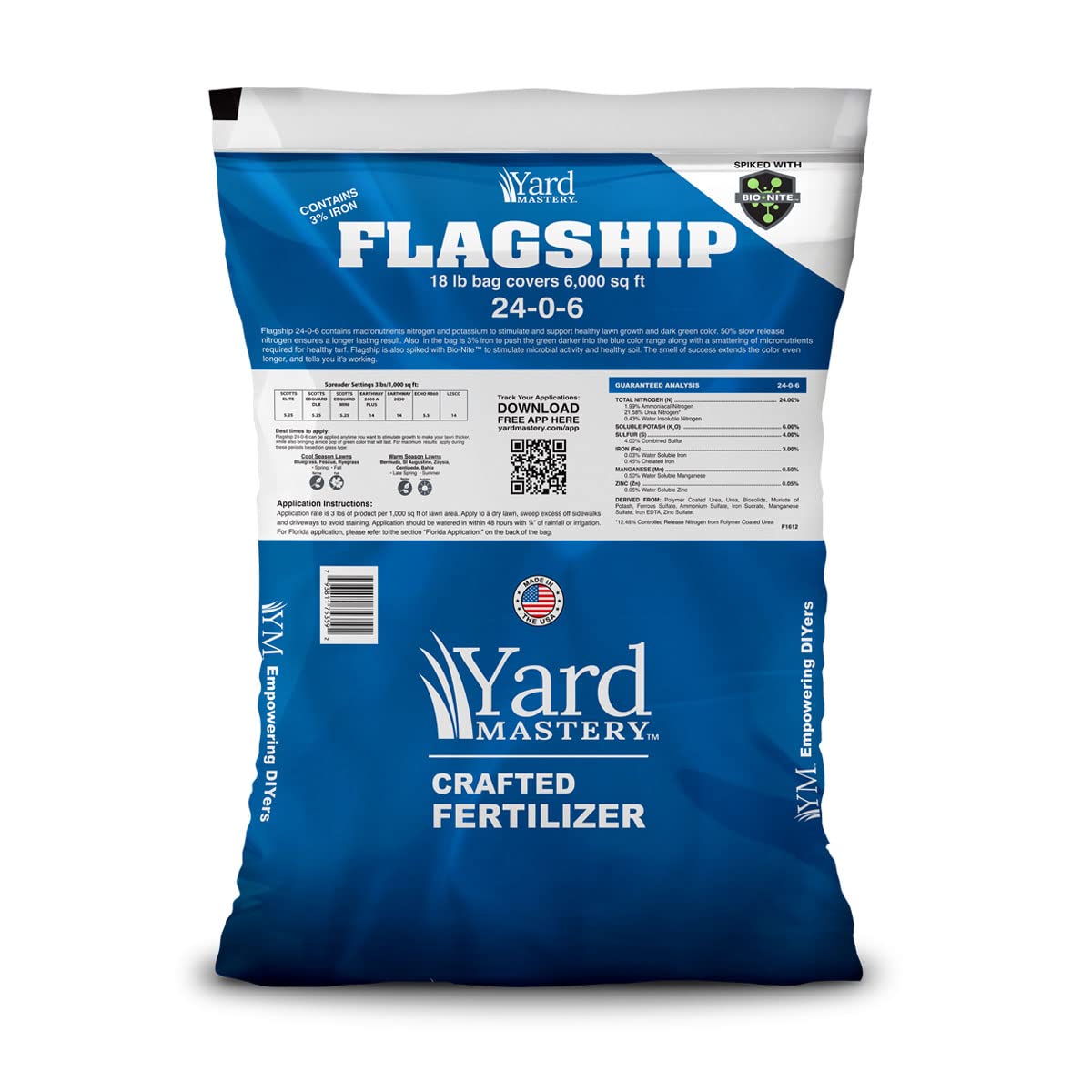
The granular fertilizer that turns a patchy spring lawn deep blue-green in a single week.
This is the bag you reach for when you want dramatic color without waiting weeks. The NPK of 24-0-6 delivers a heavy dose of nitrogen for growth, while the 3% iron is the key to that rich, deep blue-green color that makes neighbors ask which lawn service you use. The Bio-Nite technology (a natural additive in the granules) feeds steadily, so you are not chasing a quick burn with more water.
The 18-pound bag covers 6,000 square feet, making it a good fit for a medium lawn. Unlike lower-nitrogen blends, this one also includes micronutrients — boron, copper, manganese, molybdenum, and zinc — so your grass gets trace elements most fertilizers skip. Buyers report that Bermuda grass choked out weeds after a single bag, outperforming three years of professional yard service.
The trade-off is growth speed. One reviewer noted you will be cutting grass twice a week because this stuff really stimulates growth. If you want a slower, lower-maintenance feed, a product with more slow-release nitrogen might suit you better. But for pure spring green-up that works fast, this is the benchmark.
What Powers the Green-Up
- 3% iron delivers deep blue-green color other blends cannot match
- 24% slow-release nitrogen for steady feeding between apps
- Full micronutrient package for overall turf health
What to Watch For
- 18-pound bag covers only 6,000 sq ft — large lawns need multiple bags
- Fast growth means more frequent mowing
The dialed-in choice: Pick this one if you prioritize deep color and are ready to mow weekly — it is the fastest greening granular on this list.
Check your mowing schedule first: One buyer warned you will be cutting twice a week, so this is not a low-maintenance feed.
2. The Andersons Green Shocker 7-1-2 Fertilizer with Humic DG 16 lb Bag
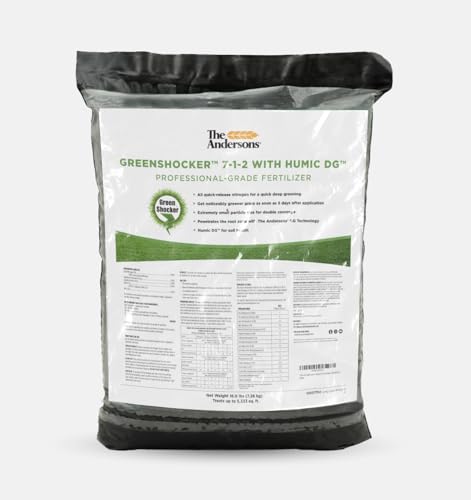
The professional-grade granular that greens your lawn in as soon as three days after application.
Green Shocker lives up to its name. It uses all fast-release nitrogen, so you see results in days, not weeks. The NPK of 7-1-2 is mild compared to the heavy hitters above, but the addition of Humic DG (a soil conditioner that helps roots absorb nutrients more efficiently) makes every application count. The particles are extremely small, which means you get even coverage without stripes or clumps.
The 16-pound bag covers a medium-sized lawn, and the 7-1-2 ratio makes it safe for spoon-feeding — you can apply lighter doses more frequently throughout the season. One reviewer described fixing a severely damaged lawn that had weeds, grubs, and fungus in three days, producing a deep blueish-green color. The biggest advantage over a high-nitrogen blend like the Yard Mastery is that it is gentle enough for regular touch-ups without burning.
The downside is the price per pound — it is noticeably more expensive than a commodity granular. And because it is not for sale in California, check your state regulations before ordering. If you want the fastest visible green and do not mind paying for small-particle precision, this is the one.
Why It Works Fast
- Visible results in as soon as 3 days after application
- Humic DG improves nutrient uptake and soil health
- Extremely small particle size for even distribution
The Catch
- Price per pound is higher than commodity options
- Not available for shipment to California
Reach for this if: You want the fastest visible green on a damaged or tired lawn and value precision application.
Look elsewhere if: You need a budget-friendly option for a large yard — the 16-pound bag runs out fast on big acreage.
3. Petramax Liquid Nitrogen Fertilizer 28-0-0 NPK – 32 Oz Spring & Summer

The liquid 28-0-0 formula that turns yellow, nitrogen-starved grass deep green fast.
If your lawn looks pale and weak coming out of winter, this concentrate gives you the highest nitrogen hit on the list. The 28-0-0 NPK is all about green-up, with 70% quick-release nitrogen for instant color and 30% slow-release nitrogen to keep it going between applications. The 32-ounce bottle treats up to 12,800 square feet at the maintenance rate, making it an efficient option for mid-size yards.
Liquid fertilizers have a real advantage over granules: you can spot-treat yellow patches without covering the whole lawn. Mix 5 ounces per gallon of water for standard feeding or 10 ounces per gallon for correcting a nitrogen deficiency. One buyer mentioned applying it to a 20x12x13 triangle area with mulch, and even after seven inches of rain from a tropical storm, the mulch held — a sign the liquid bonded well with the soil rather than washing off.
The main limitation is frequency. Liquid fertilizers do not have the staying power of a high-quality granular slow-release blend. You will need to reapply every few weeks during active growth. If you are okay with a hose-end sprayer rhythm and want immediate color on specific spots, this delivers.
What Makes It Stand Out
- 70% quick-release nitrogen for near-immediate green-up
- Treats up to 12,800 sq ft per bottle at maintenance rate
- Works with all grass types, warm- or cold-season
The Reality Check
- Requires reapplication every few weeks — no long season coverage
- Needs a sprayer for even application; not a spread-and-walk product
Grab this for: Spot-treating yellow patches or giving your whole lawn a quick pre-summer color boost with liquid precision.
Skip if: You want a single spring application that lasts all season — you will be mixing and spraying every few weeks with this one.
4. GreenView Fairway Formula Lawn Fertilizer 33 lb Bag Slow Release Nitrogen

The 33-pound bag that covers 10,000 square feet and feeds your lawn for up to 12 straight weeks.
When you have a big lawn, this is the bag that makes financial and practical sense. The 27-0-5 NPK delivers high nitrogen with 63% slow-release technology, meaning the grass gets a steady meal instead of a spike. One 33-pound bag covers 10,000 square feet — that is nearly a quarter acre on a single application. And because it contains no phosphate, it protects local waterways while feeding your turf.
Owners mention that it greens up the lawn within a few days, but the real value is the endurance. One owner reported it feeds your lawn for 12 weeks, which gets it good and ready for the summer heat. That is one spring application and you are covered until July. It works on any grass type, including Bermuda, and the granules go through a spreader cleanly with no clumping issues.
The downside is that at 33 pounds, the bag is heavy. If you have a small lawn or limited storage space, you would be better off with a smaller bag. Also, the 27-0-5 ratio is heavy on nitrogen but light on potassium compared to some competitors — fine for established grass, but not ideal for stressed lawns needing potassium for root strength.
What You Get for the Weight
- 63% slow-release nitrogen feeds for up to 12 weeks
- 33-pound bag covers 10,000 sq ft — huge value per bag
- Phosphate-free formula protects waterways
The Practical Trade-Off
- Bag is heavy at 33 pounds, awkward to carry and store
- Potassium content is low at 5 — not great for stressed lawns
Best for: Owners of medium-to-large lawns who want one spring application that lasts the whole pre-summer season.
Skip if: You need potassium for root health after a tough winter — the 5 in the NPK is minimal.
5. The Andersons Premium New Lawn Starter 20-27-5 Fertilizer
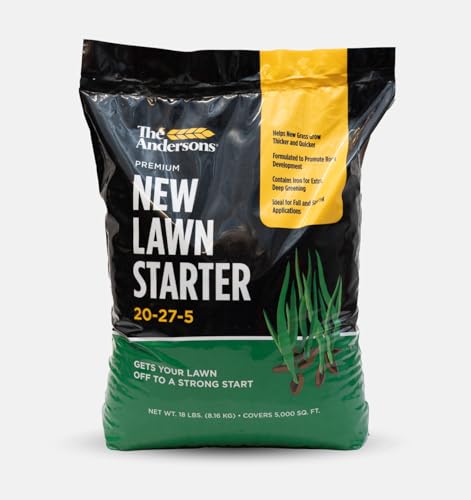
The starter fertilizer that pushes root growth hard so your new seed turns into a thick lawn in just over a week.
If you are seeding bare soil this spring, this is the bag you want. The 20-27-5 NPK flips the usual nitrogen-heavy formula and instead puts phosphorus front and center at 27 — that is what seedlings crave to build strong roots fast. It also contains 1% iron for extra deep greening, plus quick- and slow-release nitrogen for immediate feeding that keeps going.
The 18-pound bag covers 5,000 square feet, and it is safe for all turf types in both spring and fall. One customer observed they were able to get grass in just over a week, which is remarkably fast for a seeded lawn. Another reviewer combined it with dethatching, overseeding, and a root enhancer and said it produced the best lawn appearance ever — outperforming Milorganite alone.
The catch is that this is a starter fertilizer, not a maintenance feed. Once your grass is established, you will need to switch to a higher-nitrogen blend to keep the color. But for the specific job of turning seed into a thick, green carpet, the Andersons starter does it faster than most.
Why It Works for Seed
- 27% phosphorus drives aggressive root establishment
- 1% iron provides deep greening even on young grass
- Fast results — grass in just over a week per buyer reports
What It Doesn’t Do
- Not formulated for ongoing spring maintenance on established lawns
- 18-pound bag covers only 5,000 sq ft — large seeding projects need multiple bags
Choose this when: You are seeding a new lawn or overseeding bare patches and want the fastest possible root development.
Not for: Established lawns needing a nitrogen-only spring boost — switch to a 28-0-0 or 24-0-6 for ongoing color.
6. Espoma EOLF28 Organic All Season Lawn Food, 28-Pound

The organic granular that feeds your lawn with natural ingredients and Bio-tone microbes instead of harsh chemicals.
If you prefer to keep synthetic chemicals off your yard, this is the most reliable organic option. The NPK is 9-0-0 — lower nitrogen than the synthetics, but it is derived from natural ingredients and enhanced with Espoma’s exclusive Bio-tone formula (a blend of beneficial microbes that improve soil life). It will not burn your lawn even if you over-apply, and it is safe for kids and pets immediately after application.
The 28-pound bag covers a decent area, and the organic material feeds the soil as much as the grass. Reviewers consistently mention using it for years with excellent results. One user highlighted it produces a beautiful lawn season after season, noting the added microbes are a bonus most chemical fertilizers skip. It works on all lawn types including fescues, bluegrass, rye, St. Augustine, and zoysia.
The trade-off is speed and density. Organic fertilizers release more slowly, so you will not see the dramatic three-day green-up of a synthetic like the Green Shocker. Also, the 9-0-0 ratio has no phosphorus or potassium, which is fine for established lawns but not ideal for new seed or stressed soil needing a broader nutrient profile.
What Makes It Clean
- Bio-tone microbes improve soil health, not just grass color
- Won’t burn lawns or leach out of soil — very forgiving
- Safe for kids and pets immediately after application
The Organic Reality
- Greening is slower than synthetic high-nitrogen blends
- No phosphorus or potassium — not a complete diet for struggling lawns
Reach for this if: You prioritize organic gardening and want a safe, slow-release feed that builds soil biology over time.
Look elsewhere if: You need quick green-up or are seeding new grass — the 9-0-0 ratio lacks the phosphorus for root development.
7. Safer Brand Lawn Restore Natural Lawn Fertilizer – 9335SR – 9-0-2 NPK
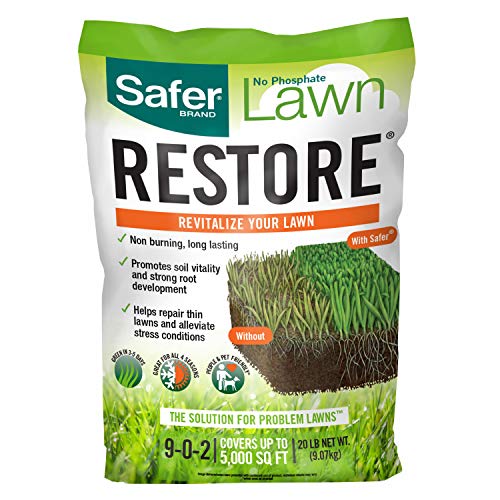
The non-burning natural fertilizer that fixes yellow burn spots in about five days without harming pets.
This is the best pick if you have already burned your lawn with a synthetic fertilizer or if you want to avoid the risk entirely. The 9-0-2 NPK is naturally derived and will not burn grass even if you over-apply. The formula revitalizes root systems and helps grass withstand heat, cold, and drought stresses — all while being safe for kids and pets to play on immediately after application.
The 22-pound bag covers 5,000 square feet, and the results are surprisingly fast for a natural product. One shopper added it fixed yellow fertilizer burn spots in about five days. Another said it revived a neighbor’s dead lawn within days and is non-toxic for pets and wildlife. The slow-release action strengthens roots rather than just pushing top growth, so your lawn builds resilience over the season.
The limitation is that 9-0-2 is mild. If your lawn is severely nitrogen-deficient and pale, this will green it up more slowly than a high-nitrogen synthetic like the Petramax liquid or the Yard Mastery granular. It is a maintenance feed and a repair tool, not a heavy-duty greening machine.
Why It’s a Safe Bet
- Non-burning formula even at high application rates
- Safe for kids and pets immediately after spreading
- Strengthens root systems against heat and drought
The Mild Side
- Lower nitrogen content — slower green-up than synthetics
- Not formulated for new seed establishment
Perfect for: Anyone who accidentally burned their lawn with a chemical fertilizer or wants a pet-safe, natural feed for ongoing maintenance.
Not the pick if: You need dramatic spring green-up fast — go with the Yard Mastery or Petramax for high-nitrogen punch.
Understanding the Specs
NPK Ratio
The three numbers on the bag are the percentage of nitrogen, phosphorus, and potassium by weight. Nitrogen (N) drives leaf growth and green color — the higher the first number, the more green you get. Phosphorus (P) builds roots, which is why starter fertilizers for new seed push 20-27-5. Potassium (K) helps overall plant health and stress resistance. For spring, you usually want a high first number (20-28) for established lawns, or a high middle number for new seed.
Slow-Release vs. Quick-Release Nitrogen
Quick-release nitrogen dissolves fast and greens up your lawn within days, but it can burn grass if applied too heavily. Slow-release nitrogen breaks down over weeks or months, providing steady feeding with minimal burn risk. The best spring fertilizers blend both — you get a fast color kick followed by sustained nutrition that carries the grass into summer. Products like the GreenView Fairway Formula use 63% slow-release nitrogen for up to 12 weeks of feeding.
FAQ
When should I apply spring fertilizer for best results?
Can I use a 28-0-0 liquid fertilizer on all grass types?
How long does a slow-release fertilizer feed my lawn?
Is organic fertilizer better for my lawn than synthetic?
Will a non-burning fertilizer still green up my lawn?
How much area does a 33-pound bag of fertilizer cover?
Can I use a new lawn starter fertilizer on established grass?
What is Humic DG and why does it matter for lawn fertilizer?
Final Thoughts: The Verdict
For most people, the best yard fertilizer for spring winner is the Yard Mastery 24-0-6 Flagship because its 3% iron and slow-release nitrogen deliver the deepest color in the fastest time without overwhelming the soil. If you want a gentle, pet-safe natural feed that also repairs burn spots, grab the Safer Brand Lawn Restore. And for seeding a new lawn from scratch, the standout is the The Andersons Premium New Lawn Starter for getting grass in just over a week.
How We Picked
We do not accept paid placement. Every pick is matched to a real buyer and a real use-case; we do not hands-on test units.
Sources & Methodology
Specifications: manufacturer listings and product documentation. Review insights: verified customer reviews, as of July 2026. Pricing: not shown on this page (it changes often); check the current price via the retailer link.
As an Amazon Associate, Lawn Gear Lab earns from qualifying purchases. This does not affect which products we feature.