
Specs are compiled from manufacturer listings and verified buyer reviews and can change over time — please confirm the key details on the product page before buying.
Wrens are bold little singers, but they are also tiny and easily bullied at the feeder. The key to bringing them close is simple: a feeder designed to keep larger birds and squirrels from muscling in. This guide breaks down the top choices for a wren-friendly setup, so you can watch them flit in and out instead of watching spooks and starlings hog the seed.
I’m Rikta — the founder and writer behind Lawn Gear Lab. This guide is built by comparing the manufacturers’ published specifications and the patterns across verified customer reviews, so you get each pick’s real strengths and trade-offs instead of marketing spin.
Whether you are new to feeding songbirds or upgrading a station that gets raided, understanding the right cage size and perch length makes the difference. That is exactly what this look at the bird feeder for wrens covers, with picks that genuinely suit their size.
Quick Picks
- Kingsyard Tube Squirrel Proof Bird Feeders for Outdoor Hanging, Metal Caged — Best Overall
- Caged Bird Feeders Squirrel-Proof, Metal, 2.8 Lbs Capacity — High Capacity
- Bird Feeders for Outdoors,13 Inch 6 Ports Squirrel Proof, Copper — Compact & Light
- Metal Tube Bird Feeders for Outdoors Hanging, 13 Inch, Green — Budget Champion
How To Choose The Best Bird Feeder For Wrens
Wrens are tiny, agile birds that prefer to feed close to cover. The right feeder welcomes them while shutting out the usual troublemakers. Focus on three things: perch size, cage spacing, and how easy it is to clean.
Perch Size Matters (Keep It Short)
Wrens have small feet, so they need a short perch — around 1.5 inches is ideal. Longer perches let larger birds like blue jays and doves land, which defeats your purpose. A compact perch gives wrens just enough room to grip and eat.
Cage or Mesh: Who Gets In
A cage feeder with a mesh opening of roughly 1.3 x 1.75 inches allows wrens and chickadees to slip through, but keeps out starlings, grackles, and squirrels. Tubes with very small ports do the same job but may need a week or two for wrens to trust them.
Durability and Cleanability
Metal construction resists squirrels’ chewing and lasts longer in weather. A removable base or flip-top lid makes refilling and cleaning straightforward — old seed can mold quickly, especially in covered cages, so easy access is a must.
Quick Comparison
| Model | Best For | Perch / Port | Height | Weight | Amazon |
|---|---|---|---|---|---|
| Kingsyard Caged Feeder | Best Overall | 1.5″ mesh | 7.6″ | 0.98 kg | Amazon |
| Mosloly Caged Feeder | Best Value (High Capacity) | 1.3″ x 1.76″ mesh | 10.6″ | 2.8 lbs | Amazon |
| TrampgiK Copper Tube | Lightweight & Compact | 1.5″ perch | 13.6″ | 0.4 kg | Amazon |
| TrampgiK Green Tube | Budget Pick | 1.5″ perch | 13.6″ | 1.5 lbs | Amazon |
In‑Depth Reviews
1. Kingsyard Tube Squirrel Proof Bird Feeders for Outdoor Hanging, Metal Caged

A cage that lets wrens in but stops squirrels from even trying.
This feeder uses a 1.5-inch x 1.5-inch mesh cage that small birds slip through while larger pests stay out. The steel outer cage is all metal and rust-resistant, so you are not worrying about a squirrel chewing through to the seed. It also has a wide protective roof that shields the food from rain — an upgrade from open-cage models that let moisture in.
Buyers report it is a “durable, small feeder with 4 ports” that is easy to fill and clean thanks to its wide, short tube. It holds 1.5 lbs of seed, which is enough for several days of steady wren visits. At 0.98 kg, it is noticeably heavier than the tube designs below, so make sure your hook is solid. Unlike the lighter TrampgiK tube models, the metal cage offers extra defense against large bird bullies.
One reviewer noted it took house finches a few weeks to warm up, but once they did, it became their favorite spot. If you want wrens and chickadees to eat without stress from above, this is the best pick.
Built-In Safety
- Rust-resistant metal cage keeps out squirrels and large birds
- Wide metal roof keeps seed dry even in rain
- Extended tray catches spilled seed for extra feeding space
Needs Patience
- Heavier than tube feeders; needs a sturdy hook
- Some birds may take a couple weeks to trust the cage
- Fewer ports (4) compared to some tube options (6)
Reach for this if: You want a low-maintenance feeder that blocks squirrels effectively and keeps seed dry through wet weather.
Look elsewhere if: You prefer a very lightweight, low-profile feeder that hangs from a thin branch.
2. Caged Bird Feeders Squirrel-Proof, Metal, 2.8 Lbs Capacity

Holds nearly twice the seed of other cages, so refills are rare.
This Mosloly feeder holds 2.8 lbs of mixed seed versus 1.5 lbs for the Kingsyard cage above. The mesh opening is 1.76 inches by 1.3 inches, which still keeps out starlings and grackles while allowing wrens, titmice, and finches to hop inside. The metal construction and removable lid protect food from weather, though owners mention that wind-driven rain can seep through the top mesh joint, causing mold if you do not clear wet seed.
You can see the seed level at a glance through the clear tube, so you know exactly when to refill without guessing. One reviewer called it “sturdy, easy to clean, great color, holes align perfectly.” Assembly is required, but customers note the manual makes it straightforward.
Honest trade-off: The spacious interior is great for less frequent refills, but the center dish can collect moisture in hard rain. If you live in a damp area, you will need to check and dry it out now and then to prevent clumping.
Good for: Anyone with a large flock of small birds who wants to cut down on fill-ups without sacrificing squirrel protection.
Not ideal if: You cannot easily reach the feeder to clear wet seed now and then, or you want a one-piece smooth tube instead of a multi-part design.
3. Bird Feeders for Outdoors,13 Inch 6 Ports Squirrel Proof, Copper
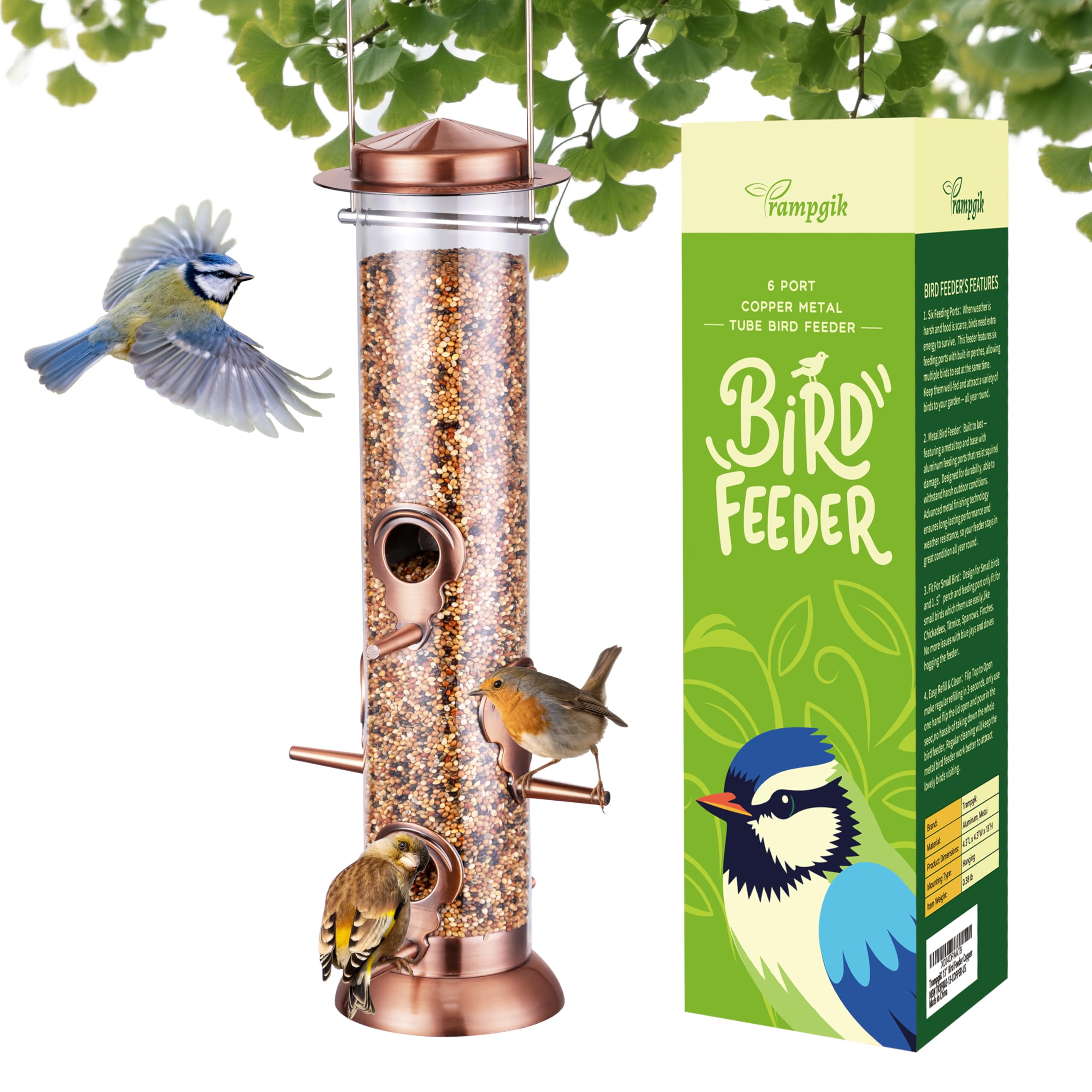
Lightweight copper tube that brings 6 feeding spots to your yard.
At just 0.4 kg versus 0.98 kg for the Kingsyard cage, this TrampgiK tube feeder is easy to hang from a thin hook or branch. The brushed copper finish adds a classic look while the metal body resists rust and squirrel chewing. Six feeding ports with 1.5-inch perches invite multiple wrens and finches to eat together, reducing squabbles. The flip-top lid opens with one hand for quick refills in five seconds.
Reviewers point out that “at first I didn’t see them a whole lot, but after a few days of placing it, they started perching on the feeder.” Once wrens and chickadees found it, they returned regularly. The 13-inch (33 cm) height holds plenty of seed, but without a cage it will not stop determined squirrels from reaching the ports. If you want a lightweight, attractive feeder that wrens will visit after a short adjustment period, this is a solid mid-range pick.
What stands out: The copper finish is practical (resists rust) and decorative, so the feeder looks good even when birds are not visiting. The flip-top lid is genuinely convenient for winter refills when you do not want to take off gloves.
Pick this if: You want an attractive, lightweight feeder that you can refill in seconds and that matches a classic garden style.
skip it if: You have a heavy squirrel problem and need a full cage barrier around the seed.
4. Metal Tube Bird Feeders for Outdoors Hanging, 13 Inch, Green
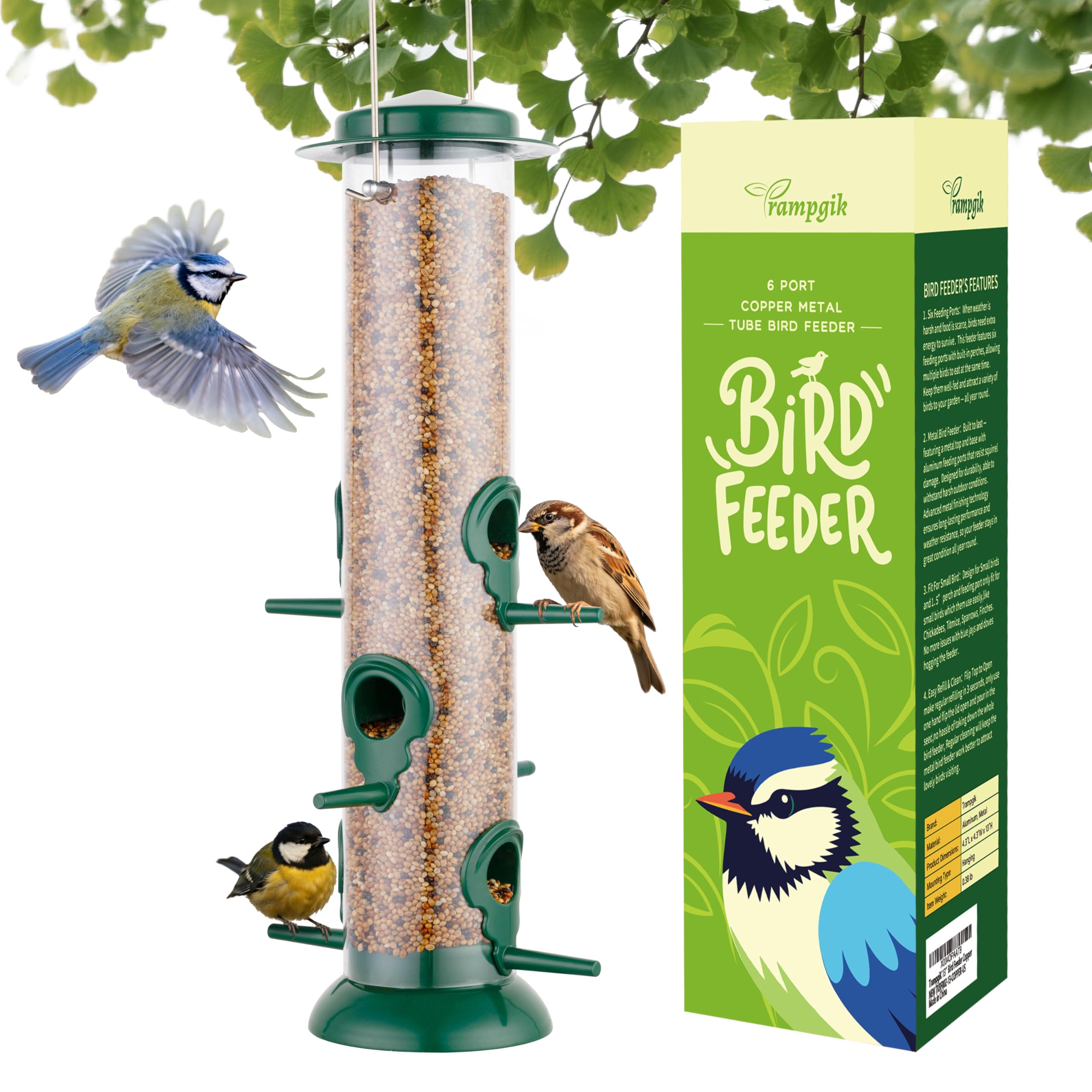
The entry-level metal tube that gets small birds feeding fast.
This green TrampgiK tube has the same 1.5-inch perches and flip-top lid as the copper version, but at a lower entry point. The green metal body stands up to chewing and weather, though weight-conscious buyers should note that at 1.5 pounds it is slightly heavier than its copper sibling. Like that model, it requires patience — one buyer mentioned “at first I didn’t see them a whole lot, but after a few days of placing it, they started perching on the feeder.”
It works best for finches, chickadees, and sparrows, which all share wrens’ need for small perches. The 13-inch tube holds a decent seed supply, though without a cage it will not stop large birds or squirrels from accessing the ports. A few buyers noted missing prongs on arrival, so give the feeder a quick check when it arrives. For the price, it is a solid starter feeder for wrens.
Bottom line: You get a functional metal tube with a simple refill mechanism and proper perch length for small birds. The trade-off is less defense against larger thieves compared to caged feeders.
Best for: A first-time wren feeder on a budget who is okay with some squirrel and larger bird visits.
Not for: Anyone who wants a low-maintenance, squirrel-proof solution — you will need a cage add-on for that.
Understanding the Specs
Perch Size & Ports
The perch length — measured in inches — determines which birds can comfortably land and feed. A 1.5-inch perch is ideal for wrens, chickadees, and finches because it offers just enough grip but is too short for larger birds like blue jays or doves to balance. More ports mean multiple birds can eat at once, reducing territorial fights.
Mesh Spacing on Caged Feeders
This vertical and horizontal measurement (for example, 1.5″ x 1.5″ or 1.76″ x 1.3″) decides exactly what fits inside. Wrens slip through openings around 1.3 to 1.75 inches, while starlings, grackles, and squirrels are blocked. Tighter mesh admits only the smallest birds but may deter slightly larger species like cardinals.
Capacity (Pounds)
Listed in pounds, this is the amount of seed the feeder holds at once. Higher capacity means fewer refills, but it also adds weight, so check your hanging hook’s strength. A 1.5-lb capacity suits a small flock for a few days; a 2.8-lb capacity is better for large groups or if you fill less often.
Material & Rust Resistance
Metal feeders (aluminum or steel) are essential for durability because they resist squirrel chewing and hold up in rain and sun. Look for “rust-resistant” or “anti-rust” in the description — this finish prevents the kind of corrosion that can turn a feeder into a maintenance hassle within one season. Plastic and wood are lighter but chewable and less weather-proof.
FAQ
What is the best bird feeder for a wren?
Do wrens like tube feeders or hopper feeders?
How long does it take for wrens to find a new feeder?
Can I use a standard tube feeder for wrens?
Will a squirrel-proof feeder keep wrens out?
What seed attracts wrens to a feeder?
How do I stop larger birds from hogging the feeder?
How often should I clean a wren feeder?
Is a metal or plastic feeder better for wrens?
Can I use a hummingbird feeder for wrens?
Final Thoughts: The Verdict
For most buyers, the bird feeder for wrens winner is the Kingsyard Caged Feeder because it combines a squirrel-proof cage, a rain-proof lid, and a compact size that small birds trust quickly. If you want larger capacity and do not mind occasional moisture checks, grab the Mosloly Caged Feeder with its 2.8-lb seed capacity. And for a lightweight, attractive tube feeder that is easy to hang and refill, the TrampgiK Copper Tube Feeder offers six ports and a classic look.
How We Picked
We do not accept paid placement. Every pick is matched to a real buyer and a real use-case; we do not hands-on test units.
Sources & Methodology
Specifications: manufacturer listings and product documentation. Review insights: verified customer reviews, as of July 2026. Pricing: not shown on this page (it changes often); check the current price via the retailer link.
As an Amazon Associate, Lawn Gear Lab earns from qualifying purchases. This does not affect which products we feature.