
Specs are compiled from manufacturer listings and verified buyer reviews and can change over time — please confirm the key details on the product page before buying.
Starting seeds is a gamble — you pick the right seeds, use the right light, and still end up with weak, leggy seedlings that flop at transplanting. The single biggest fix is literally what you put under them: a starter soil that holds just enough moisture without drowning the tiny roots, is fine enough for a seed to break through, and is free of big bark chunks and uninvited bugs. Get that right, and the rest gets much easier.
I’m Rikta — the founder and writer behind Lawn Gear Lab. This guide is built by comparing the manufacturers’ published specifications and the patterns across verified customer reviews, so you get each pick’s real strengths and trade-offs instead of marketing spin.
We weigh texture, moisture retention, pH balance, and what actual home gardeners say about germination rates. Here is your straight-forward look at the starter soil for seeds that earns its spot on your shelf.
Quick Picks
- Purple Cow Organics Seed Starter 12 Quart Bag — Best Overall
- Espoma Organic Seed Starter Premium Potting Soil Mix (2 Pack) — Premium Pick
- Black Gold 1311002 8-Quart Seedling Mix (2 Pack) — Fuss-Free Germination
- MODELLOR Coco Coir Bricks, 4-Pack (5 lb) – Premium Super Washed — Budget Expandable
- Jiffy Natural & Organic Seed Starting Soil Mix, 10 QT — Reliable Classic
- Hoffman Seed Starter Potting & Planting Mix, 10qt Bag — Transplant Expert
How To Choose The Best Starter Soil For Seeds
The difference between a good seed-starting mix and ordinary potting soil is texture and sterility. Potting soil often has big bark chips, heavy fertilizer, and inconsistent drainage — all bad for a tiny seed that needs a uniform, fine bed to push through. Look for a soilless mix (peat moss, coco coir, vermiculite, perlite) that is light, fluffy, and low in nutrients, so the seedling finds its own food without getting burned.
Texture and fineness
A seed starter must be fine and consistent — no clods, no sticks, no large bark chunks. Seeds only have a limited amount of energy stored inside; they need the least resistance to send out that first root and shoot. If the mix has chunks, the seedling can waste its energy trying to push around them and end up leggy or weak. The best starter soil has a consistency like fine crumbs, allowing every seed even contact with the medium.
Moisture retention without waterlogging
Seeds need constant moisture to germinate, but drowning them leads to damping-off — where the stem rots at the soil line and the seedling falls over. A good starter mix uses ingredients like vermiculite or peat moss to hold water while the air pockets of perlite or coco coir allow oxygen to the roots. The goal is a mix that feels damp like a wrung-out sponge, not a soaking wet one.
pH balance and nutrient content
Most seeds germinate best in a slightly acidic to neutral pH (around 5.5 to 6.5). Peat moss tends to be acidic, so many mixes include lime to bring the pH up. For the first two to three weeks, a seedling does not need much fertilizer — its seed contains most of the food. A mix with a light starter charge (compost or mycorrhizae) is fine; heavy synthetic fertilizer can burn the delicate root tip before it even gets going.
Quick Comparison
| Model | Best For | Volume | Weight | Base Material | Amazon |
|---|---|---|---|---|---|
| Purple Cow Organics Seed Starter | Best Overall Compost-Based Mix | 12 Quarts | 8 Pounds | Activated Compost | Amazon |
| Espoma Organic Seed Starter (2 Pack) | Premium with Mycorrhizae | 16 Quarts (total) | — | Sphagnum Peat Moss & Perlite | Amazon |
| Black Gold Seedling Mix (2 Pack) | Fuss-Free Germination | 8 Quarts | 6 Pounds | Peat Moss | Amazon |
| MODELLOR Coco Coir Bricks (4-Pack) | Budget-Friendly Expandable Medium | 9 Gallons (expanded) | 5 Pounds (dry) | Coco Coir | Amazon |
| Jiffy Natural & Organic Seed Starting Mix | Reliable Peat-Based Classic | 10 Quarts | 16 Ounces | Peat Moss & Vermiculite | Amazon |
| Hoffman Seed Starter Potting & Planting Mix | Transplanting & Cuttings | 10 Quarts | 4.67 Pounds | Soilless Mix | Amazon |
In‑Depth Reviews
1. Purple Cow Organics Seed Starter 12 Quart Bag

Compost-based power that sticks together for soil blocking and strong transplants.
Most starter mixes are peat heavy, but Purple Cow Organics uses its own Activated Compost, a soil amendment refined over 20 years. That compost base gives the mix enough fertility for up to 45 days, so you do not need to fertilize as soon as the second set of leaves appears. It also means the mix holds together better in a soil blocker — one reviewer confirmed it worked beautifully for making soil blocks that held together perfectly.
At 8 pounds and 12 quarts, this is a heavy, dense mix compared to light peat-only options. If you are using standard trays or making blocks, the compost base gives you a structural advantage that lighter mixes lack.
Buyers report that a few found it a little compact, but all seeds started fine. The trade-off is that this mix is not as fluffy as a coco coir or perlite-based blend, so you want to make sure you do not pack it down when filling cells. For anyone transplanting into raised beds or outdoor containers, the sturdier root systems this mix promotes handle the move better.
Why It Works
- Built-in fertility lasts 45 days — less early feeding
- Compost base holds together in soil blockers
- Promotes sturdy root systems for transplant
The Rub
- Denser than peat or coir mixes; requires gentle handling
- Slightly higher price than commodity peat starters
Reach for this if: You use a soil blocker, want built-in organic fertility for the first several weeks, or start a lot of seedlings for transplant into raised beds.
Look elsewhere if: You prefer an ultra-light, fluffy texture for tiny seeds, or are on a tight budget.
2. Espoma Organic Seed Starter Premium Potting Soil Mix (2 Pack)
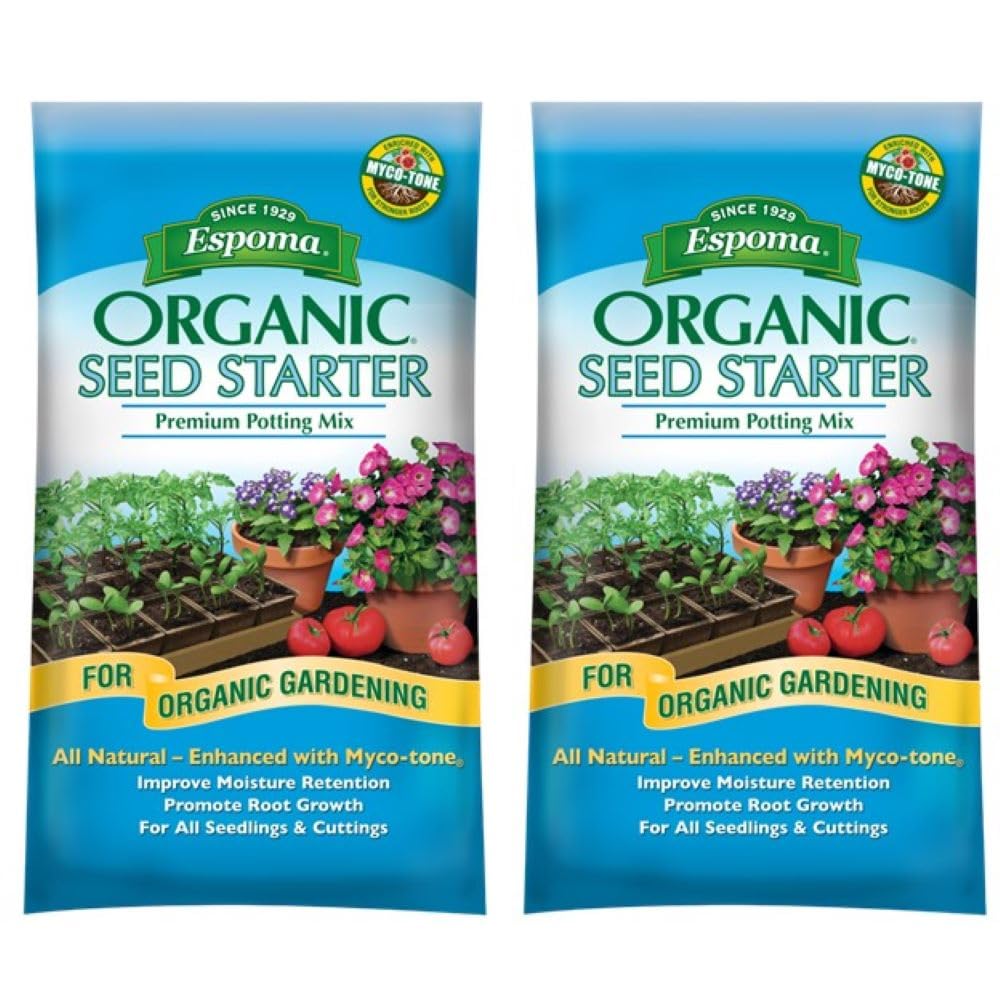
A peat and perlite mix boosted with mycorrhizae for a stronger root network from day one.
Espoma adds its proprietary Myco-Tone, a blend of endo and ecto mycorrhizae (beneficial fungi that attach to roots and help them take up water and nutrients). In plain terms, that means your seedling develops a bigger, more resilient root system before it even hits the garden. The base of the mix is sphagnum peat moss and perlite, with yucca extract (a natural wetting agent) and lime to balance the pH. It is light and airy — exactly what a germinating seed needs to push through without effort.
You get two bags with this purchase, totaling 16 quarts of medium. One reviewer noted that a single bag was more than enough to fill all five trays of a standard Gardzen set. Reviewers consistently call this the best seed starter they have used, beating out Miracle-Gro after years of using that brand. The mix is clean and fluffy; one gardener even sterilizes it by pouring boiling water over it before use to prevent fungus gnats, and has had no problems.
The premium here is the mycorrhizae inoculation. If you are growing transplants for a vegetable garden where strong root establishment matters, this is a clear upgrade over basic peat mixes. It is not the cheapest option, but for the volume and the biological boost, it earns its spot.
Root Advantage
- Myco-Tone mycorrhizae boost root development
- Light, airy, well-draining yet retains moisture
- Good value for two bags (16 qt total)
Trade-Off
- Premium price compared to single-bag peat mixes
- Mycorrhizae benefit is most noticeable in garden soil, not seedling trays
Best for gardeners who grow many transplants: The mycorrhizae give your seedlings a head start on root health, especially if you then put them into decent garden soil.
Skip if: You are starting just a few seeds in a small tray — you can likely get away with a simpler, cheaper mix.
3. Black Gold 1311002 8-Quart Seedling Mix (2 Pack)

A no-nonsense peat mix that beginners and experienced growers both praise for germination rates.
Black Gold’s Seedling Germination Mix is about as straightforward as it gets — a fine, consistent medium with no big chunks or twigs. One buyer who has over 10 years of experience noted that this mix had no large debris and produced a very good germination rate. Another beginner reported that all 4 seeds sprouted vigorously, which is exactly the kind of success you want from your first bag of starter soil.
At 8 quarts per bag in a 2-pack, you get a total of 16 quarts — but the individual bags are smaller than the Espoma 2-pack. The texture is very fine, which is great for tiny seeds like lettuce and petunias that struggle with coarse mixes. However, one experienced reviewer compared it unfavorably to a homemade mix, saying the seedlings were slower, smaller, and less hardy for tomatoes and peppers, and that the soil dried out very quickly and did not hold together for transplanting.
If you are starting a modest number of seedlings and want a reliable, ready-to-use mix that is fine and clean, Black Gold is a strong option. The catch is that the loose peat texture dries fast, so you need to monitor moisture closely, and it is not the best for holding a root ball together at transplant time.
High Points
- Very fine texture — no bark chunks or twigs
- Proven high germination rate for beginners
- Convenient 2-pack of separate bags
Low Points
- Dries out quickly; needs frequent watering
- Does not hold together well for transplanting compared to compost-based mixes
Great for beginners: If you are new to seed starting and want a clean, forgiving medium, this mix gets you high germination rates with minimal fuss.
Not ideal for: Gardeners who let seedlings grow to a large size before transplanting, or those who want a mix that holds a root ball together.
4. MODELLOR Coco Coir Bricks, 4-Pack (5 lb) – Premium Super Washed
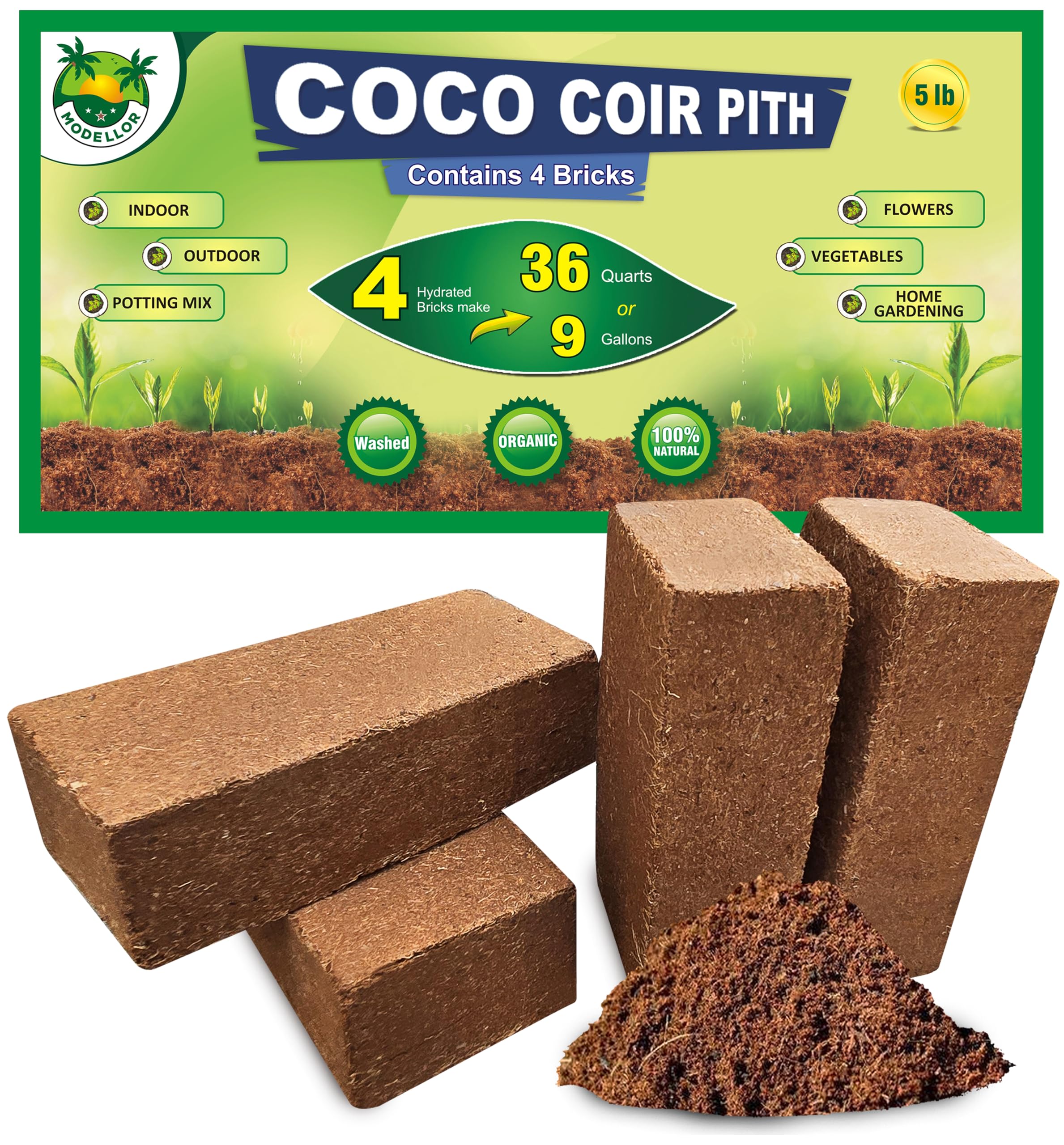
Compact bricks that expand into a huge 9 gallons of clean, pH-balanced growing medium.
Coco coir is different from peat — it comes from coconut husks, makes it a renewable resource, and naturally resists compaction. MODELLOR’s bricks are triple-washed to reduce salt content, then pH-balanced, so they are ready to hydrate and use immediately. The 4-pack yields a total of 9 gallons of fluffy medium when hydrated.
The biggest advantage is storage: 5 pounds of dry bricks turns into 36 quarts of medium, while the Jiffy bag is 10 quarts and weighs 16 ounces. That makes this option ideal for gardeners with limited shelf space. Reviewers consistently call it clean, with no bugs, no sticks, and no weird smells — one described it as looking just as good as the expensive canna coco brands. The texture holds moisture perfectly without becoming soggy, which is exactly what seeds need.
Note that coir by itself has almost no nutrients, so you need to add your own fertilizer or mix it with compost for seedlings that stay in the medium longer than 2-3 weeks. It is also slightly less forgiving than peat for holding the moisture evenly — you have to hydrate the bricks thoroughly, then squeeze out the excess water before using.
Why Buy It
- 4-pack yields 9 gallons (36 quarts) total
- Triple-washed, low-EC, pH-balanced
- Compact storage; renewable material
Heads Up
- No nutrients included — needs fertilizer or compost mix
- Requires proper hydration and draining before use
Perfect for budget-minded gardeners with space constraints: The high yield and compact bricks are a smart way to get a lot of clean medium for the cost.
Not for you if: You want a ready-to-use mix that already has nutrients — this is a blank slate that requires your own input.
5. Jiffy Natural & Organic Seed Starting Soil Mix, 10 QT

The peat-and-vermiculite formula that has been a seed-starting standard for years.
Jiffy’s mix is simple: peat moss, vermiculite, and lime. Peat can absorb up to 20 times its weight in water, which means it holds moisture against the seed coat until the seed decides to germinate. Vermiculite prevents the soil from compacting and can soak up 3-4 times its own volume in water, keeping the mix airy. The added lime counters the natural acidity of peat, bringing the pH to a healthy range for most seedlings.
At 10 quarts per bag and a weight of only 16 ounces, this is one of the lightest pre-bagged mixes on this list. That makes it easy to handle, but you need to water carefully — peat can hold a lot of water and quickly become soggy if you overdo it. Owners mention that this mix holds together when transplanting to larger pots without compacting hard, which is a common problem with cheap garden soil. They also call it a high-quality fine dirt with no large bark chunks, leading to fast sprouting and healthy seedlings.
Jiffy is a household name, and this mix lives up to that reputation. It is a slightly premium price for the volume, but buyers feel it is worth it for the consistency. If you want a straightforward peat-based starter that has been proven over decades, this is a safe bet.
Strengths
- Proven peat-vermiculite texture with added lime
- Holds together without compacting hard at transplant
- Fine, consistent texture — no bark chunks
Weaknesses
- Lightweight bag for the volume; can get soggy if overwatered
- Slightly expensive for a single 10-qt bag
Ideal for traditionalists: If you grew up starting seeds in a peat-vermiculite blend and do not want to experiment, this is exactly that — done well.
Look elsewhere if: You want a mix with built-in nutrients or a compost base for longer growth before transplanting.
6. Hoffman Seed Starter Potting & Planting Mix, 10qt Bag

A six-component soilless mix that experienced gardeners call their top choice for germination.
Hoffman is not a household name like Jiffy, but its seed starter has a loyal following among experienced gardeners. The mix blends six components (including peat, vermiculite, perlite, and lime) into a lightweight, loose, soilless medium specifically formulated for superior germination. At 4.67 pounds for 10 quarts, it is heavier than the Jiffy mix but still very light compared to compost-based blends.
Reviewers call it easy to work with, with no large chunks, and one reported a 90% germination rate. An experienced gardener compared it directly against potting soil and pure coconut coir in trials and said Hoffman outperformed both, recommending it for healthy garden starts. The mix includes a wetting agent to help it absorb water quickly — when you first water a dry peat mix, it often beads up and runs off; this agent prevents that frustration.
One thing to note: it weighs 4.67 pounds versus the Jiffy bag at 16 ounces for the same 10-quart volume, so it is denser and contains more solid material. The fine consistency and excellent water retention are the main selling points. If you are starting seeds for transplant or rooting cuttings, this mix is built for that. The caveat is that it is a mid-range price, and some buyers find it expensive for a single 10-qt bag.
Expert In
- Fine consistency with minimal debris
- Excellent moisture retention with wetting agent
- Outperforms potting soil and pure coir in trials
Watch For
- Heavier weight per quart than other peat mixes
- No significant fertilizer — fine for seeds, but needs feeding after 2-3 weeks
Reach for this if: You are an experienced gardener who values a fine, water-absorbent texture and consistently high germination over marketing hype.
Skip if: You are on a strict budget and just need the cheapest peat-vermiculite blend to get started.
Understanding the Specs
Soilless Mix
A soilless mix does not contain actual garden dirt. Instead, it uses peat moss, coco coir, vermiculite, perlite, or compost as the base. This is crucial for seed starting because garden soil can harbor fungi, bacteria, and pests that attack delicate seedlings. A soilless mix is sterile and light, allowing tender roots to grow without resistance. Most serious seed starters use a soilless mix exclusively.
Mycorrhizae
Mycorrhizae are a type of beneficial fungus that forms a partnership with plant roots. The fungus extends the root system’s reach, helping the plant absorb water and nutrients (especially phosphorus) more efficiently. When you see a seed starter that includes mycorrhizae — like Espoma’s Myco-Tone — it means the mix is inoculated with these fungi so they are present from day one. This translates to stronger, more resilient transplants that handle the move to the garden better.
FAQ
Can I use regular potting soil for seed starting?
How much water does a seed start mix need?
Is coco coir better than peat moss for seed starting?
How long does a bag of seed starter last after opening?
Do I need to add fertilizer to my seed starter mix?
What is damping-off and how do I prevent it?
Can I reuse seed starting mix from last year?
Is a seed starter with added lime necessary?
How much volume does one coco coir brick produce?
Which seed starter is best for tomato and pepper seedlings?
Final Thoughts: The Verdict
For most people, the starter soil for seeds winner is the Purple Cow Organics because it combines a compost base for steady nutrition, enough structure for soil blocking, and proven seedling vigor for transplants. If you want a mycorrhizae boost for root health, grab the Espoma Organic Seed Starter. And for budget-minded gardeners who need a lot of medium with easy storage, the standout is the MODELLOR Coco Coir Bricks.
How We Picked
We do not accept paid placement. Every pick is matched to a real buyer and a real use-case; we do not hands-on test units.
Sources & Methodology
Specifications: manufacturer listings and product documentation. Review insights: verified customer reviews, as of July 2026. Pricing: not shown on this page (it changes often); check the current price via the retailer link.
As an Amazon Associate, Lawn Gear Lab earns from qualifying purchases. This does not affect which products we feature.