
Specs are compiled from manufacturer listings and verified buyer reviews and can change over time — please confirm the key details on the product page before buying.
Your desert rose stores water in its thick, swollen trunk (its caudex). That signature look rots fast if the roots sit in damp soil. The single make-or-break factor for this plant is drainage — you need a mix that sheds water aggressively while still holding enough air and nutrients. This guide cuts through the marketing to the gritty, fast-draining blends that actually work for Adenium obesum, whether you are potting a seedling or repotting a mature specimen.
I’m Rikta — the founder and writer behind Lawn Gear Lab. This guide is built by comparing the manufacturers’ published specifications and the patterns across verified customer reviews, so you get each pick’s real strengths and trade-offs instead of marketing spin.
Below you will find the six best ready-to-use and nearly-ready potting mixes that give your desert rose the drainage it demands. What follows is a deep, honest look at the soil for desert rose, ranked by which formulas strike the best balance between drainage speed, aeration (air spaces for roots), and long-term root health.
Quick Picks
- Soil Sunrise Cactus and Succulent Potting Mix (8 Quarts) — Best Overall
- Rosy Soil Cactus & Succulent Potting Mix, 4 Quarts, Pack of 2 — Root Booster
- Midwest Hearth Cactus & Succulent Potting Soil Mix, 4 Quarts — Value Pick
- DUSPRO Succulents Soil Potting Mix (1QT) — 7-Ingredient Blend
- Hoffman 10410 Organic Cactus and Succulent Soil Mix, 10 Quarts, 2 Pack — Bulky Volume
- DUSPRO Succulents Soil Potting Mix (2QT) — Small Batch
How To Choose The Best Soil For Desert Rose
The desert rose is a succulent that stores water in its caudex, so its roots are very sensitive to moisture. A regular potting soil or even a standard cactus mix can stay wet too long. Your goal is a blend that feels gritty and loose, not smooth and dense. Here are the three specs to check on every bag.
Drainage speed and texture
Look for ingredients like perlite (volcanic glass that creates air pockets), pumice (lightweight porous rock), calcined clay (baked clay granules that resist breaking down), and pine bark. These create large pore spaces so water flows through fast. A mix that feels chunky in your hand is a good sign — a mix that feels like fine sand or mud is not.
Peat moss content
Peat moss holds water like a sponge. A little peat is fine for holding trace moisture between waterings, but a peat-heavy mix will keep the roots damp for days. For a desert rose, you want a low-peat or peat-free formula. Many premium blends skip peat entirely and rely on bark and pumice for moisture balance.
Nutrient source
Worm castings (earthworm waste, a natural slow-release fertilizer) are an excellent natural fertilizer that releases nutrients slowly without burning roots. Some blends include synthetic fertilizers, which can be too strong for a desert rose. Organic ingredients like composted bark and worm castings provide steady, gentle nutrition that matches the plant’s slow-growing nature.
Quick Comparison
| Model | Best For | Volume | Key Ingredients | Peat-Free | Amazon |
|---|---|---|---|---|---|
| Soil Sunrise Cactus & Succulent Mix | Grittiest texture, no amendments needed | 8 Quarts | Pine bark, silica sand, calcined clay, pumice | Yes | Amazon |
| Rosy Soil Cactus & Succulent Mix | Organic, peat-free with microbes | 8 Quarts (2 x 4Qt bags) | Worm castings, beneficial microbes, chunky bark | Yes | Amazon |
| Midwest Hearth Cactus & Succulent Mix | Ready-to-use, budget-friendly starter | 4 Quarts | Peat moss, perlite, vermiculite | No | Amazon |
| DUSPRO Succulent Potting Mix | 7-ingredient blend, small projects | 1 Quart | Perlite, pumice, lava rock, peat moss, pine bark, worm castings, vermiculite | No | Amazon |
| Hoffman Organic Cactus & Succulent Mix | Large volume, good base for amending | 10 Quarts (2 x 5Qt bags) | Organic matter, perlite, sand | No | Amazon |
In‑Depth Reviews
1. Soil Sunrise Cactus and Succulent Potting Mix (8 Quarts)
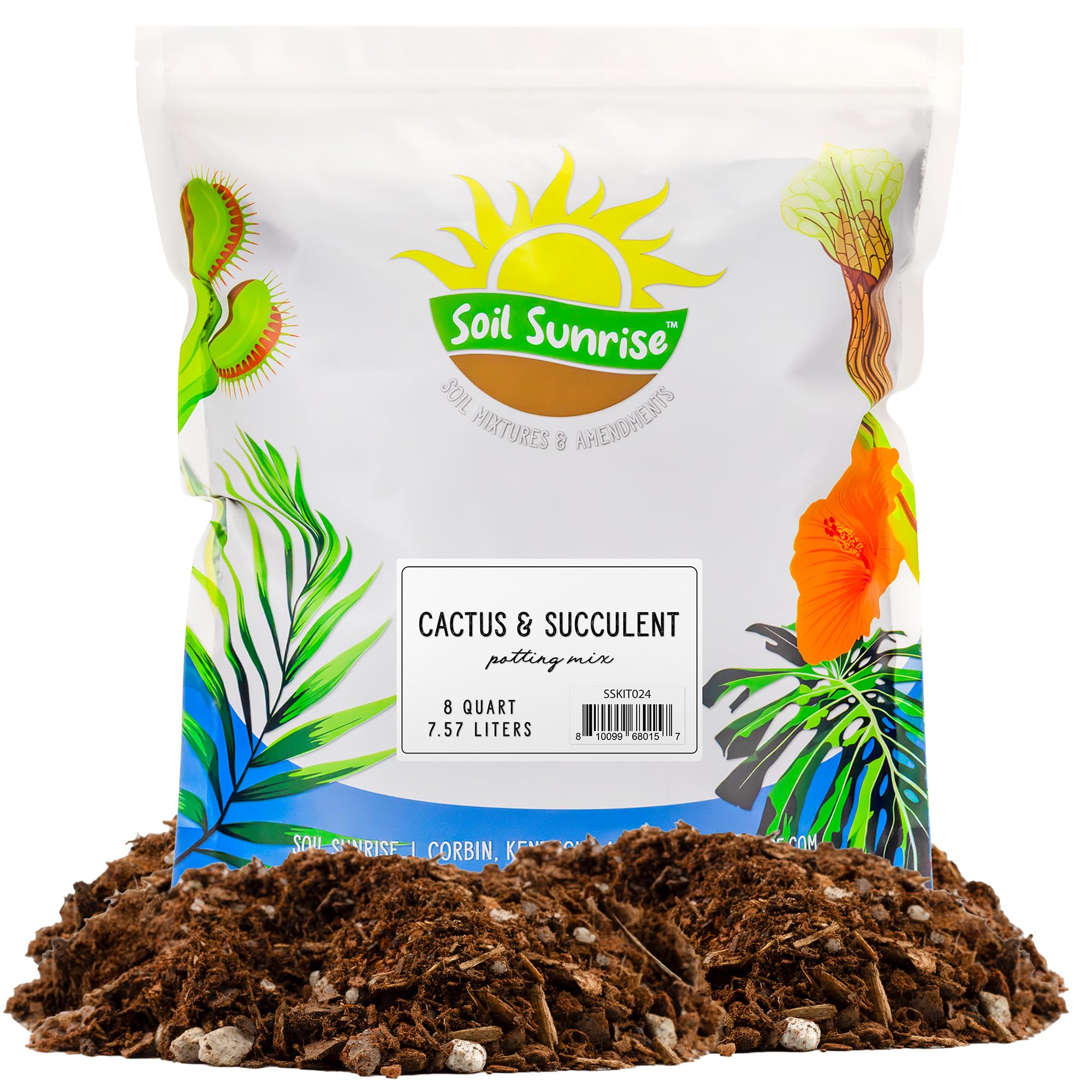
This blend arrives feeling like real desert soil — gritty, not damp and dense.
You get the fastest drainage without mixing anything yourself because Soil Sunrise uses pine bark, silica sand, calcined clay, and pumice — four chunky, non-compacting ingredients that create large air channels. The 8-quart bag fills a big 12-inch pot, giving you plenty for a mature desert rose.
Reviewers call it the “best gritty mix” and note the visible and tactile quality difference versus big-brand cactus soil. One buyer uses it as a base for ponytail palm, adding pumice, perlite, sand, and worm castings, and reports the mix dried in about 8 days — a sign the drainage works. The price per quart is notably lower than premium peat-free options, and you get double the volume of the Rosy Soil pack (8 quarts vs 4 quarts per bag) for a similar cost.
Unlike the Midwest Hearth mix which contains peat moss, Soil Sunrise is peat-free from the start, so you do not need to worry about moisture-loving ingredients. It is also hand-mixed and arrives fresh, with no bugs or smell, per reviewers.
Tactile Test
- Hand-blended with sand, gravel, and calcined clay — real gritty feel
- 8 quarts fills a large pot, good value per quart
- No peat moss, no artificial ingredients
One Trade-Off
- Some experienced growers still add extra pumice for very heavy-feeding plants
The grit winner: Buy this if you want a ready-to-use mix with a texture that looks and feels like real desert soil — no mixing, no second-guessing.
A note: If your desert rose is in a very humid climate, you may still want to add a handful of extra pumice for extra insurance.
2. Rosy Soil Cactus & Succulent Potting Mix, 4 Quarts, Pack of 2
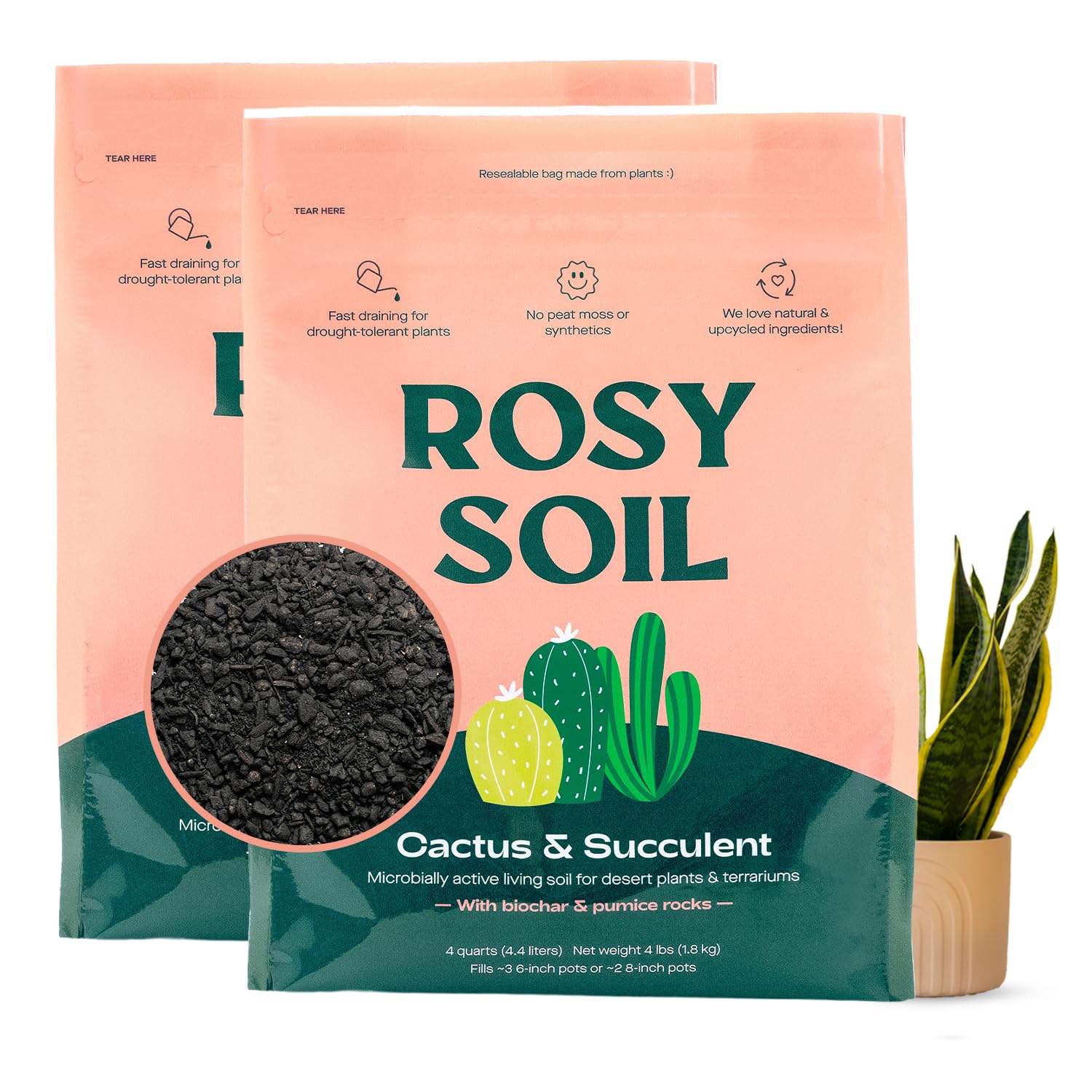
Living soil that feeds roots with microbes instead of synthetic fertilizer.
Rosy Soil takes a different approach: it is a chunky, peat-free formula that comes pre-loaded with beneficial fungi, microorganisms, and organic worm castings. That means the soil itself becomes a living ecosystem that naturally feeds the roots without any synthetic boost. The texture stays loose and airy on purpose — the maker says most succulent soils “pack too dense and hold too much water,” and the goal here is no compaction and no soggy pots.
Buyers report succulents replanted a month ago are healthy, and one reviewer noted the soil “looks clean, dark, even” with no bugs observed across six bags. A Christmas Cactus owner was pleased with the results. The 4-quart bags are resealable and made in the USA with plastic-neutral packaging. Compared to the Soil Sunrise mix, Rosy is a smaller volume per bag (4 quarts vs 8 quarts in the Soil Sunrise bag), but the two-pack gives you 8 quarts total.
One buyer mentioned bonsai soil and perlite to create their own custom mix, noting that the base Rosy soil works well as a starting point for older plants that need chunkier amendments.
Living Formula
- Peat-free with beneficial microbes and worm castings
- Chunky, loose texture prevents compaction (settling into a dense mass)
- Resealable bags, plastic-neutral packaging
Heads Up
- Smaller 4-quart bag, so you need two bags for a large pot
- Some buyers add perlite or bonsai soil for extra chunkiness
Best for organic growers: Reach for this if you want a living soil base that skips synthetic fertilizers and lets beneficial microbes support root health.
If you have heavy-feeding plants: You may want to mix in extra pumice or perlite for added drainage.
3. Midwest Hearth Cactus & Succulent Potting Soil Mix, 4 Quarts
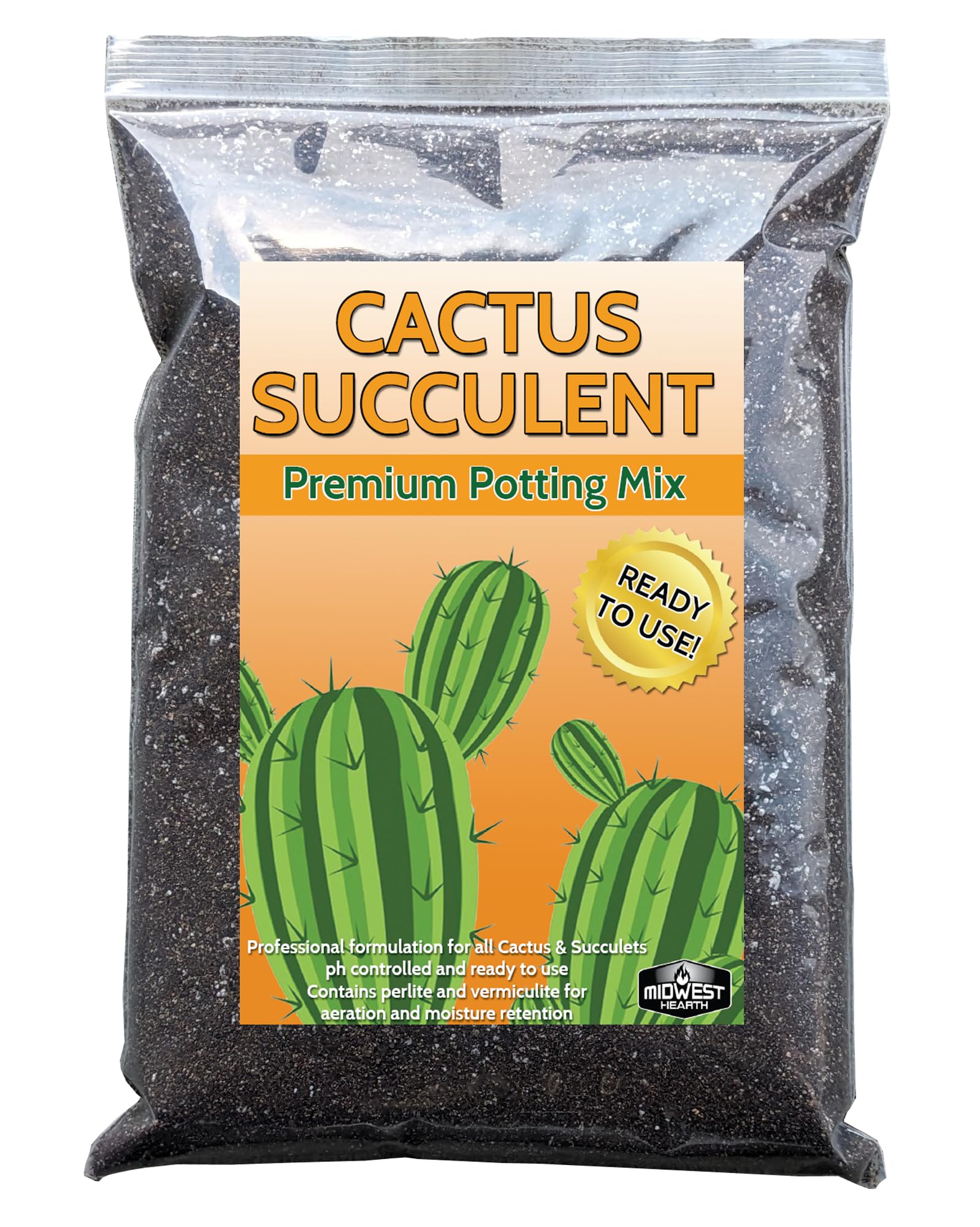
A budget-friendly starter that delivers quick drainage for a low price.
Midwest Hearth is a straightforward, no-fuss blend of peat moss, perlite, and vermiculite (a mineral that helps lighten soil) — made in the USA and ready straight from the bag. It is pH-balanced for cacti and succulents and works for desert rose, jade, Christmas cactus, and aloe vera. At 4 quarts, it fills 2-3 standard pots, making it a good entry-level size for a single plant or a small collection.
Owners mention good results: one reviewer planted 5 succulent dish gardens and said the plants “see happy,” while another called it “great dirt” and mixes it with another cactus soil. A minor complaint is that the dry top particles can blow around near an open window, creating a mess that requires daily vacuuming. The peat content means this mix will hold a bit more moisture than the peat-free options (like Soil Sunrise or Rosy Soil), so let the soil dry more thoroughly between waterings.
For a desert rose, this is a solid starting point if you are on a tight budget, but you should watch the moisture level closely in humid conditions.
What You Get
- Ready-to-use, no mixing required
- Perlite and vermiculite provide good aeration
- Affordable entry into cactus soil
Watch Out For
- Peat moss retains moisture — needs careful watering for desert rose
- Dry particles can blow around near windows
Budget-friendly start: Choose this if you want a low-cost, made-in-USA bag to repot a single desert rose and you are comfortable monitoring moisture levels. Pick the Soil Sunrise above if you want a peat-free mix that needs less attention to watering.
4. DUSPRO Succulents Soil Potting Mix (1QT)
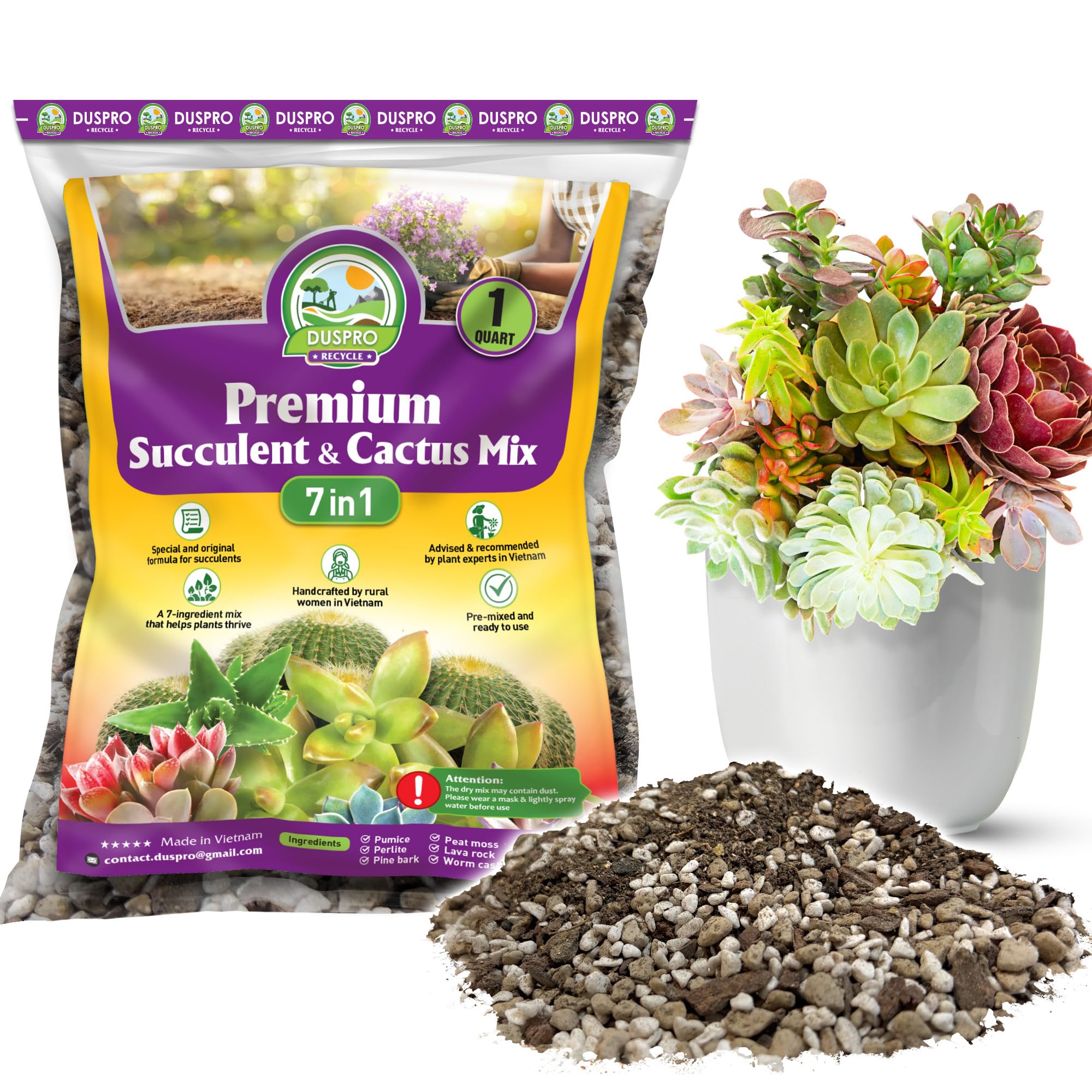
A seven-ingredient blend that covers drainage and nutrition in one bag.
DUSPRO combines perlite, pumice, lava rock, peat moss, pine bark, worm castings, and vermiculite in one pre-blended bag. That means you get both fast drainage from the rocky ingredients (perlite, pumice, lava rock) and gentle nutrition from the worm castings. It is available in 1QT, 2QT, 4QT, and 8QT sizes, so you can grab exactly the amount you need for a single pot or a small project.
The 1-quart size fills 2×4-inch pots or 1×6-inch pot, making it ideal for a young desert rose or a small repotting job. The 2-quart size is a step up for a medium pot. Since the blend includes peat moss, it will hold a little more moisture than a peat-free mix, but the pumice and lava rock create enough porosity that it still drains well.
No customer reviews are listed yet in the data, so consider this a solid option if you like the ingredient list and want a compact size.
Ingredient Depth
- Seven ingredients including pumice, lava rock, and worm castings
- Multiple sizes available for small pots
- Ready to use, no mixing needed
One Limitation
- Contains peat moss, so not peat-free
- Limited customer feedback available to confirm performance
Great for small projects: Grab the 1-quart or 2-quart size if you are repotting a young desert rose or filling a small pot and want a diverse ingredient blend. For a mature plant, the Soil Sunrise 8-quart bag likely makes more sense for volume and peat-free drainage.
5. Hoffman 10410 Organic Cactus and Succulent Soil Mix, 10 Quarts, 2 Pack

The most volume for the money, but you will likely need to add extra grit.
Hoffman gives you 10 quarts of organic cactus and succulent soil across two 5-quart bags — the largest volume in this list. The mix comes ready to use and is designed to encourage bloom and root development for cacti and succulents. It contains organic matter, perlite, and sand, and arrives in easy-to-pour, resealable bags.
Buyers have mixed opinions. One reviewer calls it the “best succulent soil,” noting it has no peat, drains extremely well, and dries quickly. Another says it feels “not lightweight” and “retains water, stays damp, feels dense like regular potting soil.” That second reviewer adds that cuttings have not rotted yet but suspects the mix may need amendment. The consensus among fans is to always mix in extra perlite or pumice to boost drainage for a desert rose.
For the volume, the price per quart is low, making it a budget-friendly base that you then customize with your own grit.
Volume Value
- 10 quarts total — biggest volume for multiple large pots
- Organic formula, ready to use
- Low price per quart
The Catch
- Some bags feel dense and retain water — expect to add perlite or pumice
- Not a pure “gritty” mix out of the bag
For the volume shopper: Buy this if you have multiple large pots to fill and are happy to mix in extra perlite or pumice to get the drainage you want. If you want a ready-to-use, peat-free gritty mix with no amendments needed, the Soil Sunrise is the better one-stop option.
6. DUSPRO Succulents Soil Potting Mix (2QT)
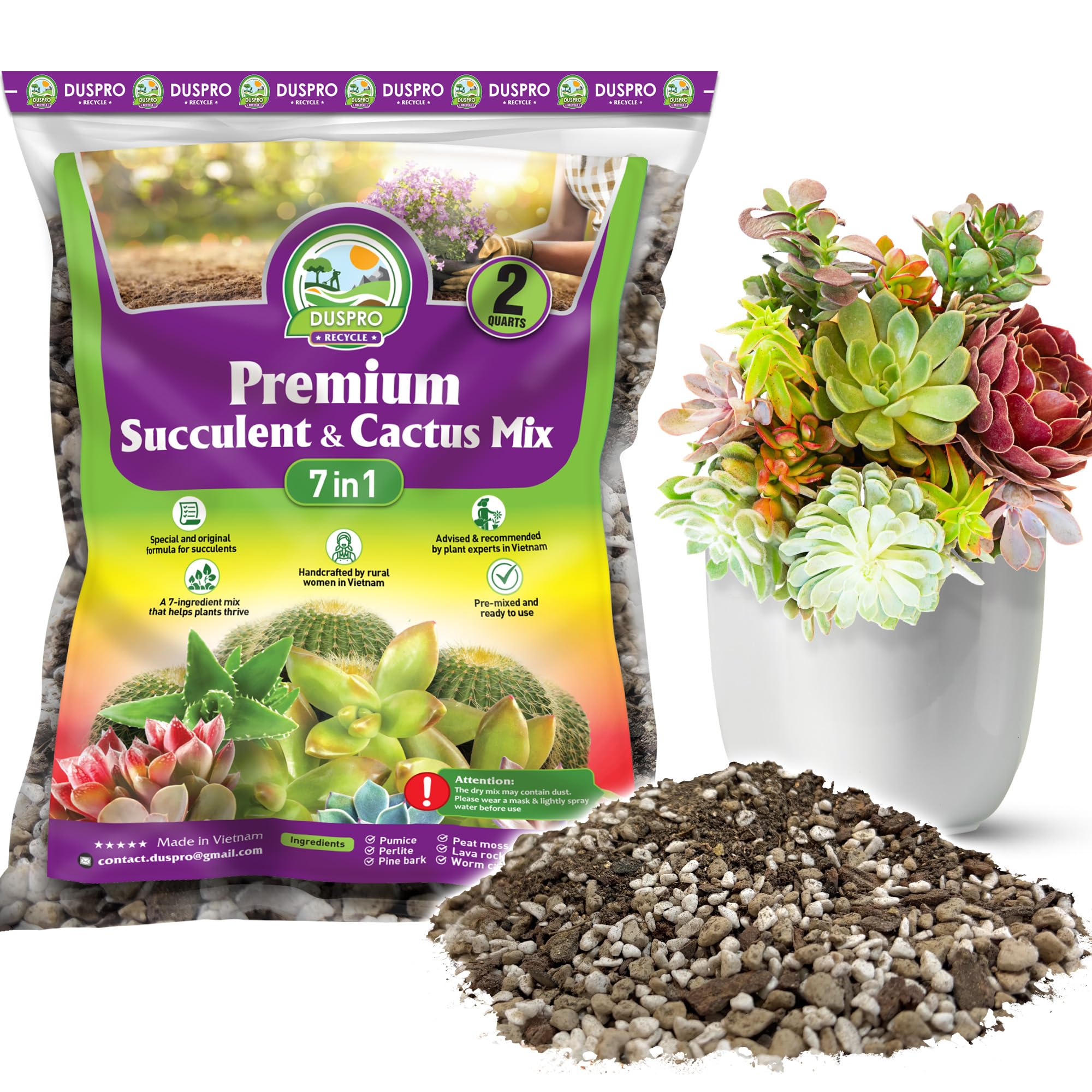
The two-quart version of the same seven-ingredient recipe for medium-sized pots.
This is the exact same 7-in-1 blend as the 1-quart DUSPRO above — perlite, pumice, lava rock, peat moss, pine bark, worm castings, and vermiculite — just in a larger 2-quart bag. It is designed to support healthy growth for succulents, cacti, aloe vera, jade plant, and other drought-tolerant varieties, including desert rose.
The 2-quart size fills a single 6-to-8-inch pot nicely, giving you a step up from the 1-quart bag without committing to a full 4-quart or 8-quart bag. The ingredients are the same: pumice and lava rock provide the drainage channels, while worm castings provide gentle natural nutrition. The peat moss helps hold a small amount of moisture, so let the soil dry between waterings.
No customer reviews are listed in the data for this specific size, but the ingredient formula is identical to the 1-quart version, so the same considerations apply.
Medium Pot Size
- 2 quarts is a good size for a single medium desert rose
- Seven ingredients cover drainage and nutrition
- Ready to use, no mixing needed
Keep In Mind
- Contains peat moss, so not ideal for wet climates
- No customer reviews available to confirm batch consistency
For a single pot: Pick this 2-quart size if you have one medium pot to fill and want the diverse ingredient blend without leftover soil. For a peat-free option in a similar size, the Soil Sunrise bag is a better choice.
Understanding the Specs
Drainage Ingredients
Perlite, pumice, calcined clay, and lava rock are the key ingredients that create large air pockets in the soil. These materials do not break down over time, so the drainage stays consistent. A mix that lists these as primary ingredients (not just a sprinkle) will move water through fast — crucial for a desert rose’s thick roots that rot in soggy conditions.
Peat Moss vs Peat-Free
Peat moss holds moisture like a sponge. A little peat helps a mix retain just enough water to keep the roots from drying out completely, but too much peat turns the soil into a wet mess. Peat-free mixes (like Soil Sunrise and Rosy Soil) rely on bark and pumice instead, giving you faster drainage and less risk of overwatering.
Worm Castings & Microbes
Worm castings are a natural, slow-release fertilizer that feeds the plant without burning its roots. Beneficial microbes create a living soil ecosystem that helps roots access nutrients. These are excellent for a desert rose because they provide steady, gentle nutrition that matches the plant’s slow growth rate — unlike synthetic fertilizers that can shock the caudex.
Volume Per Bag
Desert roses vary in size from small 4-inch pots to large 12-inch pots. A 4-quart bag typically fills 2-3 small pots. An 8-quart bag fills one large 12-inch pot. If you have a mature plant with a thick caudex, go for an 8-quart or larger bag to avoid running short mid-repotting.
FAQ
Can I use regular potting soil for a desert rose?
How often should I water a desert rose in this soil?
Do I need to add perlite to cactus soil for desert rose?
Is peat-free soil better for desert rose?
Can I reuse old soil for my desert rose?
Will the Hoffman mix need amendments for desert rose?
What size pot should I use with this soil?
How do I know if the soil is draining fast enough?
Can I use a Desert Rose soil mix for other succulents?
Is the Rosy Soil bag hard to reseal?
Final Thoughts: The Verdict
If you want one dependable pick, the soil for desert rose winner is the Soil Sunrise Cactus and Succulent Potting Mix because its gritty, hand-blended texture (pine bark, silica sand, calcined clay, and pumice) provides the fastest drainage with zero amendments needed. If you want a peat-free organic mix with beneficial microbes and worm castings, grab the Rosy Soil Cactus & Succulent Mix. And for a budget-friendly starter bag that works with careful watering, the Midwest Hearth Cactus & Succulent Mix is a solid entry point.
How We Picked
We do not accept paid placement. Every pick is matched to a real buyer and a real use-case; we do not hands-on test units.
Sources & Methodology
Specifications: manufacturer listings and product documentation. Review insights: verified customer reviews, as of July 2026. Pricing: not shown on this page (it changes often); check the current price via the retailer link.
As an Amazon Associate, Lawn Gear Lab earns from qualifying purchases. This does not affect which products we feature.