
Specs are compiled from manufacturer listings and verified buyer reviews and can change over time — please confirm the key details on the product page before buying.
Nobody wants to spend an afternoon wrestling a tree root with a dull shovel. The right tool cuts your work time down fast, and it stops you from straining your back. To pick the best tool to cut tree roots you need to match its weight, blade style, and reach to the roots you face — from skinny feeder roots up to woody 5-inch monsters.
I’m Rikta. I run this site and built this guide by comparing each maker’s published specs and patterns across real buyer reviews. You get each pick’s real strengths and trade-offs here, not marketing spin.
Whether you are clearing a stump, trenching a new bed, or digging around fence posts, you need a blade shape, handle length, and cutting action that fit your job.
Quick Picks
- Truper 5 lb Cutter Mattock (Model TH-5F / 31638) — Best Overall
- Silky GOMTARO Root-Cutting Saw 240mm Large Teeth (153-24) — Tight Space Champ
- Smarkey Root Cutting Tool (Model Ham002) — Heavy Lifter
- HANTOP Drain Spade Root Saw Spade (44-Inch) — Budget Champion
- Kings County Tools Japanese Saw Hand Saw (8-Inch) — Compact Quick-Cut
How To Choose The Best Tool To Cut Tree Roots
Pick the right tool by focusing on three things: how thick your roots are, how much room you have to swing, and how much weight you want to lift. Here is what matters.
Blade type and cutting action
A serrated shovel blade (teeth along the edge) slices roots as you dig — you step on the wide footrest and the teeth do the work. A mattock uses a heavy vertical blade that you swing like an axe, best for chopping thick roots up to about 3 inches. Hand saws with aggressive teeth give you control for precise cuts in tight spots, especially near walls or pipes.
Handle length and weight
Longer handles give you more leverage but add weight. A 44-inch shovel spreads the effort across your legs and core, which reduces back strain, while a shorter 8-inch hand saw lets you get into a cramped trench without overreaching. Heavier tools around 17 pounds rely on gravity to drive the blade deeper with each drop — less arm effort, but more muscle to carry around.
Quick Comparison
| Model | Best For | Weight | Blade Length | Handle Length | Amazon |
|---|---|---|---|---|---|
| Truper 5 lb Cutter Mattock | Chopping thick roots in open ground | 7.63 pounds | Dual head (vertical blade) | 36 inches | Amazon |
| Silky GOMTARO Root-Cutting Saw | Precision cuts in tight, confined spaces | 0.6 pounds | 9.5 inches (240mm) | Rubber grip handle | Amazon |
| Smarkey Root Cutting Tool | Heavy-duty stump and large root removal | 17.41 pounds | 44 x 2.75 x 2.75 inches | 44 inches | Amazon |
| HANTOP Drain Spade Root Saw | Trenching and digging in tight spots | 4.4 pounds | Serrated shovel blade | 44 inches | Amazon |
| Kings County Tools Japanese Saw | Quick garden cleanup and small roots | — | 2.75 inches | 8 inches (overall) | Amazon |
In‑Depth Reviews
1. Truper 5 lb Cutter Mattock (Model TH-5F / 31638)
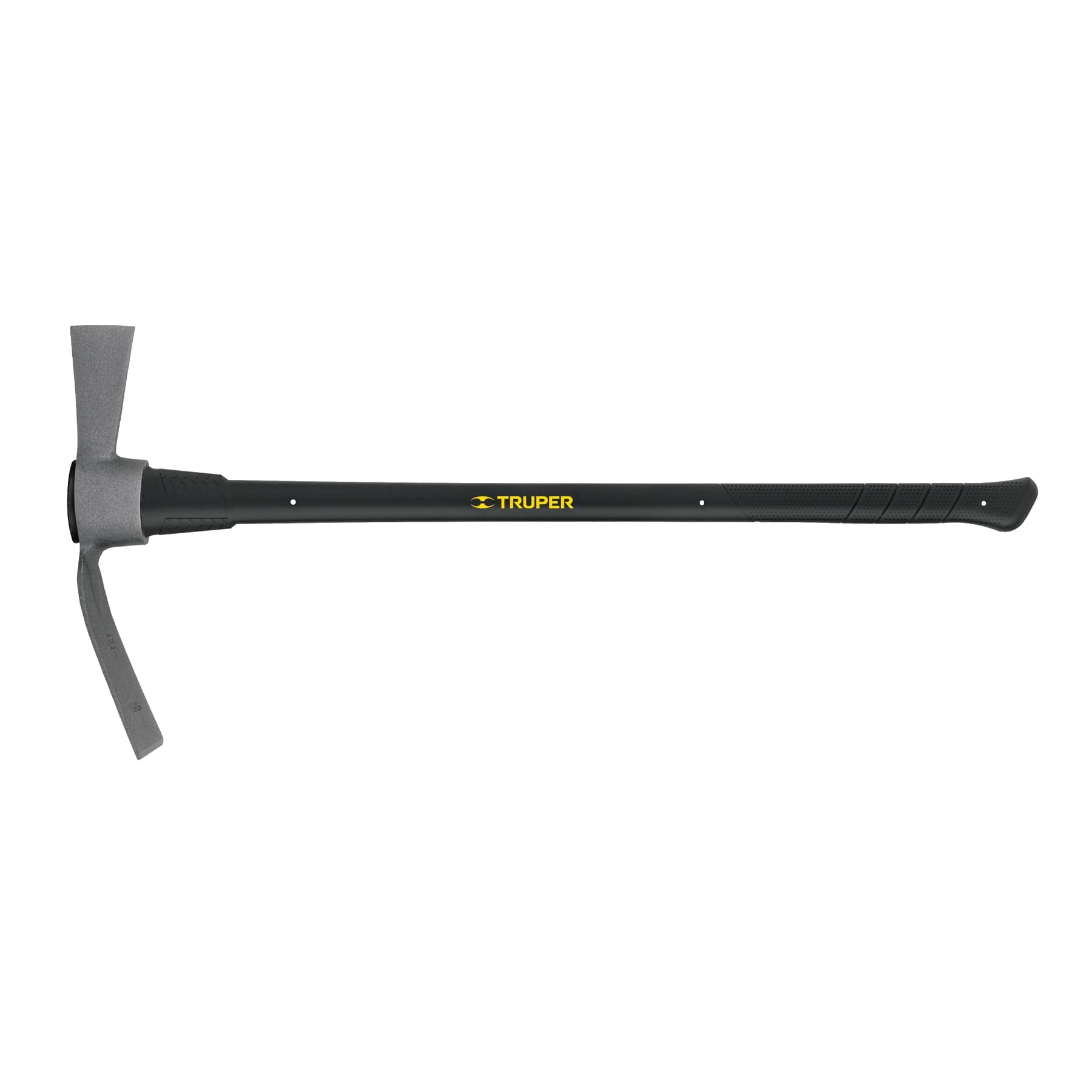
The brute-force beast that turns a full weekend into a single afternoon.
This mattock chops roots up to 3 inches and digs through hard clay without you swapping tools, all thanks to its 5-pound forged steel head. The head gives you a sharp vertical blade for slicing, plus a wide horizontal mattock (a flat blade) for trenching and breaking up soil. One buyer confirmed the blade “cuts roots up to 3 inches,” while another reported it “busts clay twice as fast as a railroad pick.” At 7.63 pounds, it is noticeably heavier than the HANTOP shovel (4.4 pounds), but that mass drives the blade deep with each swing.
The 36-inch fiberglass handle will not rot or splinter like wood, and the shock-absorbing grip keeps vibration from traveling into your wrists. A reviewer tackling stubborn palm roots praised how the handle “holds extreme pressure” and “absorbs vibration” during long work sessions. You reach for this tool when you need to clear a patch of land fast and you have room to swing.
Buyers report the handle and head feel “indestructible” and should “last generations,” though one owner noted the large flat side of the head bent slightly after repeated heavy pulls. For the price, it is an absurdly capable demolition tool for roots.
Who it dominates for: Landowners, landscapers, and anyone facing thick roots up to 3 inches in heavy soil — the dual-head design chops and digs without switching tools.
The one thing to know: At 7.63 pounds it is a workout to carry; if your roots are thin or you need precision near pipes, the Silky saw below is a better fit.
The verdict: You get one tool that chops thick roots and digs trenches for less than a premium specialty saw. This is the best value-for-power pick in the list.
Choose this over the Smarkey if you want a reliable swing-action tool that also digs soil, not just a one-trick stump buster.
2. Silky GOMTARO Root-Cutting Saw 240mm Large Teeth (153-24)

The surgeon of root saws that slips into a trench and cuts clean without collateral damage.
When you have roots next to a wall or PVC pipe, a swinging mattock like the Truper is risky — one bad hit and you crack the pipe. This 0.6-pound saw solves that problem. The 9.5-inch (240mm) hard chrome-plated blade has large teeth (6.8 teeth per inch) that cut through 3- to 5-inch roots without bouncing or jamming. One reviewer noted they “easily cut 3-5″ roots in confined space next to concrete wall without damaging nearby PVC pipes.”
At 0.6 pounds with the sheath versus the Truper mattock at 7.63 pounds, you can use it one-handed in awkward positions. Its cut capacity is 4.7 inches, meaning it handles most tree roots you will dig up in a normal garden. A buyer added that it cuts 1- to 3-inch trees in just 1-5 strokes — faster than many other aggressive hand saws.
The included black polypropylene sheath clips to your belt, so it rides on your hip while you dig with the other hand.
Best placed in: Any toolbox for pruning and root work near foundations, pipes, or fences — it is the go-to for controlled cuts.
Trade-off to know: It does not chop soil or dig; you need a shovel or mattock to first expose the root, then finish with this saw.
Grab this if precision matters more than raw power — it cuts near pipes that would break under a mattock swing.
If you mostly dig in open soil and do not need that level of care, the Truper mattock is a faster one-tool solution.
3. Smarkey Root Cutting Tool (Model Ham002)

The drop-weight wrecking ball that pulverizes stumps by gravity alone.
You lift this 17.41-pound steel tool up and let it drop onto the root — no swinging or sawing needed. The 44 x 2.75 x 2.75-inch body gives you height to build momentum, and the heavy hammer part doubles as a tamper for hard ground. One buyer mentioned it “cleared green Hibiscus stump in ~15 min,” which is fast for any hand tool.
Compared to the Truper mattock at 7.63 pounds, the Smarkey weighs 17.41 pounds. That extra heft splits stumps effectively but hurts portability. A reviewer called it “heavier than I thought” but still liked the efficiency. However, one owner reported the bottom blade section fell off on the second use, and another mentioned the metal-on-metal impact is loud and less effective than a reciprocating saw (Sawzall).
The dimensions (44 x 2.75 x 2.75 inches) make it significantly longer and narrower than the Truper mattock (35 x 15.75 x 4.25 inches), so you gain leverage but lose the wide striking face. Buyers caution that the sliding handle can pinch fingers if your hands are too close — wear gloves.
What lifts it
- Extreme 17.41-pound weight cuts deep with gravity alone — no swinging required.
- Doubles as a tamper and a wedge for splitting stumps.
- Reviewers confirm it can clear a stump in about 15 minutes on green wood.
Watch out for
- Some units have durability issues — one customer observed the blade fell off on the second use.
- Very loud metal-on-metal impact; not a quiet tool.
- Pinch hazard on the sliding handle if you grip too high.
Use this for large stumps and thick roots where drop-weight splits better than swinging — it clears green wood in about 15 minutes per stump, per one buyer.
If you need a reliable everyday tool that also digs, the Truper mattock is the safer bet because the Smarkey has durability concerns reported by buyers.
4. HANTOP Drain Spade Root Saw Spade (44-Inch)

The serrated shovel that makes trenching through roots feel like a cheat code.
For digging trenches, planting trees, or clearing fence posts, this narrow serrated shovel is the budget-friendly pick. The 44-inch fiberglass handle gives you leverage without the back strain of a short tool, and the reinforced blade has teeth that slice through small to medium roots as you step down. A buyer confirmed it is “perfect for getting out hard roots and we used it to dig around fence posts.” Another called it “easy for a women to use” and “sturdy.”
At 4.4 pounds, it is significantly lighter than the Truper mattock (7.63 pounds) and the Smarkey tool (17.41 pounds), so you can carry it all day without fatigue. The wide footstep on the blade gives you secure footing to push hard without slipping. One user did report a blade break after about six months, though the maker’s customer service was responsive — consider this for heavy daily use.
This is the best entry point for anyone who needs a root-cutting tool occasionally but does not want a specialty saw or heavy mattock.
Best for: Home gardeners and DIY landscapers who want a single shovel that digs and cuts roots without a second tool.
Watch out for: The serrated blade is not designed for roots thicker than about 1-2 inches — beyond that you will need a mattock or saw.
Pick this over the Truper if you mostly trench and plant and only hit thin roots; it saves your back at 4.4 pounds and costs less.
But if your roots are consistently over 2 inches thick, the Truper mattock’s swing action will finish the job faster.
5. Kings County Tools Japanese Saw Hand Saw (8-Inch)
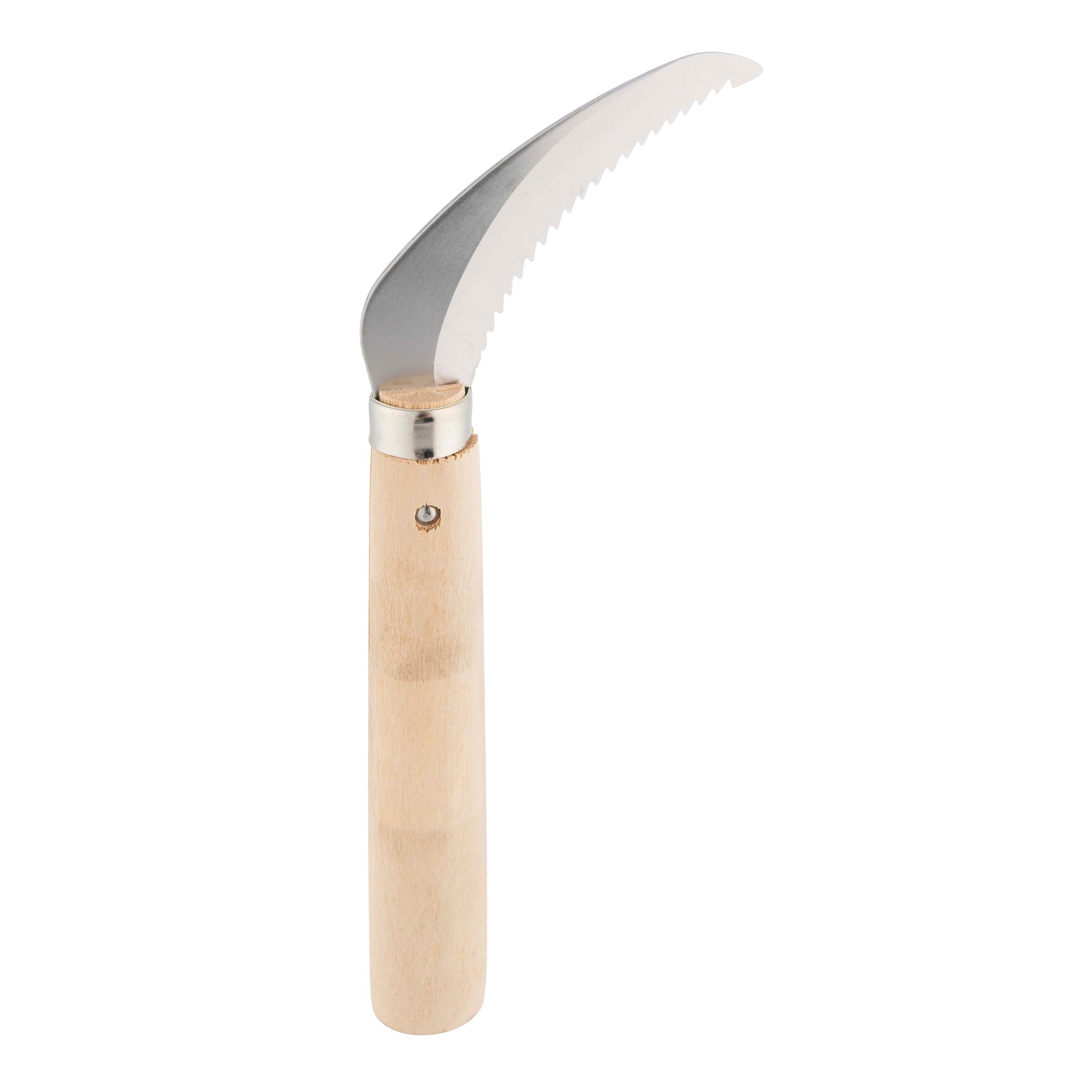
The pocket-sized root nipper that shaved an hour and a half off garden cleanup.
This 8-inch Japanese hand saw weighs almost nothing, fits in a pocket, and uses a sharp 2.75-inch serrated stainless steel blade angled at about 30 degrees for clean, effort-free cuts. One user highlighted, “This little guy took a solid hour and a half off my time (normally over 3 hours) of putting my garden to bed.” For quick root trimming during planting or light weeding, it is incredibly efficient.
The rust-resistant blade and comfortable wood handle make it ideal for repeated use in all soil conditions. Buyers consistently praise how “crazy sharp” it is — one warned to be careful because it cuts so easily. However, the handle is unfinished soft wood; one user applied polyurethane and orange paint for longevity. The compact size means it only handles thinner roots and small branches, not the 5-inch monsters the Silky saw or Smarkey tool can take on.
Think of this as your everyday companion for garden maintenance, not a stump demolition tool. It is the cheapest option here, and it delivers fast, precise cuts on small roots without dragging out a big saw or shovel.
Why you will like it
- Extremely sharp and efficient — owners mention it cuts garden cleanup time nearly in half.
- Pocket-sized portability means you always have it on you.
- Rust-resistant stainless steel blade holds up in wet soil.
Keep in mind
- Only cuts small roots and branches — not for thick stumps or tough roots.
- The unfinished wood handle may benefit from sealing for longevity.
Perfect as a supplement to the HANTOP shovel — use the shovel to dig, then the saw to snip thin roots you uncover, all without a heavy tool.
But if you face roots thicker than an inch, move up to the Silky GOMTARO for its 4.7-inch cut capacity.
Understanding the Specs
Blade configuration
The shape of the cutting edge determines what kind of root it handles best. A serrated shovel blade (like on the HANTOP spade) lets you step down and slice through roots while digging, so you do not need to swap tools. A vertical mattock blade (like on the Truper) is designed for chopping — you swing it like an axe and the weight does the work. A saw blade (like on the Silky or the Kings County saw) gives you a pull or push motion for clean, controlled cuts in tight spaces. Match the blade to the root size: serrated shovels for thin roots, mattocks for medium roots, saws for precision or large roots in tight spots.
Weight and leverage
Tool weight directly affects how much effort you put in versus how much the tool does. A heavy tool like the Smarkey (17.41 pounds) uses gravity — you lift and drop, and the momentum drives the cut. A lighter tool like the Silky saw (0.6 pounds) requires your arm to do the cutting, but you can use it one-handed without fatigue. Handle length also matters: a 44-inch handle spreads the load across your legs and core (less back strain), while a shorter handle concentrates force but keeps you closer to the work. For roots near fences or walls, a compact saw may be the only option that physically fits in the space.
FAQ
Can a regular shovel cut tree roots effectively?
What tool cuts through roots up to 5 inches thick?
Is a mattock better than a root saw for thick roots?
How do I cut tree roots without damaging nearby pipes?
What is the lightest tool for cutting roots while planting?
Can a root cutting tool also break up hard soil?
How long should a root cutting tool last?
What is the difference between a root cutter and a root saw?
Do I need hearing protection when using a root cutting tool?
Can a root saw cut through live roots without damaging the tree?
Final Thoughts: The Verdict
If you want one dependable pick, the best tool to cut tree roots is the Truper 5 lb Cutter Mattock because it chops roots up to 3 inches and digs hard clay with one dual-head design for a price that beats premium options. If you work in tight spaces near walls or pipes, grab the Silky GOMTARO Root-Cutting Saw for its precise, controlled cuts. And for budget-conscious DIYers who dig trenches and want a single shovel that handles roots along the way, the HANTOP Drain Spade Root Saw offers the best value without the weight of a dedicated stump buster.
How We Picked
We do not accept paid placement. Every pick is matched to a real buyer and a real use-case; we do not hands-on test units.
Sources & Methodology
Specifications: manufacturer listings and product documentation. Review insights: verified customer reviews, as of July 2026. Pricing: not shown on this page (it changes often); check the current price via the retailer link.
As an Amazon Associate, Lawn Gear Lab earns from qualifying purchases. This does not affect which products we feature.