
Specs are compiled from manufacturer listings and verified buyer reviews and can change over time — please confirm the key details on the product page before buying.
Most potting soils hold too much water for herbs, turning your basil or mint into a sad, droopy mess. Herbs need a mix that drains quickly but still holds enough moisture between waterings — a balance most all-purpose bagged soils get wrong. This guide cuts through the options to find the soil for herbs in containers that actually keeps roots healthy and flavor strong.
I’m Rikta — the founder and writer behind Lawn Gear Lab. This guide is built by comparing the manufacturers’ published specifications and the patterns across verified customer reviews, so you get each pick’s real strengths and trade-offs instead of marketing spin.
Whether you are starting seeds on a windowsill or transplanting into patio pots, finding the right soil for herbs in containers means knowing which ingredients help air reach the roots and which ones just turn the pot into a swamp.
Quick Picks
- Espoma Organic Potting Soil Mix – 2 Cu Ft Bag — Best Overall
- Coast of Maine Bar Harbor Blend Potting Soil – 16 QT — Premium Organic
- DUSPRO 8QRT Pre-Mixed House Plant Soil – 7-in-1 — Best Chunky Mix
- Doter Organic Potting Soil Mix – 10qt — Compact Value
- Espoma Organic Potting Soil Mix – 8qt, Pack of 2 — Best Starter Pack
- Miracle-Gro Potting Mix – 8 qt. (3-Pack) — Reliable Feeder
- Doter Organic Potting Soil Mix – 4qt — Budget Entry
How To Choose The Best Soil For Herbs In Containers
Herbs like basil, mint, and rosemary are not as demanding as orchids, but they will sulk in heavy, waterlogged soil. A good container mix balances three things: drainage, aeration, and a modest amount of nutrients. Here is what to look for before you buy.
Drainage and Aeration
Herb roots need oxygen as much as they need water. A mix with perlite, pumice, or coarse sand creates tiny air pockets so water drains through instead of pooling at the bottom. Look for “chunky” or “well-draining” on the bag — that is a sign the manufacturer built the mix for roots that hate sitting wet.
Organic vs. Synthetic Ingredients
You are eating the leaves, so what is in the soil matters. Organic mixes use natural fertilizers like worm castings, kelp meal, or compost instead of synthetic chemicals. They release nutrients slowly, which matches the steady growth herbs prefer over a sudden growth spurt.
Moisture Retention Without Sogginess
Coco coir and peat moss both hold water like a sponge, but coco coir rehydrates easier when it dries out completely. A good herb mix uses one or both of these but balances them with enough perlite or pumice so the pot does not feel heavy and wet three days after watering.
Quick Comparison
| Model | Best For | Volume | Key Ingredients | Count | Amazon |
|---|---|---|---|---|---|
| Doter Organic 4qt | Small starter pots | 4 Quarts | Peat moss, perlite, coco coir, worm castings | 128.0 Ounce | Amazon |
| Doter Organic 10qt | Mid-size container gardens | 10 Quarts | Peat moss, perlite, coco coir, worm castings | — | Amazon |
| Espoma Organic 8qt (Pack of 2) | Organic purists | 8 Quarts | Sphagnum peat moss, humus, perlite, worm castings, alfalfa meal, kelp meal, feather meal | 512 Ounce | Amazon |
| DUSPRO 7-in-1 8QRT | Chunky aroid-style mixes | 8 Quarts | Coco coir, peat moss, perlite, worm castings, pumice, pine bark, gypsum | — | Amazon |
| Coast of Maine Bar Harbor 16 QT | Premium organic nutrients | 16 Quarts | Sphagnum peat moss, compost, perlite, lobster & crab shell meal, kelp meal | 2.0 Count | Amazon |
| Espoma Organic 2 Cu Ft | Large container gardens | 2 Cubic Feet | Sphagnum peat moss, humus, perlite, worm castings, alfalfa meal, kelp meal, feather meal | 2 Count | Amazon |
| Miracle-Gro 3-Pack | Reliable all-purpose feeding | 8 qt. each | Potting mix with fertilizer (feeds up to 6 months) | 768.0 Fluid Ounces | Amazon |
In‑Depth Reviews
1. Espoma Organic Potting Soil Mix – 2 Cu Ft Bag

The serious-volume organic mix that earns its premium reputation.
This is the big bag — 2 cubic feet — which means one purchase fills several large patio pots or a whole season of repotting. The blend combines sphagnum peat moss, humus, perlite, worm castings, alfalfa meal, kelp meal, and feather meal. Buyers report the soil stays loamy and chunky rather than turning into dense crust, so water reaches the roots without pooling.
Espoma adds its own Myco-Tone, a blend of endo and ecto mycorrhizae (beneficial fungi that help roots absorb nutrients). Reviewers mention it is cleaner than some competitors, with no large sticks or wood chunks. A few note it is more expensive than generic mixes, but many call it worth the price for how well container plants respond.
The catch: the 2-cubic-foot bag is heavy to carry and might be overkill if you only have two small pots. For anyone with a serious herb garden in containers, this is the low-maintenance choice that delivers reliable results all season.
Ingredients & feel: Rich blend of organic meals and peat moss with perlite for drainage — owners mention it stays loose and never crusts.
One trade-off: The bag is bulky and physically heavy to handle compared to smaller 8-quart options.
Who this suits: Anyone managing four or more medium-to-large herb containers who wants a single bag that performs consistently from seed to harvest.
Better to skip if: You only need soil for two small indoor pots — the size and weight are more than you will use quickly.
2. Coast of Maine Bar Harbor Blend Potting Soil – 16 QT
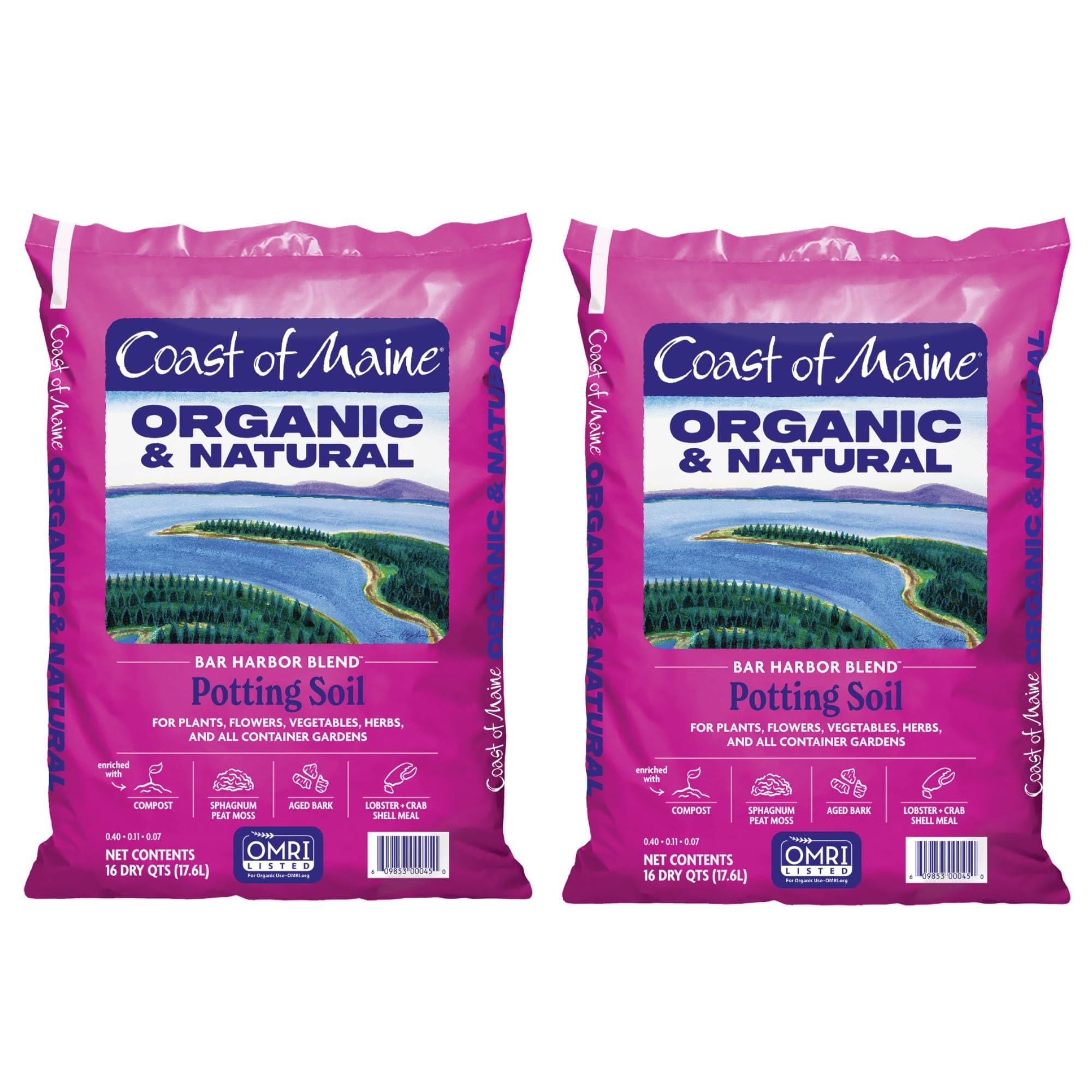
Lobster and crab shell meal give this mix a nutrient edge most soils lack.
Coast of Maine takes a different route than standard peat-and-perlite blends. This 16-quart bag adds compost, lobster and crab shell meal, and kelp meal on top of sphagnum peat moss and perlite. The shellfish meal provides a natural slow-release nitrogen source that keeps herbs fed steadily without burning the roots.
Buyers consistently praise the darker, richer color of the soil — a sign it uses less peat moss and more compost than typical bagged mixes. Customers note their tomatoes and potatoes grew far better than expected, and multiple people mention they switched from a “top brand” and will not go back. The bag is sold as a 2-pack, so you get 16 quarts total.
Unlike the Espoma above, this mix includes actual compost rather than just meals and peat. That means it holds moisture a bit longer — good for thirsty herbs like basil, but you will want to check drainage before planting rosemary or thyme in deep pots.
Nutrient density: Compost and shellfish meal create a richer, darker soil that plants respond to fast — reviewers point out noticeably better growth than standard mixes.
Heads up: The compost base retains slightly more water than a perlite-heavy mix, so herbs that prefer dry feet may need lighter watering.
Ideal for: Container gardeners who want a truly unique, compost-rich organic mix with built-in slow-release feeding for vigorous herbs.
Consider another if: You prefer a lighter, faster-draining mix for Mediterranean herbs like rosemary and thyme that hate any moisture around the crown.
3. DUSPRO 8QRT Pre-Mixed House Plant Soil – 7-in-1
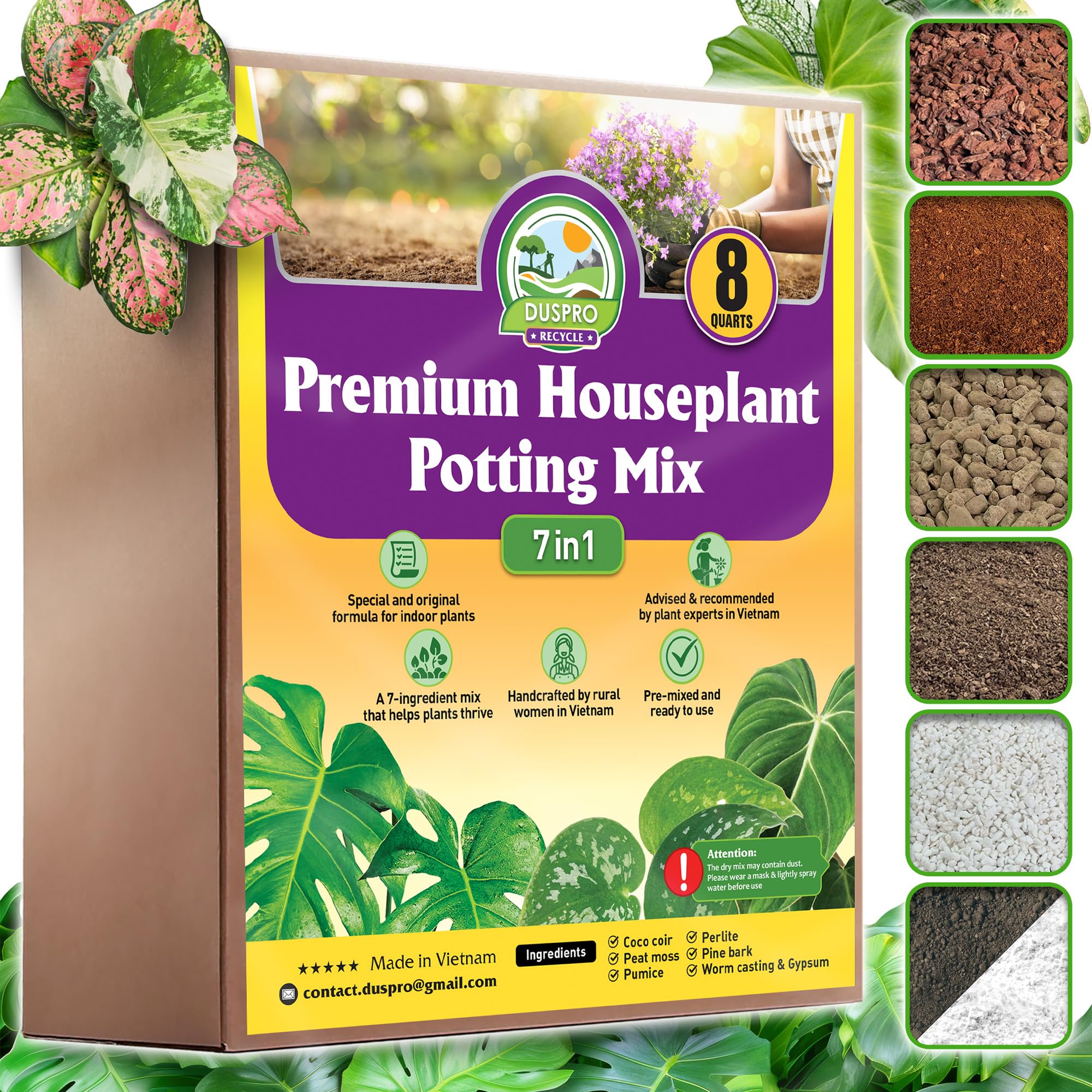
A seven-ingredient blend built for roots that need air and quick drainage.
DUSPRO skips the simple peat-and-perlite formula in favor of pine bark, pumice, coco coir, peat moss, perlite, worm castings, and gypsum. The result is a visibly chunky mix that water flows through fast — exactly what container herbs need to avoid soggy roots. This 8-quart bag comes ready to use, so you do not have to mix your own aroid-style blend.
Shoppers say the chunky texture keeps roots healthy and well-drained. One reviewer specifically called out “no mold/mildew in 6 months,” a strong sign the aeration works as promised. The mix includes gypsum, which adds calcium without altering pH much. Note that the bag is dusty when dry — buyers suggest misting it slightly before use or shaking the bag so settled pumice and bark redistribute.
Compared to the Doter organic mixes below, this feels heavier and chunkier in the hand. It is a better match for herbs that prefer a drier root zone, like sage or oregano, and for anyone who hates the sight of standing water in a saucer.
What stands out
- Seven-ingredient blend with pine bark and pumice for true chunkiness
- Buyers confirm no mold or mildew after months of use
- Light and airy texture that encourages fast root growth
What to expect
- Can be dusty when first opened; misting or shaking helps
- Very porous — water runs through fast, so self-watering pots need more attention
Best match: Herb growers who want a mix that mimics a premium potting blend without mixing ingredients themselves — especially for pots that tend to stay wet too long.
skip it if: You need a very fine, seed-starting texture — the chunky bark pieces make it harder for tiny seeds to make consistent contact.
4. Doter Organic Potting Soil Mix – 10qt

A 10-quart upgrade that gives you 2.5x more soil than the 4-quart version for a modest jump in cost.
This is the same Doter organic formula — peat moss, perlite, coconut coir, and worm castings — in a bigger bag. The ingredients are all-natural and chemical-free, so there is no synthetic fertilizer smell. Buyers report the soil is odorless and good for indoor use, with seeds typically sprouting in around 4 days and slow-growing plants making visible progress in 2 weeks.
The 10-quart volume is a smart middle ground: larger than the 4-quart starter bag but not as massive as a 2-cubic-foot sack. If you have a half-dozen medium pots on a patio or a windowsill garden with several herbs, this bag covers the job without leftovers drying out in storage. Reviewers caution that the bag looks smaller than expected for 10 quarts — measure your pots beforehand if you are filling multiple large containers.
One buyer whose basil thrived for 2 months noted the soil stays clean with no gnats, a common complaint with cheaper big-box mixes. Unlike the DUSPRO above, this is a finer, more traditional potting mix texture, so it works well for starting seeds as well as transplanting.
Versatile size: 10 quarts covers several medium pots without going to waste — owners mention growth is steady and the mix stays odor-free indoors.
Size surprise: Multiple buyers mentioned the bag appears smaller than the stated volume, so check your container sizes before ordering.
Who it fits: Indoor or patio herb gardeners with 4-6 medium pots who want a straightforward organic mix that works for both seeds and transplants.
Not ideal for: Large outdoor container gardens — for big planters you would need multiple bags, and the cost per quart adds up.
5. Espoma Organic Potting Soil Mix – 8qt, Pack of 2

Two 8-quart bags of the same Espoma formula — easier to handle than the giant 2-cu-ft sack.
The same blend of sphagnum peat moss, humus, perlite, worm castings, alfalfa meal, kelp meal, and feather meal that makes the big Espoma bag a top choice, but split into two manageable 8-quart bags. If you found the 2-cubic-foot bag too heavy to haul, this pack-of-2 option gives you the same Myco-Tone and organic formula in a much easier-to-carry form. At a total of 512 ounces, that is a 4x gap in unit count versus the Doter 128.0-ounce bag — a significant volume difference.
Customers note the soil is clean and their plants respond immediately. One reviewer noted transplanting an African violet and variegated ivy, both of which grew quickly after the switch. A minority of buyers mentioned the mix can be too dry on arrival — you may need to moisten it slightly before potting so water does not run straight through the bag.
A smart play if you like the Espoma ingredients but only have a few containers to fill at a time. The dry-out-of-the-bag issue is worth knowing: plan to dampen the mix before you fill your pots so the peat moss rehydrates evenly.
Portable volume: Two 8-quart bags are much easier to carry than one large bag — buyers love the plant growth response and clean texture.
Dry on arrival: Some customers found the soil needed pre-moistening to absorb water properly after potting.
Perfect for: Anyone who trusts Espoma quality but does not want to wrestle a 2-cubic-foot bag — two 8-quart bags keep the formula fresh and easy to lift.
Think twice if: You tend to forget to pre-moisten dry soil — the peat can stay hydrophobic if you pot dry and water from the top.
6. Miracle-Gro Potting Mix – 8 qt. (3-Pack)

The classic potting mix with built-in fertilizer that feeds herbs for months.
Miracle-Gro claims this mix grows plants twice as big as unfed plants, and the fertilizer is designed to feed for up to 6 months from a single potting. That means you fill your container once and do not need to remember liquid feedings for the rest of the season. The 3-pack gives you three 8-quart bags — each one fills two 8-inch pots, according to the brand.
Buyers consistently call it reliable and well-draining. One buyer mentioned the soil stays loose and never packs down hard, so water reaches the roots every time. The smaller bag size is a plus for anyone who does not want to haul heavy sacks. However, this mix uses synthetic fertilizer rather than organic worm castings or kelp meal — a distinction if you are growing herbs you plan to eat and prefer an all-natural approach.
Compared to the Espoma options above, this is a more conventional choice that leans on a controlled-release feed rather than organic ingredients. It is a dependable workhorse if you prioritize convenience and consistent results over sourcing every amendment from nature.
What you get
- Built-in fertilizer feeds potted herbs for up to 6 months
- Three separate 8-quart bags are easy to handle and store
- Buyers confirm the mix drains well and stays loose over time
What to know
- Synthetic fertilizer base — not ideal if you want a fully organic herb garden
- Each bag is relatively small (8 qt.), so large container gardens need multiple packs
Best use: A low-fuss option for outdoor container herbs where you want the fertilizer built-in and do not plan to supplement with organic amendments.
Look elsewhere if: You specifically want an organic soil for edible herbs — the synthetic feed may not match your gardening philosophy.
7. Doter Organic Potting Soil Mix – 4qt
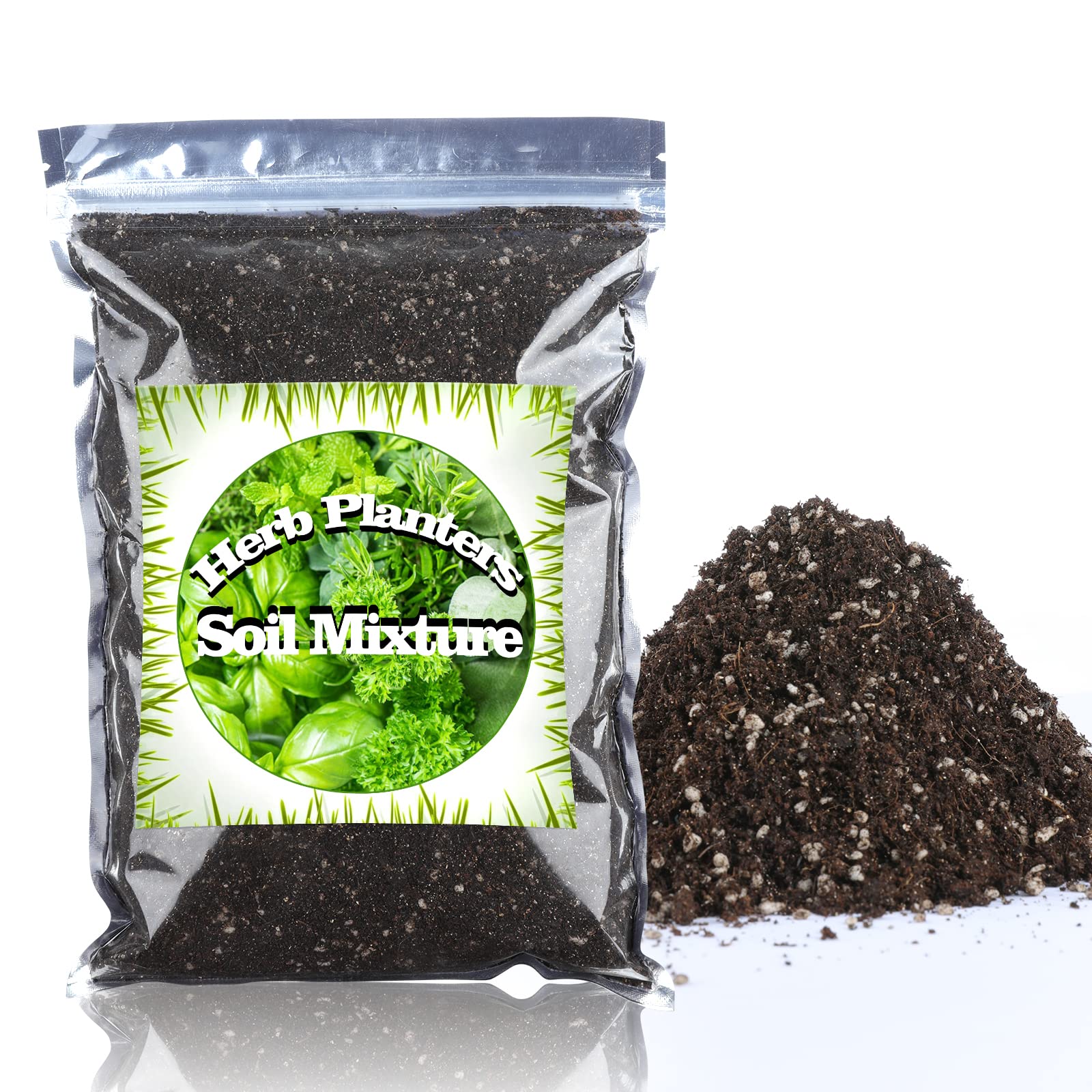
A tiny bag of clean organic soil that fits one small pot without waste.
With a volume of 4 quarts, this is the smallest bag in the list — ideal if you are starting a single herb on a kitchen windowsill. The all-natural blend of peat moss, perlite, coconut coir, and worm castings matches the larger Doter bags, so you get the same ingredients in a much smaller, cheaper package. At 128.0 ounces, the unit count is a quarter of the Espoma pack-of-2 (512.0 ounces).
Reviewers point out the soil arrives clean with no insects or gnats — a relief for anyone who has dealt with fungus gnat infestations from other brands. One owner reported seeds sprouted in just 4 days, with a slow-growing plant showing visible progress at 2 weeks. The soil is odorless and suitable for indoor use, with one buyer calling the lack of smell a win for kitchen gardening.
The main limit is size: this bag is enough to fill one small pot or top-off a few plants showing roots. If your ambitions run to multiple containers or a full patio herb garden, the 10-quart Doter bag is the smarter starting point.
Clean and odorless: Buyers confirm no bugs, no gnats, no smell — seed germination is fast at 4 days.
Very small bag: 4 quarts goes fast — one medium pot uses most of the bag, so plan for multiple purchases if you have more than one container.
Ideal for: A single indoor herb pot or a first-time grower who wants to test an organic mix without investing in a large bag.
Better to pass on: Anyone with two or more medium-to-large pots — you will run out quickly and pay more per quart than the 10-quart option.
Understanding the Specs
Volume (Quarts vs Cubic Feet)
Bag sizes vary widely — from a small 4-quart bag to a large 2-cubic-foot sack. One cubic foot equals roughly 30 quarts. For a single 8-inch pot you typically need about 3-4 quarts of soil. If you have several containers, a 16-quart or 2-cubic-foot bag saves you from buying multiple smaller bags. The downside: large bags are heavy and harder to store, especially if you only have a few pots.
Organic Ingredients & Fertilizer
“Organic” in potting soil means the ingredients come from natural sources like worm castings, compost, kelp meal, or feather meal rather than synthetic chemicals. For herbs you plan to eat, organic ingredients mean no synthetic residues on the leaves. Some mixes include a mycorrhizae blend (beneficial fungi that help roots absorb nutrients), while others use slow-release nitrogen from shellfish or alfalfa. The trade-off: organic mixes release nutrients more slowly than synthetic fertilizers, so you may need to supplement with liquid feed for heavy feeders like basil.
FAQ
Can I use regular garden soil for herbs in containers?
How often should I water herbs in a good potting mix?
Is organic potting soil worth the extra cost for herbs?
How many quarts do I need for a standard 10-inch pot?
Does Miracle-Gro Potting Mix contain synthetic fertilizers?
Why does my potting mix have white or yellow pellets in it?
Can I reuse potting soil from last season for new herbs?
What is the difference between potting mix and potting soil?
How should I store an open bag of potting soil?
Why does my potting mix smell bad after a few days in the pot?
Final Thoughts: The Verdict
For most people, the soil for herbs in containers winner is the Espoma Organic Potting Soil Mix 2 Cu Ft because it combines a nutrient-rich organic formula with Myco-Tone and enough volume to cover a full season of container gardening at a fair per-quart value. If you want a premium compost-based blend with lobster and crab meal for extra vigor, grab the Coast of Maine Bar Harbor Blend. And for a chunky, fast-draining mix that mimics a custom aroid blend without any effort, the DUSPRO 7-in-1 is your best bet.
How We Picked
We do not accept paid placement. Every pick is matched to a real buyer and a real use-case; we do not hands-on test units.
Sources & Methodology
Specifications: manufacturer listings and product documentation. Review insights: verified customer reviews, as of July 2026. Pricing: not shown on this page (it changes often); check the current price via the retailer link.
As an Amazon Associate, Lawn Gear Lab earns from qualifying purchases. This does not affect which products we feature.