
Specs are compiled from manufacturer listings and verified buyer reviews and can change over time — please confirm the key details on the product page before buying.
Grab plain garden soil or cheap potting mix for your seeds, and you risk compacting the dirt, drowning tender roots, and inviting fungi that kill seedlings before they grow their first true leaves. A proper seed starting mix is light, airy, and sterile (free of pathogens and weed seeds). It holds moisture without turning into mud, so delicate sprouts get the water and oxygen they need to push through.
I’m Rikta — the founder and writer behind Lawn Gear Lab. This guide is built by comparing the manufacturers’ published specifications and the patterns across verified customer reviews, so you get each pick’s real strengths and trade-offs instead of marketing spin.
The seven mixes here all cater to different needs and budgets. Each is formulated to give your seeds a head start with the right texture, drainage, and nutrition for germination. Choosing the right seed starting mix is the single most important decision you make for a thriving garden — and this guide helps you land on the best bag for your setup.
Quick Picks
- Espoma Organic Seed Starter Premium Potting Soil Mix — Top Performer
- Hoffman Seed Starter Potting & Planting Mix — Best Overall
- Soil Sunrise All Natural Seed Starting Mix — Master Blender
- Duspro Seed Starter Potting Soil Mix (4-in-1 Blend) — Smart Choice
- Happy Trees Coco Coir and Perlite Growing Medium — Generous Volume
- Jiffy Natural & Organic Seed Starting Soil Mix — Budget Champion
- ZeeDix 100 Pack 30mm Organic Coco Coir Pellets — Compact Starter
How To Choose The Best Seed Starting Mix
The right mix is the difference between a tray of vigorous, stocky seedlings and one that is leggy, damp, or never germinates at all. Here are the three factors that matter most when shopping.
Texture and Drainage
The mix must be fine enough for tiny roots to grip but porous enough that excess water drains freely. Look for ingredients like perlite (small white volcanic glass bits that improve aeration) and vermiculite (golden flaky minerals that hold moisture). They prevent compaction and keep air flowing to the root zone. Coarse bark or large wood chunks are a red flag in a seed starter, as they can create air pockets that dry out seeds or block tender roots.
Moisture Management
Seeds need consistent moisture to germinate, but standing water invites damping-off disease (a fungal condition that kills seedlings overnight). A good mix uses either peat moss or coco coir as the base, both of which can hold multiple times their weight in water. The phrase “wetting agent” on a bag means the mix takes up water easily instead of beading on the surface — a useful spec if you often forget to pre-moisten your soil.
Base Ingredient: Peat Moss vs. Coco Coir
Peat moss is the traditional base: it is lightweight, holds water well, and has a natural acidity that some seeds prefer, though it usually needs lime to balance the pH. Coco coir, made from coconut husks, is a renewable alternative that has naturally better aeration and re-wets more easily after drying out. Both work perfectly, but coir is considered more sustainable and is less prone to forming a crust on top that blocks water from reaching the seed.
Quick Comparison
| Model | Best For | Base Ingredient | Volume | Weight | Amazon |
|---|---|---|---|---|---|
| Espoma Organic Seed Starter | Premium organic growth | Sphagnum Peat Moss | 16 Quarts (2-pack) | — | Amazon |
| Hoffman Seed Starter | Proven all-around performance | Soilless Mix (6 components) | 10 Quarts | 4.67 Pounds | Amazon |
| Soil Sunrise All Natural | Hand-blended organic recipes | Peat Moss + Coco Coir | 8 Quarts | 3.4 Pounds | Amazon |
| Duspro 4-in-1 Blend | Peat-free convenience | Coco Coir | 8 Dry Quarts | — | Amazon |
| Happy Trees Coco Coir & Perlite | Low-salt coco coir purity | Coco Coir + Perlite | 50 Liters | — | Amazon |
| Jiffy Organic Seed Starting Mix | Budget-friendly classic | Peat Moss | 10 Quarts | 1 Pounds | Amazon |
| ZeeDix 100 Pack Coco Pellets | Compact & portable pellets | Coco Coir | 100 Count (30mm each) | — | Amazon |
In‑Depth Reviews
1. Espoma Organic Seed Starter Premium Potting Soil Mix
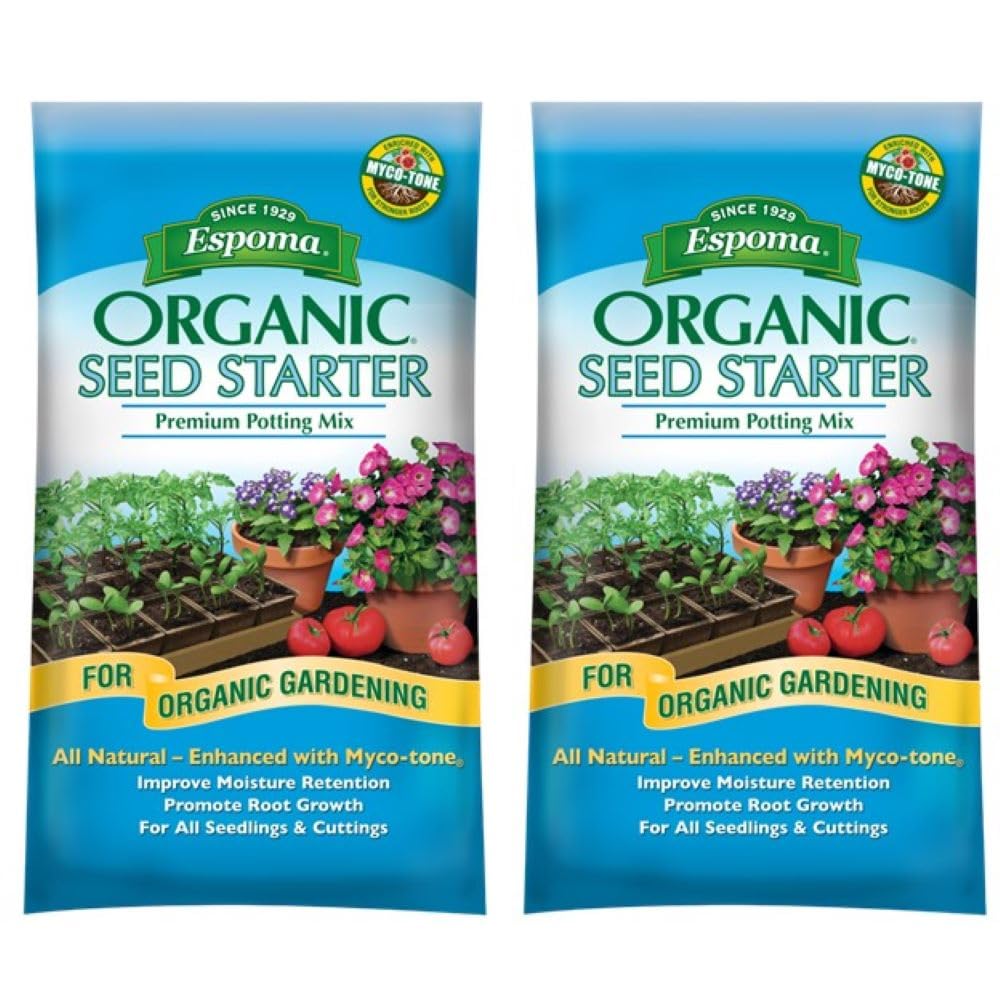
A premium organic option that gives seeds a head start with beneficial fungi already in the bag.
Buyers report that this mix delivers a “great germination rate” and feels “clean, light, fluffy” in the hand. The secret is its use of Myco-Tone — a blend of endo and ecto mycorrhizae (beneficial fungi that attach to roots and help them absorb water and nutrients). Unlike many seed starters that are intentionally nutrient-poor to prevent burning tender seedlings, this one provides just enough natural amendments to support strong early growth without synthetic chemicals.
The base is sphagnum peat moss and perlite, with yucca extract as a natural wetting agent and lime to keep the pH balanced. You get two bags with this purchase — each 16 quarts — making it a generous volume for the price. Only the Hoffman mix comes close in density, but at 4.67 pounds for a 10-quart bag, the Espoma is noticeably more voluminous and airy per quart.
Owners mention it works beautifully for flower, vegetable, and herb seeds, and one reviewer noted a single bag filled their entire set of 5 Gardzen trays. The only trade-off is the price — it sits at the higher end of the spectrum — but for a dedicated organic gardener who wants mycorrhizae built in, this is a bag you can trust season after season.
What makes it great
- Includes Myco-Tone mycorrhizae for stronger root development
- Two 16-quart bags provide ample volume
- Yucca extract acts as a natural wetting agent for even moisture
What to keep in mind
- Premium pricing compared to single-bag alternatives
- Some users prefer plain, nutrient-free mixes for the first week
Who it’s for: The organic gardener who wants a ready-to-use, biologically active medium and is willing to pay for the extra performance.
Who should pass: Anyone on a strict budget or who prefers to add their own amendments to a bare-bones base.
2. Hoffman Seed Starter Potting & Planting Mix

The six-component soilless mix that experienced gardeners keep coming back to for consistent results.
This is the mix that buyers describe as having a “fine consistency, highly water-absorbent” texture, and it contains lime to reduce acidity — a detail that removes the guesswork for gardeners who have had trouble with sour peat in the past. It weighs 4.67 pounds for the same 10-quart volume as the Jiffy mix, which weighs just 1 pound, underscoring how much heavier and denser this blend is with its six properly proportioned components.
In direct head-to-head trials, customers note it “outperformed potting soil and pure coconut coir” and one buyer mentioned a “90% germination rate” with no large chunks or debris. The wetting agent means you do not have to fight the soil to get it to absorb water — it takes the moisture evenly on the first watering, which is a lifesaver when you are filling dozens of cells.
The only real downside buyers mention is the price — some feel it runs slightly expensive for a single bag. But given the proven results, many consider it “worth the price” and prefer it to cheaper options like Miracle-Gro, which they describe as having a “rough texture and wood chunks.”
The stand-out features
- Six blended components including lime for pH balance
- Wetting agent ensures immediate water absorption
- Fine, consistent texture with minimal debris
The honest downsides
- Heavier per quart than lighter peat-based mixes
- No added fertilizer, so seedlings need feeding after first true leaves
Reach for this if: You want a proven, fine-textured mix that germinates reliably and includes a wetting agent for easy first watering.
Look elsewhere if: You need a lightweight bag for shipping or a budget-friendly price point.
3. Soil Sunrise All Natural Seed Starting Mix
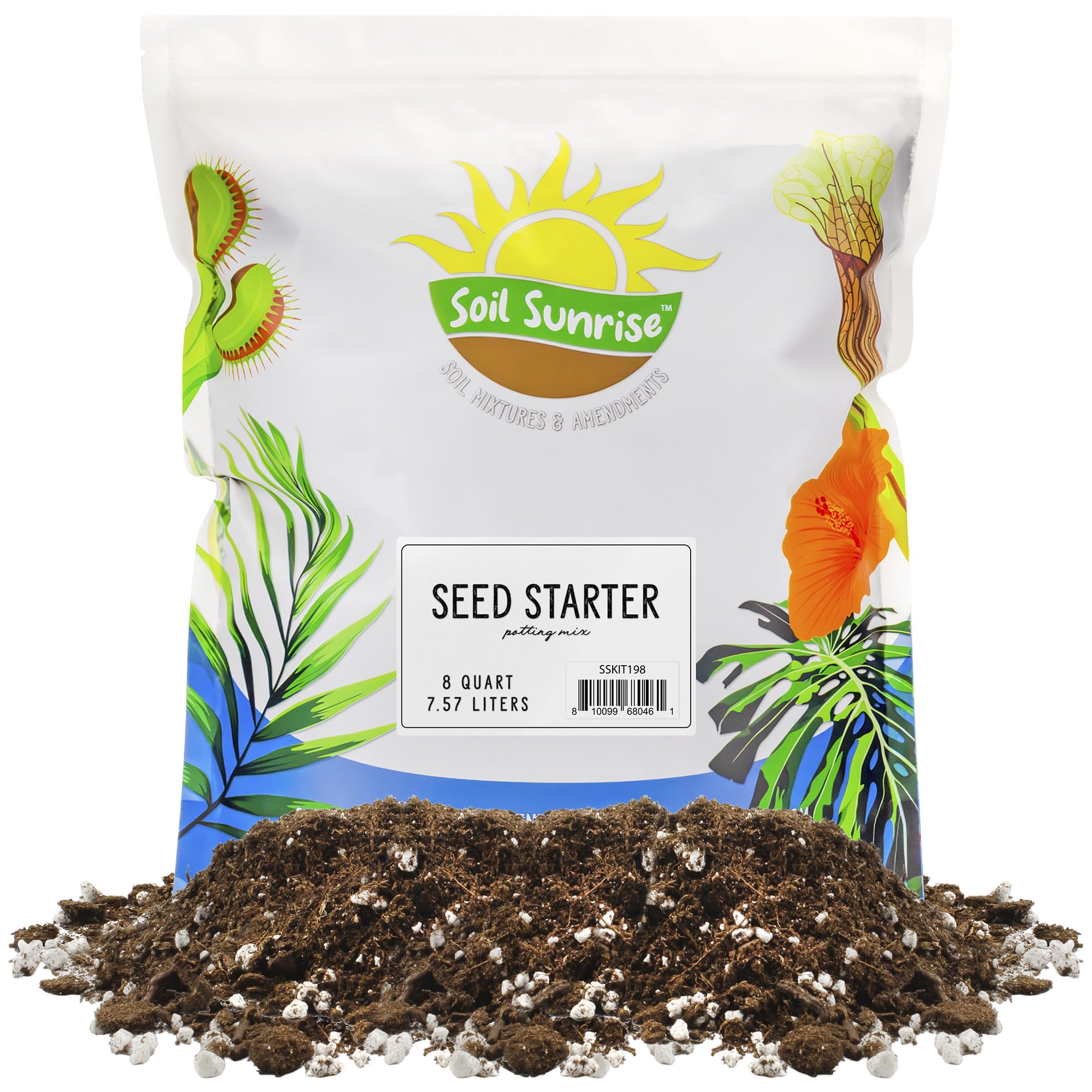
A hand-blended, six-ingredient organic mix that treats every seed like a special project.
What sets this apart from the simpler two- or three-ingredient mixes is the recipe: peat moss, perlite, worm castings, coarse sand, coco coir, and lime. That combination of worm castings (a gentle, slow-release organic nutrient source) and coarse sand (extra drainage) is unusual in a seed starter, which usually cuts nutrients to zero to avoid burning young roots. One owner reported “my seedlings turned out perfectly!!” which aligns with the mix’s target of pampering heirloom and organic seeds.
The bag holds 8 quarts, making it a smaller volume than the Hoffman or Espoma options. It weighs 3.4 pounds — lighter than the 4.67-pound Hoffman but heavier than a pure-peat mix of the same volume. Reviewers love how it holds “just enough moisture to get your seedlings off to a strong start” and note it also works well for repotting mature plants.
If you are the type of gardener who likes to know every ingredient in your soil and prefers an organic, hand-blended approach, this mix is designed for you. The downside is the higher price per quart compared to the Jiffy or Hoffman options — you pay for the artisan approach.
Artisan potting: The addition of worm castings and coarse sand to the usual peat-perlite-lime base creates a richer nutrient profile than most seed starters offer, but the 8-quart size goes fast if you fill multiple trays.
Ideal for: The organic gardener who appreciates a detailed ingredient list and wants gentle worm castings nutrition built in.
Not ideal for: Large-scale starting where volume-per-dollar matters more than ingredient variety.
4. Duspro Seed Starter Potting Soil Mix (4-in-1 Blend)
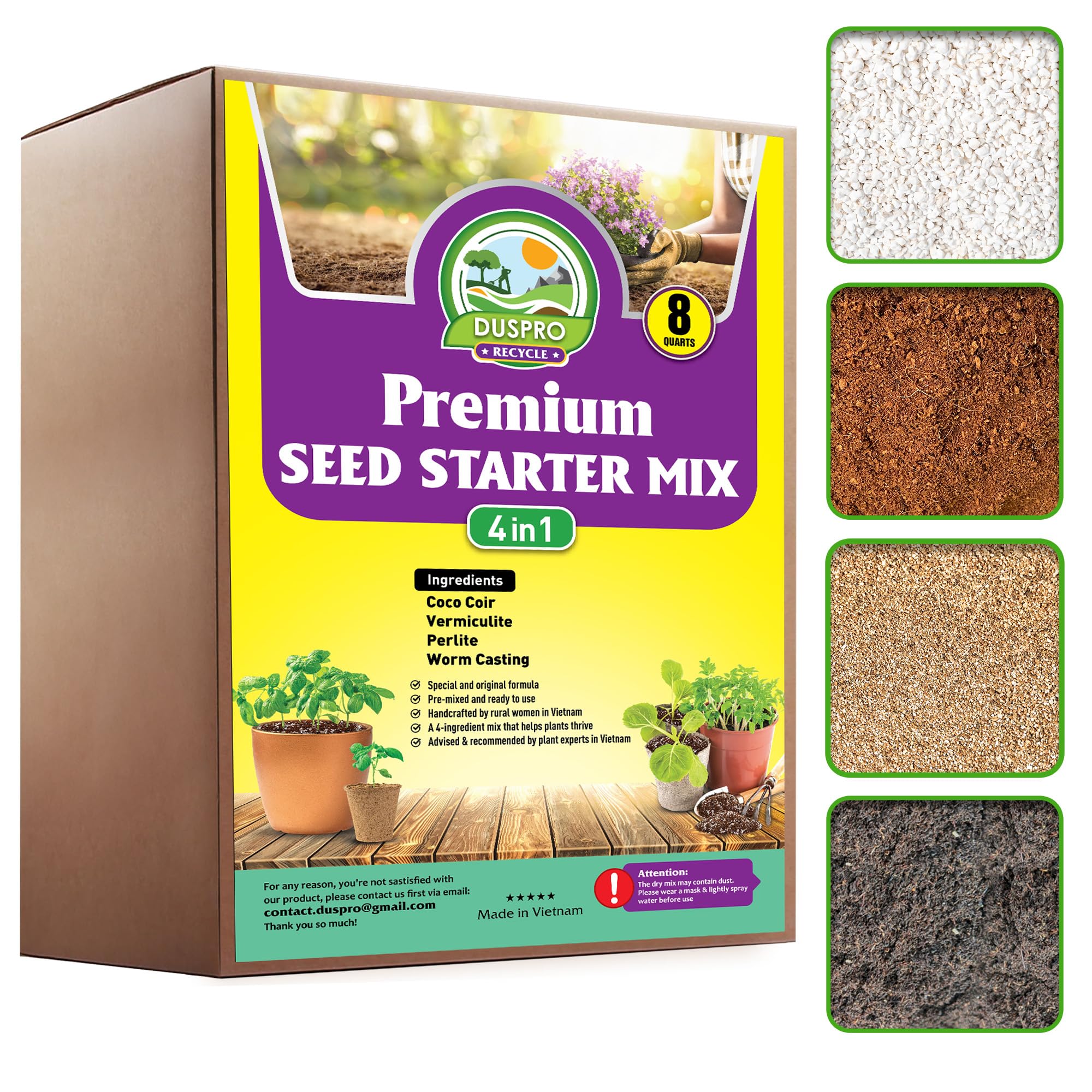
A peat-free, pre-blended mix that saves you from measuring out coco coir, perlite, vermiculite, and worm castings.
For gardeners who want to avoid peat moss due to sustainability concerns, this mix swaps it entirely for coco coir and adds perlite (aeration), vermiculite (moisture retention), and worm castings (gentle nutrients). It comes ready to use — you just moisten it, fill your trays, and plant. Reviewers point out it gives “excellent results” and one reviewer specifically praised its “perfect moisture transfer and aeration for wick-watered seed starting,” meaning it works well in self-watering trays where the soil draws moisture from below.
The 4-in-1 formula delivers a fine, hand-screened texture that helps keep seeds in contact with the mix, which is critical for germination. It comes in an 8 dry-quart bag, so the volume is modest, but the four-ingredient balance means you are not overpaying for extra bulk. The only buyer caution comes from a reviewer who noted that “not all seeds sprouted,” though they attributed that to seed quality rather than the mix itself.
Why it stands out
- Peat-free coco coir base is renewable and re-wets easily
- Pre-screened, fine texture ensures good seed-to-soil contact
- Works well in wick-watered and self-watering tray setups
Where it falls short
- Smaller 8-quart bag goes quick for large propagation projects
- A few customers noted inconsistent germination depending on seed quality
Grab it for: Peat-free growing, especially if you use self-watering trays and want a ready-to-use coco coir blend.
Skip it for: Large-scale seeding where you need the volume-per-dollar of a bigger bag.
5. Happy Trees Coco Coir and Perlite Growing Medium
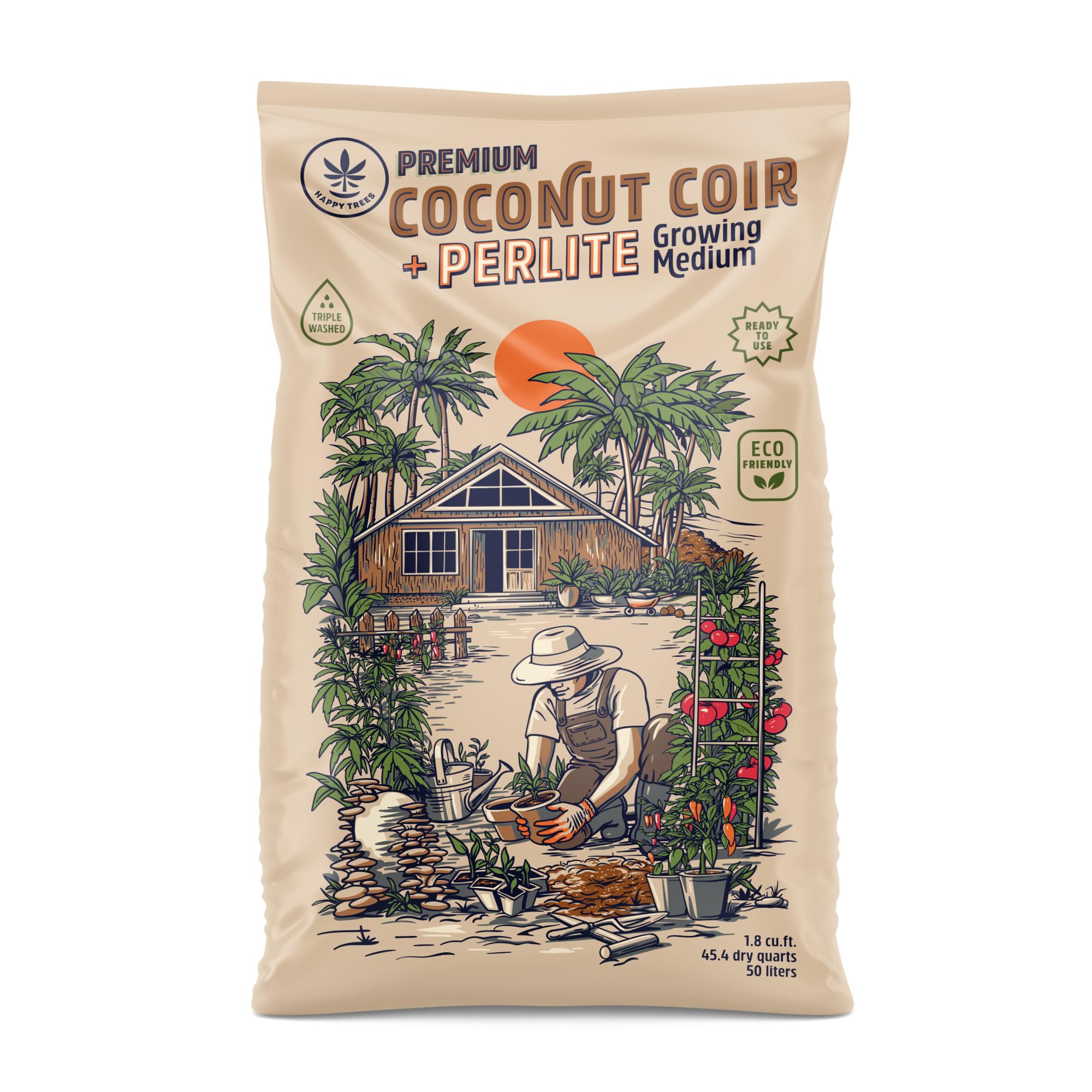
A massive 50-liter bag of triple-washed coco coir and perlite that delivers the lowest salt content on the market.
Not all coco coir is the same. The key spec here is that it is “triple-washed and buffered” to achieve low EC (electrical conductivity, a measure of soluble salts — low EC means virtually no salt residue that could harm tender roots). The mix is pre-blended with 30% perlite for aeration and comes loose and ready to use — no soaking and expanding blocks, just open the bag and fill your trays. The sheer volume (50 liters, or about 53 dry quarts) makes this by far the largest bag in the roundup.
However, this is a more general-purpose growing medium than a dedicated seed starter. It does not contain worm castings or lime, so the pH and nutrient levels are entirely up to you to manage. The manufacturer markets it for propagation, container gardening, raised beds, and even reptile bedding, so it is versatile but not optimized specifically for germination the way the Soil Sunrise or Hoffman blends are. If you want full control over your seed starting recipe and prefer an enormous bag of clean coir, this is your best bet.
Bulk buy alert: At 50 liters, you get more than five times the volume of the 8-quart blends, but you need to add your own amendments for optimal seedling nutrition.
Best for: The DIY gardener who wants a huge, clean, triple-washed coco coir base and plans to customize their own mix.
Less ideal for: The beginner who wants a grab-and-go bag with everything already balanced for seeds.
6. Jiffy Natural & Organic Seed Starting Soil Mix

The classic peat-vermiculite-lime formula that has been a seed-starting staple for decades, at a budget-friendly price.
Jiffy keeps it simple: peat moss, vermiculite, and lime. The peat soaks up to 20 times its weight in water, while the vermiculite prevents soil compaction and holds 3-4 times its volume in water. The lime keeps the pH in the balance for most vegetables and flowers. Shoppers say an “excellent germination rate, healthy seedlings” and praise its “fine texture” and good moisture retention — exactly what you want from a starter mix.
Compared to the Hoffman at 4.67 pounds, the Jiffy weighs just 1 pound for the same 10-quart volume, highlighting how airy and lightweight pure peat is. That lightness makes it easy to handle and pour, but it also means it has less structural heft and can dry out faster than heavier blends. A reviewer mentioned mixing it with potting soil “to make it go further,” which is a common trick for stretching a bag. The biggest compliment: one longtime user called it “by far my favorite starter soil” because it “holds together, without compacting hard” when transplanting.
The strong points
- Time-tested peat-vermiculite-lime formula
- Very lightweight and easy to pour and handle
- Excellent moisture retention for reliable germination
The drawbacks
- Peat base can crust over if allowed to dry out
- Some buyers find it slightly expensive for the volume
Reach for this if: You want a proven, organic peat-based starter at a friendly price that generations of gardeners have trusted.
Look elsewhere if: You prefer coco coir for sustainability reasons or need a heavier mix that will stay put in windy outdoor trays.
7. ZeeDix 100 Pack 30mm Organic Coco Coir Pellets
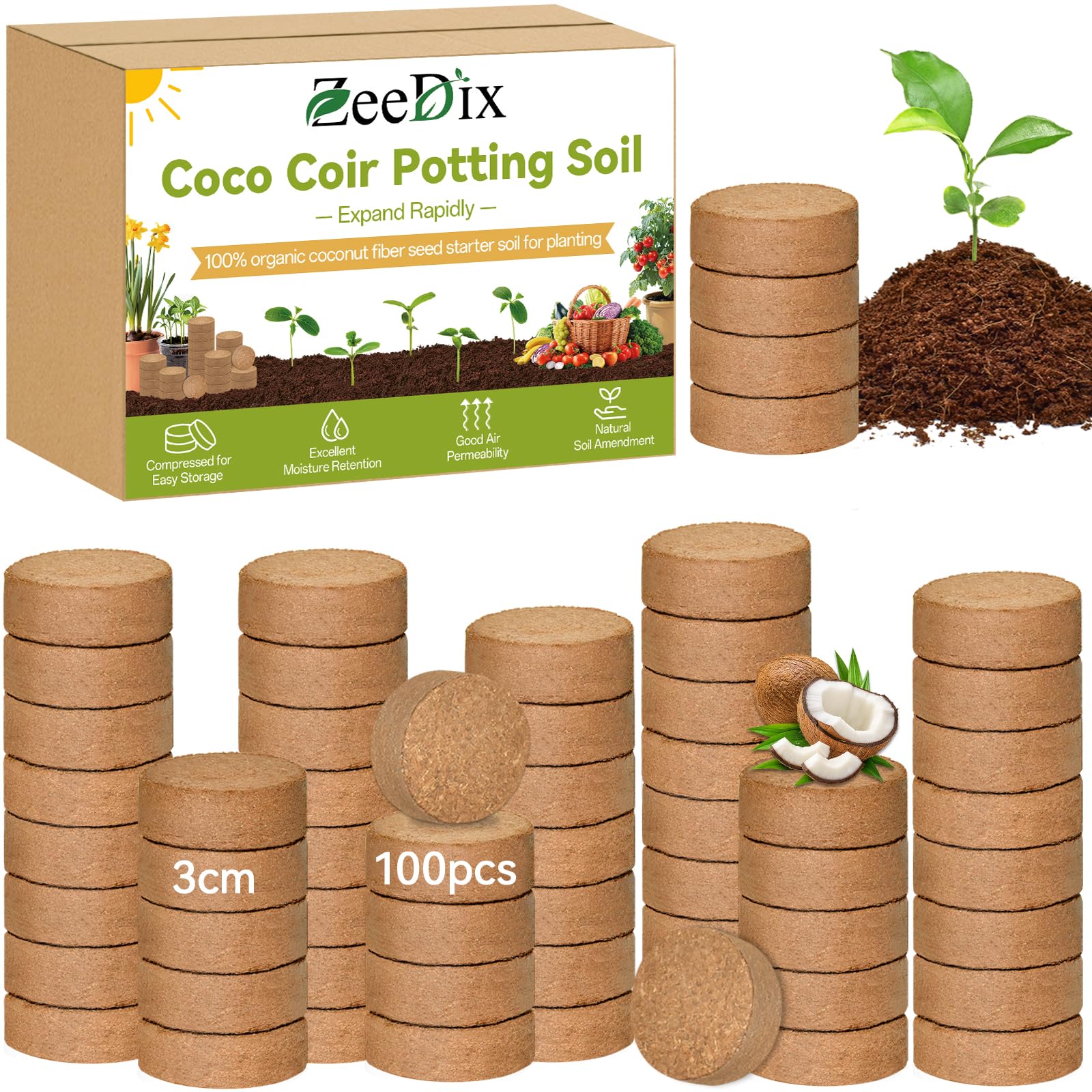
The ultimate space-saver — dry, flat discs that expand into a full growing medium with just water.
If you have limited storage space or only need a few starts, these 100 compressed coco coir pellets are incredibly convenient. Each 30mm disc expands into a small pot-sized plug when you add water. One customer observed that they “used a heating pad underneath and within a week, I have happy, healthy peppers and citrus growing.” The pellets are made from 100% organic coconut fiber with low EC and a balanced pH — no added nutrients, so it is just the clean coir base.
The main limitation is that each pellet is small (30mm diameter before expansion), so it works best for seeds that do not need deep root room before transplanting. They fit perfectly in standard 1-inch seedling cells, and a reviewer noted that “5 pellets fit #4 pots” for slightly larger plants. There are no instructions on the package about water quantity, so experts recommend adding hot water slowly and fluffing with a fork. For casual gardeners who want a mess-free, no-mix solution, this is a brilliant pick — but serious propagation enthusiasts will want a whole bag of loose mix instead.
Space-saving solution: Dry discs store flat in a drawer, then expand into seed-starting plugs in minutes — no bag of loose soil to haul or store.
Perfect for: Small-space gardeners, apartment dwellers, or beginners who want a neat, no-mess introduction to seed starting.
Less suited for: Large plantings or gardeners who want to customize their growing medium with additional amendments.
Understanding the Specs
Base Material: Peat Moss vs. Coco Coir
This is the most fundamental choice. Peat moss is a harvested material from natural bogs; it is lightweight, can hold up to 20 times its weight in water, and has a naturally acidic pH (usually balanced with lime in a seed starting mix). Coco coir is a renewable by-product of the coconut industry; it has better aeration, re-wets more easily after drying out, and has a more neutral pH. Both work well, but coir is growing in popularity for its sustainability and forgiving watering behavior.
Additives: Perlite, Vermiculite, and Wetting Agents
Perlite is the small, white volcanic glass pieces that improve drainage and aeration — they stop soil from compacting into a brick. Vermiculite is a golden, flaky mineral that holds water and nutrients, releasing them slowly to the root zone. A wetting agent is a surfactant (like yucca extract) added to the mix so that dry peat or coir absorbs water immediately instead of beading and running off. You want all three in a well-formulated seed starter for balanced moisture and air.
pH Balance and Lime
Most seeds germinate best in a slightly acidic to neutral pH range (around 5.5 to 6.5). Peat moss is naturally acidic, so manufacturers add ground limestone (called “lime” on the label) to neutralize it. If a mix does not list lime, you may need to check the pH yourself or choose a mix that is explicitly buffered. Coco coir is naturally closer to neutral and usually does not require lime unless you are starting acid-loving plants.
Volume and Weight
Seed starting mixes are sold by dry quart or liter. A 10-quart bag typically fills about 4 standard 1020 propagation trays with 50 cells each. Weight varies significantly — a peat-based mix can be as light as 1 pound per 10 quarts, while a denser blend with sand or extra components can be 4.7 pounds for the same volume. Heavier does not mean better; it just means more mineral content. For shipping or carrying from the garage, lighter is easier, but heavier blends often hold their structure better during transplanting.
FAQ
Can I reuse seed starting mix from last year?
What is the difference between potting soil and seed starting mix?
Should I fertilize seedlings in seed starting mix?
Do I need to add lime if the mix doesn’t already contain it?
Why does my seed starting mix get mold on top?
Is coco coir better than peat moss for seed starting?
How much seed starting mix do I need for my trays?
Can I mix different seed starting blends together?
Why is my seed starting mix so dusty?
Does seed starting mix expire or go bad?
Final Thoughts: The Verdict
For most buyers, the best seed starting mix overall is the Hoffman Seed Starter because its six-component blend, wetting agent, and lime inclusion deliver consistent results without any extra work. If you want organic performance with built-in mycorrhizae, choose the Espoma Organic Seed Starter for its biologically active formula and generous two-pack volume. And for the budget-conscious gardener who still wants a classic peat-based mix, the Jiffy Natural & Organic Seed Starting Mix is a trusted, wallet-friendly option that has proven itself for years.
How We Picked
We do not accept paid placement. Every pick is matched to a real buyer and a real use-case; we do not hands-on test units.
Sources & Methodology
Specifications: manufacturer listings and product documentation. Review insights: verified customer reviews, as of July 2026. Pricing: not shown on this page (it changes often); check the current price via the retailer link.
As an Amazon Associate, Lawn Gear Lab earns from qualifying purchases. This does not affect which products we feature.