
Specs are compiled from manufacturer listings and verified buyer reviews and can change over time — please confirm the key details on the product page before buying.
Spider plants are famously forgiving, but their fleshy, tuberous roots rot fast in dense, waterlogged soil. The single biggest mistake new owners make is grabbing a standard all-purpose bag that turns into mud. Your spider plant needs a mix that drains quickly yet holds enough moisture between waterings — a balance that cheap, heavy soils simply do not deliver.
I’m Rikta — the founder and writer behind Lawn Gear Lab. This guide is built by comparing the manufacturers’ published specifications and the patterns across verified customer reviews, so you get each pick’s real strengths and trade-offs instead of marketing spin.
This page breaks down the best soil for spider plant, comparing bag sizes, drainage materials, and real-world outcomes from owners who repotted their plants and saw immediate results.
Quick Picks
- Spider Plant Imperial Houseplant Potting Soil Mix by rePotme – Junior Bag (4 Quarts) — Best Overall
- Perfect Plants Indoor Plant Soil 4qt — Best Value
- rePotme Houseplant Soil – Spider Plant Imperial Potting Soil Mix – Mini Bag (2 Quarts) — Premium Single Pot
- GARDENERA Premium Spider Plant Potting Soil Mix – (2 Quart Bag) — Budget Pick
How To Choose The Best Soil For Spider Plant
Spider plants store water in thick white roots, so they hate sitting in wet soil that stays soggy for days. The right mix uses chunky ingredients to create air pockets that let water flow through fast while still keeping a little moisture around the roots. Here is what to look for.
Drainage and Aeration
The bag should list perlite, pumice, or coarse sand — these create the physical gaps that let oxygen reach the root zone and excess water drain away in seconds rather than hours. A spider plant in heavy soil will yellow and droop before you see rot at the crown.
Organic Content and Moisture Retention
Ingredients like coco coir, peat moss, and pine bark hold a small amount of water so the roots do not dry out completely between watering days. The best mixes combine fast drainage with a gentle moisture buffer, exactly what spider plants evolved to handle in their native environment.
Bag Size and Resealability
A 2-quart bag fills a single 6-inch pot, while a 4-quart bag handles two or three repots. Look for a heavy-duty resealable pouch so the leftovers do not dry out or attract fungus gnats between uses.
Quick Comparison
On smaller screens, swipe sideways to see the full table.
| Model | Best For | Volume | Key Drainage Material | Resealable Bag | Amazon |
|---|---|---|---|---|---|
| rePotme Junior 4 Qt | Best Overall | 4 Quarts | Bark Chips, Peat, Perlite | Yes | Amazon |
| Perfect Plants 4qt | Best Value | 4 Quarts | Pine Bark, Coco Coir, Perlite | Yes | Amazon |
| rePotme Imperial Mini 2 Qt | Premium Single Pot | 2 Quarts | Bark, Peat, Perlite | Yes | Amazon |
| GARDENERA Spider Plant 2 Qt | Budget Pick | 2 Quarts | New Zealand Bark, Peat Moss, Perlite | No | Amazon |
In‑Depth Reviews
1. Spider Plant Imperial Houseplant Potting Soil Mix by rePotme – Junior Bag (4 Quarts)
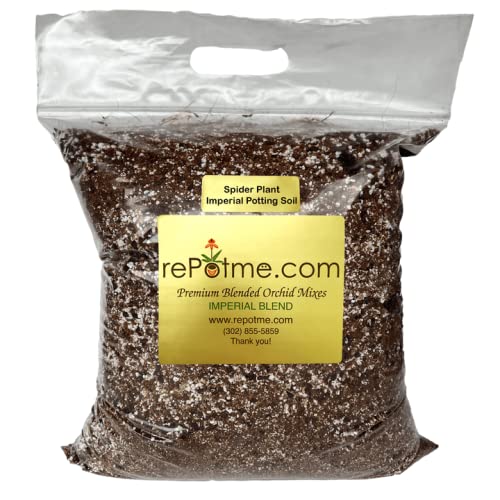
The largest bag in the lineup that still fits in a kitchen cabinet.
You get 4 Quarts versus the GARDENERA option at 2 Quarts, which means this one bag can repot a medium spider plant and leave enough for a second pot or top-dressing later. Buyers report the sealed pouch is ideal for apartments and that the mix arrives with visible bark chips, roots, and peat — no dusty powder hiding at the bottom. The dry weight is light, so lifting and scooping is easy even with one hand.
The ingredients are made fresh every day in small handcrafted batches, and the mix is used by several large conservatories and botanic gardens worldwide. One reviewer noted the bag even comes with a bonus plant tag and a butterfly clip, a small touch that regular brands skip. The catch is the cost — owners consistently say “pricey but better than Miracle-Gro,” and the 4-quart size is the most expensive option here. But for someone repotting two or three spider plants, this is the most economical bulk choice.
Unlike the Perfect Plants mix that uses pine bark and coco coir, the rePotme formula leans heavier on bark chips and peat, which gives it a chunkier texture that spider plant roots grip onto quickly. One long-term reviewer noted they have used rePotme for years without issues across multiple snake plants and spider plants.
Handcrafted quality worth the premium: Fresh daily batches, used by botanic gardens, and packed in a resealable bag that keeps the rest fresh.
The one downside: At 4 Quarts it is the priciest bag here, and one buyer mentioned they still needed more for a large pot — measure your pot before buying.
Reach for this if: You want the largest single bag from a trusted brand and do not mind paying more for hand-mixed quality.
Look elsewhere if: You only need enough for one small pot — the 2-quart Mini version costs less and avoids leftover waste.
2. Perfect Plants Indoor Plant Soil 4qt

Bug-free and airy — the best bang for your buck in a 4-quart bag.
Buyers specifically call out that this mix is completely free of fungus gnats, a problem that plagues many cheaper soils including Miracle-Gro. The formula uses pine bark, coco coir, perlite, sand, and garden lime — all natural ingredients that drain quickly while still holding enough moisture for spider plant roots. One owner reported they had “half a bag left after use” after repotting an ivy, which tells you this 4-quart bag goes a long way for small to medium pots.
It ships in a heavy-duty resealable bag that keeps the soil fresh for future repots. The texture is light and airy, which makes mixing by hand or scooping into pots easy. Reviewers consistently mention it promotes healthy root growth and vibrant leaves. The only honest trade-off is that some owners wish the bag were bigger, but at 4 Quarts versus the GARDENERA option at 2 Quarts, it is a smarter choice if you have more than one plant to repot.
Compared to the rePotme Imperial Junior, the Perfect Plants mix uses pine bark and coco coir instead of bark chips and peat — both drain well, but the Perfect Plants formula feels slightly lighter in hand. A buyer noted it drains well and dries slower in plastic pots, so you may need to adjust watering frequency depending on your container type.
What buyers love
- Light, airy, easy to scoop and work with
- Completely free of fungus gnats
- Retains moisture without staying soggy
The honest limits
- Small bag size for the price if you have multiple large pots
- Some owners felt they needed more after one big repot
Best for: Any indoor plant owner who wants a reliable, gnat-free soil that handles spider plants, monstera, aloe, and African violets — all in one bag.
skip it if: You need a specialized spider-plant-only formula with extra bark; this is a general indoor mix that works well but is not tailored to one species.
3. rePotme Houseplant Soil – Spider Plant Imperial Potting Soil Mix – Mini Bag (2 Quarts)
The perfect single-pot size from a brand that botanic gardens trust.
If you only own one spider plant, the 2-quart Mini bag from rePotme is exactly enough for a standard repot without waste. Like its larger sibling, this mix comes in a high-quality resealable pouch — buyers describe it as “sealed bag ideal for apartments.” The ingredients include bark and peat, creating a lightweight texture that is easy to scoop when dry. One customer observed it filled a large vase, two Tupperware planters, and a 4-inch pot, which shows how far it stretches despite the modest volume.
The mix is made fresh every day in small handcrafted batches, and rePotme’s products are used by some of the largest conservatories and botanic gardens in the world. Reviewers who used it on snake plants and African violets report excellent drainage and proper moisture retention without mold or mildew smells. A buyer specifically said the soil “revived a plant” — flowers regrew quickly and abundantly after repotting with sun. The same mix also works as a lightweight amendment for denser soils, with one owner mixing it 60/40 with rich soil for a monstera.
The obvious comparison is the GARDENERA 2-quart bag, which costs less but lacks the resealable pouch and the botanic-garden pedigree. For the first repot of a new spider plant, this Mini bag gives you premium quality in exactly the right quantity.
Single-plant perfection: 2 Quarts fits one spider plant pot exactly, and the resealable pouch keeps leftovers fresh for months.
The honest trade-off: Several buyers called it “pricey” and one said they needed more for their pot size, so check your pot diameter before buying.
Ideal if: You want a premium, handcrafted mix for a single spider plant and appreciate that it comes from a brand trusted by botanical gardens.
Skip if: You are repotting multiple plants — grab the 4-quart Junior bag instead for better value per quart.
4. GARDENERA Premium Spider Plant Potting Soil Mix – (2 Quart Bag)
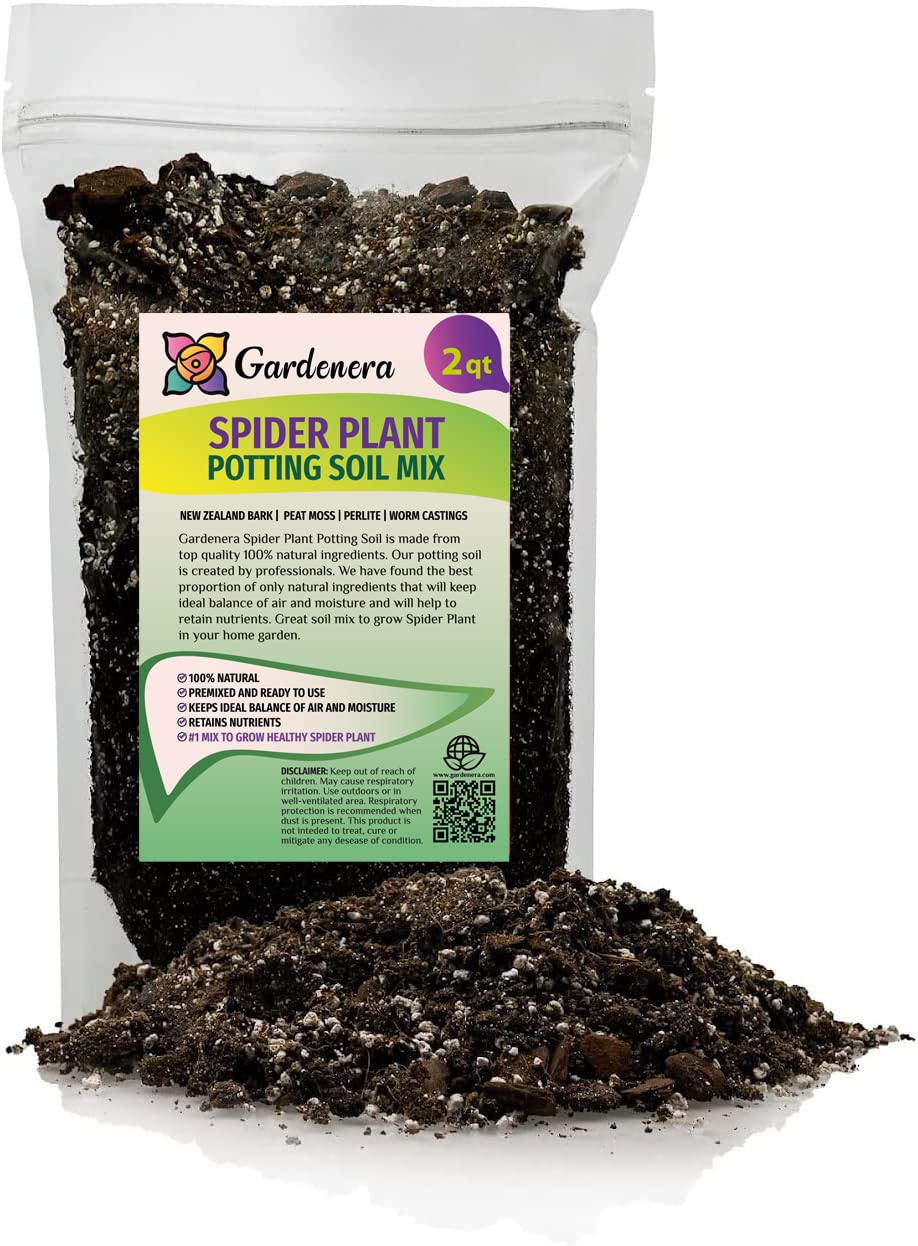
Your spider plant perks up the same day you repot with this mix.
This is the only bag here specifically marketed for spider plants, and it shows in the targeted ingredient list: New Zealand bark, peat moss, perlite, and worm castings. One user highlighted “as soon as I repotted my spider plant with this would it perked up and is looking pretty” — a same-day visual improvement that several other owners confirmed. The extra perlite and low-salt coconut coir promote rapid root development.
At 2 Quarts, this bag handles one standard spider plant repot. It is hand-blended on a small family farm in the USA with no additives, which makes it suitable for organic growing. The drainage is excellent — the formula mimics the plant’s natural outdoor environment where water flows through quickly but the root zone stays slightly moist. Compared to the Perfect Plants 4-quart bag, this one is 2 Quarts versus 4 Quarts and uses a spider-plant-specific blend rather than a general indoor formula, so you pay for targeted ingredients rather than bulk.
One thing to note: the bag does not appear to be resealable, unlike the rePotme options. If you only use part of it, you will need a clip or a separate container to store the rest. Several reviewers called it “fabulous soil” and reported their plants were thriving after the transfer, so the results speak for themselves.
What owners loved
- Specifically blended for spider plants with worm castings
- Plants perked up visibly within hours of repotting
- Hand blended on a family farm in the USA
The honest catch
- 2 Quarts is small — you may need two bags for larger pots
- No resealable closure on the bag
Reach for this if: You want a spider-plant-specific formula with organic worm castings and can use the full 2 Quarts in one go.
Look elsewhere if: You need to repot multiple plants or want a resealable bag for long-term storage — the Perfect Plants 4-quart bag gives you more volume and a zip closure.
Understanding the Specs
Bag Volume (Quarts)
This is the most practical spec for a spider plant owner. A 2-quart bag (about 2 liters) fills a standard 6-inch nursery pot with some left over. A 4-quart bag handles two medium spider plants or one large pot with room to spare. If you only have one plant, the smaller size avoids wasting soil. If you maintain a collection, the larger bag saves money per quart and gives you backup mix for future repots.
Drainage Ingredients (Perlite, Bark, Coco Coir)
Spider plants rot in dense soil because their roots store water and cannot breathe in mud. Perlite is the white volcanic glass that creates air pockets so water runs through fast. Pine bark and New Zealand bark add bigger chunks that hold their shape and keep the soil fluffy. Coco coir holds a small amount of water without turning into a soggy brick. A good spider plant mix will have at least two of these ingredients listed on the bag.
FAQ
Can I use regular potting soil for spider plants?
How often should I repot my spider plant with fresh soil?
Will my spider plant need fertilizer in this soil?
What does a 2-quart bag actually fill?
How do I know if my spider plant needs new soil?
Can I mix two different spider plant soils together?
Is it normal for spider plant soil to have small white pellets?
Can I use cactus or succulent soil for a spider plant?
Final Thoughts: The Verdict
For most people, the best soil for spider plant winner is the rePotme Junior Bag (4 Quarts) because it delivers the largest volume, a resealable pouch, and a trusted handcrafted blend used by botanic gardens. If you want value and a bug-free guarantee, grab the Perfect Plants Indoor Plant Soil 4qt. And for a single pot with a targeted spider-plant formula, the standout is the GARDENERA Premium Spider Plant Potting Soil that owners mention revives plants the same day.
How We Picked
We do not accept paid placement, and we did not hands-on test every unit. Instead, we match each pick to a real buyer and use-case by comparing the manufacturers’ published specifications against the patterns in verified customer reviews — so you get each pick’s real strengths and trade-offs instead of marketing copy.
Sources & Methodology
Specifications: manufacturer listings and product documentation. Review insights: verified customer reviews, as of July 2026. Pricing: not shown on this page (it changes often); check the current price via the retailer link.
As an Amazon Associate, Lawn Gear Lab earns from qualifying purchases. This does not affect which products we feature.